

Breast Implants Market Size and Forecast – 2026 to 2033
The global breast implants market is estimated to be valued at USD 1.70 Bn in 2026 and is expected to reach USD 2.41 Bn by 2033, exhibiting a compound annual growth rate (CAGR) of 5.1% from 2026 to 2033.
Key Takeaways
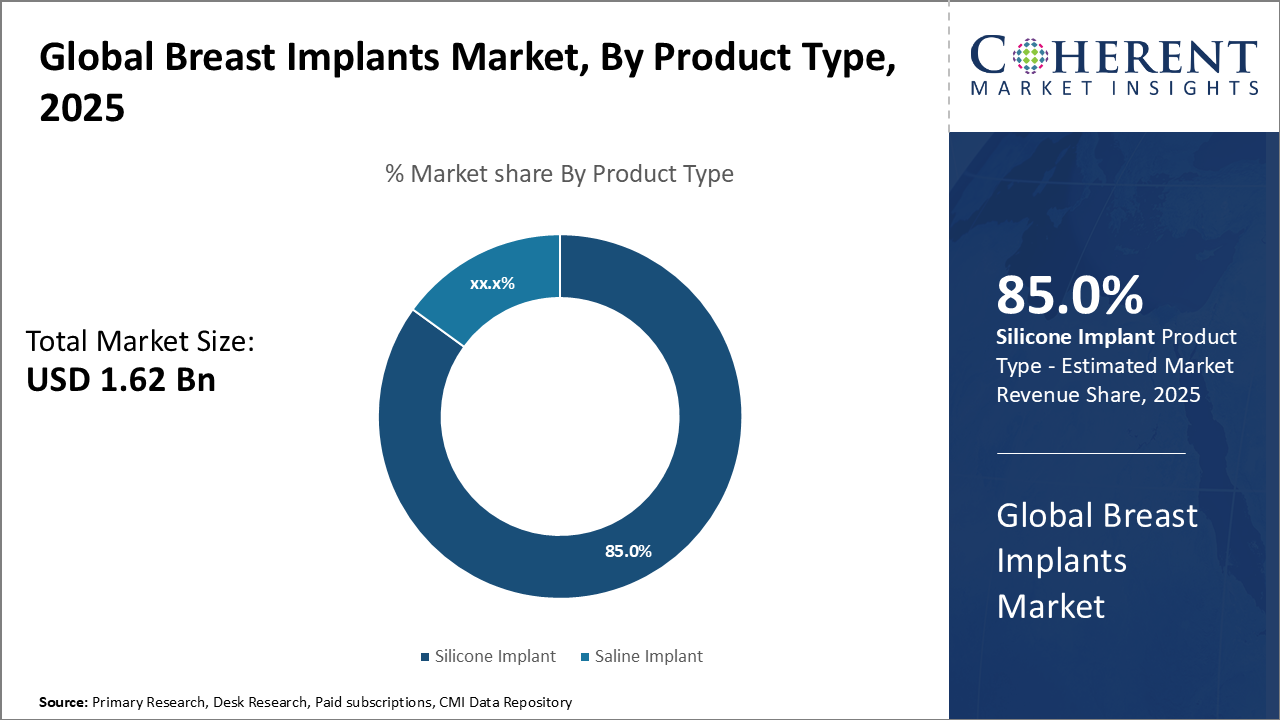
- Based on Product Type, the Silicone Implants segment is expected to account for the largest share of the market in 2026, owing to its superior aesthetics, durability, and patient satisfaction.
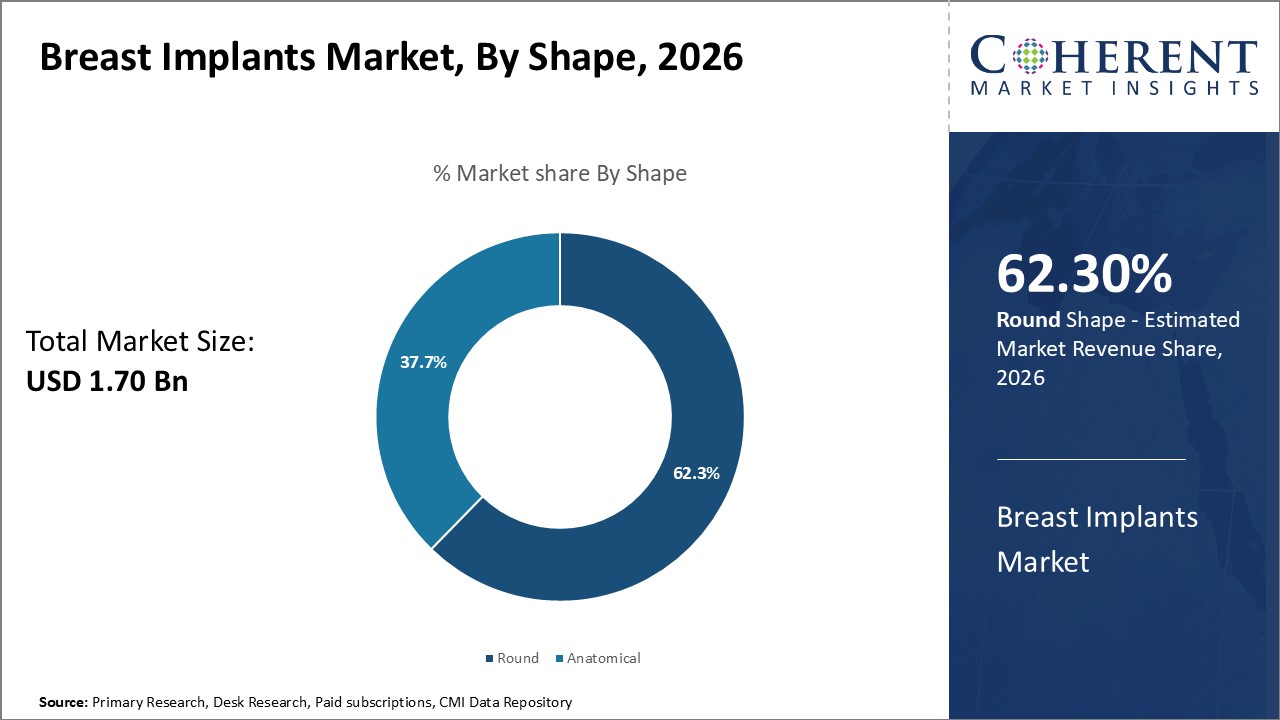
- Based on Shape, the Rund segment is expected to lead the market with the highest share in 2026, due to their ability to provide enhanced upper pole fullness and a more lifted, voluminous appearance.
- Based on Application, the Breast Augmentation segment is expected to account for 29.9% share of the market in 2026, driven by growing cosmetic awareness, rising disposable income, and evolving beauty standards.
- Based on Texture, the Smooth segment is anticipated to capture the greatest share of the market in 2026, due to their safer profile and reduced risk of complications.
- Based on End User, the Hospital segment is projected to capture 48.6% share of the market in 2026, due to their advanced surgical infrastructure, availability of experienced plastic surgeons, and comprehensive post-operative care.
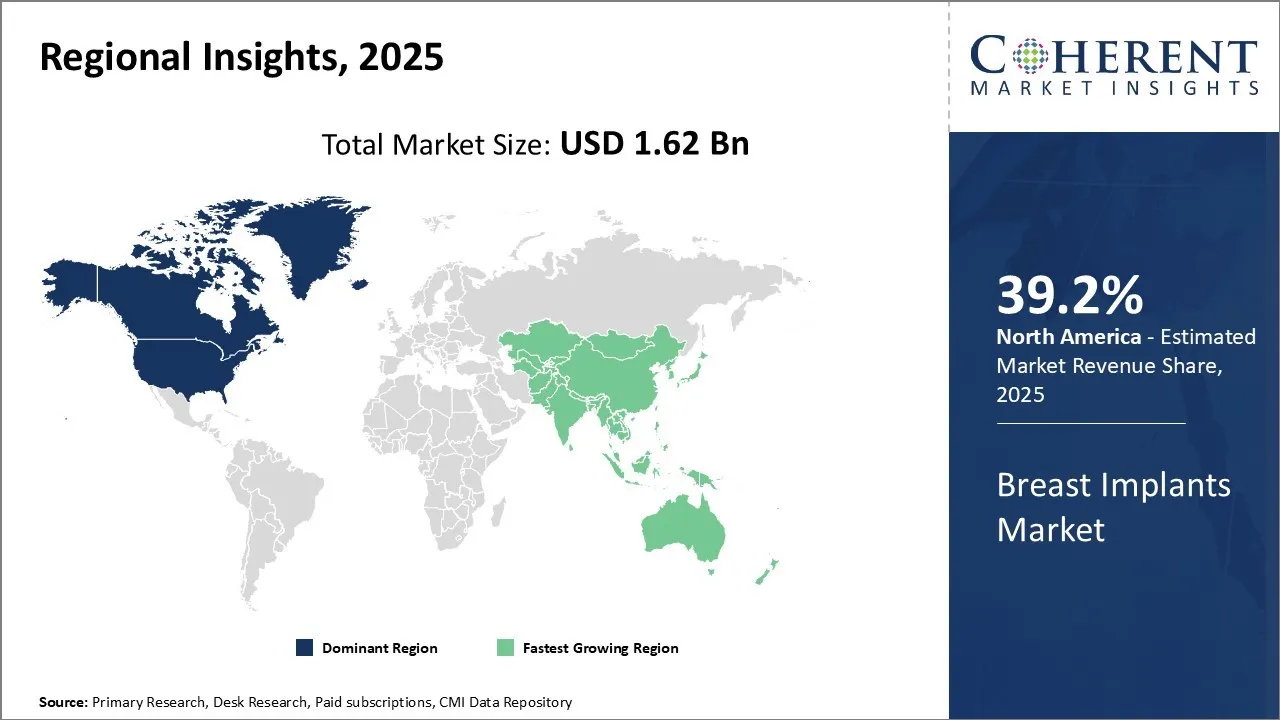
- Based on Region, North America is expected to lead the global breast implants market in 2026, with 39.2% share. While, Asia Pacific is expected to be the fastest growing region.
Market Overview
Technological advancements in breast implants to enhance safety, durability, and natural appearance are expected to boost demand for breast implants. The rising awareness about breast aesthetics among women globally and the availability of advanced breast implants are fueling the market growth. Furthermore, the increasing acceptance of breast augmentation and reconstructive surgeries owing to their ability to restore confidence, improve self-esteem, and treat breast deformities is driving demand.
Current Events and their Impact
Current Event | Description and its Impact |
Regulatory and Safety Framework Evolution |
|
Technological Innovation and Market Transformation |
|
Medical & Reconstructive Applications of Breast Implants
- Post-Mastectomy Reconstruction
- One of the most vital uses of breast implants is in reconstructive surgery following mastectomy, often due to breast cancer. Implants help restore the breast’s shape and volume, offering emotional and psychological healing alongside physical recovery. Patients may choose between immediate reconstruction (during mastectomy) or delayed reconstruction (after healing).
- Types used: Silicone, saline, or structured implants.
- Techniques: Direct-to-implant, tissue expanders, or flap-based reconstruction.
- One of the most vital uses of breast implants is in reconstructive surgery following mastectomy, often due to breast cancer. Implants help restore the breast’s shape and volume, offering emotional and psychological healing alongside physical recovery. Patients may choose between immediate reconstruction (during mastectomy) or delayed reconstruction (after healing).
- Revision Surgery
- Implants are also used in revision procedures, which correct or improve outcomes from previous surgeries. This may involve replacing old implants, correcting asymmetry, or addressing complications like capsular contracture or implant rupture.
- Emerging tools: Bioabsorbable scaffolds like GalaFLEX LITE™ are used to reinforce soft tissue and improve implant stability.
- Implants are also used in revision procedures, which correct or improve outcomes from previous surgeries. This may involve replacing old implants, correcting asymmetry, or addressing complications like capsular contracture or implant rupture.
- Congenital Deformities
- Breast implants can help correct congenital conditions such as:
- Poland Syndrome: Underdevelopment or absence of chest muscles.
- Tubular breasts: Abnormal breast shape due to restricted tissue growth.
- Implants offer a way to restore symmetry and normal appearance, often combined with tissue expansion or fat grafting.
- Breast implants can help correct congenital conditions such as:
- Gender-Affirming Surgery
- In transgender healthcare, breast implants play a crucial role in gender-affirming surgeries for trans women. These procedures help align physical appearance with gender identity, contributing to improved mental health and quality of life.
- Considerations: Chest anatomy, skin elasticity, and implant sizing are tailored to individual needs.
- In transgender healthcare, breast implants play a crucial role in gender-affirming surgeries for trans women. These procedures help align physical appearance with gender identity, contributing to improved mental health and quality of life.
- Trauma or Burn Reconstruction
- For patients who’ve experienced chest trauma or burns, implants may be used to reconstruct damaged breast tissue. These cases often require complex planning and may involve multiple stages of surgery.
- Oncoplastic Surgery
- A hybrid of oncology and plastic surgery, oncoplastic techniques combine tumor removal with aesthetic reconstruction. Implants may be used to maintain breast shape after lumpectomy or partial mastectomy.
- Current Industry Events of 2026
- Market Size Estimation
- Regional Breakdown
- Competitive Landscape
- Customer Intelligence
- Segmental Analysis
- Pricing Analysis
- Key Market Drivers, Challenges & Future Trends
- Customized Insights Section
Segmental Insights
Breast Implants Market Insights, By Product Type, Silicone Implants Lead the Market with Superior Aesthetics, Durability, And Patient Satisfaction
In terms of product type, the silicone implants segment is expected to lead the market with the largest share in 2026. Their popularity stems from their superior aesthetic qualities, offering a more natural look and feel compared to saline implants. Silicone implants are filled with cohesive silicone gel, which mimics the texture of natural breast tissue and reduces the risk of rippling. Technological advancements have also improved their durability and safety, with newer generations featuring form-stable gels and reinforced shells. These factors contribute to high patient satisfaction and surgeon preference, especially in cosmetic procedures.
For instance, in December 2024, Johnson & Johnson’s Mentor MemoryGel® BOOST silicone breast implant has received FDA approval for its largest size yet, tailored for breast reconstruction. This advancement expands post-mastectomy options, offering enhanced volume and shape with the trusted feel of silicone. The approval underscores Mentor’s commitment to innovation and patient-focused solutions in the breast implants market.
Breast Implants Market Insights, By Shape, Round Dominate Due To Their Fuller Appearance and Ease of Surgical Placement
In terms of shape, the round segment is expected to dominate with the highest share of the market in 2026. Their dominance continues in 2026 due to their ability to provide enhanced upper pole fullness and a more lifted, voluminous appearance. Round implants are easier to position during surgery and pose less risk of aesthetic distortion if they rotate within the breast pocket. This makes them a reliable choice for both surgeons and patients. Their versatility across different body types and surgical techniques further strengthens their market appeal, especially in augmentation procedures.
For instance, in March 2025, Establishment Labs named Grammy-winning artist Meghan Trainor as its brand partner following her breast augmentation with Motiva® round silicone implants. The collaboration promotes body confidence and highlights Motiva’s advanced, safety-focused implant technology. Trainor’s endorsement underscores the growing appeal of round implants in aesthetic wellness.
Breast Implants Market Insights, By Application - Breast Augmentation is Driven by Rising Cosmetic Awareness and Demand
In terms of application, the breast augmentation segment is estimated to hold 29.9% of the market share in 2026 driven by growing cosmetic awareness, rising disposable income, and evolving beauty standards. Patients increasingly seek aesthetic enhancement for personal confidence and body image satisfaction. The availability of advanced implant options, minimally invasive techniques, and financing plans has made augmentation more accessible. Social media influence and celebrity culture also play a role in boosting demand. As a result, breast augmentation procedures continue to outpace reconstructive surgeries in volume and revenue contribution.
For instance, in August 2025, Allergan Aesthetics, an acquired company by AbbVie unveiled the new faces of Natrelle® through a campaign spotlighting real stories of empowerment and transparency. Featuring individuals who’ve undergone breast augmentation or reconstruction, the initiative aims to foster confidence and informed choices. The campaign reinforces Natrelle®’s commitment to authenticity and patient-centered care in the breast implants market.
Breast Implants Market Insights, By Texture - Smooth Implants Prevail for Their Safer Profile and Reduced Risk of Complications
In terms of texture, the smooth implants segment is projected to capture the greatest share of the market in 2026, due to their safer profile and reduced risk of complications such as Breast Implant-Associated Anaplastic Large Cell Lymphoma (BIA-ALCL). Regulatory bodies in several countries have issued warnings or restrictions on textured implants, prompting a shift toward smooth-surfaced alternatives. Smooth implants are less likely to cause tissue irritation and are easier to place and adjust during surgery. Their long-term safety and compatibility with various surgical techniques make them the dominant choice in 2025.
For instance, in August 2025, Star Clinic announced the launch of Motiva® Preserve implants, bringing the latest in breast implant innovation to its patients. These smooth silicone implants are designed to offer enhanced safety, comfort, and aesthetic outcomes. The addition reinforces Star Clinic’s commitment to providing advanced, patient-focused solutions in cosmetic and reconstructive breast surgery.
Breast Implants Market Insights, By End User - Hospital is Demanding as It Offers Advanced Care and Trusted Surgical Expertise
The hospitals segment is estimated to hold 48.6% of the market share in 2026 due to their advanced surgical infrastructure, availability of experienced plastic surgeons, and comprehensive post-operative care. Patients tend to trust hospitals more for complex procedures like breast implantation, especially when safety and outcomes are paramount. Hospitals also handle a higher volume of reconstructive surgeries, often in collaboration with oncology departments for post-mastectomy care. Their ability to offer multidisciplinary support and adhere to stringent medical standards solidifies their leadership in this segment.
Regional Insights
North America Breast Implants Market Analysis & Trends
North America remains the dominant region in the global breast implants market and is estimated to hold 39.2% of the market share in 2026. The presence of key industry players and their large-scale operations have driven the market growth. Companies like Allergan and Sientra have significantly expanded their manufacturing and distribution footprint across countries like the U.S. and Canada. Their aggressive marketing campaigns have resulted in wider acceptance and higher sales volumes in the region. Apart from a strong industry presence, access to advanced medical technology and skilled surgeons have made North America an attractive destination for cosmetic surgeries. The ease of financing options for breast augmentation procedures has further boosted the consumer base. This has allowed the region to charge a small premium over international prices as customers are able to afford the higher costs. Stringent regulatory approvals have also ensured product and procedure safety standards that build consumer confidence.
For instance, in March 2024, the Aesthetic Society and The Aesthetic Foundation launched ARISE, the American Registry for Breast Implant Surveillance, powered by the FDA-recognized Aesthetic One app. With over 45,000 implants registered, ARISE aims to enhance patient safety, outcomes research, and quality improvement in breast implant procedures.
Asia Pacific Breast Implants Market Analysis & Trends
Asia Pacific has emerged as the fastest growing regional market fueled by rapidly developing economies. Countries like China, Japan, South Korea, and India are witnessing a significant rise in discretionary spending on aesthetic and cosmetic surgeries. While import dependence is currently high due to limited local manufacturing, several industry players have initiated capacity expansion drives to tap the massive market potential. International players see Asia as a strategic region to expand with lower manufacturing overheads and an abundant skilled workforce available at competitive pay scales. They have partnered with local distributors to efficiently distribute and market products. This has not only increased affordability through cost optimization but also made products more compatible with cultural preferences through customized offerings. The overall growth is further aided by growing medical tourism and rising health awareness among the expanding wealthy middle-class population. Overall, Asia Pacific's growing stature as both a lucrative production and consumption market for breast implants is evident.
For instance, in March 2026, BD announced a key milestone in its clinical trial evaluating the bioabsorbable GalaFLEX LITE™ scaffold for breast implant revision surgery. The scaffold aims to reinforce soft tissue and improve surgical outcomes. This advancement reflects BD’s commitment to innovation in aesthetic and reconstructive breast procedures.
Breast Implants Market Outlook Country-Wise
The U.S. Breast Implants Market Trends
The breast implants market is highly demanding in the United States due to a blend of cultural, medical, and technological factors. Cosmetic surgery is widely accepted and frequently performed, with breast augmentation consistently ranking among the top procedures. A strong media influence and evolving beauty standards contribute to this demand, while advanced healthcare infrastructure ensures access to skilled surgeons and innovative implant technologies. Additionally, the high prevalence of breast cancer drives the need for reconstructive surgeries, often involving implants, which are frequently covered by insurance. The U.S. also benefits from a diverse range of FDA-approved implant options, including silicone, saline, and structured designs, supported by robust regulatory oversight and patient safety initiatives like the ARISE registry. Together, these elements make the U.S. a global leader in both aesthetic and reconstructive breast implant procedures.
For instance, in May 2024, Bimini HealthTech introduced Serene™ Structured Saline Breast Implants, offering a new option for women seeking saline-based augmentation. Designed to deliver a natural look and feel, Serene™ implants feature advanced internal structure for improved shape retention and softness, marking a significant innovation in breast implant technology.
Breast Implants Market Trends
The breast implants market in China is experiencing strong demand due to a mix of cultural shifts, economic growth, and rising aesthetic awareness. As disposable incomes increase and Western beauty standards gain influence, more Chinese women, especially younger generations are seeking cosmetic enhancements like breast augmentation. Urbanization and social media also play a major role, promoting body image ideals and normalizing aesthetic procedures.
For instance, in September 2024, GC Aesthetics introduced Youthly™ breast implants in China, targeting the growing demand among younger women for personalized aesthetic solutions. Designed with advanced technology for natural results and enhanced safety, Youthly™ marks a strategic expansion into Asia’s rapidly evolving cosmetic surgery market, reinforcing the brand’s global innovation leadership.
Market Report Scope
Breast Implants Market Report Coverage
| Report Coverage | Details | ||
|---|---|---|---|
| Base Year: | 2025 | Market Size in 2026: | USD 1.70 Bn |
| Historical Data for: | 2020 To 2024 | Forecast Period: | 2026 To 2033 |
| Forecast Period 2026 to 2033 CAGR: | 5.1% | 2033 Value Projection: | USD 2.41 Bn |
| Geographies covered: |
| ||
| Segments covered: |
| ||
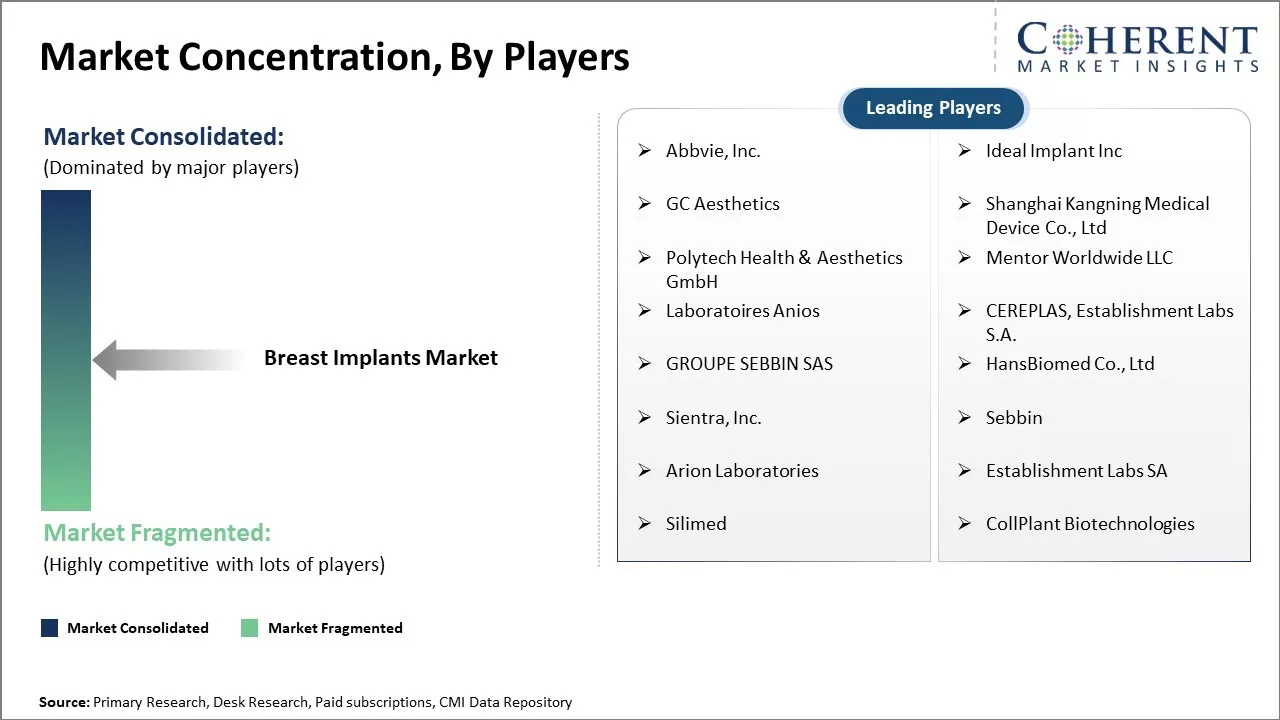
| Companies covered: | Abbvie, Inc., Ideal Implant Inc, GC Aesthetics, Shanghai Kangning Medical Device Co., Ltd, Polytech Health & Aesthetics GmbH, Mentor Worldwide LLC, Laboratoires Anios, CEREPLAS, Establishment Labs S.A., GROUPE SEBBIN SAS, HansBiomed Co., Ltd, Sientra, Inc., Sebbin, Arion Laboratories, Establishment Labs SA, Silimed, and CollPlant Biotechnologies | ||
| Growth Drivers: |
| ||
| Restraints & Challenges: |
| ||
Market Concentration and Competitive Landscape
Breast Implants Market Opportunities
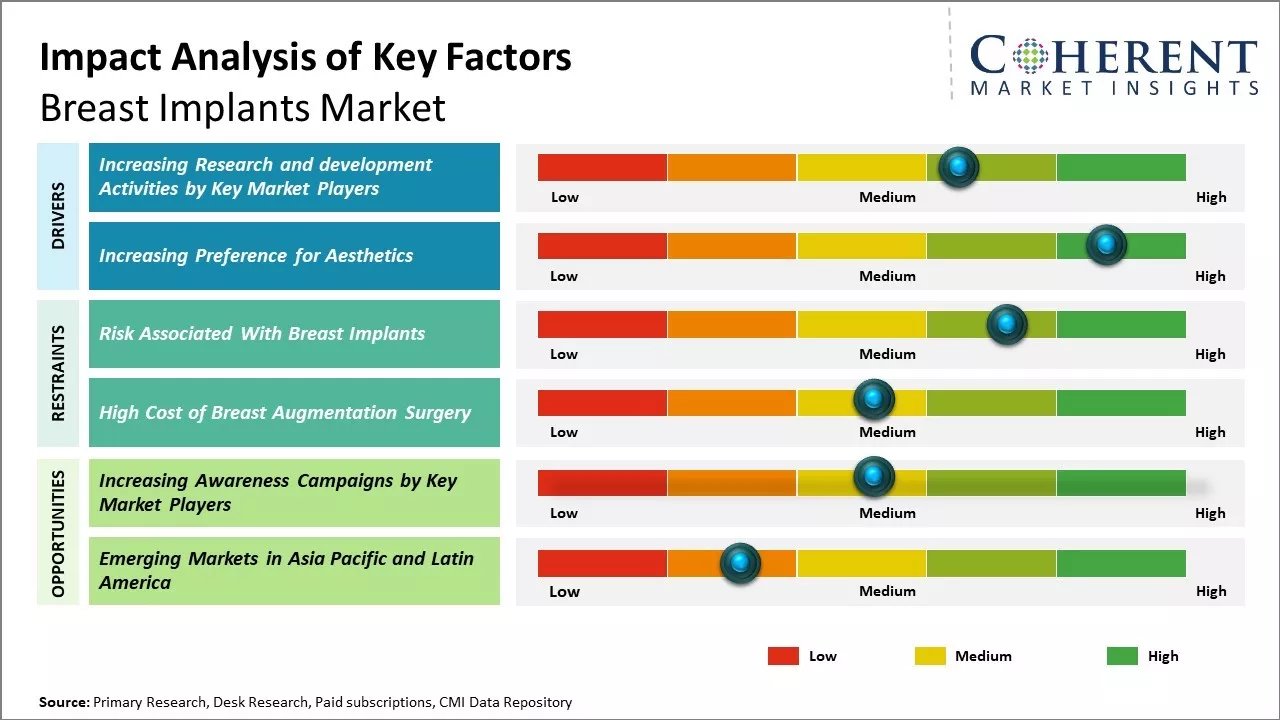
Increasing Awareness Campaigns by Key Market Players
Key players in the breast implants market are ramping up awareness campaigns to educate consumers, reduce stigma, and promote both cosmetic and reconstructive procedures. These efforts focus on safety, post-mastectomy options, and body positivity, using social media, influencer partnerships, and patient testimonials to reach wider audiences. In emerging markets, campaigns highlight affordability and quality to attract medical tourists. By increasing transparency and engagement, these initiatives are driving demand and expanding the global market.
Analyst Opinion (Expert Opinion)
The breast implants market is at a strategic inflection point where product leadership, safety credibility, and clinical differentiation determine market winners more than simple volume growth.
The silicone implant segment accounts for an overwhelming majority of unit and revenue share in recent industry reports (reported at roughly 83–84% of product mix in 2024). This dominance reflects surgeon and patient preference for the tactile properties and aesthetic predictability of modern cohesive-gel implants. However, the same period has shown increasingly intense regulatory and public scrutiny focused on implant safety and long-term outcomes, which constrains pricing freedom and elevates the cost of post-market surveillance.
Manufacturer-specific safety signals have had outsized commercial consequences. For example, regulatory action and recall requests tied to Allergan’s BIOCELL textured devices followed findings that their textured surface was associated with a markedly higher relative risk of breast implant–associated anaplastic large-cell lymphoma (BIA-ALCL), the FDA characterized the risk for BIOCELL as approximately six times that of other textured devices marketed in the U.S. The commercial fallout from such actions is not limited to lost sales; it creates persistent reputational and litigation risk that compresses valuation multiples for exposed firms and raises the bar for competitor risk-management programs.
The epidemiology is now sufficiently granular that product-level incidence estimates are part of purchase and regulatory decisions. Published analyses report manufacturer-specific incidence ranges (e.g., substantially higher point estimates linked to certain textured implants versus much lower rates for others), and professional bodies have published overall risk approximations to guide clinicians. These quantifications convert what was once a diffuse safety debate into actionable risk management for hospitals, payors, and procurement teams. As a result, firms without clean safety profiles face restricted hospital formularies and higher warranty/recall provisioning.
Speak to the analyst
Want personalized insights?
Take the findings above to one of our principal consultants, or have the report rebuilt around the segments, geographies and competitors you actually track.
Breast Implants Industry News
- In September 2024, POLYTECH expanded its breast implant portfolio with the launch of Opticon PLUS, featuring advanced shell technology and enhanced mechanical performance. Designed for improved durability and patient safety, the new implant marks a significant innovation in aesthetic and reconstructive breast surgery, reinforcing POLYTECH’s commitment to quality and clinical excellence.
- In March 2024, The Aesthetic Society, the leading authority on aesthetic plastic surgery, and The Aesthetic Foundation, the philanthropic research and education arm of The Aesthetic Society, announced the launch of the American Registry for Breast Implant Surveillance (ARISE), powered by their innovative Aesthetic One app. ARISE revolutionizes the landscape of breast implant registries by partnering with Aesthetic One, an FDA-recognized app dedicated to digital registration of breast implant devices used in aesthetic and reconstructive cases
- In January 2024, CollPlant Biotechnologies, a regenerative and aesthetics medicine company, announced its initiation of a pre-clinical trial to evaluate commercial-size, 3D-bioprinted, regenerative breast implants. Currently, there are no commercial products that allow regeneration of soft tissues such as the breast.
Market Segmentation
- Product Type Insights (Revenue, USD Bn, 2026 - 2033)
- Saline Implant
- Silicone Implant
- Shape Insights (Revenue, USD Bn, 2026 - 2033)
- Round
- Anatomical
- Application Insights (Revenue, USD Bn, 2026 - 2033)
- Breast Augmentation
- Breast Reconstruction
- Texture Insights (Revenue, USD Bn, 2026 - 2033)
- Smooth
- Textured
- End User Insights (Revenue, USD Bn, 2026 - 2033)
- Hospitals
- Clinics
- Others
- Regional Insights (Revenue, USD Bn, 2026 - 2033)
- North America
- U.S.
- Canada
- Latin America
- Brazil
- Argentina
- Mexico
- Rest of Latin America
- Europe
- Germany
- U.K.
- Spain
- France
- Italy
- Russia
- Rest of Europe
- Asia Pacific
- China
- India
- Japan
- Australia
- South Korea
- ASEAN
- Rest of Asia Pacific
- Middle East
- GCC Countries
- Israel
- Rest of Middle East
- Africa
- South Africa
- North Africa
- Central Africa
- Key Players Insights (Revenue, USD Bn, 2021 - 2033)
- Abbvie, Inc.
- Ideal Implant Inc
- GC Aesthetics
- Shanghai Kangning Medical Device Co., Ltd
- Polytech Health & Aesthetics GmbH
- Mentor Worldwide LLC
- Laboratoires Anios
- CEREPLAS, Establishment Labs S.A.
- GROUPE SEBBIN SAS
- HansBiomed Co., Ltd
- Sientra, Inc.
- Sebbin
Sources
Primary Research Interviews from the following stakeholders
Stakeholders
- Interviews with breast implant manufacturers, plastic and reconstructive surgeons, hospital procurement managers, aesthetic clinic directors, regulatory affairs specialists, and distributors across key regional markets.
Specific Stakeholders
- Consultations with certified plastic surgeons and aesthetic practitioners from leading hospitals and clinics (e.g., Mayo Clinic, Apollo Hospitals, Seoul National University Hospital, Cleveland Clinic)
- Interviews with product development and R&D heads at implant material and medical-grade silicone suppliers
- Procurement and biomedical engineering managers at multispecialty hospitals and cosmetic surgery centers
- Clinical research coordinators and investigators involved in breast implant safety and efficacy trials
- Marketing and product strategy leads at companies offering breast augmentation and reconstruction solutions
- Regulatory compliance officers managing FDA, EMA, and PMDA approvals for Class III medical devices
- Distributors and importers handling breast implants and related aesthetic devices across North America, Europe, and Asia Pacific
Databases
- World Health Organization (WHO) Global Health Observatory
- World Trade Organization (WTO) Trade Statistics
- UN Comtrade Database
- United States Food and Drug Administration (FDA) – Medical Device Databases (510(k), PMA)
- European Commission – EUDAMED (European Database on Medical Devices)
- Japan Pharmaceuticals and Medical Devices Agency (PMDA)
- National Center for Biotechnology Information (NCBI)
- Organisation for Economic Co-operation and Development (OECD) Health Data
- Health Canada – Medical Devices Active Licence Listing (MDALL)
- Indian Ministry of Health and Family Welfare – CDSCO (Central Drugs Standard Control Organization)
Magazines
- Plastic Surgery Practice
- Aesthetic Surgery Journal – News & Insights
- MedTech Insight
- Medical Device and Diagnostic Industry (MD+DI)
- European Aesthetic Guide
- Clinica (Medical Technology)
- Beauty Launchpad (Professional Aesthetics)
- Plastic Surgery News
Journals
- Aesthetic Surgery Journal (Oxford Academic)
- Plastic and Reconstructive Surgery (Wolters Kluwer)
- Journal of Plastic, Reconstructive & Aesthetic Surgery (Elsevier)
- Journal of Biomedical Materials Research – Part A
- Clinical Implant Dentistry and Related Research
- Archives of Plastic Surgery
- Journal of Cosmetic Dermatology
- International Journal of Surgery
Newspapers
- The Wall Street Journal – Health & Science
- The Economic Times – Healthcare & Pharmaceuticals
- The Guardian – Health and Wellness
- Financial Times – Life Sciences & MedTech
- Nikkei Asia – Healthcare Innovations
- The Hindu Business Line – Healthcare Industry
- Los Angeles Times – Science & Medicine Section
Associations
- International Society of Aesthetic Plastic Surgery (ISAPS)
- American Society of Plastic Surgeons (ASPS)
- American Society for Aesthetic Plastic Surgery (ASAPS)
- European Association of Plastic Surgeons (EURAPS)
- Asia Pacific Society of Aesthetic Plastic Surgeons (APSAPS)
- International Confederation of Plastic Surgery Societies (ICOPLAST)
- Medical Device Manufacturers Association (MDMA)
- Association of Indian Aesthetic Plastic Surgeons (IAAPS)
Public Domain Sources
- World Health Organization (WHO) – Global Report on Medical Devices
- U.S. Food and Drug Administration (FDA) – Breast Implant Safety Reports
- European Medicines Agency (EMA) – Medical Device Guidance
- Ministry of Health, Labour and Welfare (Japan)
- National Health Service (NHS), U.K. – Breast Implant Information
- Central Drugs Standard Control Organization (CDSCO), India
- Health Canada – Device Incident Reporting
- U.S. National Institutes of Health (NIH) – Clinical Trials Database
- World Bank – Healthcare Infrastructure and Spending Statistics
Proprietary Elements
- CMI Data Analytics Tool, and Proprietary CMI Existing Repository of information for last 8 years
*Definition: Breast implants are prosthetic devices used in breast augmentation surgery to increase the size, shape, and contour of a person's breasts. Breast implants are typically silicone shells filled with either saline (sterile salt water) or silicone gel. They are surgically inserted under the breast tissue or chest muscle to restore, augment, or enhance the appearance of the breasts.
Get access to 250+ pages report
Every segment, forecast, competitor profile and data table behind the analysis above — available for instant download.
- ESOMAR Member
- ISO 9001:2015 Certified
- D-U-N-S Registered
- GDPR & CCPA Compliant
Missing comfort of reading report in your local language? Find your preferred language:
Transform your Strategy with Exclusive Trending Reports
Frequently Asked Questions
The Breast Implants Market is estimated to be valued at USD 1.70 Bn in 2026, and is expected to reach USD 2.41 Bn by 2033.
The CAGR of the Breast Implants Market is projected to be 5.1% from 2026 to 2033.
Increasing research and development activities by key market players and increasing preference for aesthetics are the major factor driving the growth of the breast implants market.
Risks associated with breast implants and high cost of breast augmentation surgery are the major factors hampering the growth of the breast implants market.
In terms of product type, saline implant is estimated to dominate the market revenue share in 2026.
Abbvie, Inc., Ideal Implant Inc, GC Aesthetics, Shanghai Kangning Medical Device Co., Ltd, Polytech Health & Aesthetics GmbH, Mentor Worldwide LLC, Laboratoires Anios, CEREPLAS, Establishment Labs S.A., GROUPE SEBBIN SAS, HansBiomed Co., Ltd, Sientra, Inc., Sebbin, Arion Laboratories, Establishment Labs SA, Silimed, and CollPlant Biotechnologies are the major players.
North America is expected to lead the breast implants market.