

Global Cannabis Beverage Market Size and Forecast 2026-2033
Global cannabis beverage market is estimated to be valued at USD 309.3 Mn in 2026 and is expected to reach USD 1,310.1 Mn by 2033, exhibiting a compound annual growth rate (CAGR) of 22.9% from 2026 to 2033.
Key Takeaways of the Global Cannabis Beverage Market
- In terms of product type, non-alcoholic segment is estimated to contribute the 68.9% market share in 2026, due to rising health consciousness among consumers.
- In terms of end user, restaurants & cafes segment is estimated to contribute the 43.7% market share in 2026, due to growing social acceptance.
- In terms of distribution channel, online retail segment is estimated to contribute the 40.8% market share in 2026, due to consumer convenience.
- North America represents the largest regional market for cannabis beverages with an estimated market share of 37. 2% in 2026.
Market Overview
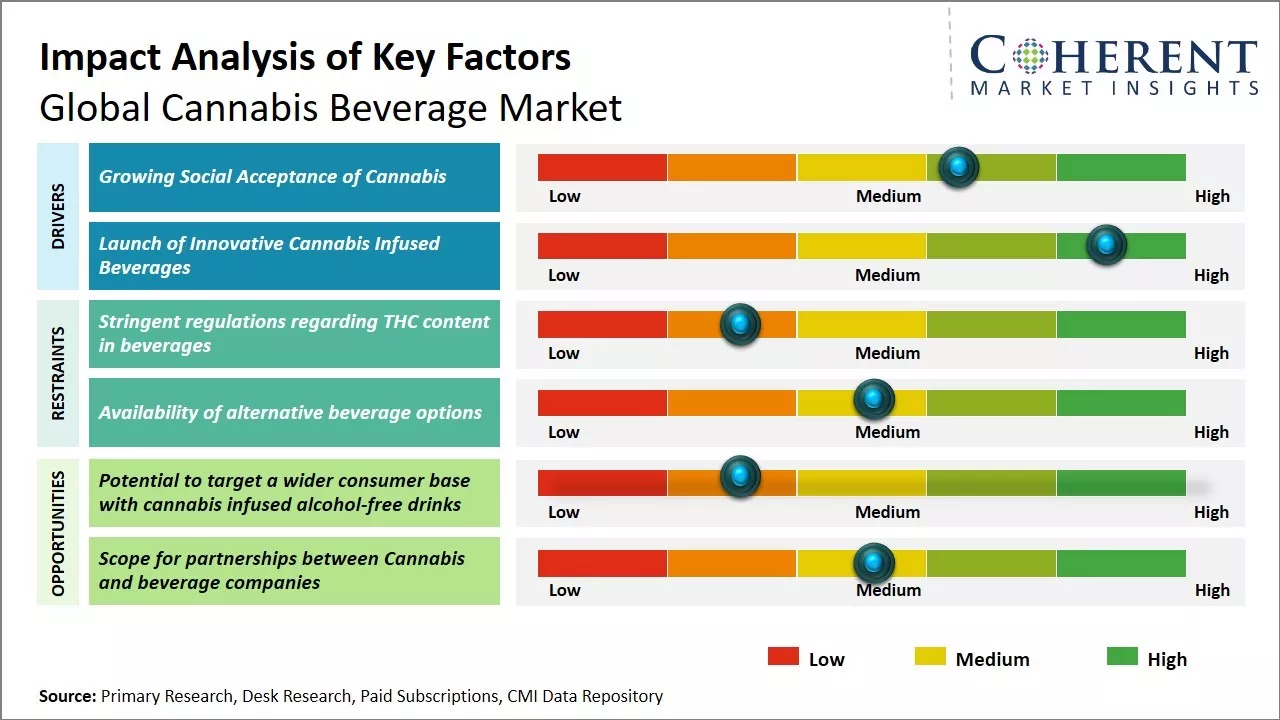
The legalization of cannabis for medical and recreational use across various countries like the U.S., Canada, and selective European nations is driving the market growth. Wide acceptability of cannabis infused beverages as a healthier alternative to alcohols can boost its demand. Growing awareness about therapeutic benefits of cannabis in conditions like chronic pains, arthritis, and insomnia has been augmenting the sales of cannabis infused drinks.
The market is expected to witness robust growth during the forecast period, owing to rising millennial population, changing consumer preference towards wellness drinks with functional benefits and expanding retail distribution. However, lack of standardization and guidelines related to use of cannabis as ingredients along with complexity in production is anticipated to hinder the market growth.
Current Events and their Impact on the Global Cannabis Beverage Market
Current Events | Description and its impact |
U.S. State-Level Legalization Efforts |
|
Federal Rescheduling Developments |
|
Market Trends
- Growing Social Acceptance of Cannabis
Global cannabis beverage market is witnessing strong growth, due to growing social acceptance of cannabis worldwide. Over the past decade, several countries have legalized recreational and medical use of cannabis, due to its medicinal properties and growing evidence that it is less harmful than alcohol.
Furthermore, senior citizens are also finding medical use of cannabis due to conditions like arthritis pain, thus, boosting its demand. With more countries expected to legalize cannabis in the near future, social acceptance is likely to boost further.
- Launch of Innovative Cannabis Infused Beverages
The launch of innovative cannabis-infused beverages, including CBD (Cannabidiol) and THC (Tetrahydrocannabinol)options, is significantly boosting the global cannabis beverage market, driven by high demand from millennials and Gen Z seeking wellness benefits. Manufacturers are leveraging advanced nanoencapsulation for quicker cannabinoid absorption and introducing diverse products like sparkling waters and teas.
Mainstream beverage giants, such as The Coca-Cola Company and Constellation Brands, are making strategic investments, accelerating innovation and improving accessibility. This growth is further supported by changing social attitudes and increasing global cannabis legalization, as highlighted by the United Nations Office on Drugs and Crime, indicating robust long-term prospects for the industry.
Market Opportunity: Potential to target a wider consumer base with cannabis infused alcohol-free drinks
Targeting the wider consumer base of health-conscious individuals with cannabis infused non-alcoholic drinks could be a major growth opportunity for the global cannabis beverage market. As awareness about the health impacts of excessive alcohol consumption grows, many consumers are increasingly interested in alternative social drinks that provide the experiential benefits of alcohol. Cannabis infused beverages that deliver a pleasurable consumer experience but without any alcohol offers opportunities for growth of market.
According to a 2021 survey by the World Health Organization, around 35% of countries reported an increase in individuals abstaining from alcohol in social settings due to growing health concerns. This presents a massive addressable audience for the cannabis beverage industry. With the health virtues of cannabis gaining wider acceptance through ongoing research, cannabis infused alcoholic drinks may be viewed more favorably than traditional alcohol by many consumers seeking a healthier alternative for socialization. Beverage companies that can successfully deliver satisfying experiential qualities through precise cannabinoid formulations stand to gain considerably in this evolving market landscape.
- Current Industry Events of 2026
- Market Size Estimation
- Regional Breakdown
- Competitive Landscape
- Customer Intelligence
- Segmental Analysis
- Pricing Analysis
- Key Market Drivers, Challenges & Future Trends
- Customized Insights Section
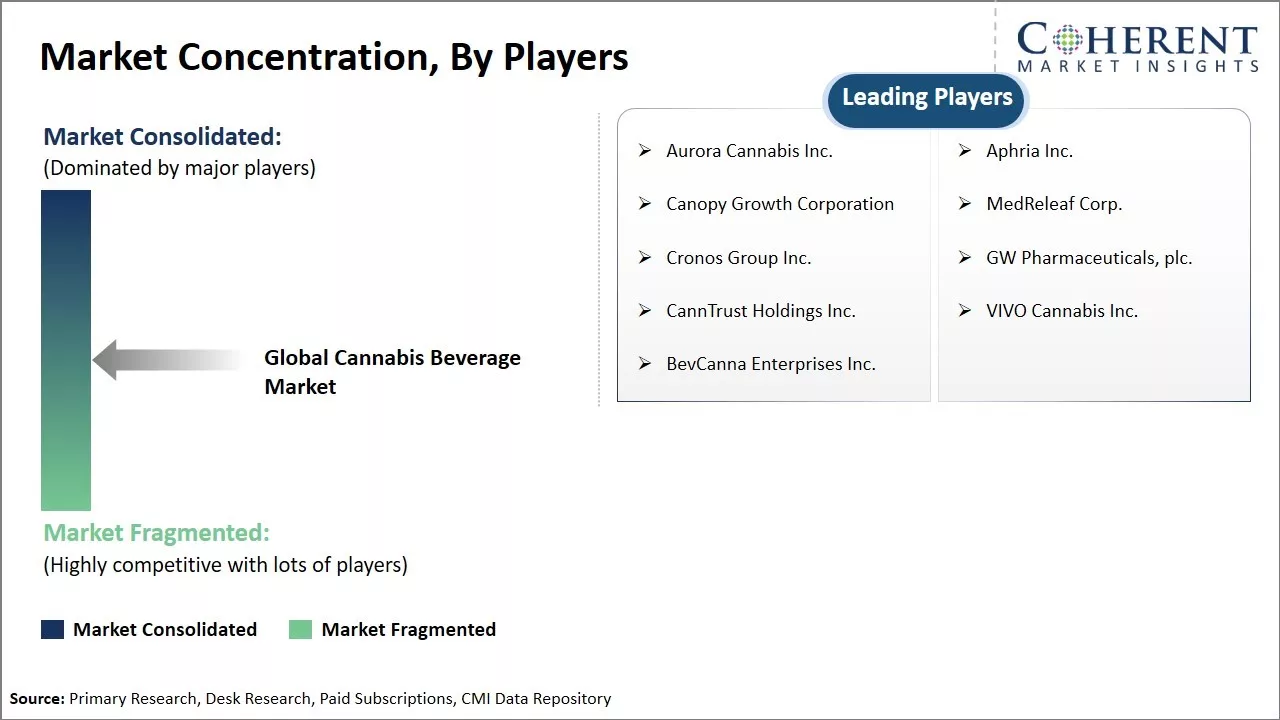
Market Concentration and Competitive Landscape
Segmental Insights
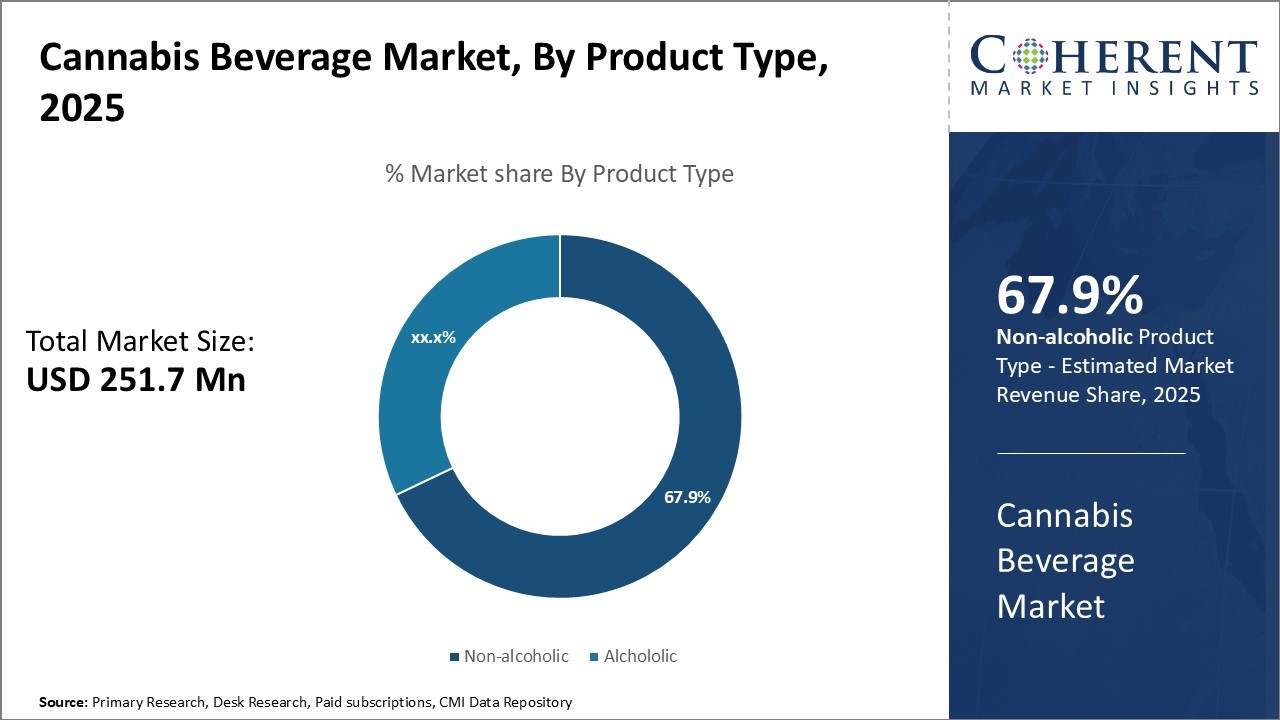
Global Cannabis Beverage Market Insights, By Product Type: Rising Health Consciousness Drives the Non-Alcoholic Segment Growth
In terms of product type, non-alcoholic segment is estimated to contribute 68.9% market share in 2026, due to rising health consciousness among consumers. The non-alcoholic segment is gaining popularity as consumers, especially millennials and generation Z, are increasingly focusing on their health and wellness. People want beverage options that provide relaxation and mood enhancement benefits of cannabis without the intoxicating effects of alcohol. This has boosted demand for cannabis infused drinks that contain no or low calories. The availability of exotic fruit and botanical flavored non-alcoholic beverages appeals to young experimental consumers.
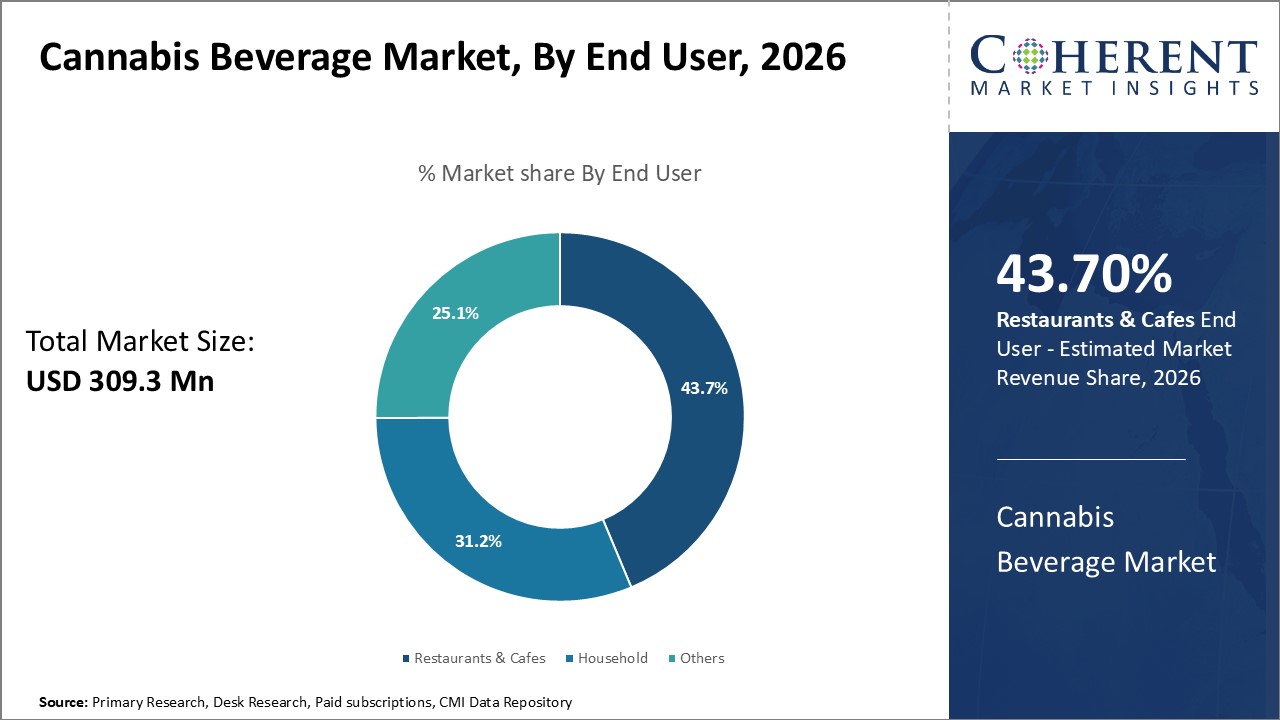
Global Cannabis Beverage Market Insights, By End User: Growing Social Acceptance Drive the Segment
In terms of end user, restaurants & cafes segment is estimated to contribute 43.7% market share in 2026, due to growing social acceptance. As the legalization of cannabis spreads across regions, the social stigma associated with cannabis is waning. More restaurants and cafes are introducing cannabis infused beverages in their menus to leverage its growing demand. The restaurants are promoting the unique effects and taste profiles of various cannabis beverages to attract new customers and enhance guest experience. This helps boost their revenue as customers tend to order extra food and other beverages when incorporating cannabis drinks into their dining experience.
Global Cannabis Beverage Market Insights, By Distribution Channel: Ease of Purchase Drives Online Retail Segment Growth
In terms of distribution channel, online retail segment is estimated to contribute 40.8% market share in 2026, due to consumer convenience. Busy lifestyles leave little time for shopping at physical stores. The ease of purchasing cannabis beverages online from the comfort of home and getting them delivered right at the doorstep resonates well with time-starved consumers. Online retail channels offer a diverse selection of cannabis drinks for customers to choose from as compared to local stores. Websites and mobile apps of cannabis retailers provide detailed information about each product along with reader reviews and ratings to help buyers make an informed choice. This transparent access drive the growth of online retail segment.
Regional Insights
North America Cannabis Beverage Market Trends and Analysis
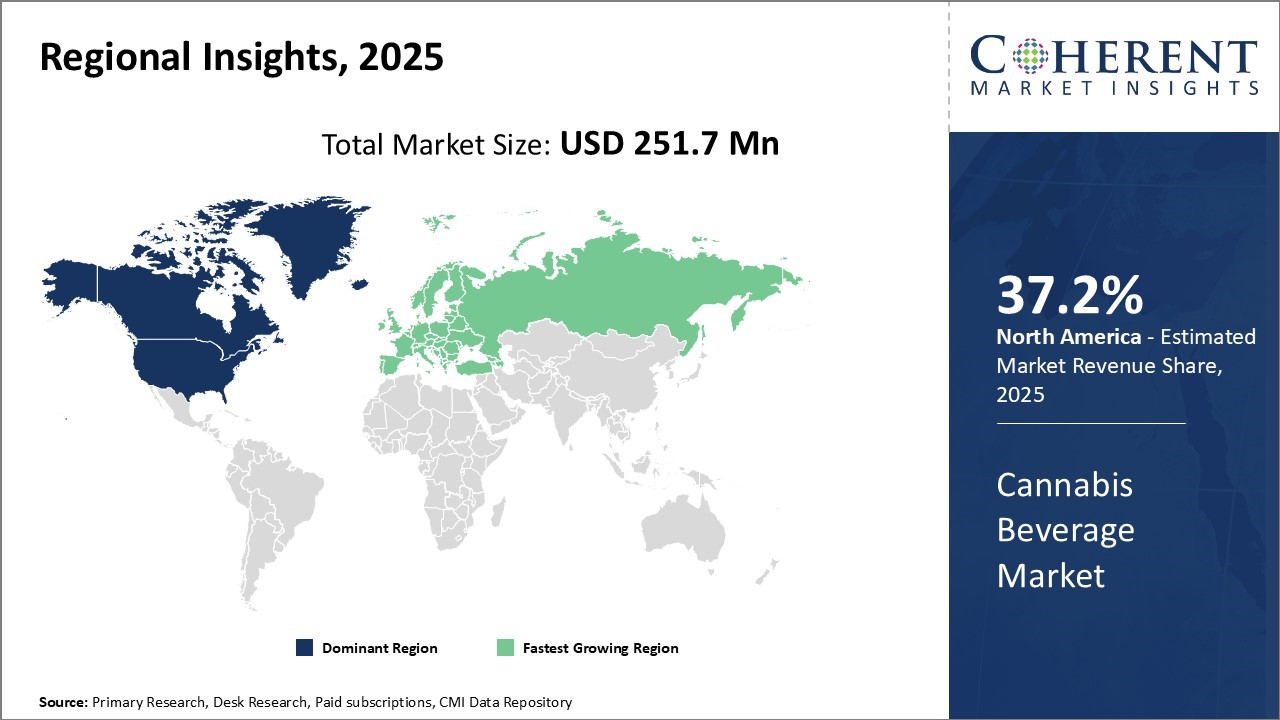
North America represents the largest regional market for cannabis beverages with estimated 37.2% market share in 2026. The U.S., with its massive consumer base and growing range of states having legalized both medical and recreational cannabis use, provides cannabis companies an attractive market to enter. With states like Colorado, Washington, and California being amongst the earliest to enact progressive cannabis laws, the region has gained significant first-mover advantage in this emergent industry.
Major beverage companies have also established facilities in West Coast states, aiding production and supply chain integration. Constellation Brands multi-billion-dollar investments in Canopy Growth are a prime example of such strategic moves aiming to capitalize on increasing demand. This enhances accessibility for cannabis beverages across various outlets in leading U.S. states currently.
Europe Cannabis Beverage Market Trends and Analysis
Among expanding international markets, Europe exhibits immense potential as the fastest growing regional market for cannabis beverages. While medical cannabis is legally accessible in many European nations, regulations continue evolving towards more liberalized frameworks. For instance, Luxembourg became the first country on the continent to legalize recreational cannabis use in 2021, opening up new possibilities.
Countries like Germany have also granted approvals for cannabis flower and extracts to be sold through pharmacies, spurring local industries. Leading firms have already proactively made acquisitions and partnerships in nations like Germany and the U.K. to build local production capabilities and brand presence. The relaxation of policies regarding CBD use across Europe has also helped popularize cannabis infused beverages.
Cannabis Beverage Market Outlook for Key Countries
U.S. Cannabis Beverage Market Trends
The U.S. cannabis beverage market is rapidly expanding, driven by increasing legalization and a strong consumer shift towards non-alcoholic, wellness-focused options. CBD-infused drinks are particularly popular for their therapeutic benefits. Innovation is high, with diverse flavors and precise dosing. Strategic partnerships and expanded distribution, including e-commerce, are fueling growth.
Strategic partnerships between cannabis companies and established beverage brands, alongside the expansion of e-commerce and licensed dispensaries, are further propelling market growth and mainstream acceptance. For instance, in January 2026, Cookies and Green Monké launched hemp-derived THC-infused drinks across ten U.S. states, indicating a push for wider distribution.
China Cannabis Beverage Market Trends
China's cannabis beverage market remains highly restricted due to stringent regulations on cannabis-related products, especially those containing THC. While recreational and medicinal cannabis beverages are largely prohibited for internal consumption, there's a notable focus on research and development, particularly in industrial hemp. China is a significant producer of hemp, and its derivatives, like CBD, are primarily for export. Domestically, CBD products are generally limited to the wellness and beauty sectors, with a strict THC content limit of less than 0.3%.
Germany Cannabis Beverage Market Trends
Germany's cannabis beverage market is growing, propelled by recent legislative changes and increasing social acceptance. The recent legalization of limited recreational cannabis is expected to further boost demand. Companies are actively pursuing mergers and acquisitions, like SynBiotic SE's acquisition of CannaCare Health, to expand their CBD offerings.
Japan Cannabis Beverage Market Trends
Japan's cannabis beverage market is largely centered around CBD-infused products, as THC remains strictly regulated and illegal for recreational use. Despite the overall strict stance on cannabis, there's a growing acceptance of non-psychoactive CBD, particularly in the wellness and therapeutic segments, driven by consumer interest in stress relief, chronic pain management, and sleep support. The Japanese medical cannabis market is showing cautious but steady progress, with regulatory reforms enabling controlled medical applications and increasing clinical research.
For instance, in May 2024, Sunderstorm announced plans to launch KANHA's CBD product lines in Japan. Challenges for the cannabis beverage market in Japan include the lack of clear regulations for CBD products, high production and distribution costs, and potential consumer concerns regarding dosage and long-term health effects.
Pricing Analysis of Cannabis-Infused Beverages
Category | Estimated Retail Cost (USD) |
CBD-Infused Beverage (e.g., water, tea) | ~7.70 per package (Q2 2024 average) |
THC (Hemp-Derived) Beverage (Single) | 5 – 10 per can/bottle; 6-pack at USD 30+ |
THC Beverage (Dispensed Brands: Cann, Wynk, Tilray) | 5 – 10 per unit |
Market Report Scope
Cannabis Beverage Market Report Coverage
| Report Coverage | Details | ||
|---|---|---|---|
| Base Year: | 2025 | Market Size in 2026: | USD 309.3 Mn |
| Historical Data for: | 2020 To 2024 | Forecast Period: | 2026 To 2033 |
| Forecast Period 2026 to 2033 CAGR: | 22.9%2033 Value Projection: | USD 1,310.1 Mn | |
| Geographies covered: |
| ||
| Segments covered: |
| ||
| Companies covered: | Aurora Cannabis Inc., Aphria Inc., Canopy Growth Corporation, MedReleaf Corp., Cronos Group Inc., GW Pharmaceuticals, plc., CannTrust Holdings Inc., VIVO Cannabis Inc., and BevCanna Enterprises Inc. | ||
| Growth Drivers: |
| ||
| Restraints & Challenges: |
| ||
Global Cannabis Beverage Industry News
- In January 2024, Aurora Cannabis Inc. launched three new cannabis-infused drinks that would be first accessible to patients who are veterans. The beverages, which are made by Vacay and Versus and come in Neon Rush, Strawberry Pineapple Tropical Fizz, and Pineapple Coconut Fizz, offer medicinal cannabis users a tasty substitute.
- In January 2024, Texas Original, one of the prominent medical cannabis providers in Texas, launched Elevate, the company's first beverage product. This product's key features include an equal mixture of CBG and THC and the inclusion of other ingredients such as turmeric and ginger juice.
- In May 2024, Tilray Brands, Inc. announced the launch of new cannabis-infused beverages through its brand XMG under two sub-brands: XMG Plus (XMG+) and XMG Zero. As a strategic initiative, the company is focusing on diverse offerings and reshaping the cannabis beverage market with quality and variety.
- In February 2024, the world's largest cannabis beverage manufacturing facility, DeltaBev, launched in Los Angeles, California, with a 45,000-square-foot capacity designed for state-of-the-art processing and packaging of cannabis beverages, including canning, bottling, and ‘mini’ production lines.
Impact of U.S. Tariffs
- Tariff Impact: The Trump administration's tariff policy is significantly increasing costs for cannabis beverage producers, disrupting their supply chains, and squeezing profit margins, due to a 10% baseline tariff and higher surcharges on imports from countries like China (e.g., 34% on tech), the EU (e.g., 20% on hemp extracts), Japan (e.g., 24% on flavorings), and Vietnam (up to 46%).
- Strategic Adaptations: To counter these tariffs, producers are shifting sourcing to USMCA partners (like Canada and Mexico), maximizing research & development (R&D) tax credits, diversifying their supplier base to lower-tariff nations, and engaging in trade lobbying efforts.
- Upcoming Enforcement: A temporary pause on these tariffs has been extended until August 1, 2025, but over 20 nations have been notified of potential tariff increases taking effect on that date.
- Consumer Price Warning: Without proactive supply chain adjustments by producers, consumers could face a substantial price hike of 15% to 30% on cannabis beverages once these tariffs are enforced.
Analyst View
- The cannabis beverage market is not just disrupting alcohol—it’s rewriting the rules of adult social consumption. In California, weed-infused drinks surged 40% in sales in 2024 while beer volumes dropped 5% in parallel. Brands like Cann and Keef have rebranded the drinker’s ritual from “buzzed” to “balanced,” with low-dose 2.5 mg THC cans now outselling stronger 10 mg formats in retail settings. This proves that controlled micro-dosing is the key to winning mainstream palates.
- Retail channel shifts reveal a deeper behavioral transformation: consumers are buying THC seltzers in liquor stores and not dispensaries, normalizing cannabis in traditional beverage aisles. In Minnesota, hemp-derived THC drinks legally entered supermarkets in 2023—within six months, brands like BLNCD and Happi outsold CBD sodas by 2.3x.
Macro-Economic Factors Influencing the Cannabis Beverage Market
Factor | Description | Examples |
Regulatory Liberalization | Global legalization trends for cannabis (both CBD and THC products) are progressively reducing market entry barriers. | Canada's Cannabis Act of 2018 significantly contributed to a projected 12.0% CAGR for the Canadian legal cannabis market from 2025 to 2030, fostering expansion into mainstream retail by firms. |
International Trade & Investment | The development of global supply chains and investments in advanced extraction technologies facilitate greater scalability and export opportunities. | Companies like Cronos Group leverage cross-border sourcing, while regulatory harmonization within the EU supports a projected growth for the European medical cannabis market to €1.2 billion (approximately USD 1.31 billion) by 2027. |
Micro-Economic Factors Influencing the Cannabis Beverage Market
Factor | Description | Examples |
Product Innovation & Differentiation | Advanced formulation techniques, such as nanoemulsion technology, are enhancing bioavailability, taste, and overall product functionality. | Nanoemulsion technology is a key driver for the non-alcoholic segment's growth. Brands like Recess incorporate adaptogens, while Cann utilizes natural sweeteners, appealing to evolving consumer preferences. |
Pricing & Competitive Strategy | Businesses employ a mix of cost leadership and premium pricing strategies to cater to diverse consumer segments. | Economy brands often focus on e-commerce distribution, while premium offerings, such as Tonino Lamborghini CBD coffee, justify higher pricing through an emphasis on perceived health and lifestyle benefits. |
Consumer Behavior & Demand Elasticity | Consumer demand for cannabis beverages is highly responsive to product attributes like flavor, sugar content, and functional benefits. | Approximately 70% of consumers express a preference for low-sugar options. Taste is consistently identified as a paramount factor influencing purchasing decisions, supporting premium pricing. The global cannabis beverage market is projected to reach USD3.86 billion by 2030, largely driven by these consumer preferences. |
Market Segmentation
- Product Type Insights (Revenue, USD Mn, 2021 - 2033)
- Alcoholic
- Non-alcoholic
- End User Insights (Revenue, USD Mn, 2021 - 2033)
- Household
- Restaurants & Cafes
- Others
- Distribution Channel Insights (Revenue, USD Mn, 2021 - 2033)
- Convenience stores
- Hypermarkets
- Specialty Stores
- Online Retail
- Others
- Regional Insights (Revenue, USD Mn, 2021 - 2033)
- North America
- U.S.
- Canada
- Latin America
- Brazil
- Argentina
- Mexico
- Rest of Latin America
- Europe
- Germany
- U.K.
- Spain
- France
- Italy
- Russia
- Rest of Europe
- Asia Pacific
- China
- India
- Japan
- Australia
- South Korea
- ASEAN
- Rest of Asia Pacific
- Middle East & Africa
- GCC Countries
- Israel
- Rest of Middle East & Africa
- Key Players Insights
- Aurora Cannabis Inc.
- Aphria Inc.
- Canopy Growth Corporation
- MedReleaf Corp.
- Cronos Group Inc.
- GW Pharmaceuticals, plc.
- CannTrust Holdings Inc.
- VIVO Cannabis Inc.
- BevCanna Enterprises Inc.
Sources
Stakeholders
- Cannabis Beverage Manufacturers
- Distributors and Retailers
- Industry Experts and Analysts
- Regulatory Authorities
- Others
Magazines
- Beverage Industry Magazine
- BevNet
- High Times
- Cannabis Business Times
- Others
Journals
- Journal of Cannabis Research
- Journal of Agricultural and Food Chemistry
- International Journal of Drug Policy
- Others
Newspapers
- The Financial Times
- The Wall Street Journal
- Bloomberg
- Reuters
- Others
Associations
- National Cannabis Industry Association (NCIA)
- Cannabis Beverage Association
- Beverage Marketing Association
- Other
Public Domain sources
- United States Food and Drug Administration (FDA)
- World Health Organization (WHO)
- United Nations Office on Drugs and Crime (UNODC)
- Centers for Disease Control and Prevention (CDC)
- Others
Proprietary Elements
- CMI Data Analytics Tool
- Proprietary CMI Existing Repository of information for last 8 years
*Definition: Global cannabis beverage market consists of all marijuana-infused drinks including sodas, teas, juices, alcoholic beverages and more containing active cannabinoids like THC and CBD. The demand for these products is growing rapidly as more consumers seek healthier ways to consume cannabis instead of smoking it. Companies in this market develop innovative beverage formulas and products containing precise doses of marijuana compounds for both medical and recreational use.
Get access to 250+ pages report
Every segment, forecast, competitor profile and data table behind the analysis above — available for instant download.
- ESOMAR Member
- ISO 9001:2015 Certified
- D-U-N-S Registered
- GDPR & CCPA Compliant
Missing comfort of reading report in your local language? Find your preferred language:
Transform your Strategy with Exclusive Trending Reports
Frequently Asked Questions
The Cannabis Beverage Market is estimated to be valued at USD 309.3 Mn in 2026, and is expected to reach USD 1,310.1 Mn by 2033.
The CAGR of the Cannabis Beverage Market is projected to be 22.9% from 2026 to 2033.
Growing social acceptance of cannabis and launch of innovative cannabis infused beverages are the major factors driving the growth of global cannabis beverage market.
Stringent regulations regarding THC content in beverages and availability of alternative beverage options are the major factors hampering the growth of global cannabis beverage market.
In terms of product type, non-alcoholic segment is estimated to dominate the market in 2026.
Aurora Cannabis Inc., Aphria Inc., Canopy Growth Corporation, MedReleaf Corp., Cronos Group Inc., GW Pharmaceuticals, plc. CannTrust Holdings Inc., VIVO Cannabis Inc., and BevCanna Enterprises Inc. are the major players in the global cannabis beverage market.
North America is expected to lead the global cannabis beverage market in 2026.