

French Fries Market Size and Forecast — 2026-2033
French Fries Market Size and Forecast – 2026 – 2033
The Global French Fries Market size is estimated to be valued at USD 13.43 billion in 2026 and is expected to reach USD 20.7 billion by 2033, exhibiting a compound annual growth rate (CAGR) of 7.4% from 2026 to 2033.
Overview
The French fries products consist of processed potato products available in frozen, fresh, and ready-to-cook varieties. The product includes straight-cut, crinkle-cut, shoestring, waffle, and specialty seasoned fries supplied to retail, foodservice, fast food chains, and restaurants. These fries undergo pre-frying, freezing, and packaging processes to maintain flavor and shelf-life, catering to the rising global demand for convenient, Western-style fast foods.
Key Takeaways
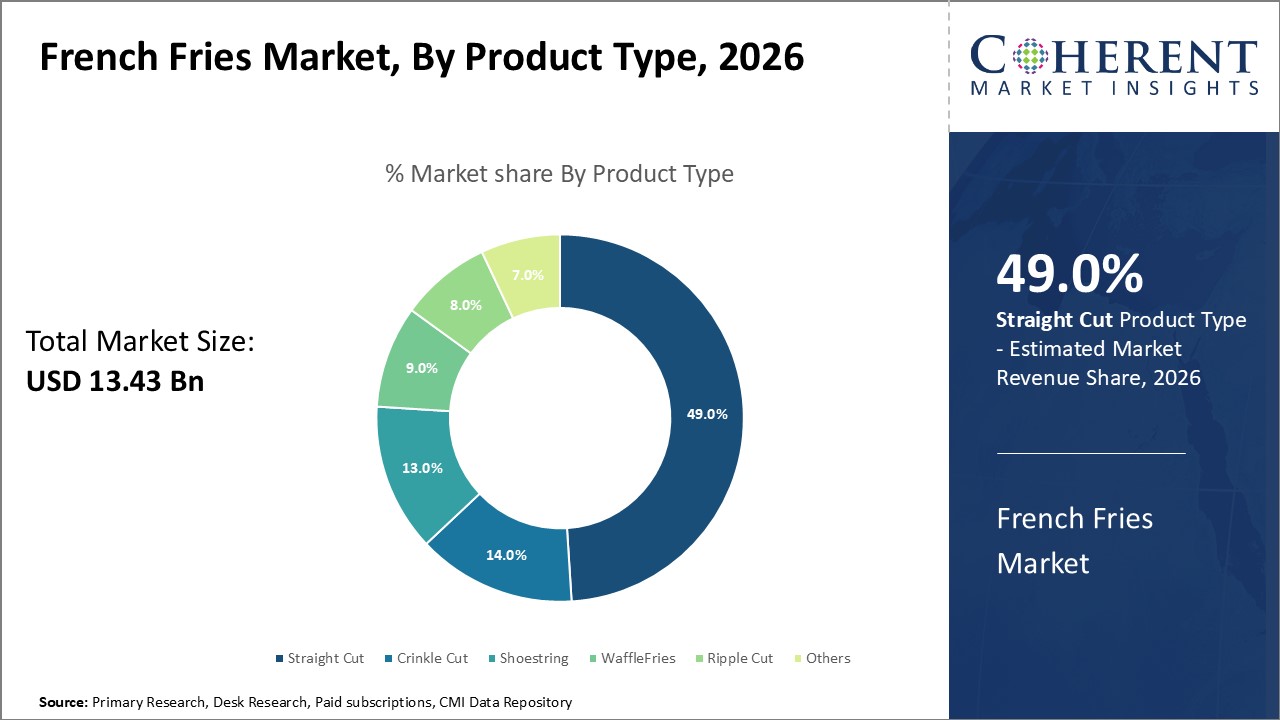
The Straight Cut subsegment dominates the Product Type segment with a commanding 49% market share, attributed to its widespread acceptance and cost-effective production, driving significant market revenue.
The Frozen form leads the Form segment owing to its convenience and longer shelf life, supported by robust distribution networks, influencing overall market size and growth positively.
Supermarkets and hypermarkets dominate the Distribution Channel with an increasing share of 46%, benefiting from consumer trends favoring bulk purchasing and variety.
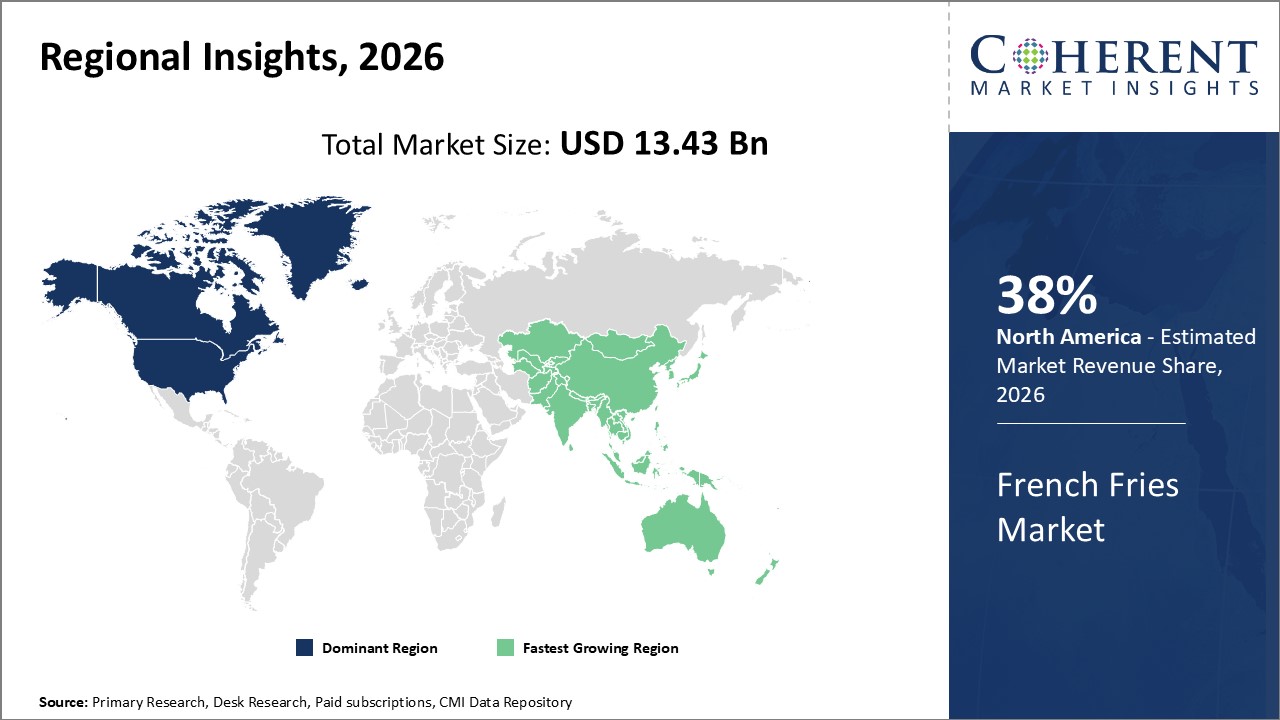
North America holds the dominant region status, accounting for approximately 38% of the market share, propelled by high consumption and advanced agricultural infrastructure.
The Asia Pacific region presents the fastest-growing market with a CAGR of 9.1%, driven by rapid urbanization, increasing disposable income, and the expansion of foodservice chains in countries like India and China.
Europe’s stringent food safety and sustainability policies are reshaping market dynamics, leading to innovation in product development and packaging.
French Fries Market Segmentation Analysis
French Fries Market Insights, By Product Type
Straight Cut dominates the market share with 49%. Straight-cut fries maintain supremacy due to their universal appeal, cost efficiency in production, and versatility across retail and foodservice channels. Their consistent consumer preference ensures their ongoing lead in market revenue contributions. The fastest-growing subsegment is Waffle Fries, which have gained traction in premium and gourmet dining sectors. Their unique texture and higher perceived value have contributed to a growth rate exceeding market average, supported by a recent 14% sales increase in 2025 within high-end quick service restaurants. Crinkle Cut and Shoestring fries remain vital in niche markets and regional preferences.
French Fries Market Insights, By Form
Frozen French Fries benefit from longer shelf life, convenience, and suitability for large-scale foodservice operators and retail consumers demanding easy-to-prepare products. Robust cold chain infrastructure supports this segment’s leadership, with frozen form accounting for the largest revenue slice. The fastest-growing segment is Frozen Ready-to-Cook, which blends convenience with the freshness appeal of ready-made meals. The rising trend towards meal kits and home cooking aids has triggered a 10% annual growth in this subsegment in 2026, particularly in urban markets. Fresh fries are preferred in niche segments emphasizing freshness and local sourcin,g but face logistical challenges in broader adoption.
French Fries Market Insights, By Distribution Channel
Supermarkets and Hypermarkets command dominance due to extensive consumer reach and bulk purchase options, influencing a significant portion of market revenue. This channel’s established infrastructure facilitates the high volume of frozen and packaged French fries demanded by households. Online sales share grew from 8% in 2022 to 15% in 2026, driven by seamless home delivery models and frequent promotional offers from market players. Foodservice channels, while stable, focus increasingly on premium and specialty fries, reflecting market challenges related to changing eating habits.
French Fries Market Trends
The market in 2025-25 reflects accelerated digital penetration with online retail sales increasing nearly twofold, complemented by innovative packaging solutions aimed at reducing environmental impact.
The rise of hybrid retail models combining physical and digital channels also enhances market accessibility, while healthier French fries options, including reduced oil and organic product launches, align with shifting consumer preferences.
For example, McCain Foods introduced a new range of air-fried French fries in 2025 that saw a 21% revenue surge within six months post-launch.
French Fries Market Insights, By Geography
North America French Fries Market Analysis and Trends
In North America, the market captures around 38% of industry share thanks to well-established supply chains, high per capita consumption, and huge foodservice sector investments. The region benefits from advanced agricultural technologies and government initiatives supporting potato farming. Key market companies such as Lamb Weston have consistently expanded production facilities, reinforcing the region’s dominance and stable market dynamics.
Asia Pacific French Fries Market Analysis and Trends
Meanwhile, Asia Pacific exhibits the fastest growth, registering a CAGR of 9.1%, mainly due to rapid urbanization, increasing westernized eating habits, and expanding quick service restaurants across India and China. Favorable trade policies and increasing potato production in countries like India also bolster supply-side capabilities. Leading companies actively partner with regional distributors to enhance market penetration and meet the growing demand for frozen and convenience food offerings.
French Fries Market Outlook for Key Countries
USA French Fries Market Analysis and Trends
The USA stands as a cornerstone of the market, combining immense production capacity with high consumer demand. Major market companies, including J.R. Simplot and McCain Foods, dominate the supply landscape, contributing to the country’s leadership in frozen French fries exports. In 2025, U.S. exports grew by 8%, driven by strong international demand, particularly from Asia Pacific markets. Innovations in food processing such as air frying have been widely adopted by US producers, aligning with health-conscious consumer trends, boosting domestic market revenue and shaping future growth trajectories.
India French Fries Market Analysis and Trends
India’s French Fries market is rapidly evolving, buoyed by rising disposable income and expanding fast-food chains like McDonald’s and Burger King. Domestic production is increasing with improved farming technologies and supply chain investments. Market players have introduced frozen and ready-to-cook French fries adapted to local tastes, facilitating a CAGR of 9.5% in 2025-25. Government programs promoting potato cultivation and value-added processing have enhanced industry resilience, making India a key growth engine within Asia Pacific.
Analyst Opinion
The surge in production capacity across key potato-producing regions has been pivotal to satisfying the rising market demand. For instance, in 2025, major agricultural zones in the USA and Europe reported a 5% year-over-year increase in processing capacities, helping to stabilize supply chains amidst fluctuating raw material costs. Such supply-side indicators emphasize the industry's scalability and its readiness to meet expanding consumption.
Pricing trends have shown resilience despite increased raw material costs; retail prices for frozen French fries rose by an average of 4.5% in 2025, reflecting manufacturers’ efforts to maintain profitability while ensuring competitive positioning. This balanced pricing structure supports steady market revenue growth without deterring consumer interest, demonstrating effective market growth strategies.
The import-export dynamics highlight growing international trade, particularly between North America and the Asia Pacific. Export volumes of frozen French fries from the USA increased by 8% in 2025, notably fulfilling escalating demand in emerging markets such as India and Southeast Asia, where urbanization trends spur convenience food consumption.
Diverse use cases beyond traditional fast food segments have emerged, including ready-to-eat meal kits and premium dining establishments offering gourmet French fries. Data from 2026 indicates that about 23% of total market volume now caters to premium and frozen ready-to-cook segments, reflecting evolving consumer preferences and driving broader market scope.
- Current Industry Events of 2026
- Market Size Estimation
- Regional Breakdown
- Competitive Landscape
- Customer Intelligence
- Segmental Analysis
- Pricing Analysis
- Key Market Drivers, Challenges & Future Trends
- Customized Insights Section
Market Scope
| Report Coverage | Details | ||
|---|---|---|---|
| Base Year: | 2025 | Market Size in 2026: | USD 13.43 billion |
| Historical Data for: | 2020 To 2024 | Forecast Period: | 2026 To 2033 |
| Forecast Period 2026 to 2033 CAGR: | 7.4% | 2033 Value Projection: | USD 20.7 billion |
| Geographies covered: |
| ||
| Segments covered: |
| ||
| Companies covered: | Agristo N.V., Farm Frites International B.V., General Mills, Inc., ConAgra Brands, Inc., PepsiCo Inc., Heinz (Kraft Heinz Company), Simplot Australia Holdings Pty Ltd, JBS S.A., Lamb Weston / Meijer, B&G Foods Inc. | ||
| Growth Drivers: |
| ||
French Fries Market Growth Factors
The increasing global preference for convenient and ready-to-eat food products is a primary growth driver, with the frozen French fries segment capturing significant consumer interest, especially among millennials and working professionals. Rising fast-food chains’ expansion in emerging economies enhances market opportunity, supported by robust supply chain development in potato-growing regions. Technological advancements in processing, such as air frying and reduced oil absorption methods, address market challenges by offering healthier options, thus driving business growth. Additionally, consumer inclination towards specialty cuts and premium varieties fuels diversification in product offerings, contributing to broader market scope. Government policies supporting agricultural improvement and food safety regulations further encourage industry players to innovate and scale operations while maintaining compliance, fostering sustainable market growth. The total market revenue expanded by 7% in 2025 alone, underscoring these growth factors as essential contributors.
French Fries Market Development
In 2025, Eagle Fries (M S International) launched its new line of premium frozen fries made from high-quality Indian potatoes. The product range emphasizes consistent cut quality, improved fry-hold performance, and suitability for QSRs and retail chains, reflecting the company’s strategy to expand India-sourced value-added potato products for global markets.
In mid-2026, Folkland Foods introduced a portfolio of organic frozen fries featuring gourmet flavor variants such as Cajun and Rosemary Garlic. Sourced from certified family-owned farms in the U.S., the launch targets the rising demand for clean-label, chemical-free, and flavor-infused frozen potato snacks, supporting the brand’s positioning in the premium natural foods category.
Key Players
Leading Companies of the Market
Agristo N.V.
Farm Frites International B.V.
General Mills, Inc.
ConAgra Brands, Inc.
PepsiCo Inc.
Heinz (Kraft Heinz Company)
Simplot Australia Holdings Pty Ltd
JBS S.A.
Lamb Weston / Meijer
B&G Foods Inc.
Several leading market companies have focused on vertical integration and strategic acquisitions to optimize supply chain efficiencies and broaden product portfolios. For example, McCain Foods expanded its processing capacities in North America and Europe in 2025 by investing USD 150 million into new frozen product lines, resulting in increased market share and improved export capabilities. Similarly, Lamb Weston’s collaboration with retail giants strengthened its frozen segment presence, driving a 13% increase in revenue in key markets.
French Fries Market Future Outlook
The future of the French fries market remains strong, supported by expanding foodservice sectors, urban lifestyles, and rising demand for convenience foods. Emerging markets in Asia-Pacific, Africa, and Latin America will experience rapid consumption growth as QSR networks expand. Product innovation—such as air-fryer fries, low-oil variants, plant-based coatings, and premium cuts—will cater to evolving health-conscious consumers. Automation in potato processing, precision agriculture for potato farming, and improved cold chain infrastructure will further enhance market efficiency. Additionally, e-commerce and online food delivery will significantly boost at-home consumption.
French Fries Market Historical Analysis
Historically, the French fries market expanded with the global rise of fast-food chains, quick-service restaurants (QSRs), and Western-style dining habits. Frozen fries became mainstream during the late 20th century due to advancements in freezing technology and supply chain logistics. Over the years, foodservice giants like McDonald’s, KFC, and Burger King significantly influenced demand patterns and established global standards for taste, processing, and quality. In retail, the growth of supermarkets and frozen food aisles introduced consumers to convenient, ready-to-cook potato products. Premium and seasoned varieties gained popularity as consumer preferences diversified, particularly in Europe and North America.
Sources
Primary Research Interviews:
Frozen Food Manufacturers
Potato Processors
QSR Buyers
Retail Category Managers
Food Technologists
Databases:
USDA Potato Data
Euromonitor Packaged Foods
UN Comtrade Frozen Vegetables
Magazines:
Frozen Food Europe
Food Processing Magazine
QSR Magazine
Snack Food & Wholesale Bakery
Food Business News
Journals:
Journal of Food Engineering
Food Chemistry
Journal of Food Processing and Preservation
LWT Food Science & Technology
Journal of Agricultural and Food Chemistry
Newspapers:
The New York Times (Food)
The Wall Street Journal (Consumer Goods)
Financial Times (Food Industry)
Reuters Food News,
The Guardian (Food Business)
Associations:
National Frozen & Refrigerated Foods Association
Potato Growers Associations
Food Processing Suppliers Association
QSR Industry Associations
European Potato Processors Association
Get access to 250+ pages report
Every segment, forecast, competitor profile and data table behind the analysis above — available for instant download.
- ESOMAR Member
- ISO 9001:2015 Certified
- D-U-N-S Registered
- GDPR & CCPA Compliant
Missing comfort of reading report in your local language? Find your preferred language:
Transform your Strategy with Exclusive Trending Reports
Frequently Asked Questions
The dominant players include McCain Foods Ltd., Lamb Weston Holdings, and J.R. Simplot Company, which have leveraged extensive production capacities and distribution networks to maintain leading market shares.
The French Fries market is projected to reach USD 20.7 billion by 2033, growing at a CAGR of 7.4% from USD 13.43 billion in 2026, driven by rising consumer demand and product innovation.
The foodservice industry, especially fast-food chains and ready-to-eat meal segments, offers the largest growth opportunity due to increasing consumer preference for convenience foods.
The market will witness increased focus on healthier product variants, digital retail expansion, and sustainable packaging, with a shift towards premium and specialty French fries variants.
The competitive landscape is characterized by consolidation, vertical integration, and innovation-focused strategies, while market challenges include commodity price volatility and regulatory compliance.
Leading market companies pursue strategic partnerships, capacity expansions, product diversification, and increased investment in logistics to improve market reach and consumer engagement.