

Global Cleanroom Consumables Market Size and Share Analysis - 2026 to 2033
Global cleanroom consumables market is estimated to be valued at USD 12.88 Bn in 2026 and is expected to reach USD 20.14 Bn by 2033, exhibiting a compound annual growth rate (CAGR) of 6.6% from 2026 to 2033.
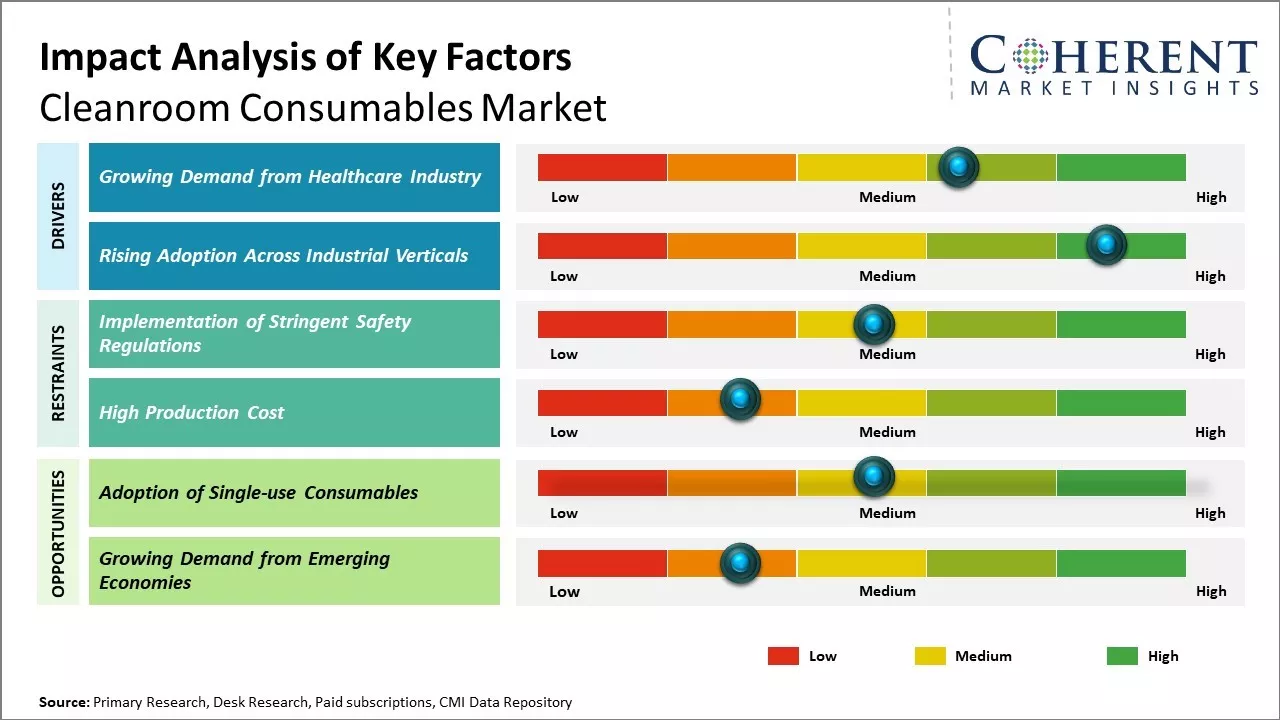
Key Takeaways
- By Product Type, Cleanroom Apparel Segment is estimated to hold 35% of the market share in 2026, owing to the critical importance of protecting sterile environments.
- Based on End User, Hospitals and Clinics Segment is estimated to hold 56.2% of the market share in 2026, due to stringent infection control mandates.
- North America remains the dominant region in the global cleanroom consumables market and is estimated to hold 34.4% of the market share in 2026.
Market Overview
The cleanroom consumables market is driven primarily by increased use in pharmaceuticals, biotech, semiconductors, and advanced manufacturing industries. Rising demands for contamination-free manufacturing areas, heightened regulatory compliance needs (such as cGMP and ISO), and increased investment in high-precision industries are fueling the use of gloves, garments, wipes, and face masks.
Increasing concerns regarding cross-contamination, particularly among life sciences and healthcare industries, are also driving the usage of disposable and anti-static cleanroom products.
Current Events and Its Impact on Cleanroom Consumables Market
Current Events | Description and its impact |
klean Nara Launches Biodegradable Cleanroom Wipes
|
|
BioTechSafe Solutions Launches Sensor-Embedded Cleanroom Garments
|
|
Pipeline Analysis
The cleanroom consumables industry is witnessing continuous innovation fueled by increasing need in pharmaceutical, biotechnology, semiconductors, and advanced manufacturing industries. The future product development pipeline is targeting better contamination control, user comfort, and sustainability. Key areas of innovation are biodegradable cleanroom apparel, anti-static and lint-free materials, and better particle filtration in wipes and masks.
Manufacturers are also creating intelligent consumables, including sensor-equipped gloves and clothing that track environmental exposure or operator compliance. Antimicrobial coating and washable, reusable cleanroom clothing is gaining acceptance, especially in Europe and North America where cost-effectiveness and sustainability are driving market forces.
In 2024–2025, various companies—like DuPont, Kimberly-Clark, and Ansell—have begun R&D programs to develop next-generation cleanroom equipment optimized for ISO Class 1 to Class 5 facilities. Products include next-generation nitrile gloves that provide added tactility along with chemical resistance and ultra-low-lint polyester wipes used for photonics and microelectronics applications.
Collectively, the pipeline reflects a strong focus on high-performance, regulatory-driven, and environmentally friendly products, with future cleanroom consumables not only responding to shifting industry norms but also complementing environmental and operational goals across multiple areas of high-precision manufacturing.
- Current Industry Events of 2026
- Market Size Estimation
- Regional Breakdown
- Competitive Landscape
- Customer Intelligence
- Segmental Analysis
- Pricing Analysis
- Key Market Drivers, Challenges & Future Trends
- Customized Insights Section
Patent Landscape
The cleanroom consumables industry has a keen emphasis on anti‑static products and pre‑saturated cleaning technology. An important early patent, US 5,736,469 (1998), is for anti‑static products such as wipes, clothing, and stationery that reduce particulate contamination and static discharge in semiconductor and pharmaceutical environments. This initial idea remains at the heart of contemporary consumables design.
From this, US 11,420,170 (2022) presents a new cleaning device with pre‑saturated wipers contained in solvent-safe packages. The wipers are designed to minimize operator error, contamination potential, and safety hazards through the standardization of chemical dilution and application in controlled environments.
Another dominant patent family, exemplified by application US 20010000769 (2001), integrates anti‑static fabrics for use throughout gloves, clothing, stationery, and wipes, helping to fortify cross-category contamination control.
Today's patent activity is shifting towards environmentally friendly and intelligent consumables. New filings investigate biodegradable cleanroom wipes made from renewable sources and sensor-enabled wearables that can monitor the environment. These innovations follow trends in environmental stewardship and contamination control more broadly.
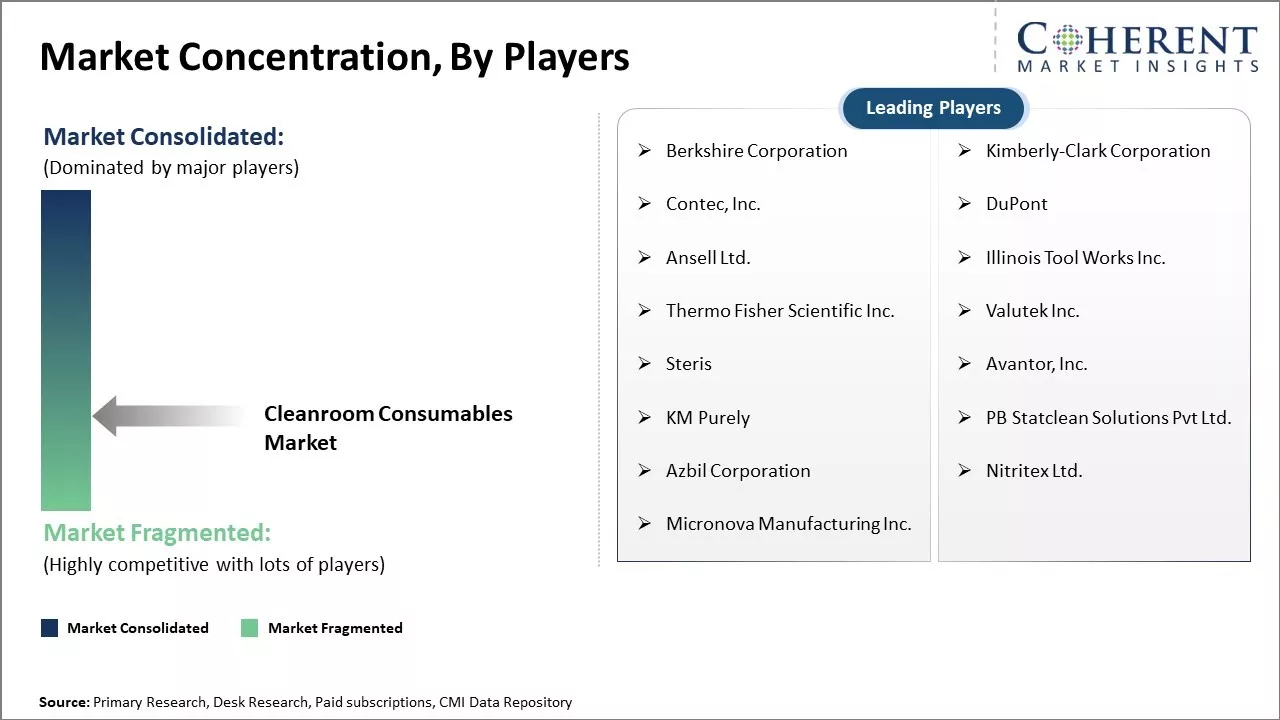
Market Concentration and Competitive Landscape
Segmental Insights
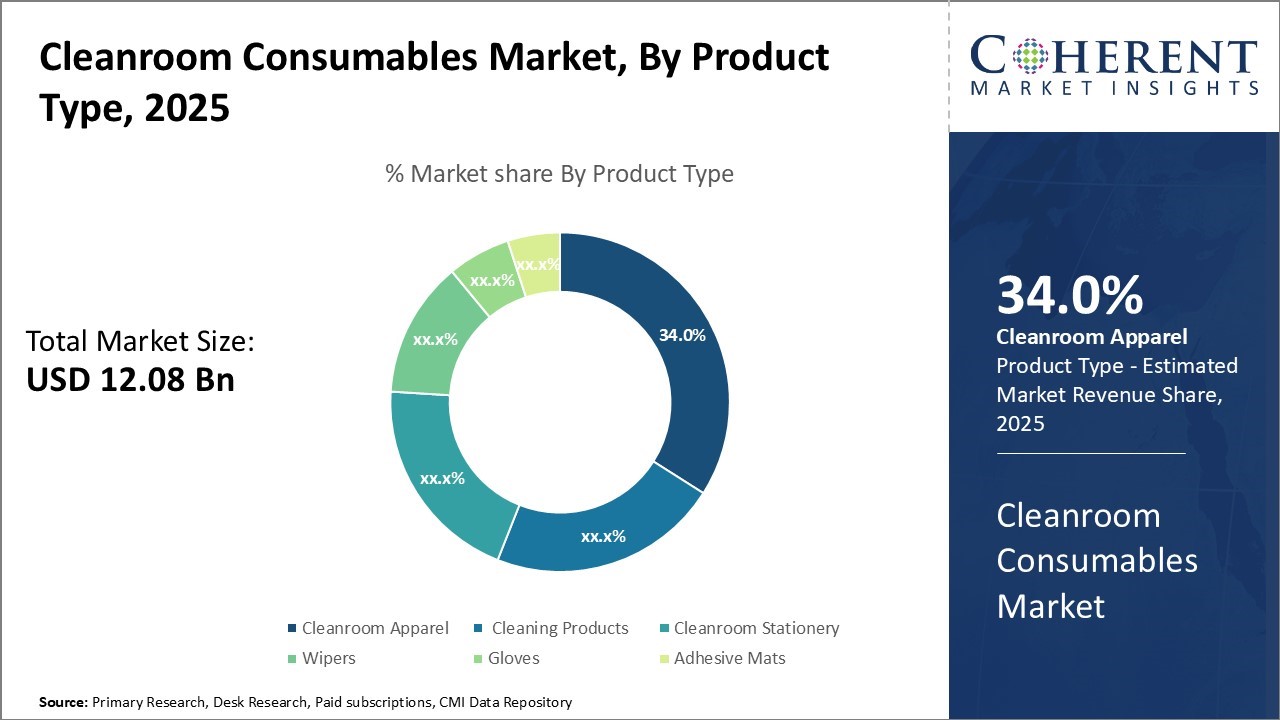
Cleanroom Consumables Market Insights, By Product Type: Cleanroom Apparel Serves as a Critical Shield Against Contamination, Ensuring Sterile Integrity in High-Risk Environments
In terms of product type, the cleanroom apparel segment is estimated to hold 35% of the market share in 2026, owing to the critical importance of protecting sterile environments. Cleanroom suits, coveralls, frocks, and boots are essential personal protective equipment worn by operators, technicians, and clinicians working within controlled cleanroom facilities.
High-risk tasks like pharmaceutical manufacturing, medical device production, and surgery preparation require stringent avoidance of contaminants introduced through skin cells or clothing fibers. Cleanroom apparel acts as the first line of defense against particulates and microbes.
Tightly woven fabrics engineered to be breathable yet impenetrable form a reliable barrier, preventing exchange between sterile inner chambers and potentially contaminated surfaces outside. Replaceable outer layers trap loose hairs and dust while isolating sterile inner layers. Feet, wrists, and hoods are fully covered to block all entry points.
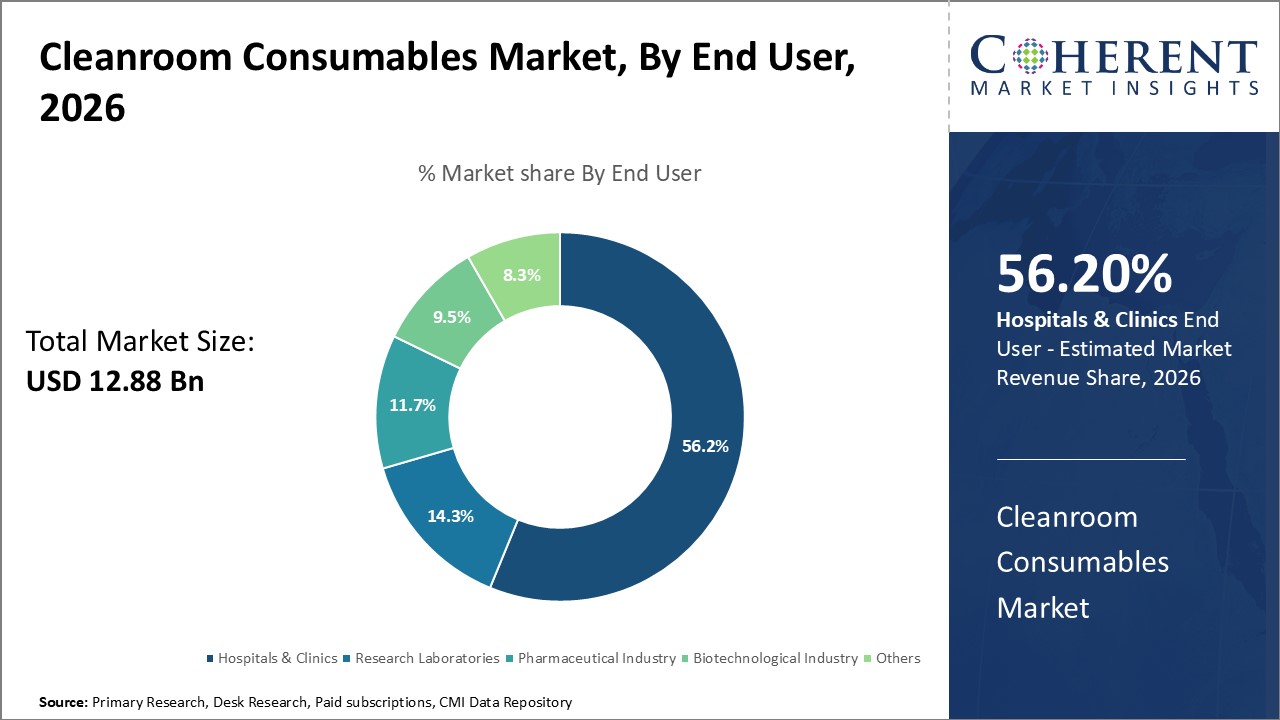
Cleanroom Consumables Market Insights, By End User: Hospitals and Clinics Dominance is Driven by Stringent Infection Control Mandates
In terms of end user, the hospitals and clinics segment are estimated to hold 56.2% of the market share in 2026 owing to stringent infection control mandates. Operating theatres, oncology wards, and neonatal intensive care units all require meticulous cleanroom standards to avoid microbial contamination that can turn deadly.
Surgical site, bloodstream, and respiratory infections severely impact patient outcomes and operational costs if not rigorously prevented. The imperative of infection control amplifies demand within healthcare over alternative end users. Ongoing innovation against drug-resistant bugs further prioritizes sterile techniques. With patient safety paramount and regulations inflexible, hospitals dominate cleanroom consumables consumption to maintain environments conducive to healing unimpeded by preventable healthcare-associated infections.
Regional Insights
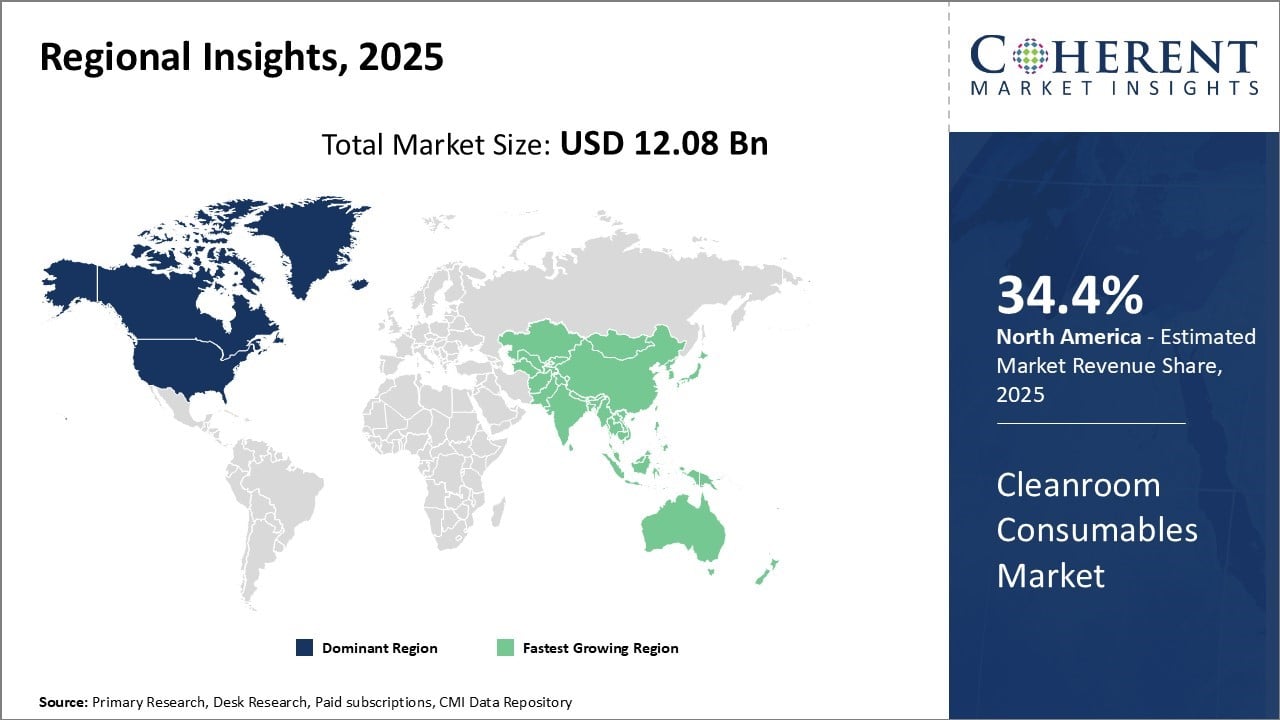
North America Cleanroom Consumables Market Analysis and Trends
North America remains the dominant region in the global cleanroom consumables market and is estimated to hold 34.4% of the market share in 2026. With the presence of major pharmaceutical and biotechnology industries, the demand for cleanroom consumables has been consistently high over the years. The region is home to many large medical device manufacturers and R&D facilities that require cleanroom consumables for developing new products and ensuring product safety.
Strong emphasis on healthcare and regulatory compliance regarding manufacturing norms along with technological advancements have kept the need for high quality cleanroom consumables elevated. The pricing in the region is also stable due to established supply chains and competition among local and international suppliers striving to cater to demanding quality standards of customers.
Asia Pacific Cleanroom Consumables Market Analysis and Trends
Asia Pacific has emerged as the fastest growing market for cleanroom consumables globally. Countries like China, India, Japan, and South Korea have built a robust manufacturing infrastructure for pharmaceuticals, medical devices as well as electronics industries in recent times. Local manufacturing is rising in these countries to address domestic demand as well as tap export opportunities arising from global trade arrangements. This has substantially increased the requirement for cleanroom consumables.
Imports have also grown significantly as manufacturers strive to ensure consistency in quality and reliability of supply. However, domestic supplier base is amplifying with emerging players offering cost-competitive products. This has made Asia Pacific an attractive hub for both exports and setting up manufacturing sites by multinational corporations.
Governments are also supporting the establishment of industry zones and infrastructure to encourage local manufacturing and job creation. With expanding industry footprint and ongoing investments, the growth momentum of the cleanroom consumables market is expected to remain high in the Asia Pacific region over the coming years.
United States Cleanroom Consumables Market Analysis and Trend
The U.S. leads the cleanroom consumables market with its strong pharmaceutical, biotech, and semiconductor industries. Low R&D budgets, strict regulatory standards (FDA, USP), and requirements for contamination-free environments drive innovation and application of cleanroom gloves, apparel, and wipes.
China Cleanroom Consumables Market Analysis and Trend
China is rapidly emerging as not just a dominant producer but also a consumer of cleanroom consumables. With government incentives for electronics manufacturing, pharmaceuticals, and healthcare, China's cleanroom community is expanding, fueling demand for cost-effective consumables in quantity.
Germany Cleanroom Consumables Market Analysis and Trend
Germany dominates the European market due to its robust pharmaceutical, medical device, and automotive industries. Strict manufacturing precision standards and compliance with EU GMP standards encourage widespread use of premium-quality cleanroom consumables, particularly in ISO Class 5 and above facilities.
Market Report Scope
Cleanroom Consumables Market Report Coverage
| Report Coverage | Details | ||
|---|---|---|---|
| Base Year: | 2025 | Market Size in 2026: | USD 12.88 Bn |
| Historical Data for: | 2020 To 2024 | Forecast Period: | 2026 To 2033 |
| Forecast Period 2026 to 2033 CAGR: | 6.6% | 2033 Value Projection: | USD 20.14 Bn |
| Geographies covered: |
| ||
| Segments covered: |
| ||
| Companies covered: | Berkshire Corporation, Kimberly-Clark Corporation, Contec, Inc., DuPont, Ansell Ltd., Illinois Tool Works Inc., Thermo Fisher Scientific Inc., Valutek Inc., Steris, Avantor, Inc., KM Purely, PB Statclean Solutions Pvt Ltd., Azbil Corporation, Nitritex Ltd., and Micronova Manufacturing Inc. | ||
| Growth Drivers: |
| ||
| Restraints & Challenges: |
| ||
Cleanroom Consumables Market Driver
- Growing Demand from Healthcare Industry
The demand for cleanroom consumables is being driven significantly by their increasing use in the healthcare industry. Cleanrooms are essential in hospitals and healthcare facilities to manufacture sterile medical devices and pharmaceutical products. They are also used for performing surgeries and other medical procedures that require highly controlled environments.
With growing healthcare expenditures and expanding medical infrastructure in developing nations, more hospitals and clinics are being established which is translating to higher volume of sterile supplies and devices needed. Also, the ageing population in major economies has led to rising cases of chronic diseases that require frequent medical treatments and invasive surgeries. This is accelerating the setup of specialized healthcare facilities as well as the upgrade of existing ones.
With growing regulatory norms regarding hygiene and contamination control in healthcare environments, establishments are compelled to implement advanced cleanroom technologies. This is favoring the sale of critical cleanroom consumables like wipes, coveralls, gloves, etc. that help in maintaining stringent sterility and cleanliness standards. Particularly for developing countries, higher disease occurrence coupled with increasing healthcare access for citizens is driving significant market potential.
In July 2024, Ecolab launched a new line of plastic-free disinfectant wipes specifically designed for healthcare cleanroom environments. These wipes meet EPA registration standards and offer a 1-minute kill time for a broad spectrum of pathogens.
- Rising Adoption Across Industrial Verticals
In addition to the healthcare industry, cleanroom consumables are witnessing wider adoption across other key industrial domains as well which is reflecting positively on their market growth. The semiconductor and electronics sector are one of the major end users due to extensive reliance on cleanroom consumables for chip manufacturing. Continuous technological advancements have made electronics miniaturization common requiring extreme cleanliness levels during production that involve delicate processes.
Cleanrooms hence form an indispensable part of semiconductor facilities. Similarly, growing applications of nanotechnology has intensified the need for contamination-free work environments. Apart from tech industries, regulated markets like food and beverages and pharmaceuticals rely heavily on cleanrooms for products approved by stringent quality certifications. Their production is incomplete without the use of cleanroom consumables.
Furthermore, burgeoning industries including automotive and aerospace also employ cleanroom techniques. All these end-use applications along with ongoing projects of modern facility expansions by manufacturing units worldwide are driving steady demand for requisite cleanroom products. Automation too is facilitating increased cleanroom supplies adoption across diverse industrial verticals.
Cleanroom Consumables Market Opportunity
Adoption of Single-use Consumables
The cleanroom consumables market has witnessed a paradigm shift over the past few years, moving away from traditional reusable products towards more sustainable single-use consumables. With heightened focus on hygiene and infection control across industries like pharmaceuticals, biotechnology and medical devices, the convenience and safety of single-use consumables make them particularly appealing going forward.
The transition to single-use is driven by their ability to streamline operations and optimize workflow inside cleanrooms. Not having to sterilize and validate reusable products saves considerable time and cuts down on operational expenses. It also eliminates the downtime required for cleaning and maintenance of reusable items. This provides greater flexibility to companies and bolsters productivity. With patent cliffs hitting many large drug molecules, single-use technologies help drug makers maintain production efficiencies and get products to market faster. Their advantages are especially pronounced for smaller batch commercial manufacturing and facility or production line changeovers.
Cleanroom Consumables Market Key Developments
- In July 2025, Helapet launched a redesigned website to showcase its expanded range of medical consumables, supporting applications in oncology, nutrition, and sterile drug preparation. The update features improved navigation, high-resolution product imagery, and a streamlined user experience, reinforcing Helapet’s commitment to innovation and customer engagement in contamination-sensitive healthcare environments.
- In September 2025, Antistat and Integrity Cleanroom announced a strategic merger, combining their expertise in ESD protection and cleanroom consumables. The union strengthens their global presence and enhances product offerings for contamination-sensitive industries such as pharmaceuticals, electronics, and aerospace. Customers can expect streamlined services, expanded inventory, and improved supply chain resilience
Key Takeaways of Analyst
- The global cleanroom consumables market is poised to experience healthy growth over the coming years. North America currently dominates the market due to stringent regulations and the growing pharmaceutical industry. However, Asia Pacific is expected to emerge as the fastest growing region with China and India as major markets.
- High costs associated with setting up and maintaining cleanroom facilities can hinder the market growth. Additional expenses include frequent product replacement and operator training. Lack of compliance monitoring in developing nations also poses a challenge.
- Increasing outsourcing of manufacturing activities to Asian countries presents lucrative opportunities. Rising investments by major players in emerging markets will further assist market penetration. Advancements in material science are leading to the development of more effective protective apparel, wipes, and disposable products, attracting more end users.
Market Segmentation
- Product Type Insights (Revenue, USD Bn, 2026 - 2033)
- Cleanroom Apparel
- Coveralls
- Frocks
- Shoecovers
- Bouffants
- Face mask
- Others
- Cleaning Products
- Cleanroom Mops
- Cleaning Chemicals
- Validation Swabs
- Others
- Cleanroom Stationery
- Adhesive Pads
- Binders
- Others (Clipboards, Labels)
- Wipers
- Gloves
- Adhesive Mats
- Cleanroom Apparel
- End User Insights (Revenue, USD Bn, 2026 - 2033)
- Hospitals and Clinics
- Research Laboratories
- Pharmaceutical Industry
- Biotechnological Industry
- Others
- Regional Insights (Revenue, USD Bn, 2026 - 2033)
- North America
- U.S.
- Canada
- Latin America
- Brazil
- Argentina
- Mexico
- Rest of Latin America
- Europe
- Germany
- U.K.
- Spain
- France
- Italy
- Russia
- Rest of Europe
- Asia Pacific
- China
- India
- Japan
- Australia
- South Korea
- ASEAN
- Rest of Asia Pacific
- Middle East
- GCC Countries
- Israel
- Rest of Middle East
- Africa
- South Africa
- North Africa
- Central Africa
- North America
- Key Players Insights (Revenue, USD Bn, 2021 - 2033)
- Berkshire Corporation
- Kimberly-Clark Corporation
- Contec, Inc.
- DuPont
- Ansell Ltd.
- Illinois Tool Works Inc.
- Thermo Fisher Scientific Inc.
- Valutek Inc.
- Steris
- Avantor, Inc.
- KM Purely
- PB Statclean Solutions Pvt Ltd.
- Azbil Corporation
- Nitritex Ltd.
- Micronova Manufacturing Inc.
Sources
Primary Research Interviews
- Cleanroom Equipment Manufacturers
- Cleanroom Consumables Suppliers and Distributors
- Pharmaceutical and Biotechnology Companies
- Semiconductor Industry Representatives
- Others
Databases
- FDA (Food and Drug Administration) Database
- WHO (World Health Organization) Global Health Observatory
- Semiconductor Industry Association (SIA) Database
- ISO (International Organization for Standardization) Standards Database
- Others
Magazines
- Cleanroom Technology Magazine
- Pharmaceutical Manufacturing Magazine
- Semiconductor Digest
- Contamination Control Magazine
- Others
Journals
- Journal of Pharmaceutical Sciences
- IEEE Transactions on Semiconductor Manufacturing
- Pharmaceutical Technology Journal
- Others
Newspapers
- Financial Times
- The Wall Street Journal
- Reuters Business News
- Bloomberg Business
- Others
Associations
- International Association for Contamination Control (IACCS)
- Pharmaceutical Research and Manufacturers of America (PhRMA)
- Semiconductor Equipment and Materials International (SEMI)
- Institute of Environmental Sciences and Technology (IEST)
- Others
Public Domain Sources
- U.S. Securities and Exchange Commission (SEC) Filings
- Company Annual Reports and Investor Presentations
- Government Statistical Offices
- World Bank Open Data
- Others
Proprietary Elements
- CMI Data Analytics Tool
- Proprietary CMI Existing Repository of information for last 8 years
om Equipment Manufacturers
- Cleanroom Consumables Suppliers and Distributors
- Pharmaceutical and Biotechnology Companies
- Semiconductor Industry Representatives
- Others
Databases
- FDA (Food and Drug Administration) Database
- WHO (World Health Organization) Global Health Observatory
- Semiconductor Industry Association (SIA) Database
- ISO (International Organization for Standardization) Standards Database
- Others
Magazines
- Cleanroom Technology Magazine
- Pharmaceutical Manufacturing Magazine
- Semiconductor Digest
- Contamination Control Magazine
- Others
Journals
- Journal of Pharmaceutical Sciences
- IEEE Transactions on Semiconductor Manufacturing
- Pharmaceutical Technology Journal
- Others
Newspapers
- Financial Times
- The Wall Street Journal
- Reuters Business News
- Bloomberg Business
- Others
Associations
- International Association for Contamination Control (IACCS)
- Pharmaceutical Research and Manufacturers of America (PhRMA)
- Semiconductor Equipment and Materials International (SEMI)
- Institute of Environmental Sciences and Technology (IEST)
- Others
Public Domain Sources
- U.S. Securities and Exchange Commission (SEC) Filings
- Company Annual Reports and Investor Presentations
- Government Statistical Offices
- World Bank Open Data
- Others
Proprietary Elements
- CMI Data Analytics Tool
- Proprietary CMI Existing Repository of information for last 8 years
Get access to 250+ pages report
Every segment, forecast, competitor profile and data table behind the analysis above — available for instant download.
- ESOMAR Member
- ISO 9001:2015 Certified
- D-U-N-S Registered
- GDPR & CCPA Compliant
Missing comfort of reading report in your local language? Find your preferred language:
Transform your Strategy with Exclusive Trending Reports
Frequently Asked Questions
The Cleanroom Consumables Market size is estimated to be valued at USD 12.88 Bn in 2026, and is expected to reach USD 20.14 Bn by 2033.
The CAGR of the Cleanroom Consumables industry is projected to be 6.6% from 2026 to 2033.
Growing demand from healthcare industry and rising adoption across industrial verticals are the major factors driving the growth of the global market.
Implementation of stringent safety regulations and high production costs are the major factors hampering the growth of the cleanroom consumables industry.
In terms of product type, cleanroom apparel is estimated to dominate the market revenue share in 2026.
Berkshire Corporation, Kimberly-Clark Corporation, Contec, Inc., DuPont, Ansell Ltd., Illinois Tool Works Inc., Thermo Fisher Scientific Inc., Valutek Inc., Steris, Avantor, Inc., KM Purely, PB Statclean Solutions Pvt Ltd., Azbil Corporation, Nitritex Ltd., and Micronova Manufacturing Inc. are the major players.
North America is expected to lead the global market.