

Global Patient Monitoring Devices Market Size and Forecast – 2026 To 2033
The global patient monitoring devices market is expected to grow from USD 55,400.2 Mn in 2026 to USD 96,080.3 Mn by 2033, registering a compound annual growth rate (CAGR) of 8.2% from 2026 to 2033. The patient monitoring devices market is poised for significant expansion, fueled by the soaring burden of chronic diseases such as cardiovascular disorders, diabetes, obesity, and chronic respiratory disorders, which demand continuous monitoring and sustained management.
According to the World Health Organization, non-communicable diseases (NCDs) have been responsible for over 43 million deaths worldwide, representing 75% of all deaths unrelated to pandemics. The mortality rate due to NCDs was about 18 million deaths per year before the age of 70 years, with about 82% of such early deaths occurring in developing countries.
(Source: World Health Organization)
Additionally, according to the Centers for Disease Control and Prevention, three in four American adults have at least one chronic condition, and over half have two or more chronic conditions. Additionally, over 90% of adults aged 65 and above are affected by at least one chronic disease, reinforcing the need for long-term wearable healthcare devices in the U.S.
(Source: Centers for Disease Control and Prevention)
Key Takeaways of the Global Patient Monitoring Devices Market
- Respiratory and anesthesia monitors are projected to hold 24.0% of the global patient monitoring devices market share in 2026, making it the dominant device type segment, significantly penetrated in North America attributed to the high volume of surgeries (according to the American College of Surgeons, over 15 million surgical procedures are performed annually in the U.S.) and a rise in respiratory disorders with advanced monitoring systems being commonly used in U.S. and Canada hospitals and ambulatory surgical centers. Stringent patient safety rules, a sound health-care infrastructure, and the increasing adoption of continuous monitoring in anesthesia administration and critical care procedures make North America the topmost regional market for this segment. For instance, according to the American Society of Anesthesiologists (ASA), oxygenation, ventilation, circulation, and temperature must be monitored at all times during anesthesia administration, hence contributing significantly towards the increased demand for respiratory and anesthesia monitoring systems. (Source: American Society of Anesthesiologists)
- Hospitals are projected to hold 57.2% of the global patient monitoring devices market share in 2026, making it the dominant end user segment, with North America holding a substantial share owing to widespread hospital facilities and its higher patient admission rates along with the growing implementation of connected patient monitoring systems in various departments such as intensive care units, emergency department and inpatient departments. With growing chronic disease burden and need for real-time patient monitoring along with increasing investments in digital health infrastructure (such as the U.S. spending approximately USD 4.9 trillion on healthcare in 2023, accounting for 17.6% of the national GDP), the region continues to hold its position on the top. For instance, according to the American Hospital Association (AHA), there are more than 6,100 hospitals in the U.S, resulting in a high need for sophisticated patient-monitoring devices for monitoring patients continuously and managing critical care. (Source: American Hospital Association)
- North America maintains its dominance with an expected share of 42.1% in 2026, attributed to stringent regulatory framework surrounding patient safety in the region (such as U.S. Food and Drug Administration (FDA) medical device regulations, Health Insurance Portability and Accountability Act (HIPAA) compliance standards, and Centers for Medicare & Medicaid Services (CMS) patient care quality requirements), a high level of healthcare spending, and rapid adoption of AI-based monitoring systems across acute and post-acute care settings. The strong market growth in the region is further being bolstered by the existence of large healthcare technology players and increasing investments in digital hospital infrastructure. For instance, according to the Centers for Medicare & Medicaid Services (CMS), U.S. health care spending grew 7.2% in 2024, reaching USD 5.3 trillion or USD 15,474 per person, supporting substantial investments in state-of-the-art patient monitoring systems within healthcare organizations. (Source: Centers for Medicare & Medicaid Services)
- Europe is expected to exhibit the fastest growth with a contribution of 23.2% share in 2026, due to growing initiatives by governments to drive digital health adoption (such as the European Health Data Space (EHDS), Germany’s Digital Healthcare Act (DVG), France’s Ma Santé 2022 strategy, and the U.K.’s NHS Digital Transformation Programme) and increasing use of remote patient monitoring in public healthcare systems. The adoption of smart medical devices is increasing in the region to alleviate the pressure from hospitals and for efficient long-term management of patients. For instance, European Commission launched a European Health Data Space (EHDS) initiative to enhance digital health systems and enhance data sharing, and interoperability in EU member states which should speed up implementation of connected patient monitoring systems. (Source: European Commission)
- Expansion of AI-Integrated Predictive Monitoring Systems: The continued advancement of smart devices to monitor patients, using AI and predictive analytics are fueling the growth of the market. Smart monitoring devices can now be used to sense signs of impending patient decline in the early stages of deterioration to allow for early clinical action, minimizing the need for ICU beds and decreasing readmissions back into hospital. The uptake of AI wearable devices and bedside monitoring tools in critical and home care sectors, among others, is accelerating the market for innovative patient monitoring devices.
- Rising Demand for Monitoring Solutions in Ambulatory Surgical Centers (ASCs): The increase in outpatient and minimally invasive surgery will rise the requirement of small and portable devices for patient monitoring in ambulatory surgical centers. The monitoring systems that monitor anesthetic delivery and post-operative patient progress and vital signs within ambulatory surgical centers (ASCs) must maintain efficiency and lower healthcare costs. The increase in global infrastructure for outpatient care in most countries creates positive potential for device manufactures of wireless and easily integrated monitors.
Segmental Insights
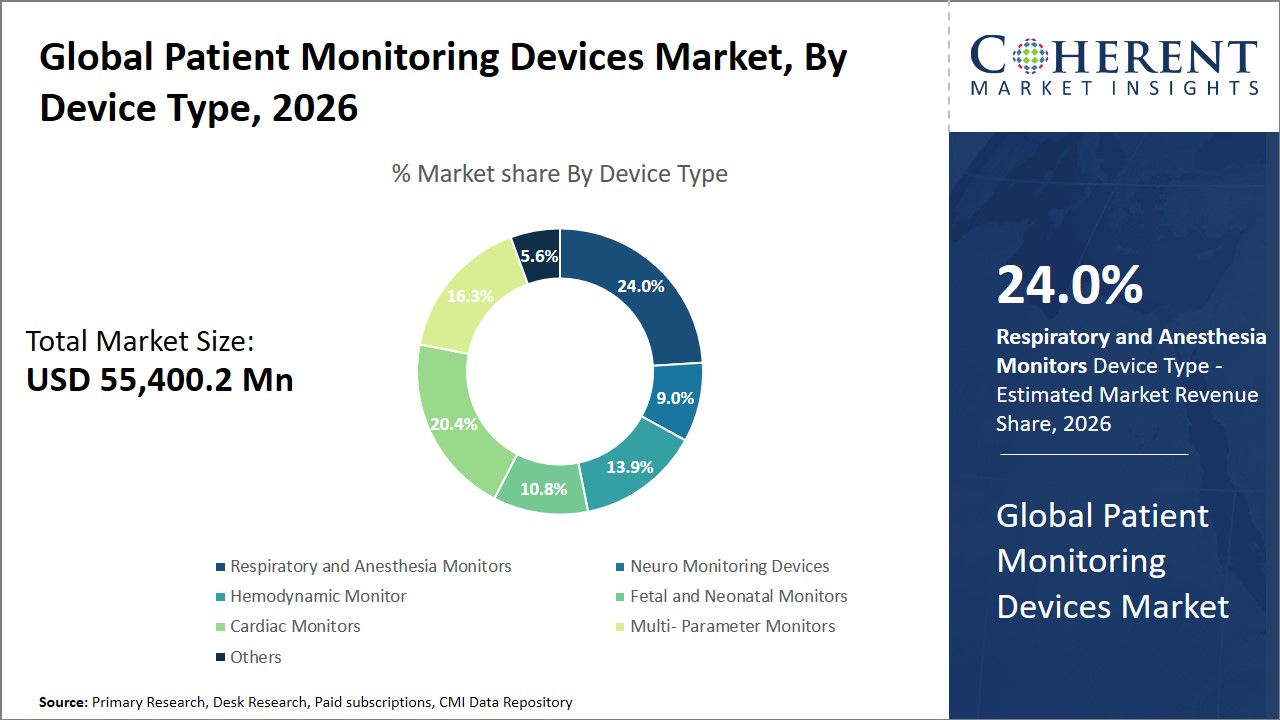
Why Does the Respiratory and Anesthesia Monitors Segment Dominate the Global Patient Monitoring Devices Market?
Respiratory and anesthesia monitors are projected to hold a market share of 24.0% in 2026, driven by the expanding requirement of consistent monitoring of ventilation and real-time tracking of anesthesia and critical care patients during surgeries. The rising prevalence of chronic obstructive pulmonary disease (COPD), sleep apnea, and acute respiratory infections has enhanced the implementation of respiratory monitoring systems in ICUs and emergency departments. Besides, the increasing number of surgeries performed globally coupled with escalating concerns over perioperative patient safety has been catalyzing the uptake of anesthesia monitors to monitor oxygen saturation, carbon dioxide levels and respiration data at enhanced accuracy levels. For instance, according to the World Health Organization, chronic obstructive pulmonary disease (COPD) is the fourth leading cause of death worldwide, causing 3.5 million deaths in 2021, approximately 5% of all global deaths. While, nearly 90% of COPD deaths in those under 70 years of age occur in low- and middle-income countries. (Source: World Health Organization)
- Current Industry Events of 2026
- Market Size Estimation
- Regional Breakdown
- Competitive Landscape
- Customer Intelligence
- Segmental Analysis
- Pricing Analysis
- Key Market Drivers, Challenges & Future Trends
- Customized Insights Section
Why Do Hospitals Represent the Largest End User Segment in the Global Patient Monitoring Devices Market?
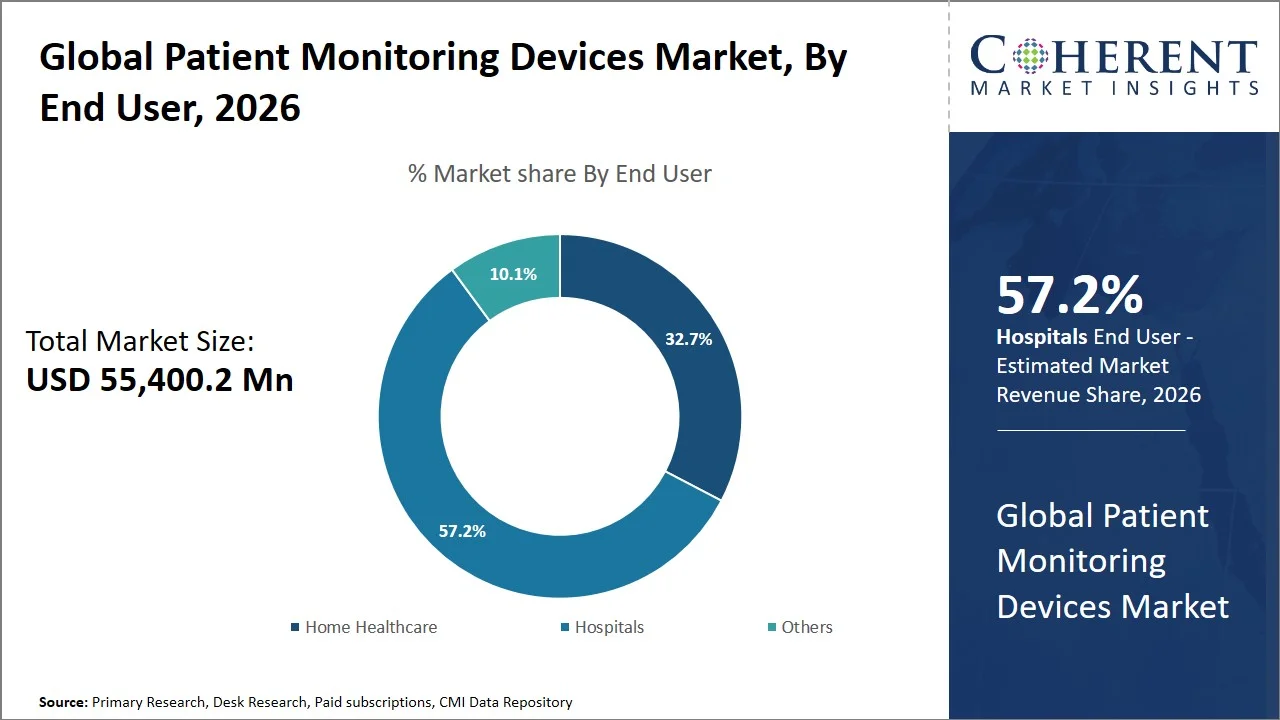
Hospitals are projected to hold a market share of 57.2% in 2026, owing to the critical need for ongoing patient monitoring at the intensive care unit, operation room, emergency department and post-surgery recovery units. The rising number of hospitalizations due to various chronic diseases, trauma cases and advanced surgical processes leads to large-scale installation of multiparameter monitors in hospitals. Furthermore, adoption of centralized monitoring systems linked with electronic medical records in hospitals is fueling workflow and clinical decision-making. Furthermore, the enhanced investment on the smart hospital infrastructure coupled with the adoption of wireless monitoring technologies is expected to facilitate the real-time access of patient data and the speed of medical intervention in the hospital.
For instance, according to the Organization for Economic Co-operation and Development (OECD), health spending from public sources is projected to be twice the average growth in government revenues (2.6% and 1.3% respectively on average across OECD countries). When combined with the need to invest in health systems for future resilience, this could lead to a potential high of 11.8% of GDP being dedicated to health spending by 2040. (Source: Organisation for Economic Co-operation and Development)
Currents Events and their Impact
Current Events | Description and its Impact |
FDA Strengthens Cybersecurity Oversight for Connected Patient Monitoring Devices (July 2025) |
|
FDA Expands Digital Health Regulatory Framework for Remote Monitoring Technologies (April 2026) |
|
(Source: Food and Drug Administration, Food and Drug Administration)
Global Patient Monitoring Devices Market Dynamics
Market Drivers
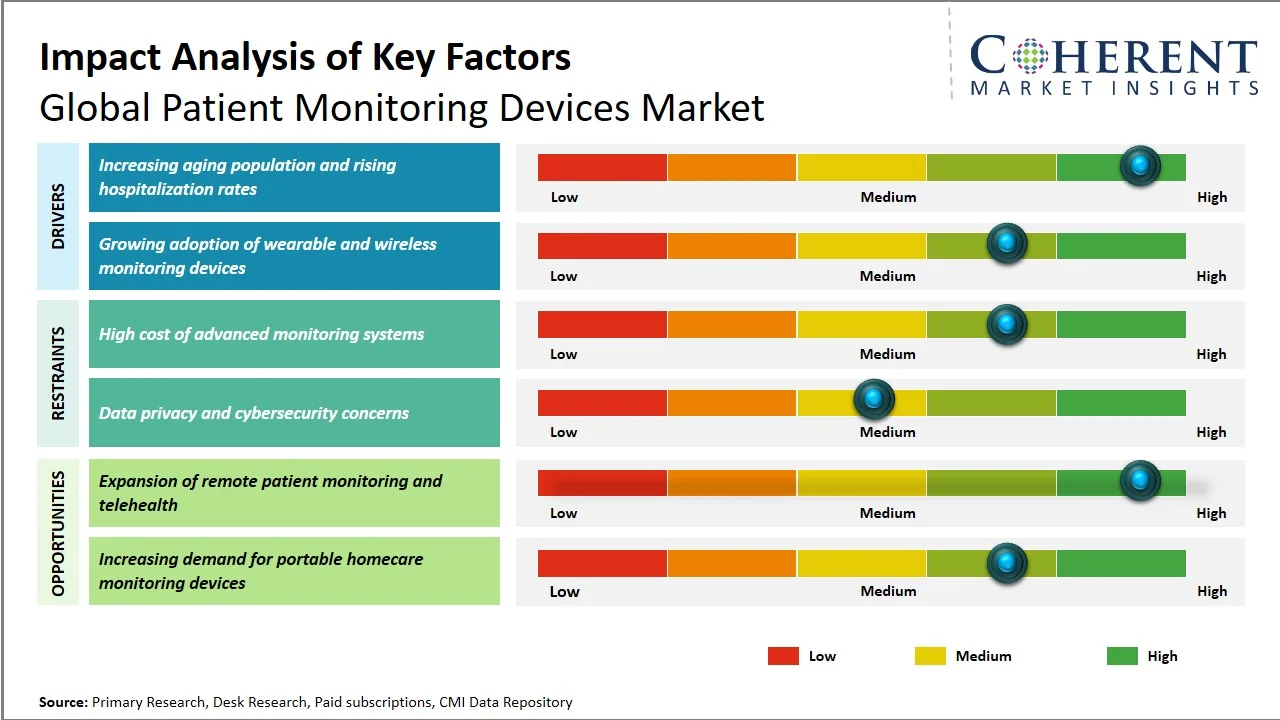
- Increasing aging population and rising hospitalization rates: The rapid increase in the geriatric population, together with the higher hospitalization rate globally are strongly contributing to the increased demand of patient monitoring devices. Geriatric population are often prone to various chronic diseases like cardiac disorders, diabetes, respiratory disorders, neurological disorders, which require constant patient monitoring and frequent hospital admissions. Moreover, with increase in surgical procedures, and more patients being admitted in critical care units, more advanced monitoring systems are being used by hospitals and long-term care facilities. According to the World Health Organization (WHO), by 2030, 1 in 6 people in the world will be aged 60 years or over. At this time the share of the population aged 60 years and over will increase from 1 billion in 2020 to 1.4 billion. By 2050, the world’s population of people aged 60 years and older will double (2.1 billion). The number of persons aged 80 years or older is expected to triple between 2020 and 2050 to reach 426 million. (Source: World Health Organization)
- Growing adoption of wearable and wireless monitoring devices: The growth of the patient monitoring devices market is being significantly attributed to the growing adoption of wearable and wireless patient monitoring devices. Medical service providers are rapidly deploying wearable biosensors, smart patch sensors, wireless ECG monitoring systems, and remotely monitored patient care systems that can enable real-time, continuous monitoring of patients outside hospital premises. These devices offer more mobility to the patients, allows early diagnosis of illness and are beneficial for remote patient care management especially in the case of chronic diseases and elderlies. Also, the increasing market size of telehealth and connected health is fueling the demand for wireless monitoring devices. For instance, according to the Pew Research Center, in 2024, 91% of American citizens owned a smartphone, indicating there exists robust infrastructure in place to support mobile-connected patient monitoring and remote health technologies. (Source: Pew Research Center)
Emerging Trends
- Increasing Integration of Cloud-Based Patient Monitoring Platforms: Cloud infrastructure platforms are being adopted by healthcare providers to facilitate a centralized system that allows for the storage of patient data, real-time monitoring of patients, and the ability to allow for access to patient data across various departments. This allows for an improved system of care, a way to implement a tele-ICU, and the ability for monitoring devices and hospital information systems to be more interoperable.
- Rising Adoption of Disposable and Single-Patient Monitoring Sensors: The healthcare industry is shifting more and more towards the use of disposable and single-patient-use monitoring sensors as infection prevention and hospital acquired infection (HAI) control becomes more of a concern. Hospitals are beginning to use disposable ECG leads, SpO₂ sensors, and other temperature monitoring accessories to enhance the safety of their patients, prevent cross-contamination, and provide more efficient care to critically ill patients.
Regional Insights
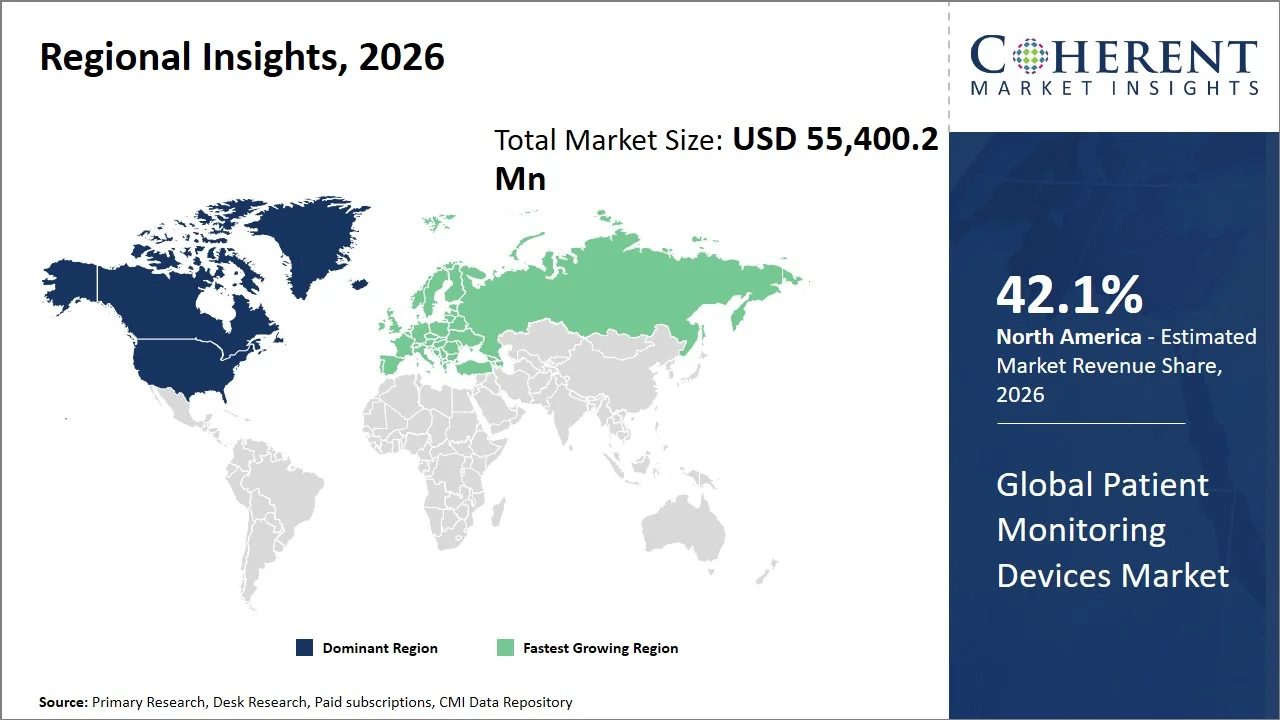
Why is North America a Strong Market for Patient Monitoring Devices?
North America leads the global patient monitoring devices market, accounting for an estimated 42.1% share in 2026, owing to the rapid adoption of digital care delivery models and the growing reimbursement coverage for remote physiological monitoring services. The healthcare providers in the U.S. are deploying remote monitoring technologies increasingly to reduce the burden on emergency care, manage patients more efficiently on an outpatient basis and promote value-based care delivery. The region is also witnessing heightened adoption of integrated monitoring systems that communicate with hospital IT infrastructure and telehealth platforms.
Moreover, the region is experiencing a positive reimbursement environment that is leading to widespread adoption of wearable and home-based monitoring devices. For instance, Centers for Medicare & Medicaid Services (CMS) is rapidly increasing reimbursement for remote patient monitoring services across Medicare to foster wider clinical utilization of connected patient monitoring solutions throughout the U.S. Healthcare system. (Source: National Library of Medicine)
Why Does the Europe Patient Monitoring Devices Market Exhibit High Growth?
The Europe patient monitoring devices market is expected to exhibit the fastest growth with an estimated contribution of 23.2% share to the market in 2026, owing to the expanding usage of digitally connected healthcare facilities and the rising spending on hospital modernization initiatives across the region. Countries like Germany, France, and the U.K. are focusing more on remote patient monitoring and monitoring devices for managing chronic diseases and providing aged care services to ease the burden on the healthcare system and achieve better healthcare results.
Moreover, the increasing emphasis on interoperable healthcare setup and clinical management using evidence-based data is further propelling the adoption of more sophisticated patient monitoring systems throughout hospitals and clinics in Europe. For instance, the European Commission has dedicated USD 6.16 billion (EUR 5.3 billion) from its EU4Health initiative to boosting digital health capacity, resilience of healthcare and the use of technology among EU countries, aiming to further promote the introduction of connected patient monitoring systems throughout the EU region. (Source: European Commission)
Global Patient Monitoring Devices Market Outlook for Key Countries
Why is the U.S. Leading Innovation and Adoption in the Patient Monitoring Devices Market?
The U.S. has become the most innovative and advanced nation for customer adoption in the global patient monitoring devices market, driven by a highly active commercialization climate for digital therapeutics, AI-enabled diagnostic devices, and next-generation biosensor technologies. The country hosts a highly active medical technology ecosystem, driven by close collaborative relationships between healthcare providers, research and academic institutions and device manufacturers through the clinical data management and real-time patient analytics processes.
Moreover, the hospitals in the region are adopting command-center-based patient monitoring models, wherein centralized surveillance mechanisms are used for monitoring and responding to patient needs with greater efficiency. Further, the rising number of U.S. FDA clearances for software-based medical devices and wearable patient monitoring devices is pushing product innovation and faster technology adoption in the U.S.
Is U.K. a Favorable Market for Patient Monitoring Devices?
The U.K. is an attractive market for patient monitoring devices on account of the broadening integration of virtual ward initiatives and digitally enabled community-care systems into the National Health Service. The country is experiencing widespread clinical and administrative deployment of remote monitoring systems to accommodate patient overflow, alleviate inpatient occupancy pressures and enable more efficient post-discharge patient management. Rising adoption of centralized digitally managed care pathways along with AI enabled patient triaging solutions is further augmenting demand for interconnected monitoring systems within hospital and community healthcare environments.
Furthermore, the country's unrelenting emphasis on reducing treatment delays and expanding long-term management of high-risk patients will continue to lead to more investment in scalable patient monitoring frameworks within hospital and outpatient care systems.
Is China Emerging as a Key Growth Hub for the Patient Monitoring Devices Market?
China is becoming a significant growth center for the patient monitoring devices market on account of rapid growth in national medical device manufacturing capabilities and widespread adoption of smart healthcare concepts in urban hospital networks. The proliferation of advanced AI-enabled patient monitoring systems, cloud-connected hospital networks and intelligent ward management platforms in Chinese hospitals are supporting improving overall quality and patient throughput.
Furthermore, local production of medical devices and healthcare technologies is reducing prices and improving competitiveness of domestic product suppliers, which is in turn encouraging broader adoption of affordable patient monitoring devices in secondary and tertiary level hospitals. The country's growing emphasis on hospital digitalization and an expanding adoption of intelligent healthcare systems will further strengthen the growth potential of the market in China.
Why Does Germany Top the Europe Patient Monitoring Devices Market?
Germany leads the Europe market for patient monitoring devices, benefiting from its pioneering hospital engineering infrastructure and extensive, early adoption of digitally interconnected clinical delivery systems at public and private care providers. The German medical technology manufacturing network has quickly adopted the latest bedside monitoring and telemetry technologies, as well as advanced intensive care monitoring systems. Moreover, hospital operators have moved to adopt data-supported clinical operational systems and interoperable monitoring networks to gain more efficiency in high-acuity care provider settings.
Is the Patient Monitoring Devices Market Developing in Japan?
The Japan patient monitoring devices market is gradually evolving in response to the widespread adoption of miniaturized and automated monitoring devices that cater to the dynamic requirements of the high-efficiency clinical settings. The country's healthcare providers are increasingly installing smart bedside monitoring systems, automated vital signs measuring devices and integrated nursing support technology to provide better patient management under soaring clinical workload pressures. The ongoing technological advances in robotic and sensor-based medical devices systems, especially in the sphere of healthcare in Japan is spurring the development of future lines of patient monitoring products. Wide scale acceptance of sophisticated monitoring systems in rehabilitation clinics, specialist medical centers and long-term care facilities are also promoting the market in Japan.
Regulatory Landscape Governing the Global Patient Monitoring Devices Market
Region | Authority & Classification | Approval Pathway | Key Regulatory Insight |
North America | U.S. FDA – Class II/III medical devices; Health Canada Medical Devices Regulations | FDA 510(k), PMA, Health Canada MDL approval | Strong emphasis on cybersecurity, interoperability, and real-time remote patient monitoring compliance. |
Europe | European Medicines Agency (EMA) & EU MDR 2017/745; CE Classification (Class IIa/IIb) | CE Marking through Notified Bodies under MDR | EU MDR mandates stringent clinical evaluation, post-market surveillance, and data safety requirements. |
Asia Pacific | China NMPA, Japan PMDA, India CDSCO, Australia TGA | Country-specific registration and clinical review approvals | Regulatory frameworks are rapidly evolving with increased focus on digital health and imported device quality standards. |
Latin America | Brazil ANVISA, Mexico COFEPRIS | Local registration, GMP certification, and technical dossier review | Brazil remains the key regulatory hub with stringent documentation and local compliance requirements. |
Middle East & Africa | Saudi FDA (SFDA), UAE MOHAP, South Africa SAHPRA | Import licensing, device registration, and conformity assessment | Growing harmonization with international standards such as FDA and CE certifications to accelerate device adoption. |
How is the expansion of remote patient monitoring and telehealth creating new growth opportunities in the global patient monitoring devices market?
The expansion of telehealth and remote patient monitoring services provides lucrative opportunities for the patient monitoring devices market, by improving access and accelerating adoption of connected and home-based monitoring devices for providing virtual care. Nowadays, hospitals are widely deploying wireless ECG monitors, pulse oximeters, blood pressure monitors, and cloud-enabled remote monitoring platforms to enhance chronic disease management and avoid costly hospital admissions. Increased adoption of telehealth programs within conventional healthcare framework is thus expected to promote the demand for advanced, integrated patient monitoring systems that facilitate real-time clinical care, and promote ongoing patient engagement.
For instance, data collected by the National Center for Health Statistics (NCHS), shows that in 2021, 80.5% of physicians in office-based settings used telemedicine, underscoring the accelerated growth in digital health infrastructure and the sustained global need for remote health monitoring solutions. (Source: National Center for Health Statistics)
Market Players, Key Development, and Competitive Intelligence
Key Developments
- In April 2026, the Life Scope E7 monitoring system was introduced by Nihon Kohden India in the Indian market as its first product in South Asia. Currently, the monitoring systems are installed in hospitals all around the world including Europe, North America, South America, the Middle East, Southeast Asia, and Africa. This will increase the visibility of the company in the segment of patient monitoring equipment.
- In July 2025, Medtronic and Philips formed a strategic partnership that helped to facilitate wider access to advanced patient monitoring technologies. The purpose of the collaboration was to improve connected care by incorporating monitoring platforms that facilitated patient data management and decision-making. This initiative is part of the increasing trend in the industry toward digital health integration and remote patient monitoring.
Competitive Landscape
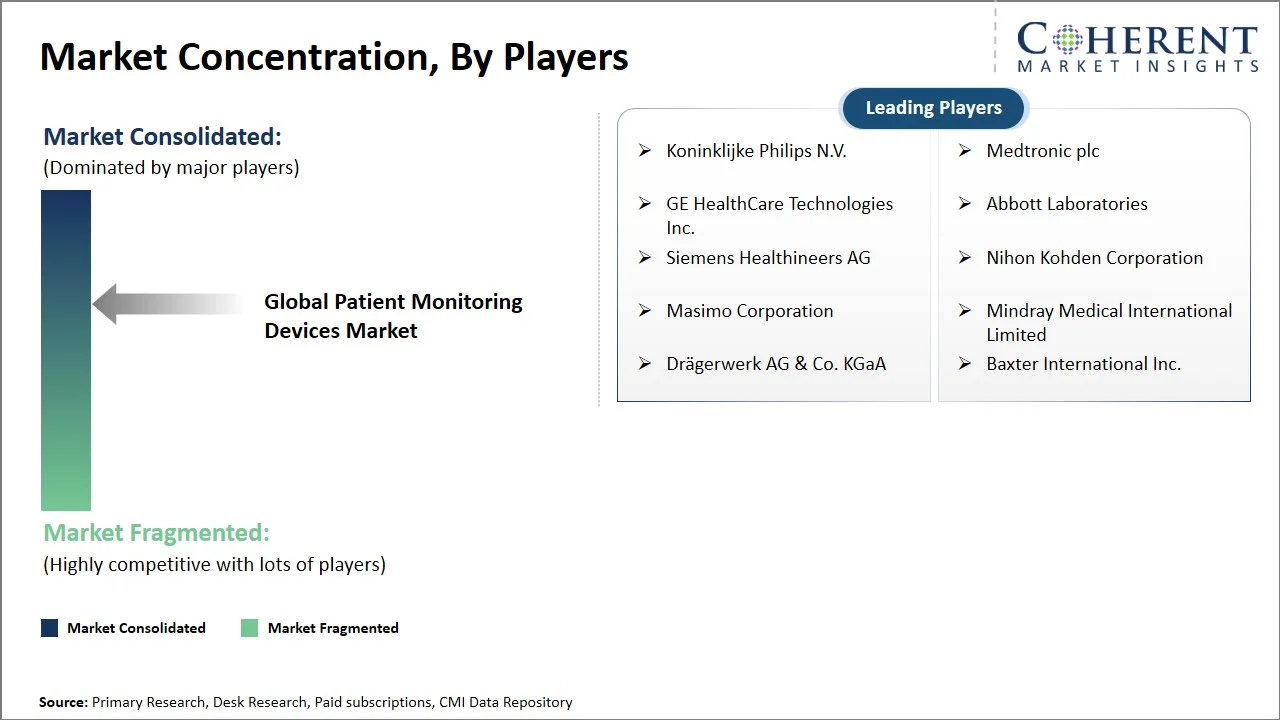
The global patient monitoring devices market is highly competitive and companies are focusing on advancements in technology, improvements in connectivity and increased capabilities for remote healthcare as ways of maintaining or increasing market share. Market players are looking at a variety of ways to develop new monitor offerings, including investing in systems that are able to monitor patients using AI-enabled, cloud-enabled surveillance platforms, and portable wireless monitors that can deliver real-time information for clinical decision support. Furthermore, devices that are able to integrate seamlessly with hospital information systems are becoming more prevalent as healthcare institutions seek to improve workflow processes. This is all complemented by collaborations with healthcare providers and digital health companies that will allow for the continued creation of new and improved patient monitors for use in hospitals, ambulatory care centers and home health settings. Key focus areas include:
- Development of AI-enabled predictive patient monitoring and clinical analytics platforms
- Expansion of wearable, wireless, and remote patient monitoring technologies
- Integration of cloud-based monitoring systems with hospital information infrastructure
- Innovation in compact multiparameter monitoring and smart biosensor technologies
- Strategic collaborations for telehealth expansion and connected healthcare solutions
Market Report Scope
Patient Monitoring Devices Market Report Coverage
| Report Coverage | Details | ||
|---|---|---|---|
| Base Year: | 2025 | Market Size in 2026: | USD 55,400.2 Mn |
| Historical Data for: | 2020 To 2024 | Forecast Period: | 2026 To 2033 |
| Forecast Period 2026 to 2033 CAGR: | 8.2% | 2033 Value Projection: | USD 96,080.3 Mn |
| Geographies covered: |
| ||
| Segments covered: |
| ||
| Companies covered: | Koninklijke Philips N.V., Medtronic plc, GE HealthCare Technologies Inc., Abbott Laboratories, Siemens Healthineers AG, Nihon Kohden Corporation, Masimo Corporation, Mindray Medical International Limited, Drägerwerk AG & Co. KGaA, and Baxter International Inc. | ||
| Growth Drivers: |
| ||
| Restraints & Challenges: |
| ||
Analyst Opinion (Expert Opinion)
- Looking ahead, the evolving focus of the patient monitoring devices market on connected, predictive and decentralized healthcare delivery models are likely to result in robust adoption of AI-enabled monitoring platforms, wearable biosensors and cloud-based patient surveillance systems that can facilitate real-time clinical insights on patients’ health status in both institutional and homecare environments. As healthcare establishments are under greater pressure to prioritize personalized, preventative care and improve chronic disease management as well as to alleviate the burden on hospitals, the patient remote monitoring device industry is poised to experience accelerated demand for remote monitoring solutions in the near future.
- The maximum growth opportunities are predicted in the remote patient monitoring use case in the home healthcare, mainly in the U.S. and China. The increasing incidences of chronic diseases, aging population and the development of telehealth networks in both countries are driving a great demand for wireless, wearable patient monitoring products. Furthermore, the infusion of large number of investments in digital healthcare platforms and intelligent hospital infrastructures will contribute to a huge opportunity for AI-enabled monitoring services and cloud-based patient data management systems.
- For the market leaders to gain and maintain a competitive advantage, they must aim to differentiate themselves from their competitors by creating interoperable, AI-enabled monitoring solutions that integrate effectively into other e-health systems, such as EHRs and telehealth platforms. Firms should also build up their offering in the areas of cybersecurity, real-time predictive analytics and miniature wearable devices in order to strengthen their product differentiation. Finally, working in partnership with hospitals, digital health providers and cloud technology companies and investing in home-care and remote monitoring solutions will be essential to broadening market presence and boosting competitiveness in the long-term.
Speak to the analyst
Want personalized insights?
Take the findings above to one of our principal consultants, or have the report rebuilt around the segments, geographies and competitors you actually track.
Market Segmentation
- Device Type Insights (Revenue, USD Mn, 2021 - 2033)
- Respiratory and Anesthesia Monitors
- Neuro Monitoring Devices
- Hemodynamic Monitor
- Fetal and Neonatal Monitors
- Cardiac Monitors
- Multi- Parameter Monitors
- Others
- End User Insights (Revenue, USD Mn, 2021 - 2033)
- Home Healthcare
- Hospitals
- Others
- Regional Insights (Revenue, USD Mn, 2021 - 2033)
- North America
- U.S.
- Canada
- Latin America
- Brazil
- Argentina
- Mexico
- Rest of Latin America
- Europe
- Germany
- U.K.
- Spain
- France
- Italy
- Russia
- Rest of Europe
- Asia Pacific
- China
- India
- Japan
- Australia
- South Korea
- ASEAN
- Rest of Asia Pacific
- Middle East
- GCC Countries
- Israel
- Rest of Middle East
- Africa
- South Africa
- North Africa
- Central Africa
- North America
- Key Players Insights
- Koninklijke Philips N.V.
- Medtronic plc
- GE HealthCare Technologies Inc.
- Abbott Laboratories
- Siemens Healthineers AG
- Nihon Kohden Corporation
- Masimo Corporation
- Mindray Medical International Limited
- Drägerwerk AG & Co. KGaA
- Baxter International Inc.
Sources
Primary Research Interviews
- Hospital administrators and critical care specialists utilizing advanced patient monitoring systems across ICU and emergency care settings
- Biomedical engineers and clinical technology professionals involved in wireless monitoring infrastructure and connected healthcare deployment
- Physicians and remote healthcare providers implementing wearable monitoring and telehealth-integrated patient surveillance systems
- Healthcare IT professionals managing interoperability between patient monitoring devices and electronic health record (EHR) platforms
Stakeholders
- Patient monitoring device manufacturers and connected healthcare technology providers
- End-use Sectors
- Hospitals and intensive care units
- Ambulatory surgical centers and emergency care facilities
- Home healthcare and remote patient monitoring providers
- Long-term care centers and rehabilitation facilities
- Regulatory & Health Bodies: U.S. Food and Drug Administration (FDA) – patient monitoring device safety and interoperability regulations, European Medicines Agency (EMA) & EU MDR Authorities – connected medical device compliance, Pharmaceuticals and Medical Devices Agency (PMDA), Japan – digital healthcare device approvals, National Medical Products Administration (NMPA), China – wireless and AI-enabled monitoring device regulations
Databases
- ClinicalTrials.gov – patient monitoring and remote healthcare clinical studies
- WHO Global Health Observatory – chronic disease and hospitalization statistics
- OECD Health Statistics – healthcare expenditure and hospital care indicators
- PubMed – patient monitoring, biosensor, and digital healthcare research publications
- FDA Medical Device Databases – patient monitoring device approvals and recalls
Magazines
- Medical Device Network – patient monitoring and digital health technology developments
- MedTech Dive – remote patient monitoring and wearable healthcare innovations
- Healthcare IT News – connected healthcare and telehealth infrastructure updates
- IEEE Spectrum – biosensor, AI healthcare, and wireless monitoring technology coverage
Journals
- Journal of Clinical Monitoring and Computing
- IEEE Journal of Biomedical and Health Informatics
- Telemedicine and e-Health
- Journal of Medical Systems
- MDPI’s Sensors
Newspapers
- Financial Times – healthcare technology and digital health investment coverage
- The Wall Street Journal – medical device and connected healthcare developments
- The New York Times (Health Section) – remote healthcare and hospital technology trends
- The Guardian (Science & Technology Section) – wearable healthcare and digital medicine developments
Associations
- American Telemedicine Association (ATA)
- Healthcare Information and Management Systems Society (HIMSS)
- Association for the Advancement of Medical Instrumentation (AAMI)
- IEEE Engineering in Medicine and Biology Society (EMBS)
Public Domain Sources
- Centers for Disease Control and Prevention (CDC) – chronic disease and hospitalization statistics
- U.S. Food and Drug Administration (FDA) – patient monitoring device regulatory framework
- European Commission – digital health and connected healthcare initiatives
- World Health Organization (WHO) – chronic disease and patient safety initiatives
Proprietary Elements
- CMI Data Analytics Tool, Proprietary CMI Existing Repository of information for last 10 years.
Get access to 250+ pages report
Every segment, forecast, competitor profile and data table behind the analysis above — available for instant download.
- ESOMAR Member
- ISO 9001:2015 Certified
- D-U-N-S Registered
- GDPR & CCPA Compliant
Missing comfort of reading report in your local language? Find your preferred language:
Transform your Strategy with Exclusive Trending Reports
Frequently Asked Questions
The global patient monitoring devices market is estimated to be valued at USD 55,400.2 Mn in 2026 and is expected to reach USD 96,080.3 Mn by 2033.
Respiratory and anesthesia monitors dominate due to their extensive utilization in surgical procedures, intensive care monitoring, and continuous respiratory assessment across critical care settings.
Patient monitoring devices are medical systems used to continuously measure, record, and display vital physiological parameters such as heart rate, blood pressure, oxygen saturation, and respiratory rate.
The CAGR of global patient monitoring devices market is projected to be 8.2% from 2026 to 2033.
Increasing aging population and rising hospitalization rates and growing adoption of wearable and wireless monitoring devices are the major factors driving the growth of the global patient monitoring devices market.
High cost of advanced monitoring systems and data privacy and cybersecurity concerns are the major factors hampering the growth of the global patient monitoring devices market.
Remote patient monitoring (RPM) is a healthcare technology approach that enables clinicians to monitor patients’ health data remotely using connected wearable and wireless medical devices.