

Complex Fertilizers Market Size and Trends
The complex fertilizers market is estimated to be valued at USD 43.71 Bn in 2026 and is expected to reach USD 66.60 Bn by 2033, exhibiting a compound annual growth rate (CAGR) of 6.2% from 2026 to 2033.
Key Takeaways
- Based on Region, North America is leading the market with 37.8% of the market share, owing to the well-established agricultural industry of the United States.
- Based on Form, the Solid segment is expected to dominate with 75.1% in 2026, owing to its convenience and longer shelf-life.
- Based on Crop type, the Cereals and Grains segment is expected to lead the market with 31.3% of the market share, owing to the demand for high-nutrient cereals.
- Based on Product type, the Complete Complex Fertilizers segment is expected to dominate with 89.2%, owing to its balanced nutrition profile.
Market Overview
Complex fertilizers are gaining more popularity than simple fertilizers due to the rising need for balanced nutrition. The blends of macro and micro nutrients in a single unit help plants access all required nutrients at once simultaneously. Complex fertilizers market is expected to grow positively over the forecast period. The glznasnxv can be attributed to the shifting preference of farmers towards complex fertilizers to maximize yield. As environmental norms are getting stricter, the demand for eco-friendly fertilizers like complex fertilizers is increasing. Development of organic fertilizers suitable for crops like fruits and vegetables will further support the market expansion during the projected timeline.
Current Events and Their Impacts
Current Events | Description and its impact |
Technological and Sustainability Innovations |
|
Corporate Capacity and Product Development |
|
Import Export of Complex Fertilizers
Between October 2023 and September 2024 (TTM), India received 195 shipments of complex fertilizers, sourced from 58 international exporters and distributed among 27 domestic buyers. This reflects a sharp 248% increase compared to the previous twelve-month period. Notably, in September 2024 alone, India recorded 33 shipments, representing a 371% year-on-year surge from September 2023 and maintaining the same volume as August 2024.
- Current Industry Events of 2026
- Market Size Estimation
- Regional Breakdown
- Competitive Landscape
- Customer Intelligence
- Segmental Analysis
- Pricing Analysis
- Key Market Drivers, Challenges & Future Trends
- Customized Insights Section
Segmental Insights
Complex Fertilizers Market Insights By form
Convenience and Shelf Life Drives the Demand for Solid Complex Fertilizers
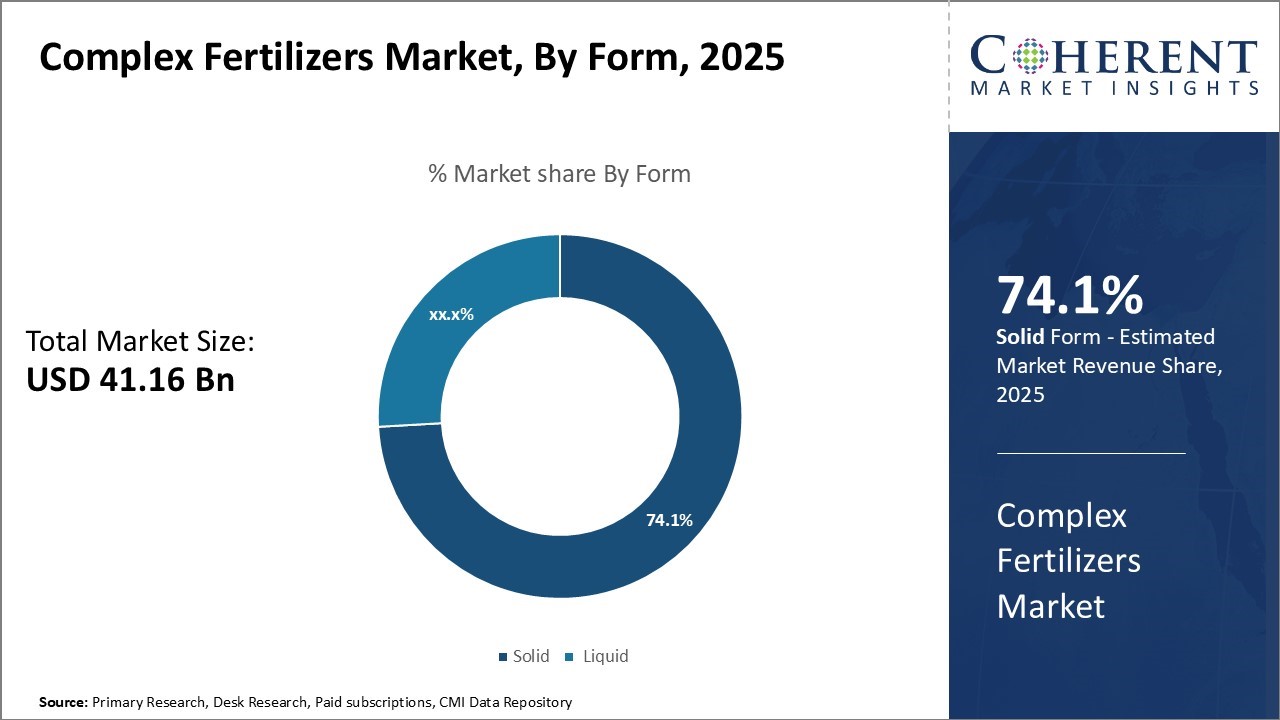
In terms of form, the solid segment is expected to contribute 75.1% share of the market in 2026, owing to its convenience and longer shelf life compared to the liquid form. Solid complex fertilizers are much easier for farmers to transport and apply to their fields as they do not leak or spill like liquids. Their solid physical state also means they can be safely stored for longer periods without any loss of nutrients. This facilitates bulk purchases and centralized distribution by fertilizer companies. The granular or powdered form of solid complex fertilizers also allows for precise application with common machinery like seed drills. Their homogeneous composition further ensures an even release of nutrients when dissolved in soil.
Complex Fertilizers Market Insights By crop type
High Nutrient Demand from Cereal Crops Boosts the Cereals and Grains Segment
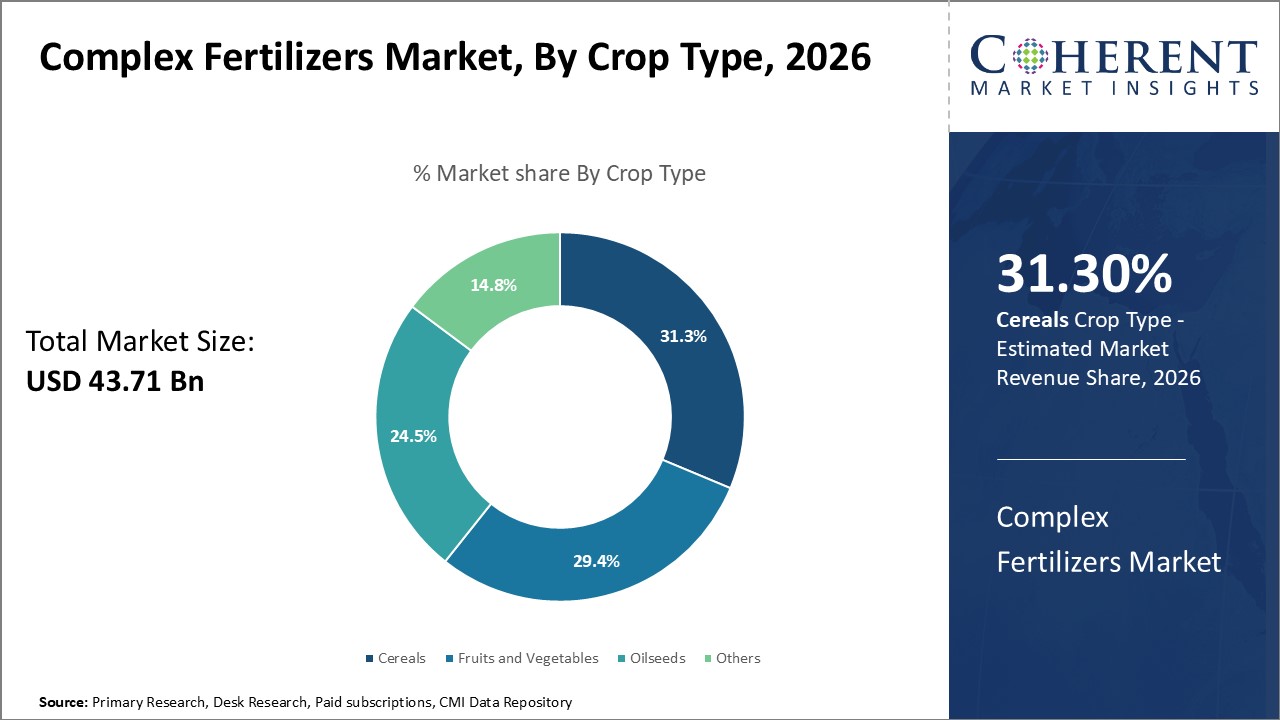
In terms of crop type, the cereals and grains segment is expected to contribute 31.3% share of the market in 2026, due to the large cultivable areas dedicated to these crops globally. Cereals like wheat, rice, corn, etc., form the staple diet of many populations and thus have consistently high production volumes. They also have stringent nutrient requirements to achieve high yields per acre. Complex fertilizers tailored for cereals perfectly meet their demands for major, secondary, and micronutrients through a balanced NPK formulation. The versatile use of cereal crops as food, feed, and raw materials in many industries also drives continuous investment in agricultural research and technology surrounding their cultivation.
For example, Acron Group has introduced new NPK complex fertilizers specifically designed for cereal crops cultivated in Africa. These new formulations—such as 23-10-5+S+Mg+Zn and 22-20+S+Ca+Zn—are tailored to meet the nutritional needs of various cereals, including maize, wheat, and others.
Complex Fertilizers Market Insights By product type
Balanced Nutrition Profile Favors Complete Complex Fertilizers
In terms of product type, the complete complex fertilizers segment is expected to contribute 90.2% share of the market in 2026, owing to their holistic nutrient composition. As the name suggests, they contain primary, secondary, and micronutrients in proportions optimized for balanced plant nutrition. This negates the need for separate application of individual fertilizers and eliminates nutrient deficiencies. Their multifunctional formulation simplifies fertilizer management for farmers. Complete complex fertilizers also improve soil health and sustainability through balanced mineralization of organic matter.
Regional Insights
North America Complex Fertilizers Market Trends
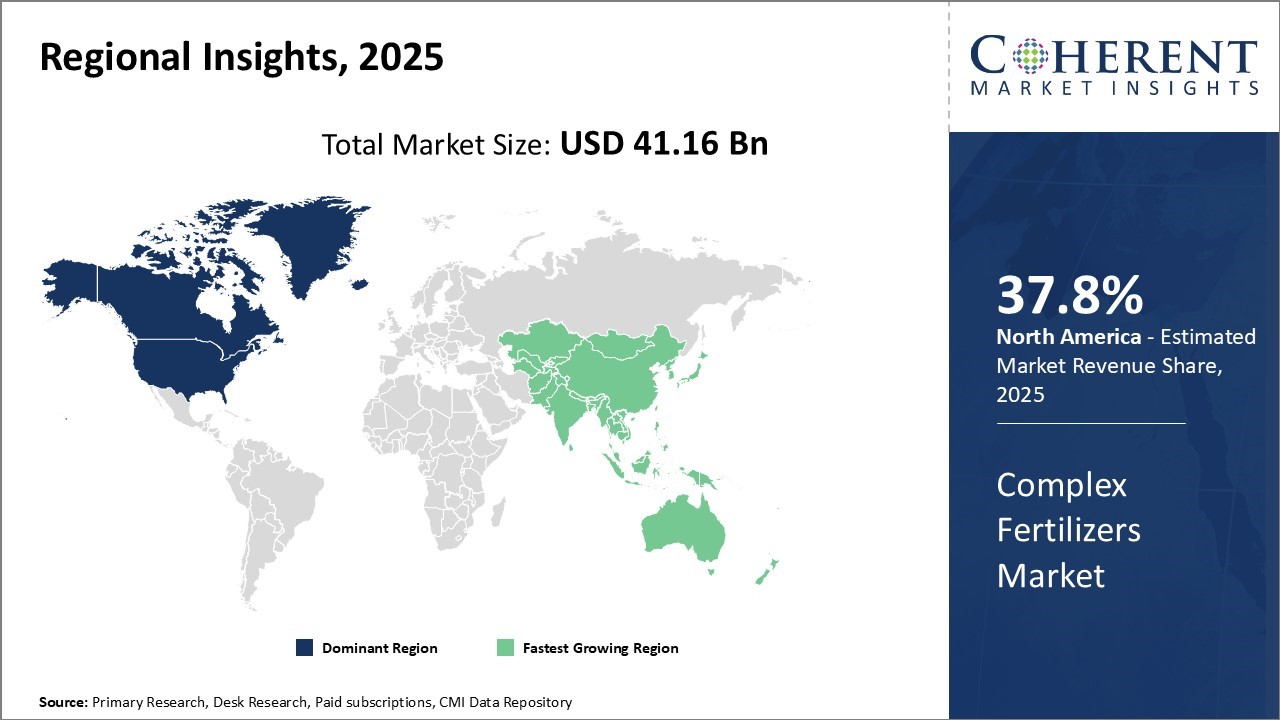
North America has been dominating the global complex fertilizers market owing to several factors. The region is expected to account for 37.8% of the market share in 2026. The region has a well-established agricultural industry, which significantly contributes to the regional GDP. Farmers in the U.S. and Canada are progressive and readily adopt new fertilizer products and technologies to boost productivity. This has ensured a sizable demand for complex or blended fertilizers over the years. The presence of leading international players has further aided market growth. Major fertilizer manufacturers have their headquarters and manufacturing facilities based in the U.S. and Canada to cater to the regional demand as well as exports. Strong distribution networks of these players across countries ensure the widespread availability of a variety of complex fertilizers.
U.S. Complex Fertilizers Market Trends
The complex fertilizers market in the U.S is driven by various factors such as large-scale commercial farming, technical advancements in agricultural practices, and subsidies provided by the government. For instance, in June 2023, KT-Kinetics Technology, a subsidiary of Milan-based MAIRE S.p.A., was awarded the early engineering work phase for a green fertilizer complex. This is further propelling the complex fertilizers market in the United States.
Asia Pacific Complex Fertilizers Market Trends
On the other hand, the Asia Pacific region has emerged as the fastest-growing market for complex fertilizers globally. Countries like India and China account for a major chunk of the regional market. Both nations have vast expanses of arable land and a growing population, which is constantly increasing the demand for food grains.
India Complex Fertilizers Market Trends
India is the largest market for complex fertilizers in the Asia Pacific region. The ever-increasing population and the need for food grains are the primary drivers in the market. However, continuous agriculture and limited cultivable land have depleted soil nutrients over time. This has enhanced the uptake of nutrient-rich complex fertilizers to restore soil health and maximize crop yields. For instance, in March 2026, the Union Cabinet of India approved the new Brownfield Ammonia-Urea Complex at the Bramhaputra Valley Fertilizer Corporation (BVFCL) plant located at Namrup in Assam. Such initiatives are escalating the complex fertilizers market demand in India.
China Complex Fertilizers Market Trends
The Chinese complex fertilizers market is the second-largest market. Supportive government policies promoting sustainable agriculture through fertilizer subsidies have further supported the market growth. Additionally, an increasing number of regional manufacturers are entering the industry, aided by abundant raw material availability and lower production costs. For instance, China Green Agriculture, Inc., a company that primarily manufactures and distributes humic acid-based compound fertilizers, along with other types of fertilizers and agricultural products through its fully owned subsidiaries in China, announced the launch of two new fertilizer products.
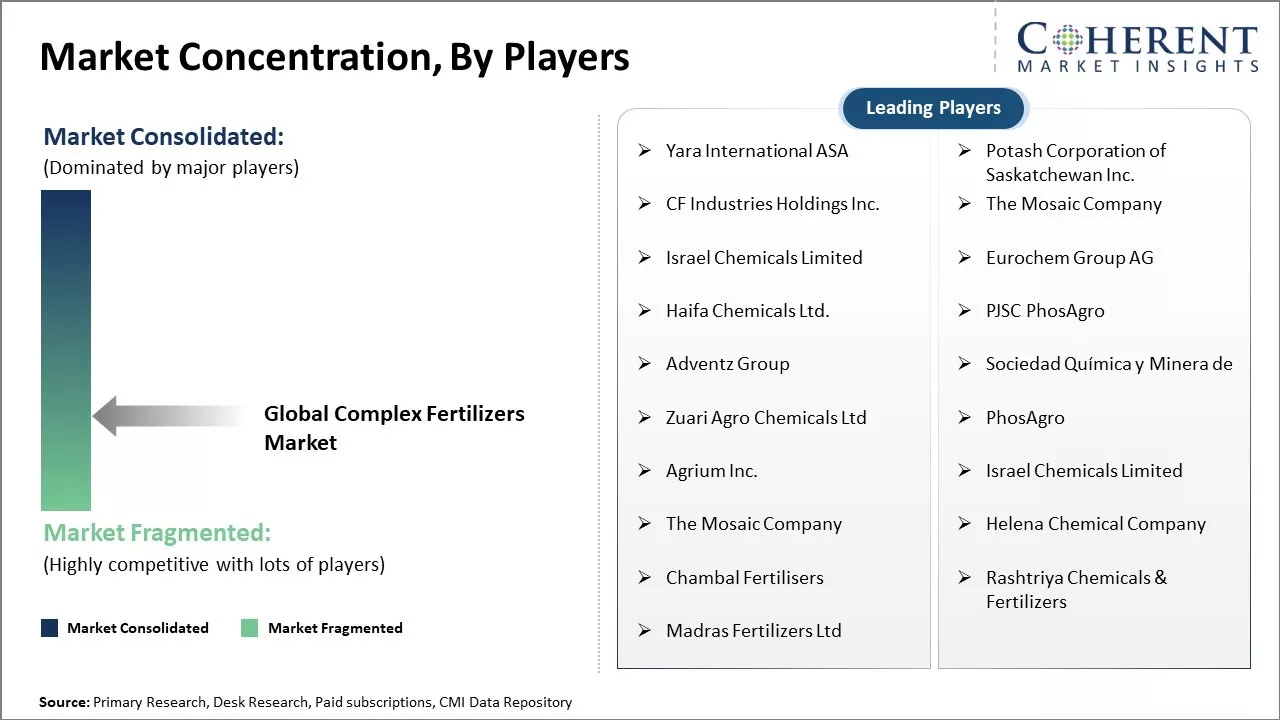
Market Concentration and Competitive Landscape
Key Developments
- In March 2024, EuroChem inaugurated its state-of-the-art phosphate fertilizer complex in Serra do Salitre, Brazil. It can produce around 1 million tonnes of phosphate fertillizers in a year.
- In May 2025, Iraq marked a milestone in its industrial revival by opening a new facility for phosphate fertilizer in the al-Anbar province.
- In June 2024, Coromandel International launched a new magnesium-fortified complex grade fertilizer, er 'Paramfos Plus,' in Bengaluru, India.
- In 2023, Krishana Phoschem Limited launched new complex fertilizers in Andhra Pradesh and Telangana in India.
- In 2023, Krishana Phoschem launched newly formulated complex fertilizers, Bharat DAP & Bharat NPK, in Hyderabad, India.
Market Report Scope
Complex Fertilizers Market Report Coverage
| Report Coverage | Details | ||
|---|---|---|---|
| Base Year: | 2025 | Market Size in 2026: | USD 43.71 Bn |
| Historical Data for: | 2020 To 2024 | Forecast Period: | 2026 To 2033 |
| Forecast Period 2026 to 2033 CAGR: | 6.2% | 2033 Value Projection: | USD 66.60 Bn |
| Geographies covered: |
| ||
| Segments covered: |
| ||
| Companies covered: | Yara International ASA, Potash Corporation of Saskatchewan Inc., CF Industries Holdings Inc., The Mosaic Company, Israel Chemicals Limited, Eurochem Group AG, Haifa Chemicals Ltd., PJSC PhosAgro, Adventz Group, Sociedad Química y Minera de, Zuari Agro Chemicals Ltd, PhosAgro, Agrium Inc., Israel Chemicals Limited, Helena Chemical Company C, Hambal Fertilisers, Rashtriya Chemicals & Fertilizers, and Madras Fertilizers Ltd | ||
| Growth Drivers: |
| ||
| Restraints & Challenges: |
| ||
Complex Fertilizers Market Trends
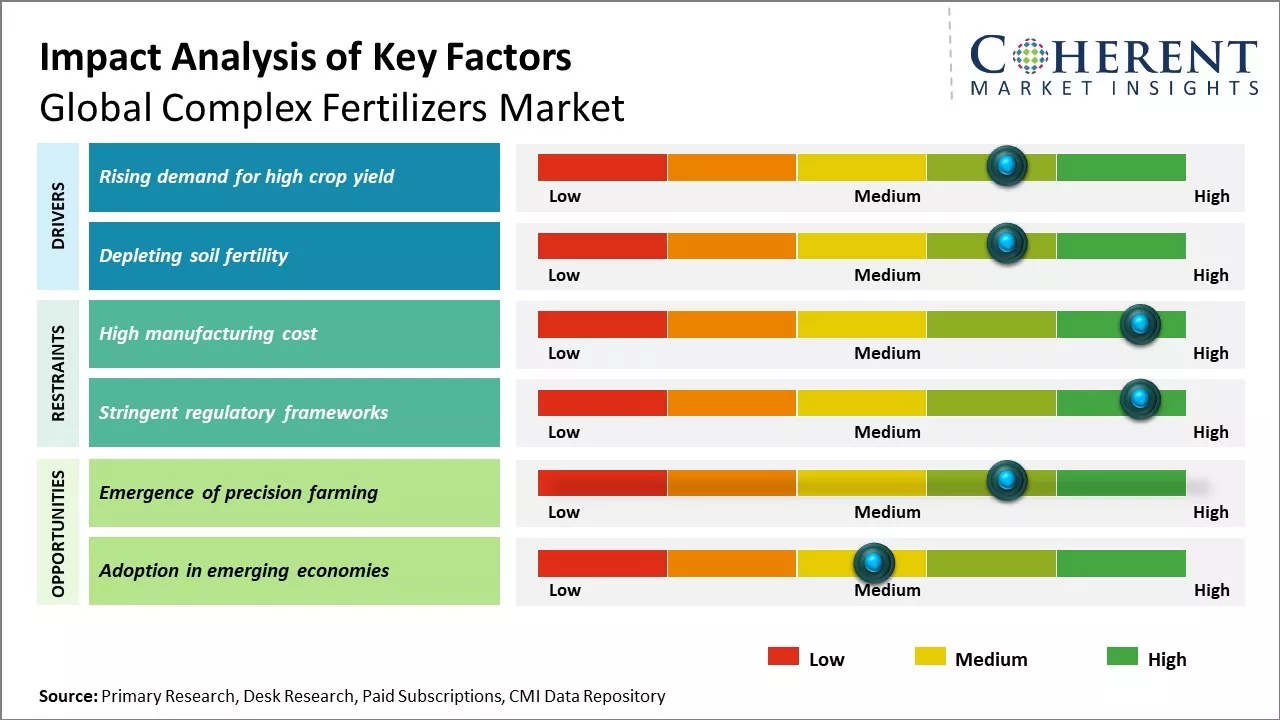
Rising demand for high crop yield
The growing global population has put immense pressure on the agricultural sector to increase food production manifold. With arable land being limited due to increasing urbanization, the focus has shifted to boosting crop yields from the existing cultivated areas. Complex fertilizers play a vital role in this regard as they deliver the balanced nutrition required by crops to boost yields. Containing two or three essential nutrients needed by plants, such as nitrogen, phosphorus, and potassium, complex fertilizers ensure comprehensive nourishment. This helps in optimizing photosynthesis, strengthening plant structure, and improving resistance to diseases and environmental stresses. As a result, crop yields witnessed significant enhancement when complex fertilizers are applied as compared to single-nutrient fertilizers. According to data by the Downtoearth organization, food demand is projected to increase by over 50% by 2050, and boosting yields through customized fertilizer solutions has become imperative. This growing need for high crop productivity is a major driver propelling the complex fertilizers market demand across key farming regions globally.
Depleting soil fertility
Intensive farming over the decades has drained out essential nutrients from the soils. Monocropping and exhaustive use of fertilizers in isolation have disrupted the natural balance of nutrients in farmlands. This has led to severe depletion of micro and macro nutrients needed by plants. As a result, the inherent fertility and productivity potential of soils have declined considerably. To sustain crop yields and meet the nutritional demands of cultivated crops, replenishing depleted soil nutrients is crucial. Compared to single-nutrient fertilizers, complex fertilizers harmoniously restore multiple nutrients in one application. This holistic nourishment helps in conditioning the soil, enhancing its natural fertility over the long run. They also facilitate better nutrient assimilation by crops. Awareness regarding deteriorating soil health and the need for balanced nutrient management is rising among farmers. This has accelerated the usage of complex fertilizers for restoring depleted soils and arresting future yield decline risks. The urgent need to revive the nutrient status of over-exploited farmlands worldwide is propelling the complex fertilizers market growth.
Complex Fertilizers Market Opportunities: Emergence of precision farming
The emergence of precision farming practices has opened up great opportunities for the complex fertilizers market. Precision farming utilizes advanced technologies like sensors, GPS, drones, etc., to precisely analyze soil conditions, moisture levels, and apply exactly the right type and amount of nutrients only where required by the crops. This targeted, site-specific approach ensures optimal usage of fertilizers with no over- or underapplication. It eliminates wastage and minimizes environmental impact from excess run-off or leaching. Precision farming promotes the use of customized, complex fertilizer blends that are tailored for the specific nutrient needs of different crops or even within single fields, considering spatial variability in soil health.
Analyst Viewpoint
- The complex fertilizers market is entering a structurally decisive phase, driven less by incremental demand growth and more by the compounding effects of agronomic necessity, geopolitical fertilizer trade dynamics, and policy-induced consumption shifts. The conventional narrative that frames complex fertilizers as merely a response to NPK efficiency overlooks the strategic pivot occurring within both producing and consuming nations.
- Critically, the market is witnessing a regional bifurcation in adoption patterns. India, for instance, continues to prioritize government-backed subsidies for nutrient-balanced fertilizers under the Nutrient-Based Subsidy (NBS) scheme. Despite a persistent overuse of urea, the Indian government’s decision in 2023 to push for fortified complex variants with zinc and sulphur additives has led to a 19% year-over-year increase in demand for customized complex fertilizers among cooperatives and private retailers. This is not simply a policy success—it represents an inflection point where regulatory pressure is realigning procurement preferences toward multi-nutrient blends.
- Meanwhile, in Eastern Europe and parts of Central Asia, complex fertilizers are gaining ground not out of choice but necessity. Following the supply constraints resulting from sanctions on Russian-origin fertilizers, producers in Kazakhstan and Uzbekistan are increasingly investing in integrated NPK production facilities to offset dependency on mono-nutrient imports. This transition, while capital-intensive, is already materializing in the form of public-private investment vehicles focused on 3:2:1 ratio complexes—especially for wheat and barley cultivation zones that suffer from secondary nutrient depletion.
- On the supply side, Western producers have consistently failed to innovate beyond the physical granulation of basic NPK blends. The lack of value-added functional additives such as micronutrient chelates or bio-stimulants has allowed Chinese and Moroccan manufacturers—particularly OCP—to capture disproportionate value in Africa, where localized nutrient deficiencies require tailor-made formulations. For example, in Nigeria’s Kaduna and Kano states, OCP’s customized 15:15:15 + 6S + Zn blends saw a 27% improvement in maize yield over conventional complexes in 2022 field trials. This performance-based differentiation is reshaping procurement strategies of agro-input dealers and is likely to marginalize low-specification producers.
Market Segmentation
- Form Insights (Revenue, USD Bn, 2021 - 2033)
- Solid
- Liquid
- Crop Type Insights (Revenue, USD Bn, 2021 - 2033)
- Cereals and Grains
- Fruits and Vegetables
- Oilseeds
- Others
- Product Type Insights (Revenue, USD Bn, 2021 - 2033)
- Complete Complex Fertilizers
- NPK (15-15-15)
- NPK (12-32-16)
- NPK (10-26-26)
- NPKS
- Others
- Incomplete Complex Fertilizers
- Monoammonium Phosphate
- Diammonium Phosphate
- Monopotassium Phosphate
- Potassium Nitrate
- NKS
- Others
- Complete Complex Fertilizers
- Regional Insights (Revenue, USD Bn, 2021 - 2033)
- North America
- U.S.
- Canada
- Latin America
- Brazil
- Argentina
- Mexico
- Rest of Latin America
- Europe
- Germany
- U.K.
- Spain
- France
- Italy
- Russia
- Rest of Europe
- Asia Pacific
- China
- India
- Japan
- Australia
- South Korea
- ASEAN
- Rest of Asia Pacific
- Middle East & Africa
- GCC Countries
- Israel
- Rest of Middle East & Africa
- North America
- Key Players Insights
- Yara International ASA
- Potash Corporation of Saskatchewan Inc.
- CF Industries Holdings Inc.
- The Mosaic Company
- Israel Chemicals Limited
- Eurochem Group AG
- Haifa Chemicals Ltd.
- PJSC PhosAgro
- Adventz Group
- Sociedad Química y Minera de
- Zuari Agro Chemicals Ltd.
- PhosAgro
- Agrium Inc.
- Israel Chemicals Limited
- Helena Chemical Company
- Chambal Fertilisers
- Rashtriya Chemicals & Fertilizers
- Madras Fertilizers Ltd.
Source
Primary Research Interviews
- Distributors, dealers, and retailers of complex fertilizers
- Agronomists and agricultural extension officers
- Procurement managers from agrochemical companies
- Government agricultural policy advisors
Databases
- FAOSTAT (Food and Agriculture Organization)
- USDA Foreign Agricultural Service (FAS)
- World Bank Open Data
- Trade Map (International Trade Centre)
- IndiaStat (for Indian agricultural data)
Magazines
- AgriBusiness Global
- Fertilizer Focus
- Farm Journal
- The Fertilizer Magazine
Journals
- Nutrient Cycling in Agroecosystems
- Journal of Agricultural and Food Chemistry
- Agricultural Systems
- Journal of Plant Nutrition and Soil Science
Newspapers
- The Hindu – Business Line (Agri-Business section)
- The Economic Times – Agriculture & Commodities
- Financial Express – AgriBusiness
- Business Standard – Rural Economy
Associations
- Fertilizer Association of India (FAI)
- International Fertilizer Association (IFA)
- Indian Council of Agricultural Research (ICAR)
- International Plant Nutrition Institute (IPNI)
- Confederation of Indian Industry – Agriculture
Public Domain Sources
- Ministry of Chemicals and Fertilizers (India)
- Reserve Bank of India – Agricultural Reports
- National Bank for Agriculture and Rural Development (NABARD)
- UN Comtrade
- European Commission – Agriculture and Rural Development
*Definition: The complex fertilizers market consists of fertilizer products that contain two or more essential plant nutrients needed for optimum crop growth and production. These complex fertilizers blend the primary nutrients nitrogen, phosphorus, and potassium, along with secondary nutrients like calcium, magnesium, and sulfur. They are formulated to provide balanced nutrition to plants throughout the growth cycle. Complex fertilizers aim to simplify fertilization for farmers while promoting healthier and higher-yielding crops.
Get access to 250+ pages report
Every segment, forecast, competitor profile and data table behind the analysis above — available for instant download.
- ESOMAR Member
- ISO 9001:2015 Certified
- D-U-N-S Registered
- GDPR & CCPA Compliant
Missing comfort of reading report in your local language? Find your preferred language:
Transform your Strategy with Exclusive Trending Reports
Frequently Asked Questions
The Complex Fertilizers Market is estimated to be valued at USD 43.71 Bn in 2026, and is expected to reach USD 66.60 Bn by 2033.
The CAGR of the Complex Fertilizers Market is projected to be 6.2% from 2026 to 2033.
Rising demand for high crop yield and depleting soil fertility are the major factors driving the growth of the global complex fertilizers market.
High manufacturing costs and stringent regulatory frameworks are the major factors hampering the growth of the global complex fertilizers market.
In terms of form, solid is estimated to dominate the market revenue share in 2026.
Yara International ASA, Potash Corporation of Saskatchewan Inc., CF Industries Holdings Inc., The Mosaic Company, Israel Chemicals Limited, Eurochem Group AG, Haifa Chemicals Ltd., PJSC PhosAgro, Adventz Group, Sociedad Química y Minera de, Zuari Agro Chemicals Ltd, PhosAgro, Agrium Inc., Israel Chemicals Limited, Helena Chemical Company, Chambal Fertilisers, Rashtriya Chemicals & Fertilizers, and Madras Fertilizers Ltd are the major players.
North America is expected to lead the global complex fertilizers market.