

Cosmetic Surfactants Market Size and Forecast — 2026 - 2033
The Global Cosmetic Surfactants Market size is estimated to be valued at USD 9.3 billion in 2026 and is expected to reach USD 14.7 billion by 2033, exhibiting a compound annual growth rate (CAGR) of 6.7% from 2026 to 2033.
Overview
Cosmetic surfactants are specialized surfactant ingredients formulated specifically for use in personal care and cosmetic products. These surfactants enable cleansing, emulsification, solubilization, and foam formation while being mild on skin and hair. Cosmetic surfactants are used in facial cleansers, body washes, shampoos, conditioners, and makeup removers. Product development focuses on skin compatibility, biodegradability, and compatibility with natural and sensitive-skin formulations.
Key Takeaways
The skin care segment dominates the Cosmetic Surfactants market, holding roughly 38% of the market share, buoyed by rising demand for gentle cleansing and moisturizing products that command premium pricing.
The anionic surfactant subsegment leads product types with a strong 42% of market share, driven by versatility across multiple applications.
North America remains the dominating region with over 35% industry share, attributed to stringent regulatory frameworks encouraging sustainable surfactants and robust personal care product development.
Asia Pacific exhibits fastest growth, with a CAGR exceeding 8% thanks to surging demand fueled by expanding middle-class consumers and increasing urbanization, especially in China and India.
Cosmetic Surfactants Market Segmentation Analysis
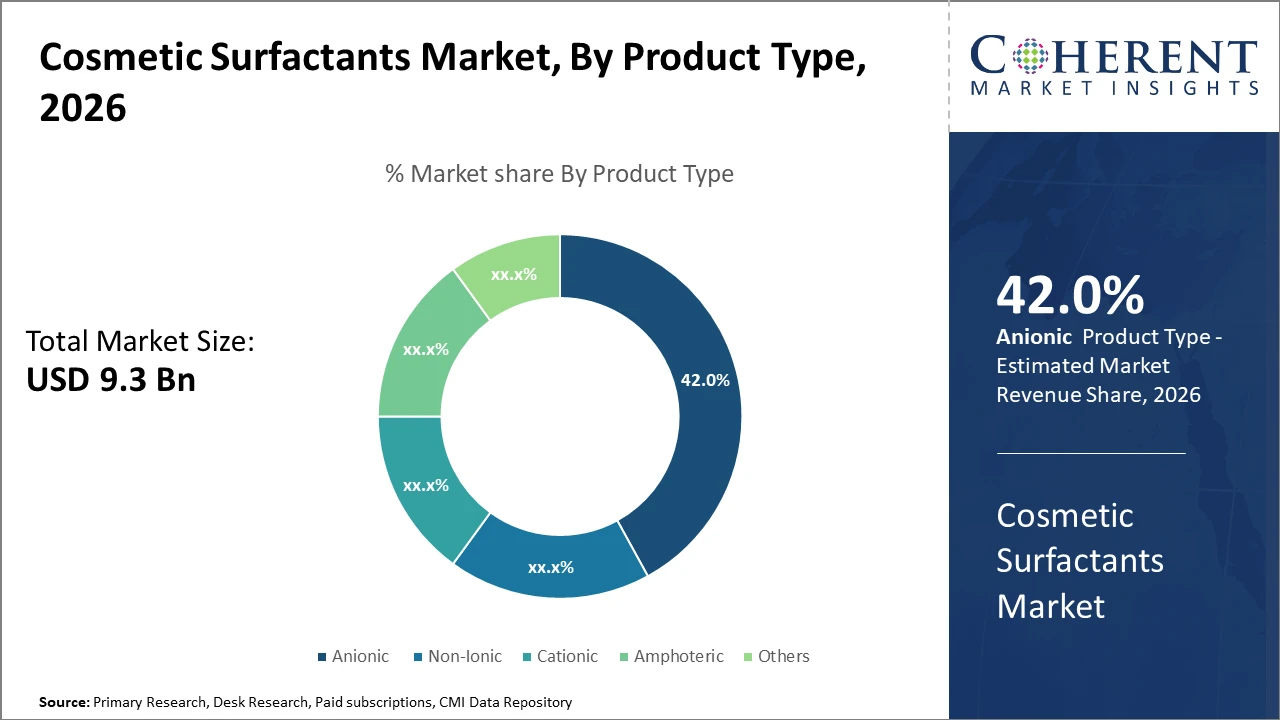
Cosmetic Surfactants Market Insights, By Product Type
The anionic segment dominates due to its superior cleansing properties and cost-effectiveness, widely used in shampoos and body washes. Its compatibility with a variety of personal care formulations has made it a staple, especially in developed markets where innovation focuses on reducing irritancy while maintaining efficacy. The non-ionic segment, recognized as the fastest-growing subsegment, benefits from rising demand for gentle cleansing agents in sensitive skin products and baby care formulations. Cationic surfactants, valued for conditioning properties, are heavily utilized in haircare products, especially in premium lines. Amphoteric surfactants are popular in multifunctional products due to their mildness and versatility.
Cosmetic Surfactants Market Insights, By Application
The skin care segment stands out as the largest subsegment, given the surging consumer preference for moisturizing and anti-aging products. This segment drives extensive research into surfactant formulations that support skin barrier enhancement while providing cleansing. Haircare represents a significant and steadily growing market due to increasing daily hygiene awareness and demand for specialty shampoos and conditioners. Oral care utilizes surfactants primarily in toothpaste and mouthwash products, emphasizing antimicrobial and foaming functions. The cosmetics segment includes makeup removers and cleansing oils where surfactants play a crucial role in product efficacy.
Cosmetic Surfactants Market Insights, By Source
Synthetic surfactants have traditionally dominated due to cost advantages and formulation flexibility but face increasing regulatory scrutiny owing to environmental impact concerns. Natural and bio-based surfactants are the fastest-growing subsegment, driven by consumer demand for eco-conscious and skin-friendly products, with production innovations leading to performance parity with synthetic counterparts. Semi-synthetic surfactants combine elements of both sources, balancing cost, sustainability, and functionality. The market is witnessing heightened R&D investment aimed at improving the biodegradability and efficacy of natural and semi-synthetic surfactants, aligning with emerging trends and regulatory expectations.
Cosmetic Surfactants Market Trends
Recent market insights illustrate a marked trend toward green surfactants and bio-based formulations, as seen in BASF’s 2025 launch of fully biodegradable surfactants, capturing significant consumer appeal in Europe.
Another emerging trend is the digital transformatio,n enabling bespoke product offerings based on consumer data analytics, which boosted targeted surfactant product sales by 18% in North America.
Additionally, Asia Pacific brands are increasingly adopting natural surfactants aligning with local traditional cosmetics, raising regional demand considerably.
Cosmetic Surfactants Market Insights, By Geography
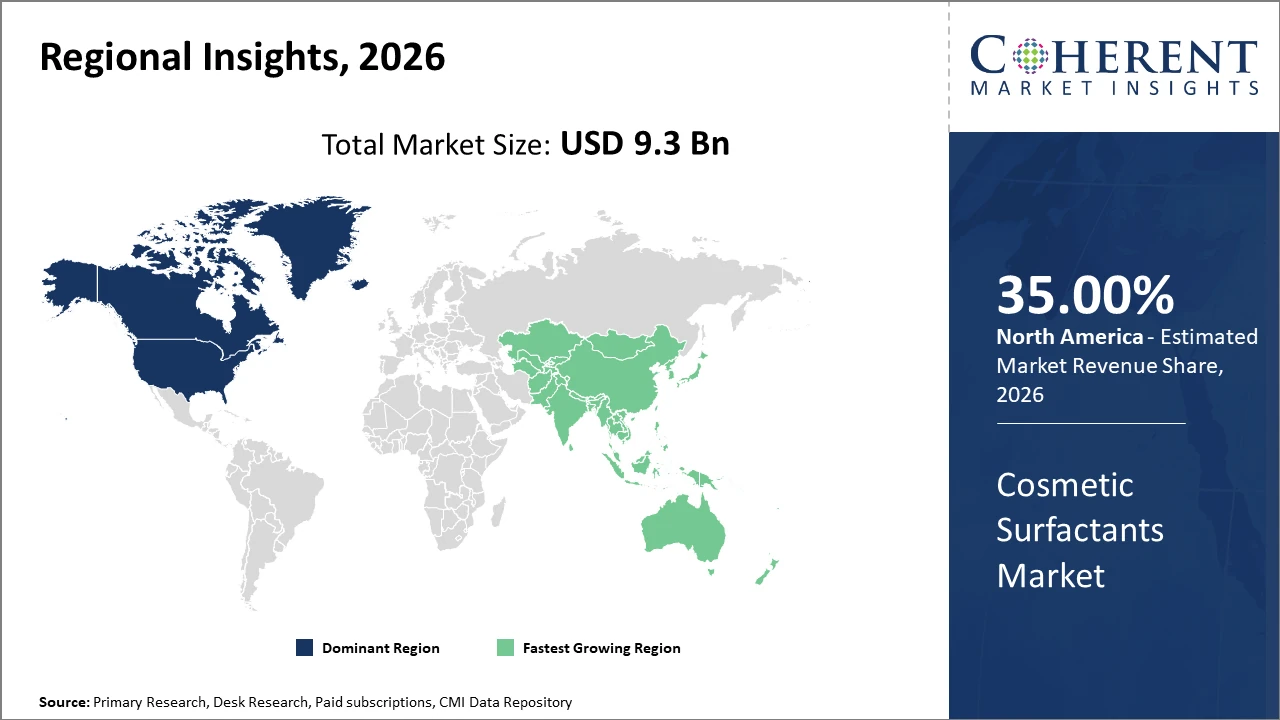
North America Cosmetic Surfactants Market Analysis and Trends
In North America, the dominance in the Cosmetic Surfactants market stems from rigorous government policies promoting sustainable manufacturing and strong presence of leading companies. North America accounts for over 35% of the market share supported by proactive environmental regulations and consumer preference for organic personal care products. Major players such as Dow Inc. and Evonik significantly contribute to innovation and product development, reinforcing regional market revenue.
Asia Pacific Cosmetic Surfactants Market Analysis and Trends
Meanwhile, the Asia Pacific exhibits the fastest growth with a CAGR exceeding 8%, backed by rising urban population and expanding middle- and upper-income consumer base. Countries like China and India are witnessing increasing product launches focused on natural and multifunctional surfactants. Government incentives toward green chemistry are accelerating new product development. Regional firms such as Galaxy Surfactants Ltd. play a pivotal role in catering to local demand while global companies boost investments to capitalize on the rapid growth.
Cosmetic Surfactants Market Outlook for Key Countries
USA Cosmetic Surfactants Market Analysis and Trends
The USA’s market is a critical driver of industry size, reflecting a surge in premium and eco-conscious personal care product consumers. Market companies reported a 14% increase in cosmetic surfactant consumption in 2025, led by innovation in mild surfactant blends compatible with sensitive skin. Stringent regulations such as the Toxic Substances Control Act (TSCA) amendments foster cleaner ingredient development, encouraging leading entities like BASF SE and Dow Inc. to expand green portfolio offerings. The growing trend of multifunctional cosmetic products further consolidates the USA’s position in market revenue and business growth.
India Cosmetic Surfactants Market Analysis and Trends
India’s market is transforming rapidly, driven by increasing urbanization and digital adoption, which enhance product accessibility and market penetration. The country witnessed a 10% surge in demand for bio-based surfactants in 2026, supported by government incentives promoting sustainable chemical industries. Local market players such as Galaxy Surfactants Ltd. lead product innovation emphasizing natural ingredients aligned with consumer preferences. The expansion of skincare and haircare segments alongside rising e-commerce sales channels creates ample business growth opportunities in India’s cosmetic surfactants industry.
Analyst Opinion
Increasing use of biodegradable surfactants is a key supply-side indicator shaping the market size. For instance, production capacity of natural-based surfactants surged by 18% in 2025 as manufacturers responded to stricter environmental regulations in Europe and North America.
Rising demand across personal care applications is a major demand-side driver. In 2026, haircare accounted for nearly 35% of total cosmetic surfactants consumption, supported by a 12% year-over-year volume increase in the USA and China.
Pricing dynamics remain stable, with premium products commanding a 15-20% price premium due to enhanced cleansing efficacy and skin compatibility. South Korea’s surge in premium facial cleanser launches in 2025 exemplifies this trend.
Imports of speciality surfactants into emerging Asian markets increased by 14% in 2026, reflecting expanding market scope and newer use cases in niche cosmetics sectors such as men’s grooming and baby care products.
- Current Industry Events of 2026
- Market Size Estimation
- Regional Breakdown
- Competitive Landscape
- Customer Intelligence
- Segmental Analysis
- Pricing Analysis
- Key Market Drivers, Challenges & Future Trends
- Customized Insights Section
Market Scope
| Report Coverage | Details | ||
|---|---|---|---|
| Base Year: | 2025 | Market Size in 2026: | USD 9.3 billion |
| Historical Data for: | 2020 To 2024 | Forecast Period: | 2026 To 2033 |
| Forecast Period 2026 to 2033 CAGR: | 6.7% | 2033 Value Projection: | USD 14.7 billion |
| Geographies covered: |
| ||
| Segments covered: | By Product Type: Anionic, Non-Ionic, Cationic, Amphoteric, and Others By Application: Haircare, Skin Care, Oral Care, Cosmetics, and Others By Source: Synthetic, Natural & Bio-based, and Semi-synthetic | ||
| Companies covered: | BASF SE, Dow Inc., Croda International Plc, Clariant AG, Stepan Company, Solvay SA, Evonik Industries AG, Innospec Inc., Huntsman Corporation, Seppic (Air Liquide). | ||
| Growth Drivers: |
| ||
Cosmetic Surfactants Market Growth Factors
Growing environmental concerns are accelerating the shift toward natural and biodegradable surfactants, a factor that prominently propels market growth. Recent regulatory frameworks in the EU and the USA have effectively boosted green product adoption by 22% between 2025 and 2026. Consumer preference for multifunctional cosmetic products, combining cleansing, moisturizing, and anti-aging properties, broadens the application scope of surfactants, with 40% of new product launches in 2026 featuring such ingredients. Increasing penetration of premium personal care products, especially in Asia Pacific, supports steady market revenue growth; for example, South Korea’s cosmetic surfactant segment recorded a 14% revenue rise in 2026. Additionally, rising skincare concerns amid aging populations in developed countries drive demand for gentle yet effective surfactants, reinforcing industry size expansion and market share capture.
Cosmetic Surfactants Market Development
In June 2024, Kaffe Bueno launched upcycled anionic surfactants derived from spent coffee grounds, targeting eco-friendly skin and hair care formulations. The innovation valorizes coffee waste streams and supports circular bioeconomy principles by converting by-products into high-performance cosmetic ingredients with reduced environmental footprint and improved sustainability credentials.
In October 2023, Sasol Chemicals introduced Livinex® and Carinex®, two new sustainable product lines aimed at personal care and industrial applications. These launches emphasized improved biodegradability, lower carbon intensity, and responsible sourcing, aligning with Sasol’s broader strategy to expand its portfolio of environmentally conscious specialty chemicals.
In 2023, Dow unveiled a range of sustainable hair care collections and formulation concepts at in-cosmetics Asia, showcasing solutions focused on renewable content, improved biodegradability, and reduced environmental impact. The concepts were designed to help formulators meet rising consumer demand for greener, high-performance personal care products.
Key Players
Leading Companies of the Market
BASF SE
Dow Inc.
Croda International Plc
Clariant AG
Stepan Company
Solvay SA
Evonik Industries AG
Innospec Inc.
Huntsman Corporation
Seppic (Air Liquide)
Certain market players have leveraged strategic acquisitions to expand their product portfolios; for instance, BASF’s acquisition of a bio-based surfactant manufacturer in 2024 increased its sustainable offerings by 25%, driving business growth across Europe and North America. Dow Inc.’s collaboration with regional distributors in Asia Pacific led to a 30% increase in market share in emerging countries during 2026.
Cosmetic Surfactants Market Future Outlook
The cosmetic surfactants market will be strongly influenced by consumer demand for clean, green, and ethically sourced personal care products. Biobased surfactants derived from sustainable feedstocks such as plant sugars, amino acids, and natural esters will gain traction as formulators respond to environmental and health-conscious purchasing behaviors. Innovations will focus on improving biodegradability, multifunctionality (e.g., combined cleansing and conditioning), and mildness for sensitive-skin formulations. Regulatory frameworks governing ingredient safety and transparency will shape product development, requiring clear labeling and compliance with emerging cosmetic standards. Digital tools such as AI-driven formula optimization and predictive irritation modeling will accelerate the formulation of next-generation surfactants that balance performance, safety, and sustainability.
Cosmetic Surfactants Market Historical Analysis
The cosmetic surfactants market has its roots in early 20th-century developments in personal care chemistry, when simplistic cleansing agents evolved into multifunctional formulations combining cleansing, emulsification, solubilization, and sensory attributes. Initially, producers relied on basic anionic and amphoteric surfactants for shampoos, body washes, and facial cleansers, but the rise of specialty personal care markets in the latter half of the 20th century spurred innovation. Cosmetic surfactants were reformulated for enhanced mildness, reduced irritation, and compatibility with sensitive skin, particularly as dermatological science advanced. The integration of naturally derived and high-performance synthetic surfactants enabled product differentiation and segmentation from luxury to mass-market personal care brands.
Sources
Primary Research Interviews:
Cosmetic Chemists
Personal Care Brand Managers
Ingredient Suppliers
R&D Scientists
Regulatory Consultants
Databases:
Euromonitor Cosmetics
UN Trade Chemicals
OECD Consumer Data
Magazines:
Cosmetics & Toiletries
Personal Care Global
Beauty Packaging
Happi Magazine
SpecialChem Cosmetics
Journals:
International Journal of Cosmetic Science
Journal of Applied Cosmetology
Skin Research and Technology
Cosmetic Dermatology Journal
Formulation Science Journal
Newspapers:
Financial Times (Consumer Goods)
Reuters Lifestyle
The Guardian (Beauty)
Vogue Business
Economic Times
Associations:
Personal Care Products Council
Cosmetics Europe
International Federation of Societies of Cosmetic Chemists
Indian Beauty & Hygiene Association
ASEAN Cosmetics Association
Get access to 250+ pages report
Every segment, forecast, competitor profile and data table behind the analysis above — available for instant download.
- ESOMAR Member
- ISO 9001:2015 Certified
- D-U-N-S Registered
- GDPR & CCPA Compliant
Missing comfort of reading report in your local language? Find your preferred language:
Transform your Strategy with Exclusive Trending Reports
Frequently Asked Questions
Dominant companies include BASF SE, Dow Inc., Croda International Plc, and Clariant AG, which collectively hold significant industry share driven by innovation and strategic expansions.
The market size is projected to rise from USD 9.3 billion in 2026 to USD 14.7 billion in 2033, indicating sustained market revenue growth and increasing market share.
The skin care segment offers the largest growth opportunity, commanding about 38% of the market due to heightened demand for natural and multifunctional products.
Trends will favor sustainable surfactants and multifunctional formulations, with rising emphasis on bio-based ingredients and digitally-driven market penetration enhancing the market scope.
The competitive landscape is marked by technological innovation and sustainability focus, with challenges including regulatory compliance and raw material cost fluctuations influencing market dynamics.
Market players implement product diversification, mergers/acquisitions for portfolio expansion, regional partnerships, and sustainability-driven innovation to gain competitive advantage.