

Duodenoscopes Market Size and Forecast – 2026-2033
Duodenoscopes Market is estimated to be valued at USD 228.2 Mn in 2026 and is expected to reach USD 366.5 Mn in 2033, exhibiting a compound annual growth rate (CAGR) of 7.0% from 2026 to 2033.
Key Takeaways
- Based on Product type, the Flexible Duodenoscopes segment is expected to lead the market holding a share of 52.2% in 2026, due to their ability to navigate through the complex anatomy of the digestive tract.
- Based on the Application, the Diagnostics segment is expected to dominate the market in 2026 and will keep expanding in the forecast period, owing to early diagnostic tests and proper treatment which will lead to faster recovery.
- Based on End Users, Hospitals segment is expected to dominate the market in 2026 and continue to hold that position in the forecast period, owing to early treatment in hospitals leading to proper recovery.
- Based on Region, North America led the overall duodenoscopes market growth account by 39.5%, credited to the highly developed healthcare infrastructure and substantial investment in medical technology.
Market Overview
Duodenoscopes are a specialized form of endoscopes that are used for ERCP (Endoscopic retrograde cholangiopancreatography) procedures. This procedure involves the evaluation of the upper part of the guy which includes the oesophagus (food pipe), stomach and the first portion of the small bowel (duodenum) with the help of a narrow flexible tube known are a gastroscope.
This procedure is crucial to perform for the gastroenterologist to diagnose and treat problems in the bile and pancreatic ducts. Duodenoscopes enable visualization of the duodenum, providing access to the bile and pancreatic ducts and manipulation of instruments for diagnosis and treatment. There is a rising demand for duodenoscopy due to the increasing incidence of digestive problems such as heartburn, nausea, vomiting, abdominal pain, difficulty swallowing and gastrointestinal bleeding. According to the Pan American Health Organization (PANO) in 2019, it was estimated that 375,170 deaths, 215,168 deaths of men and 160,002 deaths of women were accounted for due to digestive disorders.
Current Events and Its Impact on Duodenoscopes Market
Current Events | Description and its impact |
Regulatory Scrutiny and Compliance Mandates
|
|
Technological Advancements in Device Safety
|
|
Role of AI in Duodenoscopes Market
The incorporation of AI in particular duodenoscopes is the latest installation. However, AI is frequently used in gastrointestinal endoscopy which is continuously growing at an exponential rate with a growing number of applications and supporting studies. AI-assisted endoscopy is proven to have high accuracy, sensitivity and specificity in the detection and diagnosis of GI disease. Along with that artificial intelligence helps in cancer detection by identifying cancer invasive, and predicting pathological diagnosis. For instance, in January 2025, Virgo, a leader in data capture and AI analysis for endoscopy launched EndoML, a full-stack AI development platform. This new upgrade enables organizations from healthcare providers to pharmaceutical companies to build a powerful AI model from their own endoscopy videos and train bespoke precision medicine models.
- Current Industry Events of 2026
- Market Size Estimation
- Regional Breakdown
- Competitive Landscape
- Customer Intelligence
- Segmental Analysis
- Pricing Analysis
- Key Market Drivers, Challenges & Future Trends
- Customized Insights Section
Pricing Analysis of Duodenoscopes
Product Category Pricing Analysis
- Flexible Video Duodenoscopes: As the premium segment of the market, these advanced devices come with integrated imaging capabilities, typically priced between $25,000-$45,000 per unit. High-definition models from top manufacturers can exceed $60,000. The additional cost of disposable components, such as elevator mechanisms and channels, can range from $500-$1,200 per procedure.
- Flexible Non-Video Duodenoscopes: These fiber-optic models remain relevant in cost-conscious markets, with pricing ranging from $15,000-$30,000. However, their declining market share, now at 15-20%, reflects their lower imaging performance compared to video models.
Disposable vs Reusable Models
Disposable duodenoscopes are priced at $797-$1,547 per procedure, with no sterilization costs. Reusable models, on the other hand, require capital purchases of $25,000-$60,000, along with $500-$800 per procedure for sterilization. Over the long term, reusable devices are more cost-efficient, with a lifespan of 500-1,500 procedures, while disposable ones are designed for single use.
Cost Components Breakdown
- Capital Acquisition: For reusable devices, capital acquisition costs represent 60-75% of the total, including a 3-year warranty (usually 8-12% of the purchase price).
- Reprocessing & Maintenance: Service contracts range from $5,000-$12,000 annually. Channel repairs cost between $3,000-$7,000 per incident, while image sensor replacements can range from $8,000-$15,000.
- Disposables: Common disposable components include biopsy valves ($120-$250), elevator wire kits ($300-$600), and channel caps ($80-$150).
Segmental Analysis
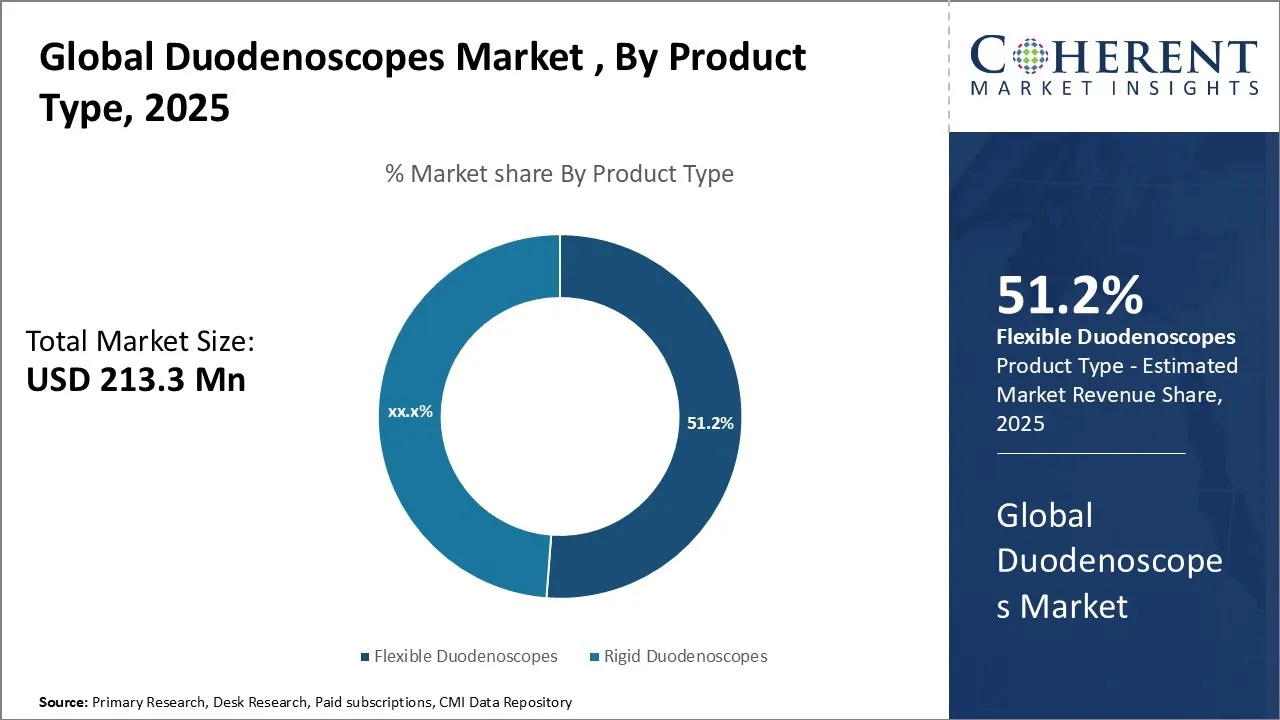
Duodenoscopes Market Insights, by Product Type, The Flexible Duodenoscopes Segments Contributed the Largest Share in the Market Owing to their Ability to Navigate Through the GI Tract
The flexible duodenoscopes segment holds a dominating position with 52.2% share of the global duodenoscopes market in 2026, The increasing incidence of pancreatic diseases such as pancreatic cancer, pancreatitis, and bile duct obstructions is a significant driver for the use of flexible duodenoscopes. According to the American Cancer Society, approximately 60,000 new cases of pancreatic cancer are expected in the United States in 2026, with duodenoscopy playing a key role in diagnosis and treatment. A flexible duodenoscopes also allows for an easy and minimally invasive diagnosis and treatment of conditions. This type of duodenoscopes offers access to areas where it was differently to reach previously, making them a versatile tool for various procedures.
The rigid duodenoscopes segment is expected to be at the constantly growing stage in the duodenoscopes market revenue. A rigid duodenoscopes is used in a medical setting, especially for ERCP procedures due to its ability to offer clear visualization and facilitate therapeutic intervention. It provides a direct and clear view of the papilla (the opening of the bile and pancreatic ducts) and surrounding area. It is essential for an accurate diagnosis and treatment.
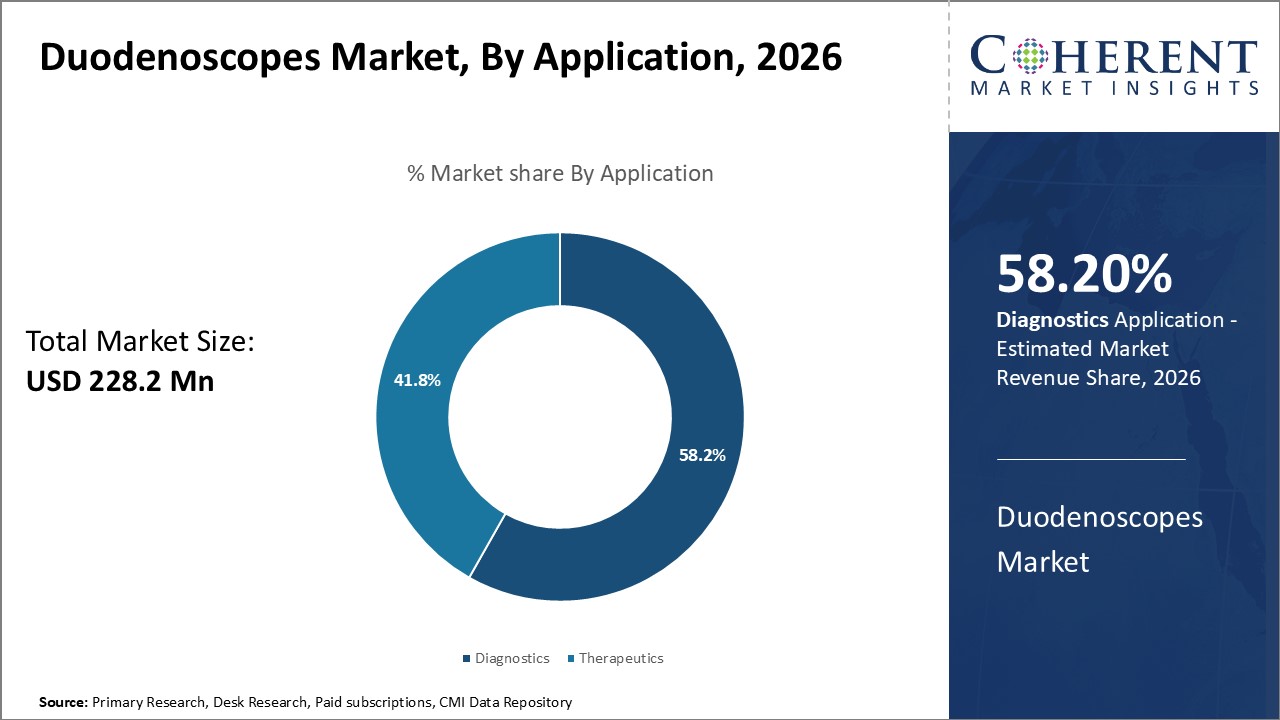
Duodenoscopes Market Insights, by Application, Rising Demand for Accurate Identification is Propelling the Diagnostics Segment Growth
The diagnostics segment is expected to dominate the market over the forecast period. Diagnosis through the duodenoscopes is vital as it offers accurate identification and understanding of the condition within the upper gastrointestinal tract, especially in the duodenum, bile duct, and pancreas. Through the right diagnosis, doctors can work towards a timely and effective treatment plan. Some of the commonly diagnosed diseases include ductal obstructions, stones, and malignancies. For instance, as stated in the Gastrointestinal Endoscopy Journal, Esophagogastroduodenoscopy (EGD) is still considered the gold standard for diagnosing UGIC.
The treatment segment is anticipated to grow at a significant rate over the forecast period owing to the seriousness of the disease and its life-threatening potential to cause complications if left untreated. Individuals experiencing gastrointestinal (GI) pancreatitis and bile duct issues, particularly those who are suffering from severe symptoms such as persistent abdominal pain or complications such as gallstones or infections.
Duodenoscopes Market Insights, by End-User, Hospitals Segment is Anticipated to Dominate the overall market
The hospital segment is expected to dominate the market in 2026, owing to early treatment in hospitals that can lead to proper recovery. In the hospital setting, a duodenoscope is used during Endoscopic Retrograde Cholangiopancreatography (ERCP), a procedure that allows doctors to visualize and treat problems in the pancreas and bile ducts. In the hospital, these procedures are handled by gastroenterologists or advanced endoscopists, they are professional and trained to perform ERCP to diagnose and treat issues related pancreas and bile duct. In February 2021, Medanta utilized a disposable duodenoscope to extract stones from the bile duct of a 30-year-old man experiencing jaundice, severe pain, and fever.
The ambulatory centers are anticipated to grow at the fastest rate during the forecast period. Duodenoscopes are widely used in ambulatory centers due to their versatility and their ability to perform ERCP procedures in ambulatory settings. A single-use duodenoscopes are proven to be significantly beneficial in ambulatory settings where resources for thorough reprocessing may be limited.
Regional Analysis
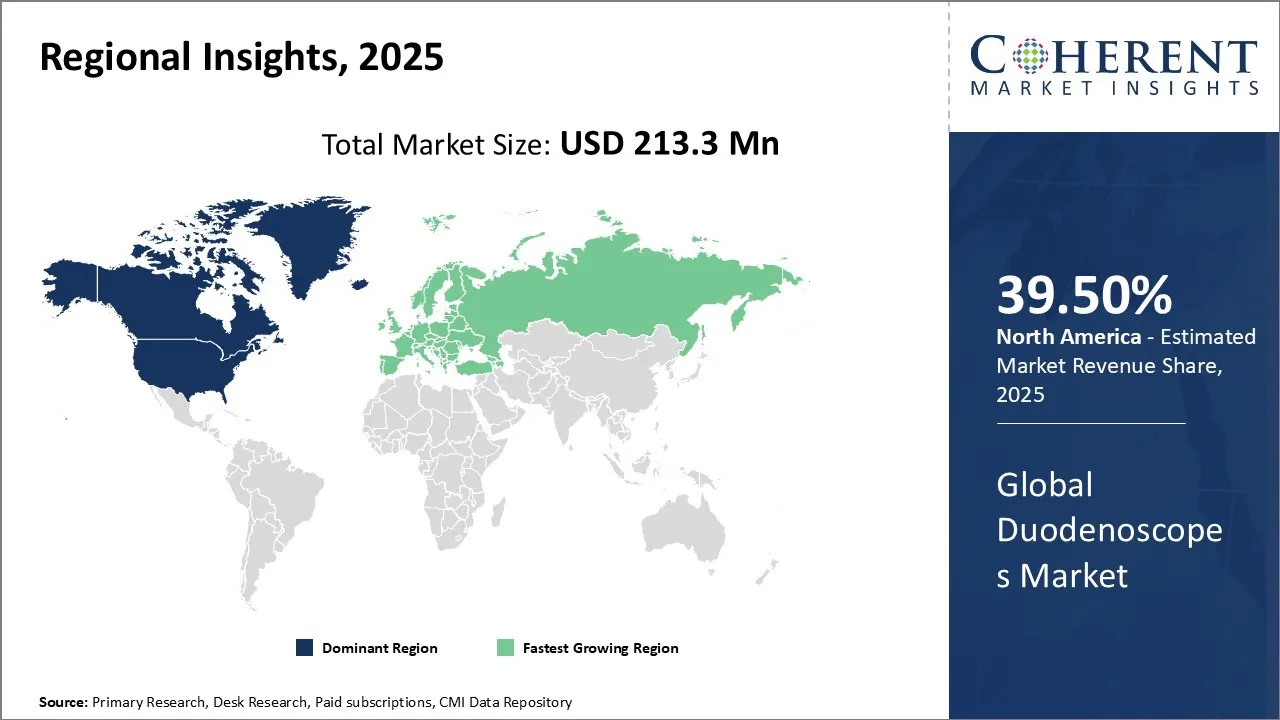
North America Duodenoscopes Market Trends
North America is estimated to hold a dominant share of 39.50 % of the market in 2025 owing to the high prevalence of gastrointestinal, liver, and pancreatic diseases, favourable health reimbursement, and increased awareness about Liver Disease. For instance, according to the article published in the American Liver Foundation (ALF), in June 2022, people affected by liver disease come together to raise awareness and funds. It provided them opportunity to support each other in a festive and inspiring environment. Funds raised through the Liver Life Walk allow ALF to provide valuable resources to liver patients. These kinds of awareness in the healthcare system and rising health expenditures, as well as increased knowledge of advanced liver treatments, are expected to drive duodenoscopes market demand in the region.
Europe Duodenoscopes Market Trends
Europe region is expected to exhibit the fastest growth in the duodenoscopes market during the forecast period. The rising demand for duodenoscopes in Europe is primarily driven by their importance for diagnosing and managing a wide range of gastrointestinal conditions. In Europe, tens of millions of people undergo endoscopic procedures every year. Duodenoscopes are widely available in hospitals and specialised endoscopy centres. Europe has several renowned endoscopy centres, focusing on training and quality improvement such as the European Endoscopy Training Centre (EETC) in Rome, Italy, the Wolfson Unit for Endoscopy at St. Mark’s Hospital in Harrow, UK and some centres affiliated with universities such as University of Amsterdam, and University of Sheffield, further adding to the duodenoscopes market share.
Duodenoscopes Market Outlook for Key Countries
Germany Duodenoscopes Market Trends
Germany is the leading country in the Europe region for the duodenoscopes market. The country has the highest number of ERCP procedures, credited to its well-equipped healthcare infrastructure with specialized gastroenterology centers. Germany has a large aging population and people suffering from conditions such as gallstones, biliary strictures, pancreatic tumours and chronic pancreatitis. It is estimated that approximately 55,000 people are treated for acute pancreatitis in hospitals every year.
China Duodenoscopes Market Trends
The most common health problem associated with the gastrointestinal tract observed among Chinese people is gallbladder and bile duct disease. According to the World Cancer Research Fund, China is ranked number 1 for gallbladder cancer in 2022 with 31,132 new cases. There are several factors responsible for this issue including gallstone, obesity, and certain dietary habits. Some lifestyle factors such as smoking and alcohol consumption also influence the development of gallbladder cancer.
India Duodenoscopes Market Trends
There is an increasing prevalence of gastrointestinal disease in India. These include the rise of liver disease, gallstones, pancreatitis, and other gastroenterology conditions which has resulted in higher demand for diagnostic and therapeutic procedures using duodenoscopes. According to the India Dietetic Association, 7 out of 10 urban Indians experience gut health issues, with about 59% suffering from digestive issues on a weekly basis and 12% on a daily basis.
U.S. Duodenoscopes Market Trends
Duodenoscopes in the United States are leading due to advanced treatment capabilities which involve minimally invasive techniques, offering diagnostic and therapeutic features. ERCP is used to treat issues such as gallstone removal, stent placement and bile duct biopsies which are important for the management of complex gastrointestinal disease. moreover, advancing technologies and growing awareness keep the United States at a growing stage in the duodenoscopes market. for instance, in the United States, the ERCP procedure was performed over 525,000 times in 2022 and the number has grown since then.
Global Duodenoscopes Market: Key Trends
Shift Towards Single-Use Device
The single-use duodenoscope device has received FDA approval since 2019. Increasing focus on patient safety and infection prevention is boosting the adoption of disposable duodenoscopes. This trend aims to reduce the risk of contamination and enhance procedural efficiency. While they are efficient to use to reduce the risk of infection and have more advantages, it is more expensive compared to the reusable options. Also, have environmental implications. For instance, in February 2020, Olympus Corporation, a Japan-based manufacturer of optics and reprography products, announced that the US FDA had approved its TJF-Q190V duodenoscope with a sterile, disposable distal endcap.
Global Duodenoscopes Market Drivers: Increasing prevalence of gastrointestinal and other diseases
The increasing prevalence of gastrointestinal, liver, and pancreatic diseases is expected to drive the market growth over the forecast period. For instance, according to the article published by the National Library of Medicine Journal, in August 2021. There were 2,814,972.3 incident cases of acute pancreatitis occurred in 2020 globally; 1,273,955.2 in women and 1,541,017.1 in men. The global age-standardized incidence rate declined from 37.9/100,000 to 34.8/100,000 during 1990–2019, an annual decrease of 8.4% (5.9–10.4%).
Global Duodenoscopes Market Restraint: Strict government regulations
Stringent Government Regulations for manufacturing and marketing are the major factors confining the use of duodenoscopes. For instance, on January 10, 2023, the FDA issued warning letters to manufacturers of duodenoscopes in the U.S. including Fujifilm Medical Systems USA, Inc., Olympus Medical Systems Corporation, and Pentax of America which failed to provide sufficient data to address postmarket surveillance studies requirements under Section 522 of the Federal Food, Drug, and Cosmetic Act.
Global Duodenoscopes Market Opportunity: Focus on Safety
With the growing use of single-use duodenoscope and disposable components, there is a growing concern about infection transmission. The researcher is focusing on addressing the economic and environmental implications of the new technologies and optimising their use towards clinical practices. With the help of new developments in duodenoscopes and reprocessing methods, it is expected to have a growing focus on improving safety, reducing costs, and minimizing environmental impacts.
Market Report Scope
Duodenoscopes Market Report Coverage
| Report Coverage | Details | ||
|---|---|---|---|
| Base Year: | 2025 | Market Size in 2026: | USD 228.2 Mn |
| Historical Data for: | 2020 To 2024 | Forecast Period: | 2026 To 2033 |
| Forecast Period 2026 to 2033 CAGR: | 7.0% | 2033 Value Projection: | USD 366.5 Mn |
| Geographies covered: |
| ||
| Segments covered: |
| ||
| Companies covered: | Custom Ultrasonics, Inc., ENDOMED, Fujifilm Holdings Corporation, Hoya Corporation, KARL STORZ GmbH & Co. KG., Olympus Corporation, PENTAX Medical Company, Ambu A/S, Boston Scientific Corporation, EndoMed Systems, HOYA Corp., CONMED Corporation, Becton, Dickinson and Company, B. Braun Melsungen AG, Cook Group and SonoScape Medical Corp. | ||
| Growth Drivers: |
| ||
| Restraints & Challenges: |
| ||
Global Duodenoscopes Market: Key Developments
- In August 2024, Advanced Sterilization Product (ASP), a division of Fortive, collaborated with PENTAX Medical, a division of HOYA, and declared their FDA clearance for the new ULTRA GITM Cycle in STERRADTM 100NX Sterilizer and ALLCLEARTM The ULTRA GI™ Cycle is a unique design to reprocess duodenoscopes using hydrogen peroxide gas plasma sterilization. This will ensure the safety of the patient and greatly prevent the risk of infection in patients in healthcare facilities.
- In January 2022, Wassenburg Medical B.V., a company that provides endoscope reprocessing products and solutions in the U.S., announced that it had acquired Custom Ultrasonics, a U.S.-based medical equipment manufacturer. This acquisition will create additional growth in the U.S. market for both companies.
- In December 2021, Fujifilm India Pvt Ltd, a medical imaging and diagnostic technologies, Partnered with A’alda Vet India Pvt Ltd animal hospital company in India, to boost healthcare facilities for pets. As part of the partnership, Fujifilm India will provide innovative medical and screening devices to DCC (Dogs, Cats & Companions) Animal Hospital, an initiative by A’alda Vet to increase the standards of veterinary care in India.
- In May 2023, Roche Information Solutions India Pvt Ltd, a company that develops innovative solutions to help labs and clinicians, showcased innovative laboratory solutions and digital diagnostics through “Innovation Past, Present and Future" at WorldLab
- EuroMedLab 2023 in Rome, Italy, on May 21-25, 2023. Attendees had the opportunity to experience first-hand Roche's latest technological advancements in lab automation, serum work area, molecular and point-of-care solutions and find out more about how the company is transforming patient care through advancements in breakthrough high-medical value diagnostic and digital solutions.
Analyst Opinion (Expert Opinion)
- The prevalence of gastrointestinal diseases is one of the primary drivers of the duodenoscope market. The global burden of diseases like pancreatitis, biliary tract disease, and cholangiocarcinoma is escalating. According to the World Gastroenterology Organisation, over 2.3 billion people globally are affected by digestive diseases, with the number rising annually, particularly in aging populations. As a result, the demand for duodenoscopes in ERCP procedures continues to surge.
- The Saudi-Japan 2030 Endoscopy Training Initiative is an exciting development that will likely boost duodenoscope demand in the Middle East. This initiative, aimed at standardizing ERCP protocols in Saudi Arabia, is set to increase duodenoscope deployments in the region by 40% year-over-year. As Saudi Arabia invests in healthcare infrastructure and skill development, the country is poised to become a key player in the duodenoscope market within the Middle East and North Africa (MENA) region. This expansion will likely encourage greater regional collaboration, leading to an influx of both training and equipment sales.
Speak to the analyst
Want personalized insights?
Take the findings above to one of our principal consultants, or have the report rebuilt around the segments, geographies and competitors you actually track.
Market Segmentation:
- Global Duodenoscopes Market, By Product Type (Revenue, USD Mn, 2021 - 2033)
- Flexible Duodenoscopes
- Rigid Duodenoscopes
- Global Duodenoscopes Market, By Application (Revenue, USD Mn, 2021 - 2033)
- Diagnostics
- Therapeutics
- Global Duodenoscopes Market, By End User (Revenue, USD Mn, 2021 - 2033)
- Hospitals
- Clinics
- Ambulatory Centers
Regional Insights (Revenue, USD Mn, 2021 - 2033)
- North America
- U.S.
- Canada
- Latin America
- Brazil
- Argentina
- Mexico
- Rest of Latin America
- Europe
- Germany
- U.K.
- Spain
- France
- Italy
- Russia
- Rest of Europe
- Asia Pacific
- China
- India
- Japan
- Australia
- South Korea
- ASEAN
- Rest of Asia Pacific
- Middle East
- GCC Countries
- Israel
- Rest of Middle East
- Africa
- South Africa
- North Africa
- Central Africa
- North America
- Global Duodenoscopes Market - Key Players
- Ultrasonics, Inc.
- EndoMed Systems GmbH.
- Fujifilm Holdings Corporation
- Hoya Corporation
- KARL STORZ GmbH & Co. KG.
- Olympus Corporation
- Roche Information Solutions India Pvt Ltd
- PENTAX Medical Company
- Ambu A/S
- Boston Scientific Corporation
- EndoMed Systems
- HOYA Corp.
- CONMED Corporation
- Becton
- Dickinson and Company
- B.Braun Melsungen AG
- Cook Group
- SonoScape Medical Corp.
Sources
Primary Research Interviews from the Following Stakeholders:
Stakeholders:
- Interviews with medical professionals, device manufacturers, healthcare providers, and industry experts specializing in endoscopic technologies.
- Specific stakeholders: Gastroenterologists, surgical professionals, biomedical engineers, and healthcare managers involved in diagnostic and therapeutic endoscopy.
Databases:
- PubMed
- ClinicalTrials.gov
- HealthData.gov
Magazines:
- MedTech Insight
- Healthcare Technology News
- Medical Device and Diagnostic Industry (MD+DI)
- HealthTech Magazine
Journals:
- Journal of Gastroenterology and Hepatology
- Endoscopy
- Gastrointestinal Endoscopy
- Journal of Medical Devices
- Biomed Optics Express
Newspapers:
- The New York Times
- The Guardian
- The Wall Street Journal
- Financial Times
- The Washington Post
Associations:
- American Society for Gastrointestinal Endoscopy (ASGE)
- European Society of Gastrointestinal Endoscopy (ESGE)
- Medical Device Manufacturers Association (MDMA)
- International Society of Gastrointestinal Endoscopy (ISGE)
- World Gastroenterology Organisation (WGO)
Public Domain Sources:
- World Health Organization (WHO)
- Centers for Disease Control and Prevention (CDC)
- Food and Drug Administration (FDA)
- National Institutes of Health (NIH)
Proprietary Elements:
- CMI Data Analytics Tool, and Proprietary CMI Existing Repository of Information for the Last 8 Years
Get access to 250+ pages report
Every segment, forecast, competitor profile and data table behind the analysis above — available for instant download.
- ESOMAR Member
- ISO 9001:2015 Certified
- D-U-N-S Registered
- GDPR & CCPA Compliant
Missing comfort of reading report in your local language? Find your preferred language:
Transform your Strategy with Exclusive Trending Reports
Frequently Asked Questions
The Duodenoscopes Market is estimated to be valued at USD 228.2 Mn in 2026, and is expected to reach USD 366.5 Mn by 2033.
The CAGR of the Duodenoscopes Market is projected to be 7.0% from 2026 to 2033.
Increasing prevalence of gastrointestinal, liver, and pancreatic diseases and increasing technological advancements are expected to drive the market growth.
flexible duodenoscopes is the leading segment in the market.
Stringent government regulations for devices manufacturing and marketing expected to hinder the market over the forecast period.
Major players operating in the Market Custom Ultrasonics, Inc., EndoMed Systems GmbH, Fujifilm Holdings Corporation, Hoya Corporation, KARL STORZ GmbH & Co. KG., Olympus Corporation, PENTAX Medical Company, Ambu A/S, Boston Scientific Corporation, EndoMed Systems, HOYA Corp., CONMED Corporation, Becton, Dickinson and Company, B. Braun Melsungen AG, Cook Group and SonoScape Medical Corp.