

Edible Insects Market Size and Forecast – 2026 to 2033
The Edible Insects Market is anticipated to grow at a CAGR of 12.9% with USD 1.6 Bn share in 2026 and is expected to reach USD 3.2 Bn in 2033. Consumers are driving the Edible Insects Market by seeking sustainable protein sources, responding to environmental concerns, addressing food security challenges, and adopting alternative food options.
Key Takeaways
- As a Whole hold the largest market share of 53.2% in 2026 owing to its rising demand for sustainable protein sources. By 2050, the global population is projected to reach 10 Bn, increasing protein demand and intensifying environmental challenges.
- Beetles expected to hold largest market share of 42.2% in 2026 owing to the high nutritional value. Peanut beetle larvae contain approximately 55% crude protein, 18% crude fat, 3% ash, and 24% carbohydrates.
- North America is expected to acquire the dominant share of 39.2% in 2026 owing to its growing demand for alternative protein sources.
Current Events and Their Impact on the Edible Insects Market
Current Event | Description and its Impact |
EU Novel Food Authorizations Expanded (2025) |
|
Singapore's Regulatory Framework for Edible Insects (2025) |
|
Segmental Insights
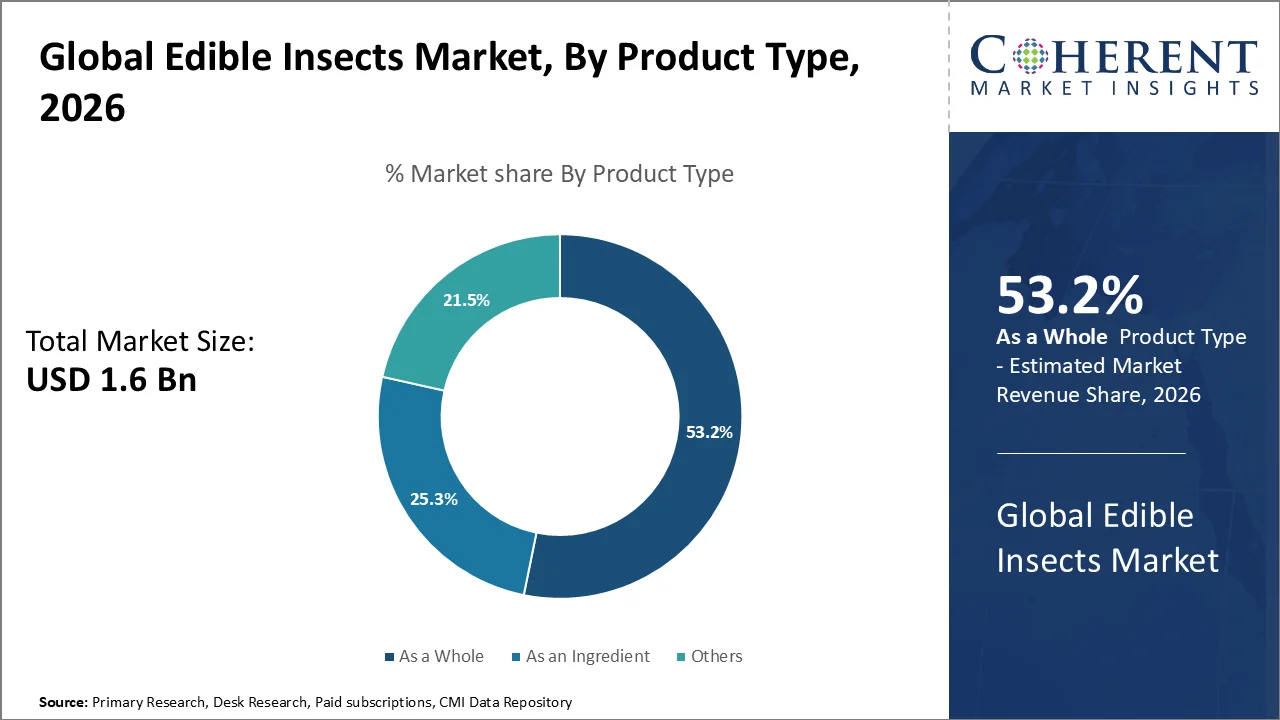
Why is As a Whole Acquiring the Largest Market Share?
As a Whole hold the largest market share of 53.2% in 2026. Consumers and food manufacturers are fueling the edible insects market by embracing sustainable, nutrient-rich protein sources as viable alternatives to conventional livestock. They value edible insects for their high protein, vitamin, and mineral content, driving greater consumer interest and adoption. Industry players are enhancing insect farming technologies, optimizing processing techniques, and expanding the use of edible insects in food, animal feed, and animal nutrition. Meanwhile, governments are establishing supportive regulatory frameworks, investors are financing market expansion, and manufacturers are introducing innovative products that strengthen commercialization and increase consumer acceptance worldwide. For instance, Rwanda advanced its edible insect sector by launching national standards and opening its first commercial insect-based animal feed plant to support food security and economic growth.
- Current Industry Events of 2026
- Market Size Estimation
- Regional Breakdown
- Competitive Landscape
- Customer Intelligence
- Segmental Analysis
- Pricing Analysis
- Key Market Drivers, Challenges & Future Trends
- Customized Insights Section
Beetles expected to hold largest market share
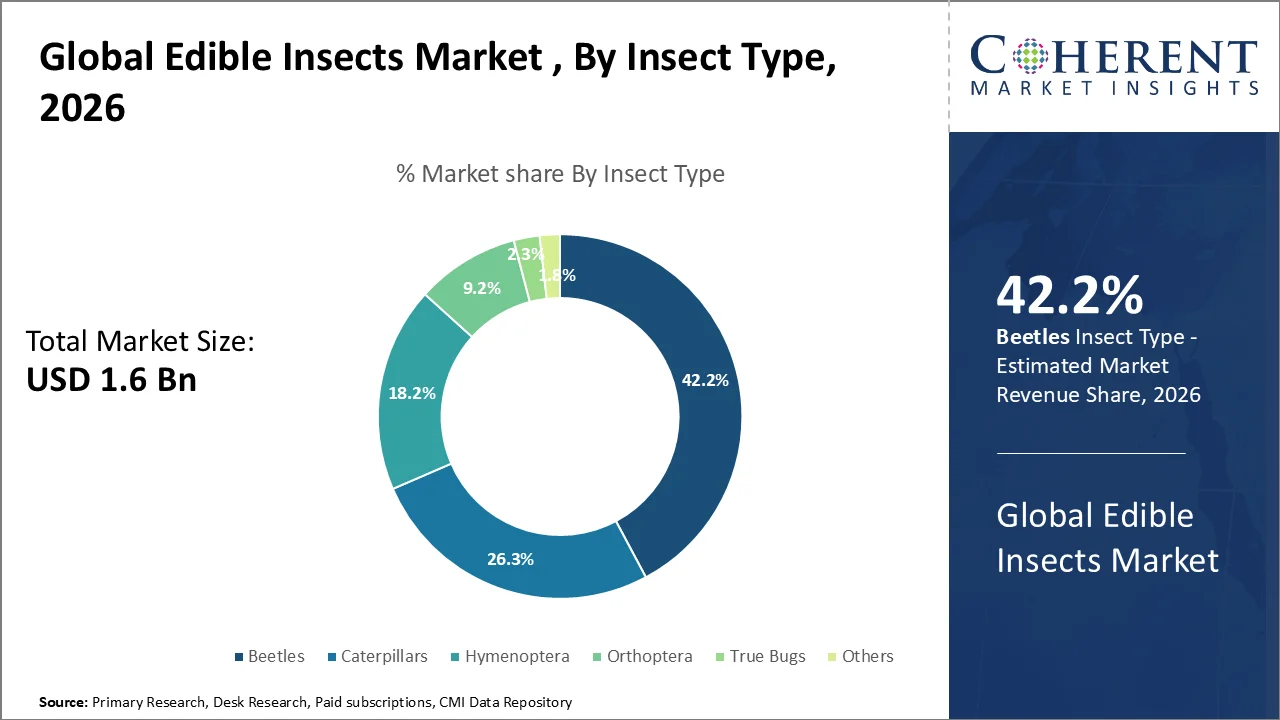
Beetles expected to hold largest market share of 42.2% in 2026 owing to the efficient farming and scalability. Producers are driving the beetles segment in the edible insects market by cultivating beetles for their high nutritional value, efficient farming characteristics, and versatility across food and animal feed applications. They prefer beetles, particularly mealworm larvae, because these insects require fewer resources and thrive in controlled farming environments. Food manufacturers are incorporating beetle-derived ingredients into protein powders, snacks, and functional foods to satisfy growing demand for sustainable nutrition. Meanwhile, investors, regulators, and industry participants are advancing farming technologies, supporting commercialization, and expanding consumer awareness of alternative proteins.
Edible Insects Market Trends
- Rising demand for sustainable protein: Growing concerns over food security and climate change are increasing interest in edible insects as an alternative protein source. According to the FAO, more than 2 billion people worldwide already consume insects as part of their traditional diets, highlighting their established role in global food systems.
- Improving production efficiency through advanced insect farming: Commercial producers are adopting automated rearing systems, precision breeding, and advanced processing technologies to improve scalability, product consistency, and production efficiency. The FAO reports that insects exhibit high feed-conversion efficiency; approximately 2 kg of feed can produce 1 kg of insect biomass, compared with about 8 kg of feed required to produce 1 kg of cattle body weight gain.
- Growing consumer interest driven by nutritional value: Increasing awareness of the high protein and micronutrient content of edible insects is supporting their adoption in health-focused food products. According to the FAO, over 2,000 insect species are recognized as edible, providing rich sources of protein, essential amino acids, vitamins, and minerals.
Regional Insights
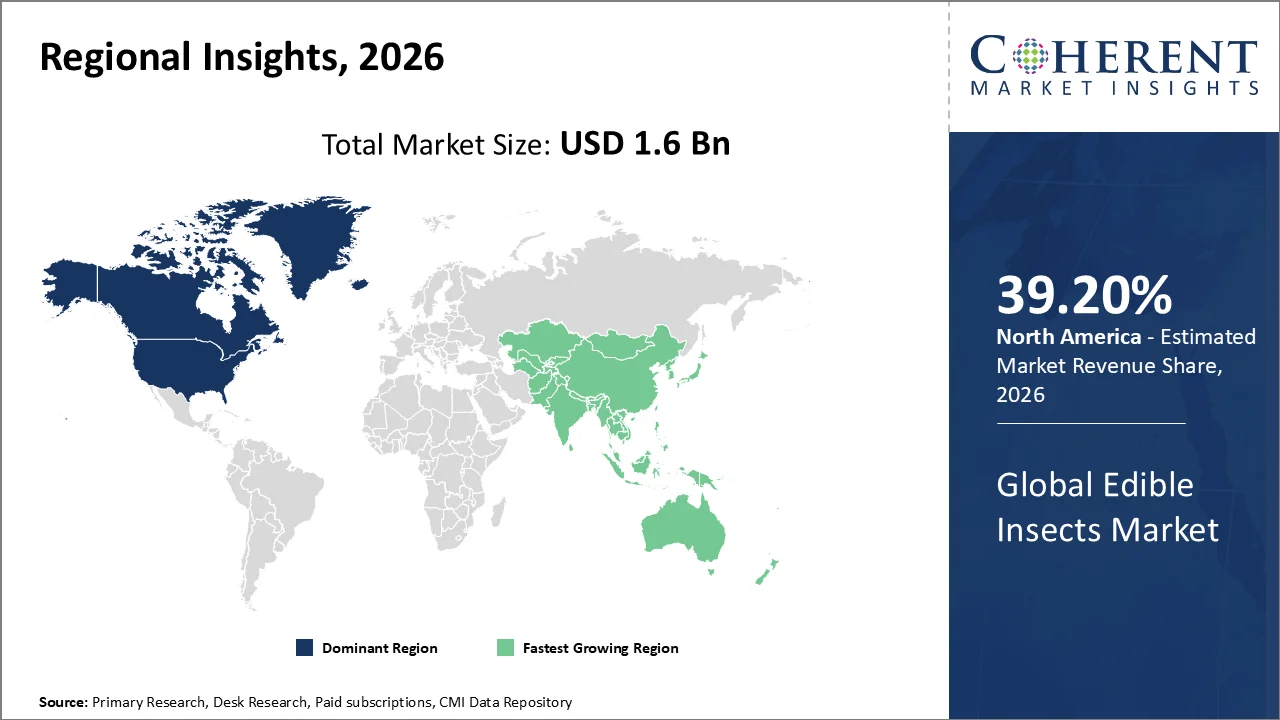
North America dominates owing to growing consumer awareness and product innovation
North America is expected to acquire the dominant share of 39.2% in 2026. Consumers, food manufacturers, and investors are driving the North American edible insects market by increasing demand for sustainable protein, investing in alternative food technologies, and expanding applications in food and animal feed. Food companies are introducing insect-based snacks, protein powders, and functional ingredients to satisfy consumer demand for nutritious and environmentally responsible products. Industry participants are advancing insect farming technologies and accelerating commercialization through innovation, while supportive regulatory developments and rising awareness of the environmental and nutritional benefits of edible insects continue to strengthen market adoption across the region. For instance, Nestlé’s Purina launched a new insect-based pet food line, offering a more sustainable protein option as bug-based foods gain popularity worldwide.
Asia Pacific Edible Insects Market Trends
The Asia Pacific region drives the edible insects market through its strong cultural acceptance of insect consumption across several countries. Consumers increasingly seek sustainable protein sources and recognize the environmental advantages of insect-based foods over conventional livestock. Food manufacturers continue to develop innovative insect-based products, while governments promote alternative proteins through supportive policies. Companies invest in insect farming to expand production capacity. Rapid urbanization, population growth, and the expanding use of edible insects in food, animal feed, and nutritional products further accelerate market development across the region. For instance, CBP agriculture specialists at LAX found 37 live beetles hidden in Japanese snacks, chips, and chocolate during an inspection of an air cargo shipment from Japan. The seized items were valued at $1,480.
United States Edible Insects Market Trends
The United States edible insects market gains momentum as consumers seek sustainable protein sources, recognize the environmental impact of conventional livestock farming, and explore alternative nutrition choices. Consumers increasingly adopt insect-based foods because these products provide valuable nutrients such as protein, vitamins, and minerals. Food companies drive market growth by introducing innovative insect-based snacks and supplements, improving product availability, and promoting sustainable food solutions that attract health-conscious and environmentally aware consumers.
China Edible Insects Market Trends
China’s edible insects market grows as consumers seek sustainable protein sources, recognize the environmental impact of conventional livestock farming. The government promotes food innovation, while companies advance insect farming technologies and develop new applications in animal feed, health products, and food ingredients. Changing consumer preferences, rapid urbanization, and the need for cost-effective protein options further encourage businesses and consumers to adopt edible insect products throughout China. For instance, A Beijing museum went viral after launching cockroach-infused coffee and other insect-based drinks made with edible bugs.
Who are the Major Companies in Edible Insects Industry
Some of the major key players in Edible Insects industry are Thailand Unique, Kreca, Nordic Insect Economy Ltd., Entomo Farms, Enviro Flight,LLC, Proti-Farm, Exo Inc., Entotech, Deli Bugs Ltd., and Eat Grub Ltd.
Key News
- In October 2023, Chinhoyi University of Technology launched the “Edible Insects: Food for the Future” cookbook, highlighting insects as a sustainable food source in African cuisine.
Market Report Scope
Edible Insects Market Report Coverage
| Report Coverage | Details | ||
|---|---|---|---|
| Base Year: | 2025 | Market Size in 2026: | USD 1.6 Bn |
| Historical Data for: | 2020 To 2024 | Forecast Period: | 2026 To 2033 |
| Forecast Period 2026 to 2033 CAGR: | 12.9% | 2033 Value Projection: | USD 3.2 Bn |
| Geographies covered: |
| ||
| Segments covered: |
| ||
| Companies covered: | Thailand Unique, Kreca, Nordic Insect Economy Ltd., Entomo Farms, Enviro Flight,LLC, Proti-Farm, Exo Inc., Entotech, Deli Bugs Ltd., and Eat Grub Ltd. | ||
Analyst Opinion
- Edible insects are moving from a niche sustainability concept to a strategic protein alternative, but consumer acceptance remains the primary market challenge. The strongest opportunity lies in regions facing protein security concerns, where insects offer high nutritional value with lower resource requirements. For example, crickets contain around 60–70 grams of protein per 100 grams of dry weight, while requiring significantly less land and water compared with conventional livestock.
- The strongest growth potential for edible insects will come from industrial applications rather than direct human consumption. Analysts believe animal feed, aquaculture, and pet nutrition will drive near-term adoption because these sectors face fewer cultural barriers and have immediate demand for sustainable feed alternatives. For instance, companies such as Protix are scaling insect-based ingredients for applications including fish feed and pet food, addressing the need to reduce dependence on traditional feed sources such as fishmeal and soybean meal.
- Regulatory progress and commercialization efforts will determine which markets successfully transition edible insects into mainstream food systems. Countries in Asia and Europe are taking the lead by approving specific insect species for food use, while companies are investing in automated farming technologies to improve consistency and food safety. For example, the European Union has authorized insects such as yellow mealworm and migratory locust for human consumption, creating a clearer pathway for product innovation. In China, the combination of food technology investment, traditional consumption of insect-based foods in some regions, and demand for alternative protein sources positions the country as a key market for future adoption.
- The industry’s long-term success will depend on branding insects as functional, high-value ingredients rather than substitutes for conventional meat. Products that emphasize protein enrichment, sustainability, and health benefits are more likely to gain consumer acceptance than products marketed solely as “insect foods.” Research indicates that insect proteins provide essential amino acids, minerals, and fatty acids, making them suitable for applications in sports nutrition, dietary supplements, and fortified foods. Companies that integrate insect ingredients into familiar products will have a stronger advantage in overcoming psychological barriers associated with insect consumption.
Speak to the analyst
Want personalized insights?
Take the findings above to one of our principal consultants, or have the report rebuilt around the segments, geographies and competitors you actually track.
Market Segmentation
- By Product Type
- As a Whole
- Steam or Fried
- Raw
- BBQ
- As an Ingredient
- Drinks
- Insect Confectionery
- Snack and Backed Products
- Others
- As a Whole
- By Insect Type
- Beetles
- Caterpillars
- Hymenoptera
- Orthoptera
- True Bugs
- Others
- By Region
- North America
- U.S.
- Canada
- Latin America
- Brazil
- Mexico
- Argentina
- Rest of Latin America
- Europe
- Germany
- U.K.
- France
- Italy
- Spain
- Russia
- Rest of Europe
- Asia Pacific
- China
- India
- Japan
- Australia
- South Korea
- ASEAN
- Rest of Asia Pacific
- Middle East
- GCC
- Israel
- Rest of Middle East
- Africa
- South Africa
- Central Africa
- North Africa
- North America
Sources
Primary Research interviews
- Interviews with industry stakeholders, including edible insect producers, insect farming companies, food manufacturers, distributors, researchers, nutrition experts, and sustainability professionals.
- Discussions with entomologists, food technology experts, agricultural researchers, and key opinion leaders involved in insect-based food innovation.
- Feedback collected from consumers, food industry participants, and ecosystem stakeholders regarding adoption trends, product preferences, and market challenges.
Databases
- Food and Agriculture Organization (FAO) – Insects for Food and Feed database and publications.
- FAOSTAT – Food production, agriculture, and livestock-related statistical databases.
- Scopus – Scientific literature database for edible insects, entomophagy, food technology, and sustainability research.
- Web of Science – Research publications and citation database.
- PubMed – Biomedical, nutrition, and food safety research database.
- National agricultural and food safety databases from relevant government agencies.
Magazines
- Food Technology Magazine
- Food Navigator
- New Food Magazine
- Food Safety Magazine
- Sustainability-focused food and agriculture publications
- Science and technology magazines covering alternative proteins and food innovation
Journals
- Journal of Insects as Food and Feed
- International Journal of Tropical Insect Science
- Food Production, Processing and Nutrition
- Agriculture & Food Security
- Entomological Research
- Food Research International
- Journal of Cleaner Production
- Trends in Food Science & Technology
Newspapers
- The Guardian
- Reuters
- The Times of India
- The New York Times
- Financial Times
- Other global and regional newspapers covering alternative proteins, food security, sustainability, and insect farming developments.
Associations
- Food and Agriculture Organization of the United Nations (FAO) – Insects for Food and Feed initiatives.
- International Platform of Insects for Food and Feed (IPIFF)
- International Association for Food Protection (IAFP)
- Entomological societies and agricultural research organizations
- Food safety and regulatory bodies involved in novel food approvals
Public Domain sources
- Government publications and regulatory documents related to novel foods and insect-based food approvals.
- FAO reports on edible insects, food security, sustainability, and insect farming practices.
- Academic research papers, conference proceedings, and publicly available scientific studies.
- Environmental sustainability reports and food system studies.
- Publicly available agricultural statistics and food consumption datasets.
Proprietary Elements
- CMI Data Analytics Tool
- Proprietary CMI Existing Repository of information for last 10 years
Get access to 250+ pages report
Every segment, forecast, competitor profile and data table behind the analysis above — available for instant download.
- ESOMAR Member
- ISO 9001:2015 Certified
- D-U-N-S Registered
- GDPR & CCPA Compliant
Missing comfort of reading report in your local language? Find your preferred language:
Transform your Strategy with Exclusive Trending Reports
Frequently Asked Questions
The Edible Insects Market is anticipated to grow at a CAGR of 12.9% with USD 1.6 Bn in 2026 and is expected to reach USD 3.2 Bn in 2033.
Low cost of investment as compared to other conventional livestock and easy availability coupled with the increasing production of edible insects is fuelling the growth of the 3D printing materials market in the region.
Growing cases of livestock disease are creating demand for edible insects and increasing demand for invertebrates for treating malnutrition are expected to favour market growth over the forecast period.
Lack of a legal blueprint for the consumption of edible insects coupled with the lack of distribution channel and human consumption of edible insects is still considered as a taboo is expected to hamper the growth the market during the forecast period.
Major players operating in the global edible insects market include BASF SA, DANONE, Kellogg’s, Arla Foods, Nestle SA, General Mills, and AMWAY Malaysia Holdings Bhd.