

Edible Oils And Fats Market Size and Forecast — 2026 - 2033
The Global Edible Oils and Fats Market size is estimated to be valued at USD 120 billion in 2026 and is expected to reach USD 180 billion by 2033, exhibiting a compound annual growth rate (CAGR) of 6.2% from 2026 to 2033.
Overview
The edible oils and fats market includes a wide range of products derived from plant and animal sources, widely used in cooking, food processing, and industrial applications. Key products include vegetable oils such as palm oil, soybean oil, sunflower oil, canola oil, and olive oil, which dominate global consumption due to affordability and health preferences. Animal-based fats like butter, lard, and tallow are also used in traditional and processed foods. Specialty oils, including coconut, avocado, and rice bran oil, are gaining popularity for their nutritional benefits. The market also features blended oils designed for specific culinary and industrial applications.
Key Takeaways
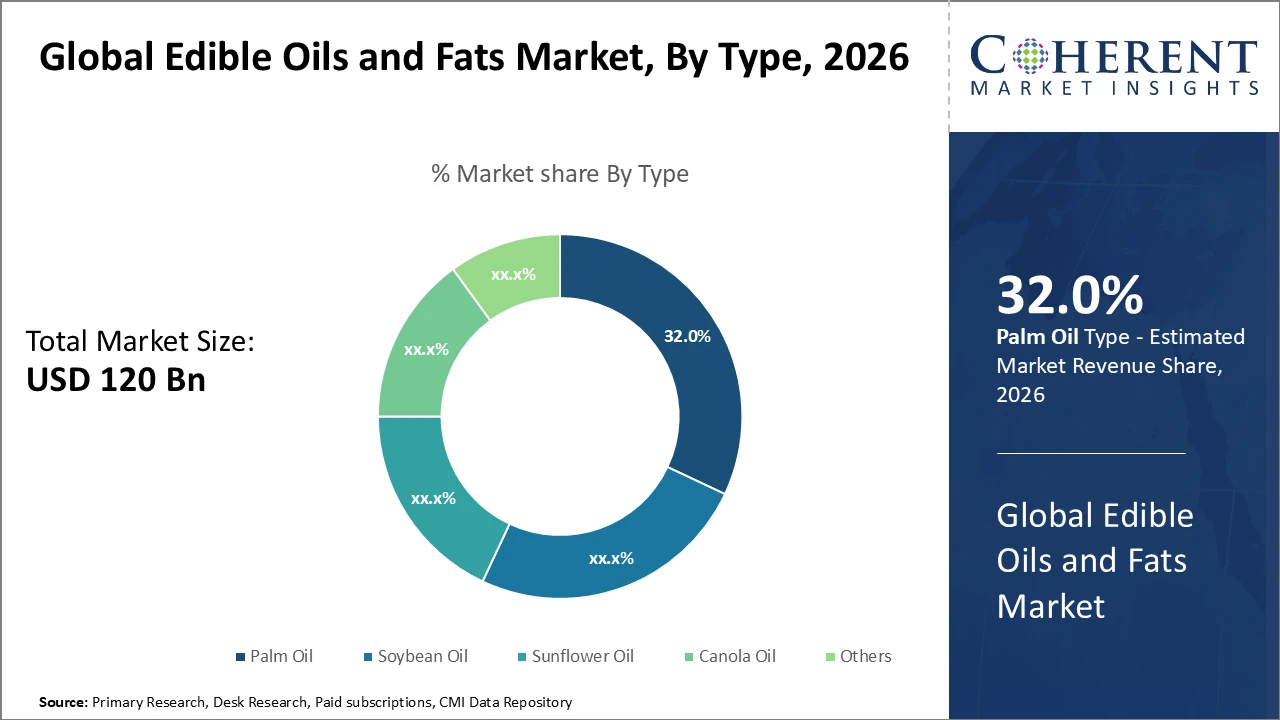
In the Type segment, palm oil holds a significant share of around 32% due to its low cost, high yield, and wide application across food processing, cosmetics, and industrial uses, while specialty oils such as soybean, sunflower, and olive oil are witnessing the fastest growth driven by rising health consciousness and demand for premium edible oils.
In the Application segment, the food industry dominates the edible oils and fats market with approximately 45% share, supported by strong demand from processed foods, bakery, and cooking applications, while industrial and pharmaceutical applications are steadily expanding due to increasing use of oils in oleochemicals, biodiesel production, and excipients.
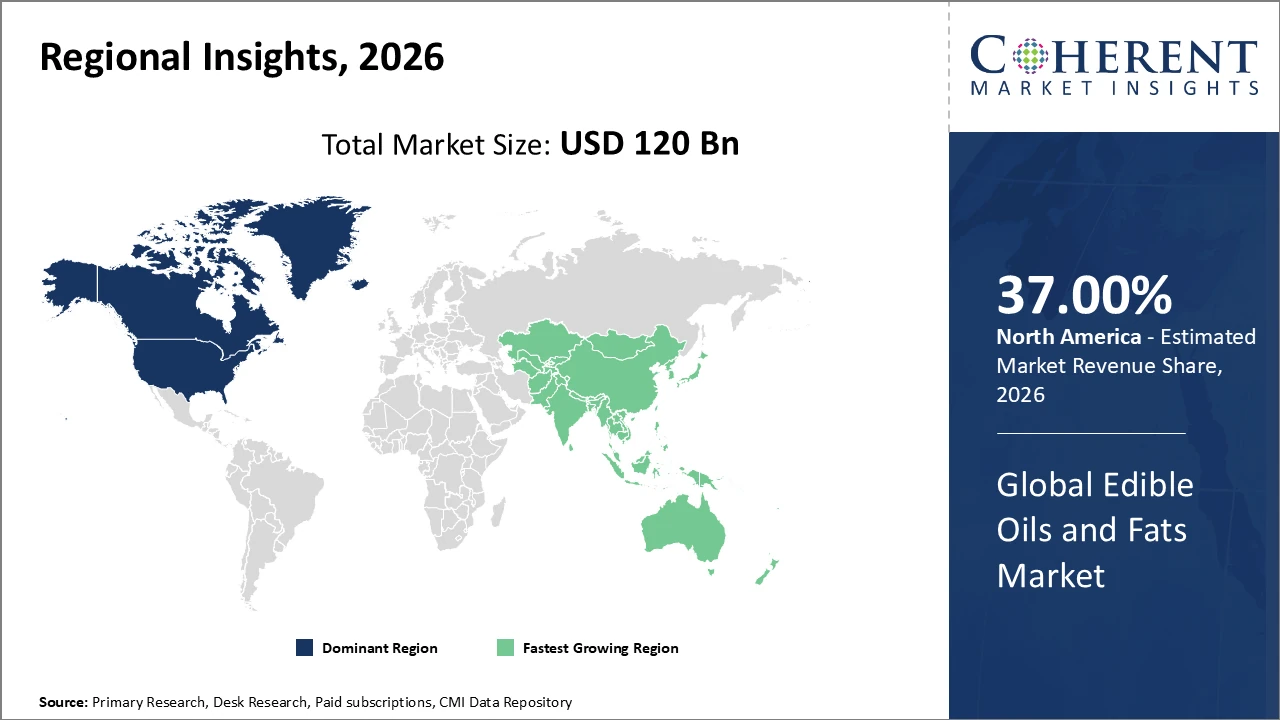
Regionally, North America leads the market owing to advanced refining and processing infrastructure, high consumption of packaged foods, and strict quality standards, whereas Asia Pacific is the fastest-growing region driven by rising population, urbanization, increasing disposable income, and expanding domestic production capacities.
Europe shows strong growth in organic, non-GMO, and sustainable edible oil segments, supported by stringent environmental regulations and high consumer awareness, particularly in countries such as Germany, France, and the United Kingdom where demand for healthier and certified products is rising.
Edible Oils and Fats Market Segmentation Analysis
Edible Oils and Fats Market Insights, By Type
Palm oil dominates the edible oils and fats market with a 32% share due to its cost efficiency, high yield per hectare, and wide versatility across food, cosmetics, and industrial applications. Soybean oil is the fastest-growing segment, driven by rising health awareness and increasing use in processed and packaged foods. Sunflower oil remains a preferred choice in premium and organic categories because of its perceived cardiovascular benefits. Canola oil is gaining steady traction due to its low saturated fat content and suitability for both culinary and industrial use. Other niche oils, including coconut and olive oil, cater to specialty health-focused consumer segments.
Edible Oils and Fats Market Insights, By Application
The food industry remains the largest application segment in the edible oils and fats market, accounting for around 45% share due to strong global demand for cooking, frying, bakery, and processed food products. The fastest-growing segment is industrial use, driven by increasing adoption of edible oils in biodiesel production, oleochemicals, lubricants, and other bio-based industrial applications. The pharmaceutical and cosmetics sectors also utilize edible oils as key ingredients in formulations focused on natural, organic, and skin-friendly products. The “others” category, including animal feed and minor applications, shows stable but comparatively limited growth, contributing a smaller share to overall market expansion.
Edible Oils and Fats Market Insights, By Form
Refined oil holds the dominant share in the edible oils and fats market due to strong consumer preference for purity, consistent quality, and longer shelf life, particularly in retail and household consumption. Blended fats represent the fastest-growing subsegment as they offer flexibility and cost efficiency for food processing, bakery, and confectionery applications. Crude oil remains important in bulk industrial operations but is less preferred in direct consumption due to limited refinement. Hydrogenated fats are declining because of increasing health concerns related to trans fats, though they still serve niche uses. Other categories include fractionated and specialty fats designed for specific industrial applications.
Edible Oils and Fats Market Trends
The edible oils and fats market is witnessing a strong shift toward health-focused products, with rising demand for organic, cold-pressed, and nutrient-rich oils driven by increasing consumer awareness of wellness and preventive nutrition.
Premiumization is emerging as a key trend, with consumers increasingly preferring specialty oils such as olive, avocado, and coconut oil, reflecting changing dietary habits and lifestyle-oriented consumption patterns.
Companies are adopting digital transformation across supply chains, using technologies like blockchain, AI-based tracking, and IoT systems to improve transparency, traceability, and efficiency in production and distribution processes.
Sustainability is becoming a central focus, with manufacturers investing in eco-friendly sourcing, sustainable palm oil certification, and reduced carbon footprint initiatives aligned with global environmental goals in 2025 and 2026.
Global trade dynamics are shifting due to changing tariffs, export restrictions, and new trade agreements, significantly impacting import-export flows, especially in emerging economies that depend heavily on edible oil imports.
Edible Oils and Fats Market Insights, By Geography
North America Edible Oils and Fats Market Analysis and Trends
North America is dominates the market driven by rising demand for specialty oils, organic products, and healthier edible alternatives. Consumers in the region are increasingly shifting toward premium and non-GMO oils due to growing health awareness and dietary preferences. The United States leads regional growth, supported by strong R&D investments, advanced food processing infrastructure, and the presence of major edible oil manufacturers. Regulatory frameworks promoting clean-label ingredients and reduced trans fats further encourage innovation and adoption of high-quality edible oil products across the market.
Asia Pacific Edible Oils and Fats Market Analysis and Trends
In the Asia Pacific region, the growth is primarily driven by key producing countries such as Indonesia and India, which together account for around 38% of the market share in 2026. The region benefits from vast agricultural cultivation areas, particularly for palm and soybean oil production, ensuring strong raw material availability. Government initiatives promoting palm oil sustainability and improved yield efficiency further support market growth. Additionally, rapid population expansion, rising disposable incomes, and increasing consumption of processed and packaged foods are fueling strong domestic demand, making Asia Pacific a central hub for global edible oil production and consumption.
Edible Oils and Fats Market Outlook for Key Countries
USA Edible Oils and Fats Market Analysis and Trends
The USA edible oils and fats market is characterized by advanced processing infrastructure, strong distribution networks, and a highly health-conscious consumer base increasingly focused on sustainability and clean-label products. Major industry players such as Archer Daniels Midland and Cargill dominate the market through large-scale operations, technological innovation, and strategic collaborations across the food and industrial sectors. In 2025, demand for high-oleic sunflower oil and other specialty oils grew by approximately 6%, driven by rising usage in the foodservice industry and packaged food manufacturing. This growth reflects shifting dietary preferences and a continued move toward healthier and more functional edible oil options.
Germany Edible Oils and Fats Market Analysis and Trends
The edible oils and fats market in Germany is driven by strong consumer preference for healthy, organic, and sustainably sourced products. Rapeseed oil remains the most widely consumed due to its local availability, affordability, and favorable nutritional profile, while olive, sunflower, and specialty oils are gaining popularity among health-conscious consumers. The market is heavily influenced by strict EU regulations promoting non-GMO, cold-pressed, and eco-friendly products. Growing plant-based dietary trends and rising demand for natural ingredients are also shaping consumption patterns. Additionally, industrial applications in food processing and biofuels contribute to steady market expansion, supported by Germany’s advanced refining and distribution infrastructure.
Analyst Opinion
Increasing production capacity in Asia-Pacific: The Asia-Pacific region is strengthening its edible oils and fats production base through advanced extraction technologies and sustainable cultivation practices. Countries such as India and Indonesia recorded a combined 7% rise in refined palm oil output in 2025, supported by investments in modern milling infrastructure and processing efficiency improvements. This expansion is enhancing supply availability and maintaining competitive pricing in the global market.
Diversification of use cases across sectors: Demand for edible oils is increasingly expanding beyond food applications, with specialty fats witnessing a 5.8% growth in 2024. Rising usage in bakery, confectionery, cosmetics, and oleochemical industries is broadening revenue streams, while emerging applications in bio-lubricants and industrial formulations are further strengthening market diversification.
Pricing dynamics influenced by supply challenges: Global edible oil prices have been affected by supply chain disruptions and adverse weather conditions in key oilseed-producing regions. In early 2026, soybean oil prices increased by approximately 4.5%, prompting manufacturers to explore alternative oils and blended formulations to manage cost volatility and maintain stable supply.
Rise in import volumes in developing economies: Developing markets such as Brazil and Nigeria experienced an average 8% increase in edible oil imports in 2025 due to domestic production shortages. This trend reflects growing consumption demand and highlights the increasing dependence of emerging economies on global supply chains and import optimization strategies.
- Current Industry Events of 2026
- Market Size Estimation
- Regional Breakdown
- Competitive Landscape
- Customer Intelligence
- Segmental Analysis
- Pricing Analysis
- Key Market Drivers, Challenges & Future Trends
- Customized Insights Section
Market Scope
| Report Coverage | Details | ||
|---|---|---|---|
| Base Year: | 2025 | Market Size in 2026: | USD 120 billion |
| Historical Data for: | 2020 To 2024 | Forecast Period: | 2026 To 2033 |
| Forecast Period 2026 to 2033 CAGR: | 6.2% | 2033 Value Projection: | USD 180 billion |
| Geographies covered: |
| ||
| Segments covered: |
| ||
| Companies covered: | Cargill Inc., Bunge Limited, Olam International, AAK AB, Daabon Organic, Ventura Foods, Slime Darby Plantation, IOI Corporation Berhad, Marico Limited | ||
| Growth Drivers: |
| ||
Edible Oils and Fats Market Growth Factors
The edible oils and fats market is driven by multiple strong growth factors shaping global demand. Changing consumer lifestyles are increasing preference for healthier and specialty oils, such as high-oleic sunflower oil and omega-rich soybean oil, supporting product diversification. Regulatory support for sustainable agriculture, cleaner labeling, and food safety compliance is further strengthening market adoption, especially in developed regions with strict standards. The expanding use of edible oils in non-food applications, including biodiesel, cosmetics, and personal care products, is also creating new revenue opportunities. Additionally, rising disposable incomes in developing economies are boosting demand for premium products, with India recording a 6.5% increase in organic virgin oil sales in 2025.
Edible Oils and Fats Market Development
In February 2026, Senegal launched a US$110 million vegetable oil refinery in Sendou, advancing food self-sufficiency and reducing reliance on imports.
Key Players
Leading Companies of the Market
Cargill Inc.
Bunge Limited
IOI Corporation Berhad
Olam International
Daabon Organic
Marico Limited
Ventura Foods
AAK AB
Sime Darby Oils
Leading companies in the edible oils and fats market are actively adopting strategies such as forward integration, capacity expansion, and product diversification to strengthen their competitive positions. For instance, Wilmar International has pursued strategic acquisitions of smaller refineries across Southeast Asia, expanding its operational footprint and achieving an estimated 9% revenue growth in 2025 through improved supply chain control and market penetration. Similarly, Cargill has focused on large-scale investments in sustainable sourcing initiatives, enhancing traceability and aligning with growing consumer demand for environmentally responsible products. These strategies collectively reinforce brand positioning, ensure supply security, and support long-term growth in a highly competitive global market.
Edible Oils and Fats Market Future Outlook
The edible oils and fats market is expected to witness steady growth driven by rising health awareness, demand for specialty oils, and expansion of processed food consumption globally. Increasing preference for organic, non-GMO, and low-trans-fat oils will shape product innovation. Growth in biodiesel, cosmetics, and industrial applications will further diversify revenue streams. Asia-Pacific will remain the dominant region due to high production and consumption, while North America and Europe will focus on premium and sustainable products. Technological advancements in extraction and refining, along with supply chain digitization and sustainability initiatives, will play a key role in shaping the market’s future trajectory.
Edible Oils and Fats Market Historical Analysis
The edible oils and fats market has evolved significantly over the years, driven by changing dietary habits, population growth, and industrialization. Historically, the market was dominated by traditional oils such as palm, soybean, and rapeseed, primarily used for household cooking and basic food processing. Over time, industrialization expanded applications into food manufacturing, cosmetics, and biofuels. The late 20th century saw rising demand for refined and hydrogenated oils, while the 21st century shifted focus toward healthier, trans-fat-free, and specialty oils. Increasing globalization of trade and advancements in extraction and refining technologies have further transformed production efficiency and product diversification across global markets.
Sources
Primary Research Interviews:
Food processing manufacturers, edible oil refiners, and FMCG brand managers involved in production, formulation, and packaging of edible oils and fats
Agricultural producers, oilseed farmers, and supply chain/logistics managers responsible for raw material sourcing, refining, and distribution of edible oils
Industry executives, R&D scientists, and formulation experts from edible oil companies working on refining technologies, specialty oils, and sustainable production methods
Magazines:
Oils & Fats International – Updates on global edible oil production, trade, and processing technologies
Food Business News – Industry developments in edible oils, ingredient innovations, and processed food applications
Nutritional Outlook – Trends in healthy oils, functional fats, and clean-label food ingredients
FoodNavigator – Insights on consumer trends, product launches, and reformulation in edible oil-based foods
Journals:
Journal of the American Oil Chemists’ Society – Research on oil extraction, refining, and fat chemistry
Food Chemistry Journal – Studies on nutritional properties, composition, and functional benefits of edible oils
International Journal of Food Science & Technology – Research on processing, stability, and innovation in edible fats and oils
Newspapers:
The Wall Street Journal – Global food commodity trends and edible oil industry investments
Financial Times – Agricultural commodities, trade flows, and food industry market developments
Reuters – News on crop production, oil price fluctuations, and global edible oil supply chains
Bloomberg – Market analysis on edible oil pricing, demand trends, and major industry players
Associations:
International Olive Council (IOC) – Standards and global trade insights for olive oil production and quality
Food and Agriculture Organization (FAO) – Global statistics and policies on edible oil production and food security
Malaysian Palm Oil Council (MPOC) – Industry insights on palm oil production, sustainability, and exports
American Oil Chemists’ Society (AOCS) – Scientific research and standards for oils and fats processing and quality control
Get access to 250+ pages report
Every segment, forecast, competitor profile and data table behind the analysis above — available for instant download.
- ESOMAR Member
- ISO 9001:2015 Certified
- D-U-N-S Registered
- GDPR & CCPA Compliant
Missing comfort of reading report in your local language? Find your preferred language:
Transform your Strategy with Exclusive Trending Reports
Frequently Asked Questions
Cargill Inc., Olam International, AAK AB, and Bunge Limited dominate the market through scale, innovation, and sustainability-focused strategies.
The market is projected to grow from USD 120 billion in 2026 to USD 180 billion by 2033 at a CAGR of 6.2%.
The food industry leads, while industrial uses like biodiesel and cosmetics are the fastest growing.
Trends include rising demand for specialty and organic oils, sustainability focus, and digital traceability technologies.
The market is competitive with focus on innovation and sustainability, while facing price volatility and supply chain risks.
Strategies include vertical integration, partnerships, acquisitions, and expansion into emerging markets.