

Global Electrophoresis Market Size and Share Analysis – Growth Trends and Forecasts (2026-2033)
Global Electrophoresis Market is estimated to be valued at USD 3.63 Bn in 2026 and is expected to reach USD 5.38 Bn in 2033, exhibiting a compound annual growth rate (CAGR) of 5.8% from 2026 to 2033.
Key Takeaways
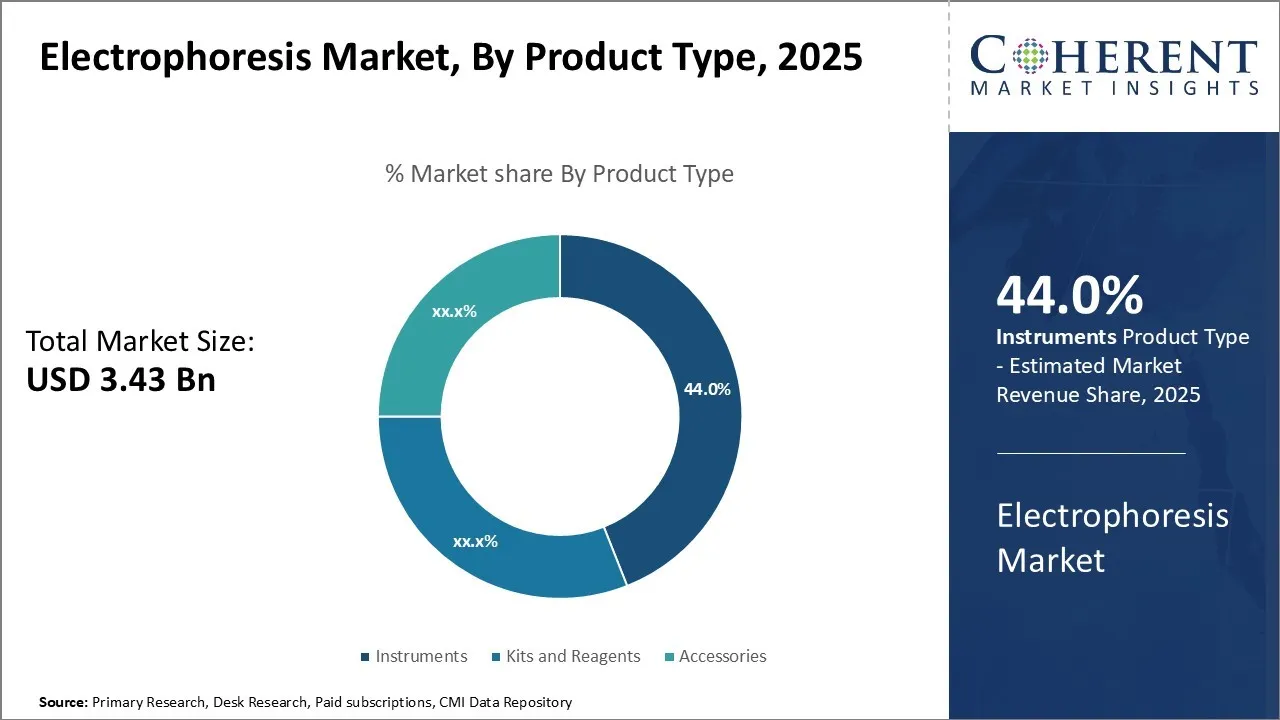
- Based on Product Type, Instrument Segment is expected to hold a share of 45.0% in the global electrophoresis market during the forecast period.
- Among regions, North America is estimated to hold a dominant position in the global electrophoresis market with 33.5% of the market share in 2026.
Market Overview
The market for electrophoresis is expected to witness consistent growth during the forecast period, as the demand for newer analytical tools in molecular biology, genomics, and proteomics continues to increase. Electrophoresis is a widely accepted method for the separation of macromolecules like DNA, RNA, and proteins on the basis of size and charge. It is a key tool for diagnostic purposes, forensic analysis, drug development, and research. The increasing frequency of genetic diseases, cancer, and infectious diseases is stimulating expanding use of electrophoresis in biomedical research and clinical diagnostics.
In January 2024, Bio-Rad Laboratories Inc. launched the ChemiDoc MP Imaging System with advanced electrophoresis gel documentation features during. The system is designed to enhance imaging accuracy and workflow efficiency in research labs. The next-generation system has multiplex fluorescence, chemiluminescence, and colorimetric imaging capabilities, enabling extended use across molecular biology workflows.
Current Events and Its Impact
Current Events | Description and its impact |
Growth of Genomic Research and Biotech Startups Drives Electrophoresis Market Growth
|
|
Increasing Demand for Protein Therapeutics Drives Adoption of Sophisticated Electrophoresis Systems
|
|
Pricing Analysis – Electrophoresis Market
The electrophoresis market is influenced by various factors that determine its pricing landscape, such as the technological complexity, application-specific customization, reagent expense, and instrumental capability. The market comprises a broad variety of products—gel electrophoresis units, capillary electrophoresis systems, power supplies, imaging systems, and consumables—and each possesses different pricing levels according to functionality, throughput, and brand name.
Simple gel electrophoresis units cost between $500 and $3,000, depending on the size and compatibility. Capillary electrophoresis units, which are usually employed in high-accuracy applications such as pharmaceuticals and genomics, are much more costly, ranging from $25,000 to $120,000. The price goes up with the addition of features such as real-time detection, multiple sample handling, and computerization through software for automated analysis.
Consumables like agarose gels, buffers, stains, and capillaries are a major contributor to repeat operating expenses. Laboratories invest between $2,000 and $10,000 per year on electrophoresis consumables based on throughput and research capacity. Protein or DNA reagent analysis kits range between $200–$800 per kit, so cost-effectiveness is a top consideration for routine testing environments.
It is also affected by geographic and regulatory influences. Developed economies such as North America and Western Europe command higher prices on account of rigorous compliance requirements, quality certifications, and value-added services (e.g., maintenance and training contracts). Emerging economies, though price-conscious, tend to favor medium-range systems with basic features and minimal service expenses.
All in all, whereas premium prices are paid for high-end instruments, global and regional competition is slowly reducing prices, especially for consumables and small bench-top systems, favoring wider adoption in academic and clinical environments.
- Current Industry Events of 2026
- Market Size Estimation
- Regional Breakdown
- Competitive Landscape
- Customer Intelligence
- Segmental Analysis
- Pricing Analysis
- Key Market Drivers, Challenges & Future Trends
- Customized Insights Section
Role of Technologies such as AI in the Electrophoresis Market
Artificial Intelligence (AI) is increasingly revolutionizing the market for electrophoresis through data analysis improvement, accuracy enhancement, and speeding up research workflows. Electrophoresis has conventionally comprised manual interpretation of gel images or intricate data output, which might be labor-intensive and prone to human error. AI-driven software currently automates image recognition, band quantitation, and pattern evaluation, yielding quicker, more accurate results with minimal user effort.
Machine learning models provide predictive analytics to optimize experiments by enabling researchers to optimize electrophoretic conditions like voltage, run time, and buffer composition. This promotes better reproducibility and minimizes trial-and-error cycles. AI also helps automate sample tracking and data management, promoting more compliance with regulatory requirements and more streamlined laboratory operations.
Combining AI with electrophoresis imaging systems enables real-time observation and anomaly identification, enhancing the reliability of experiments overall. In addition, AI-based platforms can map electrophoresis information against genomic or proteomic databases, enabling enhanced biomarker discovery and diagnostics.
Generally, AI and attendant improvements in technology are propelling the development of electrophoresis from a labor-intensive manual process towards more automated, high-data-volume, and high-throughput technique. This not only raises research productivity but also broadens the applications of the technique in personalized medicine, drug discovery, and clinical diagnostics, thus profoundly shaping the electrophoresis industry growth and innovation trends.
End-User Feedback on the Electrophoresis Market
- IVF Clinics: IVF clinics utilize electrophoresis mainly for genetic screening and DNA typing. Most clinics welcome the higher sensitivity and accuracy of contemporary electrophoresis systems, which assist in identifying genetic defects that may affect embryo viability. Some users indicate the importance of improved turnaround time and more automated alternatives to minimize workload and chances of human error.
- Pharmaceutical and Biotechnology Firms: High-throughput capability and reproducibility are their primary concerns. Electrophoresis solutions that can be incorporated into automated systems and AI-based data analysis are most sought after to accelerate drug discovery and biomarker identification. Users also stress the need for advanced capillary electrophoresis for the separation of complex samples. Cost, though, is always a concern, particularly for consumables and maintenance of high-end equipment.
- Research and Academic Laboratories: Scientists and researchers praise electrophoresis for its flexibility in DNA, RNA, and protein studies. Most welcome the ongoing innovations like multiplex imaging and optimized gels that increase experimental scope. However, criticism is that there is a call for cost-friendly equipment and reagents suitable for low-budget settings. Friendly software and improved training materials are also called for in order to fully realize the potential of the method.
- Biobanks: Biobanks employ electrophoresis to maintain sample integrity and quality control. They highly regard strong, solid systems that provide high-quality results across a high number of samples. Data management features that allow for tracking samples and adherence to regulatory requirements are greatly valued. Some biobanks also look for more scalable, automated solutions to manage increasing sample repositories effectively.
Global Electrophoresis Market– Drivers
- Increasing application of electrophoresis in cancer research
The protein electrophoresis test is often used to find abnormal substances called M proteins. The presence of M proteins can be a sign of a type of cancer called myeloma, multiple myeloma, and others. Thus, an increase in the number of cancer cases is expected to increase the use of electrophoresis technology for cancer detection and research and development for its cure. For instance, according to the World Health Organization (WHO), on July 12, 2023, there were more than 685,000 deaths associated with breast cancer globally in 2020.
- Increasing collaboration between key market players and research organizations
A rise in the number of strategies, such as collaboration between key market players and several research organizations and universities, so as to conduct research regarding genetic diseases, is also expected to drive market growth for the forecast period. In March 2025, Thermo Fisher Scientific introduced the SeqStudio Flex Dx Genetic Analyzer, a capillary electrophoresis system designed to meet the needs of clinical laboratories. This IVDR-compliant instrument supports both clinical and research applications, including Sanger sequencing and fragment analysis for targeted genomic testing.
Global Electrophoresis Market: Key Trends
- Technological advancement in electrophoresis techniques
Recent technological advancements in electrophoresis techniques, such as the advancement of automated electrophoresis systems over manual electrophoresis systems, are expected to drive market growth for the forecast period.
Moreover, according to an article published in Wiley Online Library, an open-access medical journal, in August 2022, researchers from the University of South Carolina have developed microchip electrophoresis techniques which is a miniature version of traditional electrophoresis instruments and has better sensitivity in terms of separation than mass spectrometry.
Segmental Insights
Global Electrophoresis Market Insights, by product type
By product type, the market is segmented into instruments, kits and reagents, and accessories. Out of which, instruments are expected to hold a dominant position in the global electrophoresis market during the forecast period, and this is attributed to the increasing product launches by key market players.
Global Electrophoresis Market insights, by application
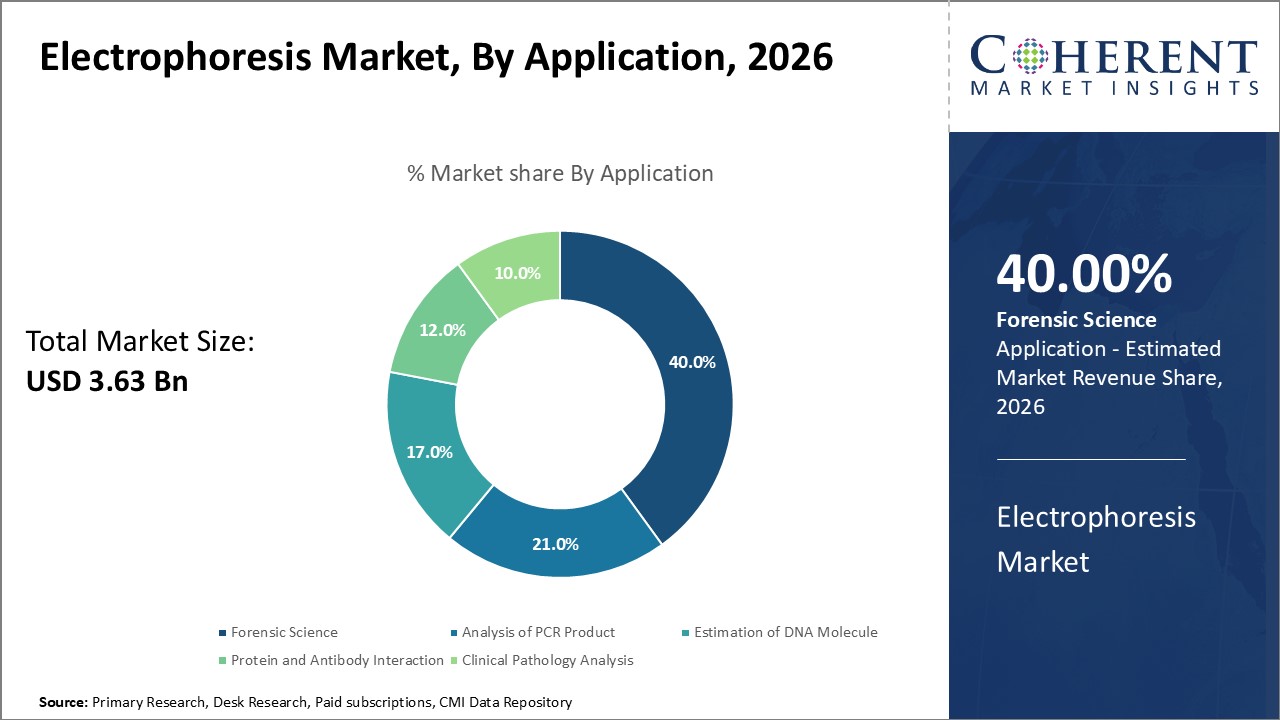
By application, the market is segmented into estimation of DNA molecule, analysis of PCR product, forensic science, protein and antibody interaction, clinical pathology analysis. Out of which, forensic science is expected to dominate the market over the forecast period, and this is attributed to increased application of electrophoresis in the determination of DNA of victims in forensic science.
Global Electrophoresis Market insights, by end user
By end user, the market is segmented into pharmaceutical and biotechnology companies, diagnostic labs, others (CROs, CMOs, Academic Institutes, etc.). Out of which, pharmaceutical and biotechnology companies are expected to dominate the market over the forecast period, and this is attributed to the increased use of electrophoresis techniques by the pharmaceutical and biotechnology companies in drug discovery.
Global Electrophoresis Market- Cross Sectional Analysis
In the end user segment, pharmaceutical and biotechnology companies held a dominant position in the North America region due to an increase in the amount of funding received by key market players. For instance, on August 1, 2023, Penn Medicine, an U.S.-based healthcare organization, announced that it had received funding of US$ 26 million from the National Institutes of Health (NIH), a U.S. government organization, to develop treatments for rare incurable genetic diseases. This funding will be used to research and development activities using techniques such as PCR, electrophoresis, for isolation and to study DNA fragments so as to develop a cure for genetic diseases.
Regional Insights
Global Electrophoresis Market- Regional Analysis
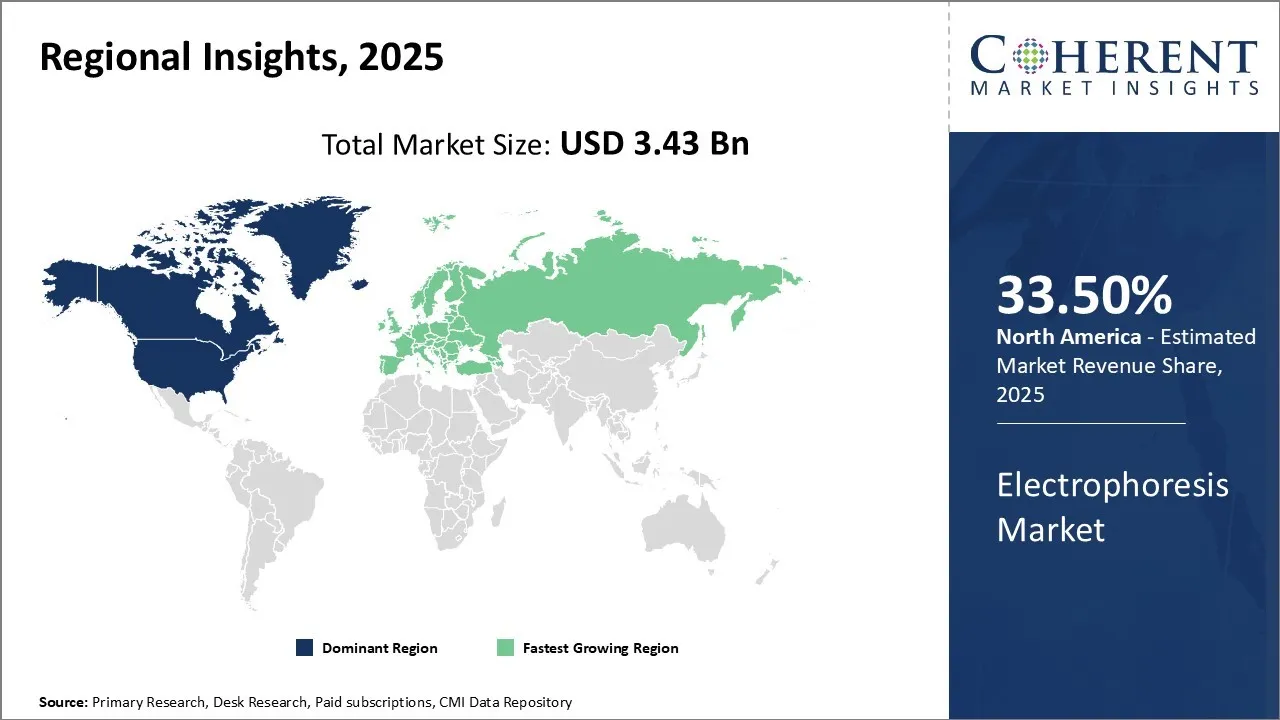
Among regions, North America is estimated to hold a dominant position in the global electrophoresis market over the forecast period. North America is estimated to hold 33.5% of the market share in 2026, and this is attributed to the presence of major players such as Thermo Fisher Scientific Inc., Sigma-Aldrich Corporation, ACTGene, Beckman Coulter, Merck Group, and others, which contribute to the development of the electrophoresis market in North America.
Electrophoresis Market Dominating Countries
United States Electrophoresis Market Analysis and Trend
America dominates the global market for electrophoresis, boosted by significant investments in biotechnology, pharma R&D, and clinical diagnostics. Key players such as Thermo Fisher Scientific, Bio-Rad, and Agilent Technologies have their headquarters located in this country, with which provides a strong base for commercial adoption and innovation. Support for precision medicine and academic research by the government further gives an impetus to domestic demand for electrophoresis technologies.
Germany Electrophoresis Market Analysis and Trend
Germany leads the market for electrophoresis in Europe, driven by its highly developed pharmaceutical and life sciences industries. The nation's emphasis on biomanufacturing and extensive research infrastructure and university network make it an important center for protein analysis, molecular diagnostics, and electrophoretic technique development.
China Electrophoresis Market Analysis and Trend
China is quickly growing its position in the market for electrophoresis as a result of growing government expenditure on biotechnology and genomic medicine under programs such as "Healthy China 2030." China is now a significant consumer and upcoming maker of electrophoresis instruments, fueled by its thriving biopharma industry and increased number of research centers.
India Electrophoresis Market Analysis and Trend
India is a rising player, with increasing demand from academic research, diagnostics, and biotech start-ups for electrophoresis. Government-sponsored genomics missions and rising foreign investment in biotech R&D are fueling adoption. Cost consciousness and infrastructure remain constraints on widespread adoption of high-end systems, however.
Market Report Scope
Electrophoresis Market Report Coverage
| Report Coverage | Details | ||
|---|---|---|---|
| Base Year: | 2025 | Market Size in 2026: | USD 3.63 Bn |
| Historical Data for: | 2020 To 2024 | Forecast Period: | 2026 To 2033 |
| Forecast Period 2026 to 2033 CAGR: | 5.8% | 2033 Value Projection: | USD 5.38 Bn |
| Geographies covered: |
| ||
| Segments covered: |
| ||
| Companies covered: | Cleaver Scientific, Thermo Fisher Scientific Inc., Sigma-Aldrich Corporation, ACTGene, Beckman Coulter, BiOptic, Merck Group, Hoefer, Lumex Instruments, Spectroline, Analytic Jena, Bio- Rad laboratories, Cytiva UK limited, Kewaunee Scientific, Prince Technology, Lumex Instruments, Agilent Technologies, and Syngene | ||
| Growth Drivers: |
| ||
| Restraints & Challenges: |
| ||
Global Electrophoresis Market: Key Developments
- In 2025, Thermo Fisher Scientific announced the availability of a miniaturized capillary electrophoresis system for biologics manufacturers. The new instrument, built for GMP-compliant environments, enables quick charge variant analysis and protein characterization.
- In 2024, Bio-Rad Laboratories launched its new generation electrophoresis platform, ChemiDoc IQ, that combines artificial intelligence to analyze gel images in real time and improve data accuracy. The system can automate detection, quantification, and reporting, cutting down on human error and increasing throughput in clinical and academic laboratories.
Analyst View
- Electrophoresis is increasingly becoming a key analytical method fueled primarily by increased demand in clinical diagnostics, drug development, and genomic research uses. Greater use of electrophoresis in protein fractionation and DNA analysis and increasing investments in sophisticated health care infrastructures worldwide fuel solid market momentum.
- The increasing demand for individualized medical strategies, especially in oncology and infectious disease, also fuels the uptake of electrophoresis technologies. In addition, vast strides in automation and miniaturization of electrophoretic platforms create new opportunities for increased usability and convenience in laboratory processes.
- There are many opportunities for electrophoretic technology integration with advances in digital imagery and software-augmented data analysis methods. Advances that enable greater precision, reproducibility, and speed will maximize electrophoresis's relevance in wider research and diagnostic applications.
- North America is still a dominant region due primarily to its better healthcare infrastructure, strong research funding, and large pharma industries. However, Asia-Pacific is the fastest-growing region, driven by growing biotechnology capabilities, rising R&D expenditure, and growing healthcare spending. In the future, innovation persistence and strategic alliances with biotech companies will be crucial in maintaining market momentum around the world.
Speak to the analyst
Want personalized insights?
Take the findings above to one of our principal consultants, or have the report rebuilt around the segments, geographies and competitors you actually track.
Sources
Primary Research Interviews
- Industry Experts from Electrophoresis Equipment Manufacturers
- Academia and Research Institutions Professionals
- Hospitals and Diagnostic Laboratories Specialists
- Biotechnology and Pharmaceutical Companies Representatives
- Others
Databases
- ClinicalTrials.gov
- Scopus
- Others
Magazines
- Laboratory Equipment Magazine
- BioTechniques Magazine
- Genetic Engineering & Biotechnology News
- Others
Journals
- Journal of Chromatography A
- Analytical Chemistry
- Electrophoresis Journal
- Others
Newspapers
- The Wall Street Journal
- The Guardian
- Financial Times
- Business Standard
- Others
Associations
- Association for Molecular Pathology (AMP)
- American Chemical Society (ACS)
- European Society for Clinical Investigation (ESCI)
- Society for Laboratory Automation and Screening (SLAS)
- Others
Public Domain Sources
- World Health Organization (WHO)
- U.S. Food and Drug Administration (FDA)
- National Institutes of Health (NIH)
- European Commission (EC)
- Others
Proprietary Elements
- CMI Data Analytics Tool
- Proprietary CMI Existing Repository of information for last 8 years
*Definition: Electrophoresis is a laboratory technique used to separate DNA, RNA or protein molecules based on their size and electrical charge. An electric current is used to move the molecules through a gel or other matrix.
Get access to 250+ pages report
Every segment, forecast, competitor profile and data table behind the analysis above — available for instant download.
- ESOMAR Member
- ISO 9001:2015 Certified
- D-U-N-S Registered
- GDPR & CCPA Compliant
Missing comfort of reading report in your local language? Find your preferred language:
Transform your Strategy with Exclusive Trending Reports
Frequently Asked Questions
The Electrophoresis Market size is estimated to be valued at USD 3.63 Bn in 2026, and is expected to reach USD 5.38 Bn by 2033.
The CAGR of the global Market is projected to be 5.8% from 2026 to 2033.
Increasing application of electrophoresis in cancer research and increasing collaboration between key market players and research organizations are expected to drive the market’s growth.
Instruments is the leading product type segment in the market.
The high cost of electrophoresis instruments is expected to hinder the global electrophoresis market over the forecast period.
Major players operating in the market are Cleaver Scientific, Thermo Fisher Scientific Inc., Sigma-Aldrich Corporation, ACTGene, Beckman Coulter, BiOptic, Merck Group, Hoefer, Lumex Instruments, Spectroline, Analytic Jena, Bio- Rad laboratories, Cytiva UK limited, Kewaunee Scientific, Prince Technology, Lumex Instruments, Agilent Technologies, and Syngene