

GCC Ecotourism Market Size and Share Analysis - Growth Trends and Forecasts (2026 - 2033)
The GCC ecotourism market is anticipated to grow at a CAGR of 9.3% with USD 655.3 Mn in 2026 and is expected to reach USD 1,220.8 Mn in 2033. The primary drivers are largely defined by the rising preference for sustainable travel experiences, growing government focus on tourism diversification, increasing development of nature-based destinations, and rising demand for eco-friendly hospitality (Travel and tourism are expected to contribute more than 10% of Saudi Arabia's GDP by 2025. At the same time, Jeddah has 18,152 hotel rooms under development to support the growing number of tourists and improve tourism infrastructure) and cultural tourism across GCC countries. Ecotourism provides assistance in traveling to natural sites in a responsible way, aid conserve the environment, as well as opens up prospects for the local community, contributing to the sustainable development of tourism in the region.
Key Takeaways
- Nature is expected to account the largest share of 60% in 2026, travelers are increasingly interested in outdoor activities such as hiking, desert exploration, mountain tourism, and visiting protected natural areas. Egypt welcomed about 15.7 Mn tourists in 2025. A number of visitors enjoyed nature-based trips, including exploring the White Desert, off-road adventures, desert camping, etc., showing the high ecotourism appeal in the country.
- Hotel stay will dominate with 40% in 2026, the GCC has seen high investment in eco-lodges, desert camps, luxury resorts, as well as nature-based accommodations, leading to higher spending on overnight stays. By 2025, Egypt had 977 tourism hotels and resorts with around 225,000 rooms. These included 235 eco-friendly hotels and 250 floating hotels, showing the focus on sustainable tourism and unique travel experiences of the country.
- Saudi Arabia is expected to acquire the dominant share of 40% in 2026, as Red Sea, AlUla, reserve, and domestic tourism programs widen nature-based travel. Saudi Arabia’s tourism sector continued to grow in 2025, with 29.7 Mn international visitors, showing an 8% increase compared with the previous year. The country also recorded 86.2 Mn domestic trips, which increased by 5% from 2023.
Segmental Insights
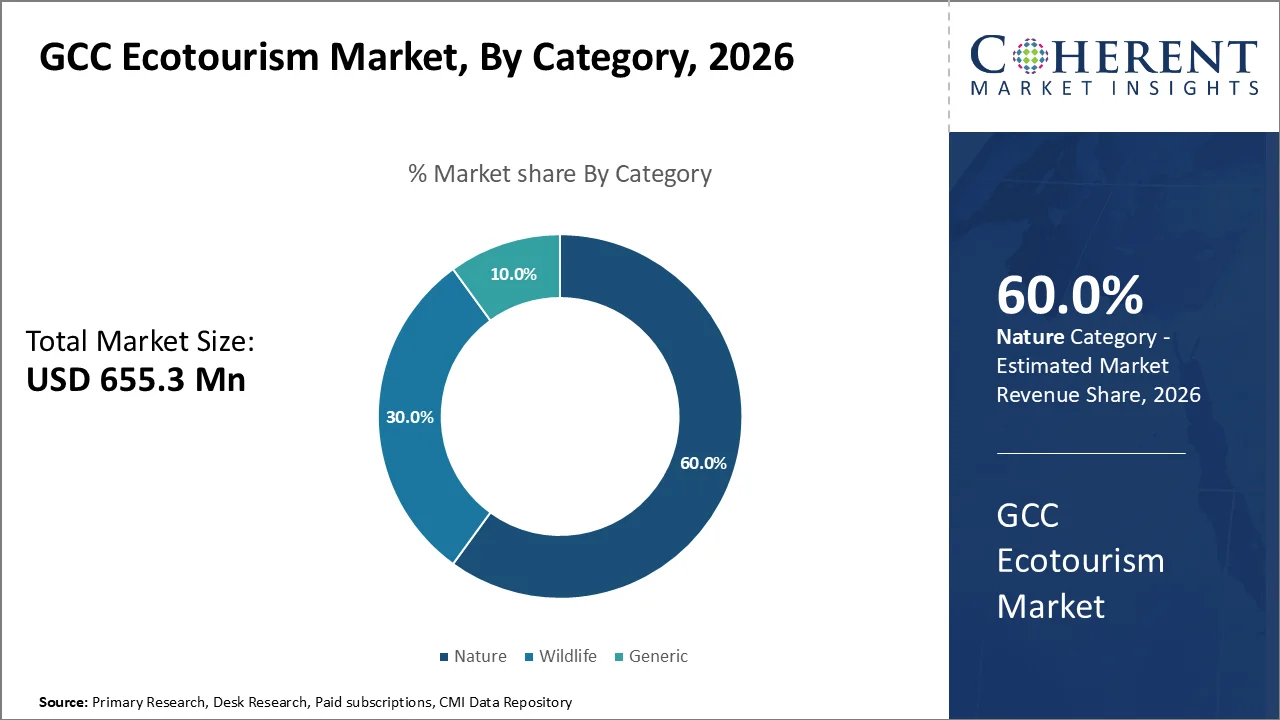
Why is Nature Segment Acquiring the Largest Market Share?
Nature is projected to account for the largest share of category in 2026, representing approximately 60% of the total volume. Owing to the extraordinary diversity of natural landscapes found across the Gulf Cooperation Council region, which has highly become a core point for travelers looking for authentic, environment-centered experiences away from the conventional urban tourism circuits that the region was historically known for.
The Nature segment has a broad spectrum of ecotourism activities including desert safaris, mountain trekking, wadis exploration, mangrove tours, coral reef diving, visits to protected natural reserves, etc., all of which appeal to a wide cross-section of domestic and international tourists. For instance, Qatar welcomed more than 5.1 million tourists in 2025. Desert safaris remain one of the most popular tourism experiences, attracting visitors who want to explore Qatar’s desert landscapes and enjoy outdoor adventures.
The dominance of the Nature segment is fundamentally tied to the aggressive conservation-driven tourism frameworks being pursued by GCC governments authorities as part of their respective national visions. Saudi Arabia's Vision 2030, for instance, has made considerable focus on unlocking the vast and largely unexplored natural wealth of the kingdom, with mega-projects including NEOM, the Red Sea Project, etc., being planned around the principle of nature-positive tourism where ecosystems are preserved rather than exploited.
- Current Industry Events of 2026
- Market Size Estimation
- Regional Breakdown
- Competitive Landscape
- Customer Intelligence
- Segmental Analysis
- Pricing Analysis
- Key Market Drivers, Challenges & Future Trends
- Customized Insights Section
Hotel Stay holds the Largest Market Share
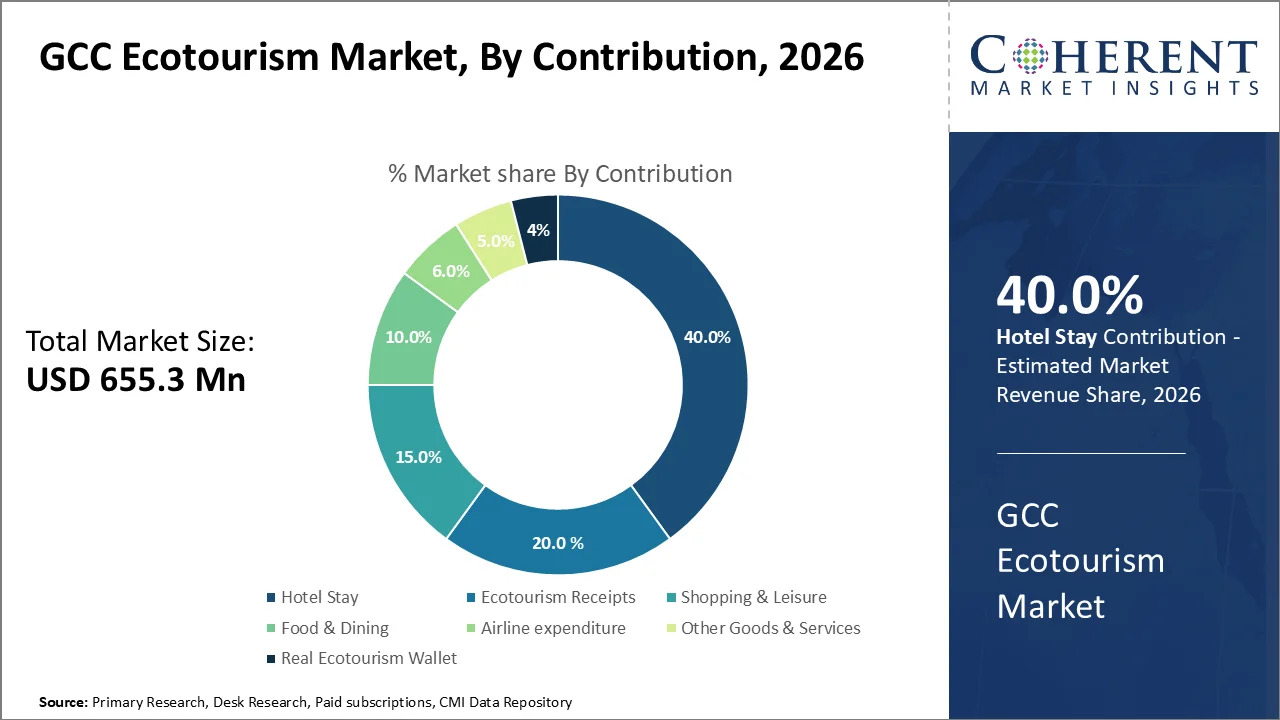
Based on contribution, hotel stay dominates the market, accounting for a significant 40% share in 2026. The rapid proliferation of eco-certified lodging facilities, luxury desert camps, nature-based resorts, as well as sustainable hospitality infrastructure across member states are the factors propelling the market.
Qatar is developing its ecotourism sector by protecting natural areas and improving nature-based tourism facilities. Around 27% of Qatar’s wild area is covered by nature reserves, including 12 reserves, which support desert, wildlife, and outdoor tourism activities. These conservation efforts help create opportunities for eco-friendly tourism experiences including desert trips, wildlife visits, nature exploration, etc.
The GCC government authorities, particularly Saudi Arabia and the UAE, have made major efforts in developing eco-lodges as well as green-certified hotels that align with international sustainability benchmarks.
The Vision 2030 tourism initiative by Saudi Arabia has brought strong focus on developing nature-integrated accommodations at destinations including AlUla, Neom's Sindalah Island, the Asir National Park region, etc., where hospitality providings are being made to lower environmental footprint while lower immersive natural experiences.
The Saudi Tourism Authority has actively focused on these sites to attract environmentally conscious travelers who prefer spending extended nights in nature-centric settings rather than conventional urban hotels.
Market Drivers
AI-Powered Wildlife Monitoring and Conservation is transforming the GCC Ecotourism Industry
AI-powered wildlife monitoring uses artificial intelligence to study and protect animals. It collects information from cameras, drones, sensors, satellites, etc., to recognize animals, track their movements, detect threats including poaching, as well as monitor wildlife in real time. Countries in the GCC are using this technology in nature reserves, protected areas, as well as marine parks to improve conservation efforts.
This technology aid reduce the need for manual wildlife monitoring, lowers conservation costs, as well as provides 24/7 monitoring without disturbing animals. It also gives accurate data that aid park managers protect wildlife, manage visitor numbers, as well as support sustainable ecotourism.
Current Events and Their Impact on the GCC Ecotourism Market
Current Event | Description and its Impact |
Saudi Arabia launches new wildlife and ecotourism projects under the National Center for Wildlife (2026) |
|
UAE National Tourism Charter strengthens sustainable tourism policy (2026) |
|
GCC Ecotourism Market Trends
- National transformation agendas are the single most powerful catalyst reshaping the GCC ecotourism landscape. Vision 2030 of Saudi Arabia, the UAE Net Zero 2050 strategic initiative, as well as Tourism Strategy 2040 of Oman are directly channeling billions of dollars into eco-sensitive tourism destinations, protected natural reserves, as well as sustainable hospitality infrastructure.
- Global change in traveler preferences are resonating strongly within the evolving visitor demographic of GCC. High-net-worth individuals (HNWIs), millennial travelers, as well as environmentally conscious European and Asian tourists are highly seeking nature-based, low-impact, as well as culturally immersive experiences.
- Landmark projects including NEOM and The Line in Saudi Arabia, Al Ula's natural heritage corridor, as well as Oman's Jebel Akhdar eco-retreats are connecting with ecological sustainability into their foundational architecture.
- The trend toward eco-lodges, glamping facilities, carbon-neutral resorts, as well as LEED/Green Star-certified properties across the region.
- Smart tourism technologies such as AI-powered visitor management systems, augmented reality (AR) nature trails, blockchain-based carbon credit tracking for eco-packages, IoT-enabled wildlife monitoring, etc., are being used to improve visitor experiences and make lower ecological footprints.
Regional Insights
Saudi Arabia dominates owing to owing to widespread adoption of non-invasive diagnostic technologies
Saudi Arabia account 40% market share in 2026, the commitment of the country in transforming its natural and cultural heritage into globally competitive ecotourism destinations through Vision 2030 is driving the growth. Vast and diverse ecological landscape of Saudi Arabia, from the Red Sea coastline, the Asir Mountains, the Hejaz region, and the expansive Rub' al Khali desert, provides an unmatched foundation for ecotourism development that few nations in the region can replicate at scale.
Saudi Arabia's tourism sector reached around 123 million tourists in 2025. This included 29.3 million international visitors and 93.3 million domestic tourists. The growth shows the strong development of Saudi Arabia’s tourism industry under its Vision 2030 plan.
The Saudi Tourism Authority has been actively promoting nature-based tourism experiences across protected reserves, including the prestigious Asir National Park, which covers approximately 4,500 square kilometers as well as hosts endemic biodiversity unique to the Arabian Peninsula.
Furthermore, National Center for Wildlife of Saudi Arabia has been instrumental in designating and managing over 100 protected areas across the kingdom, reinforcing the ecological credibility of tourism offerings in the region.
Who are the Major Companies in GCC Ecotourism Industry
Some of the major key players in GCC ecotourism market include, Ramada Worldwide, Jumeirah, Le Meridien, Emirates, Qatar, Gulf air, and Thomas Cook.
Key News
- In September 2025, Dan Company, a PIF company, has launched “Solan,” a new tourism brand in Saudi Arabia focused on farm stays, eco-tourism, and adventure experiences. The brand will help farm owners turn their farms into tourist destinations, allowing visitors to enjoy nature, local culture, and farming experiences.
- In December 2025, Jumeirah has launched Jumeirah Eco Village at Madinat Jumeirah in Dubai to promote environmental protection and sustainable tourism. The Eco Village shows the company’s efforts in protecting nature, conserving biodiversity, supporting food sustainability, and using responsible production methods.
Market Report Scope
GCC Ecotourism Market Report Coverage
| Report Coverage | Details | ||
|---|---|---|---|
| Base Year: | 2025 | Market Size in 2026: | USD 655.3 Mn |
| Historical Data for: | 2020 To 2024 | Forecast Period: | 2026 To 2033 |
| Forecast Period 2026 to 2033 CAGR: | 9.3% | 2033 Value Projection: | USD 1,220.8 Mn |
| Geographies covered: |
| ||
| Segments covered: |
| ||
| Companies covered: | Ramada Worldwide, Jumeirah, Le Meridien, Emirates, Qatar, Gulf air, and Thomas Cook | ||
| Growth Drivers: |
| ||
| Restraints & Challenges: |
| ||
Analyst Opinion
- The GCC ecotourism market is undergoing a remarkable transformation, driven by ambitious national sustainability agendas and diversified tourism strategies across member states.
- Government authorities across Saudi Arabia, UAE, Oman, Qatar, etc., are actively integrating ecotourism into their broader economic diversification frameworks, lower historical dependence on hydrocarbon revenues.
- The extraordinary biodiversity in the region, having desert ecosystems, coastal mangroves, as well as marine reserves, presents compelling natural assets that gain environmentally conscious global travelers. Saudi Arabia has rich wildlife and biodiversity, supported by many protected areas as well as conservation programs. According to the National Center for Wildlife, the country has 550 bird species, including 219 breeding species, 280 migratory species, and 51 rare visiting species. These efforts aid protect wildlife as well as support nature-based tourism.
- Major opportunities exist in community-based ecotourism initiatives, digital eco-travel platforms, as well as carbon-neutral hospitality concepts gaining traction across the region.
Speak to the analyst
Want personalized insights?
Take the findings above to one of our principal consultants, or have the report rebuilt around the segments, geographies and competitors you actually track.
Market Segmentation
- By Category (Revenue, USD Mn, 2021-2033)
- Nature
- Wildlife
- Generic
- By Contribution (Revenue, USD Mn, 2021-2033)
- Ecotourism receipts
- Hotel stay
- Shopping & Leisure
- Food & dining
- Airline expenditure
- Other Goods & Services
- Real Ecotourism Wallet
- By Region (Revenue, USD Mn, 2021-2033)
- Saudi Arabia
- UAE
- Oman
- Qatar
- Bahrain
- Kuwait
Sources
Primary Research Interviews
- Ecotourism Operators & Tour Guides (GCC Region)
- Hotel & Eco-Lodge Owners/Managers
- Government Tourism Authority Representatives
- Environmental Conservation & Wildlife Experts
- Others
Databases
- World Tourism Organization (UNWTO) Database
- Gulf Cooperation Council (GCC) Statistical Centre Database
- International Ecotourism Society (TIES) Database
- Statista Travel & Tourism Database
- Others
Magazines
- Arabian Travel & Tourism Magazine
- Eco Traveller Magazine
- Gulf Business Magazine
- Condé Nast Traveller Middle East
- Others
Journals
- Journal of Ecotourism
- International Journal of Tourism Research
- Journal of Sustainable Tourism
- Others
Newspapers
- Gulf News
- Arab News
- Khaleej Times
- The National (UAE)
- Others
Associations
- The International Ecotourism Society (TIES)
- Gulf Tourism Association (GTA)
- Arab Tourism Organization (ATO)
- World Travel & Tourism Council (WTTC)
- Others
Public Domain Sources
- Saudi Tourism Authority (STA) Official Portal
- UAE Ministry of Economy – Tourism Reports
- Oman Ministry of Heritage and Tourism Publications
- Qatar National Tourism Council (QNTC) Reports
- Others
Proprietary Elements
- CMI Data Analytics Tool
- Proprietary CMI Existing Repository of information for last 10 years
Get access to 250+ pages report
Every segment, forecast, competitor profile and data table behind the analysis above — available for instant download.
- ESOMAR Member
- ISO 9001:2015 Certified
- D-U-N-S Registered
- GDPR & CCPA Compliant
Missing comfort of reading report in your local language? Find your preferred language:
Transform your Strategy with Exclusive Trending Reports
Frequently Asked Questions
The GCC ecotourism market is expected to reach USD 1,220.8 Mn in 2033.
Major players operating in the GCC ecotourism market include Ramada Worldwide, Jumeirah, Le Meridien, Emirates, Qatar, Gulf air, and Thomas Cook.
Limited carrying capacity in fragile desert, marine, mountain, and wildlife ecosystems, along with seasonal tourism demand due to extreme summer temperatures across GCC countries is one of the major factors that is expected to hamper growth of the market over the forecast period.
Increasing government focus on sustainable tourism and economic diversification, rising development of nature-based destinations, protected areas, desert tourism, wildlife reserves, and growing preference for eco-friendly hospitality across GCC countries is driving growth of the GCC Ecotourism market.
The GCC ecotourism market is anticipated to grow at a CAGR of 9.3% between 2026 and 2033.
Among regions, Saudi Arabia is expected to account for a largest market share in the GCC ecotourism market over the forecast period.
The 4 C's of ecotourism are Conservation, Community, Culture, and Commerce. They serve as the foundational pillars for sustainable travel, ensuring that tourism protects natural ecosystems, benefits local residents, respects indigenous traditions, and remains economically viable.