

Halal Cosmetic Products Market Size and Forecast — 2026 - 2033
The Global Halal Cosmetic Products Market size is estimated to be valued at USD 12.8 billion in 2026 and is expected to reach USD 24.7 billion by 2033, exhibiting a compound annual growth rate (CAGR) of 9.3% from 2026 to 2033.
Overview
The halal cosmetic products market is driven by rising demand for ethically compliant and clean-label beauty products among Muslim consumers and beyond. Increasing awareness of halal certification, which ensures products are free from alcohol, animal-derived ingredients, and harmful chemicals, is boosting adoption. Growth in disposable income and a young population in key regions further supports market expansion. Additionally, the global shift toward vegan, cruelty-free, and sustainable cosmetics aligns with halal principles, attracting a broader consumer base. Expanding e-commerce channels, influencer marketing, and product innovation are also enhancing accessibility and driving growth in the halal cosmetics market.
Key Takeaways
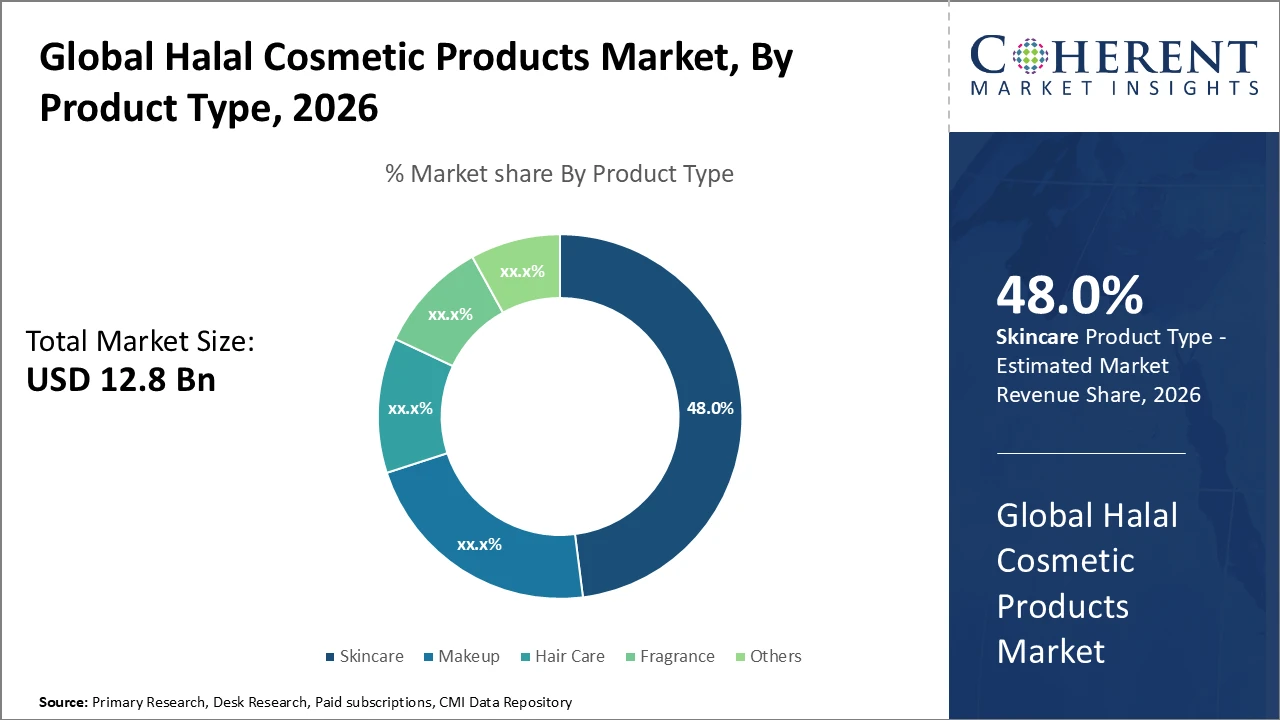
The skincare segment dominates the Halal Cosmetic Products market, representing nearly half of the industry share, driven by demand for sensitive skin formulations with Halal-certified ingredients.
Facial care applications are expected to witness the fastest growth as consumers seek multifunctional products adhering to ethical standards.
Online distribution channels are gaining significant revenue share, highlighting the importance of digital strategies for market expansion.
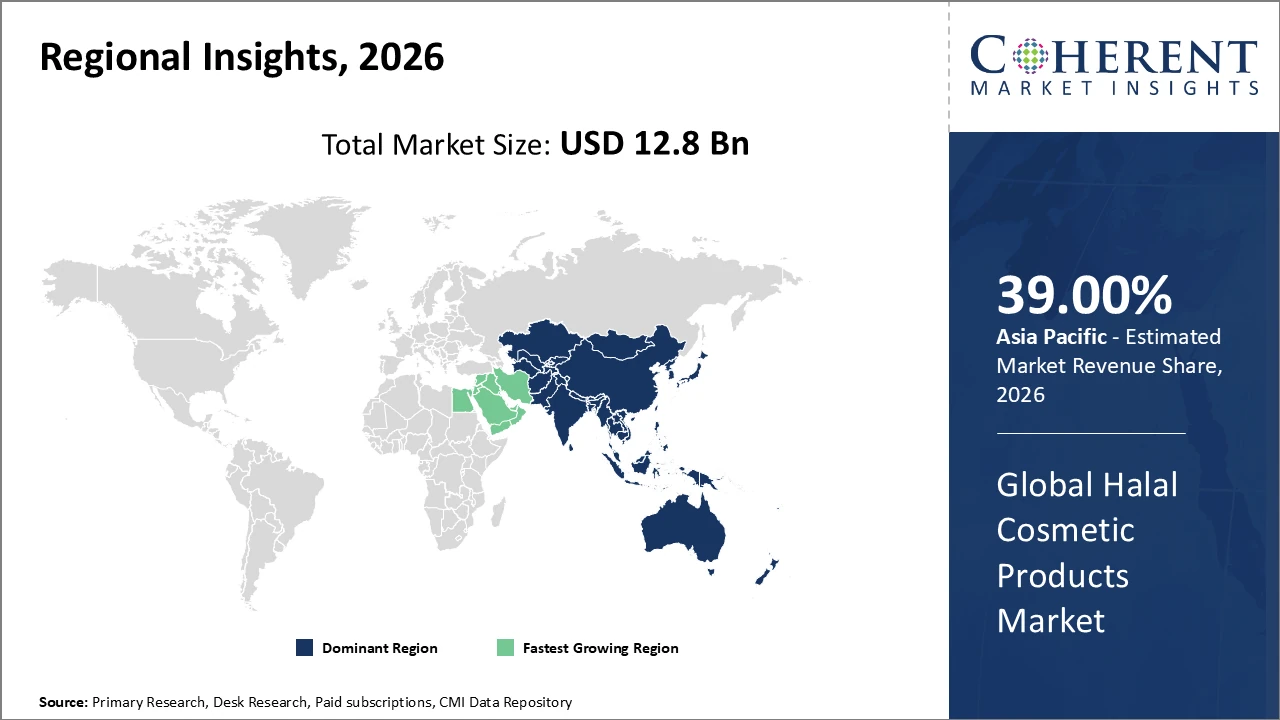
Asia Pacific holds the largest regional market share, supported by population size, religious demographics, and government-backed Halal certification initiatives.
The Middle East and Africa show the highest CAGR, fueled by strong consumer demand and expanding retail infrastructure in countries like Saudi Arabia and UAE.
North America demonstrates growth potential due to increasing Muslim populations and growing mainstream interest in ethical and Halal beauty products.
Halal Cosmetic Products Market Segmentation Analysis
Halal Cosmetic Products Market Insights, By Product Type
Skincare dominates the Halal Cosmetic Products market with a 48% share, driven by growing consumer awareness of skin health and preference for certified halal ingredients. Innovations in moisturizing, anti-aging, and sensitive skin formulations have further boosted adoption among halal-conscious consumers seeking ethical and clean beauty solutions. Makeup is the fastest-growing subsegment, benefiting from rising demand among younger demographics and the launch of certified, allergen-free, and cruelty-free products such as lipsticks and eyeliners. Hair care, fragrances, and other products contribute steadily, though growth is constrained by longer certification timelines and ingredient sourcing challenges, with hair care seeing renewed interest in herbal and organic formulations.
Halal Cosmetic Products Market Insights, By Distribution Channel
Online retail is the fastest-growing channel in the Halal Cosmetic Products market, driven by increasing digital penetration and pandemic-related shifts in consumer behavior, with e-commerce expected to account for over 30% of total market revenue in 2026. Specialty stores remain important, especially in regions with large halal consumer bases seeking personalized consultations and certified product assurance. Supermarkets provide stable growth due to broad accessibility but face challenges in shelf space allocation and halal verification. Pharmacies serve a niche market focused on medicinal or dermatological halal-certified cosmetics, gradually expanding their offerings to include a wider range of certified personal care products.
Halal Cosmetic Products Market Insights, By Application
Facial care dominates the Halal Cosmetic Products market with a 40% share, driven by consumer preference for multifunctional products that combine cleansing, moisturizing, and sun protection while adhering to halal standards. Body care is the fastest-growing application segment, supported by increasing awareness of skin health and hygiene, particularly in the Middle East and North Africa, where climate conditions influence consumer needs. Hair care focuses on scalp and follicle health using halal-certified natural oils and treatments, though its growth is moderate.
Halal Cosmetic Products Market Trends
Increasing consumer demand for transparency and ingredient traceability is shaping market trends, with brands investing in blockchain and app-based verification systems.
In 2026, a leading Halal skincare brand launched a blockchain-based ingredient tracking platform, significantly enhancing consumer confidence.
The clean beauty segment intersecting with halal standards is growing rapidly, with 30% growth in combined clean and halal formulations recorded in 2025 across key markets.
Omni-channel distribution strategies are becoming essential, with online platforms evolving from niche channels to primary sales drivers.
Online sales saw a 28% year-on-year revenue increase in 2026, highlighting the growing importance of digital channels in market expansion.
Halal Cosmetic Products Market Insights, By Geography
North America Halal Cosmetic Products Market Analysis and Trends
In North America, the Halal Cosmetic Products market is experiencing steady growth, driven by increasing Muslim populations and rising consumer interest in ethical and clean beauty products. Awareness of halal-certified ingredients is growing among mainstream consumers, creating demand beyond traditional religious segments. Online retail and specialty stores are key distribution channels, offering convenient access to certified products. Brands are investing in marketing, certification transparency, and product innovation, including clean and cruelty-free formulations. Additionally, regulatory frameworks and third-party certifications enhance consumer confidence. These factors collectively support market expansion, positioning North America as a promising region for halal cosmetic product adoption and growth.
Asia Pacific Halal Cosmetic Products Market Analysis and Trends
In Asia Pacific, the Halal Cosmetic Products market is dominated by the large Muslim population, particularly in countries such as Indonesia and Malaysia. Robust halal certification infrastructure, supported by government incentives and regulatory frameworks, has strengthened consumer confidence and driven product adoption. The region benefits from the presence of major cosmetic producers and increasing consumer purchasing power, which fuels demand for premium and ethically certified beauty products. Rising awareness of halal and clean beauty standards further supports market growth. These factors collectively reinforce Asia Pacific’s leading position in the global halal cosmetics industry, making it a key growth hub for manufacturers and investors.
Halal Cosmetic Products Market Outlook for Key Countries
USA Halal Cosmetic Products Market Analysis and Trends
The USA’s halal cosmetic market has grown substantially, fueled by a Muslim population exceeding 3.8 million in 2024 and increasing interest from non-Muslim consumers in ethical and clean beauty. Leading brands, including The Body Shop and independent vegan halal companies, are leveraging digital marketing and retail partnerships to drive market growth, achieving an estimated 10% annual revenue increase from 2024 to 2026. Supportive regulatory frameworks streamline halal certification, improving product availability across mainstream stores and online platforms. Additionally, rising demand for organic skincare products that adhere to halal principles further boosts business expansion and strengthens consumer adoption in the U.S. market.
Germany Halal Cosmetic Products Market Analysis and Trends
Germany’s halal cosmetic products market is witnessing steady growth, driven by increasing demand for ethical and certified beauty products among the Muslim population and ethically conscious consumers. The market benefits from strong regulatory frameworks and well-established certification bodies, ensuring compliance with halal standards. Skincare and makeup segments lead in adoption, supported by product innovations in natural, cruelty-free, and clean formulations. Online retail and specialty stores are primary distribution channels, enhancing accessibility. Rising awareness of ingredient transparency, sustainability, and halal traceability is encouraging brands to adopt advanced verification technologies. These factors collectively position Germany as a key market for halal cosmetic growth in Europe.
Analyst Opinion
Demand-side dynamics show rising penetration of Halal Cosmetics in Asia Pacific, with a 15% increase in consumer purchases in 2025, reflecting growing awareness and brand adoption. Average product pricing rose 5% year-on-year due to premium ingredient sourcing and certification costs, supporting revenue growth despite moderate price sensitivity.
Supply-side indicators highlight a 20% expansion in production capacities in 2024, driven by investments in Halal-certified manufacturing infrastructure in countries like Indonesia and Malaysia. Export volumes from these hubs increased 18% in 2025, primarily targeting Middle Eastern and North African markets, strengthening the global industry footprint.
Micro-indicators reveal diversification in use cases, with skincare accounting for about 48% of total market revenue in 2026, supported by rising sensitive skin concerns among consumers preferring Halal formulations. Fragrance and makeup segments posted a CAGR of over 10% in 2025, linked to higher lifestyle spending among urban millennials.
Nano-level analysis shows social media endorsements and Halal influencers contributed to a 22% growth in online sales channels in 2026. Apps enabling ingredient transparency boosted consumer confidence, increasing market share for companies focusing on digital marketing and traceability.
- Current Industry Events of 2026
- Market Size Estimation
- Regional Breakdown
- Competitive Landscape
- Customer Intelligence
- Segmental Analysis
- Pricing Analysis
- Key Market Drivers, Challenges & Future Trends
- Customized Insights Section
Market Scope
| Report Coverage | Details | ||
|---|---|---|---|
| Base Year: | 2025 | Market Size in 2026: | USD 12.8 billion |
| Historical Data for: | 2020 To 2024 | Forecast Period: | 2026 To 2033 |
| Forecast Period 2026 to 2033 CAGR: | 9.3% | 2033 Value Projection: | USD 24.7 billion |
| Geographies covered: |
| ||
| Segments covered: |
| ||
| Companies covered: | Iba Halal Care, Inika Organic, Melati Beauty, Nura Cosmetics, One Pure, Saaf Skincare, Halal Cosmetics UK, The Body Shop, Wardah Beauty, MUKKA Cosmetics | ||
| Growth Drivers: |
| ||
Halal Cosmetic Products Market Growth Factors
The Halal Cosmetic Products market is being driven by the increasing global Muslim population, particularly in Asia Pacific and Middle East regions, which fuels demand for Shariah-compliant cosmetics. A 2025 demographic report indicated this population is growing at a 1.8% CAGR, supporting steady consumption growth. Government initiatives in countries like Malaysia and Saudi Arabia, promoting halal certification infrastructure and export incentives, have accelerated market expansion, with shipments rising 13% in 2024. Additionally, the surge in e-commerce platforms has improved product accessibility for niche and geographically dispersed consumers, with online retail channels achieving a 28% revenue growth in 2026, the fastest among distribution formats.
Halal Cosmetic Products Market Development
In 2025, Kolmar Korea enhanced its blockchain-based ingredient traceability to strengthen halal certification, boosting consumer trust and ensuring regulatory compliance for Middle Eastern exports.
Key Players
Leading Companies of the Market
Halal Cosmetics UK
MUKKA Cosmetics
Melati Beauty
One Pure
Inika Organic
Nura Cosmetics
Saaf Skincare
The Body Shop
Iba Halal Care
Wardah Beauty
Several market companies have implemented growth strategies including strategic partnerships with local halal certification bodies and the launch of innovative products featuring natural extracts known for skin benefits. For example, Wardah Beauty’s collaboration with Indonesian authorities facilitated faster certification approvals, resulting in a 12% revenue increase in 2025. Similarly, Amara Halal Cosmetics expanded through omni-channel distribution in the Middle East, achieving a 20% boost in market penetration. These initiatives also improved supply chain efficiency, enabling the company to enhance its regional market share substantially while meeting rising consumer demand for certified and ethically produced cosmetic products.
Halal Cosmetic Products Market Future Outlook
The future outlook for the Halal Cosmetic Products market is highly promising, driven by the growing global Muslim population and rising awareness of ethical, clean, and sustainable beauty products. Innovations in natural, organic, and multifunctional formulations are expected to expand product offerings, while digital verification technologies, such as blockchain and app-based ingredient tracking, will enhance consumer confidence. E-commerce and omni-channel distribution will continue to play a pivotal role in reaching niche and geographically dispersed markets. Emerging regions in Asia Pacific, the Middle East, and Africa present significant growth opportunities, positioning the market for sustained expansion and increased adoption over the coming years.
Halal Cosmetic Products Market Historical Analysis
The Halal Cosmetic Products market has experienced steady growth over the past decade, initially driven by increasing awareness of Shariah-compliant beauty products among Muslim consumers in Asia Pacific and the Middle East. Early market adoption focused on skincare and basic personal care items, with limited product variety and distribution channels. Over time, the market expanded to include makeup, hair care, and fragrances, supported by the development of halal certification frameworks and government incentives in key regions. Rising consumer demand for ethical, clean, and cruelty-free products further accelerated growth. E-commerce platforms later emerged as a critical distribution channel, broadening market reach and accessibility globally.
Sources
Primary Research Interviews:
Cosmetic scientists, dermatologists, and formulation specialists in halal-certified beauty products
Operations managers, procurement heads, and distribution professionals in cosmetic manufacturing and retail companies
Market analysts and consultants focusing on halal certification, ethical beauty trends, and consumer behavior
Magazines:
Cosmetics Business – Industry Updates, Halal Product Launches, and Market Trends
Beauty Packaging – Packaging Innovations, Halal Labeling, and Regulatory Developments
Global Cosmetic News – Product Releases, Market Insights, and Consumer Trends
Premium Beauty News – Halal Certification, Ingredients, and Operational Insights
Journals:
Journal of Cosmetic Science – Research on Formulations, Ingredient Efficacy, and Halal Compliance
International Journal of Cosmetic Science – Innovations, Safety, and Product Development
Cosmetic Dermatology Journal – Trends in Skincare, Haircare, and Ethical Beauty Practices
Newspapers:
Cosmetics Design – Market Developments, Brand Launches, and Halal Innovations
BeautyMatter – Industry Expansion, Product Launches, and Consumer Insights
Global Cosmetic Industry – Company Strategies, Market Trends, and Regulatory Updates
WWD (Women’s Wear Daily) – Ethical Beauty, Halal Product Launches, and Market Analysis
Associations:
Halal Certification Bodies (e.g., JAKIM, IFANCA) – Standards, Guidelines, and Certification Processes
World Halal Council – Research, Policy, and Industry Advocacy
Personal Care Products Council – Regulatory Guidance, Best Practices, and Industry Training
Get access to 250+ pages report
Every segment, forecast, competitor profile and data table behind the analysis above — available for instant download.
- ESOMAR Member
- ISO 9001:2015 Certified
- D-U-N-S Registered
- GDPR & CCPA Compliant
Missing comfort of reading report in your local language? Find your preferred language:
Transform your Strategy with Exclusive Trending Reports
Frequently Asked Questions
Leading companies include Wardah Beauty, Iba Halal Care, and The Body Shop’s Halal-approved product lines, known for their strong market presence and innovation strategies.
he market size is estimated to reach USD 24.7 billion by 2033, with a CAGR of 9.3% driven by expanding consumer bases and emerging certifiable product types.
The Facial care segment, particularly facial care, holds the largest market opportunity, supported by increasing consumer preference for certified safe and multifunctional products.
Trends point toward integration of vegan halal products, enhanced bioactive ingredient formulations, and a significant shift toward online retail channels facilitating global accessibility.
The landscape is shaped by strategic certifications, innovation in formulating halal-compliant products, and market players adapting to regional regulations, with challenges surrounding maintaining cost-efficiency amid stringent certification processes.
Market companies focus on partnerships with certification bodies, e-commerce expansion, regional localization, and leveraging social media influencers to drive brand trust and consumer engagement.