

Halitosis Treatment Market Size and Share Analysis - Growth Trends and Forecast (2026 - 2033)
The global halitosis treatment market size is estimated to grow from USD 17.7 Bn in 2026 to USD 35.6 Bn by 2033, exhibiting a compound annual growth rate (CAGR) of 10.5% during the forecast period (2026-2033). This growth can be attributed to increasing prevalence of oral health disorders, rising awareness regarding oral hygiene and bad breath management, and growing demand for over-the-counter oral care products.
Key Takeaways from the Halitosis Treatment Market Report
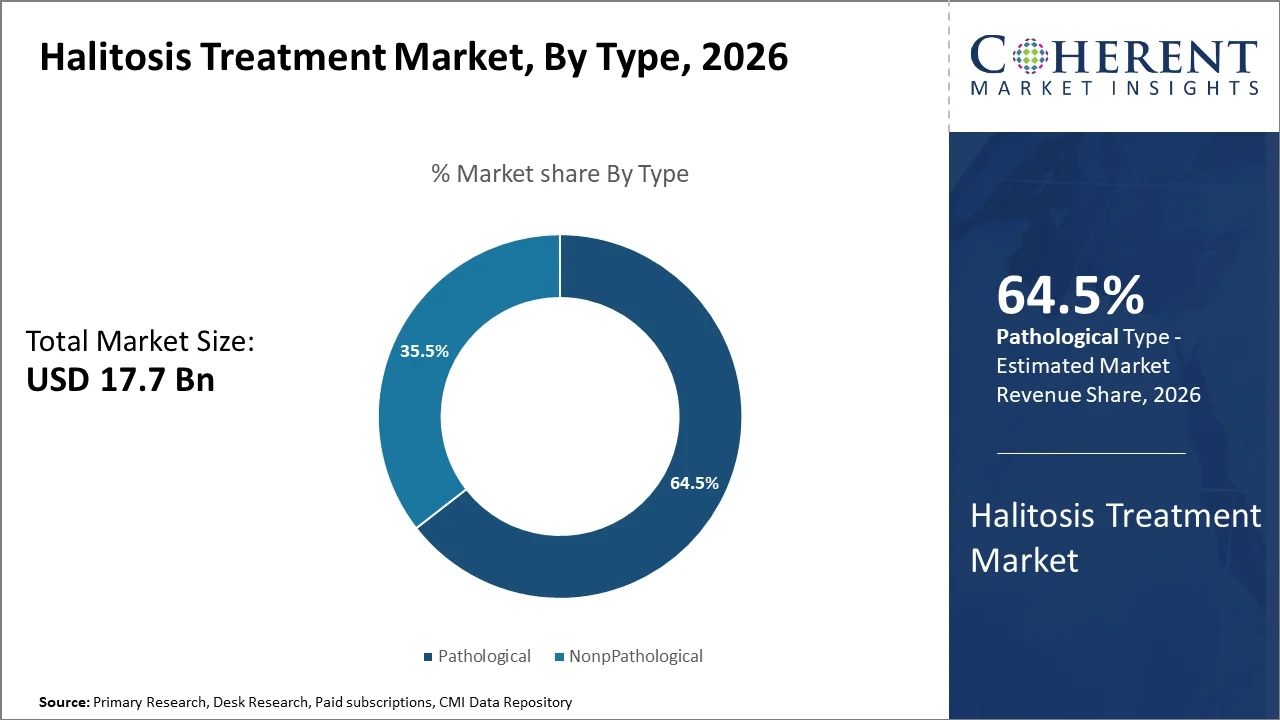
- Pathological segment is expected to lead the market with a share of 64.5% in 2026 due to higher treatment demand associated with periodontal disease, gastrointestinal disorders, respiratory infections, and chronic oral health conditions requiring ongoing intervention. For example, a clinical review published in the National Library of Medicine reported that approximately 80–90% of halitosis cases originate from intraoral pathological conditions, particularly periodontal disease and tongue coating, supporting demand for therapeutic halitosis treatments.
- Antiseptics are slated to account for the largest market share of 38.2% in 2026 because antiseptic mouth rinses and antimicrobial products represent first-line management for oral bacteria-related halitosis, which accounts for most diagnosed cases.
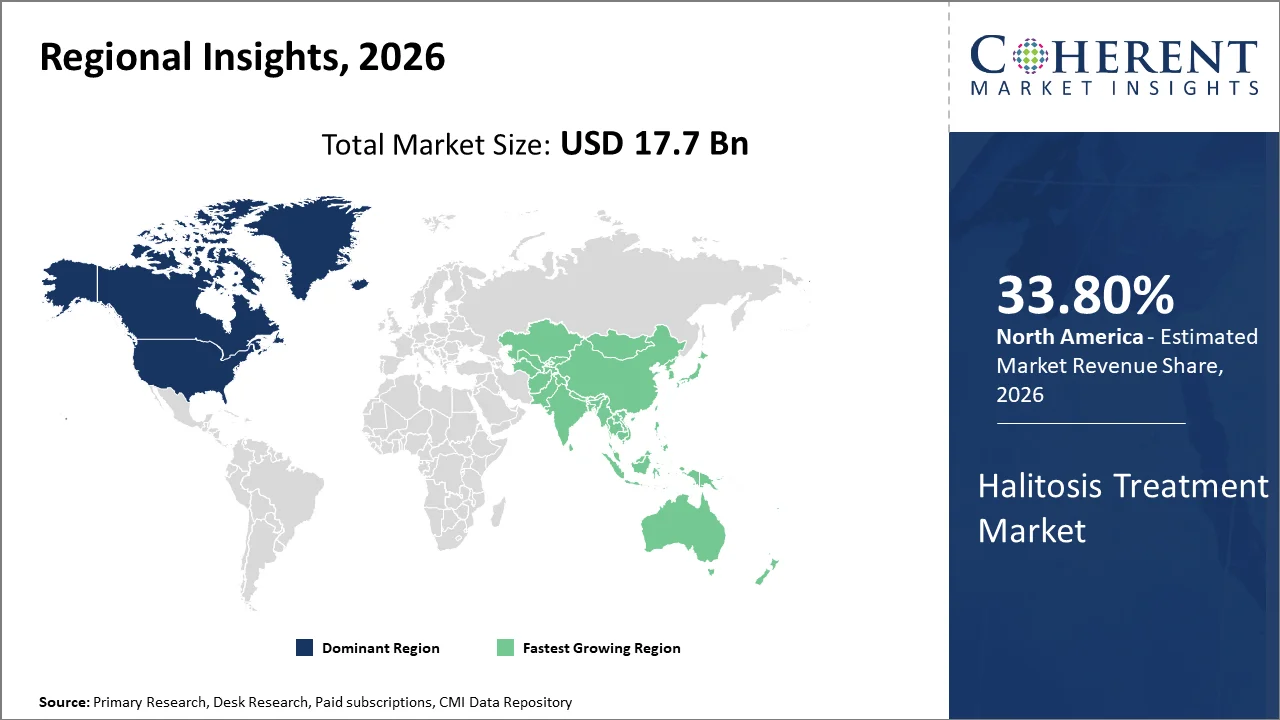
- North America is projected to dominate the halitosis treatment industry with a share of 33.80% in 2026, owing to high oral healthcare spending, rising awareness regarding oral hygiene, established dental infrastructure, and greater adoption of premium oral care products. For instance, national dental expenditure in the U.S. reached about USD 189 Bn in 2024, showing high investment in preventive and therapeutic oral healthcare services that support demand for halitosis treatment products and professional dental care.
- Asia Pacific halitosis treatment market is poised to exhibit the fastest CAGR of 12.7% during the forecast period, thanks to increasing oral healthcare awareness, expanding dental infrastructure, growing elderly populations, and increasing adoption of oral care products in nations like India and China. For instance, WHO projects that the population aged 60 years and above in the South-East Asia Region will increase from 12.2% in 2024 to 22.9% by 2050, supporting greater oral healthcare demand.
Halitosis Treatment Market Overview
The global halitosis treatment market is expected to register robust growth during the forecast period. This growth is primarily due to increasing awareness of oral health and the high prevalence of halitosis, commonly known as bad breath, a condition that affects a substantial portion of the global population and can result from various factors, including poor oral hygiene, dietary habits, dry mouth, smoking, and underlying medical conditions.
Rising prevalence of oral health disorders like periodontal diseases and xerostomia, as well as increasing consumer awareness regarding personal hygiene and social confidence, are also supporting market expansion. In addition, rising elderly population, continuous product innovations, and increasing demand for natural and herbal products are set to boost growth of the halitosis treatment market.
Halitosis, or bad breath, is a common condition that can cause social and psychological distress. It may result from multiple causes, including poor oral hygiene, gum disease, dry mouth, certain foods, tobacco use, and underlying health conditions. Maintaining good oral hygiene remains one of the most effective approaches for reducing halitosis.
Various diagnostic methods are used to assess halitosis, including halimeter testing, gas chromatography, BANA testing, and beta-galactosidase testing. Growing awareness regarding oral health and increasing utilization of oral care products are supporting market growth.
Individuals are increasingly adopting oral care products such as specialized mouthwash, toothpaste, antiseptic products, and antiplaque solutions to manage bad breath and maintain oral hygiene. This, in turn, is boosting halitosis treatment revenue growth.
Segmental Insights
Which Type of Halitosis Leads the Market?
Pathological Halitosis Accounts for the Largest Market Share
According to Coherent Market Insights’ latest halitosis treatment market analysis, pathological segment is set to dominate the market with a share of 64.5% in 2026. This dominance is due to increasing prevalence of underlying oral and systemic conditions such as periodontal disease, dental caries, respiratory tract infections, diabetes, and gastrointestinal disorders that contribute to pathological halitosis.
According to the World Health Organization (WHO), oral diseases affect nearly 3.5 billion people globally, while severe periodontal disease affects more than 1 billion people worldwide. This, in turn, is expected to fuel demand for long-term oral healthcare and halitosis treatment services.
Rising awareness about oral health, growing demand for targeted treatment solutions, and increasing access to professional dental care are also supporting segment growth. Similarly, advancements in diagnostic techniques and therapeutic products for managing chronic bad breath are expected to boost growth of the target segment during the forecast period.
- Current Industry Events of 2026
- Market Size Estimation
- Regional Breakdown
- Competitive Landscape
- Customer Intelligence
- Segmental Analysis
- Pricing Analysis
- Key Market Drivers, Challenges & Future Trends
- Customized Insights Section
Which Treatment Segment Dominates the Halitosis Treatment Market?
Antiseptics Lead the Halitosis Treatment Industry
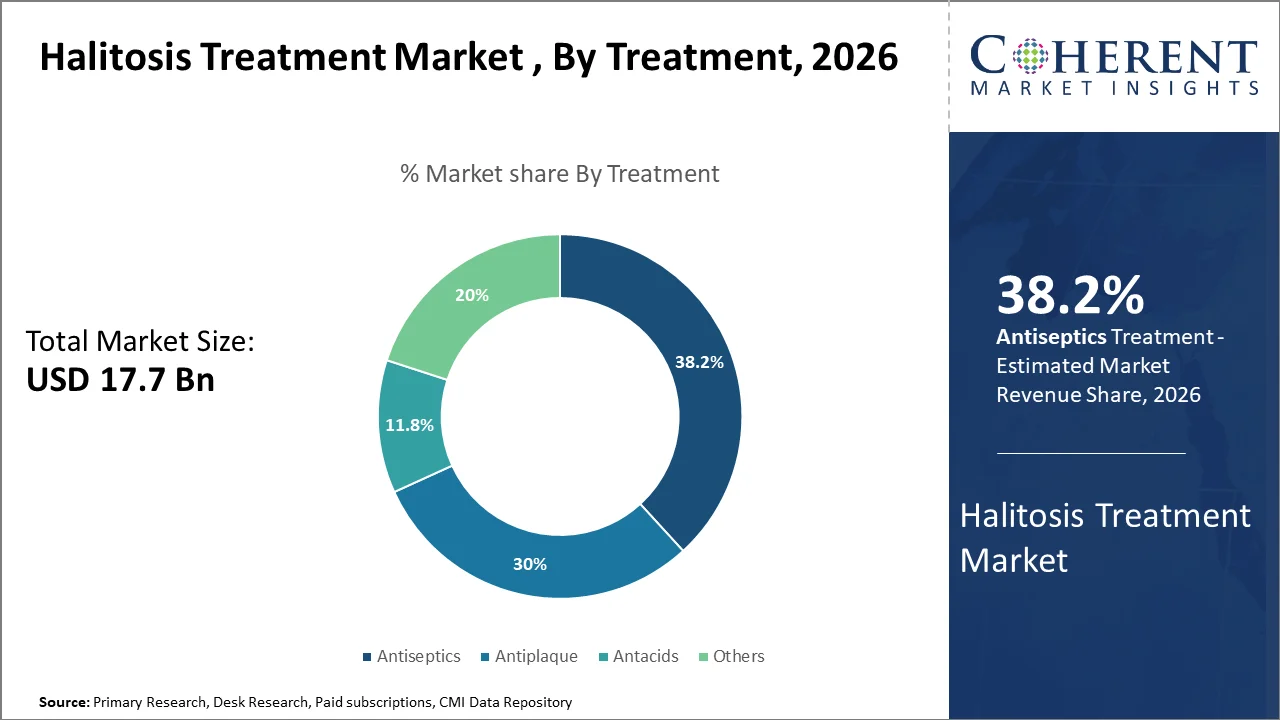
Based on treatment, antiseptics segment is projected to account for the largest market share of 38.2% in 2026. This is mostly due to their proven ability to rapidly reduce oral bacterial load, which is a primary cause of volatile sulfur compound (VSC) formation responsible for halitosis.
Antiseptic formulations such as chlorhexidine, cetylpyridinium chloride, and essential-oil-based mouthwashes are widely recommended by dental professionals for managing both transient and chronic bad breath. Their strong clinical effectiveness, easy availability over the counter, and routine use in daily oral hygiene practices, especially in patients with gingivitis and periodontal disease, also strengthen their dominant position in the market.
Halitosis Treatment Market Growth Drivers
Rising Prevalence of Oral Diseases
The incidence of oral diseases such as periodontal disease, gingivitis, dental caries, and dry mouth is increasing significantly. According to the World Health Organization (WHO), nearly 3.5 billion people globally are affected by oral diseases. This is expected to drive the growth of the halitosis treatment market, as these conditions are closely associated with halitosis. In fact, up to 80–90% of halitosis cases originate from oral conditions, especially due to bacterial activity in the mouth and tongue coating.
Halitosis Treatment Market Opportunities
Growing Oral Hygiene Awareness
People across the world are increasingly becoming aware of oral health and its connection to overall wellness due to health education campaigns and routine dental check-ups. This is prompting them to use solutions for socially embarrassing bad breath, which is driving demand for both OTC and professional treatments. Thus, rising awareness of oral hygiene is expected to create lucrative growth opportunities for the halitosis treatment market during the forecast period. Similarly, rising interest in preventive healthcare is positively impacting the sales of halitosis treatment products such as antiseptic mouthwashes, antiplaque solutions, tongue cleaners, and breath fresheners.
Halitosis Treatment Market Trends
Shift Toward Oral Microbiome-based Solutions
A key emerging trend in the halitosis treatment market is the shift toward oral microbiome modulation, including the use of oral probiotics to influence bacterial balance rather than broadly eliminating microbes. Strains such as Streptococcus salivarius (notably K12 and M18) are being studied and incorporated into formulations for their potential to reduce odor-causing bacteria and volatile sulfur compounds. This reflects a gradual transition from conventional antibacterial suppression toward targeted microbiome management approaches.
Halitosis Treatment Market Innovations
Technological Advancements in Diagnosis and Treatment
Technological advancements in diagnosis and treatment are reshaping the halitosis treatment market. Innovations such as AI-based breath analysis devices are helping in the early detection of bad breath by identifying its underlying causes. Laser therapy is being used in dental treatments to manage gum diseases that contribute to halitosis, while ozone therapy is also being explored for its antimicrobial effects.
In addition, digital dental diagnostics are improving the accuracy of oral examinations. Overall, these technologies are supporting better detection and more precise treatment, which is expected to fuel growth in the halitosis treatment market during the assessment period.
Current Events and Their Impact on the Halitosis Treatment Market
Current Event | Description and its Impact |
Global oral health policy expansion (WHO initiatives) |
|
Growing global burden of oral diseases |
|
Regional Insights
North America Remains at the Epicenter of Halitosis Treatment Market Growth
North America is expected to retain its dominance over the global halitosis treatment market during the forecast period, accounting for a share of 33.80% in 2026. This can be attributed to high awareness of oral health, strong dental care access, and rising prevalence of oral diseases linked to bad breath. High burden of periodontal disease and overall oral conditions, which are strongly associated with halitosis, is also boosting growth of North America halitosis treatment market.
According to recent global findings, about 3.69 billion people were affected by oral diseases in 2021, with gum disease and tooth decay being major contributors, significantly increasing demand for mouthwashes, toothpaste, and clinical halitosis treatments in the region. This growing patient pool, along with routine dental check-ups and advanced oral care adoption, continues to support market expansion in North America.
Asia Pacific to Emerge as Central Hub for Industry Players
Asia Pacific halitosis treatment market is poised to exhibit a CAGR of 12.7% throughout the forecast period. This is mostly due to increasing oral hygiene awareness, expanding healthcare access, and rising cases of dental infections. Increasing prevalence of oral diseases and poor oral hygiene in developing economies, which contribute to persistent bad breath issues, is providing a strong impetus for market growth in the region.
The World Health Organization reports that oral diseases affect nearly half of the global population, with the burden remaining particularly high in low- and middle-income regions where access to preventive dental care is limited. In addition, increasing urbanization and growing use of over-the-counter oral care products are further driving demand for halitosis treatment solutions across Asia Pacific.
Halitosis Treatment Market Outlook – Country-wise
U.S. Halitosis Treatment Market Trends
The United States is expected to remain the leading market for halitosis treatments during the forecast period. This can be attributed to strong dental care access, high awareness of oral hygiene, and frequent use of advanced oral care products and clinical treatments. Rising preference for preventive dental care and regular check-ups also supports market expansion in the nation.
Increasing interest in natural and herbal oral care products is expected to boost growth of the halitosis treatment industry. Consumers across the U.S. are increasingly preferring herbal mouthwashes, essential oil-based formulations, and alcohol-free products.
China Halitosis Treatment Market Forecast
The halitosis treatment market in China is expected to grow rapidly during the assessment period. This can be attributed to improving oral health awareness, expanding healthcare infrastructure, and rising demand for dental care services. Similarly, rising incidence of oral diseases in the nation is expected to fuel demand for halitosis treatments during the assessment period.
Increasing consumer demand for oral care products is boosting halitosis treatment market revenue in the nation. Consumers across China are increasingly using mouthwashes, breath fresheners, probiotic oral products, and medicated gums and sprays to counter bad breath. The convenience and accessibility of these products make them a first-line solution for most consumers.
Who are the Major Companies in the Halitosis Treatment Market?
Some of the major players in Halitosis Treatment Market are Abbott Laboratories, AstraZeneca Plc., Colgate-Palmolive Company, Dr. Harold Katz, Listerine, and Rowpar Pharmaceuticals.
Key Strategies Adopted by Industry Players
Top halitosis treatment companies are adopting various organic and inorganic strategies to boost their revenue as well as gain a competitive edge over the industry. These include new product launches and approvals, partnerships, mergers, acquisitions, and distribution agreements. For instance,
- In January 2026, Listerine launched a new mouthwash range with different flavor intensities, including extra mild, mild, and intense options. The range is designed to improve daily oral hygiene and help control bad breath.
- In February 2025, Colgate-Palmolive launched the Colgate Total Active Prevention System, which combines toothpaste, mouthwash, and toothbrush products. It is designed to reduce bacteria in the mouth and help prevent oral health problems like plaque and gum disease.
Market Report Scope
Halitosis Treatment Market Report Coverage
| Report Coverage | Details | ||
|---|---|---|---|
| Base Year: | 2025 | Market Size in 2026: | USD 17.7 Bn |
| Historical Data for: | 2020 To 2024 | Forecast Period: | 2026 To 2033 |
| Forecast Period 2026 to 2033 CAGR: | 10.5% | 2033 Value Projection: | USD 35.6 Bn |
| Geographies covered: |
| ||
| Segments covered: |
| ||
| Companies covered: | Abbott Laboratories, AstraZeneca Plc., Colgate-Palmolive Company, Dr. Harold Katz, Listerine, and Rowpar Pharmaceuticals. | ||
| Growth Drivers: |
| ||
| Restraints & Challenges: |
| ||
Analyst Opinion (Expert Opinion)
- Halitosis is a common condition worldwide and affects a large share of the population. Studies estimate that around 31.8% of people globally experience bad breath, showing a strong and steady treatment need rather than a trend-based demand.
- The market is mainly driven by poor oral hygiene and gum diseases, which allow odor-causing bacteria to grow in the mouth. This makes routine dental care and oral hygiene products an ongoing treatment requirement.
- Lifestyle factors such as smoking, dry mouth, and high-sugar diets are increasing the risk of chronic bad breath, supporting demand for mouthwash, toothpaste, tongue cleaners, and clinical treatments.
- Growing awareness and better diagnosis are encouraging more people to seek treatment, as many individuals now understand that halitosis can also signal underlying oral or digestive health issues, not just food-related odor.
Speak to the analyst
Want personalized insights?
Take the findings above to one of our principal consultants, or have the report rebuilt around the segments, geographies and competitors you actually track.
Market Segmentation
- By Type Insights ( Revenue, USD Bn, 2021 - 2033)
- Pathological
- Non-pathological
- By Treatment Insights ( Revenue, USD Bn, 2021 - 2033)
- Antacids
- Antiseptics
- Antiplaque
- Others
- By Region Insights ( Revenue, USD Bn, 2021 - 2033)
- North America
- U.S.
- Canada
- Latin America
- Brazil
- Argentina
- Mexico
- Rest of Latin America
- Europe
- Germany
- U.K.
- Spain
- France
- Italy
- Russia
- Rest of Europe
- Asia Pacific
- China
- India
- Japan
- Australia
- South Korea
- ASEAN
- Rest of Asia Pacific
- Middle East
- GCC Countries
- Israel
- Rest of Middle East
- Africa
- South Africa
- North Africa
- Central Africa
- North America
Sources
Primary Research interviews
- Interviews with dentists, periodontists, ENT specialists, dental hygienists, hospital-based oral care professionals, and academic researchers in oral microbiology and periodontal disease treatment.
Databases
- PubMed
- MEDLINE
- Scopus
- Web of Science
- Embase
- Cochrane Library
- Google Scholar
- National Institutes of Health (NIH) database
- World Health Organization (WHO) Global Health Observatory
Magazines
- Dental Tribune International
- Dentistry Today
- Oral Health Group publications
- Medical News Today (dental section)
- Nature Medicine (features)
- Scientific American (health section)
Journals
- Journal of Clinical Periodontology
- Journal of Dental Research
- International Journal of Oral Science
- Journal of Periodontology
- Oral Diseases Journal
- Community Dentistry and Oral Epidemiology
Newspapers
- The New York Times (health section)
- The Guardian (science & health)
- The Washington Post (health section)
- The Times of India (health section)
- Hindustan Times (health section)
Associations
- World Dental Federation (FDI)
- American Dental Association (ADA)
- Indian Dental Association (IDA)
- British Dental Association (BDA)
- World Health Organization (WHO – Oral Health Program)
- International Association for Dental Research (IADR)
Public Domain sources
- World Health Organization (WHO) reports
- Centers for Disease Control and Prevention (CDC) oral health data
- National health ministry publications
- Government health surveys
- Open-access dental research repositories
- Academic institutional publications
Proprietary Elements
- CMI Data Analytics Tool
- Proprietary CMI Existing Repository of information for last 10 years
Get access to 250+ pages report
Every segment, forecast, competitor profile and data table behind the analysis above — available for instant download.
- ESOMAR Member
- ISO 9001:2015 Certified
- D-U-N-S Registered
- GDPR & CCPA Compliant
Missing comfort of reading report in your local language? Find your preferred language:
Transform your Strategy with Exclusive Trending Reports
Frequently Asked Questions
The global Halitosis Treatment Market is estimated to be valued at USD 17.7 Bn in 2026.
The global Halitosis Treatment Market value is expected to reach USD 35.6 Bn by 2033.
The global halitosis treatment market is poised to exhibit a CAGR of 10.5% from 2026 to 2033.
Major growth factors include rising prevalence of halitosis and growing emphasis on oral care and hygiene awareness worldwide.
Antiseptics are slated to account for the largest market share of 38.2% in 2026.
Some major companies in the Halitosis Treatment Market include Abbott Laboratories, AstraZeneca Plc., Colgate-Palmolive Company, Dr. Harold Katz, Listerine, and Rowpar Pharmaceuticals.
North America, with 33.8% share in 2026, is set to lead the market during the forecast period.