

Hemostats Market Size and Share Analysis - Growth Trends and Forecasts (2026 - 2033)
The Hemostats market is anticipated to grow at a CAGR of 8.5% with USD 3.82 Bn in 2026 and is expected to reach USD 6.22 Bn in 2033. Rising volumes of surgical procedures performed across the world coupled with an increasing number of trauma and accident injury cases (India, annually, 0.15 million, and as per WHO, roughly 1 in 3 of these deaths result from road traffic crashes) are expected to foster growth of the global hemostats market. Moreover, the use of these instruments can be found not only in trauma injury surgical procedures but also in complex surgeries that involve significant blood loss due to larger incisions made on the patients’ skin such as open-heart surgery, hernia repair surgery, joint repair surgery, cardiovascular surgery, and other neurologic surgeries.
Key Takeaways
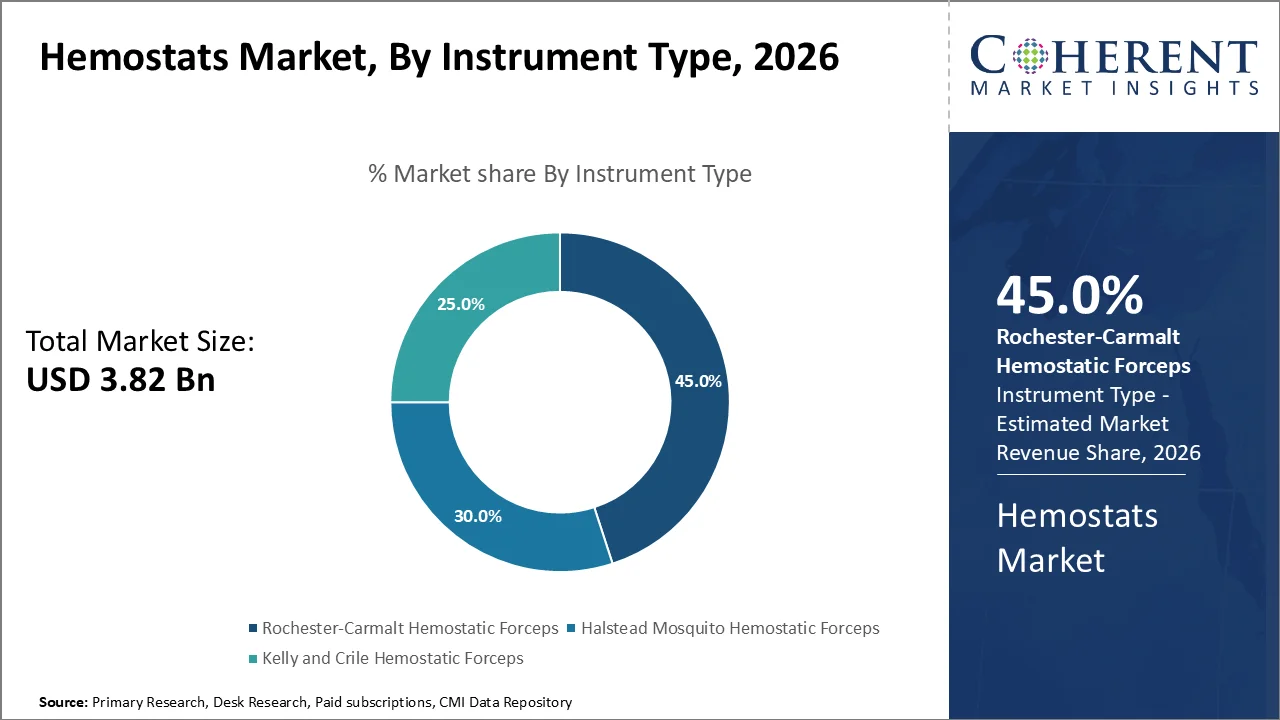
- Rochester-Carmalt Hemostatic Forceps is expected to account the largest share of 45% in 2026, as these are widely used for surgical procedures due to their convenience. The unmet need for surgery has continued to grow, reaching at least 160 million operations per year.
- Hospitals will dominate with 50% in 2026, as they handle most surgical procedures, use all types of hemostats. hospitals’ efforts to improve safety led to 200,000 Americans hospitalized between April 2023 and March 2024 surviving episodes of care they wouldn’t have in 2019.
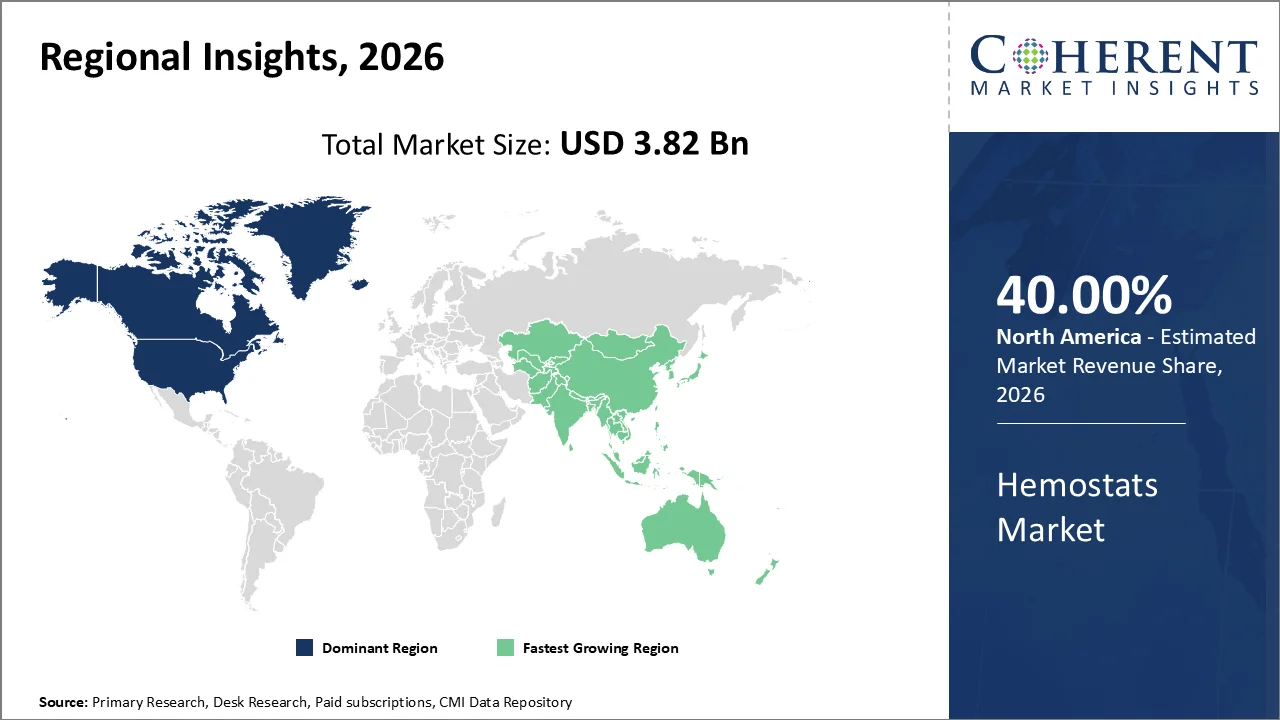
- North America is expected to acquire the dominant share of 40% in 2026, high healthcare expenditure and well-developed hospital infrastructure. Health care spending in the US reached USD 5.3 trillion and increased 7.2 percent in 2024, similar to growth of 7.4 percent in 2023.
Segmental Insights
Why is Rochester-Carmalt Hemostatic Forceps Acquiring the Largest Market Share?
Rochester-Carmalt Hemostatic Forceps is projected to account for the largest share of instrument type in 2026, representing approximately 45% of the total volume. Their exceptional versatility along with robust design is one of the growths inducing factor, characterized by multiple surgical specialties. The Rochester-Carmalt forceps are differed by their broader jaw design as well as deeper serrations, which provide better gripping capability for larger tissue masses as well as thicker vascular structures.
This design advantage has made them particularly valuable in gynecological devices, general surgery, as well as emergency medicine applications. Gynecological surgeries are a big part of women's healthcare. Over 600,000 hysterectomies are done each year in the US.
According to the American College of Surgeons, these forceps have become the preferred choice in major surgical centers owing to their ability to provide reliable hemostasis in fluctuating surgical environments where conventional hemostatic instruments may prove inadequate.
- Current Industry Events of 2026
- Market Size Estimation
- Regional Breakdown
- Competitive Landscape
- Customer Intelligence
- Segmental Analysis
- Pricing Analysis
- Key Market Drivers, Challenges & Future Trends
- Customized Insights Section
Hospitals holds the Largest Market Share
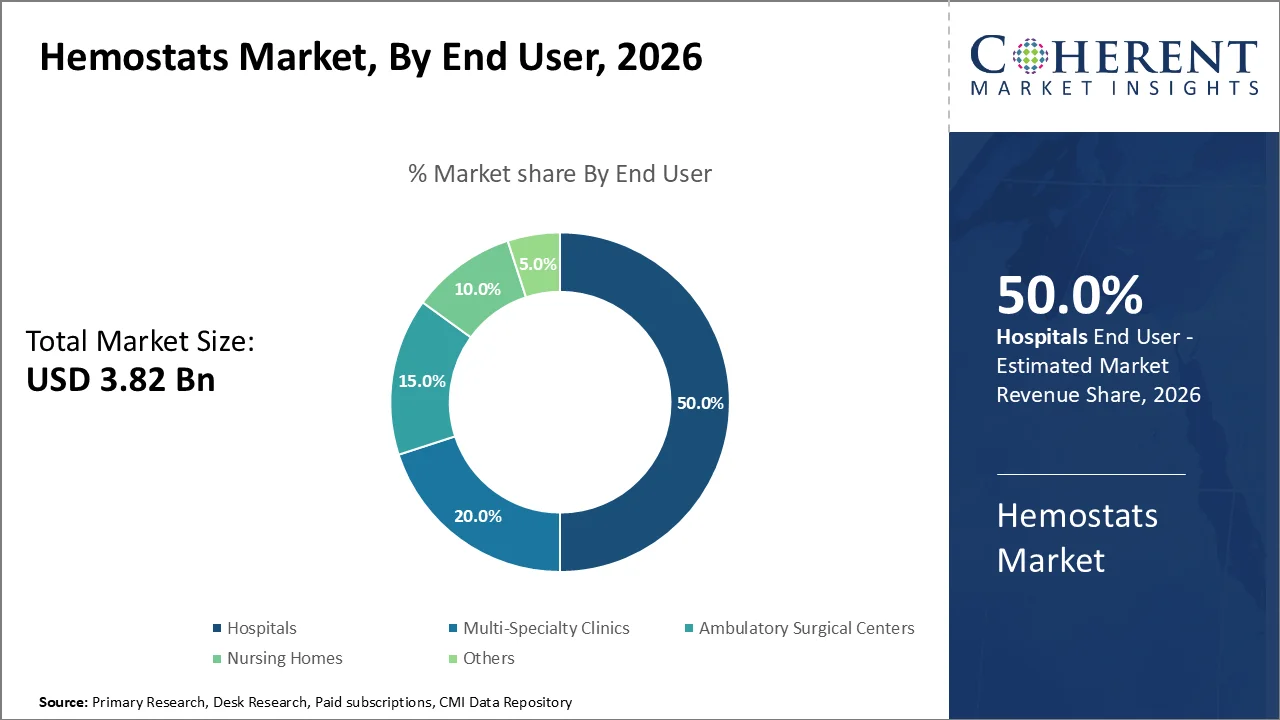
Based on end user, hospitals dominate the market, accounting for a significant 50% share in 2026, the segment is propelling due to their comprehensive surgical capabilities, high patient volume, and extensive procurement budgets for advanced medical devices. Hospital admissions totaled nearly 1.2 million in 2024/25. Hospitalized patients in Q2 2025 were on average nearly 30% more likely to survive than expected given the severity of their illnesses compared to Q4 2019.
Hospitals are the main part of healthcare worldwide and handle the most difficult surgeries that need advanced hemostatic solutions. According to the World Health Organization, hospitals worldwide perform millions of surgical procedures annually, with cardiovascular, orthopedic, as well as general surgeries being the most common, all of which heavily depend on hemostatic an to control bleeding as well as makes sure patient safety.
Data from the American Hospital Association shows that big hospitals usually keep many types of hemostatic products, like mechanical, active, and flowable hemostats, for different surgeries. Large hospitals that handle complex cases often use more of these high-quality products.
Mechanical Hemostats is transforming the Hemostats Industry
Mechanical Hemostats are tools used to stop bleeding during surgery by pressing on blood vessels or using special materials that help blood clot. Common types include gelatin sponges and foams, collagen mats and fleeces, microfibrillar collagen, and thrombin-soaked gelatin matrices. These products make a physical barrier or encourage clotting to control bleeding quickly as well as safely.
Prominent companies like Johnson & Johnson, Baxter, Pfizer, etc., make mechanical hemostats. For example, Surgicel by Johnson & Johnson works in 85% of cases within 10 minutes, FloSeal by Baxter reduces bleeding time by 50% in heart surgeries, and Gelfoam by Pfizer is used in over 10,000 hospitals worldwide. Overall, mechanical hemostats help reduce surgery time by 15–20% and lower post-surgery bleeding problems by 30%, making operations safer and more efficient.
Market Driver
Active Hemostats (Biological): A major breakthrough in Hemostats
Active Hemostats are products that help the body stop bleeding faster using natural clotting agents like thrombin and fibrinogen. Common types include recombinant thrombin products, fibrin sealants, platelet-rich plasma (PRP) concentrates, as well as autologous fibrin adhesives. These products fasten up the natural clotting process during surgery.
Major companies like CSL Behring, Grifols, Takeda, etc., make active hemostats. For example, Artiss by CSL Behring lowering blood transfusions by 40% in complex heart surgeries, Vistaseal by Grifols shows 95% success in liver surgery, as well as TachoSil by Takeda cuts re-operation rates by 25%. Overall, active hemostats improve patient outcomes, reduce blood transfusion needs by 35%, and shorten hospital stays by 20%.
Current Events and Their Impact on the Hemostats Market
Current Event | Description and its Impact |
FDA Expands Approval for Hemostatic Devices |
|
EU Medical Device Regulation (MDR) Enforcement |
|
Hemostats Market Trends
- Shift toward advanced hemostatic agents is bringing the adoption of combination hemostats and flowable/sprayable products over traditional mechanical hemostats
- Minimally invasive surgery expansion: Rising demand for hemostats compatible with laparoscopic and robotic surgical procedures. Researchers from Boston Medical Center analyzed whether different surgical approaches may explain why patients in rural areas have different recovery results. The researchers looked at 33,183 individuals age 66 or older from the SEER-Medicare database and found that a minimally invasive approach was associated with lower complication risks compared with open surgery and helped reduce a significant portion of the complication risk rural patients face.
- Bioengineered solutions with an increased focus on plant and animal-derived hemostatic products with enhanced safety profiles. For instance, TRAUMAGEL, a revolutionary plant-based hemostatic gel that controls bleeding in seconds when applied to a wound at the point of care.
- Point-of-care applications with the escalating use of portable hemostatic devices in emergency as well as trauma care settings
- Regulatory harmonization: Streamlined approval processes accelerating product launches across multiple markets
Regional Insights
North America dominates owing to the robust healthcare infrastructure
North America account 40% market share in 2026, its advanced medical technology adoption, as well as a strong regulatory framework is the growth inducing factor, ensuring high-quality hemostats products reach healthcare facilities efficiently.
The region benefits from a well-established network of leading medical device manufacturers such as Johnson & Johnson, Medtronic, and Baxter International, all headquartered within North America, providing seamless supply chain management and rapid product innovation cycles. There was 955 Medical Device Manufacturing in the U.S. businesses as of 2025, an increase of 1.8% from 2024.
The presence of world-renowned medical institutions like Mayo Clinic, Cleveland Clinic, Johns Hopkins Hospital, etc., drives demand for sophisticated hemostatic agents as well as devices, as these facilities consistently perform complex surgical procedures that require advanced bleeding control solutions.
Asia Pacific Hemostats Market Trends
The Asia-Pacific region is poised to be the fastest-growing region through 2026-2033, expanding at a CAGR of approximately 7.5%. The expanding healthcare infrastructure, increasing surgical procedures, as well as growing awareness about advanced hemostatic solutions in the region are the factors fueling the market growth.
The remarkable growth trajectory is primarily attributed to countries like China, India, and Southeast Asian nations where government healthcare initiatives are significantly boosting demand for quality medical devices. China is the world’s second largest healthcare industry with an estimated value exceeding $1 trillion in 2024, and over $1.5 trillion by 2029, with 60 percent of health expenditures currently coming from the government.
The region's growth is further accelerated by the emergence of local manufacturing capabilities, with companies like Starch Medical in China and Meril Life Sciences in India developing innovative hemostatic solutions tailored to regional needs.
Advanced Healthcare Infrastructure is Accelerating the Hemostats Market Demand in United States
The U.S. contributes the highest share in the hemostats market in North America due to its advanced medical device manufacturing capabilities, along with substantial investment in surgical innovation. Moreover, the presence of leading medical device manufacturers, extensive surgical procedure volumes, as well as strong regulatory frameworks that encourage innovation are bolstering the market.
The U.S. Food and Drug Administration's streamlined approval processes for hemostatic agents have facilitated rapid market entry for new products, ensuring a competitive landscape that fuels continuous advancement.
For example, the American College of Surgeons National Surgical Quality Improvement Program reported that over 15 million surgical procedures are conducted annually in participating hospitals across the United States, making high demand for advanced hemostatic solutions.
China Hemostats Market Trends
China contributes highest share in market due to its robust healthcare infrastructure development, extensive manufacturing capabilities, as well as major government investments in medical technology advancement. The country is further stimulated by the massive population base requiring surgical interventions, rapidly aging demographics, as well as the government's Healthcare Reform 2020 initiative that allocated substantial resources toward modernizing medical facilities across tier-one and tier-two cities.
China's dominance is exemplified by the recent establishment of multiple state-of-the-art cardiac surgery centers in Beijing and Shanghai, which have dramatically increased the demand for advanced hemostatic agents and devices.
Who are the Major Companies in Hemostats Industry
Some of the major key players in Hemostats Market include, B.Braun Melsungen AG, CareFusion Corporation, Pentax Medical, Shanghai Medical Instruments, Teleflex Medical, Asa Dental, J & J Instruments, and others
Key News
- In April 2025, Baxter International Inc., a global leader in advancing surgical innovation, announced the introduction of Hemopatch Sealing Hemostat with room temperature storage at a symposium in Austria. The evolution of the product optimizes accessibility in the operating room, delivering an immediate solution for surgeons to control bleeding or prevent leakage. The product is now available to order throughout Europe.
- In October 2025, Olympus Corporation (Olympus), a global MedTech company unveiled THUNDERBEATTM II, the next generation hybrid energy device for soft tissue management, designed to deliver faster, more hemostatic dissection and large vessel transection1 in both laparoscopic and open surgery. THUNDERBEATTM II will become commercially available in Europe starting October 2025, with a subsequent launch in Japan later this year. A global rollout, including the United States and other regions, will follow, subject to regulatory approvals including product registration and market clearance.
Market Report Scope
Hemostats Market Report Coverage
| Report Coverage | Details | ||
|---|---|---|---|
| Base Year: | 2025 | Market Size in 2026: | USD 3.82 Bn |
| Historical Data for: | 2020 To 2024 | Forecast Period: | 2026 To 2033 |
| Forecast Period 2026 to 2033 CAGR: | 8.5% | 2033 Value Projection: | USD 6.22 Bn |
| Geographies covered: |
| ||
| Segments covered: |
| ||
| Companies covered: | B.Braun Melsungen AG, CareFusion Corporation, Pentax Medical, Shanghai Medical Instruments, Teleflex Medical, Asa Dental, J & J Instruments | ||
| Growth Drivers: |
| ||
| Restraints & Challenges: |
| ||
Analyst Opinion
- The Hemostats Market is driven by real medical necessity. In 2025, over 310 million major surgical procedures were performed globally, and uncontrolled bleeding remains one of the leading causes of surgical complications and post-operative mortality.
- Mechanical and active hemostats are being used more and more in hospitals around the world. For example, 2025 studies show that Rochester-Carmalt and FloSeal® devices cut bleeding by 40–50% in heart and liver surgeries as well as made surgeries up to 20% shorter.
- Technological advancements are also altering dynamics of the market. The introduction of recombinant thrombin as well as fibrin sealants in over 1,500 hospitals across Europe and North America in 2025 shows the escalating confidence in bioactive hemostats.
- The integration of high efficacy, regulatory approvals, as well as hospital-level adoption will continue to drive market growth, particularly in regions investing heavily in surgical infrastructure and minimally invasive procedures.
- Overall, the market’s expansion is rooted in medical need, clinical efficacy, and hospital adoption rates, rather than temporary trends. As more surgeries are done and technology gets better, the Hemostats Market keeps growing, making it a strong as well as promising area for both investors and healthcare providers.
Speak to the analyst
Want personalized insights?
Take the findings above to one of our principal consultants, or have the report rebuilt around the segments, geographies and competitors you actually track.
Market Segmentation
- By Instrument Type (Revenue, USD Bn, 2021-2033)
- Halstead Mosquito Hemostatic Forceps
- Kelly and Crile Hemostatic Forceps
- Rochester-Carmalt Hemostatic Forceps
- By End User (Revenue, USD Bn, 2021-2033)
- Hospitals
- Multi-Specialty Clinics
- Ambulatory Surgical Centers
- Nursing Homes
- By Region (Revenue, USD Bn, 2021-2033)
- North America
- U.S.
- Canada
- Latin America
- Brazil
- Mexico
- Argentina
- Rest of Latin America
- Europe
- Germany
- U.K.
- France
- Italy
- Spain
- Russia
- Rest of Europe
- Asia Pacific
- China
- India
- Japan
- Australia
- South Korea
- ASEAN
- Rest of Asia Pacific
- Middle East
- GCC
- Israel
- Rest of Middle East
- Africa
- South Africa
- Central Africa
- North Africa
- North America
Sources
Primary Research Interviews
- Medical Device Manufacturers and Suppliers
- Healthcare Professionals and Surgeons
- Hospital Procurement Managers
- Regulatory Affairs Specialists
- Others
Databases
- FDA Medical Device Database
- WHO Global Health Observatory
- Healthcare Cost and Utilization Project (HCUP)
- Medical Device Market Research Databases
- Others
Magazines
- Medical Device & Diagnostic Industry (MD+DI)
- Healthcare Purchasing News
- Bioworld Intelligence
- Medical Economics Magazine
- Others
Journals
- Journal of Biomedical Materials Research
- American Journal of Surgery
- Journal of Surgical Research
- Others
Newspapers
- Healthcare Finance News
- Modern Healthcare
- FierceBiotech
- Medical Device Network
- Others
Associations
- Advanced Medical Technology Association (AdvaMed)
- Medical Device Manufacturers Association (MDMA)
- International Society on Thrombosis and Haemostasis (ISTH)
- Association for the Advancement of Medical Instrumentation (AAMI)
- Others
Public Domain Sources
- National Institutes of Health (NIH) Publications
- Centers for Disease Control and Prevention (CDC) Reports
- World Health Organization (WHO) Publications
- U.S. Patent and Trademark Office Database
- Others
Proprietary Elements
- CMI Data Analytics Tool
- Proprietary CMI Existing Repository of information for last 10 years
Get access to 250+ pages report
Every segment, forecast, competitor profile and data table behind the analysis above — available for instant download.
- ESOMAR Member
- ISO 9001:2015 Certified
- D-U-N-S Registered
- GDPR & CCPA Compliant
Missing comfort of reading report in your local language? Find your preferred language:
Transform your Strategy with Exclusive Trending Reports
Frequently Asked Questions
The Hemostats market is expected to reach USD 6.22 Bn in 2033.
Major players operating in the global Hemostats market include B.Braun Melsungen AG, CareFusion Corporation, Pentax Medical, Shanghai Medical Instruments, Teleflex Medical, Asa Dental, J & J Instruments
Risk of adverse reactions and complications from hemostatic agents are expected to restrain the Hemostats market growth over the forecast period.
Rising awareness about blood loss management during surgeries are driving growth of the global Hemostats market.
The Hemostats market is anticipated to grow at a CAGR of 8.5% between 2026 and 2033.
Among regions, North America is expected to account for a largest market share in the global Hemostats market over the forecast period.
Forceps help to clamp, or grasp the tissues or organs in the surgeries while hemostats help in controlling the flow of blood and body fluids. Forceps are also like tweezers and are somehow similar to scissors as well.