

Home Insecticide Market Size and Forecast — 2026 - 2033
The Global Home Insecticide Market size is estimated to be valued at USD 6.4 billion in 2026 and is projected to reach USD 10.9 billion by 2033, registering a compound annual growth rate (CAGR) of 8.2% during the forecast period from 2026 to 2033.
Overview
The growth of the home insecticide market is driven by increasing concerns regarding mosquito-borne and vector-borne diseases such as malaria, dengue, and chikungunya. Rising urbanization, changing climatic conditions, and growing insect infestation in residential areas are boosting demand for household pest control solutions. Increasing consumer awareness about hygiene and sanitation, along with higher spending on home care products, further supports market expansion. Demand for convenient products such as sprays, vaporizers, coils, and electric repellents continues to rise globally. In addition, advancements in eco-friendly and low-toxicity insecticide formulations, combined with expanding distribution through supermarkets and e-commerce platforms, are contributing to sustained market growth.
Key Takeaways
Spray formulations dominate the home insecticide market, capturing 45% of the segment due to ease of use and effectiveness, while bio-insecticides are the fastest growing subsegment, driven by rising consumer health and safety concerns.
Indoor applications lead market revenue, fueled by increasing residential demand in urban areas, whereas outdoor usage is gaining popularity for preventive pest control in yards and gardens.
North America maintains a significant market share due to advanced technological adoption and strong regulatory frameworks ensuring safe and effective insecticide products.
Asia Pacific exhibits the fastest market growth, driven by urbanization, rising incomes, and growing awareness of vector-borne diseases, resulting in a CAGR well above the global average.
Home Insecticide Market Segmentation Analysis
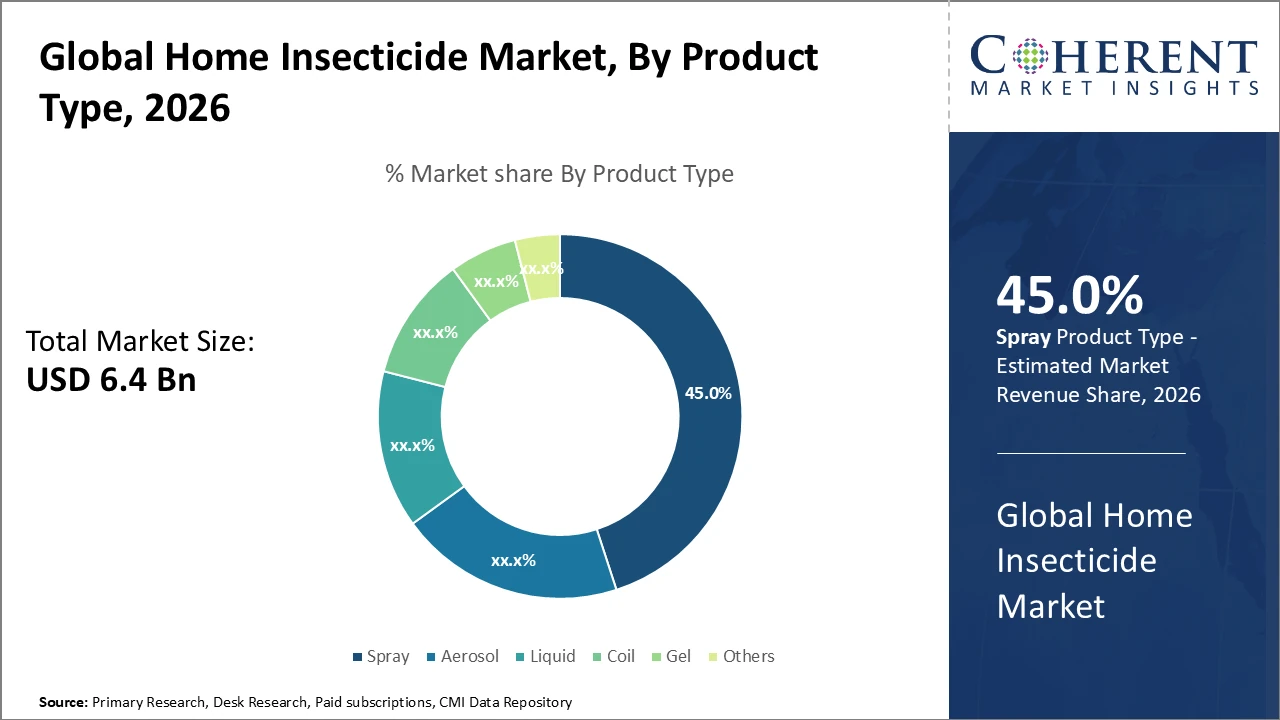
Home Insecticide Market Insights, By Product Type
Spray formulations dominate the home insecticide market, driven by their convenience, targeted application, and rapid effectiveness against common household pests. They are particularly preferred for indoor use due to easy availability and user-friendly operation. Liquids are the fastest growing subsegment, benefiting from innovations in concentrated formulations that provide longer-lasting pest control with lower toxicity, making them ideal for outdoor and garage applications. Aerosols continue to hold steady demand for quick knockdown results, while coils and gels are used in specific problem areas. Emerging formats, including powders and fumigants, cater to niche applications, expanding the product landscape.
Home Insecticide Market Insights, By Active Ingredient
Pyrethroids dominate the home insecticide market due to their high efficacy and relatively low toxicity, making them widely used in both indoor and outdoor settings. Bio-insecticides are the fastest growing subsegment, fueled by increasing consumer awareness of health and environmental safety. Innovative formulations based on botanical extracts and microbial agents have gained rapid acceptance, particularly in urban and eco-conscious markets. Organophosphates and carbamates remain relevant for targeted pest infestations despite tighter regulatory oversight. The Others category includes emerging chemical classes and novel formulations under development, reflecting ongoing innovation and diversification within the home insecticide product landscape.
Home Insecticide Market Insights, By Application
Indoor applications hold the largest share of the home insecticide market, driven by the critical need to manage pests in living spaces where human exposure risk is highest. Rapid urbanization and the rise of multi-family housing further increase demand for effective indoor pest control solutions. Outdoor applications represent the fastest growing subsegment, supported by expanding landscaping, garden maintenance, and public health initiatives targeting vector-borne diseases. Garage and utility areas maintain steady demand for specialized pest challenges, particularly in suburban and rural households. Together, these application segments highlight the market’s breadth and the evolving consumer preferences shaping product development and adoption.
Home Insecticide Market Trends
The market is increasingly shifting towards bio-insecticides and smart pest control devices, driven by consumer demand for safe, sustainable, and convenient solutions.
In 2025, the U.S. Environmental Protection Agency reported a 17% increase in environmentally friendly product registrations, reflecting regulatory support for greener insecticide alternatives.
Technological integration, including app-enabled devices for remote control of insecticides, saw adoption in North America rise by 12% between 2024 and 2026, highlighting the growing role of innovation in home pest control.
Subscription-based pest control services are gaining traction, catering to consumer preferences for continuous, hassle-free protection.
Home Insecticide Market Insights, By Geography
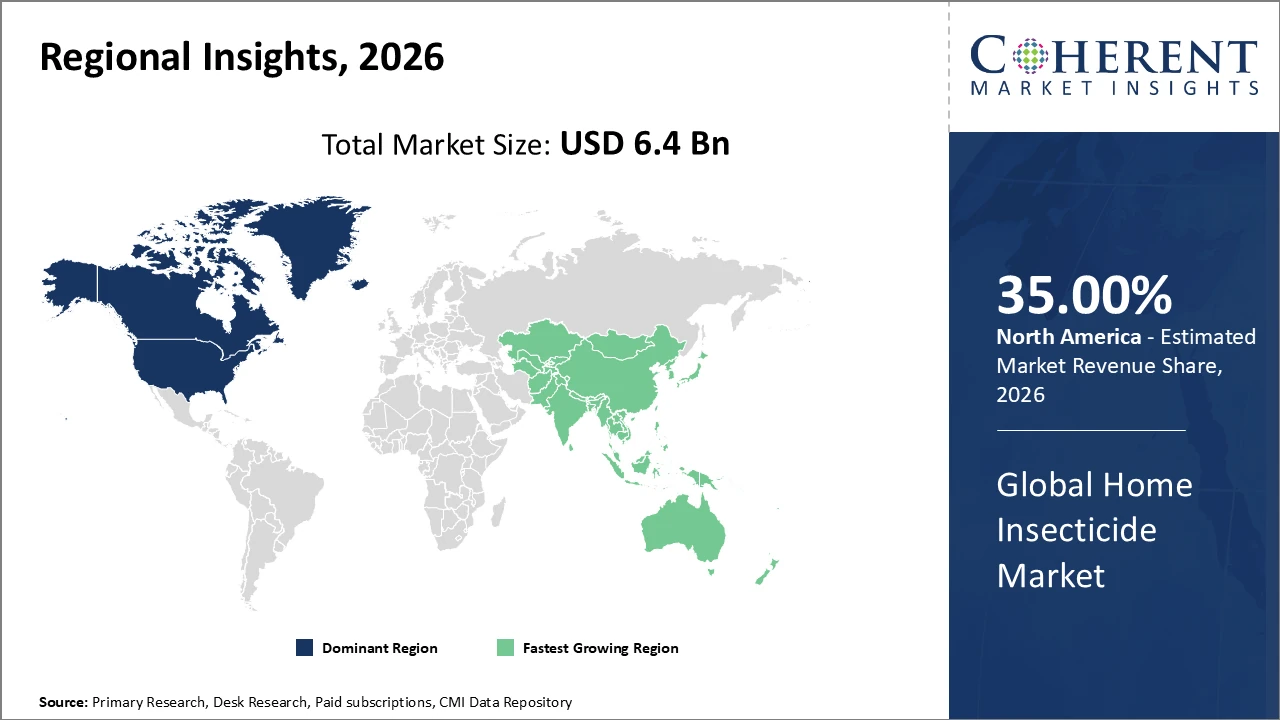
North America Home Insecticide Market Analysis and Trends
In North America, the home insecticide market is dominated by well-established infrastructure, high consumer awareness, and advanced technological adoption. The region accounts for roughly 35% of the global market share, supported by extensive distribution networks and stringent regulatory frameworks ensuring safe and effective product usage. Leading companies headquartered in the region have capitalized on innovation, launching advanced sprays, bio-insecticides, and smart pest control devices that cater to both indoor and outdoor applications. Growing demand for eco-friendly and convenient solutions, along with strong public health initiatives, continues to reinforce North America’s leadership position in the home insecticide market.
Asia Pacific Home Insecticide Market Analysis and Trends
The Asia Pacific home insecticide market is experiencing the fastest growth, with a CAGR exceeding 10%, driven by rapid urbanization, increasing disposable incomes, and a rising prevalence of vector-borne diseases such as dengue and malaria. India and China are key contributors, supported by government awareness campaigns and public health initiatives promoting bio-insecticides and safe pest control practices. Market expansion is further accelerated by collaborations between local manufacturers and global companies, enabling wider distribution and adoption of innovative insecticide solutions. Rising consumer focus on health, hygiene, and eco-friendly products continues to fuel demand, positioning the region as a high-growth market for the forecast period.
Home Insecticide Market Outlook for Key Countries
USA Home Insecticide Market Analysis and Trends
The USA’s home insecticide market thrives on high consumer spending and early adoption of innovative pest control solutions. In 2025, about 40% of households in major metropolitan areas utilized advanced insecticide delivery systems, significantly increasing market revenue. Regulatory oversight by the Environmental Protection Agency (EPA) has promoted the development and adoption of safer, eco-friendly products, encouraging manufacturers to innovate. Companies such as Bayer AG and SC Johnson have expanded their bio-insecticide portfolios, strengthening market presence. Rising awareness of vector-borne diseases and demand for convenient, sustainable pest control solutions continue to drive growth, solidifying the USA’s leadership in the global market.
Germany Home Insecticide Market Analysis and Trends
The Germany home insecticide market is characterized by strong consumer preference for safe, environmentally friendly, and effective pest control solutions. Urbanization and high residential density have driven consistent demand for indoor sprays, aerosols, and bio-insecticides. Regulatory frameworks, led by the German Federal Environment Agency, promote stringent safety standards and encourage the use of low-toxicity and botanical formulations. Growing awareness of vector-borne diseases, coupled with eco-conscious consumer behavior, has accelerated adoption of bio-based products. Technological innovations, including smart and automated pest control devices, are gradually gaining traction. Overall, Germany represents a mature market emphasizing safety, sustainability, and innovation in home insecticide solutions.
Analyst Opinion
Product Innovation and Formulation Diversification: Rising consumer demand for safer, biodegradable insecticides has driven sales of plant-based products up by 27% in 2025, highlighting a shift toward organic formulations.
Urbanization and Residential Infrastructure Development: Expanding urban areas, particularly in emerging markets, have increased home insecticide consumption. In 2024, India and Brazil saw a 15% rise in usage, reflecting higher demand from modern residential setups and enhanced hygiene standards.
Seasonal Variability Influencing Market Dynamics: Climatic changes affect insect populations, impacting sales. The 2026 monsoon season in Southeast Asia led to a 20% surge in demand, prompting manufacturers to align production with seasonal peaks.
Technological Advancements in Application Devices: Smart insecticide delivery devices, such as plug-in systems, drove 35% of U.S. sales growth in 2025, demonstrating the increasing impact of technology on market expansion.
- Current Industry Events of 2026
- Market Size Estimation
- Regional Breakdown
- Competitive Landscape
- Customer Intelligence
- Segmental Analysis
- Pricing Analysis
- Key Market Drivers, Challenges & Future Trends
- Customized Insights Section
Market Scope
| Report Coverage | Details | ||
|---|---|---|---|
| Base Year: | 2025 | Market Size in 2026: | USD 6.4 billion |
| Historical Data for: | 2020 To 2024 | Forecast Period: | 2026 To 2033 |
| Forecast Period 2026 to 2033 CAGR: | 8.2% | 2033 Value Projection: | USD 10.9 billion |
| Geographies covered: |
| ||
| Segments covered: |
| ||
| Companies covered: | Bayer AG, Johnson & Johnson, Syngenta AG, BASF SE, 3M Company, Clorox Company, FMC Corporation, Avon Protection Systems, Tata Chemicals Limited | ||
| Growth Drivers: |
| ||
Home Insecticide Market Growth Factors
The rising incidence of vector-borne diseases is a key growth driver for the home insecticide market, as households increasingly adopt preventive measures. For instance, the 2025 dengue outbreak in Southeast Asia led to an 18% increase in market revenue. Heightened consumer focus on health and hygiene, influenced by the COVID-19 pandemic, has further accelerated insecticide usage globally. Technological innovations, including IoT-enabled devices, have expanded targeted pest control, with North American smart insecticide sales rising 11% in 2025. Supportive government policies in Europe promoting eco-friendly pest management contributed to a 20% growth in bio-insecticide adoption in 2024.
Home Insecticide Market Development
In February 2026, Godrej Agrovet Limited launched TAKAI, a new insecticide for rice crops powered by Cyclapryn technology developed by ISK Japan. The product is designed to control major rice pests, including stem borer and leaf folder.
Key Players
Leading Companies of the Market
Bayer AG
Johnson & Johnson
FMC Corporation
Syngenta AG
BASF SE
3M Company
Clorox Company
Avon Protection Systems
Tata Chemicals Limited
Leading companies in the home insecticide market have pursued competitive growth strategies through portfolio expansion, acquisitions, and technological innovation. In 2024, Bayer AG acquired an organic insecticide firm, strengthening its presence in the bio-insecticide segment and achieving a 12% revenue increase. Similarly, SC Johnson advanced its smart insecticide dispenser technology in 2025, appealing to tech-savvy consumers in North America and boosting its market share by 15%. These strategic initiatives reflect the industry’s focus on combining product diversification with innovation to capture emerging consumer trends, enhance market penetration, and sustain long-term growth in both traditional and technology-driven segments.
Home Insecticide Market Future Outlook
The Home Insecticide market is expected to experience steady growth, driven by rising urbanization, increasing awareness of vector-borne diseases, and demand for hygienic living environments. Innovations in product formulations, including eco-friendly, natural, and low-toxicity insecticides, are shaping consumer preferences. Smart and automated pest control devices, such as IoT-enabled dispensers and electric insect traps, are gaining traction for convenient and continuous protection. Emerging markets in Asia Pacific and Latin America are projected to see robust growth due to expanding middle-class populations and government campaigns against mosquito-borne illnesses. Overall, technological advancements, sustainability trends, and rising health consciousness are set to define the market’s future trajectory.
Home Insecticide Market Historical Analysis
The Home Insecticide market has witnessed steady growth over the past decade, driven by increasing urbanization, rising awareness of hygiene, and the prevalence of vector-borne diseases such as dengue, malaria, and Zika virus. Early market offerings primarily included aerosol sprays and liquid concentrates, while baits, gels, and electric devices gained popularity over time due to convenience and targeted pest control. Adoption in residential and commercial spaces expanded as product efficacy improved and safety standards were reinforced. Regulatory frameworks and consumer demand for eco-friendly solutions prompted manufacturers to innovate with natural and low-toxicity formulations, laying the foundation for the current diverse and technologically advanced market landscape.
Sources
Primary Research Interviews:
R&D managers, product developers, and chemical engineers from companies manufacturing household insecticides and pest control solutions.
Technical specialists from firms providing pest control services in residential and commercial spaces.
Industry experts from companies supplying smart, automated, and eco-friendly insecticide devices.
Magazines:
Pest Control Technology – Updates on insecticide innovations, application techniques, and market trends
Household & Consumer Products Industry – Insights on product launches, consumer preferences, and sustainability trends.
Chemical & Engineering News – Reports on pesticide formulations, safety standards, and technological developments.
Journals:
Journal of Economic Entomology – Research on pest behavior, efficacy of household insecticides, and vector control studies.
Pest Management Science – Studies on chemical and natural insecticides, resistance management, and performance analysis.
Environmental Toxicology and Chemistry – Insights into safety, environmental impact, and regulatory compliance of insecticides.
Newspapers:
The Wall Street Journal – Company strategies, mergers, and investments in the insecticide and pest control market.
Financial Times – Market developments, regulatory updates, and global demand trends for home insecticides.
Reuters – News on innovations, safety regulations, and major market activities in pest control products.
Bloomberg – Corporate financial performance and market insights for leading insecticide manufacturers.
Associations:
American Mosquito Control Association (AMCA) – Guidelines, standards, and best practices for insecticide use.
National Pest Management Association (NPMA) – Industry standards, training, and regulatory compliance for household pest control.
World Health Organization (WHO) – Guidelines on safe pesticide use and vector-borne disease prevention.
Get access to 250+ pages report
Every segment, forecast, competitor profile and data table behind the analysis above — available for instant download.
- ESOMAR Member
- ISO 9001:2015 Certified
- D-U-N-S Registered
- GDPR & CCPA Compliant
Missing comfort of reading report in your local language? Find your preferred language:
Transform your Strategy with Exclusive Trending Reports
Frequently Asked Questions
Leading players include Bayer AG, Johnson & Johnson, and Tata Chemicals Limited, which hold significant market share through strong product portfolios and innovation-driven growth strategies.
The market is projected to grow from USD 6.4 billion in 2026 to USD 10.9 billion by 2033, representing a CAGR of 8.2% over this period.
Indoor applications are expected to offer the largest growth opportunity, fueled by rising consumer demand for effective and safe indoor pest control solutions.
Trends will be shaped by bio-insecticides, smart and digital delivery devices, subscription-based pest management services, and geographic expansion in Asia Pacific and Latin America.
The market is highly competitive, with players emphasizing R&D, product differentiation, and strategic acquisitions. Key challenges include navigating regulatory compliance and balancing efficacy with environmental safety.
Companies leverage technological innovation, portfolio diversification, and strategic partnerships to expand market reach and capture emerging consumer segments.