Homecare Self-Monitoring Device Market Analysis & Forecast: 2026-2033

Homecare Self-Monitoring Device Market is estimated to be valued at USD 7.01 Bn in 2026 and is expected to reach USD 9.93 Bn in 2033, exhibiting a compound annual growth rate (CAGR) of 5.1% from 2026 to 2033. Increasing investment for product launch by the key market players is expected to assist in the growth of the market over the forecast period. For instance, in the year 2022, Roche Diabetes Care part of F. Hoffmann-La Roche AG, is a Europe based multinational healthcare company featured two new blood glucose meter products i.e. “ACCU-CHEK Instant Glucometer” and “ACCU-CHEK Guide Me” Glucometer, which is a new digital diabetes management platform. It also matches all aspects of ISO 15197:2013. Simply the results show on the mySugr app on the patient’s smartphone.
Analysts’ Views on Global homecare self-monitoring device market:
The homecare self-monitoring device market’s growth is expected to increase over the forecast period. This is due to the increasing new launching of self-monitoring devices, For instance, in 2020, Pylo Health a U.S. based medical equipment manufacturer, launched PY-802-LTE, a blood pressure monitor simple and accurate hypertension patient management powered and secured by Pylo. It consists of various features like systolic-diastolic and heart rate readings, irregular heartbeat detection, measurements synced via a 4g network, FDA-cleared and fcc certified, and a comfortable universal cuff (22-42 cm). It is designed specifically for remote patient monitoring.
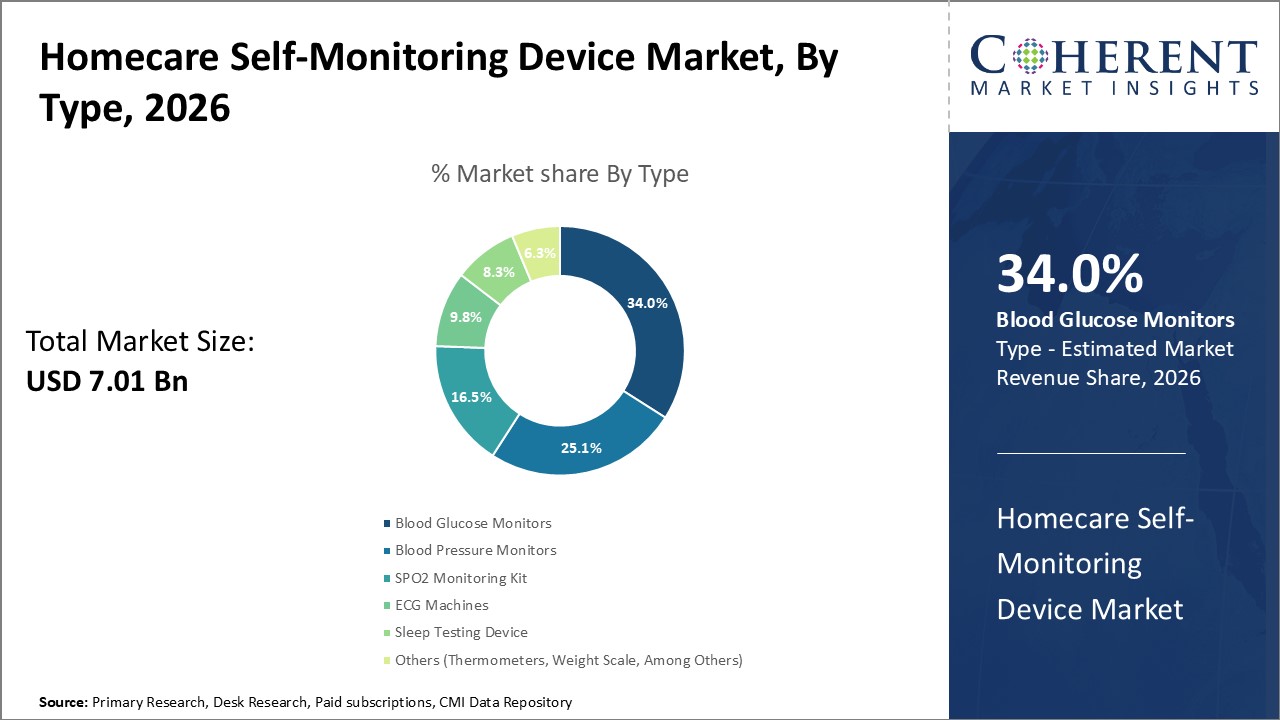
Figure 1. Global Homecare Self-monitoring Device market Share (%), by Type, 2026
To learn more about this report, Request Free Sample
Global Homecare Self-monitoring Device market- Driver
Facility expansion by the market players
Market players are indulged in facility expansion, which is expected to increase the production of self-monitoring devices for blood pressure monitors, which is expected to drive the growth of the Homecare self-monitoring device market over the forecast period. For instance, on September 13, 2022, Philips N.V.’s a Europe based multinational conglomerate corporation, new study validates ambulatory monitoring as a critical component of cardiac care, prescribing Philips MCOT (Mobile Cardiac Outpatient Telemetry) solution may support improved patient outcomes and cost savings by monitoring for arrhythmic disturbances and encouraging timely intervention.
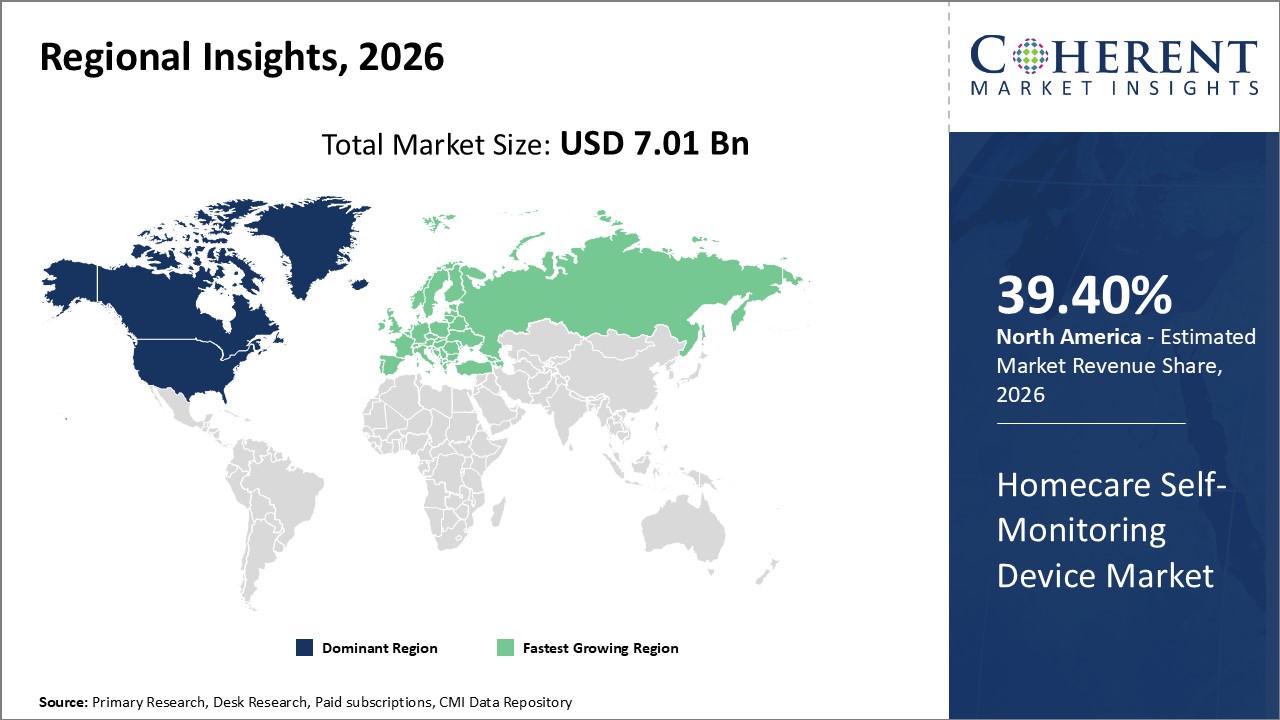
Figure 2. Global homecare self-monitoring device market Share (%), by Region, 2026
To learn more about this report, Request Free Sample
Global homecare self-monitoring device market- Regional Analysis
Among region, North America dominated the market growth in 2026, owing to the presence of key players such as Pfizer Inc., Abbott, among others in region.
Europe region is expected to be the second largest region over the forecast period. Due to the increasing prevalence of diabetes in European countries. For instance, on June 16, 2022, According to the World Health Organization (WHO) Europe, diabetes affects 52 million people and a growing proportion of the population (10-14%) in many European countries. Around 100,000 diabetes-related non-traumatic lower limb amputations are carried out in Europe every year. Diabetes is a non-curable disease, people are using self-monitoring devices for monitoring their blood sugar levels.
This rise has seen the emergence of new software, applications, and hardware for home-based physiological monitoring, leading to the promise of innovative predictive and therapeutic practices.
Homecare Self-Monitoring Device Market Report Coverage
| Report Coverage | Details | ||
|---|---|---|---|
| Base Year: | 2025 | Market Size in 2026: | USD 7.01 Bn |
| Historical Data for: | 2020 To 2024 | Forecast Period: | 2026 To 2033 |
| Forecast Period 2026 to 2033 CAGR: | 5.1% | 2033 Value Projection: | USD 9.93 Bn |
| Geographies covered: |
|
||
| Segments covered: |
|
||
| Companies covered: |
Abbott- diabetes, HELYXON HealthCare Solutions Private Ltd, GE HealthCare, ResMed, Inc., MIR Medical International Research USA. Inc, F. Hoffmann-La Roche Ltd, BAYER HEALTHCARE, OMRON Healthcare India, Guardian Connect system, InBody Asia., Medtronic plc, KARABINIS MEDICAL SA, Pulsatom Healthcare, Cofoe Medical Technology Co.Ltd, Pylo Health. |
||
| Growth Drivers: |
|
||
| Restraints & Challenges: |
|
||
Uncover macros and micros vetted on 75+ parameters: Get instant access to report
Global homecare self-monitoring device market Segmentation:
The Global homecare self-monitoring device market report is segmented into type, application, and device type.
Based on Type, the market is segmented into blood pressure monitors, blood glucose monitors, SPO2 monitoring kits, ECG machines, sleep testing devices, and others (thermometers, weight scale, among others). Out of which, blood glucose monitors is expected to dominate the homecare self-monitoring device market during the forecast period. For instance, on May 15, 2021, an article published in the Journal of Diabetes Science and Technology states that between 2000 and 2021, the number of patients in the U.S. with diabetes mellitus has gone from 11 million to 30 million. Monitoring blood sugar levels is an essential part of managing this chronic illness, and accurate and efficient measurements of glucose levels are essential.
Based on Application, the market is segmented into, metabolic disorders, circulatory disorders, respiratory track disorder, others (weight management and others). Out of which, circulatory disorders segment is expected to dominate the market over the forecast period.
Based on Device Type, the homecare self-monitoring device market is segmented into, wearable, hand handled, and others (patches and others). Out of which, hand held segment is expected to dominate the market over the forecast period and this is attributed to the higher research and development activities carried out by the market players.
Among all segmentation, by type segment has the highest potential due to the high demand for blood sugar monitoring self-care devices. Therefore, most of the manufacturers such as Abbott, F. Hoffmann-La Roche Ltd, and others are manufacturing self-care devices for diabetic Patients.
Global homecare self-monitoring device market Cross Sectional Analysis:
Though the ease of use and low cost of pulse oximetry, the ubiquity of smartphones makes this an attractive option for identifying problems at an early stage.
Global homecare self-monitoring device market: Key Developments
In 2020, Roche Diabetes Care signed an agreement with Huawei Health for two glucometers of “Roche ACCU-CHEK Instant” and “ACCU-CHEK Guide Me” a U.S based drug discovery company, Roche digital diabetes management platform will be able to provide patients with more intelligent services based on Huawei HealthKit services.
Global homecare self-monitoring device market: Restraint
Higher cost of Products
The various factors like the cost of strips and glucometers and fear of pain and injection are expected to hamper the growth of the global homecare self-monitoring device market, over the forecast period. For instance, according to the article published in Biomed Central Ltd on July 27, 2020, assessment of SMBG (self-monitoring of blood glucose) in type 1 diabetic children and adolescents and its influence on the quality of life, practice and perspective shows that about 67% of the patients assessed their blood glucose 3 times per day, while 0.57% assessed blood glucose 7 times. The most influential factors affecting compliance with SMBG were the cost of strips and glucometers, the fear of pain and injection, psychological frustration, lack of availability of information to deal with a high reading, and the absence of motivation for doing regular SMBG. Restraints can be overcome by increasing special awareness programs by the government for guidance on using self-monitoring devices.
Increasing Product Recall
On April 22, 2021, Welch Allyn Inc. (It is U.S. based manufacturer of medical devices and patient monitoring systems), recall ProBP 3400 digital blood pressure device. The ProBP 3400 automatically measures systolic and diastolic pressure (excluding neonates) and pulse rate, as well as calculates Mean Arterial Pressure (MAP). The Potential Risk of fluid ingress to the power supplies, resulting in the risk of an internal electrical short and possible electrical shock.
Global homecare self-monitoring device market: Key Players
Major players operating in the Global homecare self-monitoring device market include Abbott- diabetes, Roche Diabetes Care, HELYXON HealthCare Solutions Private Ltd, GE HealthCare, ResMed, Inc., MIR Medical International Research USA. Inc, F. Hoffmann-La Roche Ltd, BAYER HEALTHCARE, OMRON Healthcare India, Guardian Connect system, InBody Asia., Medtronic plc, KARABINIS MEDICAL SA, Pulsatom Healthcare, Cofoe Medical Technology Co., Ltd., Pylo Health.
*Definition- Self-monitoring or self-tracking is where individuals use intelligent tools like wearable sensors and mobile apps to collect, process, and display a wealth of personal data to help them monitor and manage all aspects of their health. Home health self-monitoring is the use of technology and telecommunication to monitor and track a patient’s health at home is becoming increasingly popular. Home health monitoring devices can track chronic conditions and send the information to a healthcare professional, so the patient doesn’t have to make a hospital visit. Various self-monitoring homecare devices are available like blood pressure monitors, blood glucose monitors, body fat monitors, pulse oximeters, electrocardiographs, digital thermometers, and infrared thermometers.
Share
Share
Manisha Vibhute is a consultant with over 5 years of experience in market research and consulting. With a strong understanding of market dynamics, Manisha assists clients in developing effective market access strategies. She helps medical device companies navigate pricing, reimbursement, and regulatory pathways to ensure successful product launches.

Credibility and Certifications

860519526


9001:2015
27001:2022


Need a Custom Report?
We can customize every report - free of charge - including purchasing stand-alone sections or country-level reports
Customize NowJoining thousands of companies around the world committed to making the Excellent Business Solutions.
View All Our Clients