

Immunoprotein Diagnostic Testing Market Size and Forecast – 2026 to 2033
The Immunoprotein Diagnostic Testing Market is anticipated to grow at a CAGR of 7.8% with USD 11.7 Bn in 2026 and is expected to reach USD 16.1 Bn in 2033. The Immunoprotein Diagnostic Testing Market grows as healthcare providers address rising chronic and autoimmune diseases, expanding healthcare infrastructure, and stronger preventive healthcare awareness. More than 50 million Americans (approximately 8% of the U.S. population) are affected by autoimmune diseases, with evidence indicating that their prevalence is increasing.
Key Takeaways
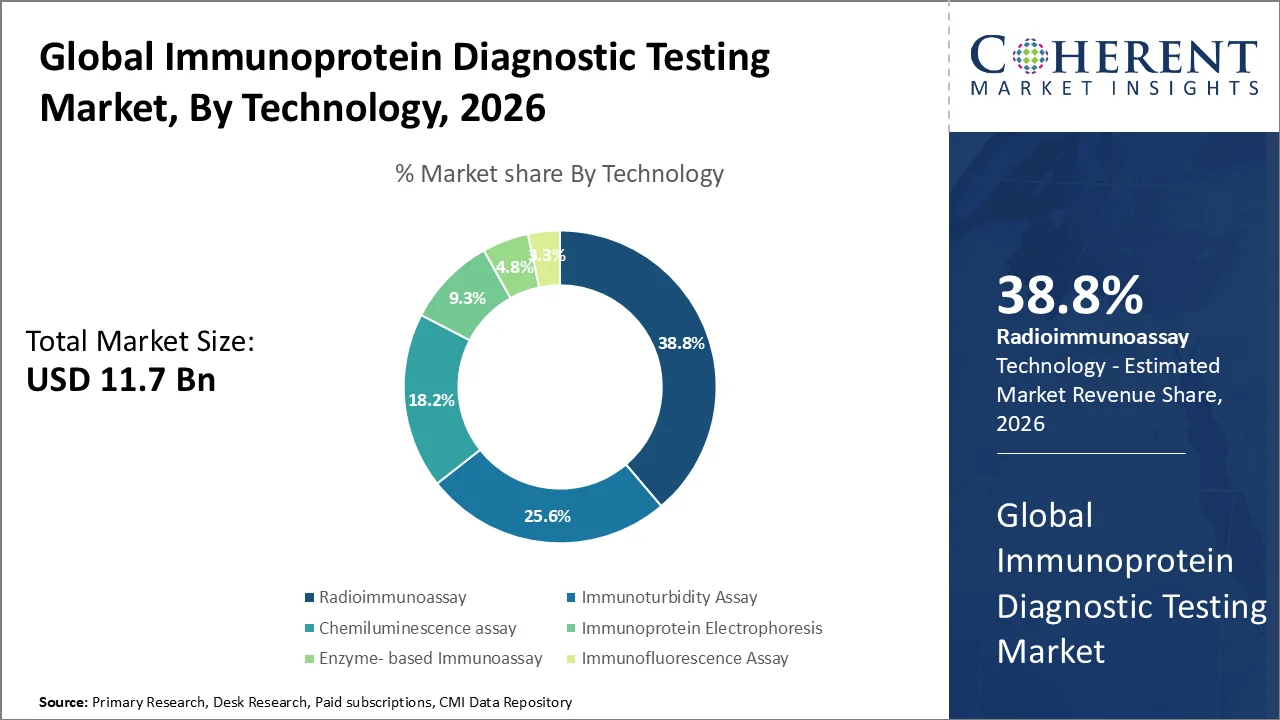
- Radioimmunoassay holds the largest market share of 38.8% in 2026 owing to the rising prevalence of chronic and endocrine disorders. According to an NCBI study, endocrine disorders affect at least 5% of U.S. adults.
- C- reactive Protein Diagnostic Test expected to hold largest market share of 39.6% in 2026 owing to its increasing burden of cardiovascular disease. According to the National Library of Medicine, by 2050, cardiovascular disease is projected to cause 35.6 million deaths annually and affect approximately 1.14 Bn people worldwide.
- Autoimmune Testing acquired the prominent market share of 37.7% in 2026 owing to the rising prevalence of autoimmune diseases.
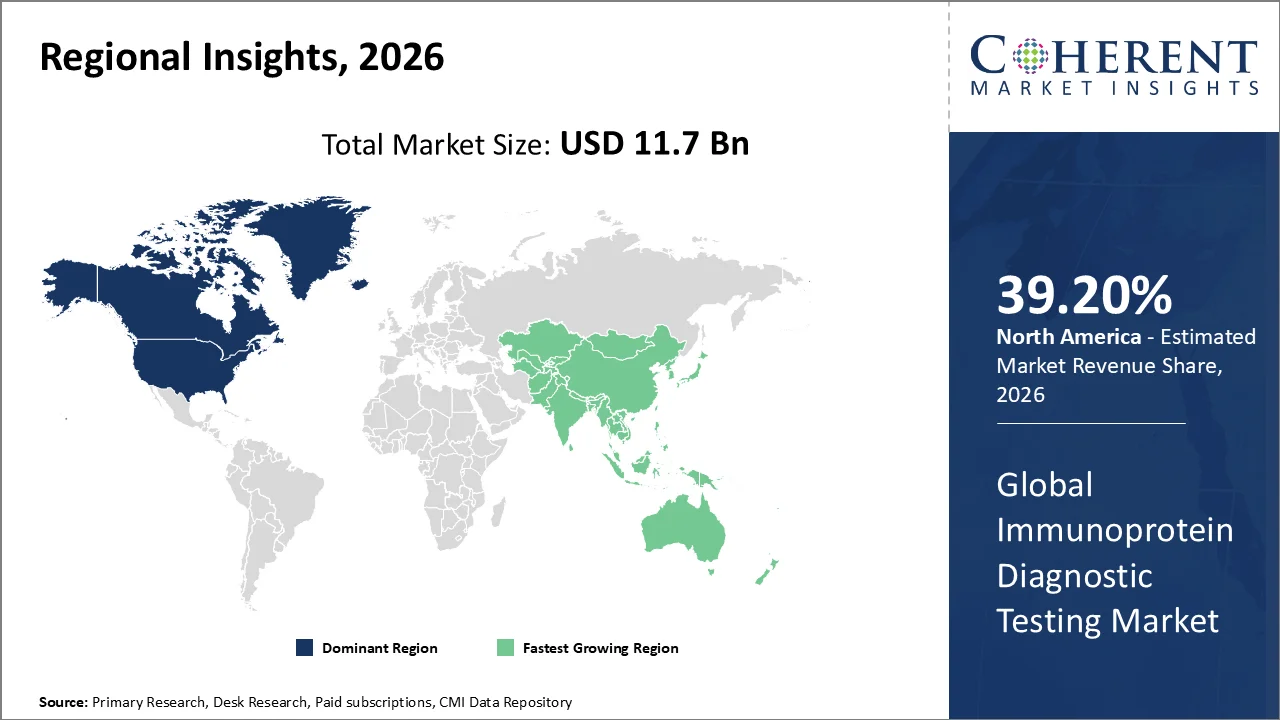
- North America is expected to acquire the dominant share of 39.2% in 2026 owing to its high healthcare expenditure and diagnostic spending. U.S. healthcare spending increased by 7.2% in 2024, reaching USD 5.3 trillion, or USD 15,474 per person.
Current Events and Their Impact on the Immunoprotein Diagnostic Testing Market
Current Event | Description and its Impact |
U.S. FDA rescinded its 2024 Laboratory Developed Test (LDT) rule in September 2025 |
|
CMS changes to Medicare Clinical Laboratory Fee Schedule (CLFS) payment methodology |
|
Segmental Insights
- Current Industry Events of 2026
- Market Size Estimation
- Regional Breakdown
- Competitive Landscape
- Customer Intelligence
- Segmental Analysis
- Pricing Analysis
- Key Market Drivers, Challenges & Future Trends
- Customized Insights Section
Why is Radioimmunoassay Acquiring the Largest Market Share?
Radioimmunoassay holds the largest market share of 38.8% in 2026. Radioimmunoassay (RIA) is gaining traction in the Immunoprotein Diagnostic Testing Market as healthcare providers increasingly demand highly sensitive and accurate detection of low-concentration hormones, proteins, antigens, and biomarkers. The rising incidence of endocrine disorders, cancer, autoimmune diseases, and infectious conditions is strengthening the need for precise diagnostic testing. Cancer is the world’s second-leading cause of death, with approximately 20.6 million new cases and nearly 10 million deaths each year. Established clinical applications, widespread use in specialized laboratories, and expanding applications in endocrinology, oncology, and pharmaceutical research further support RIA adoption. Brain Medicine has launched a Festschrift series honoring Dr. Seymour Reichlin’s centennial and his lasting impact on neuroendocrinology. The opening editorial highlights his pioneering work, including the development of radioimmunoassays for key hormones and groundbreaking discoveries on brain-hormone interactions.
C- reactive Protein Diagnostic Test expected to hold largest market share
C- reactive Protein Diagnostic Test expected to hold largest market share of 39.6% in 2026 owing to its increasing adoption of high-sensitivity CRP assays. The Immunoprotein Diagnostic Testing Market is experiencing growing demand for C-reactive protein (CRP) testing as healthcare providers manage the increasing burden of chronic, cardiovascular, autoimmune, and inflammatory diseases. Clinicians use CRP testing to monitor inflammation and support early diagnosis and preventive care. The adoption of high-sensitivity CRP assays, automated immunoassay platforms, and point-of-care technologies improves testing accuracy, accessibility, and turnaround time. Healthcare providers also use CRP testing for disease monitoring, cardiovascular risk assessment, infection management, and personalized healthcare, further driving market growth. LumiraDx Healthcare launched its highly sensitive CRP point-of-care test across India to support clinical decisions and reduce unnecessary antibiotic use and antimicrobial resistance.
Which Application segment dominates the market?
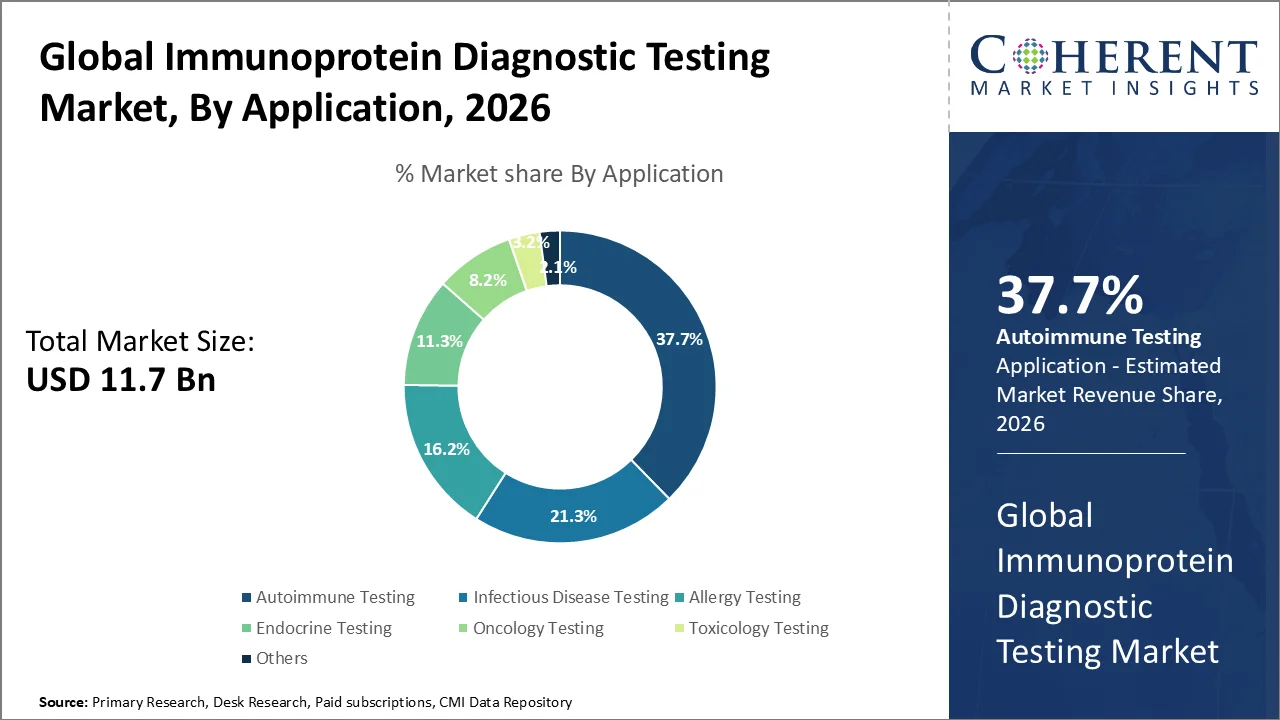
Autoimmune Testing acquired the prominent market share of 37.7% in 2026. The rising prevalence of autoimmune disorders, including rheumatoid arthritis, systemic lupus erythematosus, multiple sclerosis, and autoimmune thyroid diseases, drives autoimmune testing in the Immunoprotein Diagnostic Testing Market. Growing awareness and the need for early, accurate diagnosis encourage healthcare providers to adopt antinuclear antibody and disease-specific autoantibody tests. Advances in immunoassays, automated and multiplex testing platforms, and biomarker-based diagnostics enhance testing accuracy and efficiency. Healthcare providers also increasingly use personalized medicine, disease monitoring, and emerging autoimmune biomarkers, further strengthening demand for immunoprotein diagnostic testing. Dr. Lal PathLabs launched a new complement testing laboratory, offering advanced assays to improve the early and accurate diagnosis of autoimmune, kidney, and recurrent infection-related conditions.
Immunoprotein Diagnostic Testing Market Trends
- Growing demand for high-sensitivity and multiplex immunoprotein testing is driven by the need to detect multiple biomarkers and obtain more comprehensive disease profiles. This is particularly relevant to cancer diagnostics, where the global burden reached approximately 20 million new cases and 9.7 million deaths in 2022, highlighting the growing need for accurate and timely diagnostic testing.
- Population aging and the rising burden of chronic diseases are expanding the potential patient base for immunoglobulin, CRP, complement, and other immunoprotein tests. According to WHO, 1 in 6 people globally is projected to be aged 60 years or older by 2030, with the population aged 60+ expected to increase from 1 billion in 2020 to 1.4 billion by 2030.
- Growing adoption of personalized and precision medicine is increasing the importance of biomarker testing for disease classification, treatment selection, prognosis, and therapy monitoring. The growing global cancer burden reinforces this need: IARC estimates that annual cancer cases could reach 35 million by 2050, representing a 77% increase from 2022.
Regional Insights
North America dominates owing to favorable reimbursement and insurance coverage
North America is expected to acquire the dominant share of 39.20% in 2026. North America’s Immunoprotein Diagnostic Testing Market is expanding as healthcare providers address the high burden of chronic, autoimmune, infectious, and oncological diseases that require accurate biomarker testing. The American Cancer Society estimates 2,114,850 new cancer cases and 626,140 cancer-related deaths in the United States. Advanced healthcare infrastructure, extensive diagnostic laboratory networks, and substantial healthcare spending encourage providers to adopt immunoprotein tests. Investments in research and development, automation, and advanced immunoassay technologies further accelerate market growth. Robot Industries launched RiA Ecosystem, an advanced industrial automation platform that enables robots to understand and perform tasks autonomously without programming, teaching, or complex setup.
Asia Pacific Immunoprotein Diagnostic Testing Market Trends
The Asia Pacific immunoprotein diagnostic testing market is expanding as chronic, infectious, autoimmune, and metabolic diseases become more prevalent and healthcare providers prioritize early, accurate diagnosis. Nearly 70% of people living with autoimmune diseases are women, highlighting a significant health concern in India. Governments and private organizations are increasing healthcare spending, expanding diagnostic access, and investing in hospitals and clinical laboratories. Diagnostic providers are adopting automated immunoassays and high-throughput technologies to improve testing efficiency. Private diagnostic networks are also broadening their reach, while preventive healthcare programs and greater awareness of disease monitoring encourage more patients and providers to use immunoprotein diagnostic testing.
United States Immunoprotein Diagnostic Testing Market Trends
The United States immunoprotein diagnostic testing market benefits from the growing prevalence of chronic diseases, such as cancer, cardiovascular disorders, autoimmune conditions, and diabetes, which drives demand for accurate diagnosis and disease monitoring. An aging population further increases the need for regular diagnostic testing. Healthcare providers are adopting automated, multiplex, chemiluminescence, and point-of-care technologies to enhance testing accuracy, speed, and laboratory efficiency. Approximately 62 million Americans aged 65 and older account for about 18% of the U.S. population. The growing use of personalized medicine, biomarker-based diagnostics, and early disease detection, supported by advanced healthcare infrastructure, research investment, and favorable reimbursement policies, continues to strengthen market demand.
Japan Immunoprotein Diagnostic Testing Market Trends
Japan’s immunoprotein diagnostic testing market is expanding as an aging population, rising autoimmune and chronic inflammatory diseases, and a growing cancer burden increase demand for reliable diagnostics. Cancer is the leading cause of death in Japan, with an overall incidence rate of approximately 267.1 cases per 100,000 people. Healthcare providers increasingly use immunoglobulin, complement protein, and C-reactive protein tests to support early and accurate disease detection. Japan’s advanced healthcare infrastructure, widespread laboratory automation, and focus on precision medicine also strengthen market growth.
Who are the Major Companies in Immunoprotein Diagnostic Testing Industry
Some of the major key players in Immunoprotein Diagnostic Testing are Abbott Laboratories, Inc., Abcam PLC, Agilent Technologies, AdnaGen, BioMerieux, Enzo Life Sciences, Inc., Fujirebio Diagnostics, Inc., DiaSorin SPA, Roche, Randox Laboratories and Thermo Fisher Scientific.
Key News
- In November 2025, Castle Biosciences launched AdvanceAD-Tx, a 487-gene test designed to guide treatment decisions for patients aged 12 and older with moderate-to-severe atopic dermatitis and identify those more likely to respond to JAK inhibitors.
Market Report Scope
Immunoprotein Diagnostic Testing Market Report Coverage
| Report Coverage | Details | ||
|---|---|---|---|
| Base Year: | 2025 | Market Size in 2026: | USD 11.7 Bn |
| Historical Data for: | 2020 To 2024 | Forecast Period: | 2026 To 2033 |
| Forecast Period 2026 to 2033 CAGR: | 7.8% | 2033 Value Projection: | USD 16.1 Bn |
| Geographies covered: |
| ||
| Segments covered: |
| ||
| Companies covered: | Abbott Laboratories, Inc., Abcam PLC, Agilent Technologies, AdnaGen, BioMerieux, Enzo Life Sciences, Inc., Fujirebio Diagnostics, Inc., DiaSorin SPA, Roche, Randox Laboratories and Thermo Fisher Scientific. | ||
Analyst Opinion
- Immunoprotein testing is increasingly becoming a clinical decision tool rather than a routine laboratory add-on. The strongest demand driver is the need to distinguish immune-mediated, inflammatory, infectious, and malignant conditions earlier. For example, serum protein electrophoresis and immunofixation remain important in evaluating monoclonal gammopathies, while quantitative immunoglobulin testing helps clinicians identify antibody deficiencies and monitor immune disorders.
- Multiple myeloma is a particularly important application area. The International Myeloma Foundation notes that monoclonal proteins can be detected in approximately 97% of patients with multiple myeloma, making serum and urine immunofixation and free-light-chain testing highly valuable for diagnosis and disease monitoring.
- Autoimmune disease is another major growth engine, but the opportunity is shifting toward more specialized testing. More than 50 million people in the U.S. live with an autoimmune disease, according to the National Institutes of Health. Tests involving immunoglobulins, complement proteins, and disease-specific autoantibodies increasingly support differential diagnosis and disease monitoring.
- Laboratory automation is changing the competitive equation. High-throughput immunoassay systems can process hundreds of tests per hour, allowing major hospitals and reference laboratories to consolidate testing while reducing manual intervention. Automation is not simply a productivity upgrade, it is becoming a purchasing criterion. Vendors that integrate immunoprotein testing with automated sample handling, digital interpretation, and laboratory information systems are better positioned to secure long-term institutional adoption.
- The market’s next meaningful opportunity lies in precision monitoring, not simply higher testing volumes. Immunoglobulin levels, free light chains, complement markers, and other protein biomarkers can provide clinicians with quantitative information that supports treatment decisions and longitudinal monitoring. As oncology, immunology, and autoimmune care become increasingly personalized, I expect laboratories to prioritize platforms that deliver reproducible quantitative results, rapid turnaround, and broader assay menus.
Speak to the analyst
Want personalized insights?
Take the findings above to one of our principal consultants, or have the report rebuilt around the segments, geographies and competitors you actually track.
Market Segmentation
- By Technology (Revenue, USD Bn, 2021-2033)
- Radioimmunoassay
- Immunoturbidity Assay
- Chemiluminescence assay
- Immunoprotein Electrophoresis
- Enzyme- based Immunoassay
- Immunofluorescence Assay
- By Test Type (Revenue, USD Bn, 2021-2033)
- C- reactive Protein Diagnostic Test
- Complement System Protein Diagnostic Test
- Prealbumin Diagnostic Test
- Hepatoglobin Diagnostic Test
- Immunoglobulin Diagnostic Test
- Free Light Chain Diagnostic Test
- Others
- By Application (Revenue, USD Bn, 2021-2033)
- Autoimmune Testing
- Infectious Disease Testing
- Allergy Testing
- Endocrine Testing
- Oncology Testing
- Toxicology Testing
- Others
- By Region (Revenue, USD Bn, 2021-2033)
- North America
- U.S.
- Canada
- Latin America
- Brazil
- Mexico
- Argentina
- Rest of Latin America
- Europe
- Germany
- U.K.
- France
- Italy
- Spain
- Russia
- Rest of Europe
- Asia Pacific
- China
- India
- Japan
- Australia
- South Korea
- ASEAN
- Rest of Asia Pacific
- Middle East
- GCC
- Israel
- Rest of Middle East
- Africa
- South Africa
- Central Africa
- North Africa
- North America
Sources
Primary Research interviews
- Clinical immunologists
- Pathologists and laboratory medicine specialists
- Clinical laboratory directors
- Diagnostic laboratory managers
- Hospital laboratory procurement professionals
- IVD product specialists and laboratory technologists
Databases
- U.S. Food and Drug Administration (FDA) Medical Device Databases
- PubMed/MEDLINE
- ClinicalTrials.gov
- National Center for Biotechnology Information (NCBI)
- World Health Organization (WHO) databases
- OECD Health Statistics
- U.S. Centers for Disease Control and Prevention (CDC) databases
Magazines
- Clinical Laboratory News
- CAP Today
- Medical Laboratory Observer
- Lab Manager
- Diagnostic Products
Journals
- Clinical Chemistry
- Journal of Immunological Methods
- Clinical Biochemistry
- American Journal of Hematology
- Clinical Chemistry and Laboratory Medicine
- Critical Reviews in Clinical Laboratory Sciences
- Journal of Clinical Immunology
Newspapers
- The New York Times
- The Wall Street Journal
- The Guardian
- Financial Times
- The Japan Times
Associations
- American Association for Clinical Chemistry (AACC/ADLM)
- College of American Pathologists (CAP)
- Association of Medical Laboratory Immunologists (AMLI)
- International Complement Society (ICS)
- American Society of Hematology (ASH)
- Clinical and Laboratory Standards Institute (CLSI)
Public Domain sources
- U.S. Food and Drug Administration (FDA) regulatory and device databases
- National Institutes of Health (NIH)
- National Center for Biotechnology Information (NCBI)
- Centers for Disease Control and Prevention (CDC)
- World Health Organization (WHO)
- ClinicalTrials.gov
- U.S. National Library of Medicine
- Government health and laboratory-testing publications
- FDA records also provide information on immunoglobulin diagnostic systems, including newer mass-spectrometry-based approaches.
Proprietary Elements
- CMI Data Analytics Tool
- Proprietary CMI Existing Repository of information for last 10 years
Get access to 250+ pages report
Every segment, forecast, competitor profile and data table behind the analysis above — available for instant download.
- ESOMAR Member
- ISO 9001:2015 Certified
- D-U-N-S Registered
- GDPR & CCPA Compliant
Missing comfort of reading report in your local language? Find your preferred language:
Transform your Strategy with Exclusive Trending Reports
Frequently Asked Questions
The Immunoprotein Diagnostic Testing Market is anticipated to grow at a CAGR of 7.8% with USD 11.7 Bn in 2026 and is expected to reach USD 16.1 Bn in 2033.
The market is primarily driven by the rising burden of chronic, autoimmune, infectious, and oncological diseases, alongside increasing demand for early and precise diagnosis.
Immunoglobulin diagnostic testing represents a particularly important segment because IgG, IgA, IgM, and autoimmune conditions, infections, and allergies.
C-reactive protein testing has broad clinical utility because clinicians use CRP measurements to assess inflammation and support the evaluation of infections, and cardiovascular conditions.
Key application areas include autoimmune diseases, infectious diseases, cancer, allergies, endocrine disorders, and toxicological conditions.
Automation is shifting immunoprotein testing toward faster, standardized, and higher-throughput workflows.