

Inflight Catering Market Analysis & Forecast - 2026 to 2033
Inflight Catering Market size is estimated to be valued at USD 29.78 Bn in 2026 and is expected to reach USD 50.75 Bn in 2033, exhibiting a compound annual growth rate (CAGR) of 7.9% from 2026 to 2033.
Key Takeaways
- By Class, The Economy Class is projected to lead the global inflight catering market outlook in 2026, capturing around 68% of the market share, driven by the high volume of passengers and cost-effective meal services.
- By Region, Europe is expected to maintain its dominant position in the global market in 2026, accounting for approximately 38.00% of the total share, supported by a strong network of full-service carriers and high demand for international travel.
Market Overview
Inflight or airline catering is a service provided by companies during air travel and at the airports. Catering becomes a very critical part of the business, especially for Network Carriers serving long distances. Meal design and meal planning are important processes of catering services. According to International Air Transport Association (IATA), catering planning and catering operations are important areas of activities of inflight services. Various organizations and groups are formed in order to regulate and organize inflight-catering activities.
Current Events and Its Impact on the Inflight Catering Market
Event | Description and Impact |
Supply Chain Disruptions and Inflation Pressures |
|
Sustainability and Environmental Regulations |
|
Health and Safety Protocol Evolution |
|
Role of Advanced Technology
The inflight catering industry is being transformed by advanced technologies that enhance meal quality, safety, and passenger experience. Automation in kitchens, including AI-driven ovens and robotic assembly lines, ensures consistent food preparation while improving efficiency and reducing contamination risks.
Innovations in packaging, such as modified atmosphere packaging and smart materials with embedded sensors, extend shelf life and maintain freshness during long-haul flights. Digital platforms allow dynamic menu management and personalized meal pre-ordering, helping airlines reduce waste and tailor offerings to passenger preferences.
Cold chain solutions with IoT-enabled refrigeration and temperature controlled packaging maintain optimal food temperatures throughout transportation and storage. GPS tracking adds supply chain visibility to prevent spoilage.
Sustainability is gaining focus through energy-efficient cooking equipment, water recycling, biodegradable packaging, and solar-powered refrigeration, reducing environmental impact.
Quality control advances like blockchain traceability and real-time contamination detection enhance food safety and regulatory compliance.
Together, these technologies increase operational efficiency, reduce costs, and enable a more passenger-centric, sustainable inflight catering experience, reshaping competitive dynamics in the market.
- Current Industry Events of 2026
- Market Size Estimation
- Regional Breakdown
- Competitive Landscape
- Customer Intelligence
- Segmental Analysis
- Pricing Analysis
- Key Market Drivers, Challenges & Future Trends
- Customized Insights Section
Segmental Insights
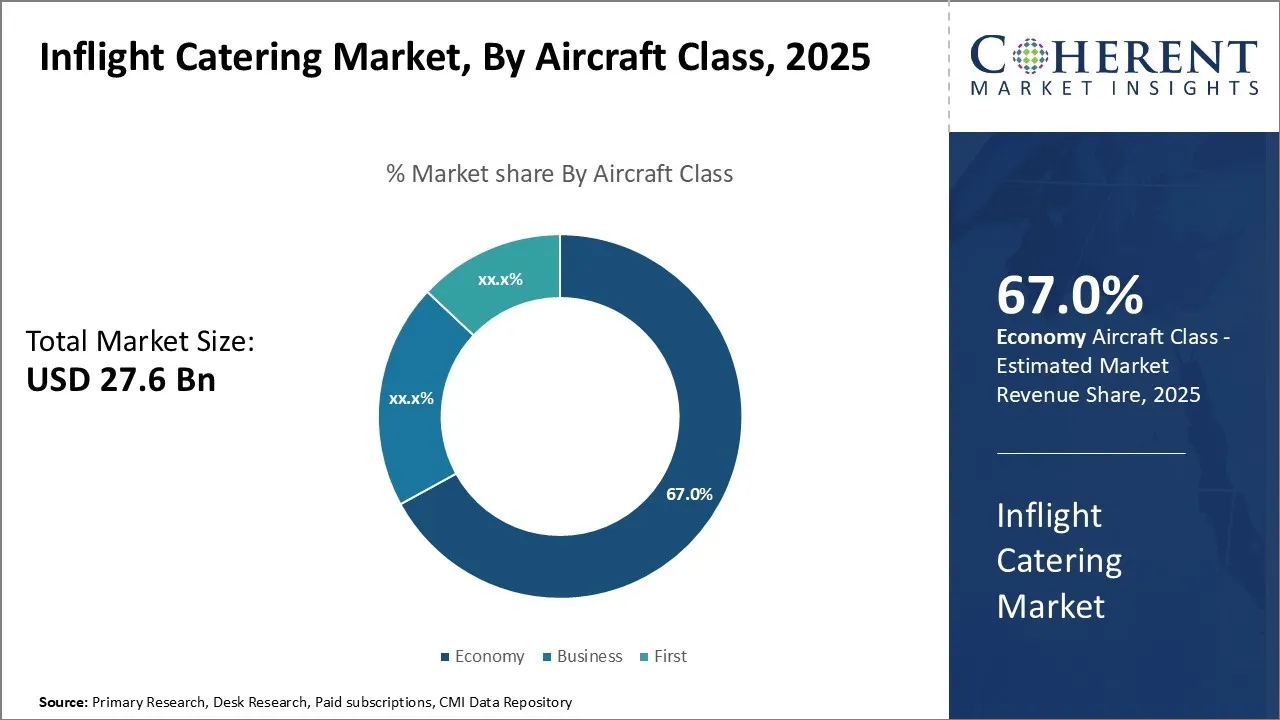
Global Inflight Catering Market Insights, By Aircraft Class
The seating class segment of the global inflight catering market is divided into First, Business, and Economy classes. Among these, the Economy class holds the largest share, accounting for 68% of the market. This dominance is driven by the high volume of passengers flying economy on both domestic and international routes.
Airlines primarily focus their inflight catering budgets on the economy segment due to its scale, offering standardized meals that are cost-effective and efficiently served.
The Business class segment represents a moderate portion of the market. Passengers in this class expect upgraded meal options, including gourmet dishes, customizable menus, and premium beverage selections. Airlines invest in high-quality catering services for business class to enhance the customer experience and maintain brand differentiation, especially on long-haul flights.
First class accounts for the smallest share of the inflight catering market. Despite its limited passenger count, the segment demands the highest level of culinary excellence and personalized service. First-class catering includes multi-course meals curated by top chefs, premium wines, and luxury amenities, which contribute disproportionately to overall catering costs.
While premium classes offer higher margins, the economy segment remains the cornerstone of the global inflight catering market due to its overwhelming passenger volume.
Regional Insights
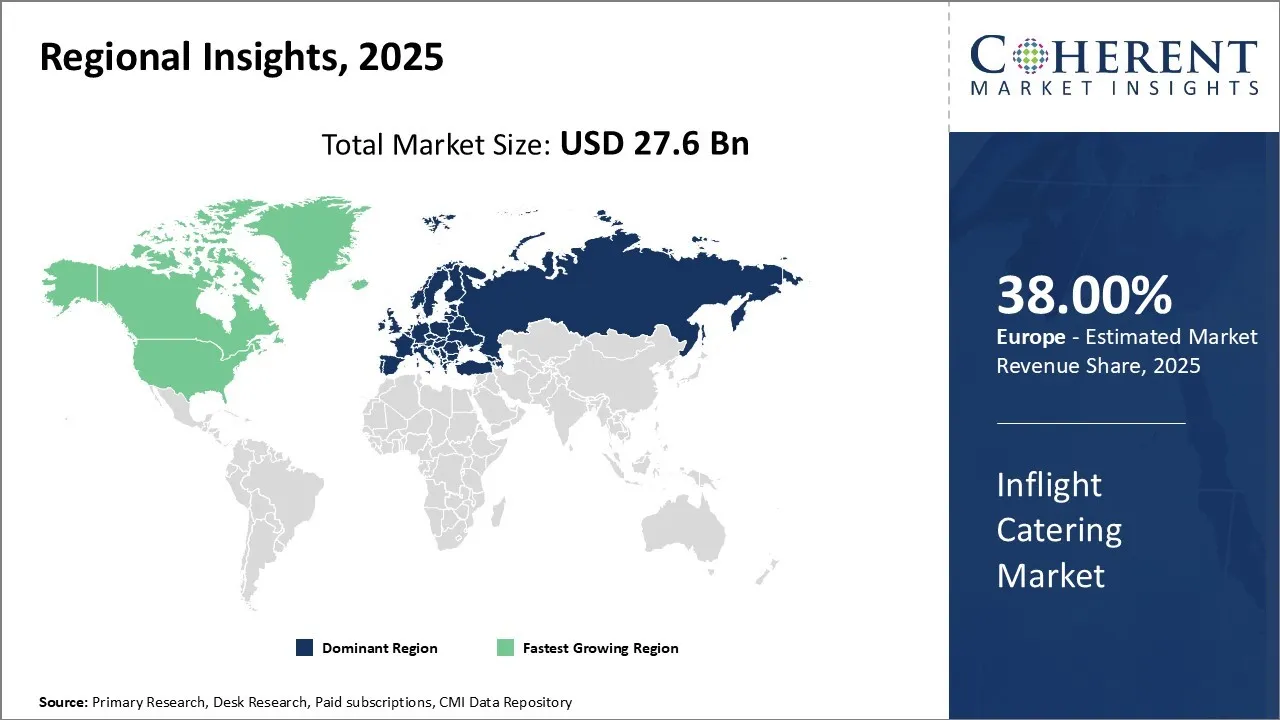
Europe Market Analysis and Trends
Europe is expected to retain its dominant position in the global market, accounting for the largest regional share of 38.00%. This stronghold is supported by the region’s mature industrial ecosystem, high regulatory standards, and robust demand from key sectors such as chemicals, pharmaceuticals, and advanced manufacturing. The widespread focus on sustainable solutions and green technologies is further driving the adoption of high-performance and compliant materials across the region.
Countries like Germany and France lead the European market due to their advanced infrastructure, export-oriented industries, and early adoption of environmentally responsible production practices. The European Union’s commitment to decarbonization and circular economy principles also encourages the uptake of innovative materials that align with evolving regulatory and environmental benchmarks. Strategic investments in R&D and a skilled industrial workforce further enhance Europe’s position as a global market leader.
North America Market Analysis and Trends
North America is projected to remain a key player in the global market, holding the second-largest regional share. The region benefits from a strong presence of end-use industries such as aerospace, automotive, electronics, and healthcare, which drive demand for advanced material solutions. Widespread innovation, coupled with a favorable policy landscape and advanced manufacturing capabilities, supports consistent market growth.
The United States and Canada are at the forefront of North American market expansion. A well-established R&D ecosystem, high rate of technology adoption, and ongoing investments in sustainability initiatives contribute to the region’s leadership in product development. In addition, regulatory bodies such as the U.S. Environmental Protection Agency (EPA) and Canadian Standards Association (CSA) ensure adherence to strict quality, safety, and environmental performance standards—further reinforcing market reliability and trust.
Dominating Countries in the Market
Germany Market Analysis and Trends
Germany plays a pivotal role in driving Europe’s market leadership, supported by a highly developed industrial base, a focus on green manufacturing, and a strong export profile. The country is a hub for innovation in chemicals, materials science, and advanced engineering, making it a central force in regional growth.
United States Market Analysis and Trends
The United States remains the dominant force in North America, backed by significant investments in innovation, a diverse industrial base, and strong regulatory frameworks. High demand from high-tech and performance-intensive sectors ensures the continued expansion of the market, particularly in advanced and sustainable material solutions.
Market Report Scope
Inflight Catering Market Report Coverage
| Report Coverage | Details | ||
|---|---|---|---|
| Base Year: | 2025 | Market Size in 2026: | USD 29.78 Bn |
| Historical Data for: | 2020 To 2024 | Forecast Period: | 2026 To 2033 |
| Forecast Period 2026 to 2033 CAGR: | 7.9% | 2033 Value Projection: | USD 50.75 Bn |
| Geographies covered: |
| ||
| Segments covered: |
| ||
| Companies covered: | SATS ltd., Gate Gourmet, LSG Sky Chefs, DO & CO Aktiengesellschaft, NewrestInternational Group, Emirates Flight Catering, Flying Food Group, Journey Group plc, and DubaiNational Air Transport Association. | ||
| Growth Drivers: |
| ||
| Restraints & Challenges: |
| ||
Global Inflight Catering Market Drivers
- Major market drivers
Major market drivers of the in-flight catering service market are the rise in offering customized and organic meals to the travelers in flight. The best thing is that the meals are typically ready on the ground in catering offices near the air terminal and are then shipped to the airplane and put in fridges for airline stewards to warm and serve ready. The food providers are more similar to the agents that help carriers mass-produce many dinners daily. The aircraft's catering group is generally answerable for the menu plan, offering quality food to the travelers.
The aircraft targets travelers somewhere in the range of eighteen and thirty-five years of age. Travelers are offered many advantages, which just could make a difference. One of the advantages in this market is the supreme food. The menu contains predominantly natural food varieties that go along with specialty brews. Due to its effective drivers, the market is expected to develop at an effective rate in the forecast period.
- Significant market opportunity
The significant opportunity in this in-flight catering market is the advancement in the technologies of the food and beverages industries like the travelers could quickly order their food through online mode. The process of serving a pre-packed meal is also a great benefit to the Global in-flight catering market for its effective development. These significant market opportunities are offering the market a growth option in the future estimated period.
Market Trends
The widespread adoption of inflight catering across the aviation industry on account of the increasing competition amongst the airlines represents one of the key factors driving the market growth. In line with this, the need for serving enhanced onboard dining experience is contributing to the market growth. This is further supported by the implementation of high-level services, including meal pre-selection, mixed buy order, and complimentary catering options for fulfilling individual passenger requirements and complying with the hybrid operational scenarios at lower prices.
Significant technological advancements, along with rising automation in food and beverage (F&B) industry, such as the utilization of tablets and mobile devices for ordering meals, thus ensuring the smooth functioning and management of catering services are acting as other major growth-inducing factors.
Analyst Viewpoint
- The inflight catering market is undergoing transformation fueled by evolving passenger expectations and recovery in global air travel.
- Premium dining experiences are emerging as key differentiators, with airlines partnering with renowned chefs and local culinary brands to elevate service quality.
- Sustainability and the use of locally sourced, healthier ingredients are reshaping procurement strategies, aligning with growing environmental and wellness trends.
- Challenges include strict food safety regulations, complex logistics, rising operational costs, limited galley space, and weight restrictions impacting packaging and menu diversity.
- Labor shortages in the aviation sector are intensifying operational pressures for catering providers.
- The Asia-Pacific region leads the market due to rising air travel demand, expanding middle classes, and diverse culinary preferences fostering menu innovation.
- Technological adoption—such as AI-driven demand forecasting, digital pre-ordering, and inventory management—is creating opportunities to optimize operations and reduce waste.
- Growth in ultra-long-haul flights opens new premium catering revenue streams, while plant-based meal alternatives gain traction as consumer preferences evolve.
Recent Developments
- In August 2022, Dnata extended its partnership with GOL Airlines, an air and travel service provider, to strengthen the partnership and offer customers the best catering experience
- In June 2022, LSG Sky Chefs signed a three-year contract with United Parcel Service to expand its services and business to cater to the needs of customers.
- In March 2022, Newrest announced that the company began providing hot meal services on two-class flights of Air Transat from various countries across Europe like Belgium, England, France, the Netherlands, Portugal, and Spain.
Market Segmentation
- Global Inflight Catering Market, By Aircraft Class (Revenue, USD Bn, 2021 - 2033)
- Economy Class
- Business Class
- First Class
- Global Inflight Catering Market, By Food Type (Revenue, USD Bn, 2021 - 2033)
- Meals
- Bakery & Confectionary
- Beverages
- Others
- Global Inflight Catering Market, By Geography (Revenue, USD Bn, 2021 - 2033)
- North America
- U.S.
- Canada
- Europe
- U.K.
- Germany
- Italy
- France
- Russia
- Rest of Europe
- Asia Pacific
- China
- India
- Japan
- ASEAN
- Australia
- South Korea
- Rest of Asia Pacific
- Latin America
- Brazil
- Mexico
- Rest of Latin America
- Middle East
- GCC
- Israel
- Rest of Middle East
- Africa
- North Africa
- Central Africa
- South Africa
- Company Profiles
- SATS ltd.
- Company Overview
- Product Portfolio
- Financial Performance
- Key Strategies
- Recent Developments
- Future Plans
- Gate Gourmet
- LSG Sky Chefs
- DO & CO Aktiengesellschaft
- NewrestInternational Group
- Emirates Flight Catering
- Flying Food Group
- Journey Group plc.
- DubaiNational Air Transport Association
Sources
Primary Research Interviews
- Airline Catering Service Executives
- Food Service Technology Managers
- Airline Operations Directors
- Digital Platform Developers
- Others
Databases
- Euromonitor International
- IBISWorld Industry Reports
- Global Market Database
- Others
Magazines
- Airline Business Magazine
- Food Service Director
- Catering Magazine
- Aviation Week & Space Technology
- Others
Journals
- Journal of Air Transport Management
- International Journal of Aviation Management
- Food Service Technology International
- Others
Newspapers
- Financial Times
- The Wall Street Journal
- Aviation Daily
- Food Business Magazine
- Others
Associations
- International Flight Services Association (IFSA)
- Airline Catering Association (ACA)
- International Air Transport Association (IATA)
- Global Food Service Association
- Others
Public Domain Sources
- Federal Aviation Administration (FAA) Reports
- European Aviation Safety Agency (EASA) Publications
- World Tourism Organization (UNWTO) Statistics
- International Civil Aviation Organization (ICAO) Data
- Others
Proprietary Elements
- CMI Data Analytics Tool
- Proprietary CMI Existing Repository of information for last 8 years
Get access to 250+ pages report
Every segment, forecast, competitor profile and data table behind the analysis above — available for instant download.
- ESOMAR Member
- ISO 9001:2015 Certified
- D-U-N-S Registered
- GDPR & CCPA Compliant
Missing comfort of reading report in your local language? Find your preferred language:
Transform your Strategy with Exclusive Trending Reports
Frequently Asked Questions
The Inflight Catering Market size is estimated to be valued at USD 29.78 Bn in 2026, and is expected to reach USD 50.75 Bn by 2033.
The market was valued at USD 29.78 Bn in 2026 in terms of revenue, exhibiting a CAGR of 7.9 % and expected to reach at USD 50.75 Bn during the forecast period (2026 to 2033).
The widespread adoption of inflight catering across the aviation industry on account of the increasing competition amongst the airlines represents one of the key factors driving the market growth.
Cynical (Self- interested) consumer perception towards the freshness and cost of food that is being served during air travel is one of the major factors that is expected to hamper growth of the market.
Major players operating in the market include SATS ltd., Gate Gourmet, LSG Sky Chefs, DO & CO Aktiengesellschaft, NewrestInternational Group, Emirates Flight Catering, Flying Food Group, Journey Group plc, and DubaiNational Air Transport Association.
The CAGR of the Inflight Catering Market is projected to be 7.9% from 2026 to 2033.