

Liquid Packaging Market Size and Forecast — 2026 - 2033
The Global Liquid Packaging Market size is estimated to be valued at USD 115.60 billion in 2026 and is expected to reach USD 185.90 billion by 2033, exhibiting a compound annual growth rate (CAGR) of 7.1% from 2026 to 2033.
Overview
Liquid packaging refers to the materials and containers used to store, protect, transport, and preserve liquid products such as water, milk, juice, soft drinks, oils, chemicals, and pharmaceuticals. It is designed to prevent leakage, contamination, and spoilage while maintaining product quality and extending shelf life. Common types of liquid packaging include plastic bottles, glass bottles, cartons, pouches, metal cans, and aseptic packaging. The choice of packaging depends on factors like product type, shelf life requirements, cost, sustainability, and consumer convenience. Modern liquid packaging often incorporates recyclable materials and innovative designs to reduce environmental impact and improve functionality.
Key Takeaways
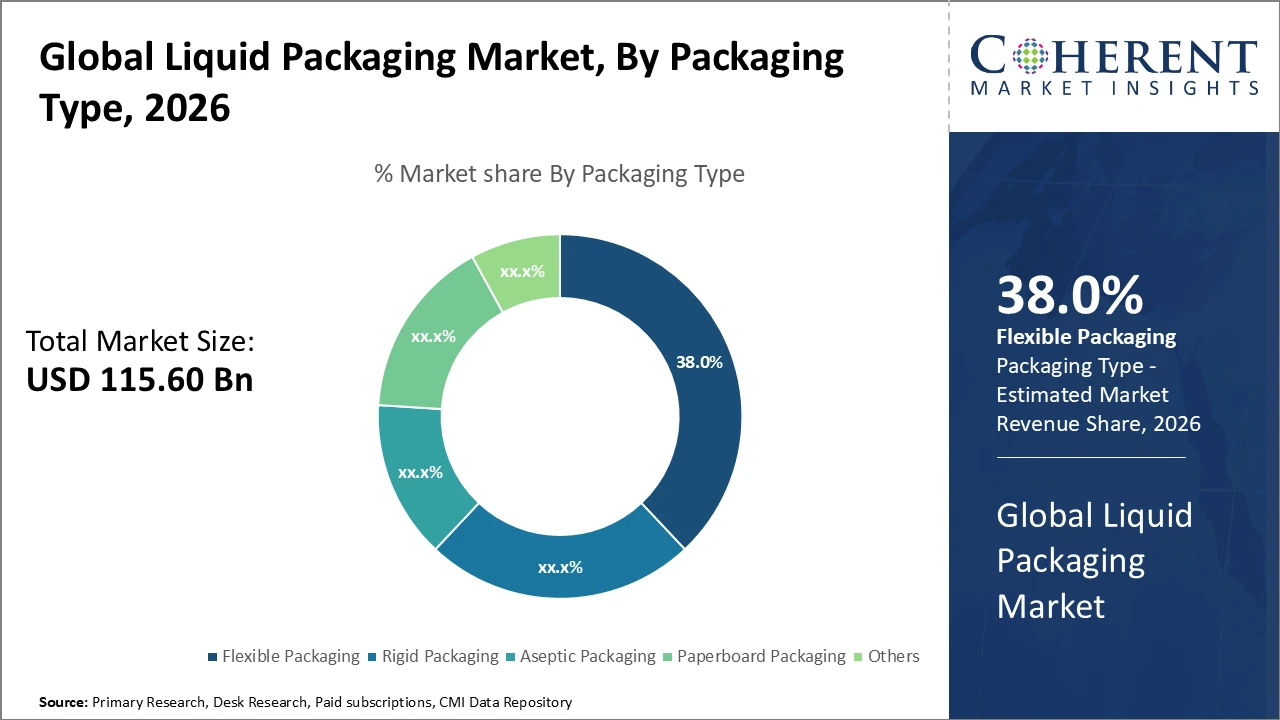
The flexible packaging segment holds a dominant 38% share of the market, supported by its adaptability, lightweight nature, and cost efficiency across beverage, dairy, and pharmaceutical applications.
Plastic remains the leading material type in terms of revenue contribution, driven by innovations in recyclable polymers and its versatility across multiple liquid packaging uses.
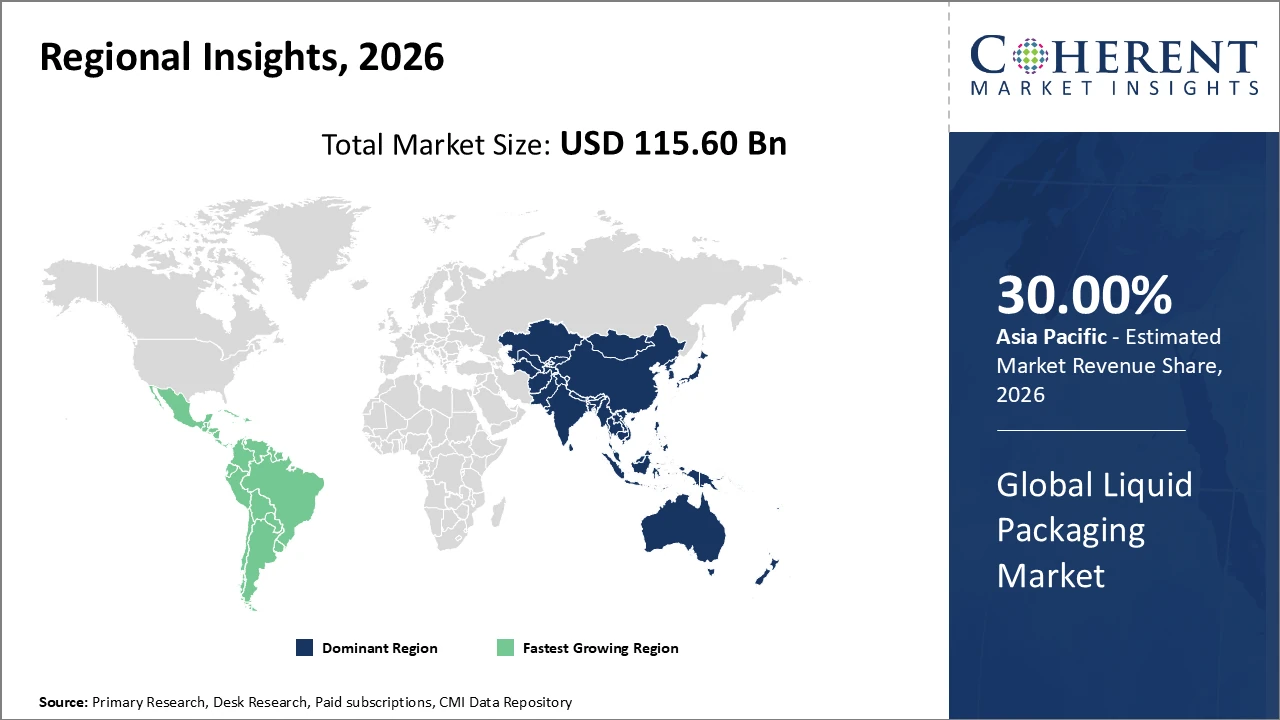
Asia Pacific stands out as a high-growth region, fueled by rapid urbanization, expanding middle-class populations, and changing consumer preferences, accounting for over 30% of global revenue.
North America represents a well-established market, supported by strong technology adoption and strict sustainability regulations, maintaining approximately a 28% share of the global industry.
Liquid Packaging Market Segmentation Analysis
Liquid Packaging Market Insights, By Packaging Type
Flexible packaging dominates the market due to its adaptability, lightweight nature, and cost efficiency, which help reduce logistics expenses and environmental impact. It supports a wide range of formats such as pouches, sachets, and bags, making it ideal for fast-growing sectors like beverages and pharmaceuticals. Aseptic packaging is the fastest-growing subsegment, driven by its ability to maintain product integrity and extend shelf life without refrigeration, aligning with consumer demand for freshness and convenience. Rigid packaging offers superior protection and premium appeal but is constrained by higher costs. Paperboard packaging remains a niche option, valued for sustainability but limited by durability concerns. Other packaging types, including metal and glass, cater to specialized applications requiring high barrier strength and robustness.
Liquid Packaging Market Insights, By Material Type
Plastic remains the preferred material due to its versatility, low production costs, and compatibility with advanced manufacturing processes such as extrusion and injection molding. Innovations in recyclable and bio-based plastics have helped sustain its market leadership despite increasing environmental concerns. Paper and paperboard represent the fastest-growing material subsegment, driven by rising demand for sustainable packaging solutions and tightening regulations in Europe and North America. Glass offers premium, inert packaging, particularly for pharmaceutical applications, but is constrained by its weight and fragility. Metal packaging is widely used in chemical and food applications, though its adoption is limited by higher costs and recycling challenges. Other materials include composite and multilayer structures designed to meet specialized liquid packaging requirements.
Liquid Packaging Market Insights, By Application
Beverages dominate the industry share, supported by high consumption volumes and a growing shift toward premium and convenience offerings such as energy drinks, functional beverages, and bottled water. Dairy products represent the fastest-growing subsegment, driven by advancements in aseptic and sustainable packaging that enhance shelf life while meeting eco-friendly demands. Food products rely on robust liquid packaging for sauces and liquid condiments, with a strong emphasis on barrier protection. Pharmaceutical applications prioritize sterile, compliant packaging solutions, increasingly supported by automation. Chemical products require durable, chemically resistant packaging to ensure safety and regulatory compliance. Other applications include cosmetics and personal care products with specialized, niche packaging requirements.
Liquid Packaging Market Trends
Sustainability is a key emerging trend, with brands increasingly adopting mono-material packaging and lightweight designs to reduce environmental impact; notably, in 2026, more than 50 liquid packaging launches featured mono-material structures to improve recyclability.
Smart packaging technologies are gaining momentum, enabling interactive consumer engagement and enhanced supply chain transparency, supported by rising consumer electronics penetration and digital consumer behavior observed in 2025.
Flexible liquid packaging continues to gain traction due to its cost efficiency, reduced material usage, and logistical advantages in transportation and storage.
Advancements in barrier technologies that extend shelf life without refrigeration are strengthening market adoption, particularly across emerging economies where cold-chain infrastructure is limited.
Liquid Packaging Market Insights, By Geography
Asia Pacific Liquid Packaging Market Analysis and Trends
Asia Pacific dominates the liquid packaging market, driven by rising population density, rapid urbanization, and the strong expansion of FMCG industries in countries such as China and India. The region contributes over 30% of global market revenue, supported by increasing consumption of packaged food and beverages. Growing disposable incomes and shifting lifestyles further accelerate demand for convenient and innovative packaging solutions. Government initiatives encouraging sustainable and recyclable packaging are also shaping market dynamics. In response to strong regional growth, major players including Tetra Pak and Amcor have expanded their presence through local partnerships, capacity expansions, and new manufacturing facilities across key markets.
Latin America Liquid Packaging Market Analysis and Trends
Latin America is emerging as the fastest-growing region in the liquid packaging market, registering a CAGR exceeding 8%. This growth is driven by the rapid expansion of the beverage industry, rising dairy consumption, and shifting consumer preferences toward packaged and convenient products. Countries such as Brazil and Mexico are at the forefront, supported by progressive sustainability policies and increasing adoption of recyclable and aseptic packaging solutions. The region is also benefiting from growing investments in advanced liquid packaging technologies and a steady rise in exports of packaged food and beverages, strengthening demand across domestic and international markets.
Liquid Packaging Market Outlook for Key Countries
USA Liquid Packaging Market Analysis and Trends
The United States remains a pivotal market in the liquid packaging industry due to its stringent regulatory framework and high adoption of advanced packaging technologies. In 2025, U.S.-based companies accounted for over 28% of North America’s total market revenue, reflecting strong domestic demand and innovation capacity. Corporations increasingly prioritize sustainable liquid packaging, with leading players such as Berry Global and Sealed Air Corporation driving advancements in recyclable and eco-friendly solutions. Federal regulations focused on product traceability, food safety, and reduced plastic usage have further accelerated the transition toward biodegradable and sustainable packaging materials, reinforcing the country’s leadership in responsible packaging innovation.
Germany Liquid Packaging Market Analysis and Trends
Germany’s liquid packaging market is characterized by a strong regulatory environment that promotes circular economy practices, including the “German Packaging Act.” Leading companies such as Mondi Group and WestRock Company have leveraged these regulations to introduce recyclable and reusable liquid packaging solutions. The market is further supported by well-developed industrial infrastructure, advanced manufacturing capabilities, and high consumer awareness regarding sustainability. These factors collectively strengthen Germany’s position as a key player in Europe’s liquid packaging industry, driving innovation, adoption of eco-friendly materials, and steady growth in both domestic and export markets.
Analyst Opinion
The growing adoption of sustainable and recyclable materials is a key growth driver, with over 40% of new liquid packaging products in 2025 incorporating biodegradable polymers. This shift is fueled by stringent environmental regulations and consumer preference for eco-friendly brands, supporting ongoing market expansion.
Rising demand for aseptic liquid packaging boosts market revenue, evidenced by a 12% year-on-year increase in volume shipments in 2026. Growth is driven by dairy and beverage sectors in emerging economies, with aseptic technology extending shelf life without preservatives to meet consumer demand for fresh and convenient products.
Market pricing is influenced by fluctuating raw material costs and investments in advanced manufacturing. In 2024, packaging material prices rose moderately by 3.5% due to resin cost volatility, while innovations like automation and digital printing helped optimize operational costs, balancing overall price increases.
On-the-go consumption trends, especially in urban Asia Pacific and North America, are driving demand for smaller, portion-controlled liquid packaging. Single-serve packaging grew by 15% in market share during 2025, driven by convenience and health-conscious consumer behavior, encouraging development of mobile-friendly packaging solutions.
- Current Industry Events of 2026
- Market Size Estimation
- Regional Breakdown
- Competitive Landscape
- Customer Intelligence
- Segmental Analysis
- Pricing Analysis
- Key Market Drivers, Challenges & Future Trends
- Customized Insights Section
Market Scope
| Report Coverage | Details | ||
|---|---|---|---|
| Base Year: | 2025 | Market Size in 2026: | USD 115.60 billion |
| Historical Data for: | 2020 To 2024 | Forecast Period: | 2026 To 2033 |
| Forecast Period 2026 to 2033 CAGR: | 7.1% | 2033 Value Projection: | USD 185.90 billion |
| Geographies covered: |
| ||
| Segments covered: |
| ||
| Companies covered: | Amcor plc, Berry Global Inc., Sealed Air Corporation, Ball Corporation, Crown Holdings, Inc., Mondi Group, DS Smith Plc, Bemis Company, Inc., RPC Group Plc, Silgan Holdings Inc. | ||
| Growth Drivers: |
| ||
Liquid Packaging Market Growth Factors
The liquid packaging market is driven by multiple growth factors. Rising consumer focus on sustainability is accelerating the adoption of recyclable and compostable materials, reinforced by regulations like the EU’s Single-Use Plastics Directive since 2024. Expansion in the beverage and dairy sectors, particularly in Asia Pacific and Latin America, boosts demand for aseptic packaging that ensures safety and extends shelf life. E-commerce growth further increases the need for protective packaging to safeguard liquids during shipment. Additionally, technological innovations in smart packaging, including QR codes for traceability and consumer engagement, are shaping business strategies and supporting market revenue growth globally.
Liquid Packaging Market Development
In May 2025, Futamura partnered with flexible packaging converter Repaq and machine manufacturer GK Sondermaschinenbau to develop a compostable laminate for liquid sachet packaging.
Key Players
Leading Companies of the Market
Amcor plc
Berry Global Inc.
Sealed Air Corporation
Ball Corporation
Crown Holdings, Inc
Mondi Group
DS Smith Plc
RPC Group Plc
Silgan Holdings Inc.
Bemis Company, Inc.
Several leading companies, including Amcor and Tetra Pak, have significantly increased R&D investments in sustainable packaging solutions. In 2025, Amcor introduced a recyclable polyethylene film, strengthening its product portfolio and expanding its market share in North America. At the same time, Tetra Pak deepened collaborations with dairy producers in Asia Pacific, which led to a 22% increase in aseptic packaging orders in 2026. These developments highlight the impact of innovation and strategic partnerships in driving growth, improving sustainability, and meeting evolving consumer and regulatory demands across key liquid packaging markets.
Liquid Packaging Market Future Outlook
The liquid packaging market is poised for robust growth, driven by sustainability, technological innovation, and evolving consumer preferences. Increasing adoption of recyclable, compostable, and mono-material packaging will continue to shape product development, supported by stricter environmental regulations worldwide. Expansion in the beverage, dairy, and e-commerce sectors, particularly in Asia Pacific and Latin America, will further boost demand. Smart packaging technologies, including QR codes and digital traceability, are expected to enhance consumer engagement and supply chain transparency. Flexible and aseptic solutions will remain critical for convenience and extended shelf life, positioning the market for steady, innovation-driven expansion over the coming decade.
Liquid Packaging Market Historical Analysis
The liquid packaging market has experienced steady growth over the past decade, driven by rising demand in beverages, dairy, pharmaceuticals, and personal care sectors. Historically, plastic and flexible packaging dominated due to their cost-effectiveness, versatility, and lightweight properties, while rigid and glass packaging served premium and specialty segments. Innovations in aseptic technology and barrier materials improved shelf life and product safety, particularly in emerging markets. Sustainability concerns began influencing material choices in the early 2020s, with increasing adoption of recyclable and eco-friendly solutions. Regional growth patterns highlighted North America and Europe as mature markets, while Asia Pacific and Latin America emerged as high-growth regions.
Sources
Primary Research Interviews:
Packaging industry experts
R&D managers in food & beverage and pharmaceutical sectors
Sustainability and regulatory consultants
Manufacturing and supply chain specialists
Databases:
Euromonitor International
UN Comtrade
Magazines:
Packaging World
Packaging Strategies
Food & Beverage Packaging
Packaging Europe
Flexible Packaging Magazine
Journals:
Journal of Packaging Technology and Research
Packaging Technology and Science
Journal of Food Engineering (packaging focus)
International Journal of Pharmaceutics
Materials Today: Proceedings
Newspapers:
The Wall Street Journal (Business & Packaging)
Financial Times (FMCG & Packaging)
The Guardian (Sustainability & Packaging)
The New York Times (Business & Consumer Goods)
Reuters (Food & Beverage Industry)
Associations:
International Packaging Association (IPA)
Flexible Packaging Association (FPA)
World Packaging Organisation (WPO)
European Carton Makers Association (ECMA)
Institute of Packaging Professionals (IoPP)
Get access to 250+ pages report
Every segment, forecast, competitor profile and data table behind the analysis above — available for instant download.
- ESOMAR Member
- ISO 9001:2015 Certified
- D-U-N-S Registered
- GDPR & CCPA Compliant
Missing comfort of reading report in your local language? Find your preferred language:
Transform your Strategy with Exclusive Trending Reports
Frequently Asked Questions
The market is dominated by industry giants such as Amcor plc, RPC Group Plc, and Berry Global Inc., which leverage innovation and strategic partnerships to maintain leadership.
The Liquid Packaging market size is forecasted to grow robustly from USD 115.6 billion in 2026 to USD 185.9 billion by 2033, evidencing a steady CAGR of 7.1%.
The beverage segment, driven by growing packaged drinks consumption and convenience demand, presents the largest growth potential among end-user industries.
Market trends will evolve with heightened emphasis on sustainable materials, smart packaging technologies, and flexible packaging solutions to meet regulatory and consumer demand shifts.
The competitive landscape is highly fragmented with key players investing heavily in sustainability and technology. Challenges include raw material price volatility and regulatory compliance complexities.
Leading strategies encompass product innovation focusing on eco-friendly materials, strategic collaborations with end-user industries, and geographic expansion into emerging markets.