

Medical Adherence Market Size and Forecast — 2026 - 2033
The Global Medical Adherence Market size is estimated to be valued at USD 10.3 billion in 2026 and is expected to reach USD 18.7 billion by 2033, exhibiting a compound annual growth rate (CAGR) of 8.4% from 2026 to 2033.
Overview
The medical adherence market focuses on solutions that help patients consistently follow prescribed treatment regimens, a critical factor in managing chronic conditions like diabetes, hypertension, and cardiovascular diseases. Globally, this market is expanding rapidly as healthcare systems prioritize improved outcomes and reduced costs associated with non-adherence, such as avoidable hospitalizations and disease complications. Digital tools—such as mobile health apps, smart pill dispensers, and connected monitoring systems—are key growth drivers, enabling real-time reminders, tracking, and personalized support. Technological innovation, including AI-powered analytics and IoT devices, is enhancing patient engagement and enabling proactive intervention strategies.
Key Takeaways
The Smart Pill Dispenser segment leads with a 42% market share due to its accuracy and ease of use, driving significant revenue growth.
Chronic Disease therapeutic areas dominate the market, representing roughly 57% of total revenue in 2026, attributable to high medication complexity.
North America retains market dominance with over 38% industry share, supported by advanced healthcare infrastructure and technology adoption.
Asia Pacific stands out as the fastest-growing region, with a CAGR exceeding 9.5%, propelled by expanding healthcare access and smartphone penetration.
Medical Adherence Market Segmentation Analysis
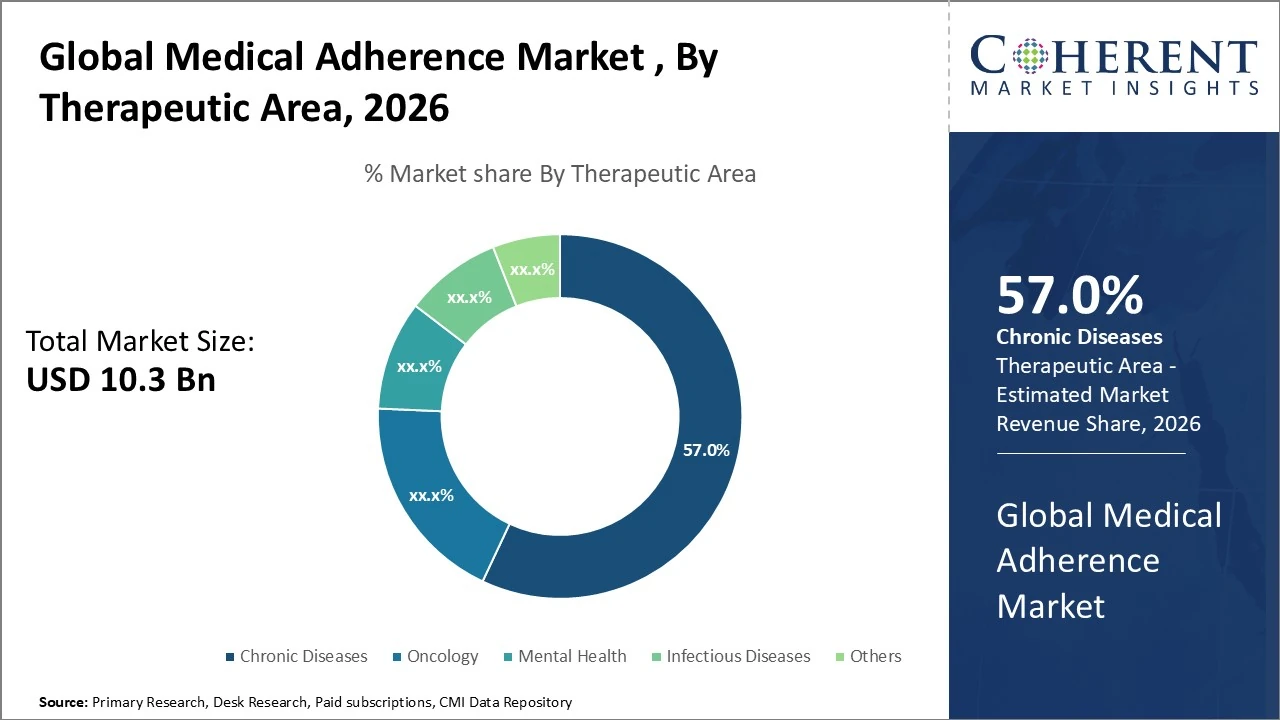
Medical Adherence Market Insights, By Therapeutic Area
Chronic Diseases hold approximately 57% of the market share, driven by complex medication regimens in conditions such as diabetes and cardiovascular disorders that require strict adherence. Oncology represents the fastest-growing segment, fueled by the expansion of targeted therapies and immunotherapies that demand precise dosing schedules to maximize treatment effectiveness. Mental Health applications are gaining traction as digital therapeutics and mobile reminders support management of depression and schizophrenia. Infectious Diseases show steady growth, particularly in tuberculosis and HIV programs where adherence is critical to public health outcomes. Other segments include rare diseases and acute conditions supported by emerging adherence technologies.
Medical Adherence Market Insights, By Product Type
Smart Pill Dispensers account for 42% of the market, supported by their ability to automate complex medication regimens and provide real-time alerts that minimize dosing errors. Mobile Health Applications represent the fastest-growing subsegment, benefiting from high smartphone penetration and cost-efficient, customizable adherence support accessible anywhere. Reminder Systems continue to experience stable demand, offering simple audio and visual prompts suited for low-technology settings. Digital Therapeutics are expanding steadily by combining behavioral therapy with medication management, especially for chronic conditions. Additional subsegments, including specialized device add-ons and monitoring accessories, play a smaller yet important role in broadening overall product offerings.
Medical Adherence Market Insights, By End User
Hospitals and Clinics account for over 45% of market share, driven by strong institutional investment in comprehensive adherence programs that improve inpatient and outpatient outcomes. Home Healthcare is the fastest-growing segment, supported by aging populations and increasing preference for home-based disease management solutions. Pharmaceutical companies leverage adherence data to enhance clinical trials, optimize treatment protocols, and strengthen post-market surveillance, reflecting gradual but steady adoption. Insurance providers are integrating adherence technologies to lower claims costs and improve patient health outcomes. Other end users, including rehabilitation centers and telehealth platforms, represent emerging segments with promising long-term growth potential.
Medical Adherence Market Trends
The Medical Adherence Market is witnessing accelerated adoption of AI-driven platforms that improve real-time patient compliance monitoring and predictive intervention strategies.
Reimbursement reforms implemented in Europe between 2024 and 2026 increasingly favor digital adherence technologies, significantly strengthening regional market expansion.
A notable industry shift is occurring from hardware-centric adherence devices toward mobile health applications.
In Asia Pacific, smartphone penetration surpassed 70% in 2025, enabling broader access to affordable, app-based adherence solutions and supporting rapid regional growth.
Medical Adherence Market Insights, By Geography
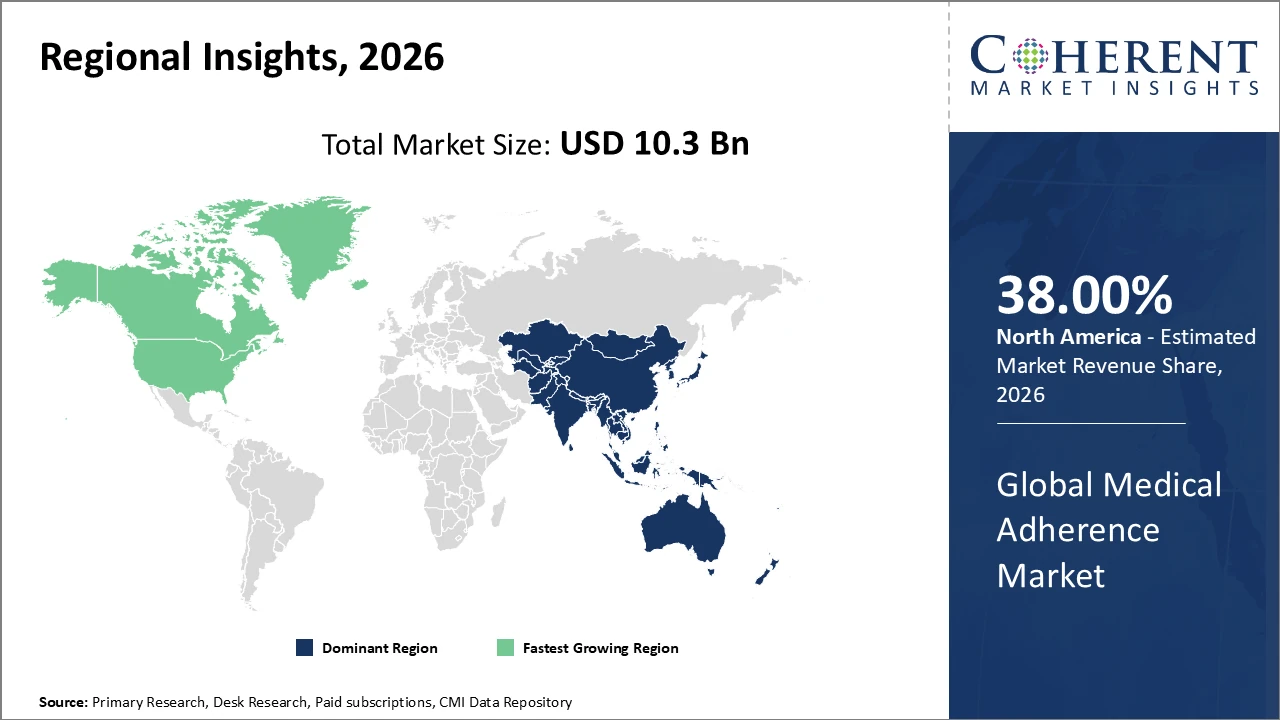
North America Medical Adherence Market Analysis and Trends
In North America, dominance in the Medical Adherence Market is driven by advanced healthcare infrastructure, supportive regulatory frameworks, and strong investment in digital health innovation. The United States accounts for nearly 35% of the global market share, supported by widespread adoption of smart adherence devices across hospitals and home care settings. High healthcare spending and rapid integration of AI-enabled monitoring platforms further strengthen regional growth. Additionally, initiatives such as the U.S. Digital Health Innovation Action Plan have encouraged technological advancement and streamlined approvals, reinforcing North America’s leadership position in the global medical adherence landscape.
Asia Pacific Medical Adherence Market Analysis and Trends
Meanwhile, Asia Pacific is the fastest-growing region in the Medical Adherence Market, recording a CAGR above 9.5%. Expansion is fueled by improving healthcare access, rising prevalence of chronic diseases, and rapid adoption of smartphone-based adherence solutions. Countries such as China and India are emerging as key innovation hubs, supported by increasing digital health investments and supportive government initiatives. Companies including Philips Healthcare and Vitality GlowCap are actively customizing adherence technologies to meet diverse regional needs, strengthening market penetration and long-term growth prospects.
Medical Adherence Market Outlook for Key Countries
USA Medical Adherence Market Analysis and Trends
The United States Medical Adherence Market remains a global frontrunner, supported by healthcare expenditure exceeding USD 4 trillion and highly advanced digital infrastructure. Leading companies such as MedMinder and Proteus Digital Health have accelerated adoption through smart pill dispensers and ingestible sensor technologies. Expanding telehealth integration and improved patient data interoperability initiatives continue to strengthen market revenue streams. In addition, evolving insurance reimbursement reforms increasingly favor adherence solutions, encouraging broader deployment across hospitals, home care settings, and chronic disease management programs nationwide.
Germany Medical Adherence Market Analysis and Trends
The Germany Medical Adherence Market is witnessing steady growth, driven by strong healthcare infrastructure, high patient awareness, and government support for digital health initiatives. Adoption of smart pill dispensers, mobile health applications, and digital therapeutics is increasing, particularly in chronic disease management and elderly care. Reimbursement policies under statutory health insurance schemes promote integration of adherence technologies in both hospital and home care settings. Rising focus on patient-centered care, combined with collaborations between local startups and multinational firms, is accelerating innovation. Additionally, Germany’s regulatory framework ensures data privacy and interoperability, supporting sustainable market expansion.
Analyst Opinion
Demand-side growth is driven by rising chronic diseases, including diabetes and cardiovascular conditions, which significantly expand the market. In 2025, the global diabetic population exceeded 540 million, increasing demand for condition-specific adherence tools. Aging populations in developed regions further intensify this demand, as patient compliance is crucial for effective disease management and reducing hospital readmissions.
Supply-side expansion is fueled by technological advancements in digital therapeutics and mobile health platforms. In 2024, production of smart pill dispensers and remote monitoring devices grew over 15% YoY, while competitive pricing, including ~12% cost reductions for mid-tier devices, boosted adoption in emerging markets.
Regional import-export trends show shifts in medical adherence supply. China became a leading exporter of wearable adherence devices in 2026, with an 18% export value increase from 2024. Meanwhile, North America, particularly the United States, remained the top importer, accounting for over 40% of global imports driven by hospital and home care demand.
Micro-indicators like healthcare infrastructure growth and patient education programs strongly affect market segments. Telemedicine initiatives, which grew 30% globally in 2025, foster adherence monitoring adoption by empowering patients and caregivers, directly enhancing overall market revenue for medical adherence solutions.
- Current Industry Events of 2026
- Market Size Estimation
- Regional Breakdown
- Competitive Landscape
- Customer Intelligence
- Segmental Analysis
- Pricing Analysis
- Key Market Drivers, Challenges & Future Trends
- Customized Insights Section
Market Scope
| Report Coverage | Details | ||
|---|---|---|---|
| Base Year: | 2025 | Market Size in 2026: | USD 10.3 billion |
| Historical Data for: | 2020 To 2024 | Forecast Period: | 2026 To 2033 |
| Forecast Period 2026 to 2033 CAGR: | 8.4% | 2033 Value Projection: | USD 18.7 billion |
| Geographies covered: |
| ||
| Segments covered: |
| ||
| Companies covered: | MedMinder, Proteous Digital Health, AdhereTech, PillPack, Omron Healthcare, CareSync, ResMed, AiCure, Propay, Propeller Health | ||
| Growth Drivers: |
| ||
Medical Adherence Market Growth Factors
Several factors drive the rapid growth of the Medical Adherence Market. The rising prevalence of chronic illnesses worldwide has created a strong need for monitoring technologies to reduce morbidity, with 2025 data showing that chronic disease patients represented nearly 65% of total medical adherence tool users. Government initiatives, such as the United States Digital Health Innovation Action Plan launched in 2026, have further accelerated adoption and simplified regulatory processes. Additionally, escalating global healthcare costs encourage payers to invest in adherence solutions, which reportedly save up to USD 5 billion annually in the U.S. Consumer health awareness and increasing smartphone penetration in emerging economies have also expanded the reach of mobile application-based adherence tools, diversifying market revenue streams.
Medical Adherence Market Development
In March 2025, World Heart Federation (WHF) warned that failure to follow prescribed medications, lifestyle guidance, and treatment plans is driving avoidable hospitalizations, poorer health outcomes, and increased pressure on healthcare budgets globally.
Key Players
Leading Companies of the Market
MedMinder
Proteous Digital Health
AdhereTech
ResMed
Omron Healthcare
CareSync
Aicure
Propay
Propeller Health
Competitive strategies in the Medical Adherence Market are largely driven by strategic partnerships and product innovation. In 2025, MedMinder partnered with major health insurers to enhance patient outreach and adherence monitoring, resulting in a 25% reduction in therapy lapses among enrolled populations. Similarly, Proteus Digital Health’s 2024 introduction of ingestible sensors integrated with AI analytics improved the accuracy of adherence tracking, allowing healthcare providers to optimize treatment outcomes while increasing client retention. These approaches illustrate how combining collaborative initiatives with cutting-edge technology can strengthen market positioning and drive sustainable growth in the medical adherence sector.
Medical Adherence Market Future Outlook
The future of the Medical Adherence Market is poised for robust growth, driven by increasing chronic disease prevalence, aging populations, and expanding digital health adoption globally. AI-enabled platforms, connected devices, and mobile health applications will continue to enhance real-time patient monitoring and predictive adherence interventions. Emerging economies are expected to witness accelerated uptake due to rising smartphone penetration and growing healthcare awareness. Government incentives, reimbursement reforms, and telehealth integration will further support market expansion. Additionally, innovations in digital therapeutics and personalized adherence solutions will improve patient outcomes, reduce healthcare costs, and create diverse revenue streams, positioning the market for long-term sustainability and innovation.
Medical Adherence Market Historical Analysis
The Medical Adherence Market has experienced steady growth over the past decade, driven by rising awareness of medication compliance and the increasing prevalence of chronic diseases. Historically, smart pill dispensers and reminder systems were the primary solutions, primarily adopted in hospitals and elderly care settings. Early digital therapeutics and mobile health applications began gaining traction in the late 2010s, supported by technological advancements and growing smartphone penetration. North America and Europe led the market, benefiting from advanced healthcare infrastructure and favorable regulatory frameworks. Gradual adoption in Asia Pacific and other emerging regions was fueled by increasing healthcare access and investment in digital health solutions.
Sources
Primary Research Interviews:
Hospitals, clinics, and home healthcare providers
Pharmaceutical companies and pharmacies
Digital health solution providers and adherence technology developers
Healthcare IT specialists, biomedical engineers, and R&D teams
Magazines:
mHealth Intelligence
Digital Health Magazine
PharmaVOICE
Healthcare IT News
Journals:
Journal of Medical Internet Research (JMIR)
Patient Preference and Adherence
Journal of Telemedicine and Telecare
International Journal of Medical Informatics
Frontiers in Digital Health
Newspapers:
Financial Times – Healthcare & Digital Health
The Wall Street Journal – Medical Technology
Reuters – Healthcare & Medication Management
Bloomberg – Digital Health & Medical Devices
Nikkei Asia – Health Technology Innovations
Associations:
Healthcare Information and Management Systems Society (HIMSS)
Digital Therapeutics Alliance (DTA)
International Society for Telemedicine & eHealth (ISfTeH)
World Health Organization (WHO) – Digital Health Division
American Medical Association (AMA) – Digital Health Initiatives
Get access to 250+ pages report
Every segment, forecast, competitor profile and data table behind the analysis above — available for instant download.
- ESOMAR Member
- ISO 9001:2015 Certified
- D-U-N-S Registered
- GDPR & CCPA Compliant
Missing comfort of reading report in your local language? Find your preferred language:
Transform your Strategy with Exclusive Trending Reports
Frequently Asked Questions
Leading companies include MedMinder, Proteus Digital Health, and AdhereTech, known for technological innovation and strategic partnerships enhancing market share.
The market is forecasted to reach USD 18.7 billion by 2033, growing at a CAGR of 8.4% during 2026-2033.
Hospitals & Clinics exhibits the fastest growth due to increasing remote patient monitoring and aging population demands.
Integration of AI, telehealth, and personalized medicine will reshape adherence solutions, emphasizing patient engagement and outcome optimization.
The market is highly competitive with continuous innovation; challenges include regulatory hurdles and ensuring patient data privacy.
Partnerships with healthcare providers and insurers, product innovation, and targeted digital marketing are key strategies facilitating market penetration.