

Global medical elastomers market is estimated to be valued at USD 10.13 Billion in 2026 and is expected to reach USD 17.58 Billion by 2033, exhibiting a compound annual growth rate (CAGR) of 8.2% from 2026 to 2033.
Key Takeaways of the Global Medical Elastomers Market
- The thermoplastic elastomer segment is estimated to hold 56.8% of the market share in 2026.
- The medical tubes segment is estimated to hold 30.9% of the market share in 2026.
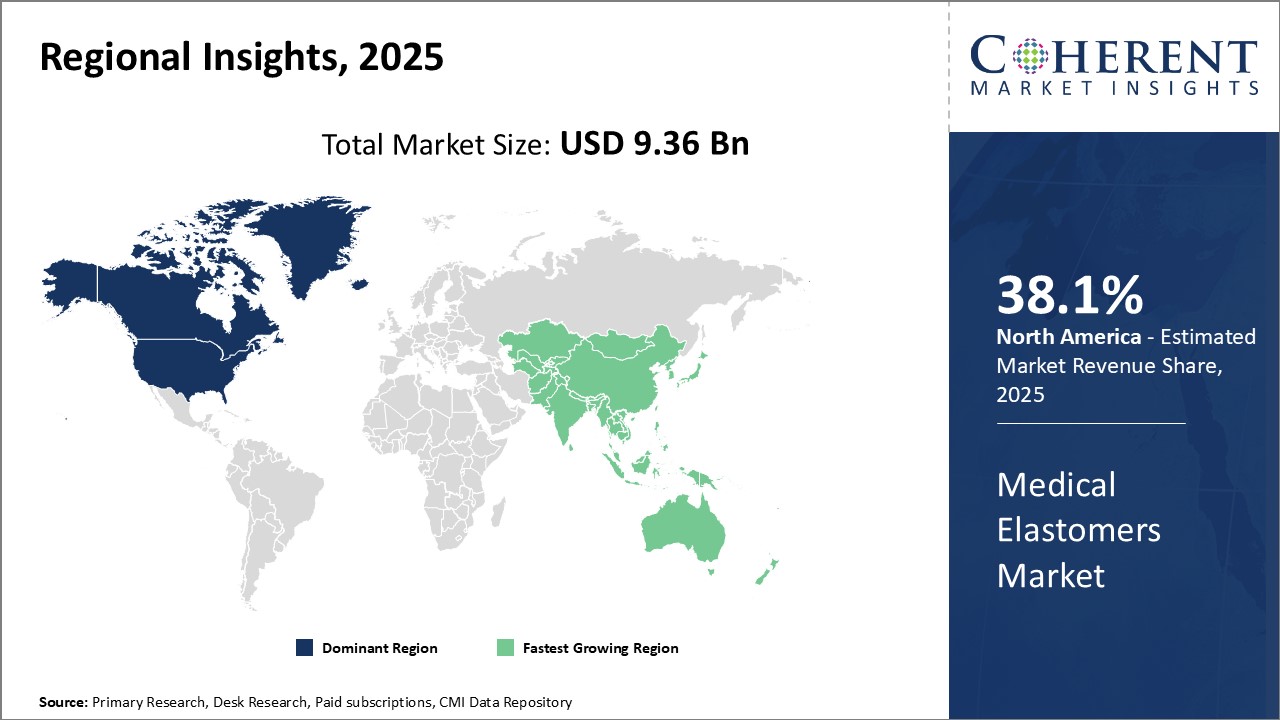
- North America is estimated to remain the dominant region in the global medical elastomers market in 2026, holding 38. 1% of the market share.
Market Overview
The global rise in the aging population and the increasing adoption of minimally invasive surgeries are driving significant demand for high-quality medical elastomers, crucial for flexible and durable medical devices and implants. The growing healthcare expenditure in emerging economies is further fueling the medical elastomers market However, stringent regulations and high raw material costs pose challenges. To overcome these hurdles and meet demand, key players are innovating with bio-based elastomers.
Current Events and their Impacts
Current Events | Description and its Impact |
Impact of Global Healthcare Infrastructure Expansion |
|
Advances in Material Science and Elastomer Technology |
|
Impact of AI on the Global Medical Elastomers Market
Artificial Intelligence is swiftly transforming the global medical elastomers sector by enhancing design accuracy, accelerating product development, and improving patient outcomes in its production and innovation.
- AI is revolutionizing medical elastomer development by optimizing formulations, simulating durability, and predicting performance, as exemplified by Dow Chemical's use of AI analytics to accelerate material design and validation.
- Companies like Medtronic are leveraging AI for predictive engineering to analyze biological interactions and ensure biocompatibility, significantly improving the reliability and regulatory approval of elastomer-based medical devices.
- AI is also enabling smarter healthcare solutions, with Continental's ContiTech developing intelligent, AI-powered elastomer sensors for wearable monitors that offer real-time, adaptive, and predictive patient monitoring enhancing both accuracy and proactive care.
- Current Industry Events of 2026
- Market Size Estimation
- Regional Breakdown
- Competitive Landscape
- Customer Intelligence
- Segmental Analysis
- Pricing Analysis
- Key Market Drivers, Challenges & Future Trends
- Customized Insights Section
Global Medical Elastomers Market: Demand-Supply Gap Analysis
Category | Key Points/Data |
Key Supply Gaps: |
|
Manufacturing Capacity |
|
Geographic Concentration |
|
Demand Drivers: |
|
Demographic Surge |
|
Regulatory Bottlenecks |
|
Immediate Opportunities: |
|
Capacity Expansion |
|
Specialized Materials |
|
Supply Chain Resilience |
|
Market Trends
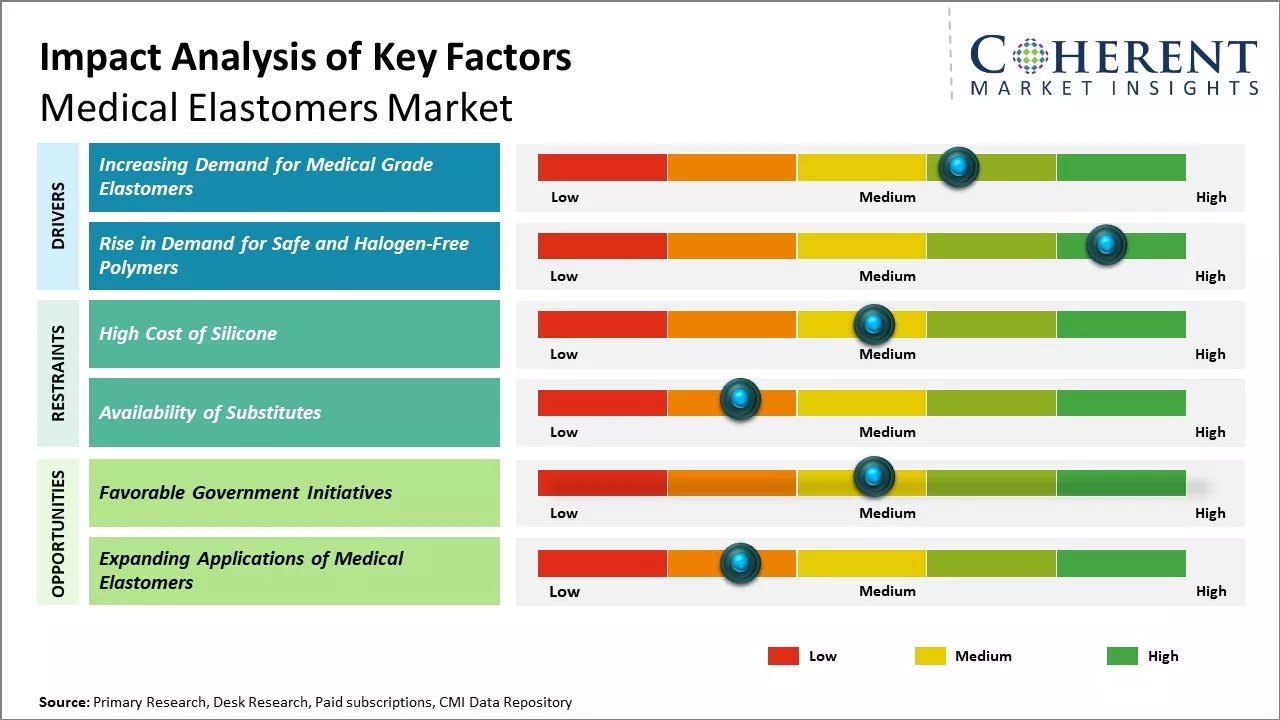
Increasing Demand for Medical Grade Elastomers
The increasing demand for medical grade elastomers is expected to augment growth of the global medical elastomers market during the forecast period. For instance, in early 2025, leading manufacturers like Wacker Chemie AG announced significant expansions in its healthcare-focused silicone elastomer production capacities in Europe, responding to robust demand from the medical device sector and pharmaceutical tubing applications. This expansion reflects the broader industry's efforts to meet rising needs for specialty medical materials.
Rise in Demand for Safe and Halogen-Free Polymers
Rise in demand for safe and halogen-free polymers is expected to boost growth of the global medical elastomers market over the forecast period. For instance, in January 2024, Polymer Compounders Limited (PCL) launched new halogen and aryl ester-free flame-retardant polymer compounds, Notoxicom B6000 and S6000, specifically designed for applications like battery casings and state-of-the-art medical devices, emphasizing lower toxicity and improved environmental profiles while maintaining high performance.
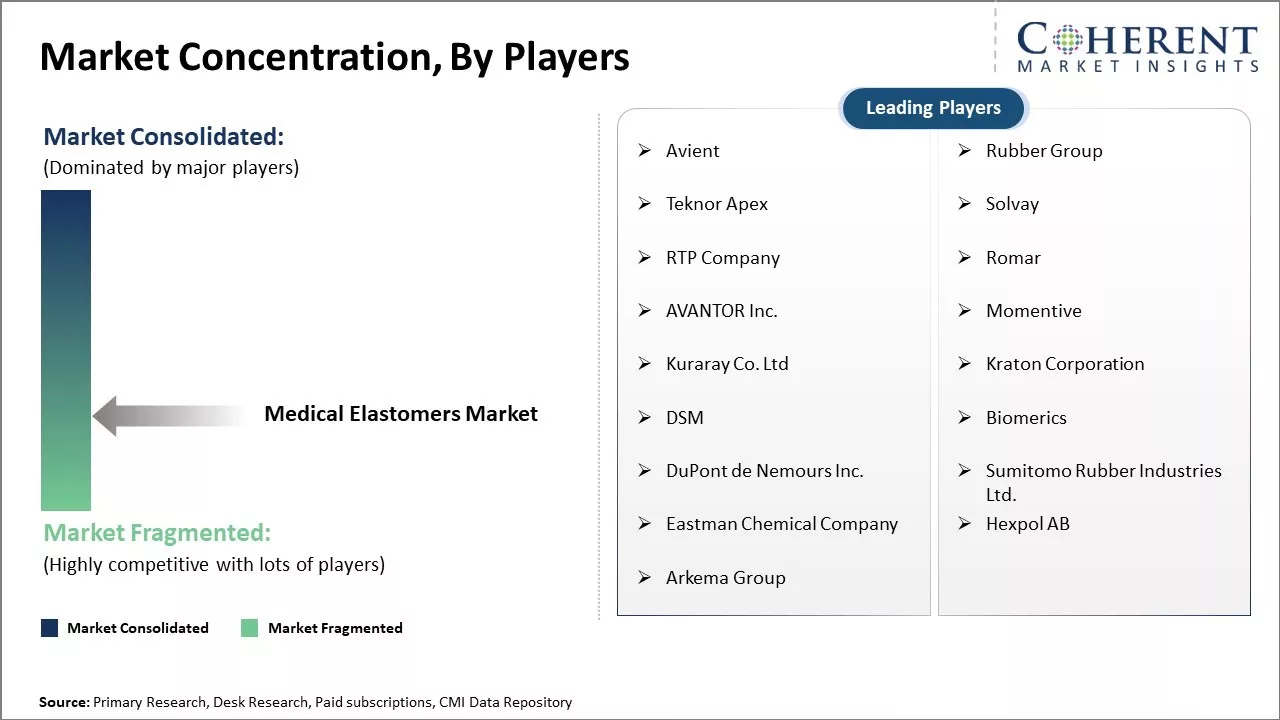
Market Concentration and Competitive Landscape
Market Opportunity: Favorable Government Initiatives
The presence of favorable government initiatives to provide high-quality healthcare facilities are expected to provide significant growth opportunities for players in the global medical elastomers market. For instance, in February 2024, the Indian government, through its Union Budget, continued to prioritize healthcare infrastructure development with significant allocations for health and wellness centers, upgrading district hospitals, and expanding medical education facilities, signaling ongoing substantial investment in the sector.
Segment Analysis
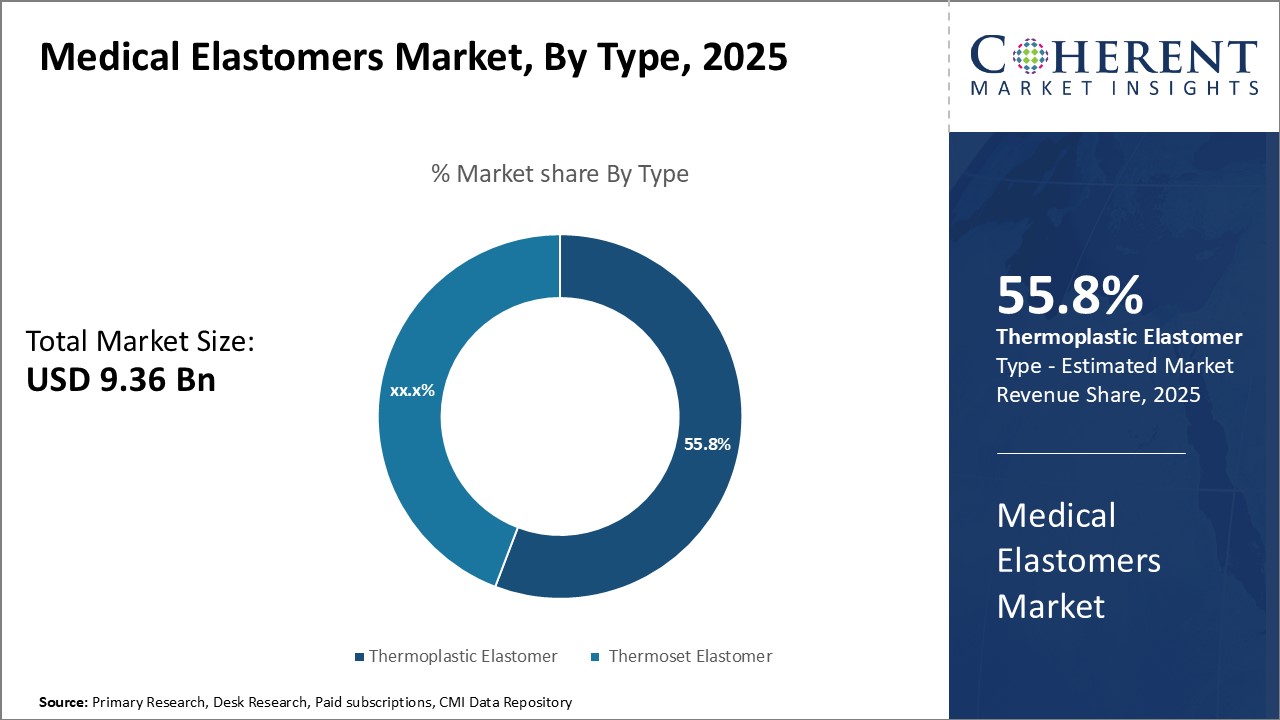
Global Medical Elastomers Market Insights, by Type
Type segment is sub-segmented into thermoplastic elastomer and thermoset elastomer. The thermoplastic elastomer sub-segment is estimated to hold 56.8% of the market share in 2026, due to its versatility compared to thermoset elastomers. Thermoplastic elastomers can be reshaped and reformed repeatedly through the application of heat, allowing for convenient processing and moldability during product manufacturing.
Thermoplastics do not require curing, so manufacturing is simpler and quicker. Additionally, the lack of curing means any defects can be easily remolded rather than having to discard an entire batch. Overall, the diverse processing advantages and versatile performance of thermoplastic elastomers have made them the leading choice for the medical elastomers type segment.
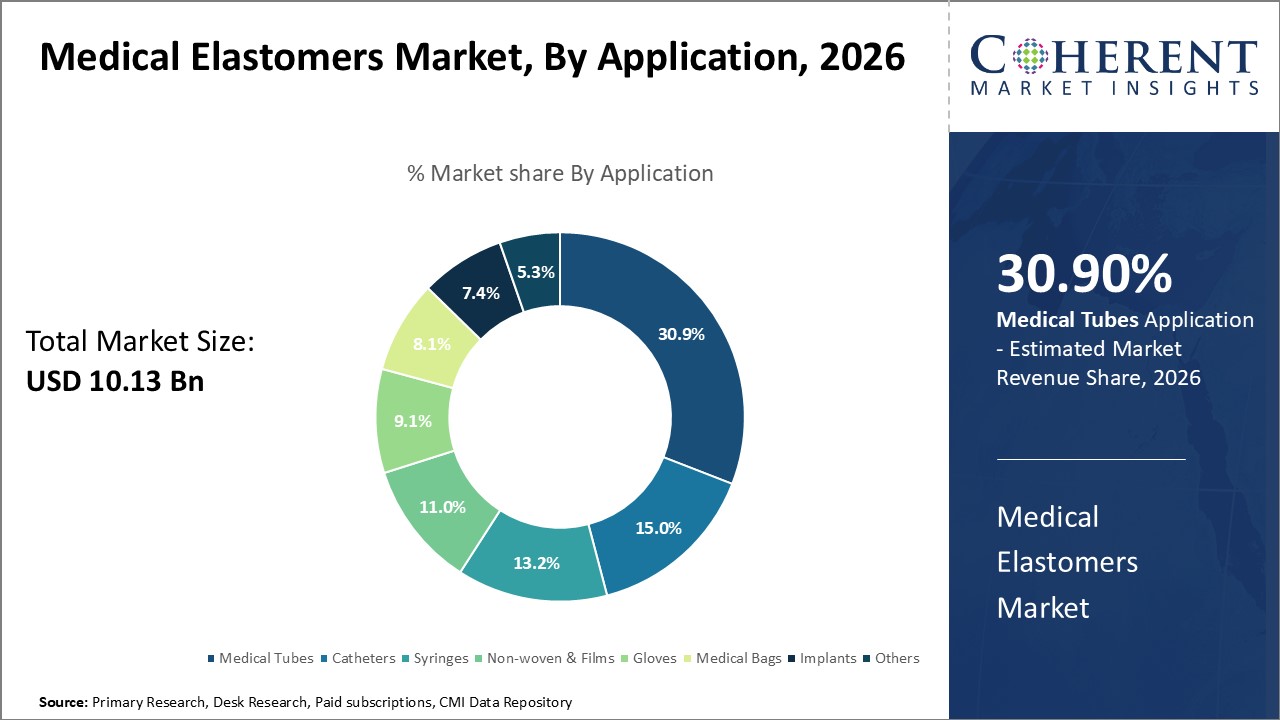
Global Medical Elastomers Market Insights by Application
Application segment is sub-segmented into medical tubes, catheters, syringes, non-woven and films, gloves, medical bags, implants, and others. The medical tubes sub-segment is estimated to hold 30.9% of the market share in 2026, due to strong demand from several prominent medical sectors. Tubes see widespread usage in critical care and vascular applications such as cardiovascular and gastroenterology devices.
Catheter-based treatments, in particular, have become more prevalent for vascular issues like blocked arteries. Meanwhile, endoscopy utilizes extensive tubing in configuration to advance scopes. Both areas experience consistent procedure volume growth. Tubing is also integral to respiratory care devices that are highly utilized in emergent settings and ICUs.
Regional Insights
North America Medical Elastomers Market Trends
North America is the dominant region in the global medical elastomers market and is estimated to hold 38.1% of the market share in 2026. The presence of leading medical device manufacturers, along with a highly developed healthcare infrastructure, has propelled the demand for medical elastomers. Major players like Dow, DuPont, and BASF have their roots in the U.S. and have been partnering with top medical equipment producers for decades to provide customized elastomer solutions. Furthermore, North America is least dependent on imports, which insulates it from volatility in raw material costs.
Asia Medical Elastomers Industry Trends and Growth Forecast
Asia Pacific region is projected to be the fastest-growing market during the forecast period. Countries like China, India, Japan, and South Korea present massive opportunities, owing to their large population bases and improving access to healthcare facilities. Overall, with expanding healthcare infrastructure and medical treatments landscape, the enormous Asia Pacific region is expected to surpass other global markets in the long run on the back of its tremendous growth potential. For instance, Asia’s healthcare expenditure is projected to reach USD 4.6 trillion by 2026, driven by rising government investments and expanding medical infrastructure. With these advancements, the Asia Pacific region is expected to surpass other global markets in the long run on the back of its tremendous growth potential.
India Medical Elastomers Market Trends
India medical elastomers Industry is experiencing significant growth, primarily driven by the nation's rapidly expanding healthcare infrastructure and substantial government investments in the sector. Furthermore, advancements in medical technology and strategic 'Make in India' initiatives are bolstering domestic manufacturing capabilities, contributing to the market's robust expansion.
U.S. Medical Elastomers Industry Trends and Analysis
The U.S. medical elastomers industry is a global leader, driven by its advanced healthcare system, significant research & development spending, and a thriving medical device sector. Demand is strong for high-tech devices, implants, and single-use products, fueled by an aging population and rising chronic illnesses. Strict regulations are also pushing for ongoing innovation in material quality and safety.
For instance, in late 2024, leading U.S. medical device manufacturers reported increased investment in R&D for next-generation implantable devices, specifically emphasizing the need for highly biocompatible and durable medical-grade elastomers.
Market Report Scope
Medical Elastomers Market Report Coverage
| Report Coverage | Details | ||
|---|---|---|---|
| Base Year: | 2025 | Market Size in 2026: | USD 10.13 Bn |
| Historical Data for: | 2020 To 2024 | Forecast Period: | 2026 To 2033 |
| Forecast Period 2026 to 2033 CAGR: | 8.2% | 2033 Value Projection: | USD 17.58 Bn |
| Geographies covered: |
| ||
| Segments covered: |
| ||
| Companies covered: | Avient, Rubber Group, Teknor Apex, Solvay, RTP Company, Romar, AVANTOR Inc., Momentive, Kuraray Co. Ltd, Kraton Corporation, DSM, Biomerics, DuPont de Nemours Inc., Sumitomo Rubber Industries Ltd., Eastman Chemical Company, Hexpol AB, and Arkema Group | ||
| Growth Drivers: |
| ||
| Restraints & Challenges: |
| ||
Global Medical Elastomers Industry News
- On January 28, 2025, Teknor Apex presented its newest medical-grade thermoplastic elastomers (TPEs) at the premier medical design and manufacturing event, MD&M West.
- In January 2024, BASF inaugurated its largest single thermoplastic polyurethane (TPU) production line at its Zhanjiang Verbund site in China. This significant investment aims to meet the escalating global demand for high-performance medical elastomers, reinforcing BASF's commitment to the healthcare sector.
- In 2024, Teknor Apex expanded its portfolio of medical-grade thermoplastic elastomers (TPEs) with new grades specifically designed for biopharmaceutical tubing applications.
- In April 2023, DuPont entered a collaboration with Qosina, granting Qosina access to DuPont's Liveo Silicone Elastomer series. This partnership focuses on providing high-quality silicone elastomers specifically for the production of biopharmaceutical, pharmaceutical, and medical devices.
- In 2023, Celanese Corporation announced an investment in research and development to create next-generation smart elastomers.
Analyst Views
- Aging populations and the rise in chronic diseases are frequently highlighted as key growth drivers. However, the majority of medical elastomer use is concentrated in disposable medical devices rather than advanced implants. Consequently, market expansion is driven more by procedure volume than by device innovation.
- Despite being positioned as a high-tech growth segment, the medical elastomers market is, at its core, a mature industrial sector. The primary opportunities lie in driving cost efficiencies and optimizing manufacturing processes, rather than in breakthrough material innovations.
- The Asia Pacific region (excluding Japan) is expected to grow the fastest because of its quickly improving healthcare systems and increasing medical tourism. North America, however, will likely stay the biggest market due to its advanced medical technology.
Emerging Applications in the Global Medical Elastomers Market
- Medical elastomers are finding new uses in bio-absorbable elastomeric stents, which provide temporary support and then safely degrade. They are also crucial for wearable medical devices and sensors, e.g., momentive uses silicone elastomers for comfortable skin interfaces in biosensors and electronic skin patches, allowing for accurate and comfortable long-term physiological monitoring.
- An exciting future area is the use of elastomers in soft robotics for surgical applications. Their high elasticity and biocompatibility make them ideal for minimally invasive procedures, enabling safe interaction with internal tissues.
- Medical elastomers are also poised for use as drug-release platforms within medical implants. This innovation promises controlled and sustained medication release, which could significantly enhance therapeutic efficacy and improve patient quality of life.
Market Segmentation
- Type Insights (Revenue, USD Bn, 2021 - 2033)
- Thermoplastic Elastomer
- Thermoset Elastomer
- Application Insights (Revenue, USD Bn, 2021 - 2033)
- Medical Tubes
- Catheters
- Syringes
- Non-woven and Films
- Gloves
- Medical Bags
- Implants
- Others
- Regional Insights (Revenue, USD Bn, 2021 - 2033)
- North America
- U.S.
- Canada
- Latin America
- Brazil
- Argentina
- Mexico
- Rest of Latin America
- Europe
- Germany
- U.K.
- Spain
- France
- Italy
- Russia
- Rest of Europe
- Asia Pacific
- China
- India
- Japan
- Australia
- South Korea
- ASEAN
- Rest of Asia Pacific
- Middle East
- GCC Countries
- Israel
- Rest of Middle East
- Africa
- South Africa
- North Africa
- Central Africa
- Key Players Insights
- Avient
- Rubber Group
- Teknor Apex
- Solvay
- RTP Company
- Romar
- AVANTOR Inc.
- Momentive
- Kuraray Co. Ltd
- Kraton Corporation
- DSM
- Biomerics
- DuPont de Nemours Inc.
- Sumitomo Rubber Industries Ltd.
- Eastman Chemical Company
- Hexpol AB
- Arkema Group
Sources:
Stakeholders:
- Senior Executives from Medical Device Manufacturing Companies
- Representatives from Suppliers and Polymer Producers
- Industry Consultants and Market Experts
- Distribution and Channel Partners
- Others
Databases:
- ICIS Chemical Business Database
- Others
Magazines:
- Plastics Technology Magazine
- Medical Plastics News
- Rubber & Plastics News
- Others
Journals:
- Journal of Elastomers & Plastics
- Journal of Biomedical Materials Research
- Journal of Polymer Science
- Others
Newspapers:
- The Wall Street Journal
- Financial Times
- The Economic Times
- Others
Associations:
- International Institute of Synthetic Rubber Producers (IISRP)
- Association of Medical Device Reprocessors (AMDR)
- Society of Plastics Engineers (SPE)
- Others
Public Domain Sources:
- World Health Organization (WHO)
- U.S. Food and Drug Administration (FDA)
- European Medicines Agency (EMA)
- Others
Proprietary Elements:
- CMI Data Analytics Tool
- Proprietary CMI Existing Repository of Information for the Last 8 Years
*Definition: Elastomer materials offer a variety of valuable physical and performance properties that are especially desirable in medical applications. Medical elastomers find increasing use in medical products, offering biocompatibility, design flexibility, durability, and favorable performance and cost ratios. They are often used in fluid pathways, blood pressure tubing, wound drainage and Penrose tubing, and even drug delivery systems. Medical elastomers are extensively of two types such as thermoset elastomers and thermoplastic elastomers.
Get access to 250+ pages report
Every segment, forecast, competitor profile and data table behind the analysis above — available for instant download.
- ESOMAR Member
- ISO 9001:2015 Certified
- D-U-N-S Registered
- GDPR & CCPA Compliant
Missing comfort of reading report in your local language? Find your preferred language:
Transform your Strategy with Exclusive Trending Reports
Frequently Asked Questions
The medical elastomers market is estimated to be valued at USD 10.13 Bn in 2026, and is expected to reach USD 17.58 Bn by 2033.
The CAGR of the medical elastomers market is projected to be 8.2% from 2026 to 2033.
Increasing demand for medical grade elastomers and a rise in demand for safe and halogen-free polymers are the major factors driving the growth of the medical elastomers market.
High cost of silicone and availability of substitutes are the major factors hampering the growth of the medical elastomers market.
In terms of type, the thermoplastic elastomer segment is estimated to dominate the market revenue share in 2026.
Avient, Rubber Group, Teknor Apex, Solvay, RTP Company, Romar, AVANTOR Inc., Momentive, Kuraray Co. Ltd, Kraton Corporation, DSM, Biomerics, DuPont de Nemours Inc., Sumitomo Rubber Industries Ltd., Eastman Chemical Company, Hexpol AB, and Arkema Group are the major players operating in the medical elastomers market.
North America is expected to lead the medical elastomers market in 2026.