

Metalworking Fluids Market Size and Forecast — 2026-2033
Metalworking Fluids Market is estimated to be valued at USD 1,482.1 Mn in 2026 and is expected to reach USD 2,071.6 Mn in 2033, exhibiting a compound annual growth rate (CAGR) of 4.9% from 2026 to 2033. Metalworking fluid is a formulation that is used to enhance the efficiency of machining tools during various operations such as drilling and grinding. These fluids are highly stable at high and low temperatures and also have excellent chemical resistance properties. Metalworking fluids help in reducing the heat in machining tools, and eliminate the small metal chips produced during the grinding and cutting of metal pieces.
Drivers
Increasing production of automobiles
Increasing production of automobiles is primarily fuelling the market growth of metalworking fluids. Metalworking fluids are widely used as coolants across metal treating, metal removal, metal forming, and metal protecting in metalworking applications. Hence, growth in the production of automobiles is expected to foster the market growth.
Increasing demand for automobiles in the U.S. is expected to augment the growth of the metalworking fluids market over the forecast period. Emerging economies, such as India, China, Brazil, and Russia, are witnessing significant growth in automotive and transportation services, specially the manufacturing sector. The increasing production of vehicles is the major factor driving the demand for metalworking fluids. Besides thr automotive industry, the aerospace, railways, marine, and defense industries are also contributing to the growth of the global metalworking fluids market.
It has hit major industrial hubs of the world, which has resulted in supply chain disruptions and production halts. Manufacturing and industrial production in many countries witnessed the sharpest declines. Small and Medium-sized Enterprises (SMEs) have been hit hard globally.
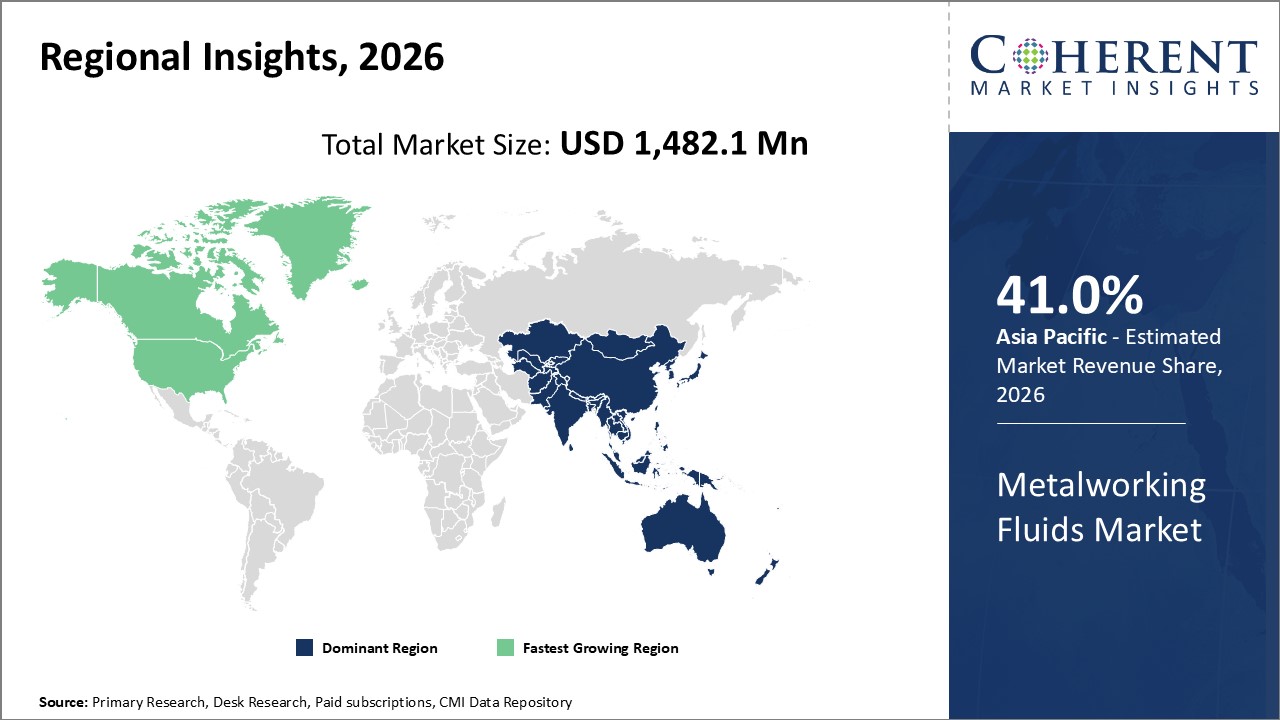
Figure 1. Global Metalworking Fluids Market Value Share (%), By Region, 2026
Market Restraints
Environmental and health-related issues associated with workers
Environmental issues like contamination of soil, groundwater, seawater, and health risks, such as asthma, chronic bronchitis, cancer, and skin diseases associated with the workers on the floor, is expected to hinder the market growth of metalworking fluids. Metalworking fluids release various toxic waste that creates environmental issues. Moreover, the chemicals present in metalworking fluids lead to cancer, respiratory, and skin diseases in workers. All these factors are expected to hamper the market growth of metalworking fluids during the forecast period.
- Current Industry Events of 2026
- Market Size Estimation
- Regional Breakdown
- Competitive Landscape
- Customer Intelligence
- Segmental Analysis
- Pricing Analysis
- Key Market Drivers, Challenges & Future Trends
- Customized Insights Section
Metalworking Fluids Market Report Coverage
| Report Coverage | Details | ||
|---|---|---|---|
| Base Year: | 2025 | Market Size in 2026: | USD 1,482.1 Mn |
| Historical Data for: | 2020 To 2024 | Forecast Period: | 2026 To 2033 |
| Forecast Period 2026 to 2033 CAGR: | 4.9% | 2033 Value Projection: | USD 2,071.6 Mn |
| Geographies covered: |
| ||
| Segments covered: |
| ||
| Companies covered: | Apar Industries Ltd., Castrol Limited, Chevron Phillips Chemical Company LP, Chem Arrow Corporation, Exxon Mobil Corporation, FUCHS, Houghton, Lukoil Lubricants, and The Lubrizol Corporation | ||
| Growth Drivers: |
| ||
| Restraints & Challenges: |
| ||
Market Trends
- The growing aerospace industry in the North America region is expected to drive the demand for metalworking fluids, and this is attributed to the growing travel and tourism trends. In 2021, the U.S. exported a substantial amount of transportation equipment, including aircraft, helicopters, and aircraft parts. In 2021, the A&D industry exports rose by 11.2 percent to a total value of USD $100.4 billion. From sustainable aviation technologies to defense systems, partners around the world trust U.S.-based companies to provide the best capabilities at the best value.
- The establishment of new facilities in machinery and tools by manufacturers for increasing production capacities is a growing trend in the market. This trend is expected to foster the market growth. For instance, in October 2022, CF Industries and ExxonMobil signed the most significant commercial arrangement of its type to capture and permanently store up to 2 million metric tonnes of CO2 emissions yearly from CF Industries' Louisiana manufacturing complex.
Figure 2. Global Metalworking Fluids Market Value Share (%), By Application, 2026
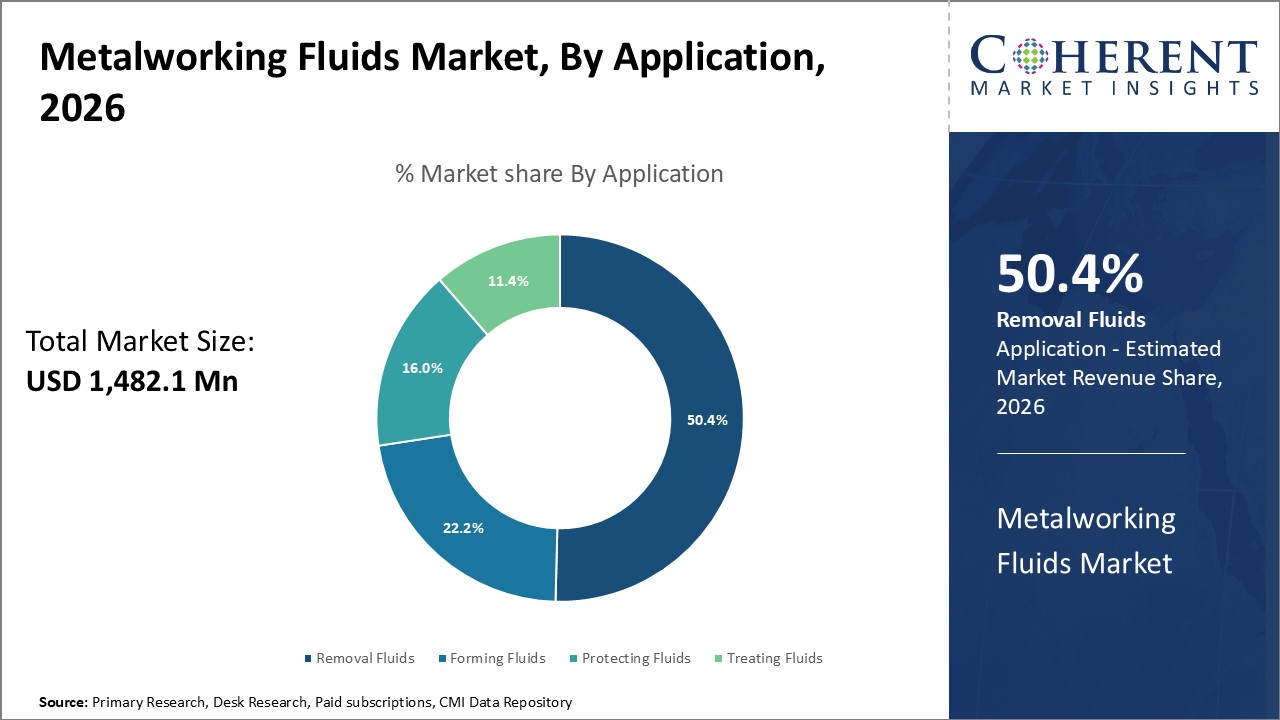
On the basis of application in 2026, the removal fluids segment accounted for the largest market share of 50.4%, in terms of value, followed by the forming fluids and protecting fluids segments respectively.
Key Developments
- In December 2022, SKF and Castrol collaborated to provide access to industrial lubricant recycling. The collaboration entails providing 'oil as a service' by combining the SKF RecondOil solution with Castrol's metal working lubricants.
- In October 2020, Biosynthetic Technologies, engaged in manufacturing of bio-based synthetic compounds, launched Biocea, its new product line of novel additives for metalworking fluids.
- In February 2023, Univar Solutions and Milliken signed an agreement to automate the liquid dyes market in North America for lubricants and metal working fluids
Competitive Section
The major players operating in the global metalworking fluids market include Apar Industries Ltd., Castrol Limited, Chevron Phillips Chemical Company LP, Chem Arrow Corporation, Exxon Mobil Corporation, FUCHS, Houghton, Lukoil Lubricants, and The Lubrizol Corporation.
Sources
Primary Research Interviews
- Metalworking fluid (MWF) producers (e.g., Quaker Houghton, Fuchs Petrolub, Blaser Swisslube, Castrol/BP, Master Fluid Solutions)
- Machining engineers at automotive, aerospace and industrial manufacturers
- Fluid management service providers
Databases
- UN Comtrade MWF trade data
- ECHA REACH registrations
- OSHA MWF exposure data
Magazines
- Lubes'n'Greases
- Modern Machine Shop
Journals
- Tribology International (Elsevier)
- Journal of Cleaner Production (Elsevier)
Newspapers
- Reuters Industrials
- Financial Times – Industrials
Associations
- ILMA (Independent Lubricant Manufacturers Association)
- STLE
- UEIL
Public Domain Sources
- OSHA MWF PEL regulations
- NIOSH MWF criteria document
- ResearchGate publications on metalworking fluids
Proprietary Elements
- CMI Data Analytics Tool, Proprietary CMI Existing Repository of information for last 10 years.
Get access to 250+ pages report
Every segment, forecast, competitor profile and data table behind the analysis above — available for instant download.
- ESOMAR Member
- ISO 9001:2015 Certified
- D-U-N-S Registered
- GDPR & CCPA Compliant
Missing comfort of reading report in your local language? Find your preferred language:
Transform your Strategy with Exclusive Trending Reports
Frequently Asked Questions
The Metalworking Fluids Market is estimated to be valued at USD 1,482.1 Mn in 2026, and is expected to reach USD 2,071.6 Mn by 2033.
The CAGR of the Metalworking Fluids Market is projected to be 4.9% from 2026 to 2033.
Increasing production of automobiles is expected to drive the market growth.
The growing steel and metal fabrication industries are expected to boost the market growth.
Environmental and health-related issues associated with workers are the key factors hampering the market growth.
The major players operating in the market include Apar Industries Ltd., Castrol Limited, Chevron Phillips Chemical Company LP, Chem Arrow Corporation, Exxon Mobil Corporation, FUCHS, Houghton, Lukoil Lubricants, and The Lubrizol Corporation.