

Microspheres Materials Market Size and Forecast — 2026 - 2033
The Global Microspheres Materials Market size is estimated to be valued at USD 4.30 billion in 2026 and is expected to reach USD 7.80 billion by 2033, exhibiting a compound annual growth rate (CAGR) of 8.3% from 2026 to 2033.
Overview
Microspheres materials are tiny spherical particles, typically ranging from 1 to 1000 micrometers in diameter, made from polymers, glass, ceramics, or metals. They are engineered to provide specific physical, chemical, or biological properties depending on their application. In healthcare, microspheres are widely used for targeted drug delivery, embolization procedures, and diagnostic imaging due to their controlled release capabilities and biocompatibility. In industrial sectors, they enhance lightweight composites, coatings, and insulation materials by improving strength, durability, and thermal resistance. Their uniform shape and customizable surface characteristics make microspheres valuable in pharmaceuticals, construction, cosmetics, and advanced manufacturing industries.
Key Takeaways
The hollow glass microspheres segment holds a dominant market share, driven by applications in insulation and lightweight composites. Polymer microspheres are the fastest-growing sub-segment due to their versatility in healthcare and cosmetic applications.
Automotive and aerospace sectors lead application-wise, with aerospace benefiting from strict weight reduction requirements to improve fuel efficiency.
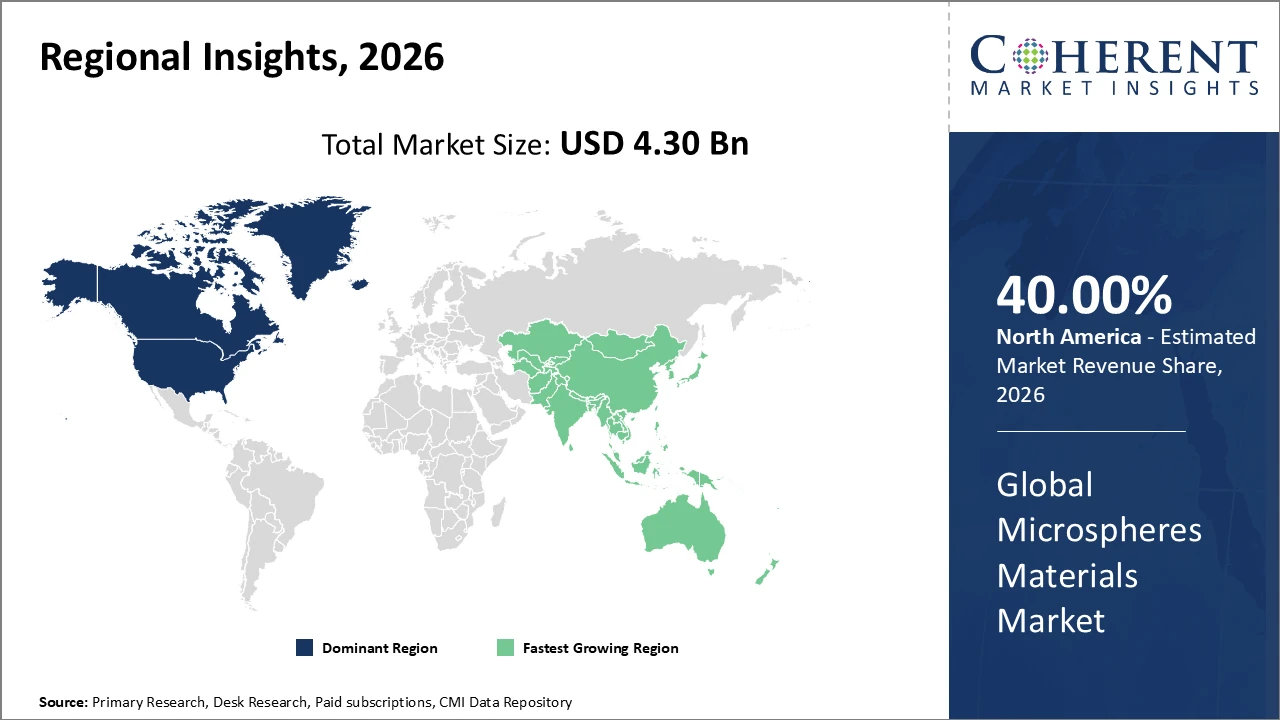
North America commands a significant market share, supported by advanced manufacturing infrastructure and strong adoption of high-performance materials. Asia Pacific shows the fastest growth, fueled by industrial expansion and rising infrastructure investments.
Europe experiences steady growth driven by stringent environmental regulations and focus on sustainable, green materials, influencing market dynamics and investment trends.
Microspheres Materials Market Segmentation Analysis
Microspheres Materials Market Insights, By Material Type
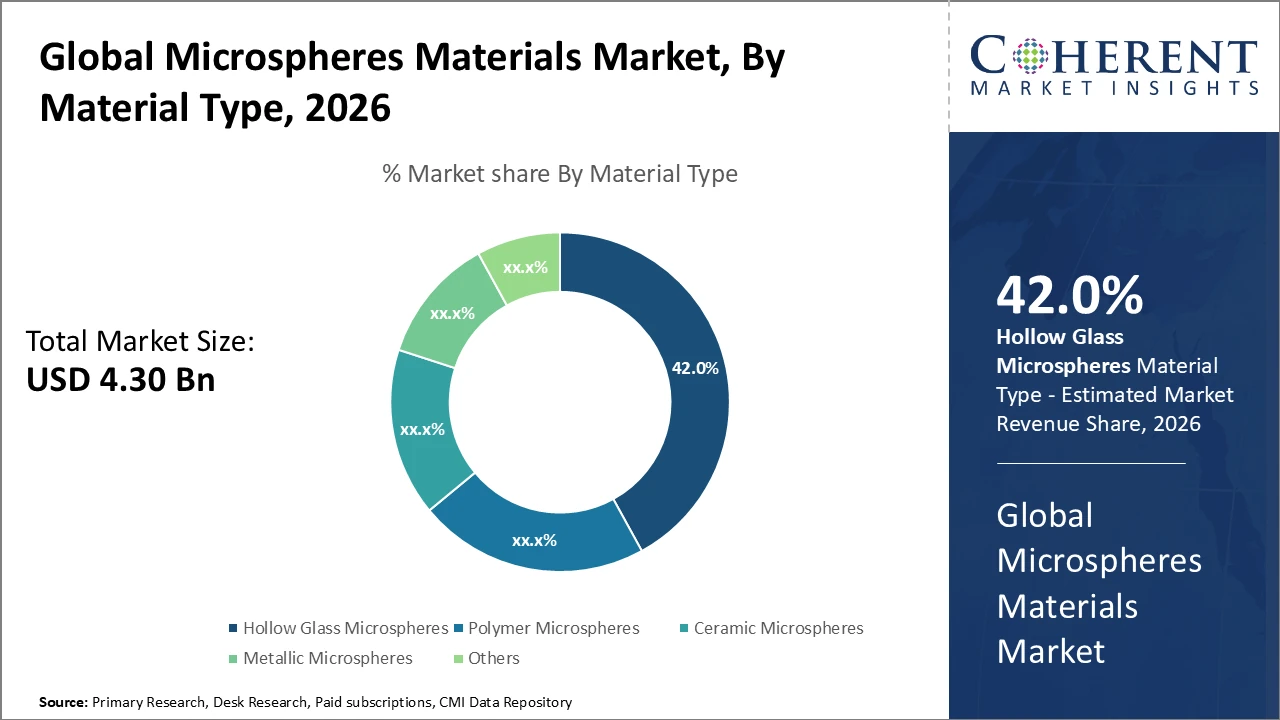
Hollow glass microspheres dominate the market with a 42% share, valued for their lightweight nature and excellent thermal insulation, making them essential in aerospace and construction insulation applications. Polymer microspheres are the fastest-growing segment, driven by their versatility in healthcare and personal care products, offering customizable features such as controlled buoyancy and biocompatibility. Ceramic microspheres provide superior thermal stability and abrasion resistance, ideal for specialty coatings and high-temperature applications. Metallic microspheres are used in conductive composites, while other microsphere types serve emerging, specialized applications, expanding the overall scope of materials in diverse industrial, medical, and consumer sectors.
Microspheres Materials Market Insights, By Application
Automotive and transportation lead the microspheres materials market in terms of share, driven by stringent emission regulations that increase demand for lightweight materials to improve fuel efficiency. Aerospace and defense represent the fastest-growing segment, supported by innovations requiring materials with high strength-to-weight ratios and excellent thermal resistance. In healthcare, microspheres are used in drug delivery systems and imaging applications, while the electronics sector leverages them for insulation and miniaturized components. The construction industry continues to adopt microspheres for insulation and lightweight concrete, and other applications are expanding into agriculture and oil & gas through specialized formulations.
Microspheres Materials Market Insights, By End-Use Industry
The coatings and paints segment dominates the microspheres materials market, utilizing microspheres to enhance durability and thermal resistance in both architectural and industrial coatings. Composites and plastics are the fastest-growing subsegment, driven by the global demand for advanced lightweight materials in automotive and aerospace manufacturing. In personal care, polymer microspheres are widely used for improved texture and active ingredient delivery, supporting steady growth. The oil and gas sector adopts microspheres for lightweight fillers and insulation, while agriculture and other industries expand their use of microspheres for functional, efficient, and cost-effective product solutions.
Microspheres Materials Market Trends
Advancements in nanotechnology and sustainability-driven innovation are key trends shaping the microspheres materials market.
Hollow glass and polymer microspheres offer enhanced thermal and mechanical properties; a 2025 study showed a 30% improvement in thermal insulation efficiency in aerospace composites.
The rise of additive manufacturing supports rapid prototyping and customization, boosting microsphere demand in electronics packaging and medical device applications.
Development of bio-based and recyclable microspheres addresses growing environmental concerns, particularly in regions like Europe and North America with stringent regulatory frameworks.
Overall, innovation and sustainability are driving new applications and expanding market adoption.
Microspheres Materials Market Insights, By Geography
North America Microspheres Materials Market Analysis and Trends
North America leads the microspheres materials market due to its mature manufacturing ecosystem, advanced R&D infrastructure, and stringent quality and regulatory standards. The U.S. alone accounts for over 35% of global market share, driven by investments from key players in innovative material development and diversified applications. Strong demand from aerospace and automotive sectors further reinforces the region’s dominance, as microspheres are widely used for lightweight composites, insulation, and high-performance materials. Government initiatives and incentives supporting research and advanced manufacturing technologies enhance product innovation and adoption, positioning North America as a critical hub for growth in the global microspheres materials market.
Asia Pacific Microspheres Materials Market Analysis and Trends
Asia Pacific is experiencing the fastest growth in the microspheres materials market, with a CAGR exceeding 10%, driven by expanding industrial sectors in China, India, and Southeast Asia. Rapid infrastructure development and increasing investments in manufacturing hubs support heightened production and supply capabilities. Cost advantages in the region, combined with rising demand from emerging applications such as oil & gas, personal care, and lightweight composites, further accelerate market adoption. Government initiatives promoting industrial growth and technological advancements in materials manufacturing enhance regional competitiveness, positioning Asia Pacific as a key growth engine in the global microspheres materials market through the coming years.
Microspheres Materials Market Outlook for Key Countries
USA Microspheres Materials Market Analysis and Trends
The U.S. microspheres market benefits from advanced technological adoption and strong aerospace and automotive sectors. In 2025, U.S. manufacturers expanded supply agreements by 18% with aerospace OEMs for lightweight composites, highlighting growing industrial demand. Concurrently, government funding for materials innovation accelerated, supporting the development of new products focused on sustainability and enhanced performance. These investments and collaborations drive product diversification and application expansion, creating a competitive yet opportunity-rich market environment. The combination of regulatory support, technological capabilities, and sector-specific demand solidifies the U.S. as a leading contributor to the global microspheres materials market.
Germany Microspheres Materials Market Analysis and Trends
Germany’s microspheres materials market is shaped by its strong automotive, aerospace, and industrial manufacturing sectors, which drive demand for lightweight, high-performance, and thermally insulating materials. In 2025, the adoption of hollow glass and polymer microspheres in automotive lightweighting and construction insulation increased by over 12%, reflecting a focus on efficiency and sustainability. Strict environmental regulations and policies promoting green materials have accelerated the development of bio-based and recyclable microspheres, while local manufacturers invest in advanced production technologies. Germany’s well-established supply chains, combined with R&D initiatives in materials innovation, position the country as a key contributor to Europe’s overall microspheres materials market growth.
Analyst Opinion
Increasing global production capacity is driving market expansion; for example, a major facility in Asia increased output by 15% in 2025, improving supply-side stability and supporting leading product types’ market share in 2026.
Pricing trends for specialty hollow glass microspheres have fluctuated due to raw material volatility but averaged a 5.2% annual growth since 2024, affecting import-export balances in regions like North America and Europe with strict quality requirements.
Demand diversification is evident, with automotive coatings and medical devices as the largest end-use sectors; 2025 saw a 12% increase in microsphere use for lightweight composites.
Nano-sized microspheres are increasingly adopted for superior mechanical and thermal performance, with a 25% rise in electronics packaging applications by 2026, reflecting innovation-driven market dynamics.
- Current Industry Events of 2026
- Market Size Estimation
- Regional Breakdown
- Competitive Landscape
- Customer Intelligence
- Segmental Analysis
- Pricing Analysis
- Key Market Drivers, Challenges & Future Trends
- Customized Insights Section
Market Scope
| Report Coverage | Details | ||
|---|---|---|---|
| Base Year: | 2025 | Market Size in 2026: | USD 4.30 billion |
| Historical Data for: | 2020 To 2024 | Forecast Period: | 2026 To 2033 |
| Forecast Period 2026 to 2033 CAGR: | 8.3% | 2033 Value Projection: | USD 7.80 billion |
| Geographies covered: |
| ||
| Segments covered: |
| ||
| Companies covered: | 3M Company, Akzo Nobel N.V., Potters Industries LLC, Inframat Corporation, Nitta Corporation, KREPL Group, Sphere-One Corporation, Omya AG, Nippon Electric Glass Co., Ltd., C-Therm Technologies Ltd. | ||
| Growth Drivers: |
| ||
Microspheres Materials Market Growth Factors
The growth of the microspheres materials market is primarily driven by rising demand for lightweight, high-strength composite materials in the automotive and aerospace sectors, where fuel efficiency and stringent emission standards are key priorities. Increasing applications in healthcare, particularly in drug delivery systems and diagnostic imaging, further boost market revenue. Advances in nanotechnology and engineered microspheres provide superior performance properties, encouraging adoption in electronics and personal care products. Additionally, government initiatives promoting sustainable and eco-friendly materials are accelerating R&D investments, fostering innovation and expanding global market scope. In 2026, bio-based polymer microsphere adoption rose by approximately 18%, highlighting the shift toward environmentally safe solutions.
Microspheres Materials Market Development
In September 2024, Sirtex Medical received EU MDR certification for its SIR-Spheres Y-90 resin microspheres and related delivery systems, enabling the Woburn, Massachusetts-based company to begin the European launch of its Siros delivery system.
Key Players
Leading Companies of the Market
3M Company
Akzo Nobel N.V.
Potters Industries LLC
Inframat Corporation
Nitta Corporation
KREPL Group
Omya AG
Nippon Electric Glass Co., Ltd.
Sphere-One Corporation
C-Therm Technologies Ltd.
Several companies are strategically expanding their manufacturing presence in Asia-Pacific to leverage cost advantages and meet growing local demand. For example, one leading supplier increased capacity at its China facility, achieving a 20% revenue growth in 2025. Competitor collaborations emphasizing innovation further demonstrate technological advancements, such as proprietary surface modification treatments that improve microsphere durability in demanding environments. These targeted strategies highlight how production expansion, R&D partnerships, and product innovation are central to the competitive landscape, driving current market share gains and shaping revenue streams across the global microspheres materials industry.
Microspheres Materials Market Future Outlook
The microspheres materials market is poised for robust growth, driven by rising demand for lightweight, high-performance materials across automotive, aerospace, healthcare, and electronics sectors. Advancements in nanotechnology and engineered microspheres will enable superior mechanical, thermal, and functional properties, expanding applications in drug delivery, diagnostic imaging, coatings, and composites. Sustainability trends, including bio-based and recyclable microspheres, will further shape product development, particularly in Europe and North America. Rapid industrialization in Asia Pacific and increasing adoption in emerging sectors such as oil & gas and personal care will sustain high growth rates. Innovation, regulatory compliance, and strategic expansions will define the market’s trajectory.
Microspheres Materials Market Historical Analysis
The microspheres materials market has experienced steady growth over the past decade, driven by increasing demand for lightweight, high-strength, and thermally insulating materials in automotive, aerospace, and construction applications. Early adoption of hollow glass microspheres supported improvements in fuel efficiency and structural performance, while polymer and ceramic microspheres found niche applications in healthcare, personal care, and electronics. Between 2018 and 2025, rising industrialization in Asia Pacific and technological advancements in nanocomposite and engineered microspheres expanded product functionality and adoption. Regulatory emphasis on sustainability and environmental compliance also guided the development of bio-based and recyclable microspheres, establishing a foundation for long-term market expansion.
Sources
Primary Research Interviews:
Materials Scientists & Polymer Engineers
Chemical & Specialty Materials Manufacturers
R&D Managers in Automotive, Aerospace, and Healthcare Sectors
Industrial Application Specialists
Databases:
ICIS Chemical Data
Magazines:
Chemical & Engineering News
Plastics Technology Magazine
Coatings World
Composites World
Industrial Minerals
Journals:
Journal of Materials Science
Materials Today
Polymer Engineering & Science
Advanced Composites Materials
Journal of Applied Polymer Science
Newspapers:
The Financial Times (Industry & Materials Section)
The Wall Street Journal (Business & Manufacturing)
The New York Times (Technology & Industry)
The Guardian (Business & Environment)
Reuters (Industrial & Chemicals News)
Associations:
American Chemical Society (ACS)
Society for the Advancement of Material and Process Engineering (SAMPE)
European Chemical Industry Council (CEFIC)
International Microspheres Association
ASTM International (Materials Standards & Testing)
Get access to 250+ pages report
Every segment, forecast, competitor profile and data table behind the analysis above — available for instant download.
- ESOMAR Member
- ISO 9001:2015 Certified
- D-U-N-S Registered
- GDPR & CCPA Compliant
Missing comfort of reading report in your local language? Find your preferred language:
Transform your Strategy with Exclusive Trending Reports
Frequently Asked Questions
Leading companies include 3M Company, Inframat Corporation, and Potters Industries LLC, Ltd., which hold significant market share through continuous innovation, high-performance product development, and expansions in production capacity.
The market is projected to grow from USD 4.3 billion in 2026 to USD 7.8 billion by 2033, registering a robust CAGR of 8.3%, driven by expanding applications in aerospace, automotive, healthcare, and personal care sectors.
Coating & Paints industries present the largest growth opportunities, fueled by demand for lightweight materials, stringent emissions regulations, and efficiency-focused innovations.
Trends include wider adoption of nano-engineered microspheres, increasing emphasis on sustainable and bio-based materials, and cross-industry collaborations to enhance multifunctional applications.
The market is highly competitive, with key players investing in capacity expansion, R&D, and innovative product launches. Challenges include raw material price volatility and adherence to strict environmental and safety regulations.
Companies adopt strategies such as regional production expansion, product portfolio diversification, technology licensing, and strategic partnerships to access emerging markets and strengthen supply chain efficiency.