

Nanostructured Drug Market Size and Forecast — 2026 - 2033
The Global Nanostructured Drug Market size is estimated to be valued at USD 14.8 billion in 2026 and is expected to reach USD 36.5 billion by 2033, exhibiting a compound annual growth rate (CAGR) of 13.2% from 2026 to 2033.
Overview
The Nanostructured Drug market is driven by the growing demand for targeted drug delivery systems that enhance therapeutic efficacy while minimizing side effects. Rising prevalence of cancer, cardiovascular diseases, neurological disorders, and other chronic conditions is increasing the need for advanced treatment approaches. Nanostructured drugs improve drug solubility, bioavailability, and controlled release, making them particularly valuable for complex therapies. Continuous advancements in nanotechnology, expanding investments in pharmaceutical research and development, and increasing approvals of nanomedicine-based products are further supporting market growth. Additionally, the growing focus on personalized medicine and biologics is accelerating the adoption of nanostructured drug formulations worldwide.
Key Takeaways
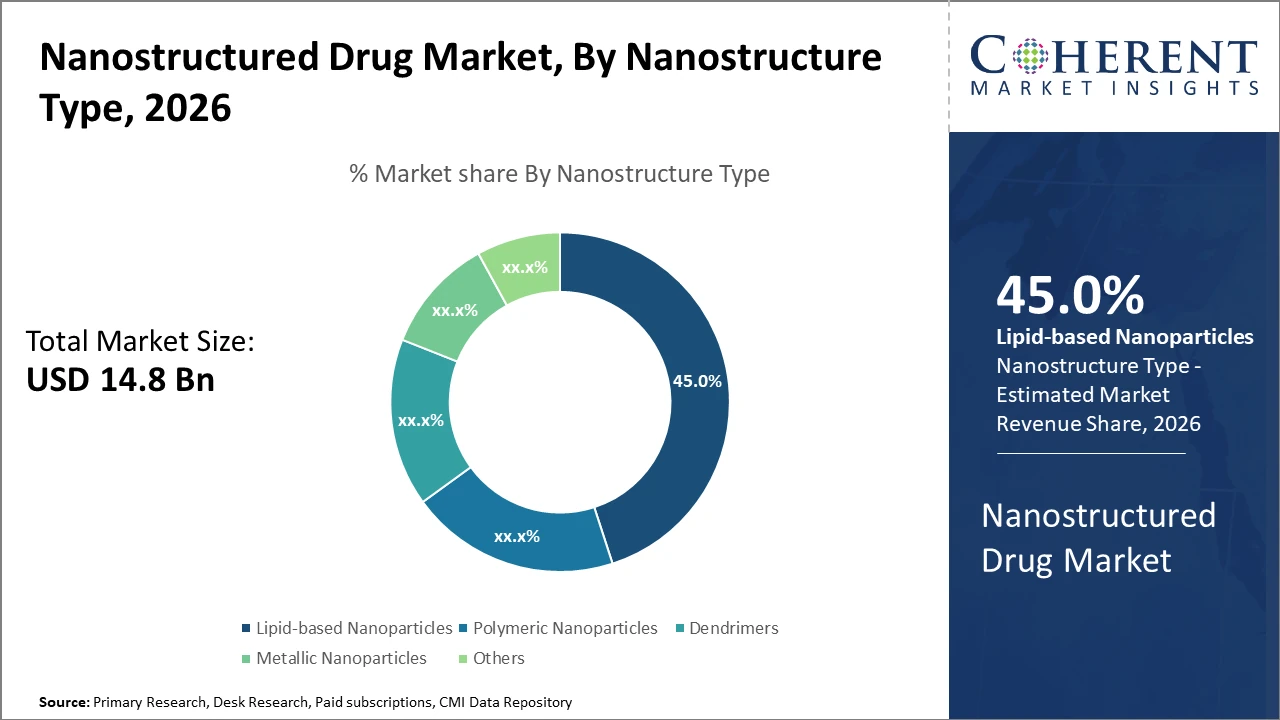
Lipid-based nanoparticles dominate the Nanostructured Drug Market with approximately 45% market share, owing to their proven effectiveness in drug encapsulation, targeted delivery, and broad applicability across multiple therapeutic areas.
Oncology represents the largest application segment, contributing more than 50% of market revenue, driven by the increasing global cancer burden and growing demand for precision-targeted therapies with improved efficacy and reduced side effects.
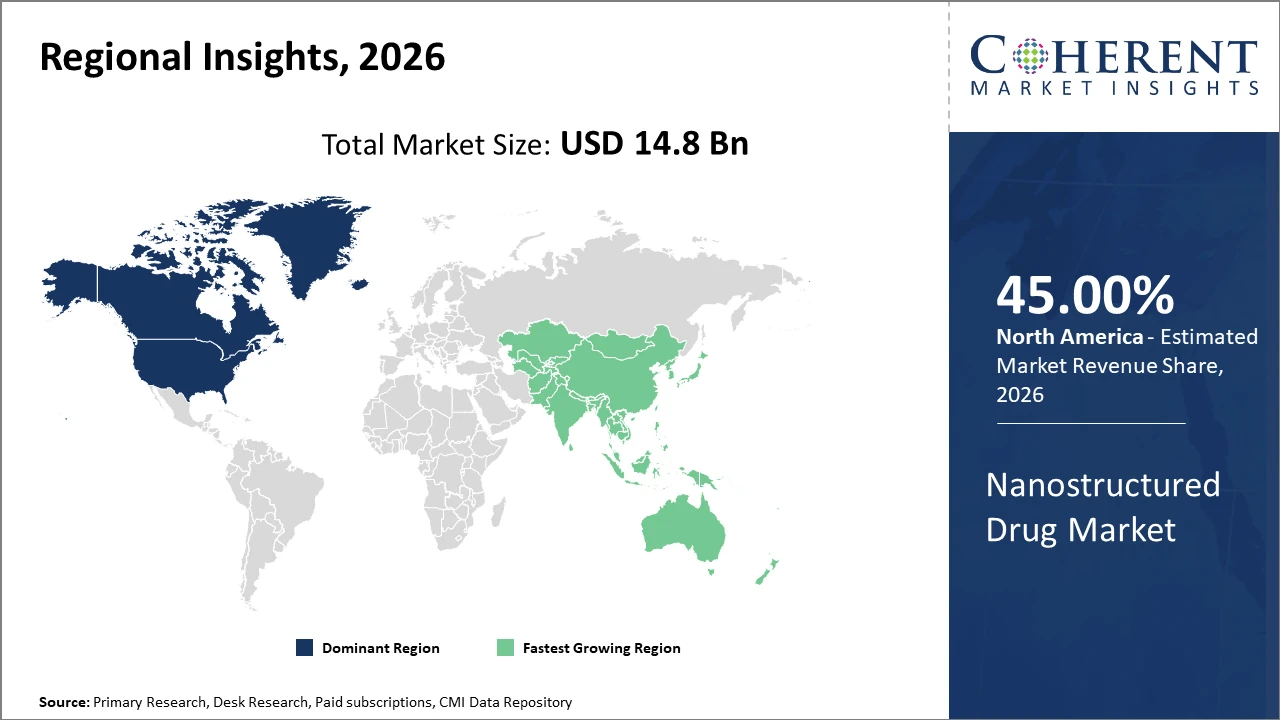
North America leads the global market due to strong research infrastructure, substantial government and private-sector funding, and early adoption of advanced nanomedicine technologies, while Asia Pacific is the fastest-growing region, supported by rising healthcare expenditure, expanding pharmaceutical manufacturing capabilities, and favorable regulatory developments.
Nanostructured Drug Market Segmentation Analysis
Nanostructured Drug Market Insights, By Nanostructure Type
Lipid-based nanoparticles dominate the Nanostructured Drug Market with a 45% share, driven by their excellent biocompatibility, stability, and ability to effectively encapsulate both hydrophobic and hydrophilic therapeutic agents. Their widespread use in mRNA-based therapies, vaccines, and oncology treatments has reinforced their market leadership. Polymeric nanoparticles represent the fastest-growing subsegment, supported by advancements in biodegradable polymers that enable controlled, sustained, and targeted drug delivery, improving therapeutic outcomes. Dendrimers continue to gain attention for their precise molecular architecture and targeted delivery capabilities, while metallic nanoparticles are primarily utilized in diagnostic and theranostic applications.
Nanostructured Drug Market Insights, By Application
Oncology dominates the Nanostructured Drug Market, accounting for the largest share of market revenue due to the increasing adoption of nanoparticle-based targeted therapies and the growing number of clinical trials evaluating advanced nanomedicines for cancer treatment. Significant investments in innovative approaches, including nanoparticle-enabled checkpoint inhibitors, antibody-drug conjugates, and precision oncology therapies, continue to drive market expansion. Infectious diseases represent the fastest-growing application segment, benefiting from heightened interest in nanocarrier technologies following the success of nanoparticle-based vaccines and antiviral therapies. Neurological and cardiovascular applications are also gaining momentum as nanostructured delivery systems improve drug targeting and overcome biological barriers. Other applications, including autoimmune and metabolic disorders, further diversify market opportunities.
Nanostructured Drug Market Insights, By Route of Administration
The oral route dominates the Nanostructured Drug Market due to its convenience, high patient compliance, and cost-effective administration, making it the preferred option for a wide range of therapies. Advances in nano-encapsulation technologies have significantly improved the bioavailability of poorly soluble drugs, expanding the applicability of oral nanomedicines. Parenteral administration is the fastest-growing subsegment, driven by increasing use of intravenous nanoformulations in oncology and infectious disease treatment, where targeted delivery enhances efficacy while minimizing systemic side effects. Transdermal delivery systems utilizing microneedles and nanoemulsions offer promising non-invasive alternatives. Other emerging routes, including inhalation and nasal delivery, are gaining attention for rapid and efficient systemic drug administration.
Nanostructured Drug Market Trends
The convergence of nanotechnology and precision medicine is a major market trend, enabling highly targeted therapies with improved efficacy, reduced toxicity, and personalized treatment outcomes.
AI-driven predictive modeling is transforming nanostructured drug development, reducing formulation development time and experimental costs by nearly 15% since 2024 while accelerating innovation and commercialization.
Growing investment in lipid nanoparticle platforms and biodegradable nanocarriers is driving market expansion, supporting scalable drug delivery systems, enhanced patient safety, and greater sustainability in pharmaceutical development.
Nanostructured Drug Market Insights, By Geography
North America Nanostructured Drug Market Analysis and Trends
North America dominates the Nanostructured Drug Market, with the United States accounting for more than 45% of the regional market share. This leadership is supported by a strong ecosystem of world-class research institutions, extensive federal funding, and rapid adoption of innovative nanomedicine technologies. Major pharmaceutical companies such as Pfizer and Moderna have leveraged advanced nanoparticle platforms to strengthen their market positions and drive revenue growth. Additionally, the regulatory support provided by the U.S. Food and Drug Administration (FDA) through adaptive approval pathways has accelerated product commercialization. High healthcare spending, robust clinical research activity, and strong industry-academic collaboration further reinforce North America’s dominance in the global nanostructured drug market.
Asia Pacific Nanostructured Drug Market Analysis and Trends
The Asia Pacific region is the fastest-growing market for nanostructured drugs, registering a CAGR exceeding 16%. Growth is driven by expanding pharmaceutical manufacturing capabilities, rising healthcare expenditures, and increasing investments in nanotechnology research and development. Countries such as China and India are emerging as major innovation hubs, supported by government incentives, research grants, and international collaborations. The region’s large patient population, increasing prevalence of cancer and chronic diseases, and growing adoption of advanced therapeutics are accelerating demand. Additionally, favorable demographics, improving healthcare infrastructure, and the presence of competitive local pharmaceutical companies continue to strengthen Asia Pacific’s position as a key growth engine for the global nanostructured drug market.
Nanostructured Drug Market Outlook for Key Countries
USA Nanostructured Drug Market Analysis and Trends
The United States represents the largest market for nanostructured drugs, supported by annual investments exceeding USD 2 billion in nanotechnology research and pharmaceutical innovation. Leading companies such as Pfizer and Moderna have played a pivotal role in advancing lipid nanoparticle-based vaccines, gene therapies, and targeted cancer treatments. The country benefits from a mature regulatory environment, extensive clinical trial infrastructure, and strong collaboration between academia, biotechnology firms, and pharmaceutical manufacturers. These advantages accelerate product development and commercialization timelines. Rising demand for precision medicine, coupled with continued investment in advanced drug delivery technologies, positions the U.S. as the global hub for nanostructured drug innovation and market growth.
Germany Nanostructured Drug Market Analysis and Trends
Germany is a leading market for nanostructured drugs in Europe, supported by a strong pharmaceutical industry, advanced research infrastructure, and substantial investments in nanomedicine development. The country benefits from close collaboration between academic institutions, biotechnology firms, and pharmaceutical manufacturers, accelerating innovation in targeted drug delivery systems. Market trends include increasing adoption of nanoparticle-based therapies in oncology, immunology, and rare disease treatment. Germany’s robust regulatory framework and favorable reimbursement environment support the commercialization of advanced nanostructured therapeutics. Growing focus on precision medicine, personalized healthcare, and biologics delivery is further driving demand, while ongoing clinical research continues to expand the scope of nanotechnology-based pharmaceutical applications.
Analyst Opinion
Nanomedicine innovation continues to drive market growth, with approvals of nanostructured drug formulations increasing by 18% in 2025; oncology and infectious disease applications accounted for nearly 60% of new product launches.
Expanded production capacity for lipid nanoparticles and polymeric nanocarriers resulted in a 22% increase in manufacturing output in 2026, while technological improvements reduced production costs by approximately 14%.
Cross-border collaborations and trade activity are accelerating market expansion, with nanostructured drug component trade between the U.S. and China rising by 27% in 2025.
Premium pricing for advanced nanoformulations remains strong, with treatment costs in specialized areas such as targeted oncology therapies increasing by around 8% year over year, reflecting sustained demand and high clinical value.
- Current Industry Events of 2026
- Market Size Estimation
- Regional Breakdown
- Competitive Landscape
- Customer Intelligence
- Segmental Analysis
- Pricing Analysis
- Key Market Drivers, Challenges & Future Trends
- Customized Insights Section
Market Scope
| Report Coverage | Details | ||
|---|---|---|---|
| Base Year: | 2025 | Market Size in 2026: | USD 14.8 billion |
| Historical Data for: | 2020 To 2024 | Forecast Period: | 2026 To 2033 |
| Forecast Period 2026 to 2033 CAGR: | 13.2% | 2033 Value Projection: | USD 36.5 billion |
| Geographies covered: |
| ||
| Segments covered: |
| ||
| Companies covered: | Pfizer Inc., Sanofi SA, Novavax Inc., Moderna Therapeutics, BioNTech SE, NanoCarrier Co. Ltd., BIND Therapeutics Inc., Abzena Inc. | ||
| Growth Drivers: |
| ||
Nanostructured Drug Market Growth Factors
The Nanostructured Drug Market is experiencing strong growth driven by the increasing prevalence of chronic and complex diseases that require highly targeted and effective therapeutic solutions. Research investments exceeding USD 1.2 billion in 2025 have accelerated innovation in nanomedicine and advanced drug delivery technologies. Improvements in nanocarrier platforms have enhanced drug bioavailability, stability, and targeting precision while reducing systemic toxicity, supporting broader clinical adoption. Favorable regulatory frameworks and expedited approval pathways for nanomedicines, particularly in oncology and infectious diseases, continue to strengthen market expansion. Additionally, growing demand for personalized medicine, biologics, and biosimilars is widening application areas, while emerging markets such as India and China are becoming important centers for future growth.
Nanostructured Drug Market Development
In June 2026, scientists developed a biodegradable mesoporous silica nanoparticle-based delivery system for siRNA, enabling targeted cancer cell therapy and effective tumor inhibition.
Key Players
Leading Companies of the Market
Pfizer Inc.
Sanofi SA
Novavax Inc.
Moderna Therapeutics
BioNTech SE
Nanocarrier Co. Ltd.
BIND Therapeutics Inc.
Abzena Inc.
Leading companies in the Nanostructured Drug Market are leveraging strategic partnerships and advanced nanotechnology platforms to strengthen their competitive positions. For example, Moderna expanded its market presence through strategic collaborations with multiple biotechnology firms in 2026, resulting in a 25% increase in nanostructured vaccine production capacity and broader commercialization opportunities. Similarly, Pfizer has utilized advanced lipid nanoparticle (LNP) technologies to expand its oncology and targeted therapeutics pipeline. This strategy enabled the company to penetrate previously underserved markets across North America and Europe, contributing to an estimated 30% year-over-year revenue growth between 2024 and 2026 while reinforcing its leadership in nanomedicine innovation.
Nanostructured Drug Market Future Outlook
The Nanostructured Drug Market is expected to experience robust growth over the coming years, driven by increasing demand for targeted drug delivery systems, personalized medicine, and advanced therapeutics. Expanding applications in oncology, infectious diseases, neurological disorders, and gene therapy will continue to fuel market expansion. Technological advancements in lipid nanoparticles, polymeric nanoparticles, dendrimers, and nanocrystal formulations are expected to improve drug efficacy, safety, and bioavailability. Growing investments in nanomedicine research, favorable regulatory support, and rising pharmaceutical collaborations will further accelerate innovation. Additionally, the increasing adoption of biologics and precision therapies is anticipated to create substantial opportunities for nanostructured drug developers worldwide.
Nanostructured Drug Market Historical Analysis
The Nanostructured Drug Market has evolved significantly over the past two decades, driven by advances in nanotechnology and growing demand for targeted therapeutics. Early development focused on improving the solubility and bioavailability of poorly water-soluble drugs through nanocrystals and liposomal formulations. As research progressed, nanoparticle-based drug delivery systems gained traction in oncology, enabling more precise targeting and reduced systemic toxicity. The commercialization of several nanomedicine products validated the technology’s clinical and economic potential. In recent years, breakthroughs in lipid nanoparticles, particularly for mRNA-based therapies, have accelerated market growth. Continuous innovation, expanding clinical applications, and increasing pharmaceutical investment have established nanostructured drugs as a key segment of modern medicine.
Sources
Primary Research Interviews:
Pharmaceutical manufacturers, biotechnology companies, drug delivery technology providers, contract research organizations (CROs), contract development and manufacturing organizations (CDMOs), hospital pharmacists, and supply chain managers involved in nanostructured drug development, manufacturing, and commercialization.
Nanotechnology researchers, pharmaceutical scientists, clinical trial investigators, regulatory consultants, formulation experts, toxicologists, and R&D directors specializing in nanoparticle drug delivery systems, nanomedicine, lipid nanoparticles, polymeric nanoparticles, and precision therapeutics.
Magazines:
Pharmaceutical Executive – Coverage of pharmaceutical innovation, nanomedicine developments, and drug commercialization strategies.
Drug Discovery & Development – Insights into emerging drug delivery technologies, clinical research, and pharmaceutical R&D trends.
BioPharm International – Updates on biologics, nanotechnology-based formulations, manufacturing advancements, and regulatory developments.
Journals:
International Journal of Nanomedicine – Research on nanoparticle therapeutics, targeted drug delivery, and clinical applications of nanotechnology.
Journal of Controlled Release – Studies on controlled-release formulations, nanocarriers, and advanced pharmaceutical technologies.
Nanomedicine: Nanotechnology, Biology and Medicine – Research covering nanostructured therapeutics, translational medicine, and clinical advancements.
Newspapers:
Financial Times – Coverage of pharmaceutical investments, biotechnology partnerships, and healthcare innovation trends.
Reuters – Reporting on drug approvals, clinical trial outcomes, pharmaceutical mergers, and regulatory updates.
Bloomberg – Insights into pharmaceutical company performance, nanomedicine investments, and global healthcare markets.
Associations:
Controlled Release Society (CRS) – Research, standards, and educational resources related to advanced drug delivery technologies.
American Association of Pharmaceutical Scientists (AAPS) – Scientific guidance, research publications, and industry developments in drug formulation and delivery.
European Federation for Pharmaceutical Sciences (EUFEPS) – Research collaboration, regulatory insights, and innovation support in pharmaceutical and nanomedicine development.
Get access to 250+ pages report
Every segment, forecast, competitor profile and data table behind the analysis above — available for instant download.
- ESOMAR Member
- ISO 9001:2015 Certified
- D-U-N-S Registered
- GDPR & CCPA Compliant
Missing comfort of reading report in your local language? Find your preferred language:
Transform your Strategy with Exclusive Trending Reports
Frequently Asked Questions
The market is led by major innovators such as Moderna, Pfizer, NanoCarrier Co., Ltd., BioNTech SE, and Novavax, Inc.. These companies maintain strong market positions through continuous innovation, strategic partnerships, and expansion of nanotechnology-based therapeutic portfolios.
The market is projected to grow from USD 14.8 billion in 2026 to approximately USD 36.5 billion by 2033, registering a strong CAGR of 13.2% during the forecast period.
Oncology represents the largest growth opportunity due to the increasing global cancer burden and the effectiveness of nanostructured drug formulations in targeted drug delivery, improved efficacy, and reduced systemic toxicity.
Future market trends will center on multifunctional nanocarriers, AI-assisted drug discovery and formulation development, precision medicine applications, and streamlined regulatory pathways that accelerate commercialization of advanced nano formulations.
The market is highly competitive, characterized by substantial R&D investments, strategic collaborations, licensing agreements, and patent activity. Key challenges include high development and manufacturing costs, scalability concerns, and evolving regulatory requirements.
Companies commonly pursue strategic alliances, co-development partnerships, technology licensing agreements, regional expansion initiatives, and investments in local manufacturing capabilities to strengthen market presence and capitalize on regulatory and production advantages.