

North America Air Conditioning Systems Market Size and Forecast - 2026-2033
North America Air Conditioning Systems Market is estimated to be valued at USD 39,166.9 Mn in 2026 and is expected to reach USD 52,802.9 Mn in 2033, exhibiting a compound annual growth rate (CAGR) of 4.4% from 2026 to 2033.
Key Takeaways
- By Product Type, Splits Segment leads the North America Air Conditioning Systems Market. This is due to its energy efficiency, ease of installation, and cost-effectiveness for residential and small commercial spaces.
- North America air conditioner market is expected to be driven on the account of different end use applications from different sectors and diverse weather circumstances.
Market Overview
The North American air conditioning system market is growing steadily as temperatures rise, climate change becomes a threat, and the need for energy-efficient systems increases. With industries and households seeking methods to enhance indoor comfort and reduce energy consumption, HVAC (Heating, Ventilation, and Air Conditioning) technology is becoming more advanced. Air conditioning systems are increasingly being equipped with the latest features in the form of smart technology, AI-based temperature control, and energy management systems.
For example, Carrier Global has made a USD 1 billion investment in increased production and manufacturing capacity in 2024 in the wake of increasing demand for energy-efficient heating, ventilation, and air conditioning systems. The company plans to increase its offerings with cutting-edge technology to facilitate faster production and greener solutions.
Current Events and Its Impact on the North America Air Conditioning Systems Market
Current Events | Description and its impact |
North American Expansion of Air Conditioning Manufacturing Capacity
|
|
Adoption of Smart and Energy-Efficient Air Conditioning Technologies
|
|
Integration of Smart features and AI
The inclusion of intelligent features and artificial intelligence technologies in the air conditioning system market in North America is revolutionizing the design and operation of HVAC systems. These technologies are aimed at improving energy efficiency, performance optimization, and comfort for users. Intelligent air conditioners incorporate features such as remote control via smartphones, voice control using smart assistants (such as Amazon Alexa or Google Assistant), and predictive maintenance based on AI algorithms. This enables users to track and regulate the temperature, humidity, and energy consumption remotely, minimizing wastage of energy and lowering bills.
AI integration allows systems to learn from patterns of use and modify operating schedules to provide peak performance with minimal human intervention. Machine learning software can forecast when a system would need maintenance, minimize downtime and maximize equipment longevity. Additionally, sophisticated sensors can monitor air quality, humidity, and temperature variations, automatically fine-tuning settings to ensure optimal indoor conditions.
In June 2025, Samsung Electronics Co., Ltd. announced the launch of its new system air conditioner (SAC) lineup in Southeast Asia and Oceania, marking a significant move to strengthen its foothold in the region’s rapidly growing climate solutions market.
- Current Industry Events of 2026
- Market Size Estimation
- Regional Breakdown
- Competitive Landscape
- Customer Intelligence
- Segmental Analysis
- Pricing Analysis
- Key Market Drivers, Challenges & Future Trends
- Customized Insights Section
Pricing Analysis
The cost of air conditioning units in North America is determined by a number of factors, such as technological innovations, energy efficiency levels, brand name, and regulatory standards. The cost of residential air conditioning units in North America averaged $3,000 to $7,000 for a typical central air unit in 2024, depending on the capacity and the features of the system.
More advanced systems with intelligent technologies, like AI-enhanced energy optimization, voice command, and sophisticated filtration systems, may cost more than $10,000 or even higher.
High SEER-rated energy-efficient models are more expensive because they save money on electricity costs in the long run. For commercial buildings, larger HVAC systems can cost between $10,000 and $50,000, depending on building size, complexity, and whether advanced features such as smart zoning and predictive maintenance are included.
On top of the system cost, installation fees contribute a substantial amount, often 15-25% of the system price, based on the installation complexity and level of customizations. Policy-related issues, like the transition to environmentally friendly refrigerants (e.g., R-32), also have an effect on prices as manufacturers design around changes in standards.
North America Air Conditioning Systems Market Drivers
- Rising demand for energy-efficient products
A large base of consumers in North America is replacing their old air conditioning systems with models of lower energy consumption and contributing to a decrease in the electricity bill. This is normally attributed to the presence of energy-efficient products available in the market. Additionally, central air conditioning devices are likely to encounter strict regulatory standards in the U.S., with 'Energy Star' being a requirement. Because consumers are becoming more and more energy-conscious, the growth for energy-efficient air conditioning systems is on the rise.
For example, the residential air conditioning system in America consumes over 8% of the electricity generated in America. Therefore, all these aspects are likely to fuel growth in the North America air conditioning systems market over the forecast period.
- Increased growth of the construction industry
The construction and building sector in North America have experienced tremendous growth in the last few years. This is due to increased demand for new homes. Increase in building permits for office construction, malls, and industrial complexes are driving the demand for air conditioning equipment.
Additionally, as per the analysis of Coherent Market Insights, commercials buildings are anticipated to increase at a growth rate of 8% over the forecast period. Therefore, these factors are anticipated to propel the market growth in the near future.
North America Air Conditioning Systems Market Opportunities
- Growing replacement demand within the region can offer attractive growth opportunities
Increasing consumption of energy and growing environmental concerns are the drivers behind the necessity to replace the traditional air conditioners in the North American region. The government stringent regulations against greener products will provide the manufacturers of air conditioners an opportunity to substitute the current models with toxic refrigerants like HCFC-22 and HFC.
The new models that are designed and developed using energy efficiency will use less power and enable the consumers to cut down on their electricity bill. The models bearing 'Energy Star' accreditation will use half the amount of power compared to the traditional models.
In 2024, Carrier Global launched a line of air conditioners using eco-friendly refrigerants like R-32, replacing the traditional HCFC-22, in response to regulatory pressures. Similarly, Trane Technologies introduced Energy Star certified systems that consume up to 50% less energy than conventional models. These innovations align with growing environmental concerns and governmental push for greener alternatives.
- Availability of cutting-edge features can offer significant business opportunities
Several manufacturers are offering new features like a pervasive sensor network for intelligent cooling humidity control employing automatic humid control. These features assist to offer personalized temperature and humidity, harmonizing the ambient nature. Market participants can take advantage of these opportunities by offering new products and obtain a competitive advantage in the marketplace.
North America Air Conditioning System Market Trends
- Raw material procurement
Various raw materials are needed in the process of manufacturing air conditioning systems, including steel, plastic, copper, and aluminium. The growing cost of raw materials can lead to a cut in profit for the manufacturers. The raw materials are employed in the process of manufacturing various parts like compressors, evaporators, fan coils, and condensers.
The need for energy-saving and technologically enhanced products has created the specialized demand for raw materials that are critical in the value chain of air conditioning systems. The increase in demand in the air conditioning systems market is driving the manufacturers to the suppliers of raw materials and components in the market.
In 2024, Trane Technologies experienced increased prices of key materials such as copper and aluminum, which are used in making components such as compressors and coils, impacting their cost of production. Likewise, Carrier Global experienced higher operational costs due to the escalating prices of steel and plastic utilized in HVAC systems. These supply chain disruptions reflect the increasing dependence on raw materials as demand for efficient air conditioning systems increases.
Segmental Insights
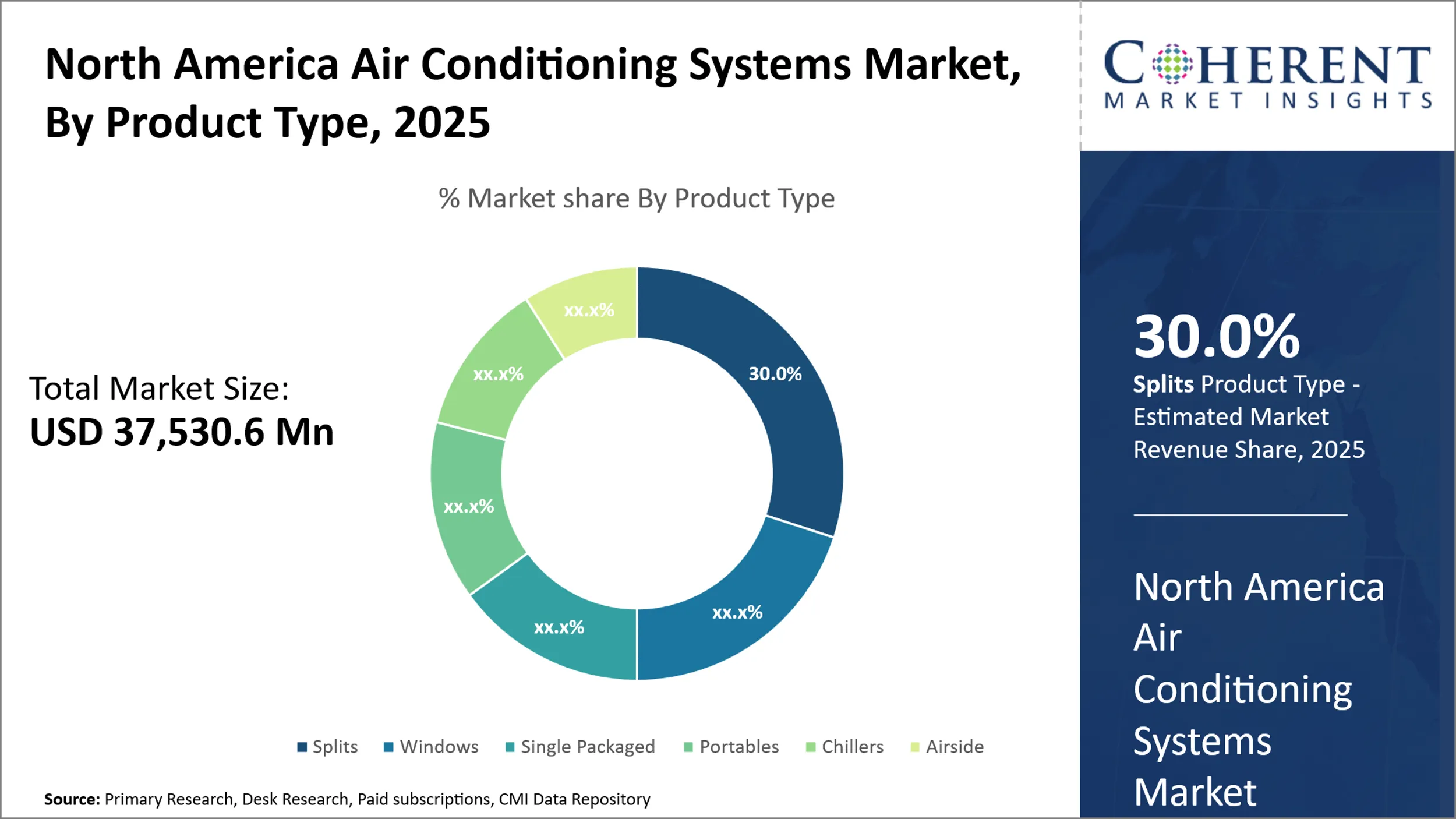
North America Air Conditioning System Market Insights, By Product Type - splits segment lead the market
Based on product type splits segment lead the market due to its energy efficiency, ease of installation, and cost-effectiveness for residential and small commercial spaces. These systems offer zoned cooling, allowing users to control temperatures in individual rooms, which is ideal for diverse climate zones across the U.S. and Canada. Technological advancements like inverter compressors and smart controls have boosted their appeal.
North America Air Conditioning System Market: Regional Insights
The regional market North America air conditioner is expected to be driven on the account of different end use applications from different sectors and diverse weather circumstances. Demand for air conditioners in North America is estimated at the rate of CAGR of over 4.16% from 2026 to 2032. Traditional air conditioning systems that consume significant energy are expected to be replaced by products that consume less energy.
Market Report Scope
North America Air Conditioning System Market Report Coverage
| Report Coverage | Details | ||
|---|---|---|---|
| Base Year: | 2025 | Market Size in 2026: | USD 39,166.9 Mn |
| Historical Data for: | 2020 To 2024 | Forecast Period: | 2026 To 2033 |
| Forecast Period 2026 to 2033 CAGR: | 4.4% | 2033 Value Projection: | USD 52,802.9 Mn |
| Geographies covered: |
| ||
| Segments covered: |
| ||
| Companies covered: | Daikin Industries Ltd., Carrier, Goodman, Lennox, Panasonic, Ingersoll Rand, LG Electronics, Samsung Electronics, Mitsubishi Corporation, and Hitachi Ltd. | ||
| Growth Drivers: |
| ||
| Restraints & Challenges: |
| ||
North America Air Conditioning System Market: Key Developments
- In May 2024, Lennox International and Samsung formed a joint venture to provide HVACR products, including ductless and ducted air conditioners and heat pumps, to consolidate their market position in North America.
- In October 2024, Rheem Manufacturing Company finalized the acquisition of Nortek Global HVAC (NGH) from Madison Industries. NGH, which has been in existence since 1919, is a leading global manufacturer of heating and cooling products that cater to the residential and manufactured housing markets. Through this acquisition, NGH has joined Rheem's Global Air Division, adding to the strength of Rheem's portfolio within the HVAC industry.
North America Air Conditioning System Market: Key Companies Insights
The North America Air Conditioning System Market is highly competitive. This is attributed to continuous launch of new technologies due to ongoing R&D and efforts by value chain participants. Moreover, key players are adopting various business growth strategies in order to expand their presence on regional as well as global basis.
Some of the key players in the North America Air Conditioning System are Daikin Industries Ltd., Carrier, Goodman, Lennox, Panasonic, Ingersoll Rand, LG Electronics, Samsung Electronics, Mitsubishi Corporation, and Hitachi Ltd.
Analyst View
- The North America air conditioning systems industry is influenced by changing regulatory environments, technological advancements, and changing consumer attitudes. Incentives are provided by strict energy efficiency regulations, which are driving growth in the inverter-based and solar-integrated systems adoption.
- Extremes of weather and rising temperatures in urban areas are increasing demand for effective cooling solutions, especially in areas that have traditionally had temperate climates. In addition, the incorporation of smart HVAC technologies like IoT-based diagnostics and AI-based load management is optimizing system performance and customer convenience.
- Prospects are in retrofitting mature residential and commercial systems with energy-efficient replacements, a market that is set to expand as building codes evolve. Decentralized cooling technologies, such as ductless mini-splits, meet urban demand where space is limited. Integrating renewable energy, solar-assisted systems in particular, provides a means of lowering operating expenditures and meeting sustainability objectives.
- The most dominant markets are the U.S. Sun Belt and high-density urban regions, where cool demand converges with disposable income. New opportunities in colder northern markets are fueled by multifunction heat pump penetration, erasing seasonal demand patterns. Commercial applications such as data centres and healthcare are placing higher emphasis on precision cooling systems, building niche growth opportunities.
Market Segmentation
- North America Air Conditioning Systems Market, By Product Type (Revenue, USD Mn, 2021 - 2033)
- Portables
- Windows
- Split
- Single Packaged
- Chillers
- Airside
- North America Air Conditioning Systems Market, By (Revenue, USD Mn, 2021 - 2033) End user
- Residential
- Commercial
- Construction
- Tourism and Hotel Industry
- Tents: New End Use Segment
- Others
- Industrial
- North America Air Conditioning Systems Market, By Country (Revenue, USD Mn, 2021 - 2033)
- U.S.
- Canada
- Company Profiles
- Daikin Industries Ltd.
- Carrier
- Goodman
- Lennox
- Panasonic
- Ingersoll Rand
- LG Electronics
- Samsung Electronics
- Mitsubishi Corporation
- Hitachi Ltd
Sources
Primary Research interviews
- Carrier Corporation executives
- Mitsubishi Electric HVAC engineering team
- Daikin Industries Ltd product managers
- LG Electronics cooling solutions division
- Others
Magazines
- HVACR Business Magazine
- ACHR News (Air Conditioning, Heating & Refrigeration)
- Engineered Systems Journal
- Contractor Magazine
- Others
Journals’
- International Journal of Refrigeration
- ASHRAE Journal
- Energy and Buildings Journal
- Others
Newspapers
- The Wall Street Journal (Energy & HVAC trends)
- The New York Times (Climate technology section)
- USA Today (Consumer electronics coverage)
- Others
Associations
- Air-Conditioning, Heating & Refrigeration Institute (AHRI)
- American Society of Heating, Refrigerating and Air-Conditioning Engineers (ASHRAE)
- Energy Efficiency Alliance
- Others
Public Domain sources
- U.S. Department of Energy efficiency reports
- ENERGY STAR certification databases
- Environmental Protection Agency (EPA) refrigerant guidelines
- U.S. Census Bureau construction spending data
- Others
Proprietary Elements
- CMI Data Analytics Tool
- Proprietary CMI Existing Repository of information for last 8 years
*Definition
Air conditioning is the process of removing heat and moisture from the interior, in order to improve the comfort of occupants. Air conditioning can be used in both commercial and domestic environments. Furthermore, air conditioning is also used in cooling and dehumidifying electronic devices such as computer servers, power amplifiers, and other delicate products
Get access to 250+ pages report
Every segment, forecast, competitor profile and data table behind the analysis above — available for instant download.
- ESOMAR Member
- ISO 9001:2015 Certified
- D-U-N-S Registered
- GDPR & CCPA Compliant
Missing comfort of reading report in your local language? Find your preferred language:
Transform your Strategy with Exclusive Trending Reports
Frequently Asked Questions
The North America Air Conditioning Systems Market size is estimated to be valued at USD 39,166.9 Mn in 2026, and is expected to reach USD 52,802.9 Mn by 2033.
The CAGR of the North America Market is projected to be 4.4% from 2026 to 2033.
Residential segment held the major market share in 2026. Residential air conditioner systems are smaller and simpler compared to their commercial and industrial counterparts.
Major factor driving the market during the forecast period is increasing demand for energy-efficient products.
Major factors hampering the market during the forecast period constitutes rising energy consumption and effect of environment.
US air conditioning systems market is expected to generate the highest revenue during the forecast period.
Some of the key players operating in the market are Daikin Industries Ltd., Carrier, Goodman, Lennox, Panasonic, Ingersoll Rand, LG Electronics, Samsung Electronics, Mitsubishi Corporation, and Hitachi Ltd.