

Global Pancreatic Cancer Therapeutics and Diagnostic Market Analysis
The Global Pancreatic Cancer Therapeutics and Diagnostic Market size was valued at USD 3,966.3 Mn in 2026 and is forecast to reach a value of USD 6,580.3 Mn by 2033 at a (CAGR) of 7.5% between 2026 and 2033.
Key Takeaways
- By Type, The Treatment Segment is expected to dominate the pancreatic cancer therapeutics and diagnostics market outlook with an 81.7% share by 2026, driven by increasing adoption of advanced therapies and combination treatment regimens.
- By Region, North America is projected to lead the global market with a 38.9% share by 2026, supported by advanced healthcare infrastructure, high disease prevalence, and strong R&D investments.
Market Overview
The global pancreatic cancer therapeutics and diagnostic market forecast is experiencing strong growth due to the rise in incidence and prevalence of pancreatic cancer and rise in development of novel therapeutics. Moreover, growing geriatric population around the world and rise in demand for safe and effective therapeutics is expected to boost the growth of the market. However, factors such as stringent rules and regulations and high cost associated with diagnosis and treatments are expected to hamper the growth of the market.
Current Events and Its Impact on the Global Pancreatic Cancer Therapeutics and Diagnostic Market
Event | Description and Impact |
Major Regulatory Approvals and Clinical Trial Advancements |
|
Diagnostic Technology Breakthroughs |
|
Strategic Industry Collaborations |
|
Pipeline Analysis
The pancreatic cancer therapeutics and diagnostics pipeline is robust, featuring several promising candidates across various clinical trial phases. Key molecules under development by leading innovators are outlined below:
Therapeutics Pipeline:
- SM-88 (Tyme Technologies) — Phase 2/3 clinical trials exploring its novel mechanism targeting cancer metabolism.
- Napabucasin (BBI-608) (Boston Biomedical) — Currently in Phase 3, focusing on cancer stem cell inhibition to improve survival outcomes.
- Pamrevlumab (FG-3019) (FibroGen) — In Phase 3, this anti-fibrotic agent aims to enhance chemotherapy efficacy in pancreatic cancer.
- Masitinib (AB Science) — A Phase 3 tyrosine kinase inhibitor targeting tumor microenvironment and inflammation.
- Devimistat (CPI-613) (Rafael Pharmaceuticals) — Phase 3 trials assessing its role in disrupting cancer cell metabolism.
- NUC-1031 (Acelarin) (NuCana) — Undergoing Phase 3 evaluation as an improved nucleoside analog for pancreatic cancer treatment.
Diagnostics Pipeline:
- IMMray PanCan-d (Immunovia) — Under clinical validation, this blood-based test aims to improve early detection.
- PancraGEN (Interpace Biosciences) — Commercially available molecular test aiding in pancreatic cyst risk stratification.
- Oncuria (Arquer Diagnostics) — In clinical validation for non-invasive cancer detection through urine biomarkers.
- CancerSEEK (Thrive Earlier Detection / Exact Sciences) — Clinical validation ongoing for multi-cancer early detection including pancreatic cancer.
- UroPanc (Immunomic Therapeutics) — In clinical development phase, targeting early diagnostic biomarkers.
- PanCystPro (Immunovia) — Clinical development focused on cyst fluid molecular profiling to differentiate malignant from benign cysts.
This pipeline snapshot reflects dynamic progress in both therapeutic and diagnostic innovation aimed at improving early detection, personalized treatment, and patient outcomes in pancreatic cancer. The landscape continues to evolve as these candidates advance through clinical and regulatory milestones.
- Current Industry Events of 2026
- Market Size Estimation
- Regional Breakdown
- Competitive Landscape
- Customer Intelligence
- Segmental Analysis
- Pricing Analysis
- Key Market Drivers, Challenges & Future Trends
- Customized Insights Section
Patent Landscape
The therapeutics and diagnostics market for pancreatic cancer showcases vigorous innovation from competition which is indicative of a very strong patent prospect. Areas of active patent applications include:
- Targeted Therapeutics: Innovations in small molecules and biologics directed at genetic modifiers like KRAS and BRCA as well as metabolic pathways. Are included in multiple patents.
- Immunotherapy Innovations: Immune stimulators aimed at promoting the body’s response against pancreatic tumors have been protected through significant patent filings, including checkpoint immunotherapy, cell-based cancer vaccines, and adoptive immunotherapy.
- Diagnostic Technologies: Increasing patent protection for liquid biopsy techniques such as ctDNA and CTC, along with molecular profiling and biomarker panel advancements, are growing.
- Artificial Intelligence And Machine Learning: The use of AI algorithms for image diagnostic and ex-understanding imaging aids, as well as tailored requirement prescriptions, are under more and more patents.
- Drug Delivery Systems: Patents are provided on these systems because of substantial improvement posited to the therapeutic index and reduction of systemic toxicity side effects caused.
Pharmaceutical, biotech, and diagnostic companies fiercely compete with one another as major patent holders like Roche, Novartis, Amgen, Illumina and Thermo Fisher Scientific emerges. Ostensibly, the rise in patent applications over the past three years demonstrates the sector's focus on self-driven technology advancement and high attention strategically geared towards personalized medicine.
Roughly speaking, the patent landscape is indicative of a strong clinical management innovation pipeline that is likely to alter pancreatic cancer treatment and profoundly shift the market.
Reimbursement Scenario
The reimbursement framework of pancreatic cancer therapeutics and diagnostics incorporates critical coding constituents like ICD-10-CM (C25 for pancreatic cancer), CPT (e.g., 48150 for pancreatectomy), and HCPCS (e.g. J9999 for antineoplastic agents). Such codes assist in billing and claims processing within the healthcare systems.
These U.S. reimbursement rates are set by the Centers for Medicare & Medicaid Services (CMS), with Medicare entitled to reimburse hospital admissions, medical care, and FDA-authorized chemotherapy. In 2020, Medicare was estimated to have spent around $2.5 billion on managing pancreatic cancer, generally covering 80% of the approved expenses post deductibles.
Private insurers in the U.S. reported spending approximating $3.8 billion in 2020, each offering different coverage based on their plan types which include PPOs, HMOs, and HDHPs. Coverage is typically provided between 60 to 90 % post deductibles and copayments.
NICE assesses cost efficacy and recommends coverage to the NHS in the UK. Grasping reimbursement codes, processes, and insurance variation is pivotal to improving patient access and aiding in the growth of the market and services available for pancreatic cancer care.
Prescribers’ Preference
When prescribing diagnostic and therapeutic options for pancreatic cancer, clinicians often choose from treatment frameworks that are clinically effective and incorporate a patient access pathway so as to minimize out-of-pocket expenses for patients.
- Preferred Treatment: Oncologists and other medical practitioners demonstrate a strong inclination towards FDA-approved chemotherapy and targeted therapy options that have been assigned reimbursement codes, including but not limited to CPT 48150 for surgical procedures and antineoplastic agents like J9999. Also, Medicare Part D and private insurance significantly determine the choices of these prescribers, who, in any case, prefer predictable reimbursement patterns with low, out-of-pocket expenses for patients.
- Preferred Diagnosis: Diagnostics that are performed within reimbursable procedures (surgical pathology CPT 88305 and more advanced imaging or tumor embolization procedures HCPCS S2095) are preferred. A number of diagnosic tools have been validated by payers as well as endorsed by other authoritative bodies like NICE in the UK where cost-effectiveness evaluations determine NHS coverage.
- Impact of Insurance Policies: Provider choice is impacted by the insurance system where Medicare’s inclusive payment to healthcare providers for pancreatic cancer care and the range of private insurance plans (PPO, HMO or HDHP) offer access and adherence challenges. Providers integrate clinical necessities and reimbursement challenges which may include prior authorization, financial burden, and other payment windows from various payers, including patients.
- Local Differences: In North American markets, prescribers are incredibly reliant on reimbursement (or payment) coding already done for services by CMS, unlike Europe, where adherence to guidelines issued by NICE elevates highly cost-effective therapies and diagnostics.
For stakeholders looking to assist prescribers and foster more proactive involvement in the management of pancreatic cancer, these approaches in reimbursement strategies supporting specific preferences outline their expectations.
Segmentation Analysis
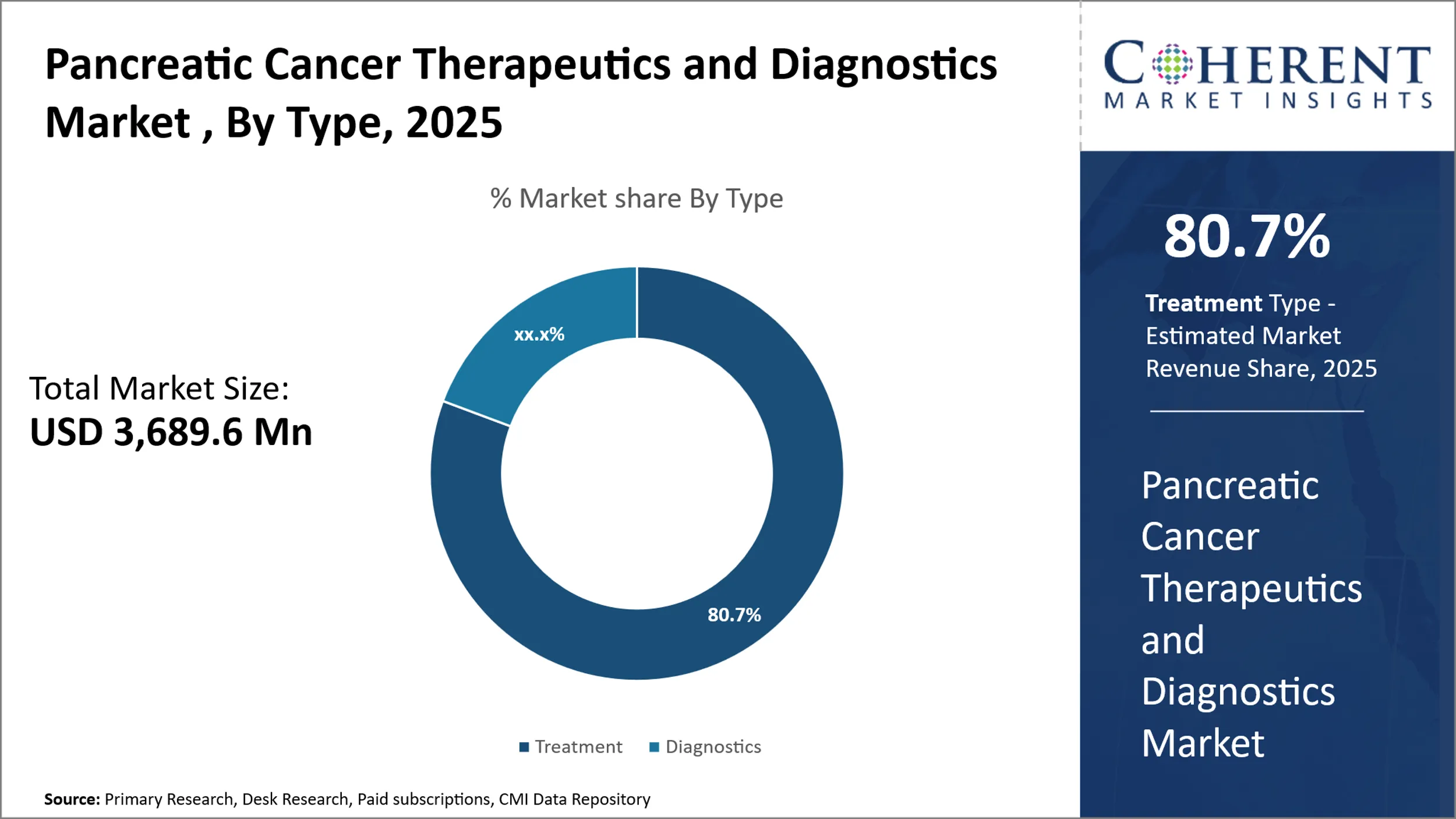
Global Pancreatic Cancer Therapeutics and Diagnostic Market Insights, By Type
In terms of type, the Treatment segment is expected to dominate the pancreatic cancer therapeutics and diagnostics market demand with 81.7% in 2026, driven by the rising global demand for safe and effective treatment options. Increasing awareness about novel therapies, coupled with advancements in targeted drugs and immunotherapies, is accelerating adoption across healthcare systems worldwide. Leading pharmaceutical companies are focusing on developing precision treatments that improve patient outcomes while minimizing adverse effects.
The Diagnostics segment is also poised for significant growth, propelled by the escalating burden of pancreatic cancer globally. Early and accurate diagnosis remains critical for improving survival rates, leading to increased utilization of advanced imaging technologies, molecular diagnostics, and biomarker tests. Innovations aimed at enhancing diagnostic accuracy and accessibility are expanding the scope of pancreatic cancer detection and monitoring, thereby strengthening this segment’s market share.
Global Pancreatic Cancer Therapeutics and Diagnostic Market – Regional Analysis
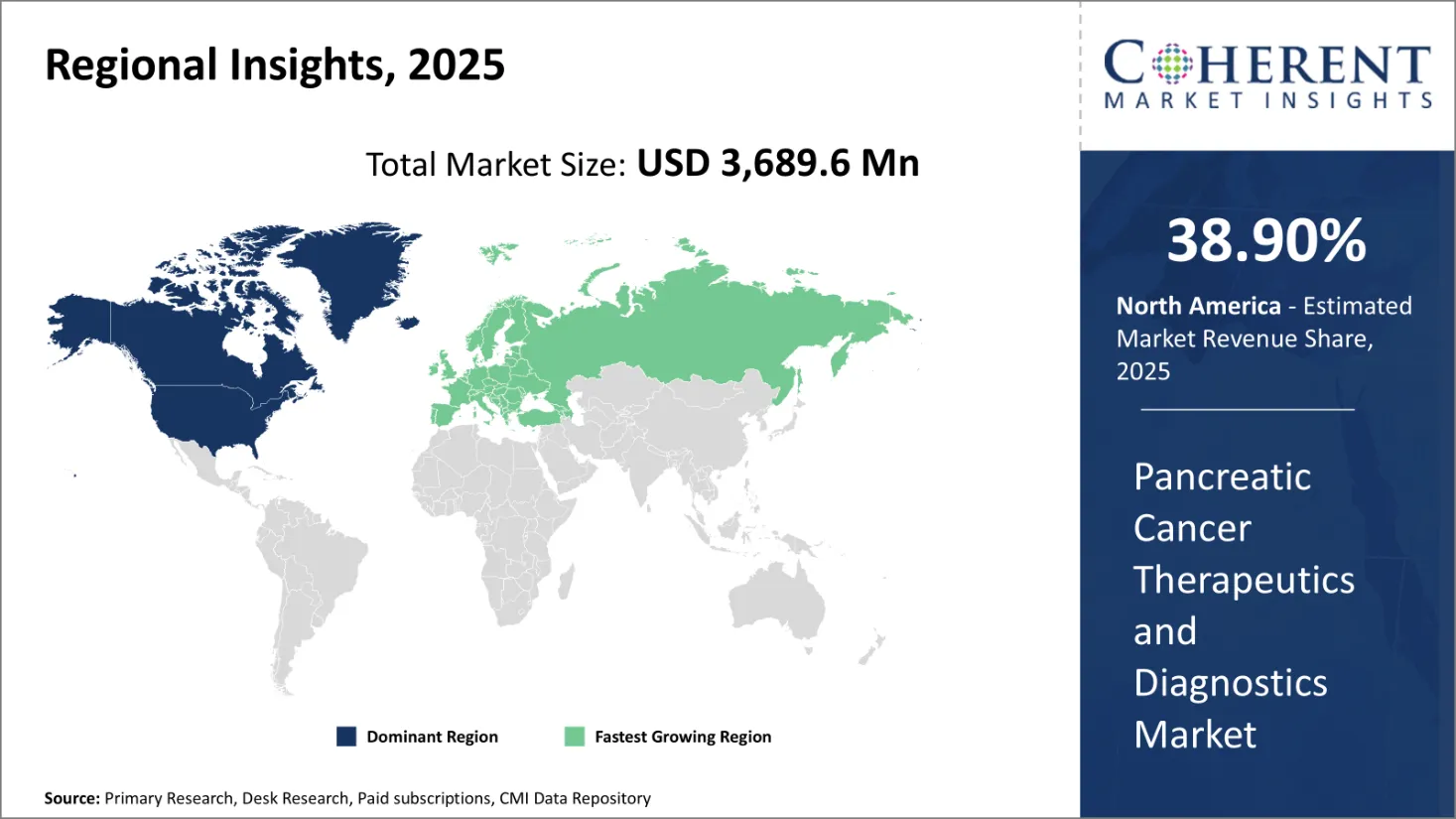
North America Pancreatic Cancer Therapeutics and Diagnostics Market Analysis and Trends
North America is projected to dominate the global pancreatic cancer therapeutics and diagnostics market growth with 38.9% share in 2026, driven by a combination of high disease prevalence, advanced oncology care infrastructure, and strong pharmaceutical R&D activity. The region continues to lead in the adoption of cutting-edge diagnostic imaging, biomarker-based screening, and precision oncology therapies. According to the American Cancer Society, over 62,000 new cases of pancreatic cancer were reported in the U.S. in 2022, with nearly 50,000 deaths—highlighting a critical need for timely diagnosis and effective treatment strategies.
Healthcare institutions in North America benefit from robust clinical trial networks, favorable reimbursement policies, and significant public funding for cancer research. Ongoing collaboration between regulatory authorities, academic research centers, and private manufacturers supports rapid innovation and improved patient outcomes.
Europe Pancreatic Cancer Therapeutics and Diagnostics Market Analysis and Trends
Europe is expected to hold the second-largest share of the global pancreatic cancer therapeutics and diagnostics market trend in 2026, underpinned by a rising disease burden, progressive public health strategies, and growing demand for precision medicine. According to United European Gastroenterology, pancreatic cancer now causes over 90,000 deaths annually across the EU, with mortality rates nearly doubling over the past 30 years.
The region benefits from structured cancer care pathways, expanding access to diagnostic innovations, and coordinated research funding at both national and EU levels. Increasing integration of molecular diagnostics and personalized treatment plans is strengthening Europe’s clinical response to pancreatic cancer.
Asia Pacific Pancreatic Cancer Therapeutics and Diagnostics Market Analysis and Trends
Asia Pacific is anticipated to be the fastest-growing region in the global pancreatic cancer therapeutics and diagnostics market through 2026. The region’s growth is driven by increasing cancer incidence, rapid improvements in healthcare accessibility, and rising awareness around early detection. Countries across Asia Pacific are scaling up investments in oncology infrastructure, national screening programs, and data-driven cancer registries.
Efforts to enhance diagnostic coverage, combined with the presence of both domestic and multinational pharma companies, are fueling clinical advancements. Expansion of medical insurance schemes and public-private partnerships are also improving access to pancreatic cancer care.
Market Report Scope
Pancreatic Cancer Therapeutics and Diagnostic Market Report Coverage
| Report Coverage | Details | ||
|---|---|---|---|
| Base Year: | 2025 | Market Size in 2026: | USD 3,966.3 Mn |
| Historical Data for: | 2020 To 2024 | Forecast Period: | 2026 To 2033 |
| Forecast Period 2026 to 2033 CAGR: | 7.5% | 2033 Value Projection: | USD 6,580.3 Mn |
| Geographies covered: |
| ||
| Segments covered: |
| ||
| Companies covered: | F Hoffmann-La Roche AG, Merck KgaA, Apexigen Inc., Immunovia AB, Viatris Inc., Amgen Inc., AstraZeneca PLC, Bristol-Myers Squibb, Novartis AG, Pfizer Inc., Myriad Genetics Inc., Canon Medical Systems Corporation, FUJIFILM Holdings Corporation, Boston Scientific Corporation, and Rafael Holdings Inc. (Rafael Pharmaceuticals), among others. | ||
| Growth Drivers: |
| ||
| Restraints & Challenges: |
| ||
Global Pancreatic Cancer Therapeutics and Diagnostic Market Drivers:
- Growing burden of pancreatic cancer to underpin market growth
One of the key factors expected to augment the growth of the global pancreatic cancer therapeutics and diagnostic market over the forecast period is the rise in incidence and prevalence of pancreatic cancer around the world. According to the World Cancer Research Fund, pancreatic cancer is the 12th most common cancer across the globe, and it is the 12th most common cancer in men and the 11th most common cancer in women. Over 495,000 new cases of pancreatic cancer were diagnosed in 2020, increasing the demand for effective therapeutics and diagnostics.
- Increase in development of novel therapeutics to augment market growth
Another factor which is driving the growth of the pancreatic cancer therapeutics and diagnostic market is the rise in development of novel therapeutics. Owing to increase in burden of pancreatic cancer worldwide and increase in awareness among people, players in the market are focusing on developing and launching novel therapeutics in the market.
In January 2022, Marker Therapeutics Inc. announced that the U.S. Food and Drug Administration (USFDA) Office of Orphan Products Development has granted Orphan Drug designation to MT-601, a multi-tumor-associated antigen-specific T cell therapy for the treatment of pancreatic cancer.
Global Pancreatic Cancer Therapeutics and Diagnostic Market Opportunities:
Growing geriatric population across the globe is expected to offer significant growth opportunities for players in the pancreatic cancer therapeutics and diagnostic market. For instance, the number of elderly patients with pancreatic cancer has increased worldwide, and thus, there is urgent need to develop specific therapeutics and diagnostic for elderly patients. According to the World Health Organization (WHO), by 2030, one in six people in the world will be aged 60 years and over, and by 2050, the world’s population of people aged 60 years and older will double (2.1 billion). This in turn is expected to drive growth of the market.
Increase in demand for safe and effective therapeutics worldwide is expected to offer significant growth opportunities for players in the pancreatic cancer therapeutics and diagnostic market. For instance, players in the market are focusing on developing and launching novel therapeutics and diagnostics in the market. In July 2021, Novartis announced that the U.S. FDA has granted Orphan Drug Designation (ODD) for NIS793 in combination with standard of care chemotherapy for the treatment of pancreatic cancer. NIS793 is known to have an important role in metastatic pancreatic ductal carcinoma (mPDAC) and other solid tumors.
Global Pancreatic Cancer Therapeutics and Diagnostic Market Trends:
- Increasing investments in the healthcare sector is a recent trend
With the increase in number of cancer cases and a steady rise in the geriatric population, demand for safe and effective treatment is also increasing. Thus, research institute and market players are increasingly investing for the development of effective therapeutics and diagnostics. In February 2021, Garvan Institute of Medical Research and the University of New South Wales Sydney led an innovative pancreatic cancer clinical trial program, thanks to a USD 3.75 million grant from the Cancer Institute NSW. This in turn is expected to drive the market growth.
- Growing frequency of drug launches and approvals is another trend
Due to rise in burden of pancreatic cancer and increase in awareness among people, players in the market are focusing on launching and developing novel therapeutics. For instance, the U.S. Food and Drug Administration has approved several therapeutics to treat pancreatic cancer. In January 2022, the U.S. FDA gave orphan drug status to multi-targeted T-cell therapy for pancreatic cancer treatment. This in trend is also expected to continue over the forecast period.
Analyst Viewpoint
- The Pancreatic Cancer Therapeutics and Diagnostic Market outlook is cautiously optimistic, fueled by rising pancreatic cancer incidence, improved diagnostic awareness, and expanding therapeutic options.
- Promising advancements in targeted therapies and immunotherapies are improving clinical outcomes, especially in advanced-stage patients.
- The integration of liquid biopsy, molecular profiling, and next-generation sequencing is transforming early detection and personalized treatment strategies.
- High treatment costs and persistent challenges in early-stage diagnosis remain major barriers to widespread adoption.
- The asymptomatic nature of early pancreatic cancer limits timely intervention, affecting survival rates and treatment effectiveness.
- Significant opportunities exist in biomarker development and innovative diagnostic platforms that can enable early-stage identification.
- Strategic collaborations between pharmaceutical companies, diagnostics developers, and academic institutions are accelerating the pace of therapeutic innovation.
- North America continues to lead the market due to a high disease burden, advanced healthcare infrastructure, and strong R&D funding.
- Asia-Pacific is expected to witness the highest growth rate, driven by a growing patient base, increasing healthcare investments, and enhanced awareness initiatives.
Global Pancreatic Cancer Therapeutics and Diagnostic Market: Key Developments
- In May 2025, AstraZeneca entered into a strategic partnership with Guardant Health to co-develop a liquid biopsy-based companion diagnostic for targeted pancreatic cancer therapies, aimed at enabling earlier intervention and precision treatment.
- In April 2025, the U.S. FDA granted Fast Track designation to Rafael Pharmaceuticals for its lead candidate devimistat, intended for treating metastatic pancreatic adenocarcinoma in combination with standard chemotherapy.
- In January 2025, BioNTech initiated Phase I/II clinical trials for an mRNA-based immunotherapy targeting pancreatic ductal adenocarcinoma, marking a significant step forward in personalized oncology treatment.
- In November 2024, Roche Diagnostics launched a real-time PCR test to detect KRAS mutations in pancreatic tumors, expanding its molecular diagnostics portfolio and supporting oncologists in personalized treatment planning.
Global Pancreatic Cancer Therapeutics and Diagnostic Market: Key Companies Insights
The pancreatic cancer therapeutics and diagnostic market is highly competitive. This is attributed to the increase in demand for safe and effective therapeutics, as a result, players in the market are focusing on launching novel products in the market.
Some of the key players in the global pancreatic cancer therapeutics and diagnostic market are F Hoffmann-La Roche AG, Merck KgaA, Apexigen Inc., Immunovia AB, Viatris Inc., Amgen Inc., AstraZeneca PLC, Bristol-Myers Squibb, Novartis AG, Pfizer Inc., Myriad Genetics Inc., Canon Medical Systems Corporation, FUJIFILM Holdings Corporation, Boston Scientific Corporation, and Rafael Holdings Inc. (Rafael Pharmaceuticals), among others.
Detailed Segmentation:
- Global Pancreatic Cancer Therapeutics and Diagnostic Market, By Type:
- Treatment
- Diagnostics
- Global Pancreatic Cancer Therapeutics and Diagnostic Market, By Geography:
- North America
- Europe
- Asia Pacific
- Middle East
- Africa
- Latin America
- Company Profiles:
- F.Hoffmann-La Roche AG
- Merck KgaA
- Apexigen Inc.
- Immunovia AB
- Viatris Inc.
- Amgen Inc.
- AstraZeneca PLC
- Bristol-Myers Squibb
- Novartis AG
- Pfizer Inc.
- Myriad Genetics Inc.
- Canon Medical Systems Corporation
- FUJIFILM Holdings Corporation
- Boston Scientific Corporation
- Rafael Holdings Inc. (Rafael Pharmaceuticals)
Sources
Primary Research Interviews
- Medical Oncologists Specializing in Gastrointestinal Cancers
- Hospital Pharmacy Directors from Major Cancer Centers
- R&D Heads of Diagnostic Equipment Manufacturers
- Pharmaceutical Supply Chain Managers
- Others
Databases
- National Cancer Surveillance Databases
- Global Cancer Burden and Incidence Repositories
- Clinical Trial Registries Focused on Pancreatic Cancer
- Others
Magazines
- Industry Publications on Pharmaceutical Technologies
- Specialized Oncology Practice Magazines
- Medical Technology and Device Coverage Sources
- Others
Journals
- Peer-Reviewed Journals on Clinical Oncology
- Specialized Journals for Pancreatic Disease Research
- Oncology Therapy and Treatment Innovation Journals
- Others
Newspapers
- Business and Financial Dailies with Health Sections
- Global Publications with Focus on Pharmaceuticals
- News Outlets Covering Medical Research and Policy
- Others
Associations
- Pancreatic Cancer Advocacy and Research Organizations
- Professional Bodies in Oncology and Gastrointestinal Medicine
- Cancer Research and Awareness Societies
- Others
Public Domain Sources
- Global Health Organizations' Cancer Mortality Data
- National Public Health Cancer Statistics Repositories
- Government-Supported Oncological Knowledge Portals
- Others
Proprietary Elements
- CMI Data Analytics Tool
- Proprietary CMI Existing Repository of Information (Last 8 Years)
*Definition: Pancreatic cancer is cancer that forms in the cells of the pancreas. Pancreatic cancer occurs when changes (mutations) in the pancreas cells lead them to multiply out of control. The cancer can be diagnosed with the help of ultrasound, computerized tomography scans, magnetic resonance imaging and, sometimes, positron emission tomography scans. Treatment may include surgery, radiation, chemotherapy, or a combination of these.
Get access to 250+ pages report
Every segment, forecast, competitor profile and data table behind the analysis above — available for instant download.
- ESOMAR Member
- ISO 9001:2015 Certified
- D-U-N-S Registered
- GDPR & CCPA Compliant
Missing comfort of reading report in your local language? Find your preferred language:
Transform your Strategy with Exclusive Trending Reports
Frequently Asked Questions
The global Pancreatic Cancer Therapeutics And Diagnostic Market size was valued at USD 3,966.3 million in 2026 and is expected to reach USD 6,580.3 million in 2033.
The global market size is estimated to be valued at USD 3,966.3 million in 2026 and is expected to exhibit a CAGR of 7.5% between 2026 and 2033.
Rise in incidence/prevalence of pancreatic cancer and rise in development of novel therapeutics around the world is fueling the market.
The treatment segment is the leading component segment in the market.
Stringent rules and regulations and high cost associated with diagnosis and treatments are major factors restraining market.
Major players operating in the market are F Hoffmann-La Roche AG, Merck KgaA, Apexigen Inc., Immunovia AB, Viatris Inc., Amgen Inc., AstraZeneca PLC, Bristol-Myers Squibb, Novartis AG, Pfizer Inc., Myriad Genetics Inc., Canon Medical Systems Corporation, FUJIFILM Holdings Corporation, Boston Scientific Corporation, and Rafael Holdings Inc. (Rafael Pharmaceuticals), among others.