

Particulate Respirators Market Size and Forecast — 2026 - 2033
The Global Particulate Respirators Market size is estimated to be valued at USD 5.2 billion in 2026 and is expected to reach USD 9.8 billion by 2033, exhibiting a compound annual growth rate (CAGR) of 9.1% from 2026 to 2033.
Overview
Particulate respirators are personal protective equipment designed to filter airborne particles, including dust, aerosols, pathogens, and fine particulates. These products include disposable and reusable respirators with specialized filtration materials and tight-fitting designs. They are used extensively in healthcare, industrial environments, construction, and emergency response settings. Particulate respirators are engineered to meet safety standards for filtration efficiency, breathability, and wearer comfort.
Key Takeaways
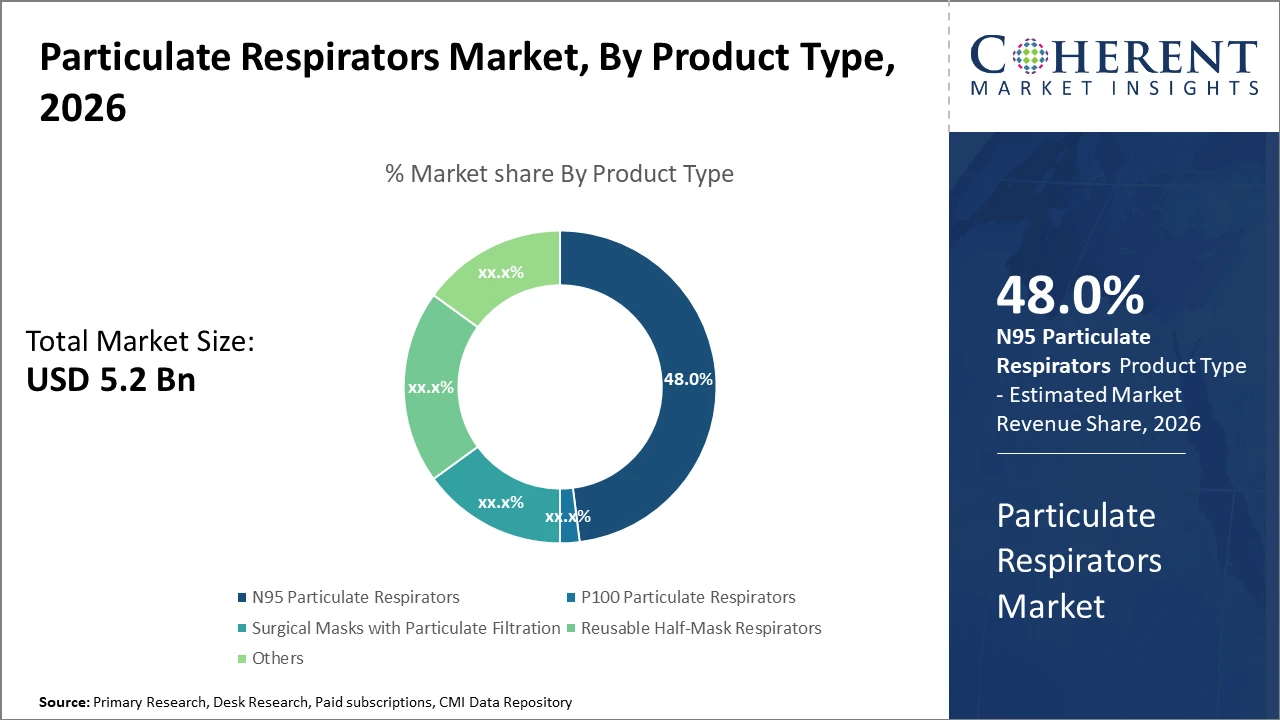
The N95 particulate respirators segment dominates the product type category, accounting for approximately 48% of overall market share, driven by strong healthcare and industrial demand for certified filtration standards.
The healthcare & medical end-user industry continues to be the largest contributor to market revenue, capturing a 42% share, fueled by pandemic-driven infection control mandates.
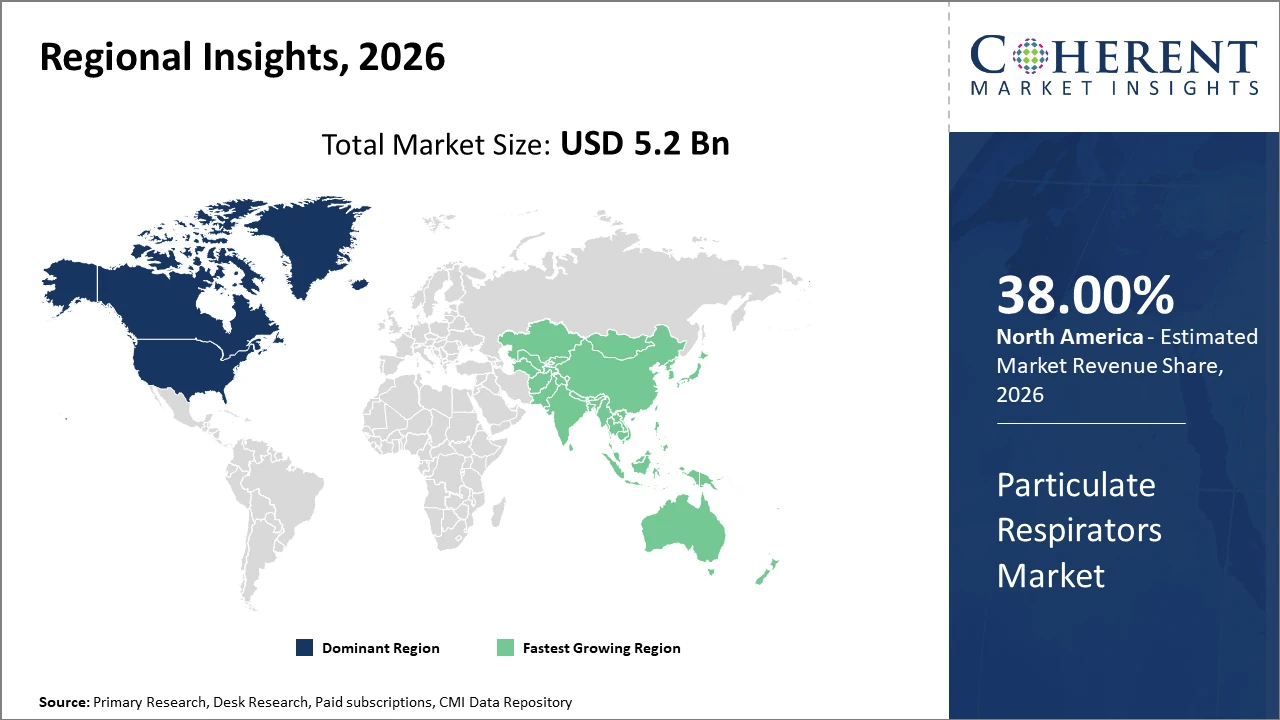
North America leads the regional market share, contributed by stringent regulatory enforcement and the presence of key market players like 3M, comprising close to 38% of the industry revenue in 2026.
Asia Pacific is the fastest-growing region, with a CAGR exceeding 11%, propelled by expanding construction and manufacturing sectors alongside increasing government awareness programs for worker safety.
Particulate Respirators Market Segmentation Analysis
Particulate Respirators Market Insights, By Product Type
N95 particulate respirators dominate the market with nearly 48% share. The N95 segment’s dominance is rooted in its well-established filtration efficiency, widespread regulatory endorsement, and diverse use cases in healthcare and industrial applications. Meanwhile, P100 respirators represent the fastest-growing subsegment, propelled by heightened industrial demand for higher filtration levels, especially in chemical manufacturing and hazardous material handling environments. Surgical masks with particulate filtration maintain a stable share due to their dual protection functionality in medical settings, but are less preferred in industrial applications.
Particulate Respirators Market Insights, By End-User Industry
Healthcare & Medical is the leading segment, holding approximately 42% of the market share, driven primarily by infection control protocols that necessitate high-volume respirator usage. This segment benefits from continuous government spending and global public health focus, reinforcing market revenue streams. The industrial & manufacturing sector emerges as the fastest-growing subsegment owing to stricter occupational health regulations and the rise of advanced manufacturing units requiring superior respiratory protection. Construction follows with steady growth fueled by infrastructure spending globally, while the chemical & pharmaceutical industry increasingly invests in specialized respirators to mitigate exposure to hazardous aerosols.
Particulate Respirators Market Insights, By Distribution Channel
Direct sales command a dominant market share of 55%, primarily due to longstanding supplier-buyer relationships in healthcare and industrial sectors, ensuring product authenticity and compliance. Online retail is rapidly gaining traction as a fastest-growing subsegment, driven by the rise in e-commerce adoption post-2024 and increased demand for convenient procurement channels, particularly during supply chain disruptions. Distributors & dealers hold a steady share by catering to smaller end users and regional clients with flexible order quantities.
Particulate Respirators Market Trends
The market trends demonstrate a decisive move toward technology-enhanced safety solutions.
Smart respirators with embedded sensors have gained traction, particularly in North America and Europe, where workplace safety compliance is rigorously enforced.
For instance, 2026 data show that smart respirators accounted for 15% of all respirator shipments in the U.S., marking a notable industry shift.
Sustainable manufacturing practices have also come to the forefront; manufacturers in Asia Pacific introduced biodegradable mask lines in 2025, aligning with regional environmental policies.
Additionally, the rise of hybrid work environments has fostered demand for ergonomic and disposability-balanced respirators to optimize use across healthcare and industrial applications, reflected in a 13% increase in ergonomic respirator sales globally in 2026.
Particulate Respirators Market Insights, By Geography
North America Particulate Respirators Market Analysis and Trends
In North America, the dominance in the Particulate Respirators market is primarily due to stringent regulatory frameworks, including OSHA and NIOSH standards that mandate high-quality respiratory protection. The region accounted for approximately 38% of the market share in 2026, supported by consistent investments from key market players headquartered in the U.S., such as 3M and Honeywell. The healthcare and industrial sectors in this region prioritize product innovation and compliance, driving steady demand and stable market revenue.
Asia Pacific Particulate Respirators Market Analysis and Trends
Meanwhile, the Asia Pacific exhibits the fastest growth with a CAGR surpassing 11%, fueled by rapid industrialization, expanding construction sectors, and proactive governmental safety regulations. Countries like China and India have launched extensive workplace safety campaigns, increasing particulate respirator adoption by over 20% annually since 2024. The presence of emerging domestic manufacturers offering cost-competitive solutions complements investments from multinational companies, accelerating market expansion in this region.
Particulate Respirators Market Outlook for Key Countries
USA Particulate Respirators Market Analysis and Trends
The USA commands a pivotal role, driven by early and sustained adoption of advanced particulate respirators, supported by federal and state-level regulatory oversight. With healthcare systems requiring high filtration standards and industrial safety mandates, the U.S. accounts for nearly 30% of global market revenue. Companies such as 3M and Honeywell have amplified production capacities through new manufacturing plants across the Midwest, reinforcing market supply chains and fostering healthier competition. Furthermore, government initiatives that stockpile respirators for emergency preparedness continue to underpin robust demand cycles in this mature yet evolving market.
India Particulate Respirators Market Analysis and Trends
India's particulate respirator market is expanding rapidly, driven by escalating infrastructure projects and stricter workplace safety legislation. The government’s National Policy on Safety, Health, and Environment at Workplaces, introduced in 202,5 has boosted compliance rates significantly, influencing a 16% rise in respirator purchases in construction and manufacturing sectors. Key domestic players are enhancing product lines with innovative filtration technologies tailored for the region’s specific industrial pollutants, attracting notable collaborations with foreign companies. The growing urban population’s awareness and increased healthcare acquisition post-pandemic have also contributed to broadening the market base.
Analyst Opinion
Demand-side indicators reveal strong uptake of particulate respirators in healthcare, with hospitals and clinics increasing procurement by over 15% annually since 2024 due to stringent infection control protocols. For example, the U.S. Department of Health and Human Services reported a 20% surge in respirator imports in 2025, indicating elevated end-user demand.
Pricing dynamics have remained steady, though supply chain efficiencies have brought modest cost reductions. In 2026, manufacturers leveraged enhanced raw material sourcing strategies, leading to a 5% average price decline while maintaining product quality, facilitating wider market penetration especially in price-sensitive APAC regions.
Production capacity expansions were significant in 2024 and 2025, with leading companies commissioning new facilities in North America and Asia to meet increasing global demands. This resulted in a 12% year-over-year increase in manufacturing output, underpinning market stability and growth.
Micro-level market shifts indicate rising preferences for advanced N95 and higher filtration standards, catalyzed by respiratory safety mandates in industrial zones. The implementation of OSHA’s updated respirator fit-testing protocols in 2026 further accelerated market penetration of premium-grade products, constituting over 60% of market revenue by mid-2026.
- Current Industry Events of 2026
- Market Size Estimation
- Regional Breakdown
- Competitive Landscape
- Customer Intelligence
- Segmental Analysis
- Pricing Analysis
- Key Market Drivers, Challenges & Future Trends
- Customized Insights Section
Market Scope
| Report Coverage | Details | ||
|---|---|---|---|
| Base Year: | 2025 | Market Size in 2026: | USD 5.2 billion |
| Historical Data for: | 2020 To 2024 | Forecast Period: | 2026 To 2033 |
| Forecast Period 2026 to 2033 CAGR: | 9.1% | 2033 Value Projection: | USD 9.8 billion |
| Geographies covered: |
| ||
| Segments covered: |
| ||
| Companies covered: | Moldex-Metric, Inc., Halyard Health, Inc., Prestige Ameritech Ltd., Crosstex International, Inc., Sundstrom Safety AB, Aura Health and Safety Equipment Pvt. Ltd., Aearo Technologies LLC, Bullard, Drägerwerk AG & Co. KGaA, Sperian Protection (now part of Honeywell) | ||
| Growth Drivers: |
| ||
Particulate Respirators Market Growth Factors
The increasing prevalence of airborne diseases post-pandemic has massively accelerated demand for particulate respirators in healthcare, with 2025 witnessing a 22% surge in hospital procurement worldwide. Regulatory frameworks tightening occupational safety norms across industrial sectors underpin expansion, exemplified by Europe’s revised PPE Directive enforcement that led to a 17% increase in certified respirator use in 2026. Additionally, rapid urbanization and escalating construction activities in Asia Pacific have propelled demand for effective respiratory protection, contributing to a 14% annual rise in that region’s market revenue. Innovations improving respirator comfort and reusability foster market growth by encouraging prolonged usage, as evidenced by 3M’s reusable respirator sales climbing by 18% in 2025.
Particulate Respirators Market Development
In January 2025, 3M launched a new generation of respiratory innovations at CES 2025, introducing refillable air filtration systems with durable frames engineered to last up to 20 years. These products were designed to significantly reduce waste associated with disposable respirators while maintaining high filtration efficiency, reinforcing 3M’s strategic focus on sustainability and long-life respiratory protection solutions.
In April 2025, Medtronic completed the acquisition of Cardinal Health’s N95 respirator business for approximately USD 6.1 billion, substantially strengthening its position in the global respiratory protection market. The acquisition expanded Medtronic’s manufacturing scale, supply chain resilience, and product portfolio, enabling broader distribution of medical-grade respiratory protection across healthcare and industrial settings.
Key Players
Leading Companies of the Market
Moldex-Metric, Inc.
Halyard Health, Inc.
Prestige Ameritech Ltd.
Crosstex International, Inc.
Sundstrom Safety AB
Aura Health and Safety Equipment Pvt. Ltd.
Aearo Technologies LLC
Bullard
Drägerwerk AG & Co. KGaA
Sperian Protection (now part of Honeywell)
Competitive strategies have centered around product innovation, capacity expansion, and strategic acquisitions. For instance, 3M’s launch of the 3M Versaflo TR-300+ Powered Air Respirator in 2025 significantly improved user comfort and filtration efficiency, driving a 10% growth in their respirator segment. Meanwhile, Honeywell’s acquisition of Moldex-Metric in late 2024 enhanced its portfolio in reusable respirators, which resulted in broader market coverage and increased market revenue over subsequent quarters.
Particulate Respirators Market Future Outlook
The future outlook for the Particulate Respirators Market is centered on innovation, resilience, and long-term demand stability. Manufacturers are increasingly focusing on advanced filtration media, reusable designs, and enhanced comfort to support prolonged use. Smart respirators with integrated sensors and monitoring capabilities are expected to gain attention in high-risk environments. Growing concerns over air quality, workplace safety, and infectious disease preparedness are likely to sustain demand across healthcare, industrial, and public sectors. As regulatory frameworks continue to evolve, the market is expected to remain a critical component of global safety and health infrastructure.
Particulate Respirators Market Historical Analysis
The Particulate Respirators Market has traditionally been driven by occupational safety requirements in industries such as construction, mining, manufacturing, and healthcare. Early respirators offered basic filtration but often lacked comfort and proper fit, limiting extended use. Over time, regulatory standards and advancements in filtration materials led to significant improvements in efficiency, breathability, and ergonomic design. Public health crises and rising awareness of airborne pollutants and pathogens expanded respirator usage beyond industrial settings into healthcare and consumer markets. Supply chain disruptions during global emergencies further highlighted the strategic importance of particulate respirators.
Sources
Primary Research Interviews:
Industrial safety managers
healthcare workers
PPE manufacturers
occupational health experts
regulatory consultants
Databases:
OSHA Safety Data
CDC PPE Guidelines
WHO Occupational Health Data
ISO Standards Database
Magazines:
Occupational Health & Safety
Industrial Safety & Hygiene News
Medical Device Network
Safety+Health Magazine
Healthcare Packaging
Journals:
Journal of Occupational Health
Annals of Work Exposures and Health
American Journal of Infection Control
Safety Science
Aerosol Science & Technology
Newspapers:
Reuters Industry News
Financial Times (Manufacturing)
The Guardian (Workplace Safety)
Bloomberg Industry
The Washington Post (Health)
Associations:
National Safety Council
American Industrial Hygiene Association
WHO
OSHA
International Safety Equipment Association
Get access to 250+ pages report
Every segment, forecast, competitor profile and data table behind the analysis above — available for instant download.
- ESOMAR Member
- ISO 9001:2015 Certified
- D-U-N-S Registered
- GDPR & CCPA Compliant
Missing comfort of reading report in your local language? Find your preferred language:
Transform your Strategy with Exclusive Trending Reports
Frequently Asked Questions
Leading companies include 3M Company, Honeywell International Inc., Medline Industries, and Kimberly-Clark Corporation, with strategic product innovation and capacity expansions shaping their market leadership.
The market size is projected to grow from USD 5.2 billion in 2026 to USD 9.8 billion by 2033, with a CAGR of 9.1%, driven by increased regulatory oversight and pandemic-related safety investments.
Healthcare & Medical remains the largest growth driver, accounting for 42% of the market, stimulated by persistent infection control requirements and rising hospital respirator demand.
The market is shifting towards smart respirators with IoT integration and eco-friendly materials, alongside growing emphasis on ergonomic and reusable designs to meet evolving user needs.
The landscape is highly competitive with innovation and cost-efficiency being key; challenges include supply chain disruptions and evolving regulatory requirements that companies need to navigate.
Market players focus on product innovation, strategic acquisitions, expanding manufacturing capabilities, and building distribution partnerships to enhance market reach and revenue.