

Global Permanent Magnet Motor Market Size and Share Analysis – (2026-2033)
The Global Permanent Magnet Motor Market is estimated to be valued at USD 59.79 Bn in 2026 and is expected to reach USD 120.28 Bn by 2033, exhibiting a compound annual growth rate (CAGR) of 10.5% from 2026 to 2033.
Key Takeaways
- In terms of Motor Type, the Direct Current (DC) Motor segment is estimated to account for 65.9% share of the market in 2026. This is due to its programmable and customizable nature.
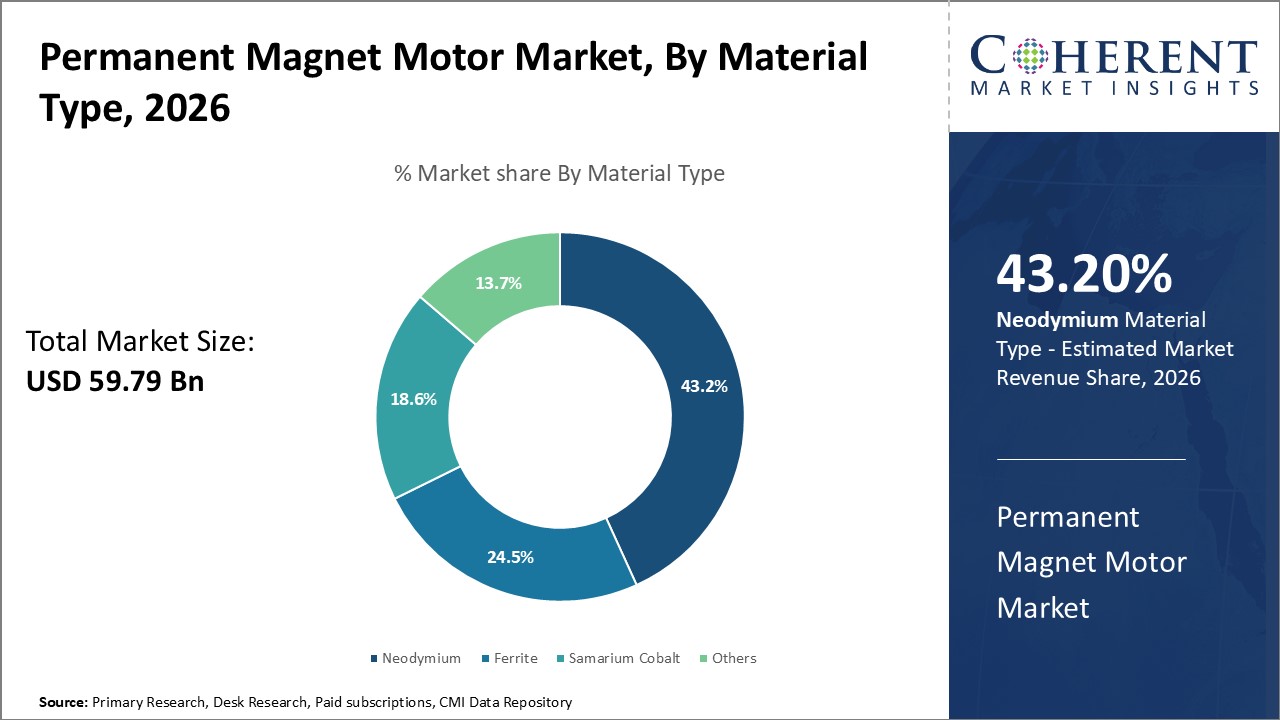
- In terms of Magnetic Material Type, the Neodymium segment is estimated to account for 43.2% share of the market in 2026. This is due to its unmatched magnetic properties that deliver maximized motor performance.
- In terms of Vertical, the General Industrial segment is estimated to account for 45% share of the market in 2026. This is due to the proliferation of industrial automation worldwide.
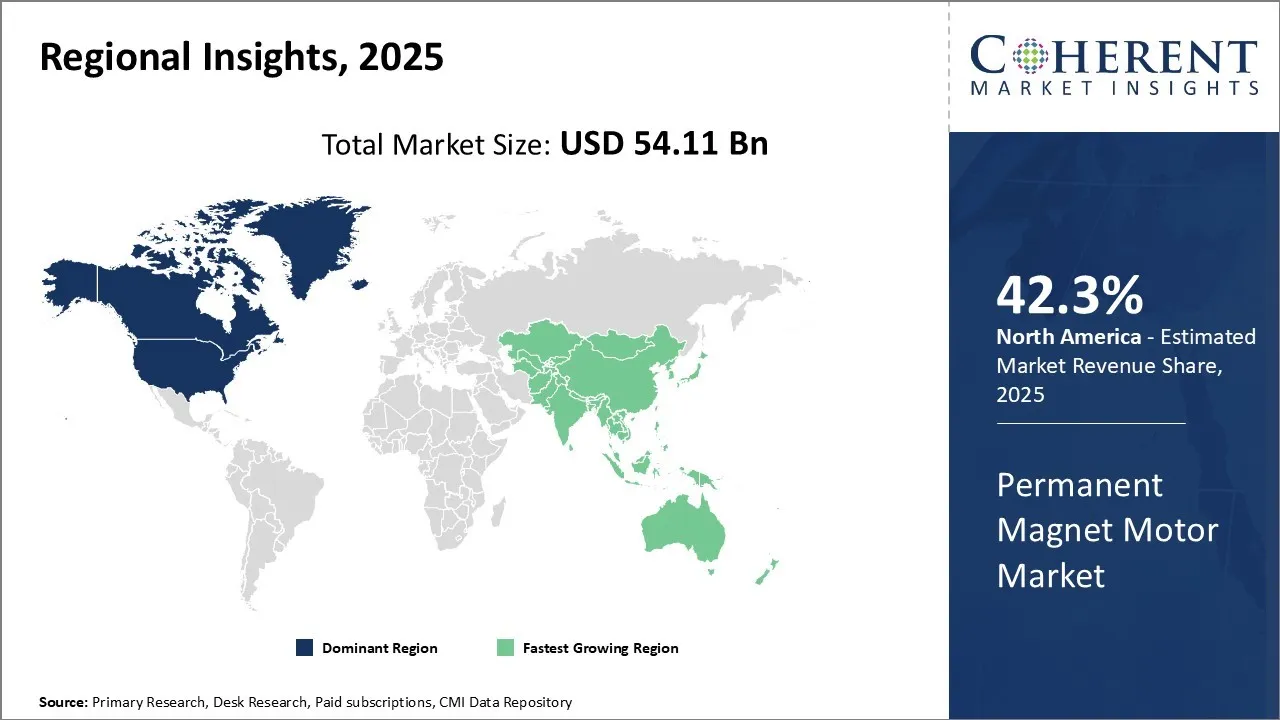
- North America has established itself as the dominant region in the global permanent magnet motor market. The U.S. accounts for the 42.3% share in 2026. This is due to strong automotive, industrial, and HVAC sectors which are major end users of permanent magnet motors.
Market Overview
The global permanent magnet motor market is expected to expand steadily during the forecast period due to increasing adoption in automotive, industrial machinery, renewable energy, and consumer electronics segments. Permanent magnet motors provide high efficiency, compactness, and excellent torque density, and are best suited for applications that need less energy consumption and space-saving designs. The growing trend towards car electrification, combined with innovation in battery-powered industrial machinery and air conditioning system units, is fueling the demand for PMMs.
Current Events and Its Impact
Current Events | Description and its impact |
Permanent Magnet Motor Segment Affected by Global Supply Chain Disruptions
|
|
Strategic Investments in Domestic Rare Earth Magnet Production
|
|
Role of Advanced Technologies in the Permanent Magnet Motor Market
Emerging technologies are having a breakthrough effect on the Permanent Magnet Motor (PMM) industry, with enhanced motor efficiency, cost savings, and greater potential for use. The main driver is the adoption of high-performance materials like neodymium-iron-boron (NdFeB) magnets, which allow the motors to have a higher power density, efficiency, and torque in a lower footprint. Advances in magnet design and additive manufacturing are also making it possible to create intricate geometries that enhance motor thermal management and magnetic performance.
Digital twin technology and finite element analysis (FEA) are increasingly being used in PMM design and simulation so that motor behavior can be modeled under various scenarios, prototyping cycles can be minimized, and performance can be optimized. Moreover, AI-based predictive maintenance and Internet of Things (IoT) enabled motor monitoring systems are becoming a norm in industrial use. These intelligent motors can sense anomalies in performance and minimize downtime while ensuring efficient operation.
In the automotive industry, high-power electronics like silicon carbide (SiC) inverters are making it possible to control permanent magnet synchronous motors (PMSMs) more efficiently, especially in electric vehicle (EV) drivetrains. This leads to enhanced energy efficiency, acceleration, and heat management.
In addition, recycling technologies used for extracting rare-earth materials from retired motors are increasingly popular, minimizing environmental impact and establishing more stable long-term prices. The integration of AI, advanced materials, digital simulation, and intelligent monitoring is not only expanding the frontiers of PMM capabilities but also making them competitive in the new world order of electrification and Industry 4.0.
- Current Industry Events of 2026
- Market Size Estimation
- Regional Breakdown
- Competitive Landscape
- Customer Intelligence
- Segmental Analysis
- Pricing Analysis
- Key Market Drivers, Challenges & Future Trends
- Customized Insights Section
Market Driver
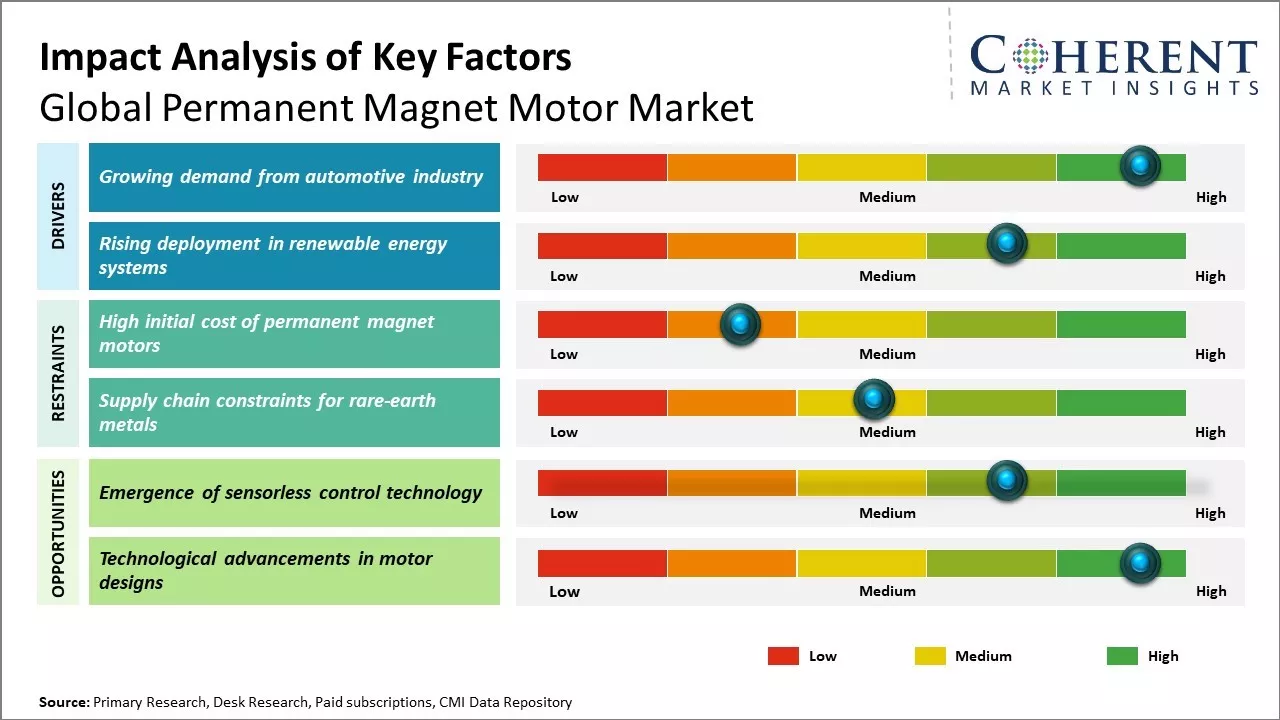
- Growing demand from automotive industry
The automotive industry has seen a rise in the adoption of permanent magnet motors in applications such as electric vehicles, hybrid electric vehicles, and plug-in hybrid electric vehicles. Permanent magnet motors provide advantages like higher efficiency, reliability and compact size. With growing environmental concerns and stringent emission regulations, automakers are focusing on electrification of vehicles. Both pure electric vehicles and hybrids rely heavily on permanent magnet motors to drive the electric powertrain.
Motors with permanent magnets are well-suited for automotive applications as they provide high torque even at lower rpm which is ideal for traction motors. The sales of electric vehicles have been growing significantly and major automakers have aggressive plans to expand their EV portfolio in the coming years. As more automakers join the electrification revolution, the demand for permanent magnet motors from the automotive industry is expected to surge.
With strong government support and falling battery prices, market analysts predict that electric vehicles will account for a considerable share of total vehicle sales over the next decade. This will present lucrative opportunities for permanent magnet motor manufacturers in the upcoming years.
- Rising deployment in renewable energy systems
Another key driver for permanent magnet motors is the renewable energy industry. Permanent magnet motors find widespread usage in various renewable energy conversion systems such as solar power, wind power, hydroelectric power. In solar power systems, permanent magnet motors are used in solar trackers and concentrators to optimize sunlight exposure.
They provide the precise torque control needed to automatically adjust the position of photovoltaic panels. In wind power generation, permanent magnet synchronous generators are the technology of choice for direct drive wind turbines due to their reliability and efficiency. They eliminate the need for gearboxes which are a major pain point in wind turbines. Permanent magnet motors also enable improved design of multi-pole and super-long stator linear generators for hydrokinetic turbines.
With the growing emphasis on clean and green energy, investments in solar, wind and hydro power projects have been increasing tremendously. Agencies like IEA forecast that the global renewable energy capacity will almost double by 2030 from the 2020 levels. This expands the market for permanent magnet motors that play a crucial role in renewable energy technology. Their high performance, durability and maintenance-free operations make them well-aligned to deliver on the exploding demand from the renewable energy sector.
Market Opportunities: Emergence of sensor less control technology
The emergence of sensor less control technology could provide significant opportunities for the global permanent magnet motor market growth. Sensor less control removes the need for position sensors within motors, making the overall system simpler, more robust, and reliable. This helps reduce manufacturing and maintenance costs. Such technology allows precise control of motor speed and position without the need for separate feedback devices.
Many industries are now looking to adopt sensor less technology. For example, the HVAC industry has been implementing sensor less permanent magnet motors in applications such as fans and blowers. Removing sensors reduces overall system weight and complexity. This provides design advantages for equipment manufacturers. At the same time, it lowers costs for end users.
The industrial automation sector is another major area primed for growth with sensor less control of permanent magnet motors. Automated processes require precise motion control, which sensor less technology provides. Many factory robots, CNC machines, and other automated equipment now utilize sensor less permanent magnet motors. This trend is anticipated to rise further over the coming years as more industrial processes become automated and optimized.
Segmental Insights
Permanent Magnet Motor Market Insights, By Motor Type
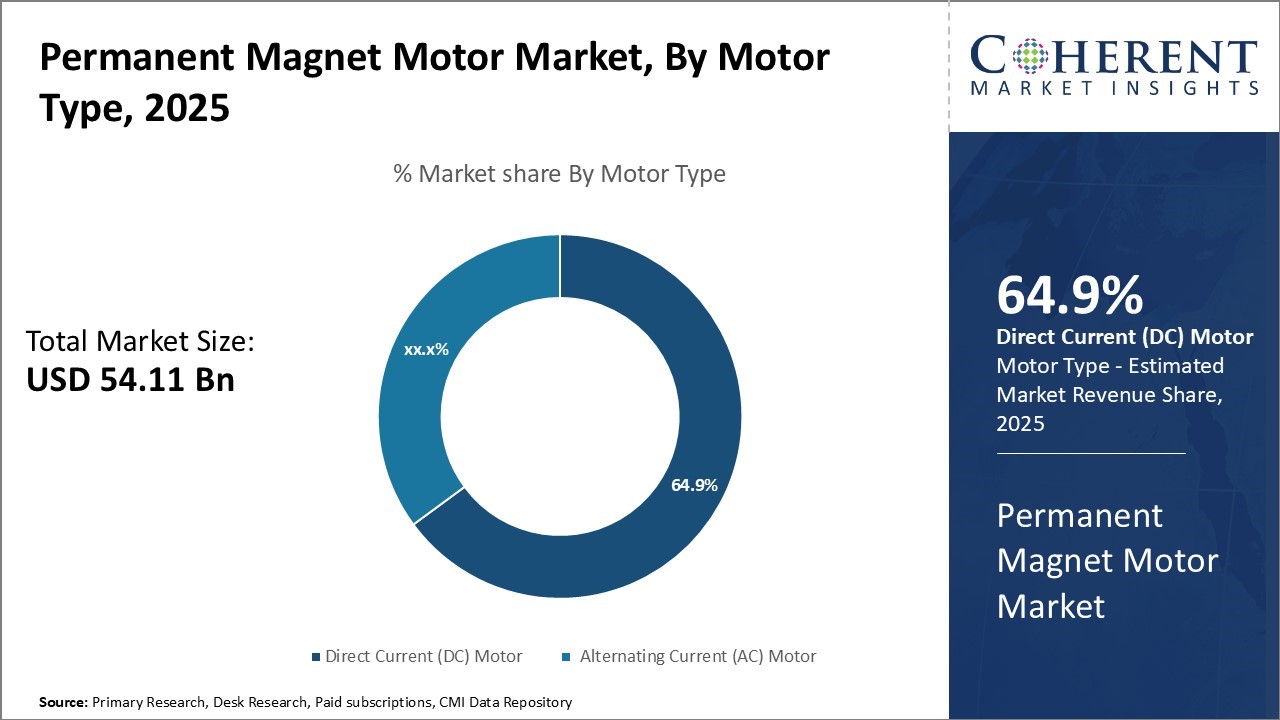
In terms of Motor Type, the Direct Current (DC) Motor segment is estimated to account for 65.9% share of the market in 2026 owing to its programmable and customizable nature. DC motors offer high controllability as their speed and torque can be precisely regulated through advanced variable speed drives. This programmability gives DC motors an edge over AC motors in applications that require flexible control and automation.
DC motor speed and direction can be easily controlled by adjusting the voltage and current levels through external control circuits. Their operation is not reliant on mains power frequency, providing more robust performance even under voltage fluctuations. This high degree of customizability has accelerated the use of DC motors in applications with complex motion profiles like CNC machines, robotic arms, conveyor belts, and laser cutters where real-time adjustments are critical.
Most industrial motion control processes now leverage DC motor versatility for precision motion applications. Their simple construction with fewer moving parts also gives DC motors higher reliability and longer operational life compared to AC motors. This reduced maintenance needs boosts the total cost of ownership for DC motorized systems over time.
Permanent Magnet Motor Market Insights, By Material Type
In terms of Magnetic Material Type, the Neodymium segment is estimated to account for 43.2% share of the market in 2026 owing to its unmatched magnetic properties that deliver maximized motor performance. Neodymium magnets have exceptionally high magnetic fields that allow building of smaller yet more powerful electric motors .
With a large magnetic flux density, neodymium magnets efficiently convert electrical energy into rotational force output. This high energy product means motors using neodymium magnets can operate at higher torque and rotational speeds while maintaining a compact form factor. Their small size leads to lightweight yet powerful motors suitable for applications constrained by size and weight.
Neodymium magnets also demonstrate high Curie temperatures, meaning they retain their magnetic properties even under elevated operational temperatures without demagnetization. This thermal endurance has expanded their use in high-temperature industrial processes and electric vehicles. Neodymium magnets' strong magnetic fields also result in high motor efficiencies of above 90%, lowering energy consumption significantly.
Permanent Magnet Motor Market Insights, By Vertical
In terms of Vertical, the General Industrial segment is estimated to account for 45% share of the market in 2026 owing to the proliferation of industrial automation worldwide. Growing labor costs and the need for consistent quality have accelerated automation integration across various general industrial processes like material handling, assembly, packaging, inspection, and machine tooling.
Permanent magnet motors are increasingly replacing legacy AC induction motors in automated machinery due to advantages like high efficiency, precise control, wider speed range and compact size. Their programmable operation is well-suited for automated equipment with variable workload profiles.
Integration of permanent magnet motors has streamlined complex, repetitive production tasks while reducing downtime from equipment failures. Developing countries are also automating general industries like food and beverage, rubber and plastics, paper and metals to boost output and quality.
Regional Insights
North America Permanent Magnet Motor Market Analysis and Trends
North America has established itself as the dominant region in the global permanent magnet motor market. The U.S. accounts for the 42.3% share in 2026 owing to strong automotive, industrial, and HVAC sectors which are major end users of permanent magnet motors. American automobile manufacturers such as General Motors and Ford are global leaders and have significant operations across the world. This has prompted large scale investment in permanent magnet motor technologies to power electric vehicles.
Stringent regulations regarding fuel efficiency and emissions have further boosted demand. Major North American industrial firms have also incorporated advanced permanent magnet motors into their manufacturing processes for improved productivity and energy savings. With a highly developed industrial base focused on factory automation, the use of permanent magnet motors continues to grow. Furthermore, organizations providing HVAC and cooling systems have widely adopted permanent magnet motors due to their reliability and efficiency.
Asia Pacific Permanent Magnet Motor Market Analysis and Trends
The Asia Pacific has emerged as the fastest growing market for permanent magnet motors. China, in particular, is playing a pivotal role due to immense manufacturing activity and a growing focus on renewable energy and electric vehicles. Automobile exports from China have surged in recent years with electric vehicle production rising exponentially. This has presented massive opportunities for permanent magnet motor suppliers.
Countries such as India and Southeast Asian nations are also industrializing rapidly, resulting in extensive foreign investment pouring in. Manufacturing industries require efficient motor systems and are turning to permanent magnet varieties. In addition, initiatives by governments to modernize infrastructure and transition to cleaner sources of energy have created significant tailwinds. Large multinational corporations have established facilities across Asia to take advantage of low production costs and proximity to end-markets, augmenting demand.
Permanent Magnet Motor Market Dominating Countries
China Permanent Magnet Motor Market Analysis and Trend
China dominates the market for permanent magnet motors due to its leadership in the production of rare-earth magnets and widespread application of PMMs in renewable energy systems, industrial automation, and electric vehicles. Chinese companies such as Zhongke Electric, Wolong Electric, and BYD are quickly increasing production to supply both local and international markets.
United States Permanent Magnet Motor Market
The U.S. market is driven by robust demand from the automotive, aerospace, and HVAC industries. With increasing vehicle electrification and smart manufacturing development, U.S.-based manufacturers like Tesla, Rockwell Automation, and GE are investing extensively in high-efficiency PMM systems. Government energy efficiency regulations drive market growth further.
Germany Permanent Magnet Motor Market
Germany is at the forefront of Europe's PMM market as a result of its high-tech engineering industry, strong industrial fabric, and automotive innovation leadership. Siemens and Bosch are incorporating permanent magnet motors into electric drivetrains and automation technology in line with Germany's energy transition strategy and Industry 4.0 agenda.
Japan Permanent Magnet Motor Market
Japan is a leader, particularly in precision manufacturing and electric mobility. Nidec and Mitsubishi Electric lead innovation for compact, high-efficiency PMMs used for robotics, EVs, and consumer applications. Japan's investments in magnet recycling and low-carbon technologies support its long-term competitiveness.
Market Report Scope
Permanent Magnet Motor Market Report Coverage
| Report Coverage | Details | ||
|---|---|---|---|
| Base Year: | 2025 | Market Size in 2026: | USD 59.79 Bn |
| Historical Data for: | 2020 To 2024 | Forecast Period: | 2026 To 2033 |
| Forecast Period 2026 to 2033 CAGR: | 10.5% | 2033 Value Projection: | USD 120.28 Bn |
| Geographies covered: |
| ||
| Segments covered: |
| ||
| Companies covered: | ABB Ltd., Ametek, Inc., Danfoss A/S, General Electric Company, Hitachi, Ltd., Hyosung Heavy Industries, Johnson Electric Holdings Limited, Mitsubishi Electric Corporation, Nidec Corporation, Regal Beloit Corporation, Rockwell Automation, Inc., Schneider Electric SE, Siemens AG, Toshiba Corporation, and WEG S.A. | ||
| Growth Drivers: |
| ||
| Restraints & Challenges: |
| ||
Permanent Magnet Motor Industry News
- In October 2024, Niron a company based in Minnesota, launched a plant for the manufacture of rare-earth-free magnets with iron and nitrogen. This disrupts China's monopoly in magnet manufacturing and provides a stable cost substitute for industries that depend on high-performance magnets.
- In 2024, Schaeffler introduced its Electrically Excited Synchronous Machine (EESM) permanent-magnet-free motor that utilizes rotor coils energized by an RF transmitter via the shaft. The design takes advantage of high-speed compatibility, space neutrality, and scalable performance without employing rare-earth materials.
Key Takeaways from Analyst
- The permanent magnet motor market is poised to grow significantly in the coming years driven by rising demand for energy efficient motors across various industrial applications. Increased focus on lowering carbon emissions and energy consumption will prompt more end users to adopt permanent magnet motors.
- Government regulations mandating energy efficiency are also expected to boost adoption. Advantages of high torque to weight ratio and power density makes permanent magnet motors attractive for electric vehicles. Growth in the EV industry will thus create opportunities for motor manufacturers.
- North America currently dominates the market owing to high motor demand. Strong growth in industries like automotive, HVAC, and factory automation is driving the APAC market growth. Asia Pacific and Europe are also sizable markets driven by regulatory pushes for energy efficiency.
- Fluctuating prices of rare earth metals used in magnets can pose a challenge for manufacturers. Supply chain disruptions due to geopolitical issues also impact raw material availability and prices. However, ongoing R&D towards developing motors with less rare earth usage can help address this restraint. Overall, with rising electrification across industries and governments emphasizing sustainable growth, the permanent magnet motor market is well positioned for steady expansion globally in the long term.
Market Segmentation
- By Motor Type (Revenue, USD Bn, 2021 - 2033)
- Direct Current (DC) Motor
- Alternating Current (AC) Motor
- By Magnetic Material Type (Revenue, USD Bn, 2021 - 2033)
- Ferrite
- Neodymium
- Samarium Cobalt
- Others
- By Vertical (Revenue, USD Bn, 2021 - 2033)
- Automotive
- General Industrial
- Energy
- Water and Wastewater Treatment
- Mining
- Oil and Gas
- Aerospace and Defense
- Others
- By Region (Revenue, USD Bn, 2021 - 2033)
- North America
- U.S.
- Canada
- Latin America
- Brazil
- Argentina
- Mexico
- Rest of Latin America
- Europe
- Germany
- U.K.
- Spain
- France
- Italy
- Russia
- Rest of Europe
- Asia Pacific
- China
- India
- Japan
- Australia
- South Korea
- ASEAN
- Rest of Asia Pacific
- Middle East
- GCC Countries
- Israel
- Rest of Middle East
- Africa
- South Africa
- North Africa
- Central Africa
- Key Players Insights
- ABB Ltd.
- Ametek, Inc.
- Danfoss A/S
- General Electric Company
- Hitachi, Ltd.
- Hyosung Heavy Industries
- Johnson Electric Holdings Limited
- Mitsubishi Electric Corporation
- Nidec Corporation
- Regal Beloit Corporation
- Rockwell Automation, Inc.
- Schneider Electric SE
- Siemens AG
- Toshiba Corporation
- WEG S.A.
Sources
Primary Research Interviews
- Siemens AG
- ABB Ltd.
- General Electric Company
- Toshiba Corporation
- Emerson Electric Co.
- Others
Databases
- Factiva
- Bloomberg
- Others
Magazines
- Motor Magazine
- Electric Motor Engineering Magazine
- Automation World Magazine
- Others
Journals
- IEEE Transactions on Industrial Electronics
- Journal of Magnetism and Magnetic Materials (Elsevier)
- International Journal of Engineering Research & Technology
- Others
Newspapers
- The Economic Times
- The Wall Street Journal
- Financial Times
- Business Standard
- Others
Associations
- Electric Motor and Generator Association (EMGA)
- National Electrical Manufacturers Association (NEMA)
- International Copper Association
- Association of Electrical Equipment and Medical Imaging Manufacturers (COCIR)
- Others
Public Domain sources
- International Energy Agency (IEA)
- United States Department of Energy (DOE)
- European Union Open Data Portal
- World Bank Data Repository
- Others
Proprietary Elements
- CMI Data Analytics Tool
- Proprietary CMI Existing Repository of information for last 8 years
Get access to 250+ pages report
Every segment, forecast, competitor profile and data table behind the analysis above — available for instant download.
- ESOMAR Member
- ISO 9001:2015 Certified
- D-U-N-S Registered
- GDPR & CCPA Compliant
Missing comfort of reading report in your local language? Find your preferred language:
Transform your Strategy with Exclusive Trending Reports
Frequently Asked Questions
The Permanent Magnet Motor Market size is estimated to be valued at USD 59.79 Bn in 2026, and is expected to reach USD 120.28 Bn by 2033.
The CAGR of the global Market is projected to be 10.5% from 2026 to 2033.
Growing demand from automotive industry and rising deployment in renewable energy systems are the major factors driving the growth of the global permanent magnet motor industry.
High initial cost of permanent magnet motors and supply chain constraints for rare-earth metals are the major factors hampering the growth of the global market.
In terms of Motor Type, the Direct Current (DC) Motor segment is estimated to dominate the market in 2026.
ABB Ltd., Ametek, Inc., Danfoss A/S, General Electric Company, Hitachi, Ltd., Hyosung Heavy Industries, Johnson Electric Holdings Limited, Mitsubishi Electric Corporation, Nidec Corporation, Regal Beloit Corporation, Rockwell Automation, Inc., Schneider Electric SE, Siemens AG, Toshiba Corporation, and WEG S.A. are the major players.
North America is expected to lead the global market in 2026.