

Phosphodiesterase Enzyme Inhibitors Market Size and Forecast – 2026 to 2033
The Phosphodiesterase Enzyme Inhibitors Market is anticipated to grow at a CAGR of 6.7% with USD 4.7 Bn in 2026 and is expected to reach USD 7.2 Bn in 2033. The Phosphodiesterase Enzyme Inhibitors Market continues to expand as healthcare providers treat more cardiovascular, respiratory, neurological, and erectile dysfunction disorders. According to the WHO, approximately 500 million people worldwide live with asthma or chronic obstructive pulmonary disease (COPD), and these two conditions collectively cause nearly 4 million deaths annually. (Source: WHO)
Key Takeaways
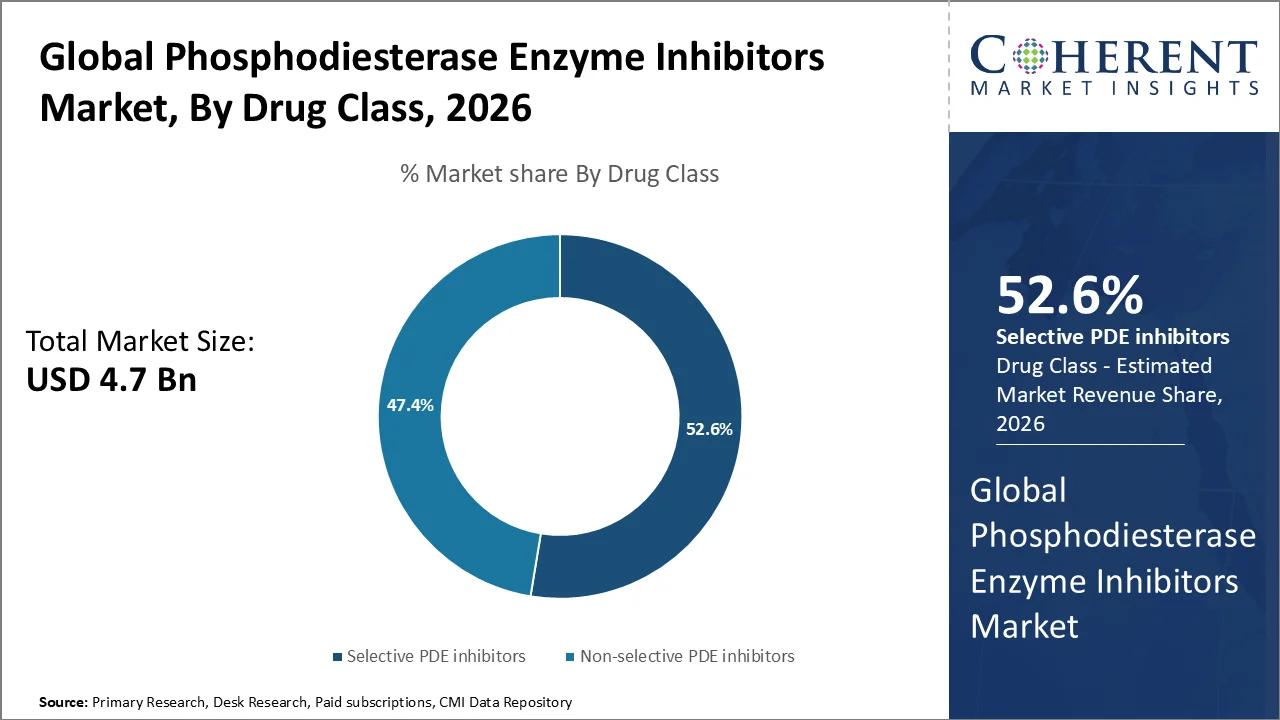
- Selective PDE inhibitors hold the largest market share of 52.6% in 2026 driven by their targeted mechanism of action, established clinical use, and increasing adoption in the management of respiratory and inflammatory disorders. According to the National Institutes of Health (NIH), phosphodiesterase (PDE) inhibitors are anti-inflammatory and bronchodilating medications primarily used to manage chronic obstructive pulmonary disease (COPD) by inhibiting enzymes that degrade signaling molecules involved in lung function.
- Cardiovascular Disease expected to hold largest market share of 37.8% in 2026 owing to its increasing prevalence of pulmonary hypertension. In 2025, the United States had approximately 50,000 prevalent pulmonary arterial hypertension (PAH) cases, including an estimated 40,000–44,000 diagnosed cases.
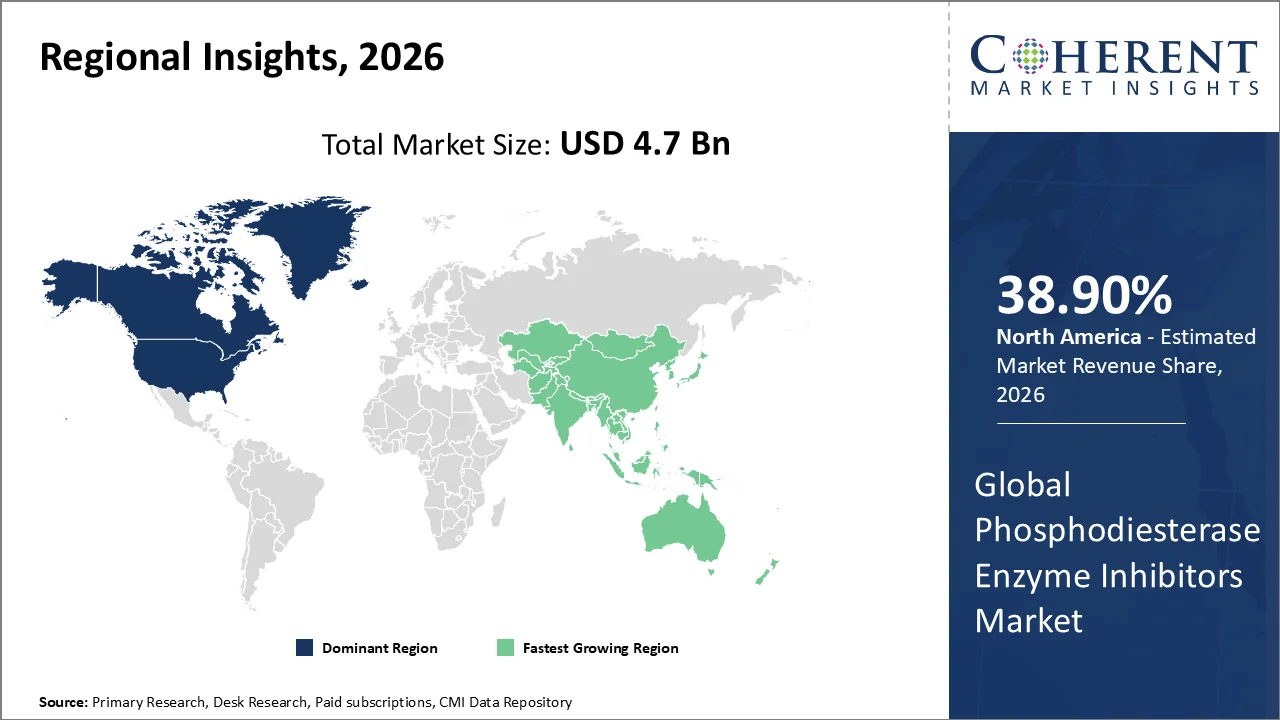
- North America is expected to acquire the dominant share of 38.9% in 2026 owing to its high prevalence of chronic diseases. More than 75% of U.S. adults live with at least one chronic condition, while over half have two or more chronic conditions.
Current Events and Their Impact on the Phosphodiesterase Enzyme Inhibitors Market
Current Event | Description and its Impact |
FDA Approval of Ensifentrine (Ohtuvayre) for COPD |
|
FDA Approval of Nerandomilast, a PDE4B Inhibitor |
|
Segmental Insights
- Current Industry Events of 2026
- Market Size Estimation
- Regional Breakdown
- Competitive Landscape
- Customer Intelligence
- Segmental Analysis
- Pricing Analysis
- Key Market Drivers, Challenges & Future Trends
- Customized Insights Section
Why is Selective PDE inhibitors Acquiring the Largest Market Share?
Selective PDE inhibitors hold the largest market share of 52.6% in 2026. Growing demand for targeted therapies drives selective PDE inhibitors, as these drugs act on specific phosphodiesterase isoforms and enhance therapeutic precision. The rising prevalence of erectile dysfunction, pulmonary arterial hypertension, COPD, inflammatory skin disorders, and cardiovascular conditions increases demand for PDE5, PDE4, and other selective inhibitors. By 2025, approximately 322 million men worldwide were projected to experience erectile dysfunction (ED), highlighting its substantial and growing global burden. Established clinical applications, ongoing research into new indications, and efforts to improve efficacy and tolerability further support market growth. Pharmaceutical companies also continue developing novel, highly selective molecules, strengthening the market outlook.
Which Application segment dominates the market?
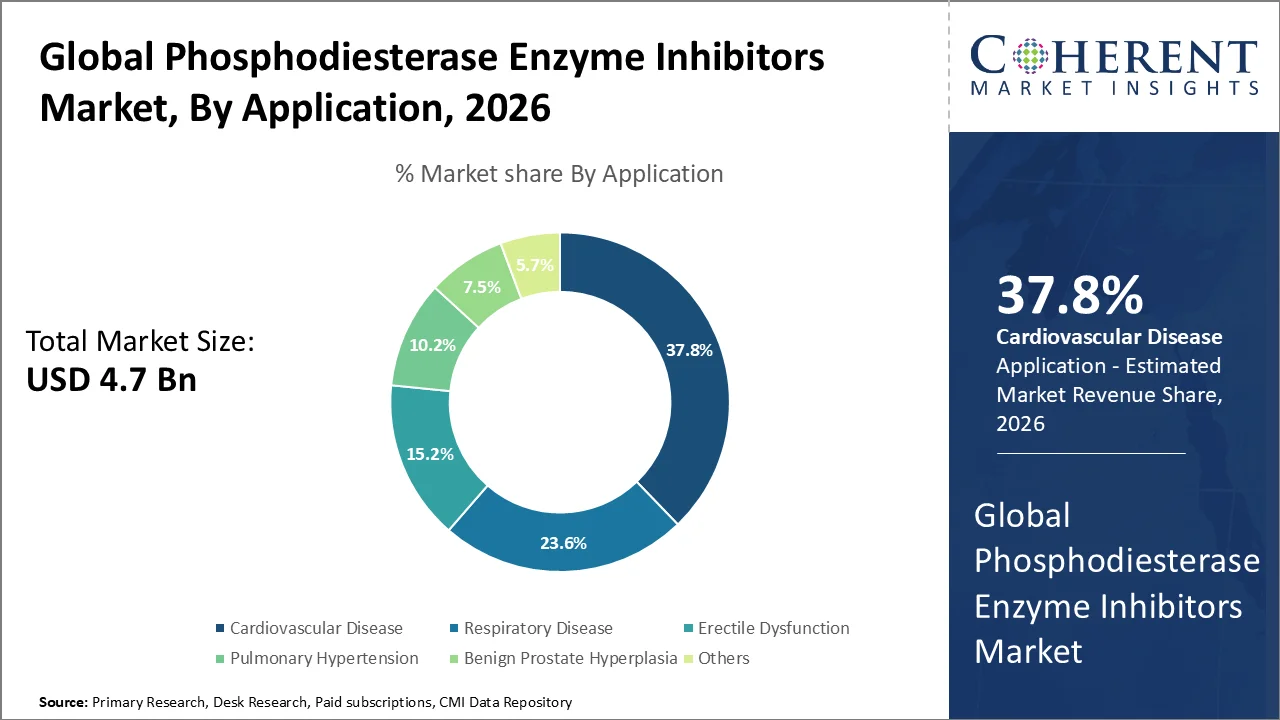
Cardiovascular Disease expected to hold largest market share of 37.8% in 2026. The growing burden of cardiovascular diseases, especially pulmonary hypertension and heart failure, increases demand for phosphodiesterase enzyme inhibitors. Cardiovascular diseases (CVDs) are the leading global cause of death, accounting for an estimated 17.9 million deaths annually. PDE5 inhibitors enhance cGMP signaling and promote pulmonary vasodilation, supporting their use in treating pulmonary arterial hypertension. Researchers continue to investigate their effects on pulmonary hemodynamics, exercise capacity, and cardiac function, driving further market development. Greater diagnosis of cardiovascular disorders, expanding treatment options, and ongoing clinical studies encourage pharmaceutical companies to develop targeted PDE therapies and explore broader cardiovascular applications.
Phosphodiesterase Enzyme Inhibitors Market Trends
- Growing adoption of selective PDE inhibitors: Selective PDE inhibitors are gaining attention because targeting specific PDE isoforms can provide more targeted pharmacological effects. The continued development of isoform-specific therapies is supported by recent regulatory activity, including the FDA approval of nerandomilast, a PDE4B inhibitor, for progressive pulmonary fibrosis in 2025. This expansion into a new indication demonstrates continued commercial and clinical interest in selective PDE inhibition.
- Increasing use of PDE4 inhibitors in respiratory and inflammatory diseases: PDE4 inhibition continues to expand across respiratory and inflammatory indications. In June 2024, the FDA approved Ohtuvayre (ensifentrine), a PDE3/PDE4 inhibitor, for the maintenance treatment of COPD in adults. The approval was supported by two clinical trials involving 1,553 adults with moderate-to-severe COPD.
- Rising prevalence of chronic diseases and an aging population increases demand for PDE inhibitor therapies as healthcare systems manage growing numbers of patients with cardiovascular disorders, pulmonary hypertension, COPD, erectile dysfunction, and inflammatory diseases.
- Expansion of clinical research into novel PDE targets and indications: Development of therapies targeting individual PDE isoforms is broadening the potential applications of the drug class. The FDA's approval of ensifentrine as a dual PDE3/PDE4 inhibitor for COPD and the subsequent development of selective PDE4B inhibition for pulmonary fibrosis demonstrate continued exploration of PDE targets beyond traditional indications.
Regional Insights
North America dominates owing to high awareness and diagnosis of erectile dysfunction
North America is expected to acquire the dominant share of 38.90% in 2026. North America’s advanced healthcare infrastructure, high diagnosis rates, and strong access to specialized care drive demand for phosphodiesterase enzyme inhibitors. The region’s high prevalence of erectile dysfunction, pulmonary arterial hypertension, COPD, and cardiovascular disorders creates a substantial patient base. An estimated 30–50 million men in the United States experience erectile dysfunction (ED), with the condition affecting approximately 18% of adult men overall; prevalence varies substantially with age and underlying health conditions. Established clinical practices, supportive reimbursement systems, and significant healthcare spending improve treatment access. Furthermore, pharmaceutical companies invest heavily in research and development, while specialist care and growing patient awareness encourage PDE inhibitor adoption and strengthen market expansion across North America. In January 2026, Omeros Corporation announced a revised schedule for its conference call to discuss the FDA’s recent approval of YARTEMLEA (narsoplimab-wuug), the first and only approved therapy for hematopoietic stem cell transplant-associated thrombotic microangiopathy (TA-TMA).
Asia Pacific Phosphodiesterase Enzyme Inhibitors Market Trends
The Asia Pacific phosphodiesterase enzyme inhibitors market gains momentum from rising healthcare spending, growing rates of cardiovascular, respiratory, and erectile dysfunction disorders, and broader access to medical services. NSO Survey 2025 reports that heart disease cases in India have nearly tripled over seven years, with growing risks among 15–29-year-olds. Patients and healthcare providers increasingly recognize available treatment options, while better diagnostic capabilities encourage adoption. Pharmaceutical manufacturers in India and China continue to expand production, improving access to affordable therapies. Government healthcare programs, increased research and development, an aging population, and expanding clinical applications of PDE inhibitors further strengthen regional demand and create new market opportunities.
United States Phosphodiesterase Enzyme Inhibitors Market Trends
The United States phosphodiesterase enzyme inhibitors market gains momentum as healthcare providers increasingly treats erectile dysfunction, pulmonary hypertension, chronic obstructive pulmonary disease, and other chronic conditions. Higher healthcare spending, advanced medical infrastructure, and greater disease awareness encourage more patients to seek diagnosis and treatment. U.S. healthcare spending hit USD 5.3 trillion in 2024, accounting for 18% of GDP. Pharmaceutical companies continue to invest in research and development, expand therapeutic applications, and introduce improved treatment options. Widespread clinical use of PDE5 inhibitors and PDE4 therapies, combined with greater access to generic medicines, further strengthens market growth across the United States. Lupin Limited launched FDA-approved Sildenafil Tablets USP in 25 mg, 50 mg, and 100 mg strengths as a generic version of Pfizer’s Viagra. The PDE5 inhibitor is indicated for treating erectile dysfunction (ED).
China Phosphodiesterase Enzyme Inhibitors Market Trends
China’s phosphodiesterase enzyme inhibitors market is expanding as an aging population and the increasing prevalence of respiratory and urological disorders drive treatment demand. China recorded approximately 266,887 new genitourinary cancer cases and 108,589 deaths, with incidence and mortality varying by age. Patients and healthcare providers are also showing greater awareness of available therapies. Expanded healthcare coverage and improved access to hospitals, online consultations, and digital pharmacies further support adoption. Domestic pharmaceutical companies are strengthening research and development, expanding affordable generic and innovative PDE inhibitors. Regulatory reforms, advanced clinical research, and new formulations continue to broaden treatment options and intensify market competition.
Who are the Major Companies in Phosphodiesterase Enzyme Inhibitors Industry
Some of the major key players in Phosphodiesterase Enzyme Inhibitors are Pfizer, Inc., AstraZeneca plc, Bayer AG, Eli Lilly & Company, Celgene Corporation, Mist Pharmaceuticals
Key News
- In January 2025, Verona Pharma has made a strong start by launching Ohtuvayre, its first product and a maintenance treatment for chronic obstructive pulmonary disease (COPD).
Market Report Scope
Phosphodiesterase Enzyme Inhibitors Market Report Coverage
| Report Coverage | Details | ||
|---|---|---|---|
| Base Year: | 2025 | Market Size in 2026: | USD 4.7 Bn |
| Historical Data for: | 2020 To 2024 | Forecast Period: | 2026 To 2033 |
| Forecast Period 2026 to 2033 CAGR: | 6.7% | 2033 Value Projection: | USD 7.2 Bn |
| Geographies covered: |
| ||
| Segments covered: |
| ||
| Companies covered: | Pfizer, Inc., AstraZeneca plc, Bayer AG, Eli Lilly & Company, Celgene Corporation, Mist Pharmaceuticals. | ||
Analyst Opinion
- Phosphodiesterase enzyme inhibitors are moving from niche therapies toward more strategically important treatment options because their clinical value spans multiple high-burden conditions. PDE5 inhibitors, for example, have become established therapies for erectile dysfunction and pulmonary arterial hypertension, while PDE4 inhibitors address inflammatory respiratory and dermatological conditions. In the U.S., erectile dysfunction affects about 30 million men, creating a substantial treatment pool for PDE5 inhibitors. In pulmonary arterial hypertension, clinical evidence has shown PDE5 inhibitors such as sildenafil and tadalafil can improve exercise capacity and hemodynamic outcomes.
- The PDE5 segment remains the market’s commercial anchor, but prescribing is increasingly shaped by combination therapy and treatment persistence rather than simple patient volume. Sildenafil and tadalafil are used across erectile dysfunction and pulmonary hypertension, while tadalafil also offers a longer duration of action, supporting differentiated prescribing. Clinical studies have demonstrated that tadalafil can provide therapeutic effects for up to 36 hours, a characteristic that materially influences patient preference and supports premium positioning. Manufacturers that emphasize duration, tolerability, dosing convenience, and indication-specific formulations will capture greater value than companies competing primarily on generic pricing.
- Respiratory applications represent the strongest diversification opportunity for PDE inhibitors, particularly as clinicians seek therapies that address chronic inflammatory disease with improved tolerability. Roflumilast, a selective PDE4 inhibitor, is approved for reducing the risk of COPD exacerbations in patients with severe COPD associated with chronic bronchitis and a history of exacerbations. COPD affected an estimated 392 million people globally in 2020, highlighting the scale of the underlying clinical need. The approval of roflumilast cream for plaque psoriasis also demonstrates how PDE4 inhibition can expand beyond respiratory medicine.
- China is becoming particularly important for PDE inhibitor competition because domestic manufacturers can combine established active ingredients with aggressive generic development and expanding clinical capabilities. China has more than 1.4 billion people and faces a rapidly aging population, while chronic respiratory and cardiovascular diseases continue to create substantial treatment demand. The country’s centralized procurement policies also place intense pressure on drug prices, making manufacturing efficiency and portfolio breadth critical.
Speak to the analyst
Want personalized insights?
Take the findings above to one of our principal consultants, or have the report rebuilt around the segments, geographies and competitors you actually track.
Market Segmentation
- By Drug Class (Revenue, USD Bn, 2021-2033)
- Selective PDE inhibitors
- PDE-1
- PDE-2
- PDE-3
- PDE-4
- PDE-5
- Others
- Non-selective PDE inhibitors
- Selective PDE inhibitors
- By Application (Revenue, USD Bn, 2021-2033)
- Cardiovascular Disease
- Respiratory Disease
- Erectile Dysfunction
- Pulmonary Hypertension
- Benign Prostate Hyperplasia
- Others
- By Region (Revenue, USD Bn, 2021-2033)
- North America
- U.S.
- Canada
- Latin America
- Brazil
- Mexico
- Argentina
- Rest of Latin America
- Europe
- Germany
- U.K.
- France
- Italy
- Spain
- Russia
- Rest of Europe
- Asia Pacific
- China
- India
- Japan
- Australia
- South Korea
- ASEAN
- Rest of Asia Pacific
- Middle East
- GCC
- Israel
- Rest of Middle East
- Africa
- South Africa
- Central Africa
- North Africa
- North America
Sources
Primary Research interviews
- Key opinion leaders in urology, pulmonology, cardiology, dermatology, and sexual medicine
- Hospital-based physicians and specialists prescribing PDE5 and PDE4 inhibitors
- Clinical pharmacists and formulary decision-makers
- Pharmaceutical R&D executives and regulatory specialists
- Generic drug manufacturers and API suppliers
- Clinical-trial investigators and academic researchers
Databases
- U.S. Food and Drug Administration (FDA) drug databases
- National Library of Medicine (NLM) / PubMed
- ClinicalTrials.gov
- World Health Organization (WHO) databases
- European Medicines Agency (EMA) databases
- U.S. National Center for Biotechnology Information (NCBI) resources
- National health and pharmaceutical regulatory databases
Magazines
- Pharmaceutical Executive
- Pharmaceutical Technology
- Drug Discovery & Development
- Fierce Pharma
- Fierce Biotech
- BioPharma Dive
- Medical Device Network
Journals
- The Journal of Sexual Medicine
- European Urology
- American Journal of Respiratory and Critical Care Medicine
- Chest
- New England Journal of Medicine
- The Lancet
- Nature Reviews Drug Discovery
- British Journal of Clinical Pharmacology
- Journal of Clinical Investigation
- PubMed-indexed peer-reviewed literature
Newspapers
- The New York Times
- The Wall Street Journal
- Financial Times
- The Guardian
- Reuters
- Bloomberg
- The Economic Times
Associations
- American Urological Association (AUA)
- European Association of Urology (EAU)
- American Thoracic Society (ATS)
- European Respiratory Society (ERS)
- American College of Cardiology (ACC)
- American Heart Association (AHA)
- International Society for Sexual Medicine (ISSM)
- Pulmonary Hypertension Association (PHA)
Public Domain sources
- U.S. Food and Drug Administration (FDA) prescribing information and regulatory documents
- National Institutes of Health (NIH) publications and databases
- PubMed and NCBI Bookshelf
- ClinicalTrials.gov clinical-trial records
- World Health Organization publications and datasets
- European Medicines Agency regulatory documents
- Centers for Disease Control and Prevention (CDC) disease statistics
- U.S. National Cancer Institute and other NIH-supported scientific resources
- Government health ministry and national regulatory-agency publications
Proprietary Elements
- CMI Data Analytics Tool
- Proprietary CMI Existing Repository of information for last 10 years
Get access to 250+ pages report
Every segment, forecast, competitor profile and data table behind the analysis above — available for instant download.
- ESOMAR Member
- ISO 9001:2015 Certified
- D-U-N-S Registered
- GDPR & CCPA Compliant
Missing comfort of reading report in your local language? Find your preferred language:
Transform your Strategy with Exclusive Trending Reports
Frequently Asked Questions
The Phosphodiesterase Enzyme Inhibitors Market is anticipated to grow at a CAGR of 6.7% with USD 4.7 Bn in 2026 and is expected to reach USD 7.2 Bn in 2033.
PDE5 inhibitors represent one of the most commercially established segments because sildenafil, tadalafil, vardenafil, and avanafil have well-defined clinical applications.
Respiratory and inflammatory diseases are key demand drivers. Roflumilast has an established role in COPD, while apremilast is used for psoriasis and psoriatic arthritis.
Indication expansion allows pharmaceutical companies to extend established molecules into additional patient populations rather than relying exclusively on their original indications.
Tolerability, adverse effects, drug interactions, and intense generic competition remain important challenges.