

Postmenopausal Osteoporosis Market Size and Forecast – 2026 to 2033
Postmenopausal Osteoporosis Market is estimated to be valued at USD 5,413.2 Mn in 2026 and is expected to reach USD 7,416.0 Mn in 2033, exhibiting a compound annual growth rate (CAGR) of 4.6% from 2026 to 2033.
Key Takeaways
- By Drug Class, Bisphosphonates acquired the prominent share of 74.4% in 2026 owing to the aging population and rising osteoporosis prevalence.
- By Route of Administration, Oral holds the largest share of 68% in 2026 on account of its wide availability and accessibility.
- By Distribution Channel, Hospital Pharmacies dominates the overall market with an estimated share of 44.7% in 2026 owing to the growing support for inpatient and outpatient services.
- By Region, North America acquired the prominent share of 37.2% in 2026 as Robust Pharmaceutical Industry and Innovation.
Market Overview
The postmenopausal osteoporosis market is experiencing significant growth, driven by several key factors. The aging global population, particularly the increasing number of postmenopausal women, has led to a higher prevalence of osteoporosis, thereby boosting demand for effective treatments. Advancements in drug development, including the introduction of biologics and combination therapies, have improved treatment efficacy and patient outcomes. Additionally, increased awareness and education about osteoporosis have led to earlier diagnosis and proactive management, further propelling market growth. The expansion of healthcare infrastructure and reimbursement policies in emerging economies has also facilitated greater access to osteoporosis treatments. These combined factors are expected to continue driving the market's expansion in the coming years.
Current Events and Its Impact
Current Events | Description and its impact |
Regulatory and Policy Changes |
|
Drug Development & Market Dynamics |
|
Global Health Initiatives |
|
Role of AI (Artificial Intelligence) in the Postmenopausal Osteoporosis Market
Artificial Intelligence (AI) is improving drug research, diagnosis, and treatment customisation, which is revolutionizing the postmenopausal osteoporosis market. By more precisely evaluating bone mineral density scans (like DEXA), AI-powered diagnostic tools are enhancing early osteoporosis identification by allowing physicians to spot minute changes that the human eye might overlook. Additionally, machine learning algorithms are being used to predict fracture risk using patient-specific information such as age, medical history, and genetic markers. This allows for more individualized treatment plans. AI in drug discovery expedites the process of finding new therapeutic targets and, by forecasting patient reactions, improves the design of clinical trials.
For example, UCB plans to license its AI technology for enhanced osteoporosis detection to ImageBiopsy Lab.
- Current Industry Events of 2026
- Market Size Estimation
- Regional Breakdown
- Competitive Landscape
- Customer Intelligence
- Segmental Analysis
- Pricing Analysis
- Key Market Drivers, Challenges & Future Trends
- Customized Insights Section
Reimbursement Policies in the Postmenopausal Osteoporosis Market
Medicare covers a number of osteoporosis-related services in the United States. Outpatient screenings including bone density tests and some injectable therapies like denosumab (Prolia) are covered by Medicare Part B if certain requirements are met. For example, if a woman has osteoporosis, is eligible for Medicare home health services, and suffers a related fracture, Part B may pay for Prolia injections. Different reimbursement schemes for osteoporosis treatments are found in European nations. After receiving bisphosphonates, denosumab is covered in France as a second-line treatment for postmenopausal women who are at higher risk of fracture. For some patients, particularly those who are intolerant to bisphosphonates, selective estrogen receptor modulators (SERMs), such as raloxifene, are advised and compensated.
End-user Feedback and Unmet Needs in the Postmenopausal Osteoporosis Market
- Many postmenopausal women report delayed diagnosis, often discovering osteoporosis only after suffering a fracture, which suggests a major gap in early screening and awareness.
- There is widespread concern over the side effects of available medications, particularly bisphosphonates, which are known to cause gastrointestinal discomfort and, in rare cases, serious conditions like osteonecrosis of the jaw.
- Inconvenient dosing regimens, such as infusions required every 6 to 12 months or oral tablets with complex instructions, are frequently cited as barriers to long-term adherence.
- A key unmet need is more affordable access to effective therapies, especially newer biologics like denosumab or romosozumab, which remain expensive and poorly reimbursed in many healthcare systems.
- There is also demand for better integration of lifestyle and non-pharmaceutical interventions such as strength training, calcium-rich diets, and fall prevention programs, which are often overlooked in treatment plans.
- Patients request holistic approaches that consider comorbid conditions, family history, and preferences rather than one-size-fits-all pharmacological solutions.
Segmental Insights
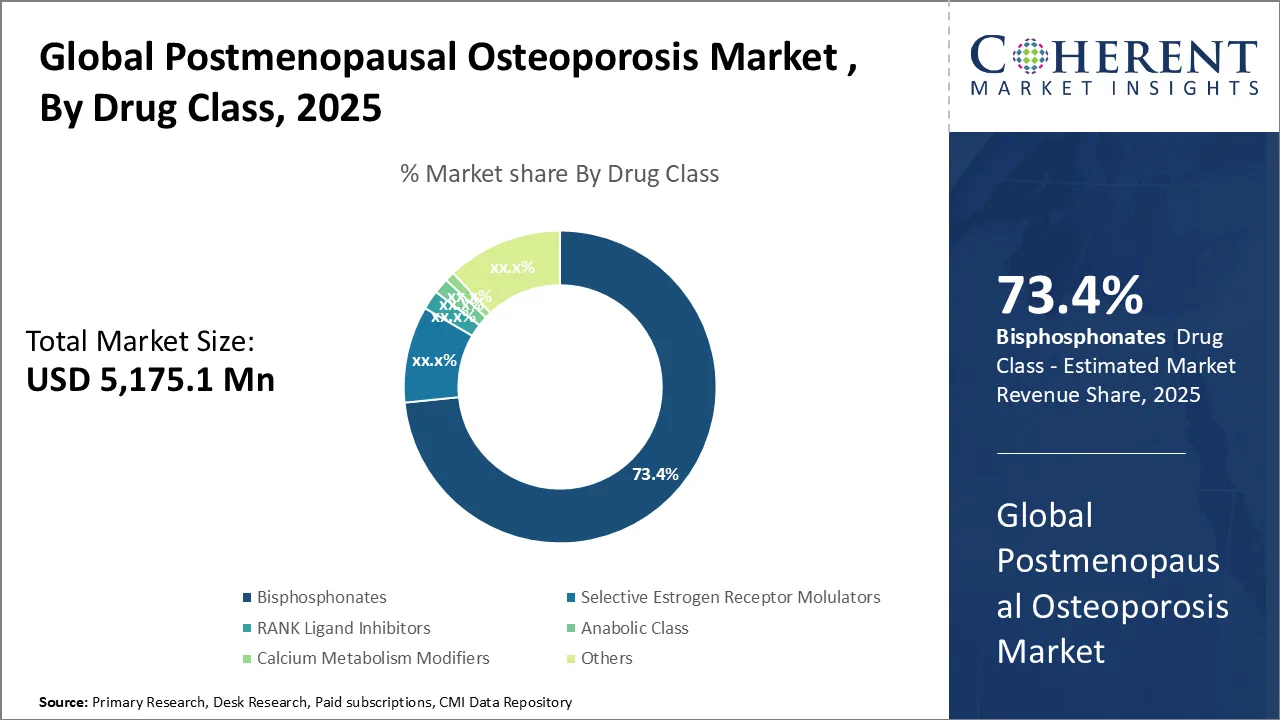
Postmenopausal Osteoporosis Market Insights, by Drug Class - Bisphosphonates contribute the highest share of the market as Advancements in Drug Formulations
The proven effectiveness of bisphosphonates in halting bone loss and lowering the risk of fractures makes them a mainstay in the treatment of postmenopausal osteoporosis. By preventing osteoclast-mediated bone resorption, these drugs help to preserve or improve bone mineral density. Alendronate, risedronate, and ibandronate are often prescribed drugs that are widely accessible in oral and injectable formulations, providing therapeutic flexibility according to patient requirements and preferences. Generic bisphosphonates' low cost contributes to their broad use, especially in healthcare systems with tight budgets. According to an article published by Versus Arthritis, bisphosphonates are used to lower the risk of fractures in the hip and spine caused by osteoporosis, which is further contributing to the postmenopausal osteoporosis market growth.
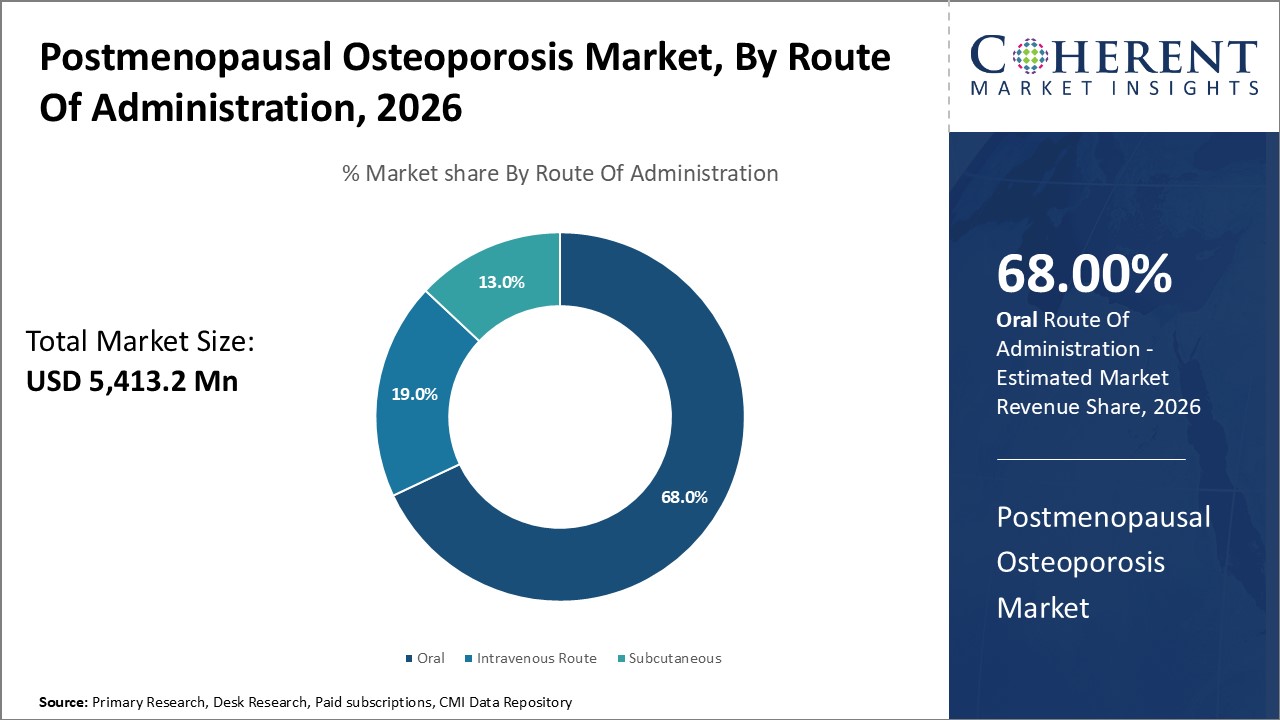
Postmenopausal Osteoporosis Market Insights, by Route of Administration - Oral drives the largest application segment due to Wide Availability and Accessibility
In the treatment of postmenopausal osteoporosis, oral treatments are essential because they provide many patients with a practical and efficient option. These drugs are frequently prescribed because they have been shown to be effective in lowering the risk of fractures and because they are simple to use, especially oral bisphosphonates like alendronate and risedronate. Healthcare professionals can customize treatment strategies to meet the needs of each patient by using flexible dose schedules, such as daily, weekly, or monthly, which improves adherence and results. Furthermore, accessibility and affordability have increased due to the availability of generic formulations, particularly in healthcare settings where costs are a concern. Apart from this, people prefer oral therapy which is further accelerating the postmenopausal osteoporosis market demand. For example, 77% of patients preferred oral therapy, with 70.4% feeling it disrupted their daily life less, 86.9% having no swallowing difficulties, and 56.8% not worried about missing doses.
Postmenopausal Osteoporosis Market Insights, by Distribution Channel - Hospital Pharmacies hold the largest share due to Expertise in Medication Management
Hospital pharmacies are crucial distribution channels for pharmaceuticals, especially for patients in need of specialist care, and are therefore important players in the market for postmenopausal osteoporosis treatments. The administration of cutting-edge osteoporosis therapies, including injectable biologics like denosumab and romosozumab, depends heavily on these pharmacies. Hospital pharmacies allow for easy collaboration between pharmacists, doctors, and other healthcare professionals because they are located within medical facilities. By ensuring prompt drug delivery, tracking patient reactions, and modifying treatment regimens as needed, this integration improves patient outcomes overall. Hospital pharmacies serve both inpatient and outpatient patients by giving them prescription drugs both while they are in the hospital and after they are discharged.
Regional Insights
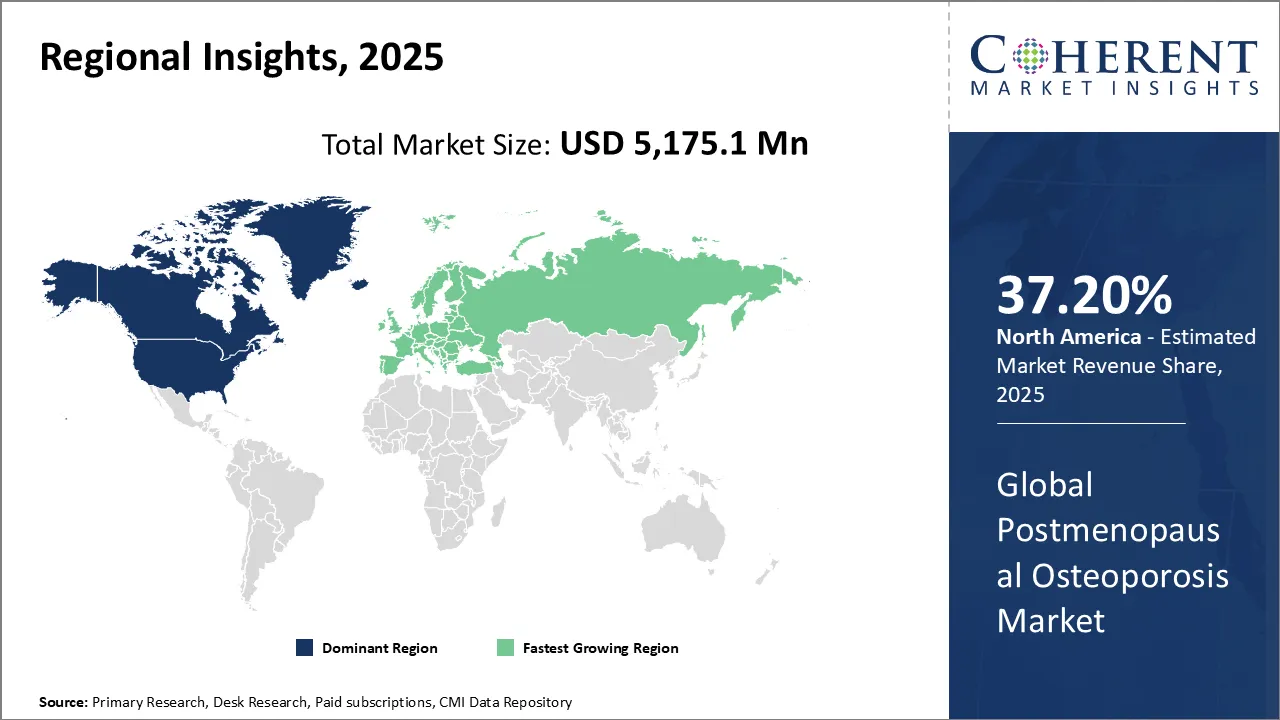
North America Postmenopausal Osteoporosis Market Trends
An aging population, greater awareness, and improved treatment choices are all contributing to the postmenopausal osteoporosis market growth in North America. North America acquires 37.2% market share in 2026, with the United States dominating because of its highly developed healthcare system and high diagnostic rates. About 71 million Americans are expected to have osteoporosis or reduced bone mass by 2030, demonstrating the high incidence of osteoporosis among women 50 and older. Furthermore, RANKL inhibitors like denosumab are becoming more popular; in 2024, the FDA approved biosimilars of Jubbonti and Wyost, improving accessibility and affordability. For Instances, The US Food and Drug Administration (FDA) approved Wyost (denosumab-bbdz) and Jubbonti (denosumab-bbdz), the first and only FDA-approved denosumab biosimilars, to treat postmenopausal women with osteoporosis, Sandoz, a major player in generic and biosimilar medications.
Asia Pacific Postmenopausal Osteoporosis Market Trends
The postmenopausal osteoporosis market in Asia Pacific is expanding significantly due to changes in the population, heightened awareness of healthcare issues, and improvements in available treatments. At the front of this expansion are nations like China, Japan, India, and South Korea, each of which makes a distinct contribution to the marketplace dynamics. Reports indicate that approximately 60 million people in India suffer from osteoporosis, with women accounting for 80% of cases. The peak onset of osteoporosis in India happens 10 to 20 years earlier compared to Western countries. Edirol (eldecalcitol), a medication licensed for the treatment of postmenopausal osteoporosis, government assistance, and a rapidly aging population are the main drivers of this rise. The introduction of innovations like romosozumab, a monoclonal antibody that promotes bone growth and reduces bone resorption, in nations like Japan has improved postmenopausal women's treatment options. This is further contributing to the postmenopausal osteoporosis market share.
United States Postmenopausal Osteoporosis Market Trends
Growing awareness of bone health, improved treatment choices, and an aging population are all contributing to the postmenopausal osteoporosis industry in the United States. Because of their ability to lower fracture risk and maintain long-term tolerability, bisphosphonates continue to be the most prescribed medication and enjoy a substantial market share. The U.S. Food and Drug Administration (FDA) has approved Prolia™ (denosumab) for treating postmenopausal women with osteoporosis who are at high risk of fractures, further contributing to the postmenopausal market share.
India Postmenopausal Osteoporosis Market Trends
With life expectancy increasing, a significant portion of India's population is aging. For example, an article by the UNFPA states that India’s elderly population, currently at 153 million people aged 60 and above, is projected to rise dramatically to 347 million by 2050. This demographic shift has led to a higher prevalence of osteoporosis, particularly among women, as bone density naturally decreases with age.
Postmenopausal Osteoporosis Market Trends
Technology Integration
The growing use of digital health tools, including wearable technology, AI-powered risk assessment tools, and smartphone applications, is revolutionizing the treatment of osteoporosis by encouraging adherence and facilitating real-time monitoring. Government initiatives and nonprofit campaigns that inform women on lifestyle modifications, calcium and vitamin D consumption, and early screening are fueling the growing movement in favor of preventive treatment. Consultations and follow-ups for osteoporosis are becoming easier with the use of telemedicine, particularly for older women living in remote or disadvantaged locations.
Postmenopausal Osteoporosis Market Opportunities
Rising Aging Female Population
The global increase in the population of women aged 50 and above is a major driver of the PMO market. Postmenopausal women are at high risk of developing osteoporosis due to declining estrogen levels, making them prime targets for treatment. This demographic trend is particularly pronounced in developed nations and rapidly aging regions such as East Asia and Eastern Europe, where healthcare systems are investing more in elderly care.
Growth in Biosimilars and Affordable Options
With the expiration of patents for some leading PMO drugs, there is a growing opportunity for biosimilars to enter the market. These cost-effective alternatives are making treatment more accessible in low- and middle-income countries. Pharmaceutical companies that develop high-quality biosimilars can tap into a wider patient base, particularly where healthcare affordability is a concern.
Market Report Scope
Postmenopausal Osteoporosis Market Report Coverage
| Report Coverage | Details | ||
|---|---|---|---|
| Base Year: | 2025 | Market Size in 2026: | USD 5,413.2 Mn |
| Historical Data for: | 2020 To 2024 | Forecast Period: | 2026 To 2033 |
| Forecast Period 2026 to 2033 CAGR: | 4.6% | 2033 Value Projection: | USD 7,416.0 Mn |
| Geographies covered: |
| ||
| Segments covered: |
| ||
| Companies covered: | Pfizer Inc., F. Hoffmann-La Roche Ltd, Mylan N.V. (Viatris Inc.), Fresenius Kabi AG, Hikma Pharmaceuticals PLC, Novartis AG, Teva Pharmaceutical Industries Ltd., GlaxoSmithKline plc, Sun Pharmaceutical Industries Ltd, Ligand Pharmaceuticals Incorporated, Paras Biopharmaceuticals Finland Oy, Eli Lilly and Company, TRANSCENTA HOLDING, Amgen, Gedeon Richter Plc. Enzene Biosciences, Samsung BioepisL Radius Health, Inc., Alvotech, and AryoGen Pharmed | ||
| Growth Drivers: |
| ||
| Restraints & Challenges: |
| ||
Postmenopausal Osteoporosis Market News
- In February 2025, the U.S. Food and Drug Administration (FDA) approved the Biologics License Application (BLA) for OSPOMYV™ (denosumab-dssb; SB16; 60 mg pre-filled syringe) and XBRYK™ (denosumab-dssb; SB16; 120 mg vial), biosimilars referencing Prolia and Xgeva.
- In October 2024, Pharmed Limited, a leading pharmaceutical company in India, launched the India Bone Health Initiative (IBHI) on World Osteoporosis Day.
- In January 2025, 23andMe Holding Co. launched a new polygenic risk score (PRS) report* on osteoporosis genetics for 23andMe+ Premium members.
- In November 2023, Apotex Corp. launched Teriparatide Injection, a single-use pre-filled pen for osteoporosis treatment in the U.S., delivering 28 daily doses of 20 mcg each.
- In December 2019, Evenity® (romosozumab) has been approved for sale by the European Commission (EC) to treat severe osteoporosis in postmenopausal women who are at high risk of fracture. The medication is a brand-new bone-building monoclonal antibody (mAb) that decreases bone resorption to a lesser degree while simultaneously increasing bone growth. Evenity's mechanism of action involves blocking sclerostin activity, which also promotes the growth of new bone.
- In May 2020, Industry reports state that Daewon Pharmaceutical has introduced Terrosa, a biosimilar teriparatide for osteoporosis that is based on Eli Lilly's Forsteo, to the Republic of Korea market. The launch follows the signing of a local sales agreement between Seoul-based Daewon and Richter-Helm Biotec, a joint venture between Gedeon Richter in Hungary and Helm in Germany.
- In March 2025, On the 19th, Daewoong Pharmaceutical formally introduced "Stoboclo," a biosimilar of Celltrion Pharm's osteoporosis medication Prolia, to the Korean market. The first domestic Prolia biosimilar is called Stoboclo. Amgen developed Prolia (ingredient name denosumab) in the United States. It increases bone density by inhibiting the action of osteoclasts that break down bone. It helps to lessen difficulties by suppressing bone metastases in cancer patients and lowering the risk of bone loss and fractures in postmenopausal women.
Analyst Opinion (Expert Opinion)
- The market for postmenopausal osteoporosis is at a turning phase, propelled by innovative treatments and calculated repositioning rather than volume growth. In my opinion, the market is now a race to change the patient journey, where availability, efficacy, and compliance all come together, rather than a race to treat osteoporosis. Nearly 50% of women stop taking oral bisphosphonate therapy within a year, which seriously compromises treatment results, according to a 2023 study that was published in The Journal of Bone & Mineral Research.
- The standard of care is being rewritten by emerging biologics. For example, in the FRAME trial, Amgen's Evenity (romosozumab), which is FDA-approved for women at high fracture risk, showed a 73% decrease in new vertebral fractures after 12 months when compared to a placebo. With both anabolic and antiresorptive actions, this medicine is not only superior; it redefines therapeutic goals.
- However, democratization of invention is necessary. Accessibility is still a structural barrier, especially in Latin America and Asia-Pacific. For example, a startling disparity that prevents early identification occurs in India, where less than 10% of postmenopausal women at risk get their bone mineral density (BMD) tested. Businesses that combine rural outreach and mobile BMD scanning technologies will reap benefits not only from increased sales but also from improved public health.
- Additionally, the behavioral science issue facing the PMO market needs to be acknowledged. Patient non-adherence is a communication breakdown rather than a medication problem. Digital adherence technologies, such as AiCure's AI-powered monitoring, are starting to make inroads into the markets for chronic diseases and have demonstrated up to 90% accuracy in confirming drug ingestion. The field of osteoporosis shouldn't fall behind. Such technologies have the potential to significantly change long-term results in this infamously noncompliant group.
Speak to the analyst
Want personalized insights?
Take the findings above to one of our principal consultants, or have the report rebuilt around the segments, geographies and competitors you actually track.
Market Segmentation
- Global Postmenopausal Osteoporosis Market, By Drug Class (Revenue, USD Mn, 2021 - 2033)
- Bisphosphonates
- Selective Estrogen Receptor Modulators (SERMs)
- RANK Ligand Inhibitors
- Anabolic Class
- Calcium Metabolism Modifiers
- Others (Calcitonin, Denosumab, among Others)
- Global Postmenopausal Osteoporosis Market, By Route of Administration (Revenue, USD Mn, 2021 - 2033)
- Oral
- Intravenous Route
- Subcutaneous
- Global Postmenopausal Osteoporosis Market By Distribution Channel (Revenue, USD Mn, 2021 - 2033)
- Hospital Pharmacies
- Retail Pharmacies
- Online Pharmacies
- Global Postmenopausal Osteoporosis Market, By Region (Revenue, USD Mn, 2021 - 2033)
- North America
- By Country
- U.S.
- Canada
- By Country
- Latin America
- By Country
- Brazil
- Mexico
- Argentina
- Rest of Latin America
- By Country
- Europe
- By Country
- Germany
- U.K.
- France
- Italy
- Spain
- Russia
- Rest of Europe
- By Country
- Asia Pacific
- By Country
- China
- India
- Japan
- Australia
- South Korea
- ASEAN
- Rest of Asia Pacific
- By Country
- Middle East
- By Country
- GCC
- Israel
- Rest of Middle East
- By Country
- Africa
- By Country/Region
- South Africa
- Central Africa
- North Africa
- By Country/Region
- North America
- Company Profiles
- Pfizer Inc.
- F. Hoffmann-La Roche Ltd
- Mylan N.V. (Viatris Inc.)
- Fresenius Kabi AG
- Hikma Pharmaceuticals PLC
- Novartis AG
- Teva Pharmaceutical Industries Ltd
- GlaxoSmithKline plc
- Sun Pharmaceutical Industries Ltd
- Ligand Pharmaceuticals Incorporated
- Paras Biopharmaceuticals Finland Oy
- Eli Lilly and Company
- TRANSCENTA HOLDING
- Amgen
- Gedeon Richter Plc.
- Enzene Biosciences
- Samsung BioepisL Radius Health, Inc.
- Alvotech
- AryoGen Pharmed
Sources
Primary Research Interviews
- Interviews with endocrinologists and rheumatologists specializing in bone health
- Discussions with pharmaceutical R&D leads involved in osteoporosis drug development
- Conversations with hospital procurement officers and retail pharmacists
- Feedback from patient advocacy groups and osteoporosis support networks
Databases
- World Health Organization (WHO) Global Health Observatory
- Global Burden of Disease (GBD) database
- U.S. Food and Drug Administration (FDA) Drug Approval Database
- ClinicalTrials.gov
- PubMed and MEDLINE
Magazines
- Pharmaceutical Executive
- Drug Discovery & Development
- Nature Biotechnology Review
- BioPharma Dive
Journals
- Journal of Bone and Mineral Research
- Osteoporosis International
- The Lancet Rheumatology
- Endocrine Reviews
- Bone Reports
Newspapers
- The New York Times – Health Section
- The Guardian – Global Development
- The Wall Street Journal – Pharma & Health News
- Financial Times – Life Sciences Coverage
Associations
- International Osteoporosis Foundation (IOF)
- National Osteoporosis Foundation (NOF)
- American Society for Bone and Mineral Research (ASBMR)
- European Calcified Tissue Society (ECTS)
Public Domain Sources
- World Bank Health Indicators
- Centers for Disease Control and Prevention (CDC)
- European Medicines Agency (EMA)
- U.S. National Institutes of Health (NIH)
- Ministry of Health portals in countries covered in the report
Proprietary Elements
- CMI Data Analytics Tool, and Proprietary CMI Existing Repository of information for last 8 years
Get access to 250+ pages report
Every segment, forecast, competitor profile and data table behind the analysis above — available for instant download.
- ESOMAR Member
- ISO 9001:2015 Certified
- D-U-N-S Registered
- GDPR & CCPA Compliant
Missing comfort of reading report in your local language? Find your preferred language:
Transform your Strategy with Exclusive Trending Reports
Frequently Asked Questions
The Postmenopausal Osteoporosis Market is estimated to be valued at USD 5,413.2 Mn in 2026, and is expected to reach USD 7,416.0 Mn by 2033.
The CAGR of the Postmenopausal Osteoporosis Market is projected to be 4.6% from 2026 to 2033.
Increasing research and development activities among research institutes is expected to drive the market.
Bisphosphonates is the leading drug class segment in the market.
The major factors hampering the market include Side effects from postmenopausal osteoporosis treatments.
Major players operating in the market include Pfizer Inc., F. Hoffmann-La Roche Ltd, Mylan N.V. (Viatris Inc.), Fresenius Kabi AG, Hikma Pharmaceuticals PLC, Novartis AG, Teva Pharmaceutical Industries Ltd., GlaxoSmithKline plc, Sun Pharmaceutical Industries Ltd, Ligand Pharmaceuticals Incorporated, Paras Biopharmaceuticals Finland Oy, Eli Lilly and Company, TRANSCENTA HOLDING, Amgen, Gedeon Richter Plc. Enzene Biosciences, Samsung BioepisL Radius Health, Inc., Alvotech, and AryoGen Pharmed.