

Prescriptive Analytics Market Size and Forecast — 2026 - 2033
The Global Prescriptive Analytics Market size is estimated to be valued at USD 6.8 billion in 2026 and is expected to reach USD 18.3 billion by 2033, exhibiting a compound annual growth rate (CAGR) of 15.4% from 2026 to 2033.
Overview
The Prescriptive Analytics market offers a range of solutions designed to recommend actionable strategies and optimize decision-making across industries. Key products include advanced analytics software platforms that integrate artificial intelligence, machine learning, and optimization algorithms to suggest the best course of action. Cloud-based prescriptive analytics solutions provide scalability and real-time insights, while on-premise deployments cater to enterprises with strict data security requirements. Specialized modules focus on supply chain optimization, financial forecasting, risk management, and marketing strategy. Additionally, industry-specific solutions for healthcare, retail, manufacturing, and logistics leverage predictive data to deliver prescriptive recommendations, driving efficiency, cost reduction, and competitive advantage.
Key Takeaways
The supply chain management application segment dominates the market with a 34% share, driven by enterprises aiming to optimize logistics, inventory management, and demand forecasting.
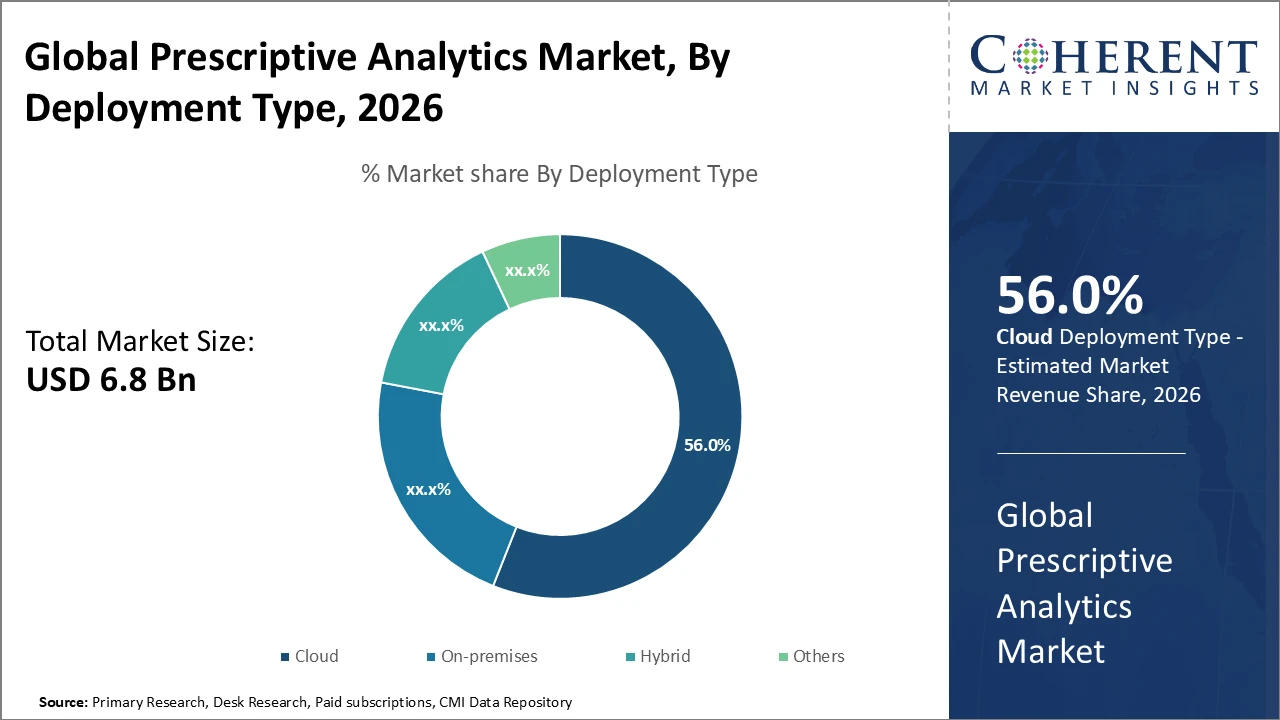
Cloud deployment leads with 56% market share, offering scalability, flexibility, and cost-efficiency, which are key for widespread adoption.
The healthcare end-user industry is a major contributor, using prescriptive analytics to enhance treatment personalization, operational efficiency, and regulatory compliance.
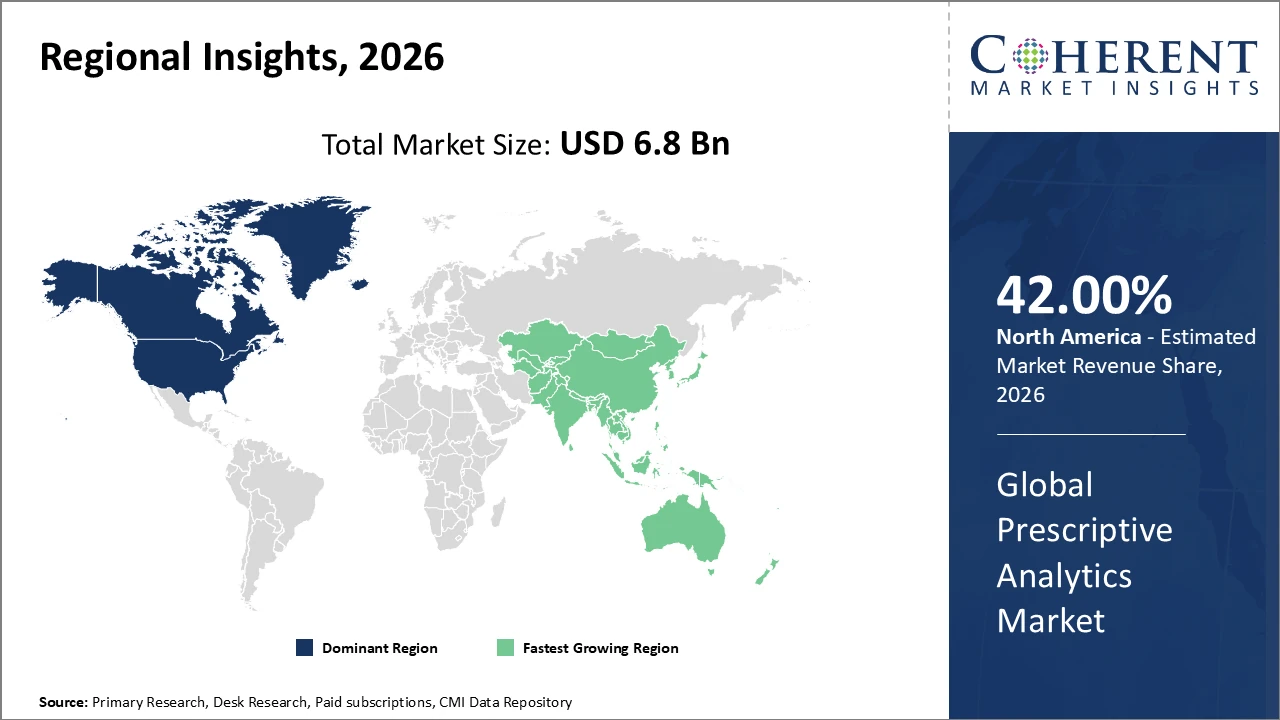
North America holds the largest regional market share at 42%, supported by mature analytics infrastructure, early adoption of AI technologies, and strong enterprise investment.
Asia Pacific is the fastest-growing region with a projected CAGR of 17.8%, fueled by rapid digitization, government smart manufacturing initiatives, and expanding IoT and industrial ecosystems.
Prescriptive Analytics Market Segmentation Analysis
Prescriptive Analytics Market Insights, By Deployment Type
Cloud deployments dominate the prescriptive analytics market with a 56% share, driven by scalability, cost-effectiveness, and seamless integration that allow organizations to expand analytics capabilities rapidly without large upfront investments. Enhanced data security frameworks aligned with regulatory standards contributed to a 30% rise in cloud adoption among financial institutions in 2025. Hybrid deployments are the fastest-growing subsegment, offering a balance between on-premises control and cloud flexibility, particularly for sensitive data. On-premises and other deployment types maintain smaller shares, often chosen by enterprises with legacy systems or strict data sovereignty needs.
Prescriptive Analytics Market Insights, By Application
Supply chain management leads the prescriptive analytics market with a 34% share, driven by the need to anticipate demand fluctuations and optimize inventory, with enterprises reporting up to 15% reduction in operational costs in 2025. Risk management is the fastest-growing application, as financial institutions and insurers use advanced analytics to mitigate credit, market, and operational risks. Fraud detection remains critical, with a 22% increase in prescriptive analytics adoption in 2026 to strengthen cybersecurity. Customer experience management is rapidly evolving through behavioral data-driven personalization. Other applications include marketing campaign optimization and HR analytics, enabling comprehensive business intelligence solutions.
Prescriptive Analytics Market Insights, By End User Industry
Healthcare dominates the prescriptive analytics market, driven by its critical role in optimizing patient outcomes, operational efficiency, and regulatory compliance. Adoption among healthcare providers rose by 23% in 2025, fueled by digital health initiatives and data-driven research. Banking and financial services represent the fastest-growing end-user segment, using prescriptive analytics for credit risk assessment, anti-money laundering, and customer retention, contributing to a 20% revenue increase from 2024 to 2026. Retail leverages analytics for demand forecasting and personalized marketing, while manufacturing applies it to predictive maintenance and quality control. Each sector uniquely shapes market dynamics, supported by industry-specific opportunities and challenges.
Prescriptive Analytics Market Trends
Greater adoption of augmented analytics tools is a key trend, reducing time-to-insight for business analysts. In 2026, financial institutions using augmented prescriptive analytics achieved a 20% reduction in credit default risks.
Hybrid cloud models are increasingly adopted, allowing organizations to balance security and flexibility, particularly in regulated industries such as pharmaceuticals.
AI ethics and compliance standards are gaining importance, prompting market players to redesign product frameworks and implement stronger data governance practices.
Europe and North America are leading regions in adopting these trends, driven by regulatory requirements and advanced digital infrastructure.
Prescriptive Analytics Market Insights, By Geography
North America Prescriptive Analytics Market Analysis and Trends
North America dominates the prescriptive analytics market, supported by a mature ecosystem with advanced data infrastructure and a strong presence of leading solution providers. Government initiatives promoting digital transformation, combined with extensive enterprise use cases in finance, healthcare, and manufacturing, reinforce market expansion. Organizations increasingly leverage prescriptive analytics to optimize operations, enhance risk management, and improve customer experience, positioning North America as a key revenue contributor and innovation hub in the global prescriptive analytics landscape.
Asia Pacific Prescriptive Analytics Market Analysis and Trends
Asia Pacific is the fastest-growing region in the prescriptive analytics market, with a projected CAGR of 17.8%, driven by rapid digitization across key economies such as China and India. The widespread adoption of IoT technologies and supportive government initiatives, particularly in smart manufacturing and smart city projects, are accelerating analytics integration. Strong collaborations between local technology vendors and multinational corporations are enhancing market penetration, knowledge transfer, and solution deployment. Additionally, increasing investments in AI and cloud infrastructure are enabling enterprises to leverage prescriptive analytics for operational efficiency, risk management, and customer experience optimization, positioning the region as a high-growth market hub.
Prescriptive Analytics Market Outlook for Key Countries
USA Prescriptive Analytics Market Analysis and Trends
The U.S. prescriptive analytics market is propelled by strong technological advancements and substantial investments in AI and cloud-based analytics from both private and public sectors. Leading companies, including IBM and Microsoft, have expanded their prescriptive analytics solutions to address regulatory compliance, risk management, and advanced fraud detection. Widespread adoption in healthcare, finance, and large enterprises has driven analytics spending growth of 25% year-over-year from 2024 to 2026. This robust demand for actionable insights and predictive decision-making positions the U.S. as a major revenue contributor and innovation leader, shaping trends and setting benchmarks for the global prescriptive analytics market.
Germany Prescriptive Analytics Market Analysis and Trends
Germany’s prescriptive analytics market is witnessing steady growth, driven by strong digital transformation initiatives across industries such as manufacturing, finance, and healthcare. The country’s robust IT infrastructure and high adoption of cloud-based analytics solutions support the integration of AI and machine learning for decision optimization. Key trends include the rise of real-time prescriptive analytics for supply chain and production efficiency, and increasing demand for risk management and compliance solutions in the financial sector. Additionally, German enterprises are focusing on industry-specific solutions, leveraging predictive insights to generate actionable recommendations, reduce operational costs, and enhance strategic planning, positioning the market for continued expansion.
Analyst Opinion
Demand-side indicators highlight that industries like banking and healthcare, using prescriptive analytics for risk management and personalized treatments, significantly boost market revenue. In 2025, U.S. healthcare providers increased adoption by 23%, improving patient outcomes.
Analytics software vendors have expanded production capacity and adjusted pricing strategies to support scalable cloud-based solutions. In 2024, cloud deployments grew by 30% across North American enterprises, enhancing market share for cloud-oriented providers.
Integration of IoT data with prescriptive analytics in manufacturing has fueled growth, with smart factories in Asia Pacific expanding analytics capacity by 28% in 2026, improving efficiency.
Import trends indicate rising cross-border software purchases and data service contracts, particularly in Latin America, where advanced analytics investments grew by 19% in 2025 due to increased business intelligence demand.
- Current Industry Events of 2026
- Market Size Estimation
- Regional Breakdown
- Competitive Landscape
- Customer Intelligence
- Segmental Analysis
- Pricing Analysis
- Key Market Drivers, Challenges & Future Trends
- Customized Insights Section
Market Scope
| Report Coverage | Details | ||
|---|---|---|---|
| Base Year: | 2025 | Market Size in 2026: | USD 6.8 billion |
| Historical Data for: | 2020 To 2024 | Forecast Period: | 2026 To 2033 |
| Forecast Period 2026 to 2033 CAGR: | 15.4% | 2033 Value Projection: | USD 18.3 billion |
| Geographies covered: |
| ||
| Segments covered: |
| ||
| Companies covered: | SAS Institute Inc., Microsoft Corporation, Oracle Corporation, IBM Corporation, SAP SE, Google LLC, Quest Analytics, Domo Inc., FICO, RapidMiner Inc. | ||
| Growth Drivers: |
| ||
Prescriptive Analytics Market Growth Factors
The growth of the prescriptive analytics market is driven by the widespread adoption of data-driven decision-making across industries, fueled by global digital transformation initiatives. In 2025, over 60% of Fortune 500 companies increased investments in prescriptive analytics to enhance operational efficiency. Cloud computing platforms have further accelerated adoption by enabling scalable, cost-effective deployment of advanced analytics. Regulatory compliance pressures, particularly in financial services, promoted a 22% increase in usage in 2026. Additionally, the integration of AI and machine learning algorithms into prescriptive analytics solutions strengthens real-time decision-making capabilities, supporting faster, more informed business growth and competitive advantage.
Prescriptive Analytics Market Development
Technology group Wärtsilä has launched GEMS Pulse, a predictive analytics offering meant to improve the financial and performance performance of energy storage facilities.
Key Players
Leading Companies of the Market
SAS Institute Inc.
IBM Corporation
Microsoft Corporation
Oracle Corporation
SAP SE
Google LLC
Domo, Inc.
Quest Analytics
FICO
RapidMiner Inc.
Several leading companies are leveraging strategic partnerships and product innovations to enhance their market presence and offerings. For instance, IBM’s collaboration with U.S. healthcare providers in 2025 boosted prescriptive analytics adoption by 18%, optimizing patient care strategies. Microsoft strengthened its cloud segment by launching Azure Synapse Analytics in 2024, delivering scalable prescriptive analytics capabilities and increasing market share by 12%. Similarly, SAP SE invested in AI-driven prescriptive analytics modules for the manufacturing sector, resulting in a 20% rise in enterprise deployments across Europe in 2026, reflecting the growing emphasis on targeted solutions and regional expansion in the market.
Prescriptive Analytics Market Future Outlook
The prescriptive analytics market is poised for robust growth, driven by increasing demand for data-driven decision-making and AI-powered optimization across industries. Future trends include wider adoption of real-time prescriptive solutions, integration with IoT and edge computing, and enhanced automation in supply chain, finance, and healthcare operations. Cloud-based platforms will continue to gain traction due to scalability and accessibility, while industry-specific solutions will expand to address unique operational challenges. The growing emphasis on personalized customer experiences, predictive maintenance, and risk mitigation will further accelerate market adoption. Overall, prescriptive analytics is expected to become a critical tool for strategic and operational excellence worldwide.
Prescriptive Analytics Market Historical Analysis
The prescriptive analytics market has experienced significant evolution over the past decade, driven by growing data volumes, advancements in artificial intelligence, and increasing demand for optimized decision-making across industries. Early adoption focused on predictive analytics, with prescriptive capabilities emerging as organizations sought actionable recommendations rather than just forecasts. Industries such as finance, healthcare, and manufacturing were among the first to leverage prescriptive analytics for risk management, operational efficiency, and strategic planning. Cloud adoption and improved computing power accelerated deployment, while integration with enterprise resource planning systems enhanced functionality. Historical growth reflects a shift from reactive to proactive decision-making, laying the foundation for current market expansion.
Sources
Primary Research Interviews:
Data scientists, business analysts, and AI specialists directly involved in prescriptive analytics implementation.
IT managers, enterprise decision-makers, and operations leaders responsible for deploying analytics solutions across supply chain, finance, and manufacturing.
Product managers, solution architects, and regulatory experts from software companies developing AI-driven prescriptive analytics platforms and optimization tools.
Magazines:
Analytics Insight – Updates on AI, prescriptive analytics trends, and industry applications.
CIO Magazine – Insights on enterprise analytics adoption, data-driven decision-making, and technology strategies.
InformationWeek – Focus on analytics software, digital transformation, and emerging prescriptive technologies.
Journals:
Journal of Business Analytics – Research on prescriptive modeling, optimization algorithms, and enterprise adoption.
Decision Support Systems – Studies on AI, machine learning, and prescriptive analytics in operational contexts.
Expert Systems with Applications – Investigations into predictive and prescriptive analytics applications across industries.
Newspapers:
The Financial Times – Global technology trends, enterprise software investments, and AI market developments.
Reuters – Updates on analytics software launches, corporate strategies, and industry adoption.
Bloomberg – Market performance, mergers, and technology-driven innovation in analytics.
Associations:
INFORMS (Institute for Operations Research and the Management Sciences) – Guidelines, research, and analytics standards.
International Institute of Business Analysis (IIBA) – Training, conferences, and insights on business analytics practices.
Association for Information Systems (AIS) – Research, publications, and trends in enterprise analytics adoption.
Get access to 250+ pages report
Every segment, forecast, competitor profile and data table behind the analysis above — available for instant download.
- ESOMAR Member
- ISO 9001:2015 Certified
- D-U-N-S Registered
- GDPR & CCPA Compliant
Missing comfort of reading report in your local language? Find your preferred language:
Transform your Strategy with Exclusive Trending Reports
Frequently Asked Questions
Leading market players include SAS Institute, IBM Corporation, Microsoft, Oracle, and SAP SE, all holding strong positions through innovative analytics platforms and strategic collaborations.
The market is expected to grow from USD 6.8 billion in 2026 to USD 18.3 billion by 2033, at a CAGR of 15.4%, driven by widespread adoption across industries and ongoing technological advancements.
Healthcare offers the largest growth potential due to the demand for personalized medicine, compliance with regulations, and optimization of clinical operations through prescriptive analytics.
Trends point to increased adoption of cloud and augmented analytics, integration with IoT at the edge, and a stronger focus on ethical AI practices shaping next-generation solutions.
The market is highly competitive, emphasizing innovation, partnerships, and cloud migration, while challenges include data privacy concerns and system integration complexities.
Common strategies include industry-specific solution development, strategic partnerships, cloud platform expansion, and investment in AI-driven analytics to boost adoption and market penetration.