

Progressive Supranuclear Palsy Treatment Market Size and Share Analysis - 2026 To 2033
The progressive supranuclear palsy treatment market is anticipated to grow at a CAGR of 12.2% with USD 313 Mn in 2026 and is expected to reach USD 689 Mn in 2033. Growth in this market is due to better research and more awareness of this rare brain disorder. Increasing incidence of progressive supranuclear palsy (PSP) (Globally, 1 per 100,000, with a prevalence rate of five per 100,000 individuals) is expected to boost the market. Doctors and scientists are learning more about Progressive Supranuclear Palsy and focusing on diagnosing it early and giving treatments that fit each patient. This approach can help patients feel better and live healthier lives.
Key Takeaways
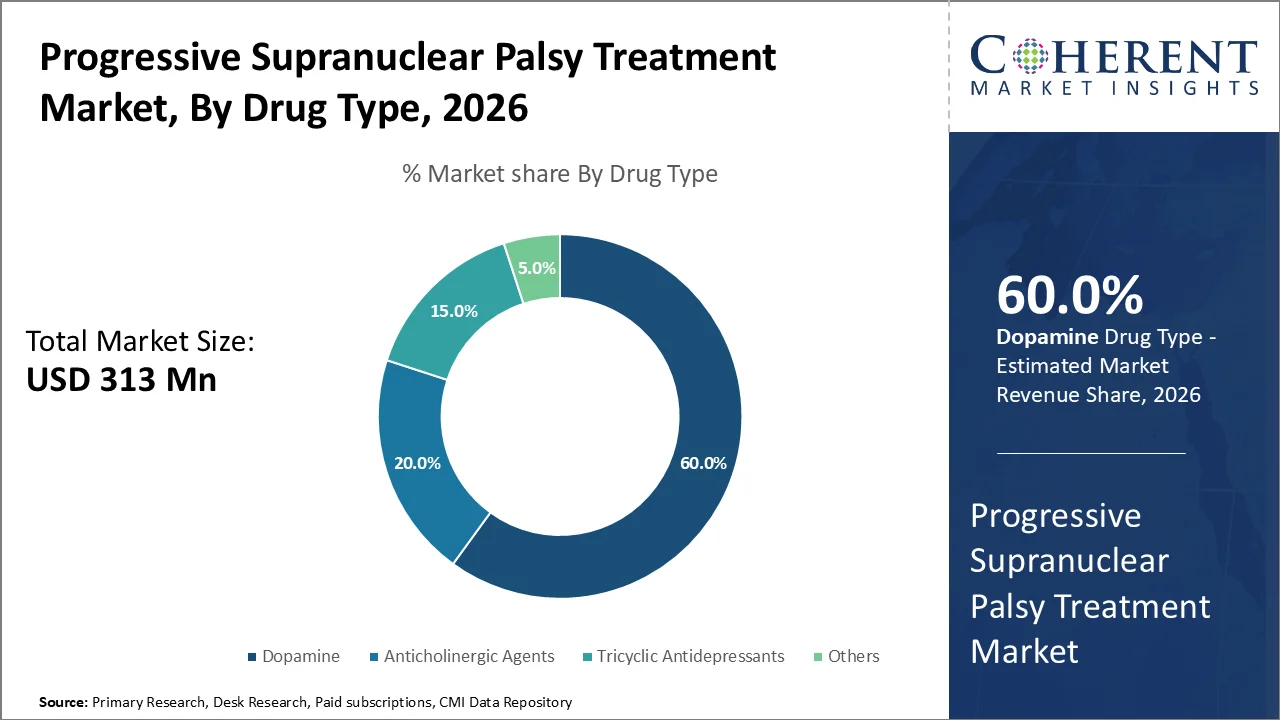
- Dopamine is expected to account the largest share of 60% in 2026, Dopamine drugs (like levodopa) target to replace or stimulate dopamine, which is deficient in PSP patients. This helps with main movement problems, making it a key treatment option. A new Parkinson’s drug, tavapadon, is now being reviewed by the FDA after trials showed it improved movement symptoms.
- Based on distribution channel, hospital pharmacies will dominate with 40% in 2026, PSP is a rare, serious neurodegenerative disorder. Patients are often diagnosed and treated in specialized hospitals or neurology clinics, where doctors directly dispense or prescribe medications. In Japan, around 59% of pharmacists worked in community pharmacies in 2022, while around 19% worked in hospitals or clinics, and the remaining 22% in other settings.
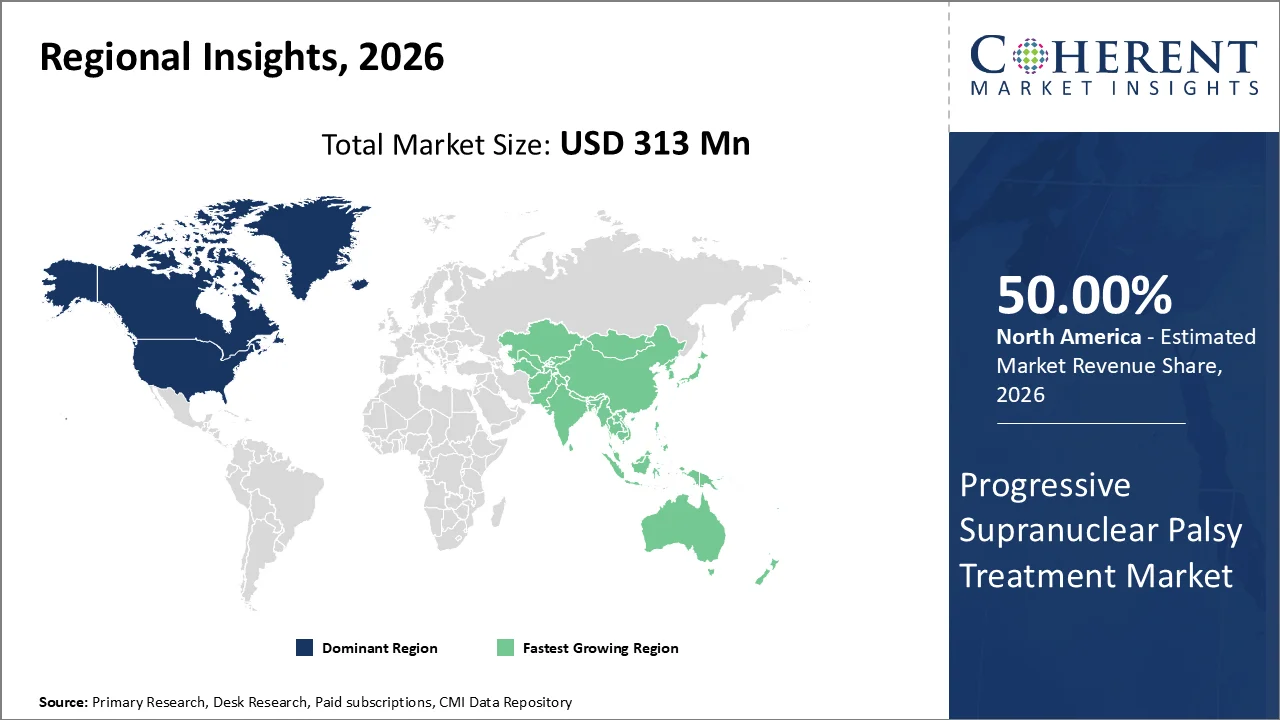
- North America is expected to acquire the dominant share of 50% in 2026, owing to increasing new cases of progressive supranuclear palsy in this region. PSP is considered rare, affecting 6-10 individuals per 100,000, with about 30,000 cases in the United States.
Segmental Insights
Why is Dopamine Acquiring the Largest Market Share?
Dopamine is projected to account for the largest share of drug type in 2026, representing approximately 60% of the total volume. Owing to its established therapeutic efficacy in managing the motor symptoms associated with PSP as well as its widespread acceptance among neurologists globally. Rates of HIGH/VERY HIGH DA dosing increased with patient age. Twice as many neurologists (31.1%) prescribed HIGH/VERY HIGH doses vs other specialties.
Dopamine drugs are most used because they treat the main problem in PSP, which is a big loss of dopamine in certain parts of the brain, especially the basal ganglia and brainstem.
The National Institute of Neurological Disorders and Stroke (NINDS) recognizes dopaminergic therapy as a cornerstone treatment approach for PSP patients, despite the generally limited response compared to Parkinson's disease.
Levodopa, the most commonly prescribed dopaminergic medication, remains the first-line treatment recommendation from major neurological associations globally, including the American Academy of Neurology as well as the European Federation of Neurological Societies, primarily because it provides the most predictable symptomatic relief for bradykinesia as well as rigidity symptoms in PSP patients.
- Current Industry Events of 2026
- Market Size Estimation
- Regional Breakdown
- Competitive Landscape
- Customer Intelligence
- Segmental Analysis
- Pricing Analysis
- Key Market Drivers, Challenges & Future Trends
- Customized Insights Section
Hospital Pharmacies holds the Largest Market Share
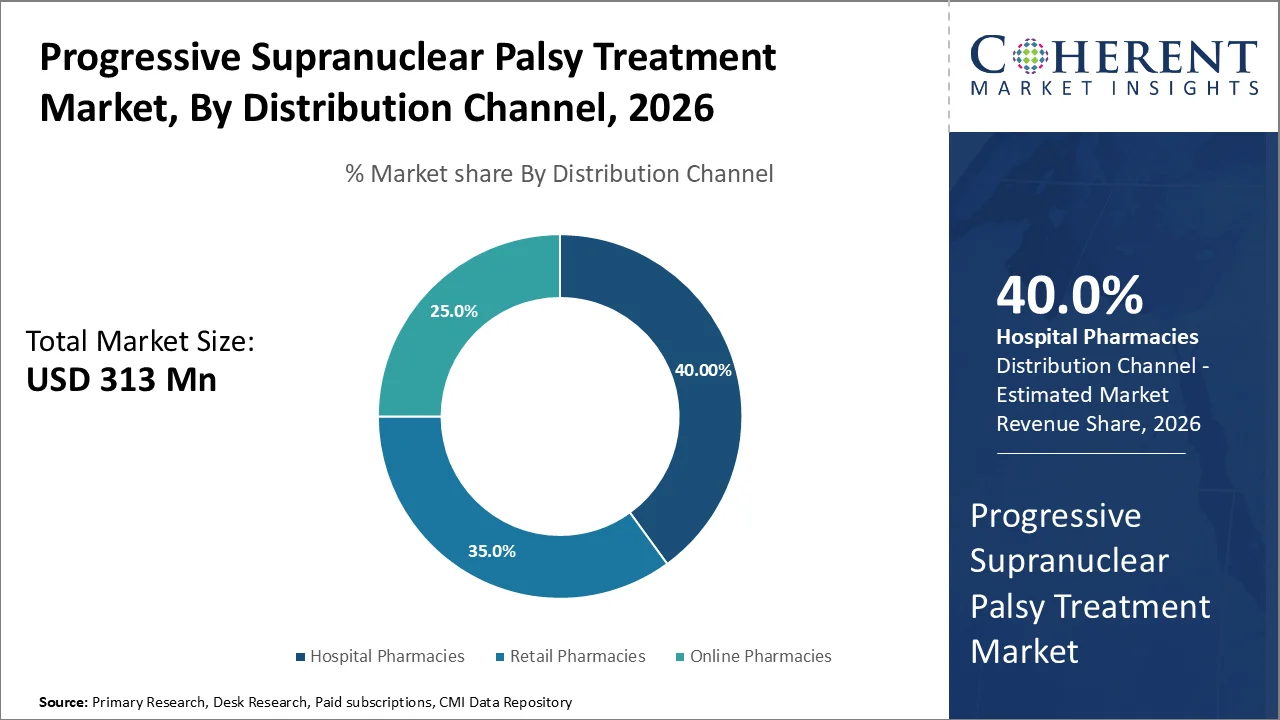
Based on distribution channel, hospital pharmacies dominates the market, accounting for a significant 40% share in 2026, owing to the specialized nature of Progressive Supranuclear Palsy (PSP) as a rare neurodegenerative disorder that needs comprehensive medical supervision as well as expert neurological care.
The dominance of hospital pharmacies in this therapeutic area stems from the complex diagnostic process along with the need for multidisciplinary treatment approaches that are typically available within hospital environment.
According to the Journal of Research in Medical and Dental Science, PSP affects about 6 to 7 people in every 100,000. Treating it needs special expertise, usually found in big hospitals and research centers. These hospitals have brain specialists who treat rare disorders, so patients usually visit hospital pharmacies first for PSP treatment.
Tau Aggregation Inhibitors is transforming the Progressive Supranuclear Palsy Treatment Industry
Tau aggregation inhibitors are small molecules and antibodies designed to prevent tau protein clumping, a key factor in neurodegeneration. Leading companies include Alector Inc. with AL001, AbbVie with ABBV-8E12, as well as TauRx with methylene blue derivatives (LMTM).
Early trial results are promising: TauRx’s Phase 3 tests with LMTM showed small improvements in thinking for PSP patients, leading to wider access in many countries. Alector’s AL001 cut a marker of nerve damage by 50% in Phase 1b trials, showing it might slow the disease.
Current Events and Their Impact on the Progressive Supranuclear Palsy Treatment Market
Current Event | Description and its Impact |
FDA Rare Disease Guidance Update (2025) |
|
EU Orphan Drug Regulation Revision (2025) |
|
Progressive Supranuclear Palsy Treatment Market Trends
- Precision Medicine Growth: The market is moving toward treatments using biomarkers and personalized care, with new tau-targeting drugs becoming more important.
- Digital Health Use: New brain imaging, digital biomarkers, and telemedicine are changing how patients are monitored.
- Collaborative Research Acceleration: More partnerships between drug companies, universities, as well as patient groups are fastening drug development as well as lowering clinical trial expenses.
- Regulatory Fast-Track Adoption: Expedited approval pathways for rare diseases are making favorable regulatory environments, with breakthrough therapy designations becoming highly common. The European Medicines Agency (EMA) and U.S. FDA, 2025 reports show that over 45% of orphan drug applications in neurodegenerative disorders received breakthrough therapy or accelerated approval designations.
Regional Insights
North America dominates owing to its robust healthcare infrastructure
North America account 50% market share in 2026, owing to its robust healthcare infrastructure, advanced medical research facilities, and comprehensive patient care networks that have established the region as the global epicenter for Progressive Supranuclear Palsy (PSP) treatment innovation. According to the data published in UCSF Health, about 20,000 Americans, or one in every 100,000 people over age 60 — have PSP.
The presence of world-renowned neurological research institutions such as the Mayo Clinic, Johns Hopkins Hospital, the National Institute of Neurological Disorders and Stroke (NINDS), etc., which have been at the forefront of PSP research and clinical trials.
The region benefits from substantial federal funding through the National Institutes of Health (NIH), which allocated major resources to rare neurological disorder research in recent years. The National Institute of Neurological Disorders and Stroke (NINDS) is a part of the U.S. National Institutes of Health (NIH). It conducts as well as funds research on brain and nervous system disorders and has a budget of just over USD2.03 billion.
The CurePSP foundation, headquartered in New York, has been instrumental in driving awareness and research funding, organizing annual conferences that bring together leading neurologists from across North America.
Asia Pacific Progressive Supranuclear Palsy Treatment Market Trends
The Asia-Pacific region is poised to be the fastest-growing region through 2026-2033, expanding at a CAGR of approximately 7.5%. Driven by rapidly aging populations as well as increasing diagnostic capabilities across key markets including Japan, South Korea, Australia, etc. The region's growth is particularly evident in Japan, where the Ministry of Health, Labour and Welfare designated PSP as a specified intractable disease in 2022, effectively improving patient access to specialized treatments which is responsible for the growth of the market.
The total population of Japan is 124.35 million people as of October 1, 2023. The number of the population aged 65 and over is 36.23 million. The percentage of the population aged 65 and over (percentage of the elderly) is 29.1%., creates an expanding patient base requiring PSP interventions. Furthermore, the opening of special PSP treatment centers, like the new movement disorder clinic at the National Center of Neurology and Psychiatry in Tokyo, shows Japan’s commitment to treating this rare brain disease using both standard therapies and new protective drugs.
Advanced healthcare infrastructure is Accelerating the Progressive Supranuclear Palsy Treatment Market Demand in United States
The U.S. contributes the highest share in the Progressive Supranuclear Palsy (PSP) treatment market in North America owing to its advanced healthcare infrastructure, substantial research and development investments, and higher prevalence of diagnosed PSP cases. The United States benefits from having world-renowned neurological research centers such as the Mayo Clinic and Johns Hopkins, which have established dedicated PSP research programs and treatment protocols.
The National Institute of Neurological Disorders and Stroke (NINDS) has funded many PSP treatment studies, with over 15 active trials listed on ClinicalTrials.gov. The U.S. also has big drug companies, like AbbVie, which recently moved their PSP treatments through Phase II trials, showing strong efforts to develop new drugs.
The CurePSP Foundation in New York has the largest PSP patient registry in North America, with over 3,000 patients mostly in the U.S., giving important data for developing treatments. U.S. hospitals have special care programs for PSP, with movement disorder clinics in more than 200 medical centers.
Japan Progressive Supranuclear Palsy Treatment Market Trends
Japan contributes the highest share in the Progressive Supranuclear Palsy Treatment Market in Asia Pacific owing to its advanced healthcare infrastructure, sophisticated neurological research capabilities, along with established pharmaceutical regulatory framework. The nation's demographic profile, characterized by one of the world's most rapidly aging populations, makes a patient pool requiring specialized neurological care. The World Economic Forum, in 2024, the country had a record 36.25 million people aged 65 and over, accounting for 29.3% of the total population. This share is projected to rise to 34.8% in 2040 and 36.3% in 2045.
Japan’s health ministry has made strong healthcare policies for brain diseases. They set up special centers for rare neurological disorders in big cities like Tokyo, Osaka, and Kyoto.
The Japanese Society of Neurology has helped make standard rules for diagnosing and treating PSP, which helps find the disease earlier and manage it better.
Who are the Major Companies in Progressive Supranuclear Palsy Treatment Industry
Some of the major key players in Progressive Supranuclear Palsy Treatment Market include, AbbVie Inc., Acorda Therapeutics Inc., Biogen Inc., Bristol-Myers Squibb Co., Merck & Co. Inc., UCB Biopharma, AlzProtect, Asceneuron Therapeutics, TauRx Pharmaceuticals, GlaxoSmithKline PLC, Novartis AG, and Teva Pharmaceutical Industries Ltd.
Key News
- In March 2026, Arvinas, Inc. presented Phase 1 data for ARV-102, a drug that reduces LRRK2 in Parkinson’s patients by approximately 50% in cerebrospinal fluid. Even though these drugs are tested in Parkinson’s, they show new ways to treat movement disorders like PSP and could affect future PSP treatments and the market.
- In October 2025, Spanish international pharmaceutical company Ferrer finished recruiting patients for the PROSPER study, a Phase II trial testing FNP-223. This oral drug, licensed from Asceneuron, blocks the OGA enzyme as well as aims to slow disease progression in PSP. The trial is checking how safe and effective the drug is, and how the body processes it.
Market Report Scope
Progressive Supranuclear Palsy Treatment Market Report Coverage
| Report Coverage | Details | ||
|---|---|---|---|
| Base Year: | 2025 | Market Size in 2026: | USD 313 Mn |
| Historical Data for: | 2020 To 2024 | Forecast Period: | 2026 To 2033 |
| Forecast Period 2026 to 2033 CAGR: | 12.2% | 2033 Value Projection: | USD 689 Mn |
| Geographies covered: |
| ||
| Segments covered: |
| ||
| Companies covered: | AbbVie Inc., Acorda Therapeutics Inc., Biogen Inc., Bristol-Myers Squibb Co., Merck & Co. Inc., UCB Biopharma, AlzProtect, Asceneuron Therapeutics, TauRx Pharmaceuticals, GlaxoSmithKline PLC, Novartis AG, and Teva Pharmaceutical Industries Ltd. | ||
| Growth Drivers: |
| ||
| Restraints & Challenges: |
| ||
Analyst Opinion
- Progressive Supranuclear Palsy treatments are majorly symptomatic, with no disease-modifying therapy approved. Globally, PSP affects approximately 6–7 people per 100,000, showing the small but critical patient population demanding effective therapies.
- High disease awareness as well as improved diagnostics are leading to earlier identification. Example: Studies show early PSP diagnosis has surged by 20–30% over the past decade in specialized centers.
- Complex disease biology as well as clinical trial failures hinder drug development. Rarity of the disease limits recruitment; PSP accounts for <1% of all parkinsonian disorders, constraining commercial viability.
- Advanced biomarkers, tau-targeted therapies, and gene therapy are in development. Clinical pipelines have several tau-targeted drugs in Phase 2–3 trials, representing potential first disease-modifying options.
Speak to the analyst
Want personalized insights?
Take the findings above to one of our principal consultants, or have the report rebuilt around the segments, geographies and competitors you actually track.
Market Segmentation
- By Drug Type (Revenue, USD Mn, 2021-2033)
- Dopamine
- Anticholinergic Agents
- Tricyclic Antidepressants
- Others
- By Distribution Channel (Revenue, USD Mn, 2021-2033)
- Hospital Pharmacies
- Retail Pharmacies
- Online Pharmacies
- By Region (Revenue, USD Mn, 2021-2033)
- North America
- U.S.
- Canada
- Latin America
- Brazil
- Mexico
- Argentina
- Rest of Latin America
- Europe
- Germany
- U.K.
- France
- Italy
- Spain
- Russia
- Rest of Europe
- Asia Pacific
- China
- India
- Japan
- Australia
- South Korea
- ASEAN
- Rest of Asia Pacific
- Middle East
- GCC
- Israel
- Rest of Middle East
- Africa
- South Africa
- Central Africa
- North Africa
- North America
Sources
Primary Research Interviews
- Neurologists specializing in movement disorders
- Pharmaceutical company executives and R&D heads
- Healthcare providers and hospital administrators
- Patient advocacy group representatives
- Others
Databases
- ClinicalTrials.gov
- PubMed/MEDLINE
- FDA Orange Book Database
- Others
Magazines
- Neurology Today
- Pharmaceutical Executive
- BioWorld Intelligence
- Drug Discovery & Development
- Others
Journals
- Movement Disorders Journal
- Journal of Neurochemistry
- Parkinsonism & Related Disorders
- Others
Newspapers
- The Wall Street Journal
- Financial Times
- Reuters Health News
- BioPharma Dive
- FierceBiotech
- Others
Associations
- International Parkinson and Movement Disorder Society (MDS)
- CurePSP Foundation
- American Academy of Neurology (AAN)
- Pharmaceutical Research and Manufacturers of America (PhRMA)
- Others
Public Domain Sources
- World Health Organization (WHO) reports
- National Institutes of Health (NIH) publications
- FDA drug approval databases
- European Medicines Agency (EMA) public assessments
- Others
Proprietary Elements
- CMI Data Analytics Tool
- Proprietary CMI Existing Repository of information for last 10 years
Get access to 250+ pages report
Every segment, forecast, competitor profile and data table behind the analysis above — available for instant download.
- ESOMAR Member
- ISO 9001:2015 Certified
- D-U-N-S Registered
- GDPR & CCPA Compliant
Missing comfort of reading report in your local language? Find your preferred language:
Transform your Strategy with Exclusive Trending Reports
Frequently Asked Questions
The Progressive Supranuclear Palsy Treatment market is expected to reach USD 689 Mn in 2033.
Major players operating in the global progressive supranuclear palsy treatment market include AbbVie Inc., Acorda Therapeutics Inc., Biogen Inc., Bristol-Myers Squibb Co., Merck & Co. Inc., UCB Biopharma, AlzProtect, Asceneuron Therapeutics, TauRx Pharmaceuticals, GlaxoSmithKline PLC, Novartis AG, and Teva Pharmaceutical Industries Ltd.
Higher cost of the treatments and R&D costs involved into developing new drugs and therapies is expected to be key restraint for the growth of the amyloids market over a period of study.
Rising incidence of progressive supranuclear palsy and ongoing clinical trials for the treatment of progressive supranuclear palsy are favoring the market growth.
The Progressive Supranuclear Palsy Treatment market is anticipated to grow at a CAGR of 12.2% between 2026 and 2033.
Among regions, North America is expected to account for a largest market share in the global Progressive Supranuclear Palsy Treatment market over the forecast period.
Progressive supranuclear palsy (PSP) causes are unknown, but the disease results from the abnormal accumulation of the protein tau in brain cells, leading to neuronal damage in areas controlling movement, balance, and cognition.