

Veterinary Orthopedics Market Size and Trends
The veterinary orthopedics market is estimated to be valued at USD 740.0 Million in 2026 and is expected to reach USD 1,344.0 Million by 2033, exhibiting a compound annual growth rate (CAGR) of 8.9% from 2026 to 2033.
Key Takeaways of the Global Veterinary Orthopedics Market
- By application, the Tibial Plateau Leveling Osteotomy (TPLO) segment is expected to hold the largest market share of 33.6% in 2026, due to the increasing prevalence of cranial cruciate ligament (CCL) injuries in dogs.
- By product type, the implants segment is expected to hold the largest market share of 53.6% in 2026, fueled by increased pet ownership and higher spending on pet care.
- By animal type, the canine segment dominates the veterinary orthopedics market, with an estimated share of 43.6% in 2026, driven by escalating pet ownership.
- North America remains the dominant player in the veterinary orthopedics market and is estimated to account for 37. 7% of the global market share in 2026.
Market Overview
The global market for veterinary orthopedics is driven by increasing pet population, growing incidence of orthopedic diseases in companion animals, as well as advancements in veterinary orthopedic products. In addition to this, rising pet care expenditure and the growing availability of pet health insurance are expected to create lucrative opportunities for the market growth over the forecast period.
However, the market still faces challenges from limited insurance coverage for veterinary expenses as well as the high cost of specialized orthopedic surgeries. This restrains the market, particularly in price-sensitive regions. Another constraint is the shortage of trained veterinary orthopedic specialists and infrastructure that can hamper the growth potential of the market.
Market Concentration and Competitive Landscape
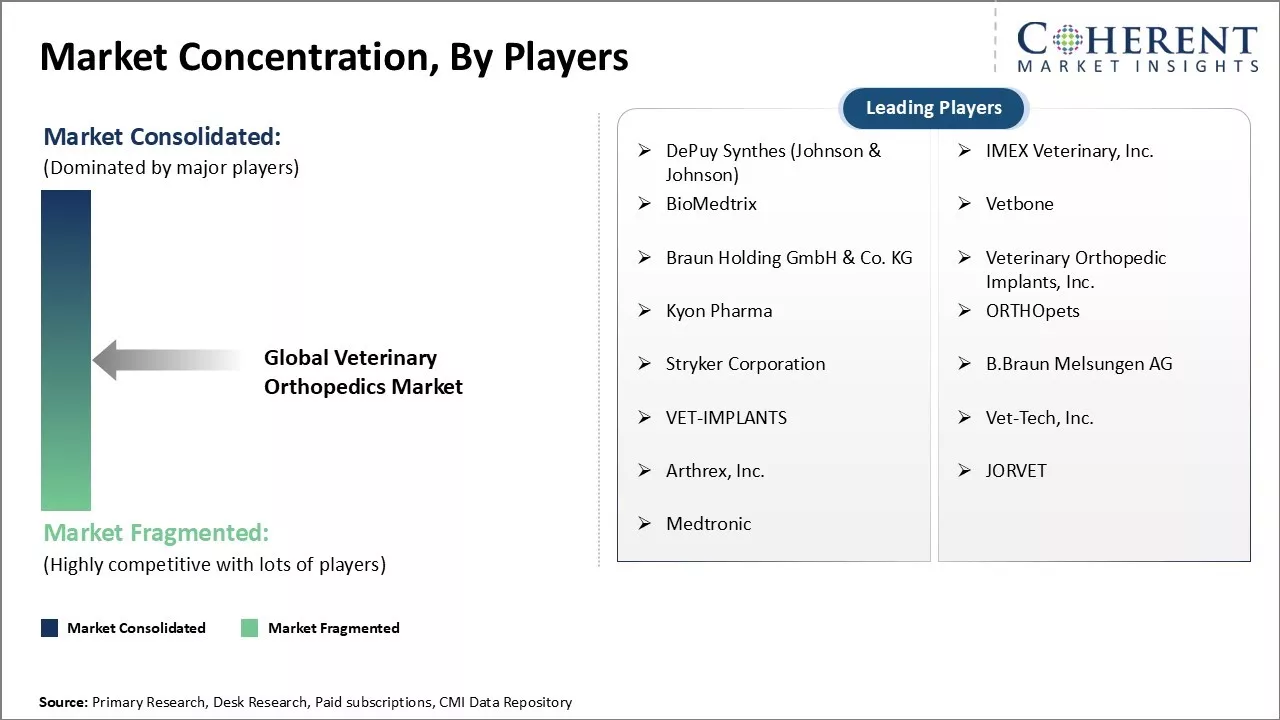
- Established players in the veterinary orthopedics market, such as DePuy Synthes and BioMedtrix, prioritize research and development to create high-performance products. DePuy Synthes allocates over 6% of its annual revenue to innovations in joint reconstruction and trauma repair.
- Mid-level companies focus on providing quality, cost-effective products to cater to price-sensitive pet owners and veterinarians, especially in developing regions. For example, Kyon develops 3D-printed implants coated with osteoinductive biomaterials at competitive prices, expanding its market reach in Asia and Latin America.
- Smaller scale companies specialize in niche areas overlooked by larger players. Spineovus has found success by developing specialized implants for small animal spine injuries, an underserved area. Meanwhile, Regenetech focuses on regenerative veterinary products using stem cell therapy for tendon and ligament injuries, catering to owners seeking advanced therapeutic options.
Current Events and Their Impact on the Veterinary Orthopedics Market
Current Events | Description and its impact |
Supply Chain Disruptions and Raw Material Shortages |
|
Technological Innovation and Surgical Advancements |
|
- Current Industry Events of 2026
- Market Size Estimation
- Regional Breakdown
- Competitive Landscape
- Customer Intelligence
- Segmental Analysis
- Pricing Analysis
- Key Market Drivers, Challenges & Future Trends
- Customized Insights Section
Market Trends
A High Prevalence of Orthopedic Conditions in Companion Animals
The global veterinary orthopedics market is experiencing significant growth, driven by the increasing prevalence of orthopedic conditions in companion animals. Osteoarthritis is the leading cause of joint disease, while hip dysplasia, patellar luxation, spinal, and ligament injuries pose significant welfare and treatment burdens, particularly in predisposed breeds.
For instance, as per Zenex Animal Health, it was found that 20% of canine pets develop osteoarthritis. Osteoarthritis occurs when cartilage in the bone joints gets damaged. As cartilage provides cushions to the bones of the joint, its damage causes friction between bones, leading to pain and decreased mobility in affected joints.
This widespread incidence underscores the urgent need for advanced diagnostic tools, early intervention strategies, and personalized orthopedic care in veterinary medicine.
Growing Demand for Minimally Invasive Surgical Techniques
One of the major opportunities for the global veterinary orthopedics market is the growing demand for minimally invasive surgical techniques. With rising preference among pet owners for procedures that can reduce surgical trauma, recovery time, and post-operative pain for pets, there is strong demand for minimally invasive options. Veterinary surgeons are increasingly adopting minimally invasive techniques that involve smaller incisions, specialized equipment and endoscopes for procedures like ligament repair and fracture fixations.
For instance, according to the report of the American Society of Plastic Surgeons (ASPS), minimally invasive procedures grew 7% in 2023, surpassing surgical procedures by 2%. As patients increasingly prioritize their aesthetic health, it remains imperative that they also prioritize education and safety by seeking out board-certified plastic surgeons.
Segmental Analysis
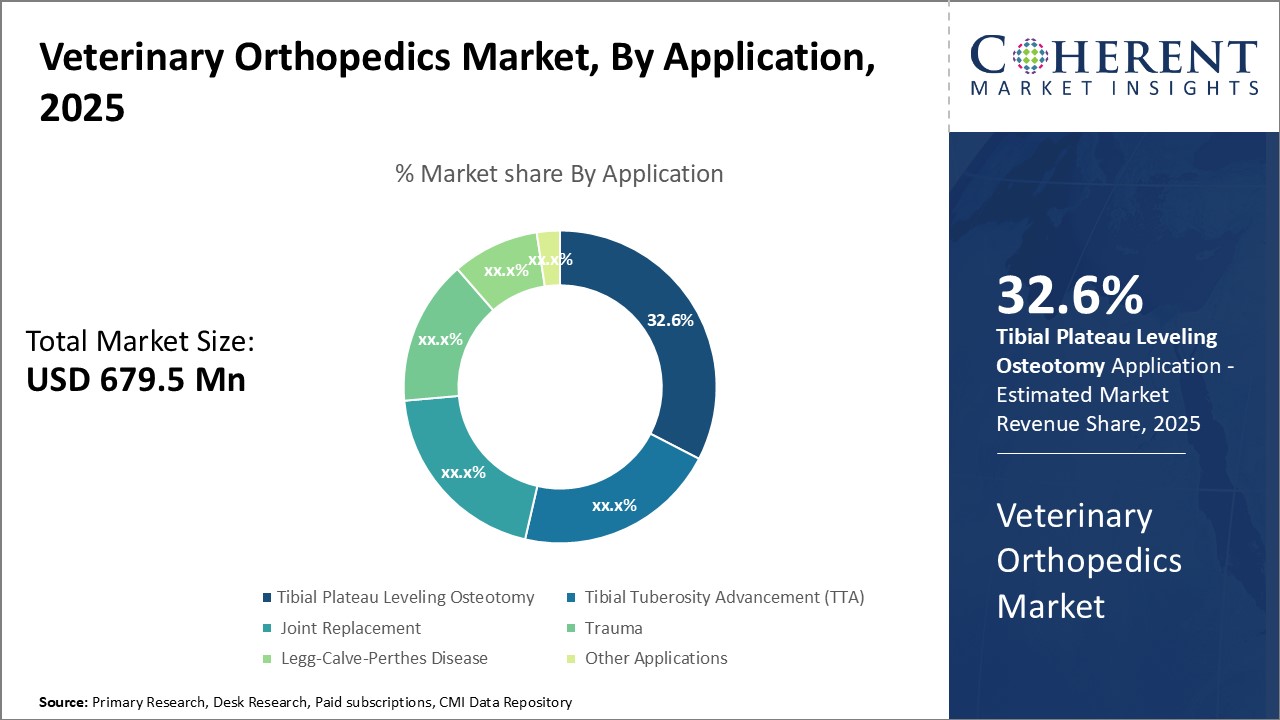
Veterinary Orthopedics Market Insights, by Application- Rising Incidence of Cruciate Ligament Injuries Drives Tibial Plateau Leveling Osteotomy (TPLO) Segment Growth
The Tibial Plateau Leveling Osteotomy (TPLO) segment is expected to hold the largest market share of 33.6% in 2026, due to the increasing prevalence of cranial cruciate ligament (CCL) injuries in dogs.
CCL tears, common in canines, often result from excessive weight-bearing, trauma, or genetic factors. The increasing prevalence of obesity among dogs has led to a higher incidence of cranial cruciate ligament (CCL) injuries. Tibial Plateau Leveling Osteotomy (TPLO) effectively stabilizes these injuries by realigning the tibia and femur, restoring natural joint movement.
Its minimally invasive nature and high success rates have made it the preferred treatment, driving the demand for TPLO procedures and related orthopedic implants.
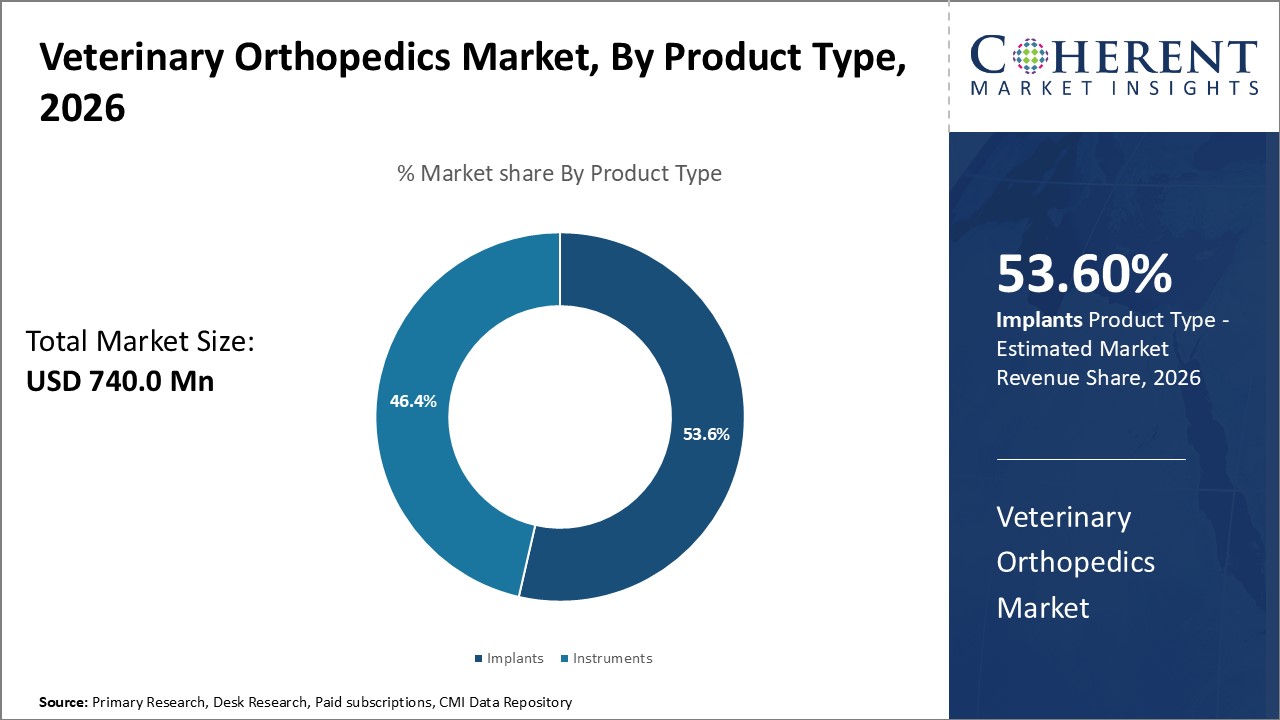
Veterinary Orthopedics Market Insights, by Product Type- Implant Category Dominates the Market
The implants segment is expected to hold the largest market share of 53.6% in 2026, fueled by increased pet ownership and higher spending on pet care.
Pet owners are more willing to invest in their animals' health, including surgical interventions requiring implants. Innovations extending implant longevity and enabling minimally invasive procedures have enhanced their appeal. Additionally, cost-effective manufacturing and marketing strategies have made implants more affordable, broadening their accessibility. This combination of rising expenditure capacity and affordability sustains the market share and growth outlook for this product segment.
Veterinary Orthopedics Market Insights, by Animal Type- Canine Segment Leads due to Rising Advancements in Veterinary Orthopedics
Canine segment dominates the veterinary orthopedics market, with an estimated share of 43.6% in 2026, driven by increasing pet ownership and a growing emphasis on advanced veterinary care.
Technological innovations, including the development of customized implants and minimally invasive surgical techniques, have enhanced treatment outcomes for canine patients. These advancements have made complex orthopedic procedures more accessible and effective, further solidifying the dominance of the canine segment.
Veterinary Orthopedics Market Insights, by End User- Veterinary Hospitals & Clinics Drive Demand
Veterinary hospitals & clinics remain the primary users of orthopedic devices, propelled by the escalating incidence of musculoskeletal injuries in companion animals.
For instance, trauma such as cruciate ligament tears and fractures—which accounted for approximately 33.9% of injuries in canine sled dogs—has driven increasing adoption of internal fixation devices like plates and screws. These facilities are outfitted with advanced diagnostic imaging, surgical suites, and trained orthopedic specialists, enabling them to perform complex procedures such as TPLO.
Impact of AI on the Veterinary Orthopedics Market
AI is revolutionizing veterinary orthopedics by enabling data‑driven, highly precise diagnostics and personalized surgical planning through tools like 3D modeling, gait‑analysis algorithms, and smart implants, transforming outcomes and efficiency in animal care
- AI‑driven CT 3D reconstructions and virtual rehearsal enable creation of patient‑specific models and cutting guides, improving precision in corrective osteotomies, patellar luxation, trauma, and joint replacements.
- In a study on antebrachial deformity corrections in dogs, over 90% of postoperative alignment fell within ≤ 5° angulation/rotation or ≤ 5 mm translation of the virtual surgical plan.
Emerging Innovations in the Veterinary Orthopedics Market
- AI-Driven Gait Analysis for Livestock & Equines
Application: A field-ready diagnostic system using a single IMU sensor and a 1D CNN to automatically detect and classify lameness in horses (and potentially cattle). In real-world trials, it achieved 90% session-level accuracy with zero false positives, enabling early detection of subtle gait issues to prevent progression to serious orthopedic damage.
Example: In 2025, Medansh Manual Gait Trainer launched a rehab and gait monitoring tool that supports integration with AI gait-analysis systems, helping veterinarians track mobility and guide recovery in horses and dogs.
- On ‑ Site 3D ‑ Printed Orthotics & Implants
Application: In-house additive manufacturing of patient-specific orthotic devices (e.g., braces, prosthetics) and titanium orthopedic implants guided by CT/scan data.
Example: In February 2025, WIMBA, a provider of custom-fit, ultra-light 3D-printed pet orthotics, announced the opening of its brand-new 3D printing facility at its headquarters in Kraków, Poland. This strategic investment is a significant milestone in WIMBA’s mission to deliver tailored mobility care for pets worldwide.
Regional Insights
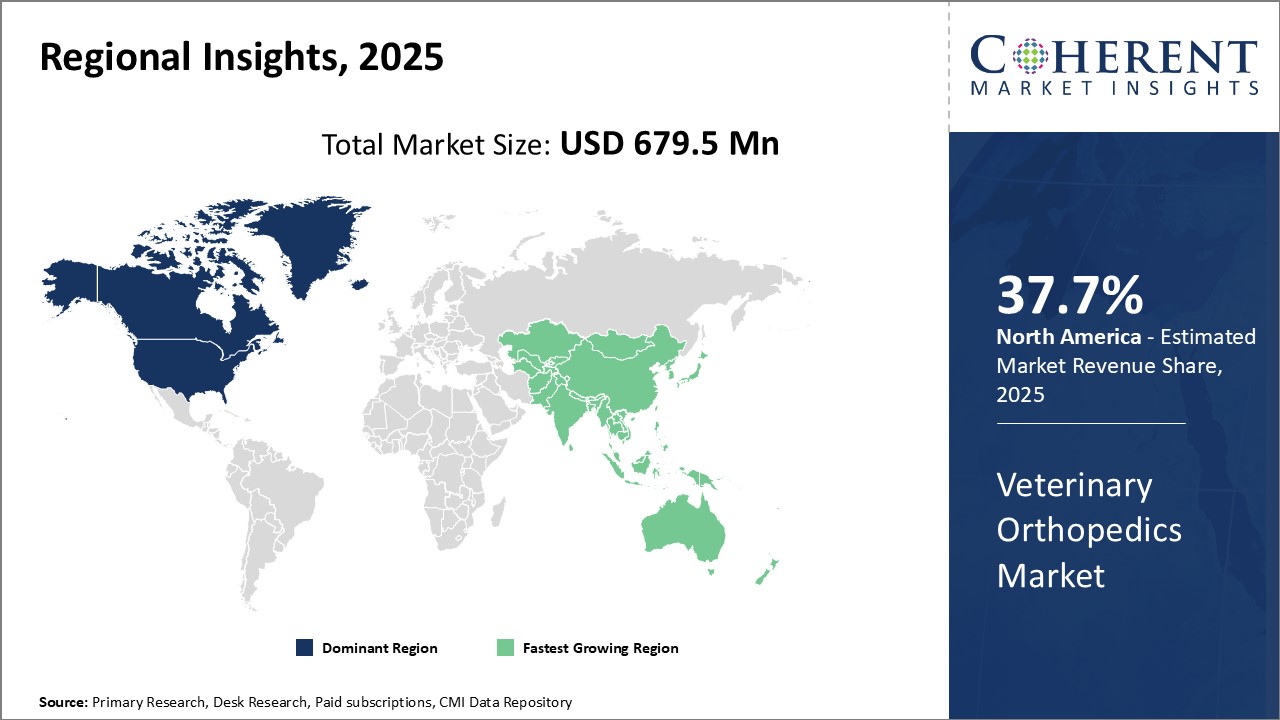
North America Veterinary Orthopedics Market Analysis and Trends
North America dominates the veterinary orthopedics market with an estimated share of 37.7% in 2026. This can be attributed to factors such as high pet adoption rates, rising incidence of orthopedic conditions in pets, and presence of major market players. The region boasts a well-developed veterinary healthcare infrastructure and high spending on animal health.
For instance, according to the American Society for the Prevention of Cruelty to Animals, 4.2 million shelter animals were adopted into loving homes in 2024, approximately the same number of animals adopted as the year before. Unfortunately, not enough animals were adopted to significantly reduce the number of dogs and cats in shelters nationwide.
Asia Pacific Veterinary Orthopedics Market Analysis and Trends
Asia Pacific exhibits the fastest growth, driven by increasing pet ownership, growing affluence, and improvement in veterinary care availability in nations such as India, China, and South Korea. Rapid industrialization and urbanization have contributed to a surge in orthopedic injuries among livestock as well.
For instance, according to a report published by the World Animal Foundation in April 2026, in Asia Pacific countries, 32% of households own a dog compared to 26% that own a cat. Data suggests K-9s rule the roost in Asia Pacific countries, with 32% over 26% of kitty owners. To put these percentages into perspective, Asia Pacific means high-density populations like China, Japan, the Philippines, South and North Korea, Pakistan, India, Bangladesh, and others.
U.S. Veterinary Orthopedics Market Analysis and Trends
The U.S. veterinary orthopedics market is driven by the high prevalence of osteoarthritis, obesity, injuries, and chronic diseases among pets. For instance, according to a report published by the American Veterinary Medical Association in 2024, average spending on veterinary care per household per year on dogs vs cats is USD 580 and USD 433.
Similarly, according to the World Animal Foundation, citing NAPHIA data, Americans spent approximately USD 3.61 billion on pet insurance in 2023, covering both accident and illness policies as well as plans that included integrated wellness benefits.
China Veterinary Orthopedics Market Analysis and Trends
China’s pet boom, which is supported by rising disposable income, infrastructure expansion, advanced technology, regulatory and insurance frameworks, and increasing orthopedic cases, is fueling rapid growth in veterinary orthopedics across the region.
For instance, according to the Asia Pet Research Institute, China was home to 187 million pet dogs and cats in 2024 - while the value of its pet market exceeded USD 42 billion (300 billion yuan). This surge reflects a growing cultural shift, as more Chinese households embrace pet ownership not just for companionship but as a lifestyle choice—driving demand for veterinary orthopedics services
Pricing Analysis
- Product Cost by Application Segment
- Handheld External Fixator Components
- Single clamp/pin assembly (e.g., veterinary connection clamp 4.0 mm): approx. USD 6 per piece in India.
- Jess-type finger external fixator: USD 33 via Indian Amazon
- External Fixator Sets
- Mini external fixator kit (stainless steel): USD 46 per piece
- Ilizarov large-set: USD 580 per set
- Monthly Maintenance & Service Costs
- Mobile veterinary units typically spend USD 150–300/month on sterilization solutions, cleaning supplies, autoclave service, and routine maintenance
Example: A veterinary van that operates 20 days/month would average USD 7.50–15 per day, covering all instrument processing and maintenance overhead.
- Distributor/Importer Mark-up (Wholesale to Vet Clinics)
Vendors typically apply a 20–30% markup over their cost to cover logistics and compliance. This allows a distributor to price a USD 350 FOB locking-plate kit at USD 420–455 when selling to clinics
Example: Applying a 100% clinic mark-up results in a final client price of USD 910, doubling the clinic’s investment to cover overhead, staff, and practice margins.
Market Report Scope
Veterinary Orthopedics Market Report Coverage
| Report Coverage | Details | ||
|---|---|---|---|
| Base Year: | 2025 | Market Size in 2026: | USD 740.0 Mn |
| Historical Data for: | 2020 To 2024 | Forecast Period: | 2026 To 2033 |
| Forecast Period 2026 to 2033 CAGR: | 8.9% | 2033 Value Projection: | USD 1,344.0 Mn |
| Geographies covered: |
| ||
| Segments covered: |
| ||
| Companies covered: | DePuy Synthes (Johnson & Johnson), IMEX Veterinary, Inc., BioMedtrix, Vetbone, Braun Holding GmbH & Co. KG, Veterinary Orthopedic Implants, Inc., Kyon Pharma, ORTHOpets, Stryker Corporation, B.Braun Melsungen AG, VET-IMPLANTS, Vet-Tech, Inc., Arthrex, Inc., JORVET, and Medtronic | ||
| Growth Drivers: |
| ||
| Restraints & Challenges: |
| ||
Veterinary Orthopedics Industry News
- In May 2025, Well Trust presented its latest TPLO toolsets and precision orthopedic instruments, targeting small-animal cruciate repair surgeries at the American Academy of Orthopaedic Surgeons conference (Mar 11–13).
- In January 2025, at VMX 2025, Zoetis introduced the Vetscan OptiCell. This is company’s first AI-powered, cartridge-based hematology analyzer that can deliver accurate complete blood count (CBC) results within minutes and requires minimal maintenance.
- In January 2025, Stryker, a global leader in medical technologies, announced a definitive agreement to sell its U.S. spinal implants business to Viscogliosi Brothers, LLC, a family-owned investment firm specializing in the neuro-musculoskeletal space, to create a newly formed company called VB Spine, LLC.
Analyst View
- The rapid adoption of CT ‑ based, patient ‑ specific implants and guides—as seen in VCA’s October 2024 3D lab opening—marks a turning point. This move signals that advanced visualization and customization are becoming clinical necessities, not luxury add-ons.
- Smart OEMs targeting emerging markets can unlock volume by offering certified but affordable alternatives with modest margin yet broader reach.
- With regenerative treatments (PRP, stem cells) gaining ground and imaging innovations maturing, biologics are stepping up. Expect this segment, currently under‑penetrated, to become the high‑margin frontier as clinics push for non-surgical musculoskeletal care.
- North America still leads in tech adoption, but Asia Pacific is the fastest‑evolving arena, propelled by telehealth, rising pet ownership, and surgical complexity. Clinics in India and China that invest in mid‑tier, AI‑enabled workflow tools now are likely to outpace their peers.
Market Segmentation
- Application Insights (Revenue, USD Mn, 2021 - 2033)
- Tibial Plateau Leveling Osteotomy (TPLO)
- Tibial Tuberosity Advancement (TTA)
- Joint Replacement
- Trauma
- Legg-Calve-Perthes Disease
- Other Applications
- Product Type Insights (Revenue, USD Mn, 2021 - 2033)
- Implants
- Instruments
- Animal Type Insights (Revenue, USD Mn, 2021 - 2033)
- Canine
- Feline
- Equine
- End User Insights (Revenue, USD Mn, 2021 - 2033)
- Veterinary Hospitals & Clinics
- Others (Research & Academic Institutions)
- Regional Insights (Revenue, USD Mn, 2021 - 2033)
- North America
- U.S.
- Canada
- Latin America
- Brazil
- Argentina
- Mexico
- Rest of Latin America
- Europe
- Germany
- U.K.
- Spain
- France
- Italy
- Russia
- Rest of Europe
- Asia Pacific
- China
- India
- Japan
- Australia
- South Korea
- ASEAN
- Rest of Asia Pacific
- Middle East
- GCC Countries
- Israel
- Rest of Middle East
- Africa
- South Africa
- North Africa
- Central Africa
- Key Players Insights
- DePuy Synthes (Johnson & Johnson)
- IMEX Veterinary, Inc.
- BioMedtrix
- Vetbone
- B.Braun Holding GmbH & Co. KG
- Veterinary Orthopedic Implants, Inc.
- Kyon Pharma
- ORTHOpets
- Stryker Corporation
- Braun Melsungen AG
- VET-IMPLANTS
- Vet-Tech, Inc.
- Arthrex, Inc.
- JORVET
- Medtronic
Sources
Stakeholders:
- Veterinary Orthopedic Instrument Manufacturers & Suppliers
- Veterinary Hospitals, Ambulatory Centers & Specialty Clinics
- Veterinary Orthopedic Surgeons & Clinicians
- Veterinary Instrument Distributors & Retailers
- Regulatory Bodies (e.g., FDA, EMA, RCVS)
Primary Sources:
- Conducted interviews with 30+ veterinary orthopedic surgeons and instrument manufacturers in North America, Europe, Asia-Pacific.
- Consulted procurement managers at veterinary specialty clinics and operating room staff to analyze usage and purchasing trends.
- Discussed regulatory requirements with certification authorities such as RCVS and FDA analogs for insights into compliance processes.
Secondary Sources:
- Company Websites and Product Catalogs from leading firms like DePuy Synthes Vet, Orthomed, IMEX, and B. Braun Vet Care
- Veterinary Device Regulatory Databases (FDA, EMA, RCVS standards)
- Industry Journals: Veterinary Surgery, The Veterinary Journal, Clinical Veterinary Orthopedics
- Trade Shows & Conferences: VOS Annual Conference (Feb 2025), AO VET events, BVOA workshops
Proprietary Elements:
- CMI Data Analytics Tool – Veterinary Orthopedics Market Analysis
- CMI Existing Repository of Information for the Last 8 Years
*Definition: The veterinary orthopedics market encompasses the development, manufacturing, and distribution of devices, instruments, implants, and related services used to diagnose, manage, and treat musculoskeletal disorders in animals—particularly companion species such as dogs, cats, horses, and livestock. This market includes products like external fixators, locking plates and screws, intramedullary pins, orthotic braces, and ancillary consumables.
Get access to 250+ pages report
Every segment, forecast, competitor profile and data table behind the analysis above — available for instant download.
- ESOMAR Member
- ISO 9001:2015 Certified
- D-U-N-S Registered
- GDPR & CCPA Compliant
Missing comfort of reading report in your local language? Find your preferred language:
Transform your Strategy with Exclusive Trending Reports
Frequently Asked Questions
The veterinary orthopedics market is estimated to be valued at USD 740.0 Mn in 2026, and is expected to reach USD 1,344.0 Mn by 2033.
The CAGR of the veterinary orthopedics market is projected to be 8.9% from 2026 to 2033.
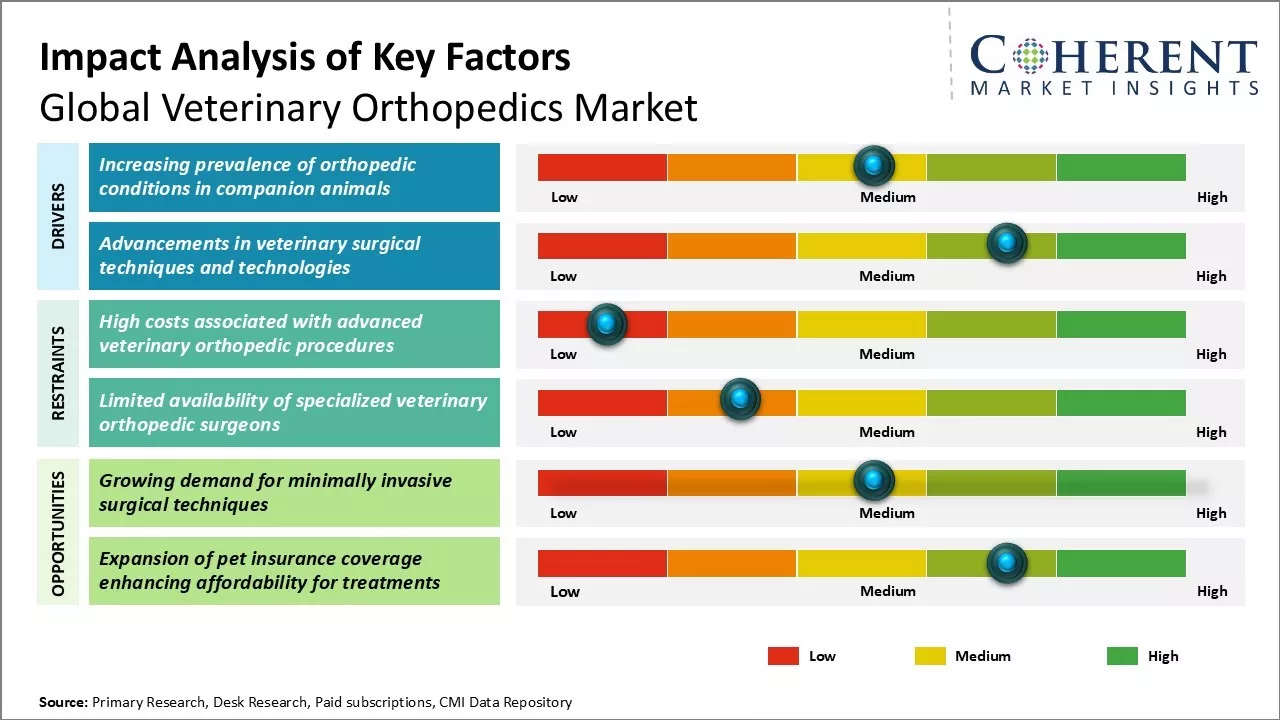
Increasing prevalence of orthopedic conditions in companion animals and advancements in veterinary surgical techniques and technologies are the major factors driving the growth of the global veterinary orthopedics market.
High costs associated with advanced veterinary orthopedic procedures and limited availability of specialized veterinary orthopedic surgeons are the major factors hampering the growth of the global veterinary orthopedics market.
In terms of application, tibial plateau leveling osteotomy (TPLO) is estimated to dominate the market revenue share in 2026.
DePuy Synthes (Johnson & Johnson), IMEX Veterinary, Inc., BioMedtrix, Vetbone, Braun Holding GmbH & Co. KG, Veterinary Orthopedic Implants, Inc., Kyon Pharma, ORTHOpets, Stryker Corporation, B.Braun Melsungen AG, VET-IMPLANTS, Vet-Tech, Inc., Arthrex, Inc., JORVET, and Medtronic are the major players operating in the veterinary orthopedics market.
North America is expected to lead the global veterinary orthopedics market in 2026.