

Plasma Fractionation Market Size and Forecast — 2026 - 2033
The Global Plasma Fractionation Market is projected to be valued at USD 27.4 billion in 2026 and is anticipated to grow to USD 44.9 billion by 2033, registering a compound annual growth rate (CAGR) of 7.8% during the forecast period from 2026 to 2033.
Overview
The Plasma Fractionation Market is driven by rising demand for plasma-derived therapies to treat conditions like Hemophilia and Immunodeficiency Disorders. Increasing prevalence of chronic and rare diseases, along with an aging global population, boosts demand for immunoglobulins and clotting factors. Technological advancements in fractionation and purification processes improve efficiency and safety. Growing healthcare expenditure and expanding access to advanced treatments in emerging economies further support market growth. Additionally, increased awareness, government initiatives, and rising plasma collection infrastructure are key factors accelerating the adoption of plasma-derived products worldwide.
Key Takeaways
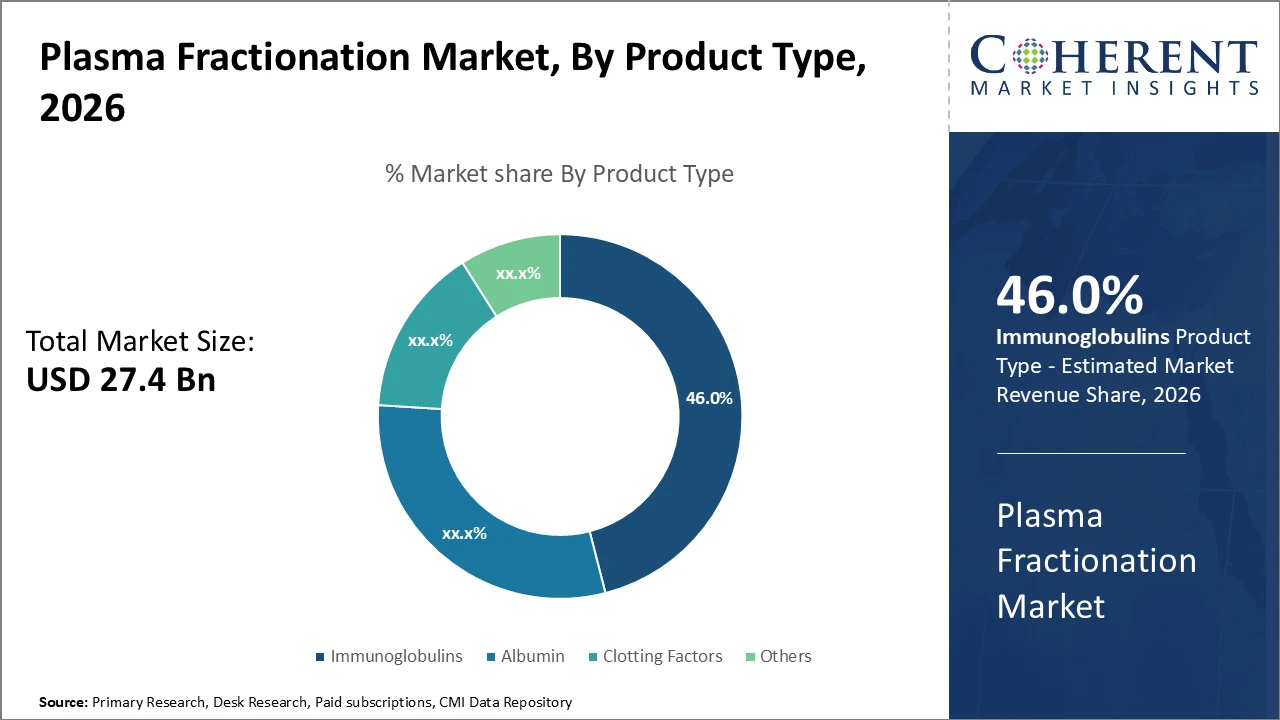
The immunoglobulins segment accounts for the largest share of the plasma fractionation market due to its wide usage in treating autoimmune and neurological disorders.
Albumin is the fastest-growing product subsegment, driven by increasing demand for chronic liver disease treatment and critical care applications.
The therapeutic application segment dominates the market, contributing more than 60% of total revenue, supported by rising hospital utilization and treatment needs.
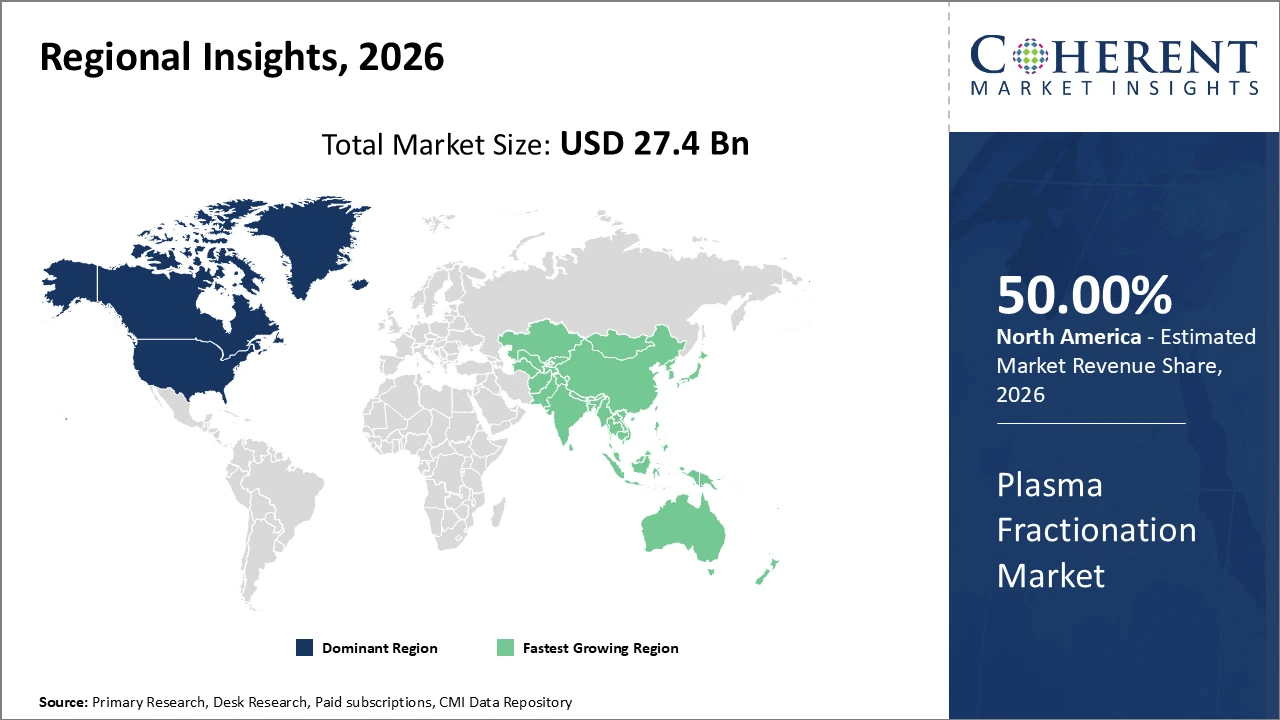
North America holds the largest market share, supported by strong plasma collection systems, favorable regulations, and high export activity led by the United States.
Asia Pacific is the fastest-growing regional market, with a CAGR exceeding 10%, fueled by growing healthcare investments and increasing awareness about plasma donation.
Europe shows steady growth due to well-established manufacturing infrastructure and the presence of major industry players.
Plasma Fractionation Market Segmentation Analysis
 Plasma Fractionation
Market Insights, By Product Type
Plasma Fractionation
Market Insights, By Product Type
Immunoglobulins dominate the plasma fractionation market, serving as the primary revenue contributors due to their broad therapeutic use in autoimmune, infectious, and neurological disorders. Their increasing adoption in chronic disease management continues to strengthen market demand. Albumin represents the fastest-growing subsegment, driven by its expanding use in critical care, trauma management, and chronic liver disease treatment. Rising global surgical procedures further boost its demand. Clotting factors hold a stable position, playing a crucial role in managing hemophilia and other bleeding disorders. The others segment includes specialized plasma proteins that cater to rare and emerging clinical conditions, supporting niche treatment requirements.
Plasma Fractionation Market Insights, By End User
Hospitals hold the dominant share in the plasma fractionation market, as they are the primary consumers of products such as immunoglobulins and clotting factors used in inpatient care, surgeries, and emergency treatments. Their advanced infrastructure and high patient inflow support consistent demand. Clinics represent the fastest-growing subsegment, driven by the rising trend of outpatient treatments and increased accessibility to plasma-based therapies and immunizations. Diagnostic laboratories utilize plasma-derived proteins for disease screening and assay development. Research institutes focus on innovation and clinical trials, while other segments include specialized care centers and home healthcare providers increasingly adopting plasma therapies.
Plasma Fractionation Market Trends
The plasma fractionation market is witnessing technological maturation, with a stronger emphasis on improving efficiency, scalability, and product precision.
Investments in automated fractionation equipment increased by over 18% between 2024 and 2026, leading to reduced processing time and enhanced purity of plasma-derived products.
Strategic collaborations between plasma collection organizations and biopharmaceutical companies are growing to secure raw material supply and expand production capabilities.
Partnerships, such as those formed by companies like Octapharma with regional plasma centers in Asia Pacific in early 2026, are strengthening plasma sourcing networks.
There is a rising number of clinical trials focused on immunoglobulins, particularly targeting rare and complex diseases.
Expanding research in rare disease treatment is broadening the therapeutic applications and overall market potential of plasma-derived therapies.
Plasma Fractionation Market Insights, By Geography
 North America Plasma
Fractionation Market Analysis and Trends
North America Plasma
Fractionation Market Analysis and Trends
North America leads the plasma fractionation market, primarily driven by the strong plasma collection infrastructure in the United States, which accounted for over 50% of global plasma supply in 2025. Strict regulatory standards under the U.S. Food and Drug Administration ensure high product quality and safety, encouraging the development of premium plasma-derived therapies. Major industry players such as CSL Behring and Grifols continue to invest in advanced fractionation facilities, strengthening regional production capacity. These factors collectively reinforce North America’s dominant position in the global plasma fractionation market.
Asia Pacific Plasma Fractionation Market Analysis and Trends
Asia Pacific represents the fastest-growing region in the plasma fractionation market, registering a CAGR exceeding 10%, driven by rising healthcare expenditures, increasing awareness of plasma donation, and supportive government initiatives to establish plasma collection centers. China plays a crucial role with its expanding plasma collection capacity and the growth of domestic companies such as Shanghai RAAS Blood Products, accelerating overall market revenue. Japan and India also contribute significantly, supported by improving healthcare infrastructure, rising patient awareness, and increasing adoption of plasma-derived therapies across diverse medical applications.
Plasma Fractionation Market Outlook for Key Countries
USA Plasma Fractionation Market Analysis and Trends
The United States plasma fractionation market remains the largest contributor globally, supported by its extensive donor network, advanced manufacturing infrastructure, and strong focus on research and development. Plasma collection volumes increased by 14% between 2024 and 2026, aided by more than 700 licensed plasma centers across the country. Leading domestic companies continue to drive innovation, particularly in immunoglobulin therapies, contributing to significant revenue growth in 2025. Supportive regulatory frameworks, guided by the U.S. Food and Drug Administration, along with incentives encouraging plasma donation, further strengthen the country’s dominant position in the global market.
Germany Plasma Fractionation Market Analysis and Trends
Germany serves as a major hub for Europe’s plasma fractionation market, supported by a strong biotechnology sector and rigorous quality standards. The market has experienced steady revenue growth, fueled by the increasing prevalence of chronic diseases and higher hospital demand for plasma-derived products such as albumin and clotting factors. Domestic companies actively collaborate with global industry players on technology transfer and new product development, strengthening market capabilities and revenue potential. Additionally, government initiatives aimed at improving healthcare infrastructure have promoted plasma donor recruitment programs since 2024, further supporting the expansion and stability of Germany’s plasma fractionation industry.
Analyst Opinion
Global plasma collection volumes are rising, directly supporting the expansion of the plasma fractionation market. In 2024, plasma collection centers reported a 12% year-over-year increase, particularly in North America and Europe, ensuring raw material availability for production and driving market growth through 2033.
Demand for immunoglobulins is increasing, especially for treating autoimmune diseases and immune deficiencies, accounting for over 60% of plasma fractionation market revenue in 2025. Clinical trials for novel immunoglobulin therapies grew 15% in 2026 compared to 2024, highlighting diversified applications fueling long-term market expansion.
Pricing trends show steady increases due to rising production costs and premium strategies addressing regulatory compliance and enhanced product quality. Between 2024 and 2026, plasma-derived product prices in established markets rose about 5% annually, contributing to higher revenue despite cost pressures.
Micro-indicators, such as expanding export capacity from plasma-rich regions like the U.S., which exported over 40% of collected plasma-derived products globally in 2025, illustrate a dynamic trade environment. This expansion supports market penetration into emerging regions and ensures a stable supply of fractionated products.
- Current Industry Events of 2026
- Market Size Estimation
- Regional Breakdown
- Competitive Landscape
- Customer Intelligence
- Segmental Analysis
- Pricing Analysis
- Key Market Drivers, Challenges & Future Trends
- Customized Insights Section
Market Scope
| Report Coverage | Details | ||
|---|---|---|---|
| Base Year: | 2025 | Market Size in 2026: | USD 27.4 billion |
| Historical Data for: | 2020 To 2024 | Forecast Period: | 2026 To 2033 |
| Forecast Period 2026 to 2033 CAGR: | 7.8% | 2033 Value Projection: | USD 44.9 billion |
| Geographies covered: |
| ||
| Segments covered: |
| ||
| Companies covered: | Grifols, CSL Behring, Octapharma, Biotest AG, Sanquin, CSL Plasma, Kamada Ltd., LFB Group, Baxter International, Kedrion Biopharma | ||
| Growth Drivers: |
| ||
Plasma Fractionation Market Growth Factors
The growing prevalence of immunodeficiency and chronic diseases requiring plasma-derived therapies continues to drive the plasma fractionation market, supported by an expanding patient base in developing countries. Investments in plasma collection infrastructure have increased, with a 10% annual rise in global collection centers between 2024 and 2026, improving raw material availability and market reach. Technological advancements in fractionation processes have enhanced product purity and yield, reducing manufacturing costs and supporting business growth. Additionally, regulatory harmonization across major markets has streamlined approval processes, increased industry confidence, and enabled faster product launches, further strengthening the global plasma fractionation market’s expansion potential.
Plasma Fractionation Market Development
In December 2025, SK Plasma and Indonesia Investment Authority’s joint venture, SKPlasma Core Indonesia, launched SK GammaBio and SK Albumin during the National Health Day celebration.
Key Players
Leading Companies of the Market
Grifols
CSL Behring
Octapharma
LBF Group
Biotest AG
Kamada Ltd.
Sanquin
CSL Plasma
Baxter International
Kedrion Biopharma
Leading market players in the plasma fractionation industry have focused on aggressive product innovation and strategic partnerships to strengthen their market positions. For instance, Takeda’s acquisition of BioLife Plasma Services in 2025 increased its plasma collection capacity by 15%, enhancing supply chain resilience and ensuring a steady flow of raw materials for production. Similarly, Grifols introduced next-generation immunoglobulin therapies in early 2026, expanding its product portfolio and targeting emerging niche therapeutic segments. These initiatives not only boosted revenue growth but also reinforced the companies’ competitiveness by addressing evolving clinical needs and expanding their reach in the global plasma fractionation market.
Plasma Fractionation Market Future Outlook
The future of the plasma fractionation market is poised for robust growth, driven by rising prevalence of chronic and immunodeficiency disorders, expanding plasma collection infrastructure, and increasing awareness of plasma therapies in emerging markets. Technological advancements in fractionation processes are expected to enhance product purity, yield, and cost-efficiency, while regulatory harmonization will streamline approvals and facilitate faster product launches. Innovations in immunoglobulins and specialty plasma proteins for rare diseases will further expand therapeutic applications. Strategic collaborations, mergers, and acquisitions among leading players will strengthen supply chains and global reach, ensuring sustained market expansion and revenue growth through 2033.
Plasma Fractionation Market Historical Analysis
The plasma fractionation market has experienced steady growth over the past decade, driven by increasing demand for immunoglobulins, albumin, and clotting factors in treating autoimmune, infectious, and bleeding disorders. Expansion of plasma collection centers, particularly in North America and Europe, ensured a stable supply of raw materials, supporting market development. Technological improvements in fractionation processes enhanced product purity and yield, while regulatory frameworks strengthened quality and safety standards. Rising prevalence of chronic diseases and growing hospital and outpatient adoption further fueled demand. Strategic investments, collaborations, and clinical research by key industry players contributed to market maturation and set the foundation for future growth.
Sources
Primary Research Interviews:
Executives from plasma fractionation and biopharmaceutical companies
Hospital and clinic administrators involved in plasma therapy
Plasma collection center managers and donor program coordinators
Market analysts and healthcare trend consultants
Magazines:
BioPharma-Reporter – Plasma Products and Biopharma Updates
Pharmaceutical Technology – Blood-Derived Therapy Innovations
Plasma Protein Therapeutics – Industry Developments and Market Trends
Fierce Biotech – Plasma Fractionation and Immunoglobulin News
Journals:
Transfusion – Blood Plasma Research and Therapeutic Applications
Vox Sanguinis – Plasma Collection and Fractionation Studies
Journal of Clinical Apheresis – Plasma-Derived Therapy Research
Blood Reviews – Advances in Plasma Protein Therapies
Newspapers:
The Wall Street Journal – Biopharmaceutical and Plasma Market Insights
Financial Times – Healthcare and Biopharma Industry News
Reuters – Plasma Fractionation and Blood Product Developments
Bloomberg – Biopharma and Therapeutic Market Trends
Associations:
Plasma Protein Therapeutics Association (PPTA)
International Society of Blood Transfusion (ISBT)
European Blood Alliance (EBA)
AABB (formerly American Association of Blood Banks)
Get access to 250+ pages report
Every segment, forecast, competitor profile and data table behind the analysis above — available for instant download.
- ESOMAR Member
- ISO 9001:2015 Certified
- D-U-N-S Registered
- GDPR & CCPA Compliant
Missing comfort of reading report in your local language? Find your preferred language:
Transform your Strategy with Exclusive Trending Reports
Frequently Asked Questions
Dominant players include Grifols, CSL Behring, Octapharma, and CSL Plasma, all of which lead in plasma collection capacity and product innovations.
The market size is projected to grow from USD 27.4 billion in 2026 to USD 44.9 billion by 2033, exhibiting a CAGR of 7.8%, driven by rising demand for plasma-derived therapies.
The hospitals segment, especially hospitals and clinics administering immunoglobulin therapies, holds the largest growth opportunity due to rising prevalence of autoimmune diseases.
Emerging trends include advancements in personalized plasma therapy, AI integration in fractionation processes, and an expanding plasma donor base in Asia Pacific, reshaping market dynamics.
The market is highly competitive with a few key players dominating plasma collection and fractionation. Challenges include stringent regulatory compliance, high production costs, and plasma donor recruitment hurdles.
Leading companies emphasize acquisition of plasma collection centers, strategic product portfolio diversification, and collaborations for technology innovation to enhance market share and revenue.