

Non Hodgkins Lymphoma Treatment Market Size and Forecast — 2026 - 2033
The Global Non Hodgkins Lymphoma Treatment Market size is estimated to be valued at USD 10.5 billion in 2026 and is expected to reach USD 18.3 billion by 2033, exhibiting a compound annual growth rate (CAGR) of 8.5% from 2026 to 2033.
Overview
The Non-Hodgkins Lymphoma (NHL) treatment market encompasses a range of therapeutic options aimed at targeting abnormal lymphocyte proliferation and improving patient outcomes. Key product categories include chemotherapy, immunotherapy, targeted therapy, and combination regimens. Chemotherapy involves cytotoxic drugs to destroy cancer cells, while immunotherapy leverages monoclonal antibodies, immune checkpoint inhibitors, and CAR-T cell therapies to enhance the body’s immune response. Targeted therapies focus on specific molecular pathways, such as kinase inhibitors, to minimize off-target effects. Emerging therapies, including bispecific antibodies and personalized medicine approaches, are gaining traction. Supportive care products, such as growth factors and antiemetics, complement treatment regimens for improved patient quality of life.
Key Takeaways
The B-Cell lymphomas segment dominates the market with over 60% share, due to higher prevalence and extensive therapeutic research focused on this disease type.
Immunotherapy, particularly CAR-T therapies, is the fastest-growing subsegment, driven by improved patient outcomes observed in multiple Phase III trials.
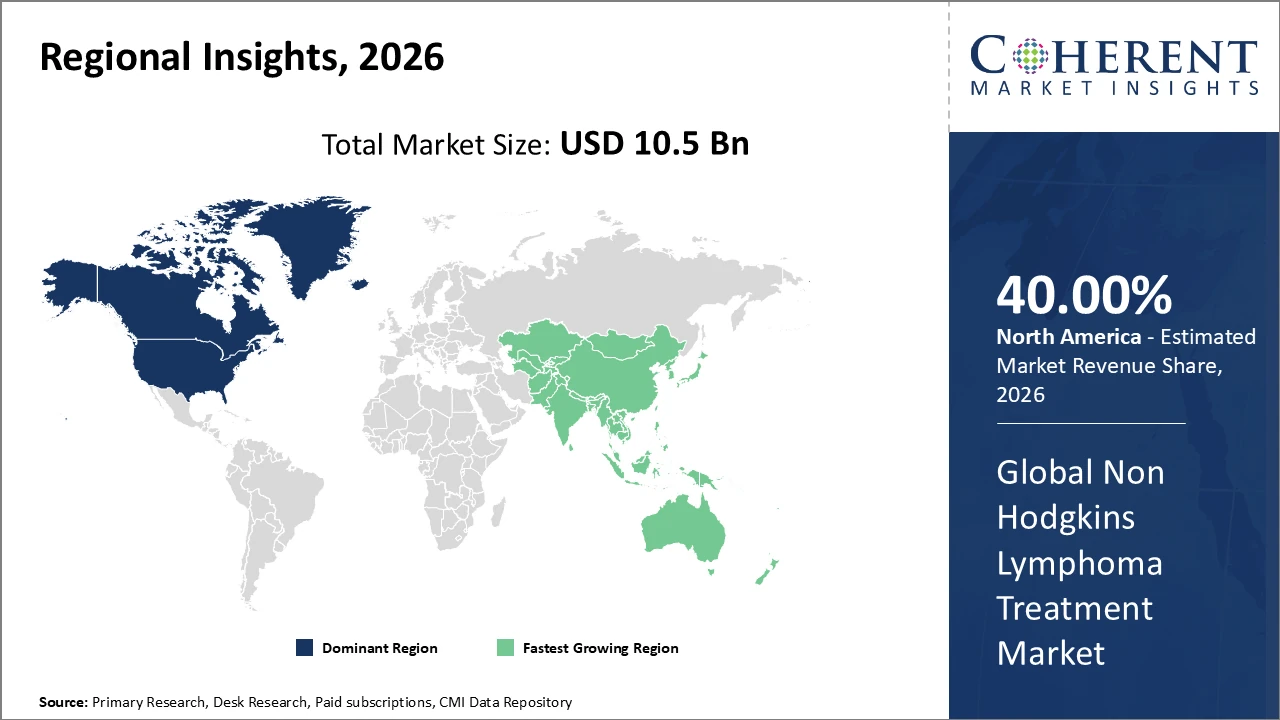
North America leads regionally with around 40% market share, supported by advanced healthcare infrastructure and significant oncology R&D investments.
Asia Pacific exhibits the highest CAGR, fuelled by increasing healthcare spending and growing cancer awareness programs in countries such as China and India.
Europe maintains a strong competitive position due to a robust regulatory framework and a large oncology patient population.
Non Hodgkins Lymphoma Treatment Market Segmentation Analysis
Non Hodgkins Lymphoma Treatment Market Insights, By Treatment Type
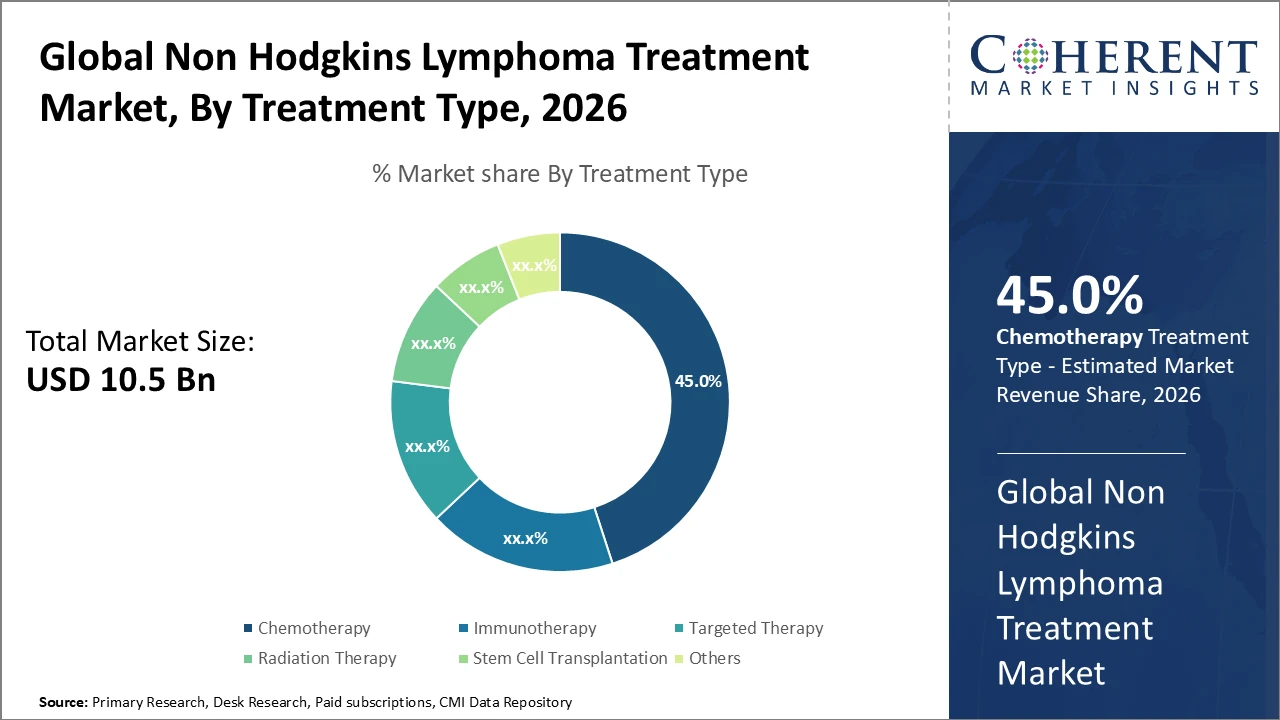
Chemotherapy dominates the Non Hodgkins Lymphoma treatment market with a 45% share, driven by its proven efficacy and broad availability across global treatment centers. Immunotherapy is the fastest-growing segment, fuelled by increased adoption of CAR-T and monoclonal antibody-based therapies, which have demonstrated improved survival outcomes and differentiated treatment benefits. Targeted therapies, including kinase inhibitors, play a key role in precision medicine approaches, while radiation therapy and stem cell transplantation continue to provide essential complementary care. Emerging treatments, such as molecular inhibitors and novel biologics, are gaining attention, reflecting ongoing innovation and diversification within the NHL therapeutic landscape.
Non Hodgkins Lymphoma Treatment Market Insights, By End User
Hospitals dominate the Non Hodgkins Lymphoma treatment market with a 55% share, driven by advanced infrastructure, skilled medical personnel, and the ability to deliver complex therapies such as chemotherapy, CAR-T, and stem cell transplantation. Specialty clinics and oncology centers are experiencing rapid growth, fuelled by increasing patient preference for specialized, outpatient-focused care and personalized treatment plans. Ambulatory surgical centers and other care settings hold smaller market shares but play a crucial role in providing supportive treatments, follow-up care, and post-therapy monitoring. Collectively, these healthcare channels ensure comprehensive patient management while expanding overall market accessibility and treatment reach.
Non Hodgkins Lymphoma Treatment Market Insights, By Disease Type
B-Cell lymphomas hold the largest market share at 60%, attributed to their higher global incidence and a broad range of established therapeutic options targeting this subtype. The T-Cell lymphomas segment is the fastest-growing, driven by innovations in selective immunotherapies and rising disease awareness, which have improved early diagnosis and treatment access. NK-Cell lymphomas and other rare subtypes represent a smaller yet important segment, benefiting from advancements in diagnostic differentiation, molecular profiling, and inclusion in clinical trials. Overall, continued research, novel therapies, and improved detection methods are expanding treatment opportunities across all lymphoma subtypes.
Non Hodgkins Lymphoma Treatment Market Trends
Next-generation sequencing and liquid biopsy technologies are emerging trends, enabling precise disease characterization and improved monitoring of minimal residual disease.
Widespread adoption of biosimilars is reshaping the market by reducing treatment costs and expanding patient accessibility. In 2026, biosimilar rituximab accounted for 35% of market revenues in the Asia Pacific region, highlighting this cost-efficiency trend.
Collaborations between pharmaceutical companies and technology firms are driving the development of AI-powered predictive analytics tools, streamlining treatment customization.
Pilot projects in Europe in 2025 demonstrated that AI-driven predictive tools improved clinical response prediction by 20%, supporting personalized therapy approaches.
Non Hodgkins Lymphoma Treatment Market Insights, By Geography
North America Non Hodgkins Lymphoma Treatment Market Analysis and Trends
In North America, the Non Hodgkins Lymphoma treatment market is dominated by substantial oncology research funding, high adoption of advanced therapeutics, and a well-established healthcare infrastructure. The United States represents nearly 75% of the regional market share, supported by widespread availability of hospitals and specialized oncology centers. Leading companies such as Roche and Gilead are headquartered in the region, driving revenue growth through innovative product launches, clinical trials, and targeted therapies. Strong regulatory frameworks, supportive reimbursement policies, and high patient awareness further reinforce market leadership. These factors collectively position North America as a key hub for NHL treatment innovation and adoption.
Asia Pacific Non Hodgkins Lymphoma Treatment Market Analysis and Trends
The Asia Pacific region is experiencing the fastest growth in the Non Hodgkins Lymphoma treatment market, with a CAGR exceeding 9%, driven by rising healthcare investments, improved access through government initiatives, and increasing patient awareness. Countries such as China and India are witnessing higher lymphoma diagnosis and treatment rates, supported by expanded oncology infrastructure and early detection programs. Domestic pharmaceutical companies are strengthening oncology portfolios, while favorable regulatory policies encourage the introduction of generics and biosimilars, improving affordability and accessibility. These factors collectively position Asia Pacific as a high-growth market, attracting both regional and global players to capitalize on emerging opportunities.
Non Hodgkins Lymphoma Treatment Market Outlook for Key Countries
USA Non Hodgkins Lymphoma Treatment Market Analysis and Trends
The U.S. Non Hodgkins Lymphoma treatment market is marked by high adoption of premium therapies, including CAR-T and immunomodulators, supported by continuous advancements in clinical pipelines. In 2025, patient access programs expanded by 18%, increasing treatment uptake and accessibility. Leading companies such as Bristol-Myers Squibb and Janssen are integrating digital health solutions to enhance patient monitoring, adherence, and outcome assessment, strengthening therapeutic effectiveness. Advanced healthcare infrastructure, favorable reimbursement policies, and high clinical trial activity further reinforce the U.S. as a key market. Collectively, these factors contribute to the country’s leadership and significant share in the global NHL treatment market.
Germany Non Hodgkins Lymphoma Treatment Market Analysis and Trends
Germany’s Non Hodgkins Lymphoma treatment market is characterized by a well-established healthcare system, high patient awareness, and strong oncology research capabilities. Chemotherapy and targeted therapies dominate, while immunotherapies, including CAR-T and monoclonal antibodies, are witnessing rapid adoption due to clinical efficacy and regulatory support. Hospitals and specialized oncology centers serve as primary treatment settings, offering comprehensive care. The market benefits from robust reimbursement frameworks and early access programs that improve therapy uptake. Additionally, collaborations between pharmaceutical companies and research institutions drive innovation in precision medicine and biosimilars. These factors collectively sustain Germany’s strong competitive position within the European NHL treatment landscape.
Analyst Opinion
The adoption of CAR-T cell therapies and novel monoclonal antibodies is driving market expansion. Clinical trials also reported a 35% rise in patient enrolment for these therapies from 2025 to 2026, reflecting growing demand.
Improved imaging and molecular diagnostics have boosted diagnosis rates, contributing to market growth. Between 2024 and 2026, early-stage NHL detection in North America increased by 22%, enhancing treatment uptake and revenue.
Pharmaceutical companies expanded production of immunomodulatory drugs and biosimilars, optimizing pricing to improve accessibility. In 2025, rituximab biosimilar production in Asia Pacific rose by 40%, supporting market share growth.
Integration of genetic profiling has enabled personalized treatment, improving patient outcomes. European oncology centers reported a 30% improvement in treatment effectiveness from 2024 to 2026, driving higher market revenue.
- Current Industry Events of 2026
- Market Size Estimation
- Regional Breakdown
- Competitive Landscape
- Customer Intelligence
- Segmental Analysis
- Pricing Analysis
- Key Market Drivers, Challenges & Future Trends
- Customized Insights Section
Market Scope
| Report Coverage | Details | ||
|---|---|---|---|
| Base Year: | 2025 | Market Size in 2026: | USD 10.5 billion |
| Historical Data for: | 2020 To 2024 | Forecast Period: | 2026 To 2033 |
| Forecast Period 2026 to 2033 CAGR: | 8.5% | 2033 Value Projection: | USD 18.3 billion |
| Geographies covered: |
| ||
| Segments covered: |
| ||
| Companies covered: | Roche Holding AG, Novartis AG, AbbVie Inc., Sanofi, Merck & Co., Pfizer Inc., Amgen Inc., Celgene Corporation, BeiGene Ltd., Karyopharm Therapeutics | ||
| Growth Drivers: |
| ||
Non Hodgkins Lymphoma Treatment Market Growth Factors
The global Non Hodgkins Lymphoma treatment market is driven by the growing aging population, as disease incidence is higher among older adults. In 2025, U.S. data showed a 12% increase in diagnosed cases among individuals aged 60 and above, directly boosting market revenue. Technological advancements, including minimally invasive diagnostics and personalized medicine, enhance treatment efficacy and patient quality of life, further supporting growth. Rising investments in oncology research, evidenced by a 20% increase in global clinical trials in 2024, and government initiatives to expand cancer care access, particularly in emerging Asia Pacific and Latin American markets, are also key growth drivers.
Non Hodgkins Lymphoma Treatment Market Development
In 2025, the FDA approved brexucabtagene autoleucel for relapsed or refractory mantle cell lymphoma in the U.S., leading to a significant increase in CAR-T therapy adoption. Hospitals reported higher patient enrolment and improved access to advanced immunotherapies, boosting market revenue.
Also in 2025, China’s pharmaceutical companies expanded production of rituximab biosimilars by 40%, increasing availability and affordability for Non Hodgkins Lymphoma patients. This, combined with government initiatives promoting cancer treatment access, drove greater therapy uptake and strengthened the Asia Pacific region’s contribution to the global NHL treatment market.
Key Players
Leading Companies of the Market
Roche Holding AG
Novartis AG
Amgen Inc.
Pfizer Inc.
AbbVie Inc.
Bayer AG
Merck & Co.
Sanofi
BeiGene Ltd.
Celgene Corporation
Several leading players in the Non Hodgkins Lymphoma treatment market have pursued mergers and acquisitions to expand their oncology portfolios. For instance, Roche’s acquisition of a biotech firm specializing in targeted lymphoma therapies in 2025 resulted in a 15% increase in annual revenue. Additionally, companies such as Gilead have made substantial investments in research and development of cell-based therapies, leading to multiple Phase III clinical trials in 2026. These strategic initiatives have strengthened their competitive positions, enhanced their product pipelines, and enabled them to capture significant market share in the rapidly evolving NHL treatment landscape.
Non Hodgkins Lymphoma Treatment Market Future Outlook
The future outlook for the Non Hodgkins Lymphoma treatment market is highly promising, driven by increasing global lymphoma prevalence, especially among aging populations, and rising patient awareness. Advances in immunotherapies, including CAR-T and monoclonal antibody treatments, along with targeted therapies and personalized medicine approaches, are expected to expand treatment options and improve survival outcomes. Adoption of biosimilars will enhance affordability and accessibility, particularly in emerging markets. Integration of digital health tools and AI-powered predictive analytics will further optimize patient management and treatment efficacy. Continued investment in oncology research and supportive government initiatives will sustain strong market growth through 2033.
Non Hodgkins Lymphoma Treatment Market Historical Analysis
The historical analysis of the Non Hodgkins Lymphoma treatment market highlights steady growth over the past decade, driven by increasing global lymphoma incidence and advances in oncology care. Chemotherapy and monoclonal antibody therapies initially dominated treatment approaches, supported by clinical validation and widespread availability. Immunotherapies, particularly CAR-T cell treatments, emerged in the late 2010s, reshaping therapeutic strategies and improving patient outcomes. North America led the market historically due to advanced healthcare infrastructure and robust R&D investments, while Europe maintained strong growth through regulatory support and early access programs. Asia Pacific began expanding rapidly, driven by rising awareness, improved healthcare access, and biosimilar adoption.
Sources
Primary Research Interviews:
Executives and operations managers at pharmaceutical and biotechnology companies specializing in oncology
Oncologists, hematologists, and clinical researchers treating lymphoma patients
Technology providers for CAR-T therapy, monoclonal antibodies, and targeted treatment platforms
Industry analysts and consultants specializing in oncology, hematology, and immunotherapy markets
Databases:
PubMed
Scopus
ClinicalTrials.gov
Bloomberg Terminal
Thomson Reuters Eikon
Euromonitor International
S&P Global Market Intelligence
Others
Magazines:
Oncology Times – Lymphoma Research and Treatment Updates
Cancer Therapy Advisor – Market Trends and Therapy Developments
PharmaVOICE – Pharmaceutical Innovations and Oncology Insights
Hematology Advisor – Clinical Practice and Emerging Therapies
Journals:
Journal of Clinical Oncology – NHL Clinical Trials and Therapeutic Advances
Blood – Hematologic Malignancy Research and Case Studies
Leukemia & Lymphoma Journal – Treatment Strategies and Outcomes
Cancer Research – Targeted Therapies, Immunotherapies, and Personalized Medicine
Newspapers:
The Wall Street Journal – Pharmaceutical and Global Oncology Markets
Financial Times – Healthcare and Biopharma Market Insights
Fierce Pharma – Oncology Product Launches and Market Developments
BioWorld – Clinical Trials and Drug Approval Updates
Associations:
American Society of Hematology (ASH) – Lymphoma Research and Guidelines
European Hematology Association (EHA) – Clinical Practices and Policy Updates
International Lymphoma Coalition (ILC) – Patient Advocacy and Market Insights
World Health Organization (WHO) – Global Cancer Statistics and Treatment Guidelines
Get access to 250+ pages report
Every segment, forecast, competitor profile and data table behind the analysis above — available for instant download.
- ESOMAR Member
- ISO 9001:2015 Certified
- D-U-N-S Registered
- GDPR & CCPA Compliant
Missing comfort of reading report in your local language? Find your preferred language:
Transform your Strategy with Exclusive Trending Reports
Frequently Asked Questions
Leading companies include Celgene Corporation, Roche Holding AG, Brayer AG, and Novartis AG, which maintain strong oncology pipelines and significant market shares through innovative therapies and strategic collaborations.
The market is projected to grow from USD 10.5 billion in 2026 to USD 18.3 billion by 2033, reflecting a CAGR of 8.5%, driven by technological advancements and increasing global disease prevalence.
Hospitals dominate the end-user segment with a 55% market share, leveraging advanced treatment protocols and specialized infrastructure to manage complex lymphoma cases effectively.
The market is expected to shift toward highly personalized treatments, including CAR-T therapies and bispecific antibodies, along with AI-driven diagnostics to enhance patient outcomes and optimize therapy selection.
The competitive landscape is dynamic, focusing on innovation, pricing strategies, and geographic expansion. Key challenges include high therapy costs, regulatory complexity, and access limitations in emerging markets.
Companies emphasize partnerships for clinical research, acquisitions to expand oncology portfolios, and targeted growth in emerging markets to enhance treatment accessibility and disease management outreach.