

Recombinant Therapeutic Antibodies and Proteins Market Size and Share Analysis: (2026 - 2033)
The Recombinant Therapeutic Antibodies and Proteins Market is anticipated to grow at a CAGR of 12.5% with USD 257.0 Bn share in 2026 and is expected to reach USD 575.3 Bn in 2033. The Recombinant Therapeutic Antibodies and Proteins Market is gaining traction as biologics move deeper into oncology, autoimmune, hematology, metabolic, and rare disease care. The American Cancer Society, published in January 2026, estimated 321,910 new invasive breast cancer cases and 60,730 DCIS cases in U.S. women in 2026, supporting demand for targeted antibodies. Regulatory momentum is also visible: in May 2026, the U.S. FDA approved fam trastuzumab deruxtecan nxki for two HER2 positive early-stage breast cancer indications. In DESTINY Breast11, the pCR rate reached 67.3% versus 56.3%, showing measurable clinical value for recombinant antibody-based treatment.
Source: FDA; American Cancer Society
Key Takeaways
- Monoclonal Antibodies is expected to account the largest share of 45.2% in 2026, because they provide target specific activity, broad use across oncology, autoimmune and hematology indications, companion diagnostic driven patient selection, and strong regulatory acceptance. For instance, in March 2026, U.S. FDA approved teclistamab with daratumumab hyaluronidase for relapsed or refractory multiple myeloma, showing continued approval momentum for antibody-based biologics in high unmet need advanced specialty care settings worldwide. The U.S. FDA published this approval notice in March 2026. The approval covered teclistamab, Tecvayli, Janssen Biotech, Inc., in combination with daratumumab hyaluronidase, and the FDA reported a randomized trial of 587 patients, with median progression free survival not reached in the treatment arm versus 18.1 months in the control arm.
- Oncology will dominate with 38.5% in 2026, because recombinant antibodies and proteins enable tumor specific targeting, biomarker guided selection, immune modulation, antibody drug conjugate delivery, and strong hospital adoption across breast cancer, myeloma, lymphoma, and solid tumors. In May 2026, U.S. FDA approved fam trastuzumab deruxtecan nxki for two HER2 positive early-stage breast cancer indications, reinforcing oncology focused biologic demand globally. U.S. FDA published this approval in May 2026 for fam trastuzumab deruxtecan nxki, Enhertu, Daiichi Sankyo Inc., covering two HER2 positive early-stage breast cancer indications.
- North America is expected to acquire the dominant share of 41.2% in 2026, attributed to due to strong biologics adoption, high oncology and immunology treatment demand, advanced reimbursement access, and the presence of major biopharmaceutical companies. The U.S. also has one of the strongest drug commercialization environments, with CMS reporting prescription drug spending of US$ 467.0 billion in 2024, while FDA CDER approved 50 novel drugs in 2024, including new therapeutic biologics under BLAs. OECD also reported that the U.S. had the highest per capita pharmaceutical spending among OECD countries, supporting faster uptake of high value biologics and recombinant therapies.
Segmental Insights
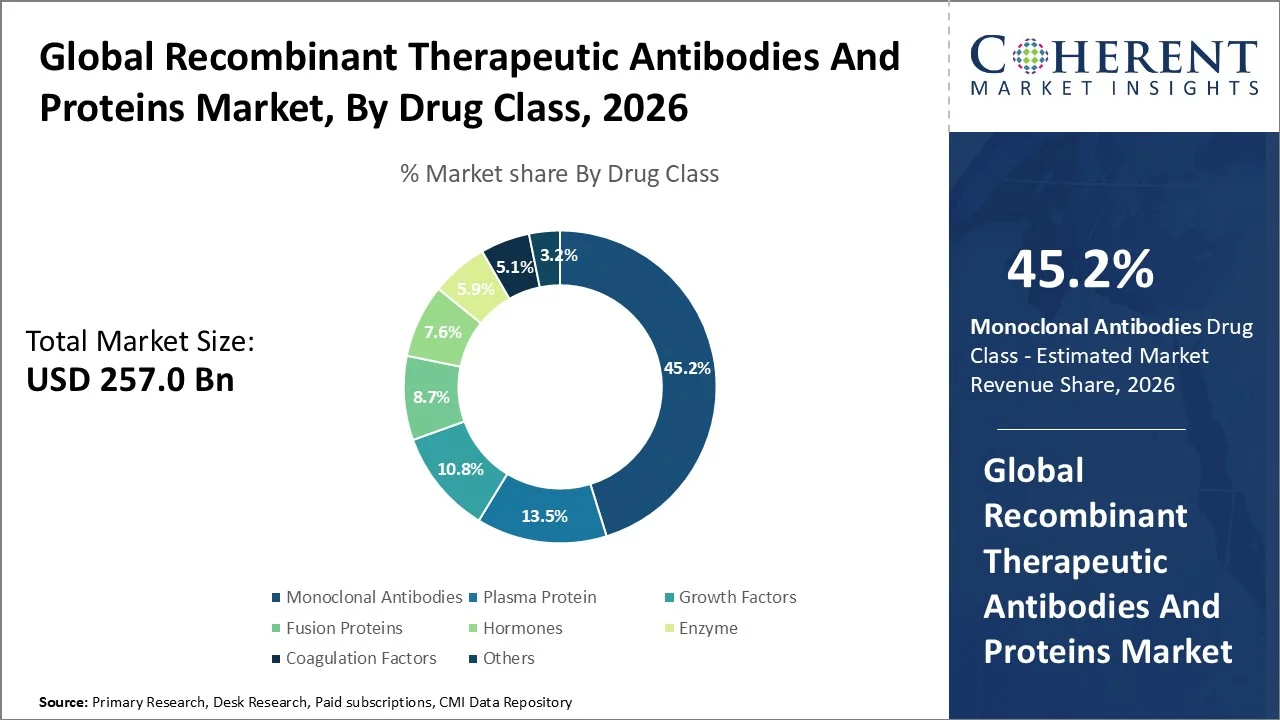
Why is Monoclonal Antibodies Acquiring the Largest Market Share?
Monoclonal Antibodies is projected to account for the largest share of cognitive systems spending in 2026, representing approximately 45.2% of the total volume. Monoclonal antibodies dominate the Recombinant Therapeutic Antibodies and Proteins Market because they offer high target specificity, predictable mechanisms, strong clinical validation, and broad use across oncology, autoimmune, hematology, inflammatory, and rare disease indications. Their engineered formats, including bispecific antibodies, antibody drug conjugates, and subcutaneous antibody combinations, improve patient selection, efficacy, dosing convenience, and hospital adoption. In March 2026, the U.S. FDA approved teclistamab with daratumumab hyaluronidase for relapsed or refractory multiple myeloma. The FDA reported a trial involving 587 patients, with median progression free survival not reached versus 18.1 months in the control arm, showing stronger outcome potential for antibody based recombinant biologics. This evidence supports their leadership over other recombinant proteins in specialty care.
- Current Industry Events of 2026
- Market Size Estimation
- Regional Breakdown
- Competitive Landscape
- Customer Intelligence
- Segmental Analysis
- Pricing Analysis
- Key Market Drivers, Challenges & Future Trends
- Customized Insights Section
Oncology holds the Largest Market Share
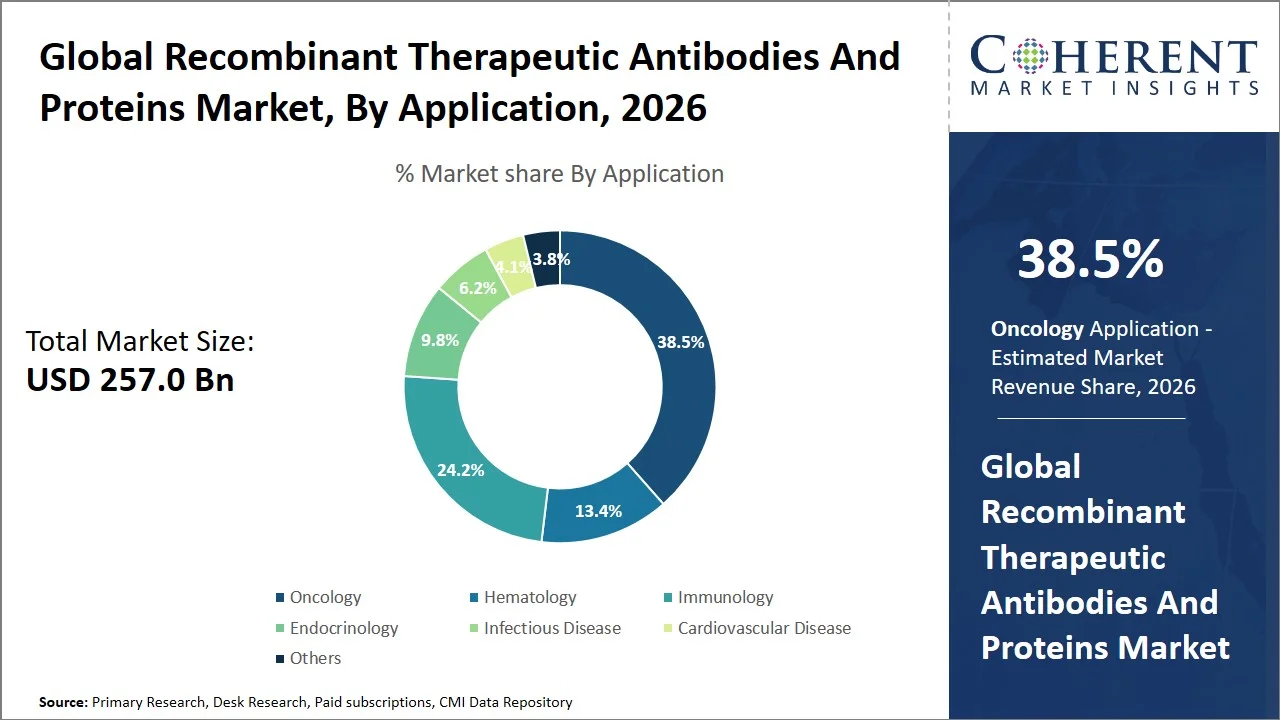
Based on application, oncology dominates the market, accounting for a significant 38.5% share in 2026, because cancer care has the highest need for targeted recombinant biologics, including monoclonal antibodies, antibody drug conjugates, bispecific antibodies and fusion proteins. These therapies support tumor specific targeting, biomarker based patient selection, immune pathway modulation and improved response in breast cancer, lymphoma, myeloma and solid tumors. The American Cancer Society, published in January to February 2026, projected 2,114,850 new cancer cases and 626,140 cancer deaths in the U.S. in 2026, creating a large treatment requiring patient base. Regulatory momentum also supports dominance: in May 2026, the U.S. FDA approved fam trastuzumab deruxtecan nxki for two HER2 positive early-stage breast cancer indications. FDA reported DESTINY Breast11 enrolled 927 adults, with pCR of 67.3 percent versus 56.3 percent, demonstrating measurable value of oncology recombinant antibodies.
Market Drivers
Rising Burden of Chronic and Complex Diseases
Rising burden of chronic and complex diseases drives the Recombinant Therapeutic Antibodies and Proteins Market growth as cancer, autoimmune disorders, hematologic malignancies, metabolic diseases, and rare conditions require highly targeted, long-term therapies. Recombinant antibodies and proteins are increasingly used because they bind specific disease pathways, improve clinical response, and support personalized treatment where conventional drugs show limited benefit. For instance, in January 2026, the American Cancer Society, projected 2,114,850 new cancer cases and 626,140 cancer deaths in the U.S. in 2026, reflecting a large treatment requiring patient pool. The U.S. FDA, published in March 2026, approved teclistamab with daratumumab hyaluronidase for relapsed or refractory multiple myeloma. In the 587-patient trial, median progression free survival was not reached versus 18.1 months in the control arm, highlighting demand for advanced recombinant antibody-based treatment in complex chronic cancer care settings.
Advances in recombinant DNA and biomanufacturing technologies is transforming the Recombinant Therapeutic Antibodies and Proteins Market
Advances in recombinant DNA and biomanufacturing technologies are transforming the market by improving protein expression, process scalability, yield consistency, product purity, and commercial reliability. Platforms such as engineered microbial strains, mammalian cell culture, vector construction, downstream purification, and bioconjugation allow manufacturers to develop monoclonal antibodies, fusion proteins, enzymes, hormones, and antibody drug conjugates with better target specificity and controlled quality. In March 2026, Olon and myBIOS announced a methanol free Pichia pastoris fermentation partnership for recombinant protein production, aimed at reducing toxic chemical use, lowering energy consumption, simplifying regulatory compliance, and maintaining high protein yields. Olon reported over 60 years in microbial fermentation, more than 30 years in recombinant protein production, 20 years in mammalian cell culture, approximately 5,000 m³ fermentation capacity, 14 manufacturing sites, and 14 R&D centers, supporting scalable biologics production and faster commercialization.
Source: Olon S.p.A.
Current Events and Their Impact on the Recombinant Therapeutic Antibodies and Proteins Market
Current Event | Description and its Impact |
FDA Push to Simplify Biosimilar Development in the U.S. |
|
FDA Interchangeability Guidance Reduces Switching Study Burden |
|
FDA National Priority Voucher Pilot Accelerates Review of Biologics |
|
India Releases Revised Similar Biologics Guidelines |
|
Rising Government Funding Activity |
|
India BioE3 and Biofoundry Network Strengthen Advanced Biomanufacturing |
|
EU Biotechnology and Biomanufacturing Initiative |
|
BARDA Project NextGen Supports Enhanced Monoclonal Antibodies |
|
Recombinant Therapeutic Antibodies and Proteins Market Trends
- Expansion of antibody drug conjugates in oncology- recombinant antibody drug conjugates are becoming a key trend because they combine tumor targeting with cytotoxic delivery, allowing use in defined cancer populations and earlier treatment settings. In May 2026, U.S. FDA approved fam-trastuzumab deruxtecan-nxki for two HER2 positive early-stage breast cancer indications, with DESTINY-Breast11 enrolling 927 adults and pCR reaching 67.3% versus 56.3%.
Source: U.S. FDA
- Rising use of bispecific antibodies in hematology- bispecific antibodies are gaining momentum because they connect cancer cells with immune effector cells and support targeted killing in relapsed or refractory malignancies. In March 2026, U.S. FDA approved teclistamab with daratumumab hyaluronidase for multiple myeloma after at least one prior therapy. The pivotal trial enrolled 587 patients; median progression-free survival was not reached versus 18.1 months.
- Biosimilar access and interchangeability are accelerating adoption- biosimilars are a major trend because they expand recombinant antibody availability, increase payer acceptance and lower biologic treatment barriers. In May 2026, FDA approved first interchangeable biosimilars to Simponi and Simponi Aria for rheumatoid arthritis, psoriatic arthritis, ankylosing spondylitis, ulcerative colitis and polyarticular juvenile idiopathic arthritis. FDA also stated biosimilars can improve patient access by increasing medication options and potentially lowering costs.
- Biomarker and companion diagnostic driven biologic use- targeted recombinant antibodies are increasingly linked to FDA-authorized tests, making treatment selection more precise and improving clinical confidence. In May 2026, FDA approved T-DXd for HER2 positive early-stage breast cancer as determined by an FDA-authorized test and also approved two companion diagnostic devices. This indicates stronger integration of diagnostics with antibody therapy commercialization, reimbursement and hospital treatment pathways.
- Sustainable and scalable biomanufacturing is becoming central- manufacturers are optimizing recombinant protein expression, fermentation, purification and yield stability to reduce production risk and improve supply reliability. In March 2026, Olon and myBIOS announced methanol-free Pichia pastoris fermentation for recombinant proteins, designed to eliminate toxic chemicals, reduce energy use and maintain high yields. Olon cited over 5,000 m³ fermentation capacity and 14 manufacturing sites.
Regional Insights
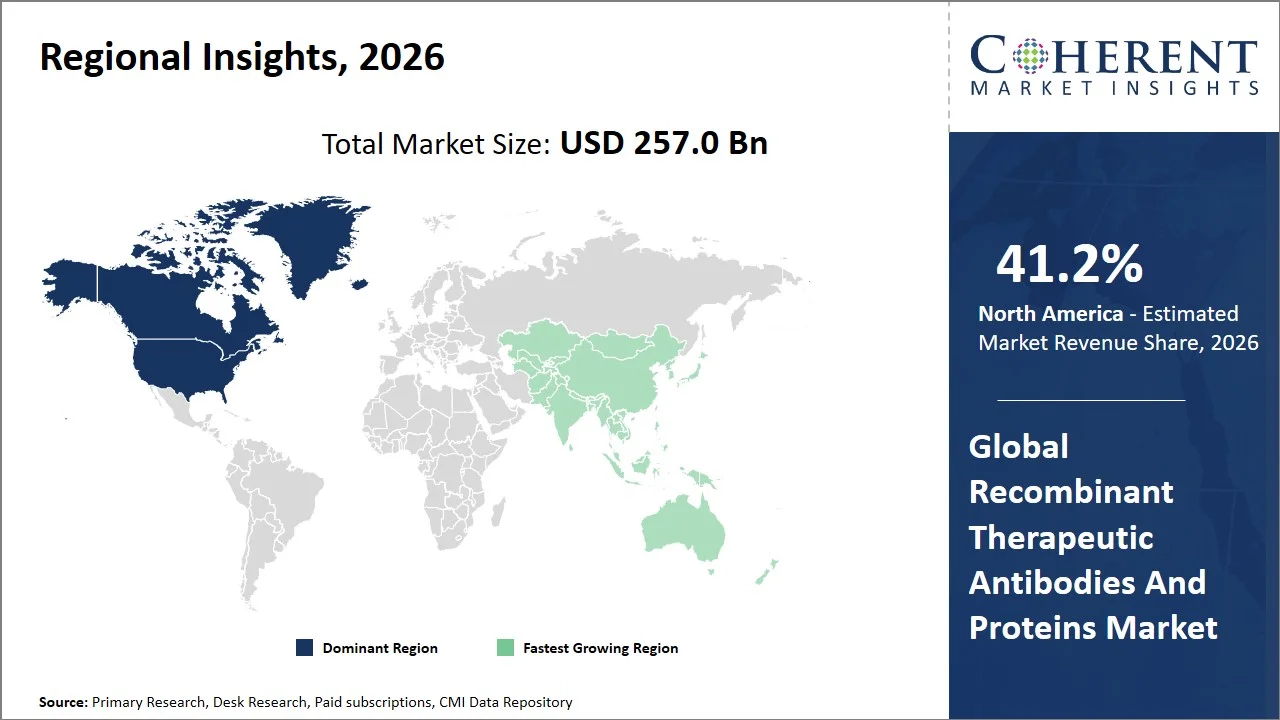
North America dominates owing to Strong Technological Infrastructure
North America account 41.2 % market share in 2026, supported by because the region combines high chronic disease burden, faster regulatory approvals, strong biologics R&D, advanced hospital infusion networks, companion diagnostic use, and broad payer coverage for specialty medicines. The U.S. remains the main growth engine as oncology, autoimmune, hematology and rare disease patients increasingly receive monoclonal antibodies, antibody drug conjugates, bispecific antibodies, recombinant enzymes and fusion proteins. For instance, the American Cancer Society, published in January to February 2026, projected 2,114,850 new cancer cases and 626,140 cancer deaths in the U.S. in 2026, supporting large demand for targeted biologics. Regulatory momentum is also strong, as the U.S. FDA, published in May 2026, approved fam trastuzumab deruxtecan nxki for two HER2 positive early-stage breast cancer indications, with DESTINY Breast11 enrolling 927 adults and pCR reaching 67.3 percent versus 56.3 percent.
Asia Pacific Recombinant Therapeutic Antibodies and Proteins Market Trends
The Asia-Pacific region is poised to be as the fastest-growing region through 2026-2033, due to rising cancer and autoimmune disease burden, expanding biosimilar adoption, lower cost biologics manufacturing, improving clinical trial activity, and strong investment in China, India, Japan and South Korea. Asia holds a large treatment needing population, as IARC reported that Asia accounted for 49.2 percent of global cancer cases and 56.1 percent of global cancer deaths in its February 2024 GLOBOCAN analysis. For instance, in January 2026, AstraZeneca announced a US$15 billion China investment through 2030 to expand discovery, development and manufacturing of innovative medicines. In May 2026, Pfizer and Innovent announced a collaboration worth up to US$10.5 billion covering 12 oncology programs, including antibody drug conjugates and multispecific antibodies, showing strong global confidence in Asia Pacific antibody innovation and manufacturing capacity.
Growing healthcare Expenditure and Strong Biologics R&D Ecosystem is Accelerating the Recombinant Therapeutic Antibodies and Proteins Market Demand in United States
The U.S. recombinant therapeutic antibodies and proteins market dominates North America because it has a large specialty treatment base, strong biologics R&D ecosystem, advanced oncology and infusion networks, faster FDA review pathways, companion diagnostic adoption, and high access to premium antibody therapies. The American Cancer Society, published in January to February 2026, projected 2,114,850 new cancer cases and 626,140 cancer deaths in the U.S. in 2026, creating strong demand for targeted biologics. In May 2026, the U.S. FDA approved fam trastuzumab deruxtecan nxki for two HER2 positive early-stage breast cancer indications, with DESTINY Breast11 enrolling 927 adults and pCR reaching 67.3 percent versus 56.3 percent.
China Recombinant Therapeutic Antibodies and Proteins Market Trends
China has become the biggest player in the Asia Pacific recombinant therapeutic antibodies and proteins market because it combines a large oncology and chronic disease treatment base, expanding biologics manufacturing, active clinical trial networks, strong local innovators, and rapid partnerships with global pharmaceutical companies. For instance, in January 2026, AstraZeneca, announced a USD 15 billion China investment through 2030, covering drug discovery, clinical development and manufacturing, with R&D centres in Beijing and Shanghai, over 500 clinical hospital collaborations, four manufacturing sites, and supply to more than 70 markets. Additionally, in May 2026, Innovent Biologics, Inc., biotechnology company and Pfizer announced a collaboration across 12 oncology programs, including antibody drug conjugates and multispecific antibodies, confirming China’s strength in recombinant antibody innovation and global commercialization.
Who are the Major Companies in Recombinant Therapeutic Antibodies and Proteins Market
Some of the major key players in recombinant therapeutic antibodies and proteins market are Abbott, Amgen Inc., Biogen Inc., Eli Lilly and Company, F. Hoffmann-La Roche, Johnson and Johnson, Merck & Co., Novo Nordisk, Pfizer Inc., and Sanofi S.A.
Key News
- In February 2026, Immedica Pharma AB, pharmaceutical company received U.S. FDA accelerated approval for Loargys, pegzilarginase nbln, for treating hyperargininemia in adult and pediatric patients aged two years and older with Arginase 1 Deficiency. Loargys is a recombinant human arginase 1 enzyme therapy and represents an important advancement in rare disease protein therapeutics, as it directly targets elevated plasma arginine rather than only managing symptoms through dietary restriction and supportive care.
Source: Immedica Pharma
- In March 2026, the U.S. FDA approved teclistamab, marketed as Tecvayli by Janssen Biotech, in combination with daratumumab hyaluronidase fihj for adults with relapsed or refractory multiple myeloma after at least one prior therapy. The approval was supported by the MajesTEC 3 trial, which randomized 587 patients and showed median progression free survival was not reached in the combination arm versus 18.1 months in the control arm.
- In May 2026, the U.S. FDA approved pivekimab sunirine pvzy, marketed as Decnupaz by AbbVie, for adults with blastic plasmacytoid dendritic cell neoplasm, an ultra-rare hematologic malignancy. Decnupaz is a CD123 directed antibody and alkylating agent conjugate. Its approval highlights the increasing use of engineered antibody drug conjugates for rare and aggressive cancers with limited treatment options.
- In May 2026, Accord BioPharma received U.S. FDA approval for Ennumo, pegfilgrastim pccg, a biosimilar to Neulasta. Ennumo is a recombinant therapeutic protein used as a leukocyte growth factor and adds another biosimilar option in supportive oncology care. The approval reflects continued expansion of recombinant protein biosimilars, improving treatment availability and supporting cost efficient access in cancer related neutropenia management.
- In May 2026, Pfizer and Innovent Biologics entered a global strategic collaboration to develop 12 early-stage oncology medicine programs, including antibody drug conjugates and multispecific antibodies. The agreement includes a USD 650 million upfront payment and up to US$9.85 billion in potential milestone payments. This partnership indicates strong investment in next generation recombinant antibody platforms and global oncology biologics pipelines.
Source: Pfizer; Innovent Biologics
Market Report Scope
Recombinant Therapeutic Antibodies and Proteins Market Report Coverage
| Report Coverage | Details | ||
|---|---|---|---|
| Base Year: | 2025 | Market Size in 2026: | USD 257.0 Bn |
| Historical Data for: | 2020 To 2024 | Forecast Period: | 2026 To 2033 |
| Forecast Period 2026 to 2033 CAGR: | 12.5% | 2033 Value Projection: | USD 575.3 Bn |
| Geographies covered: |
| ||
| Segments covered: |
| ||
| Companies covered: | Abbott, Amgen Inc., Biogen Inc., Eli Lilly and Company, F. Hoffmann-La Roche, Johnson and Johnson, Merck & Co., Novo Nordisk, Pfizer Inc., and Sanofi S.A. | ||
Analyst Opinion
- The recombinant therapeutic antibodies and protein market is moving from innovation led growth to wider access led expansion, as biologics are now central to oncology, autoimmune diseases, diabetes, inflammatory disorders, and rare disease treatment. The disease burden remains a major demand driver, as global cancer cases reached nearly 20 million in 2022, with 9.7 million cancer deaths, and WHO expects new cancer cases to exceed 35 million by 2050. This rising clinical need continues to strengthen demand for monoclonal antibodies, fusion proteins, recombinant insulin, growth factors, and other targeted biologic therapies.
- Regulatory reforms are becoming a major growth catalyst, especially in the U.S. biosimilar In October 2025, the U.S. FDA announced steps to accelerate biosimilar development by reducing unnecessary comparative clinical efficacy studies, and in March 2026, FDA further proposed streamlining certain clinical pharmacokinetic testing requirements. FDA stated that 82 biosimilars had been approved to date, covering diseases such as cancer, rheumatoid arthritis, diabetes, Crohn’s disease, and osteoporosis. These reforms can reduce development costs and increase competition in recombinant antibodies and therapeutic proteins.
- Government backed biomanufacturing initiatives are strengthening domestic biologics production capacity. India’s Biopharma SHAKTI initiative, announced in 2026 with an outlay of ₹10,000 crore over five years, is designed to support biologics, biosimilars, clinical trial capacity, regulatory strengthening, and manufacturing infrastructure. This can directly benefit recombinant monoclonal antibodies, recombinant insulin, erythropoietin, and other protein-based therapies by improving local production capability, lowering import dependence, and supporting affordable biologic access across emerging markets.
- Technology advancement is reshaping antibody discovery and recombinant protein development. AI and machine learning are increasingly being used for antibody structure prediction, developability screening, affinity optimization, toxicity assessment, and clinical trial efficiency. FDA’s AI drug development framework also recognizes the use of AI and ML across drug and biological product development. This supports faster candidate selection, improved molecule design, and better manufacturing decision making, helping companies reduce failure risk and accelerate the development of next generation recombinant therapeutic antibodies and proteins.
- Asia Pacific is emerging as a high growth region for recombinant therapeutic antibodies and proteins, supported by government led biopharma investment, expanding biosimilar manufacturing, and stronger clinical trial infrastructure. India’s Biopharma SHAKTI initiative, announced in 2026 with an outlay of ₹10,000 crore over five years, focuses on domestic production of biologics and biosimilars, regulatory strengthening, and a nationally accredited network of 1,000 clinical trial sites under ICMR. This positions Asia Pacific as a key future production and access hub for recombinant monoclonal antibodies, recombinant insulin, erythropoietin, growth factors, and other protein-based therapies.
Speak to the analyst
Want personalized insights?
Take the findings above to one of our principal consultants, or have the report rebuilt around the segments, geographies and competitors you actually track.
Market Segmentation
- By Drug Class (Revenue, USD Bn, 2021-2033)
- Monoclonal Antibodies
- Plasma Protein
- Growth Factors
- Fusion Proteins
- Hormones
- Enzyme
- Coagulation Factors
- Others
- By Application (Revenue, USD Bn, 2021-2033)
- Oncology
- Hematology
- Immunology
- Endocrinology
- Infectious Disease
- Cardiovascular Disease
- Others
- By Region (Revenue, USD Bn, 2021-2033)
- North America
- U.S.
- Canada
- Latin America
- Brazil
- Mexico
- Argentina
- Rest of Latin America
- Europe
- Germany
- U.K.
- France
- Italy
- Spain
- Russia
- Rest of Europe
- Asia Pacific
- China
- India
- Japan
- Australia
- South Korea
- ASEAN
- Rest of Asia Pacific
- Middle East
- GCC
- Israel
- Rest of Middle East
- Africa
- South Africa
- Central Africa
- North Africa
- North America
- Competitive Landscape
- Abbott
- Amgen Inc.
- Biogen Inc.,
- Eli Lilly and Company
- Hoffmann-La Roche
- Johnson and Johnson
- Merck & Co.
- Novo Nordisk
- Pfizer Inc.
- Sanofi S.A.
Sources
Primary Research Interviews
- Interviews with biopharma R&D heads, biologics scientists, and antibody discovery specialists to understand innovation trends, target selection, recombinant protein development, and challenges in antibody engineering.
- Insights from biosimilar manufacturers, CDMOs, and bioprocessing experts on production scalability, cell line development, purification challenges, quality control, and cost optimization.
- Discussions with regulatory consultants, clinical trial experts, and pharmacovigilance professionals to evaluate approval pathways, biosimilar guidelines, clinical evidence requirements, and safety monitoring practices.
- Conversations with hospital procurement teams, oncologists, immunologists, and specialty care physicians to assess therapy adoption, treatment preferences, pricing sensitivity, reimbursement access, and demand for recombinant therapeutic antibodies and proteins.
Databases
- U.S. Food and Drug Administration (FDA) Purple Book Database
- European Medicines Agency (EMA) Medicines Database
- ClinicalTrials.gov
- PubMed Database
- World Health Organization (WHO) Global Health Observatory
Magazines
- Nature Biotechnology
- Genetic Engineering & Biotechnology News (GEN)
- BioPharma Dive
- Fierce Pharma
- Pharmaceutical Technology
Journals
- Nature Reviews Drug Discovery
- mAbs Journal
- Biotechnology and Bioengineering
- Journal of Biological Chemistry
- Frontiers in Immunology
Newspapers
- Financial Times (Pharmaceuticals and Healthcare Section)
- The Wall Street Journal (Health and Pharma Section)
- The New York Times (Health Section)
- Reuters Health News
- The Guardian (Global Health Section)
Associations
- International Federation of Pharmaceutical Manufacturers & Associations (IFPMA)
- Biotechnology Innovation Organization (BIO)
- European Federation of Pharmaceutical Industries and Associations (EFPIA)
- Pharmaceutical Research and Manufacturers of America (PhRMA)
- International Generic and Biosimilar Medicines Association (IGBA)
Public Domain Sources
- U.S. FDA Biologics, Biosimilars, and Drug Approval Reports
- EMA European Public Assessment Reports
- WHO Biological Standardization Reports
- National Institutes of Health (NIH) Research and Funding Reports
- Company Annual Reports and Investor Presentations from biologics manufacturers
Proprietary Elements
- CMI Data Analytics Tool
- Proprietary CMI Existing Repository of information for last 10 years
Get access to 250+ pages report
Every segment, forecast, competitor profile and data table behind the analysis above — available for instant download.
- ESOMAR Member
- ISO 9001:2015 Certified
- D-U-N-S Registered
- GDPR & CCPA Compliant
Missing comfort of reading report in your local language? Find your preferred language:
Transform your Strategy with Exclusive Trending Reports
Frequently Asked Questions
The Recombinant Therapeutic Antibodies and Proteins Market is expected to reach USD 575.3 Bn in 2033.
Major players operating in the global Recombinant Therapeutic Antibodies and Proteins Market include Abbott, Amgen Inc., Biogen Inc., Eli Lilly and Company, F. Hoffmann-La Roche, Johnson and Johnson, Merck & Co., Novo Nordisk, Pfizer Inc., and Sanofi S.A.
Complex manufacturing and quality control requirements and stringent regulatory approval pathway are the major factors hampering the growth of the recombinant therapeutic antibodies and proteins market.
Rising burden of chronic and complex diseases and growing adoption of targeted biologic therapies are the key factors driving the growth of the recombinant therapeutic antibodies and proteins market.
The Recombinant Therapeutic Antibodies and Proteins Market is anticipated to grow at a CAGR of 12.5% between 2026 and 2033.
Among regions, North America is expected to account for a largest market share in the global Recombinant Therapeutic Antibodies and Proteins Market over the forecast period.