

Sports Water Bottles Market Size and Forecast — 2026-2033
Sports water bottles market is estimated to be valued at USD 6.78 Bn in 2026 and is expected to reach USD 9.29 Bn by 2033, exhibiting a compound annual growth rate (CAGR) of 4.6% from 2026 to 2033. Increasing health consciousness among consumers and growing participation in sports and fitness activities is driving the demand for sports water bottles.
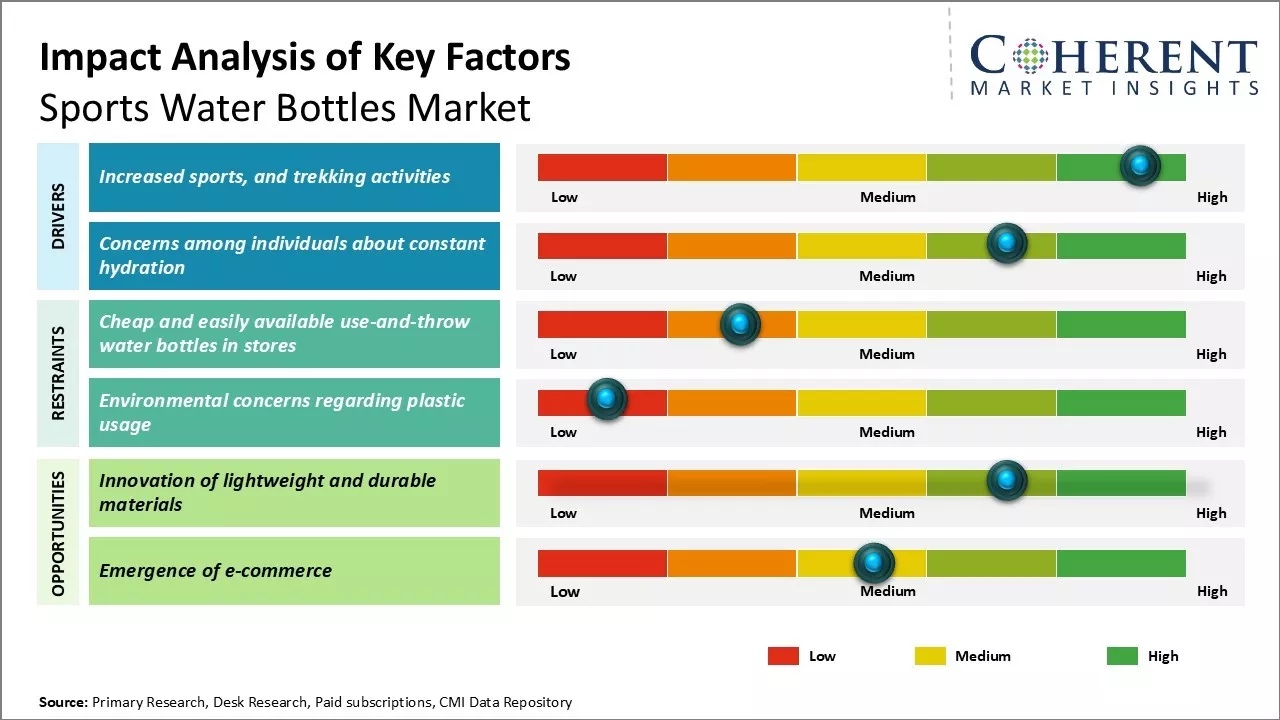
The sports water bottles market is witnessing rising demand for customized and unique designs in sports water bottles to stand out from competitors. Many local and regional players are entering the market with innovative bottles designs targeted at niche consumer segments. Lightweight and durable materials are gaining popularity to providing enhanced portability and convenience to the active consumer base.
Insights, By Material Type
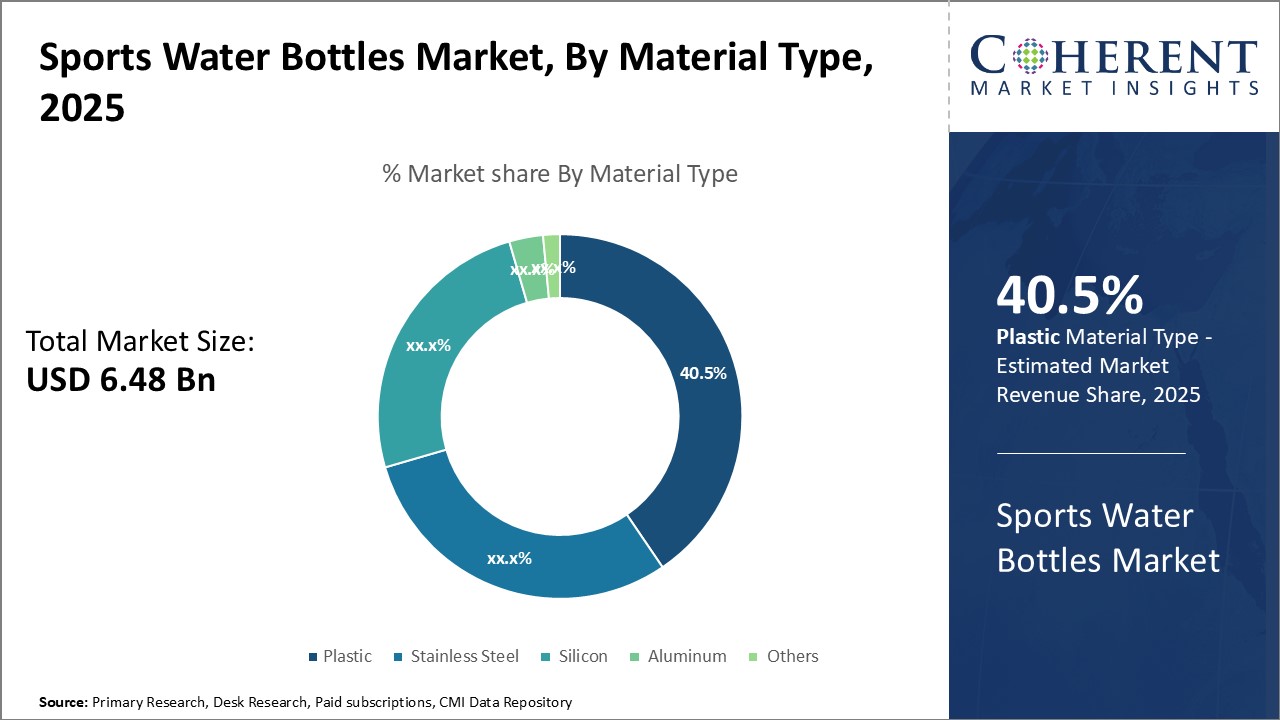
Insights, By Material Type : Advantages of Plastic Water Bottles
In terms of material type, the plastic segment is estimated to contribute the highest market share of 41.5% in 2026, owing to its lightweight yet durable properties. Being lightweight, plastic water bottles allow for the ease of carrying during workouts or other sporting activities. Their flexibility also makes them easier to squeeze and grip compared to bottles made of other materials like steel or glass.
Insights, By Capacity
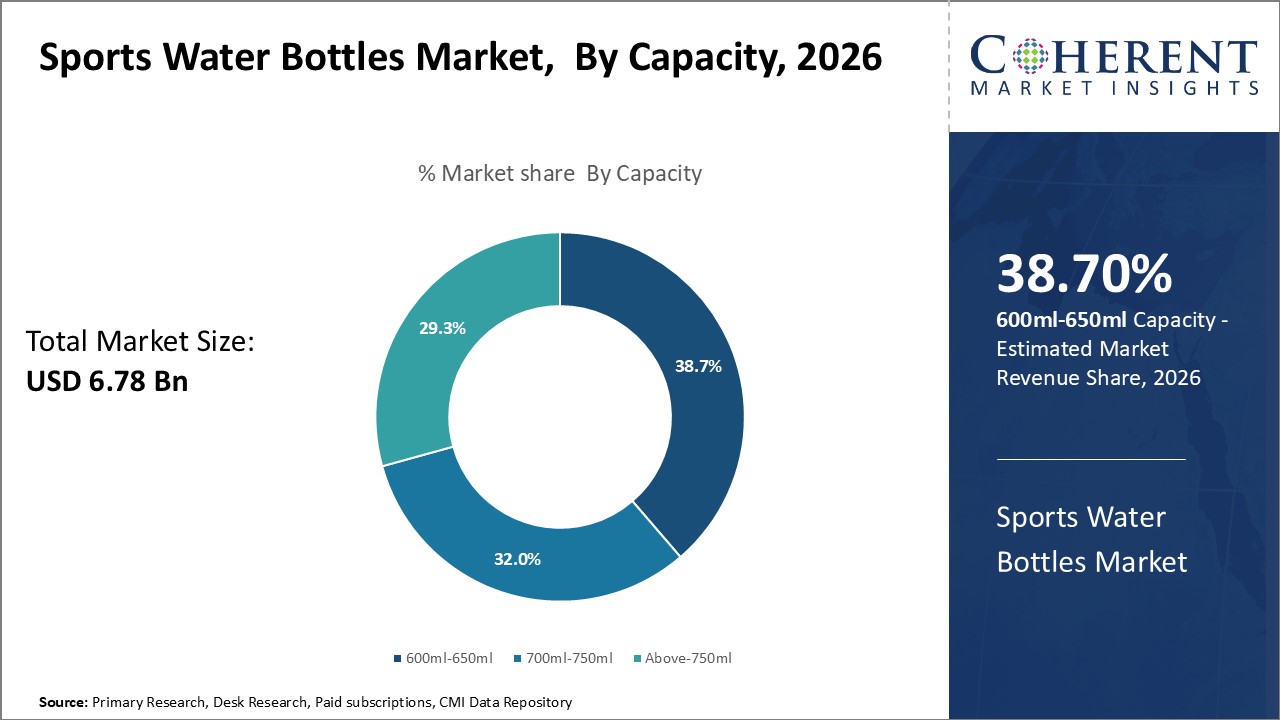
Insights, By Capacity : Market Share of 600ml-650ml Water Bottles in 2026
In terms of capacity, the 600ml-650ml segment is estimated to contribute the highest market share of 38.7% in 2024, since it offers an ideal balance. Bottles in this size range can comfortably hold enough water to keep active individuals hydrated during most workouts or athletic activities without being too bulky.
Their moderately sized capacity also makes these bottles easy to grip, carry and drink from on the go. Larger bottles above 750ml start becoming heavier when full and more awkward to hold.
Insights, By Distribution Channel
Insights, By Distribution Channel: The Dominance of Hypermarkets/Supermarkets
Based on distribution channel, the hypermarkets/supermarkets segment is estimated to contribute the highest market share of 29% in 2026, due to widespread availability and bulk purchase opportunities. As one-stop retail destinations, supermarkets make a variety of sports water bottle options accessible under one roof.
This convenience encourages impulse buys and top-up purchases from shoppers visiting supermarkets for their routine needs. The shelving space allocated to sports bottles expose customers to new products and deals which boost trial and repurchases.
Regional Insights
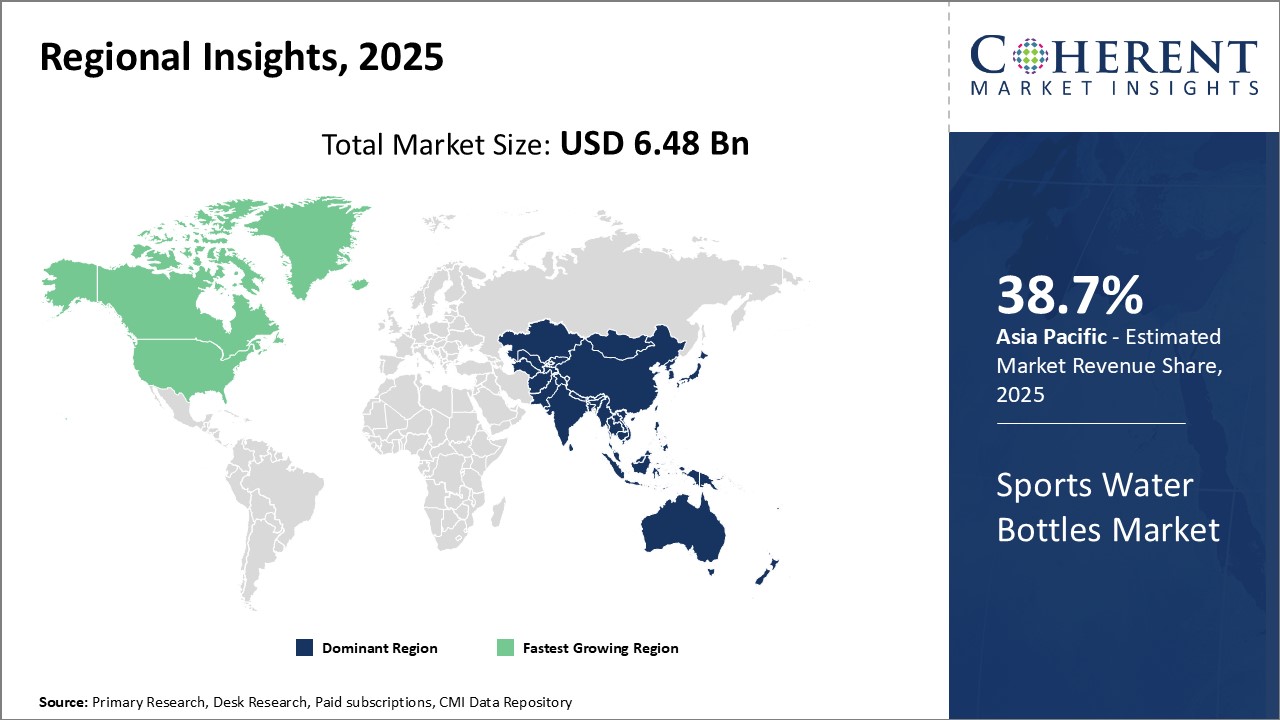
Regional Analysis: Sports Water Bottles Market
Dominating Region: Asia Pacific
Asia Pacific is accounted for the greatest revenue share of 38.7% in 2026. Asia Pacific’s dominance in the sports water bottles market can be attributed to factors such as the strong presence of manufacturers, government support for sports and outdoor activities, and growing health consciousness among consumers. Countries such as China, India, and Japan have emerged as major sports hubs, fueling the demand for sports accessories including reusable water bottles. Additionally, rising participation in recreational sports and fitness activities has boosted sales.
Fastest-Growing Region: North America
The North America region exhibits the fastest growth, led by countries like the U.S. and Canada. Rapid urbanization, rising disposable incomes, and increasing focus on health and wellness have augmented the region's market potential. Additionally, governments across North America are promoting active lifestyles and sponsoring major sports events. Local manufacturers are also entering the fray to cater to domestic demand.
Sports Water Bottles Market Outlook for Key Countries
U.S.: The U.S. market is dominated by innovators like Nalgene and Camelbak, with their novel designs and customization options. Health clubs and gyms stock their products extensively.
China: China's market has seen meteoric rise on the back of low-cost manufacturing and huge customer base. Local brands are providing competition to global giants.
India: India market continues to lead as the fastest growing country market due to growing incomes, youth population, and promotions around fitness. Companies like Thermos leverage their wide distribution reach.
Japan: Japanese brands like OSKitchen and KawamuraKan offer specialty bottles tailored for active lifestyles and local preferences like bicycling. They enjoy high customer loyalty.
Market Players, Key Development, and Competitive Intelligence
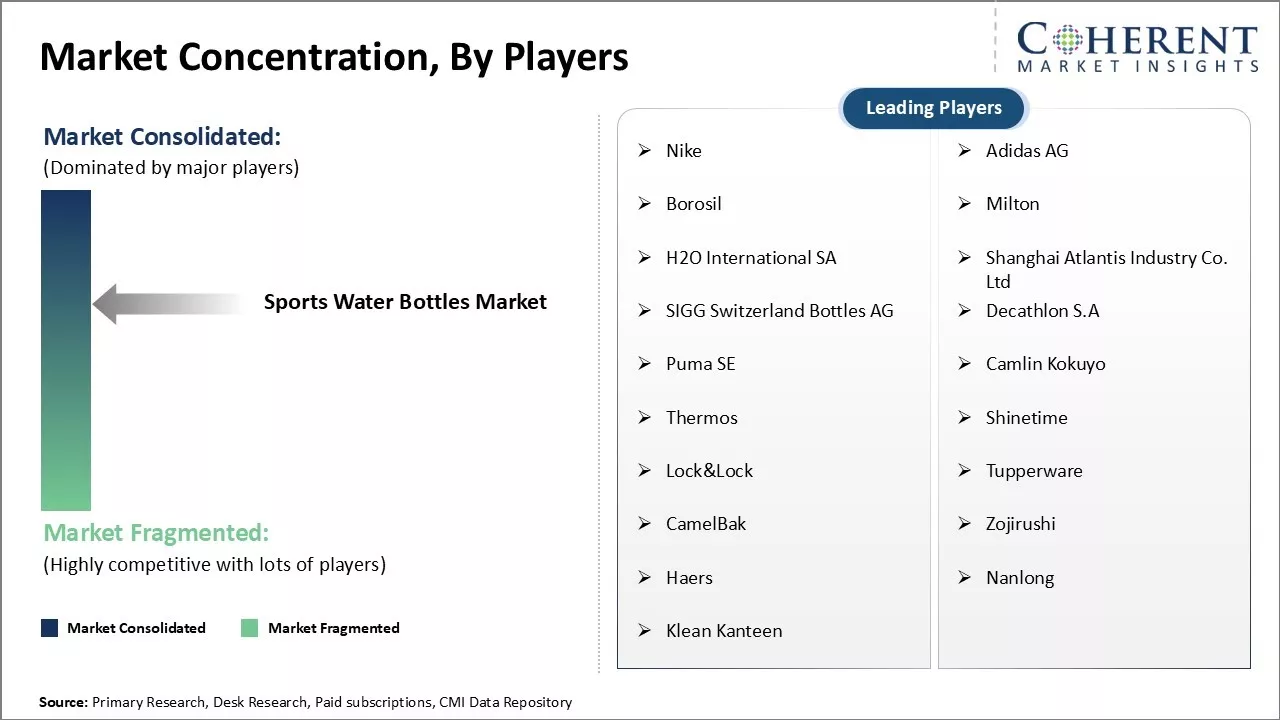
Top Strategies Followed by Sports Water Bottles Market Players
- Established Players: Leading companies in the sports water bottles market heavily invest in extensive research and development to innovate high-performance products. Brands like Nalgene and Camelbak consistently invest over 5% of their annual revenue in R&D to develop bottles with advanced filtration systems, temperature control, data tracking features, and customization options.
- Mid-Level Players: Mid-sized players such as Shinetime in the market focus on delivering quality, affordable bottle options to target price-sensitive consumers. They leverage economical production processes and source raw materials efficiently to keep costs low. Additionally, some partner with startups providing new materials or technologies, gaining access to innovations without heavy investments.
- Small level Players: Niche Marketing: Focusing on specific consumer segments, such as athletes or outdoor enthusiasts, to differentiate from larger brands. Local Sourcing: Utilizing local materials and production to appeal to community-minded consumers and reduce costs.
Emerging Startups in Sports Water Bottles Market
Innovative Technologies
FlashLabs: This startup has developed a smart water bottle that tracks hydration levels through an integrated sensor and companion mobile app. It analyzes fluid intake and alerts users if they are not drinking enough. Such advanced IoT-enabled bottles could optimize performance and prevent dehydration-linked health issues.
Sustainable Solutions
Lokai: This B-Corp certified brand creates bottles from recycled materials and ocean plastics. It also plants trees as a reforestation effort for every product sold. Similar startups are consciously switching to renewable resources and promoting sustainability to contribute towards reducing plastic waste from the bottled water industry.
Market Contribution
Ever&Ever: This company addresses the need for personalized bottles through customization options. It partners with universities, brands and organizations to co-design bottles reflecting their identities. Such specialized bottles with school/team logos and colors help startups strengthen institutional partnerships and co.
- Current Industry Events of 2026
- Market Size Estimation
- Regional Breakdown
- Competitive Landscape
- Customer Intelligence
- Segmental Analysis
- Pricing Analysis
- Key Market Drivers, Challenges & Future Trends
- Customized Insights Section
Market Report Scope
Sports Water Bottles Market Report Coverage
| Report Coverage | Details | ||
|---|---|---|---|
| Base Year: | 2025 | Market Size in 2026: | USD 6.78 Bn |
| Historical Data for: | 2020 To 2024 | Forecast Period: | 2026 To 2033 |
| Forecast Period 2026 to 2033 CAGR: | 4.6% | 2033 Value Projection: | USD 9.29 Bn |
| Geographies covered: |
| ||
| Segments covered: |
| ||
| Companies covered: | Nike, Adidas AG, Borosil, Milton, H2O International SA, Shanghai Atlantis Industry Co. Ltd, SIGG Switzerland Bottles AG, Decathlon S.A, Puma SE, Camlin Kokuyo, Thermos, Shinetime, Lock&Lock, Tupperware, CamelBak, Zojirushi, Haers, Nanlong, and Klean Kanteen | ||
| Growth Drivers: |
| ||
| Restraints & Challenges: |
| ||
Market Dynamics
Market Driver - Increased sports, and trekking activities
With growing health awareness, more and more people are participating in different types of sports activities on a regular basis. Earlier, it was mostly limited to professional athletes but now recreational sports have seen tremendous rise globally. To promote exercise and community well-being, many municipal corporations and private organizations across countries have been focusing on developing walking tracks, cycling trails and outdoor gyms in public places. For Instance, according to data published by the Outdoor Industry Association in 2021, outdoor recreation saw remarkable growth in the U.S. during the COVID-19 pandemic, with over approximate 51% of Americans participating in various outdoor activities. Sports such as running and cycling saw massive increase in participation rates as people took up active hobbies to stay fit during lockdowns and social distancing periods.
Market Challenge - Cheap and easily available use-and-throw water bottles in stores
One of the major challenges faced by the sports water bottles market is the availability of cheap use-and-throw plastic water bottles in stores. Consumers find it more convenient and affordable to buy multi-packs of cheap plastic water bottles from local stores instead of investing in a high-quality, reusable sports water bottle.
For Instance, according to data released by UNEP (United Nations Environment Programmed) in April 2023, global plastic pollution entering oceans could triple by 2040, totaling over half a billion metric tons. Furthermore, the abundance of plastic bottle litter and non-biodegradability of plastics poses serious environmental concerns, shifting demand towards sustainable alternatives has proven difficult. The sports water bottle industry needs to focus on effective strategies to promote reuse over single-use and highlight long-term cost savings to overcome this challenge.
Market Opportunity - Innovation of lightweight and durable materials for market
The sports water bottles market possesses significant opportunities related to innovation in materials. The demand for high-performance, lightweight bottles that can withstand wear-and-tear during exercise offers scope for novel material development.
For Instance, according to United Nations Environment Program (UNEP), by 2050 around 75% of world population will be living in urban areas putting pressure on energy and water resources. Lightweight water bottles with insulation can play a role in meeting the Sustainable Development Goals of environment protection and well-being. Tailoring material properties suit varied sporting contexts from jogging to mountain biking opens new customer segments.
Analyst Opinion (Expert Opinion)
Key Takeaways from Analyst
The global sports water bottles market continues to grow owing to rising health awareness and active lifestyle adoption. As people focus on fitness and join gyms, demand for convenient hydration solutions for workouts will increase. Sports water bottles are easy to carry and use during exercise sessions like running, cycling, or team sports.
However, environmental concerns around single-use plastic bottles pose a challenge. Regulations banning or discouraging single-use plastics may negatively impact sales. Also, the availability of alternatives like metal water bottles can divert demand. Nevertheless, innovations in materials like Tritan plastic make bottles durable and lightweight, addressing ecological issues to some extent.
Asia Pacific dominates the current sports water bottles landscape due to intense focus on health and fitness culture. However, North America is likely to be the fastest-growing market, fueled by developing economies like India and China with a young population taking up active lifestyles.
Speak to the analyst
Want personalized insights?
Take the findings above to one of our principal consultants, or have the report rebuilt around the segments, geographies and competitors you actually track.
Market Segmentation
- Material Type Insights (Revenue, USD, 2021 - 2033)
- Plastic
- Stainless Steel
- Silicon
- Aluminium
- Others
- Capacity Insights (Revenue, USD, 2021 - 2033)
- 600ml-650ml
- 700ml-750ml
- Above-750ml
- Distribution Channel Insights (Revenue, USD, 2021 - 2033)
- Hypermarkets/Supermarkets
- Convenience Stores
- Grocery Stores
- E-Commerce websites
- Others
- Regional Insights (Revenue, USD, 2021 - 2033)
- North America
- U.S.
- Canada
- Latin America
- Brazil
- Argentina
- Mexico
- Rest of Latin America
- Europe
- Germany
- U.K.
- Spain
- France
- Italy
- Russia
- Rest of Europe
- Asia Pacific
- China
- India
- Japan
- Australia
- South Korea
- ASEAN
- Rest of Asia Pacific
- Middle East
- GCC Countries
- Israel
- Rest of Middle East
- Africa
- South Africa
- North Africa
- Central Africa
- North America
- Key Players Insights
- Nike
- Adidas AG
- Borosil
- Milton
- H2O International SA
- Shanghai Atlantis Industry Co. Ltd
- SIGG Switzerland Bottles AG
- Decathlon S.A
- Puma SE
- Camlin Kokuyo
- Thermos
- Shinetime
- Lock&Lock
- Tupperware
- CamelBak
- Zojirushi
- Haers
- Nanlong
- Klean Kanteen
Get access to 250+ pages report
Every segment, forecast, competitor profile and data table behind the analysis above — available for instant download.
- ESOMAR Member
- ISO 9001:2015 Certified
- D-U-N-S Registered
- GDPR & CCPA Compliant
Missing comfort of reading report in your local language? Find your preferred language:
Transform your Strategy with Exclusive Trending Reports
Frequently Asked Questions
The Sports Water Bottles Market is estimated to be valued at USD 6.78 Bn in 2026, and is expected to reach USD 9.29 Bn by 2033.
The CAGR of the Sports Water Bottles Market is projected to be 4.6% from 2026 to 2033.
Increased sports, and trekking activities and concerns among individuals about constant hydration are the major factors driving the market growth.
Cheap and easily available use-and-throw water bottles in stores and environmental concerns regarding plastic usage are the major factors hampering the market growth.
In terms of material type, plastic segment is estimated to dominate the market revenue share in 2026.
Nike, Adidas AG, Borosil, Milton, H2O International SA, Shanghai Atlantis Industry Co. Ltd, SIGG Switzerland Bottles AG, Decathlon S.A, Puma SE, Camlin Kokuyo, Thermos, Shinetime, Lock&Lock, Tupperware, CamelBak, Zojirushi, Haers, Nanlong, and Klean Kanteen are the major players.
Asia Pacific is expected to lead the global sports water bottles market in 2026.