

Syringe Market Size and Trends
The syringe market is estimated to be valued at USD 26.40 Bn in 2026 and is expected to reach USD 50.48 Bn by 2033, exhibiting a compound annual growth rate (CAGR) of 9.7% from 2026 to 2033.
Key Takeaways
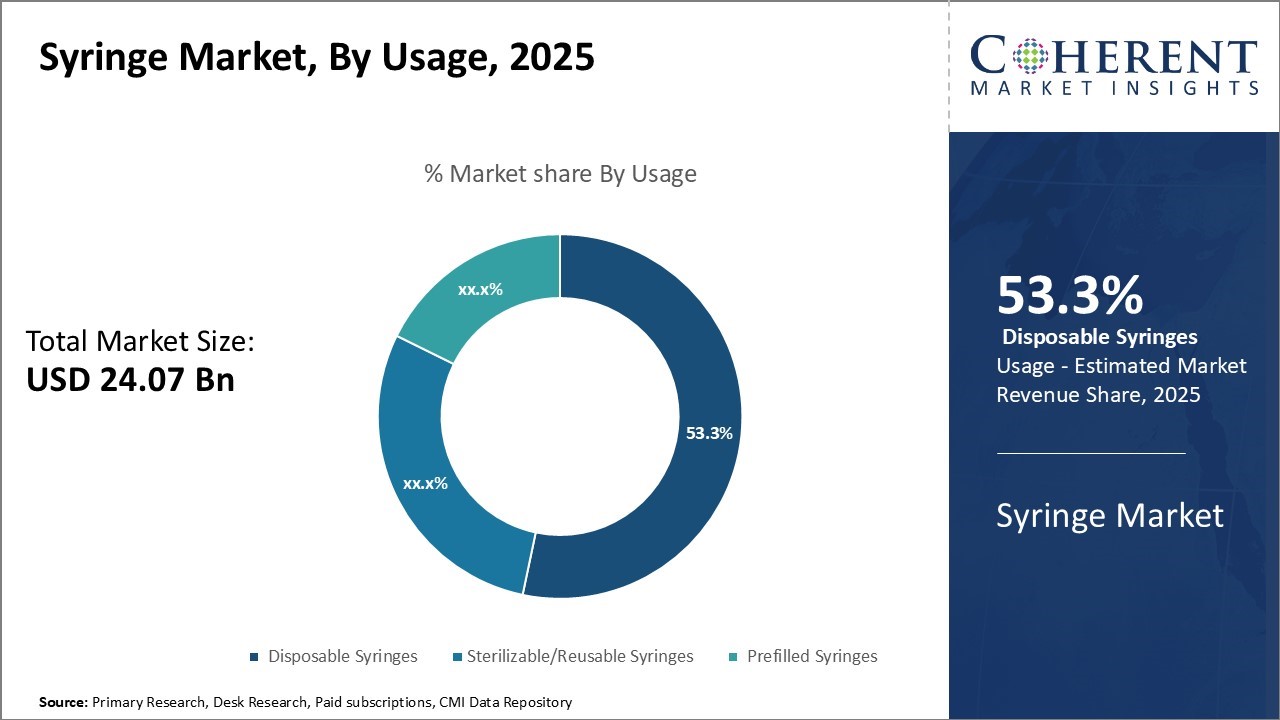
- Based on Usage, the Disposable Syringe segment is expected to account for 54.3% of the global syringe market in 2026, owing to their convenience and ease of use.
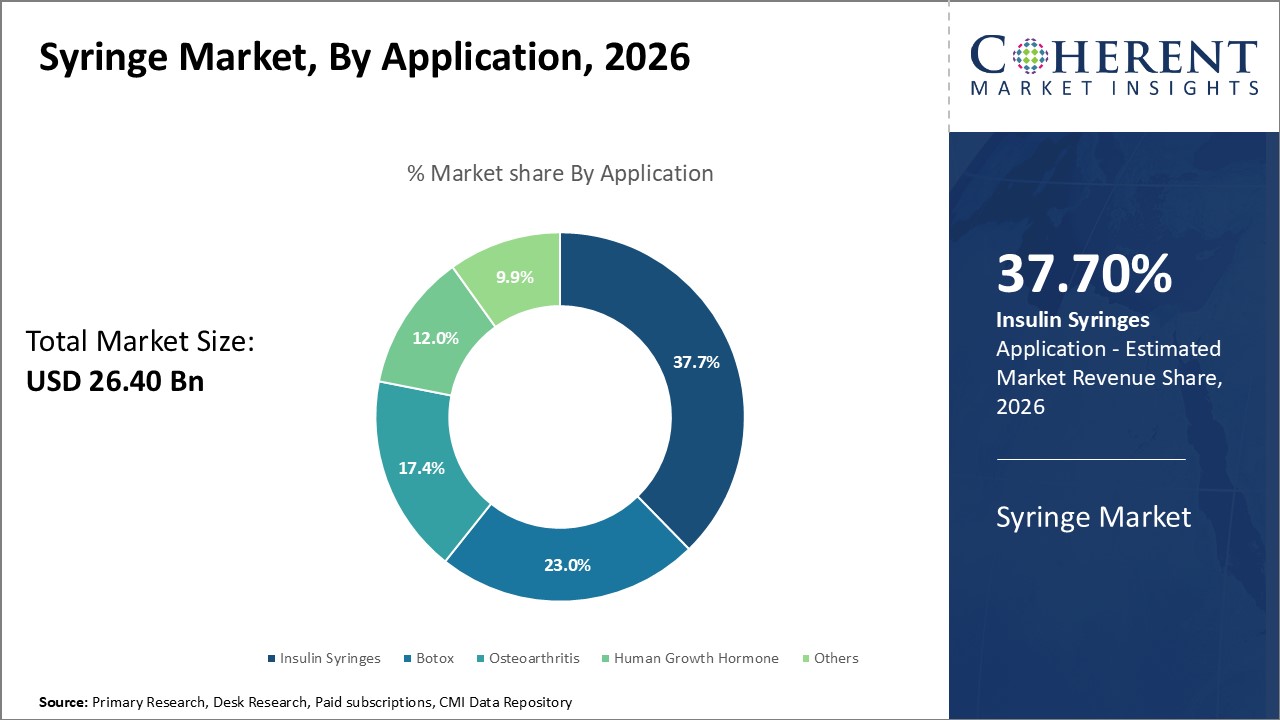
- Based on Application, the Insulin Syringe segment is projected to hold a 37.7% share of the global syringe market in 2026, due to the large and growing diabetes patient population worldwide.
- Based on End User, the Hospital segment is expected to account for 44.8% of the market in 2026, owing to the scale and complexity of healthcare delivered within these settings.
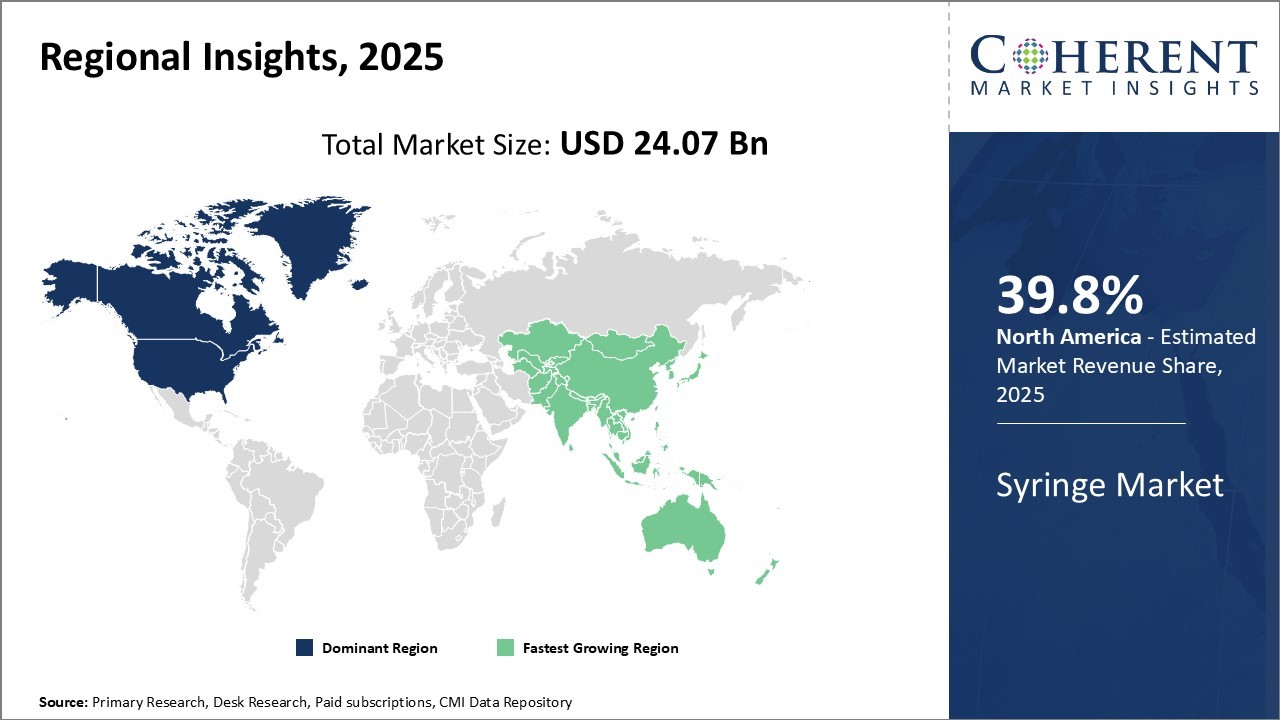
- Based on Region, North America is set to lead the global syringe market 39. 8% share in 2026. While, Asia Pacific will be the fastest growing region during the forecast period.
Market Overview
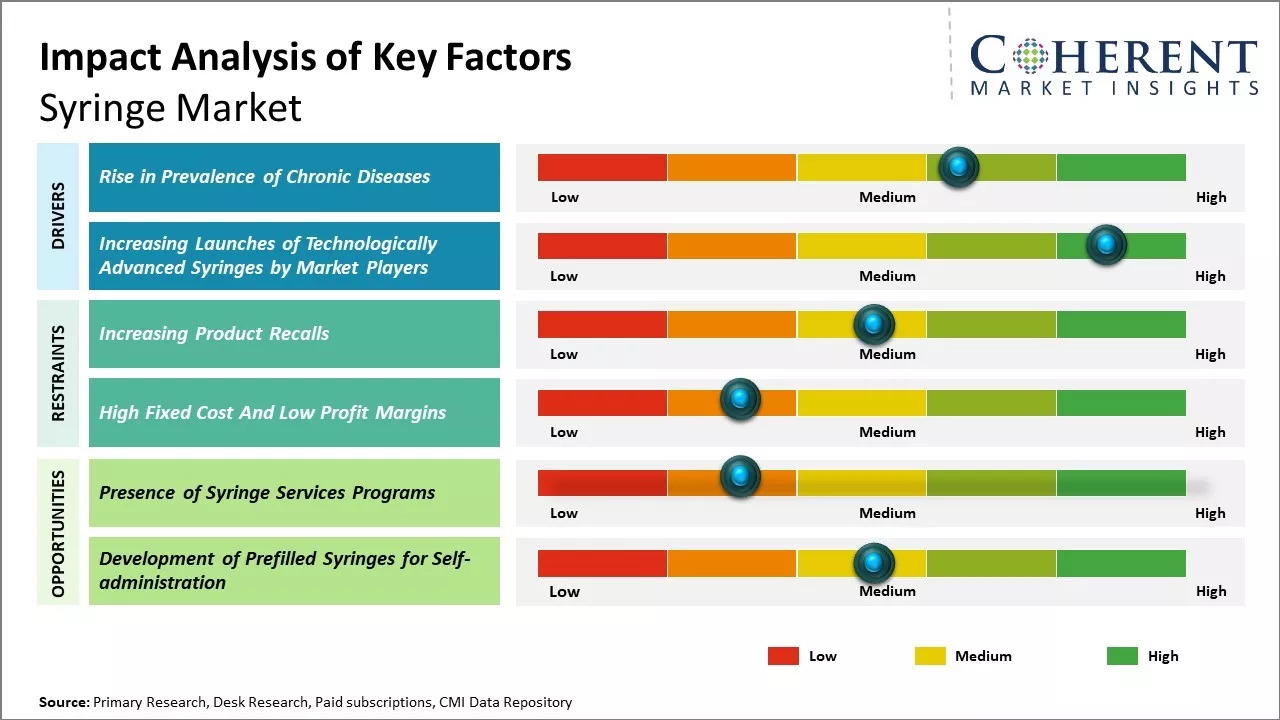
The syringe market is expected to witness significant growth over the forecast period. The growth of the market is anticipated to be driven by the rising prevalence of chronic diseases such as diabetes, cancer, and cardiovascular diseases. Additionally, increasing cases of needle stick injuries are compelling key players to focus on developing advanced safety syringes with retractable needles, which is further expected to provide lucrative opportunities for the market players. The growing syringe market demand for prefilled syringes for home healthcare and the advantage of administering accurate dosage is also projected to support revenue generation in the coming years.
Current Events and Its Impact
Current Event | Description and its Impact |
U.S. Domestic Manufacturing Expansion |
|
Regulatory Shifts and Quality Enforcement |
|
Pipeline Analysis
The pipeline for the syringe market is evolving rapidly, with a strong focus on enhancing safety, automation, and patient-centric design. Manufacturers are actively developing next-generation syringes, such as retractable and auto-disable syringes, to minimize the risk of needlestick injuries and cross-contamination. Innovations in prefilled syringes are also gaining traction, particularly in biologics and vaccines, where precise dosing and convenience are critical. Several companies are investing in smart syringes integrated with RFID or digital tracking systems to support medication adherence and inventory management in healthcare settings. Additionally, there is increasing R&D activity aimed at producing eco-friendly and biodegradable syringe components to address growing environmental concerns. The pipeline also reflects efforts to meet the demand from home healthcare, with autoinjectors and self-administration devices in development for chronic disease management. These trends suggest a dynamic and innovation-driven future for the syringe market.
- Current Industry Events of 2026
- Market Size Estimation
- Regional Breakdown
- Competitive Landscape
- Customer Intelligence
- Segmental Analysis
- Pricing Analysis
- Key Market Drivers, Challenges & Future Trends
- Customized Insights Section
Patent Analysis
The syringe market has witnessed a steady increase in patent filings over the past decade, reflecting ongoing innovation in safety mechanisms, material science, and user-friendly designs. Patent activity has been especially strong in areas such as auto-disable syringes, retractable needle systems, and prefilled syringes, technologies aimed at enhancing patient safety and reducing contamination risks. Countries like the United States, China, and Germany lead in syringe-related patent applications, driven by their robust medical device industries and regulatory focus on infection control. Notably, several major players have secured patents for syringes designed for self-administration, a growing segment fueled by the rise in chronic diseases requiring regular injections. As demand for safer and more efficient injection devices continues, patent filings are expected to intensify, especially in smart syringe technologies integrated with digital monitoring for dosage accuracy and compliance tracking. This growing body of intellectual property indicates a competitive landscape where innovation is key to differentiation and market leadership.
Segmental Insights
Syringe Market Insights, By Usage
Convenience Drives Demand for Disposable Syringes
In terms of usage, the disposable syringes segment is expected to hold 54.3% of the market share in 2026, owing to their convenience and ease of use. Being single-use products, disposable syringes eliminate the need for sterilization between patients, saving medical professionals significant time and effort. This makes disposable syringes particularly well-suited for administering medications and injections in busy settings like hospitals, clinics, and doctors' offices where throughput is important. By avoiding the sterilization process, disposable syringes also reduce the risk of contamination compared to reusable needles. For patients, disposable syringes assure that each injection is being administered with a new, sterile needle rather than one that may not have been adequately disinfected between uses. This is further proliferating the syringe market share.
In March 2024, Hindustan Syringes & Medical Devices (HMD) launched Dispojekt single‑use syringes featuring a one‑hand‑activated safety needle shield designed to prevent accidental needle‑stick injuries (NSIs) among healthcare professionals. These syringes, available in 22G, 23G, and 24G, integrate seamlessly into existing injection protocols without added cost.
Syringe Market Insights, By Application
Growing Prevalence of Chronic Diseases Fuels Insulin Syringe Usage
In terms of application, the insulin syringes segment is expected to hold 37.7% of the market share in 2026 due to the large and growing diabetes patient population worldwide. Diabetes prevalence has increased dramatically in recent decades, driven by aging populations and rising rates of obesity and physical inactivity. It is estimated that over 537 million people currently have diabetes globally, and this figure is expected to continue rising substantially. As a chronic, lifelong condition, diabetes ensures a continuous long-term demand for insulin delivery. Insulin syringes provide an affordable and effective means of administering the medication. Advancements in syringe designs, like more precise dosage controls and thinner needles to reduce pain, have also enhanced the patient experience and compliance with insulin therapy.
In February 2025, JumboMed introduced a groundbreaking disposable insulin syringe with an integrated needle, designed to streamline diabetes management. The syringe offers enhanced precision, comfort, and safety, addressing key concerns for daily insulin users. Its ergonomic design and improved needle sharpness reduce injection pain and improve compliance, especially for elderly and pediatric patients. The new device also features advanced safety mechanisms to minimize needle-stick injuries. Such innovations are proliferating the syringe market share.
Syringe Market Insights, By End User
Hospitals Lead Syringe Consumption Due to Scale and Complexity of Care
In terms of end users, the hospital segment is expected to hold 44.8% of the market share in 2026, owing to the scale and complexity of healthcare delivered within these settings. As institutions managing large inpatient populations as well as major outpatient services, hospitals require vast numbers of syringes on a daily basis to administer intravenous medications, oral medications via feeding tubes, injections for various procedures, and more. Even minor medical incidents or clinical tests can involve multiple syringe uses. The diversity of hospital departments, from emergency rooms treating trauma cases to specialty wards caring for long-term conditions, means syringes need to span both acute and chronic care. As healthcare grows more specialized with advancing medical technologies, hospitals also handle more complex cases than other care sites, necessitating more intensive syringe-based interventions and monitoring of drug therapies. While clinics, nursing homes, and individual physicians certainly drive syringe consumption, none match the sheer volume and variety of syringe applications in hospital environments. This makes hospitals the consistent cornerstone of the syringe market demand.
According to the National Institute of Health, a study estimates that a hospital uses about 8 syringes per patient per day, including for injections and blood draws. The World Health Organization (WHO) estimates that 16 million syringes are used globally each year.
Regional Insights
North America Syringe Market Analysis & Trends
North America remains the dominant region in the global syringe market and is anticipated to hold 39.8% of the market share in 2026. With a highly developed healthcare infrastructure and large healthcare expenditure, the region sees wide adoption of syringes across therapeutics areas. Various government initiatives to prevent needle stick injuries and spread of diseases through syringe reuse have propelled the demand for advanced syringes such as safety syringes. For example, in 2024, the U.S. Occupational Safety and Health Administration (OSHA) updated its guidelines to push for wider adoption of engineered sharps injury protection (ESIP) devices in hospitals and outpatient facilities. This move is driving demand for advanced safety syringes across the country. Apart from this, in July 2026, Health Canada approved Apotex’s Aflivu™, a biosimilar to Eylea®, offered in both pre-filled syringe and vial formats. Such innovations are proliferating the syringe market demand.
Asia Pacific Syringe Market analysis & Trends
The Asia Pacific region is expected to exhibit the fastest growth in the market during forecast period due to rapid economic growth, expanding healthcare access, and increased demand for chronic disease management. Countries such as India, China, and Indonesia are witnessing a surge in demand due to rising awareness of safe injection practices and growing investment in public health infrastructure. For example, in 2024, India’s Hindustan Syringes & Medical Devices (HMD) announced a major expansion in its production capacity to meet domestic and international demand, citing a rise in vaccination programs and injectable therapies. Similarly, China’s ongoing healthcare reforms under its "Healthy China 2030" vision have boosted demand for prefilled syringes and autoinjectors, particularly in rural healthcare facilities. These developments are positioning Asia Pacific as a key contributor to global syringe supply and innovation.
Syringe Market Outlook Country-Wise
The U.S. Syringe Market Trends
In the U.S., syringe demand is rising due to a high prevalence of chronic conditions like diabetes and arthritis that require regular injections. The growing use of autoinjectors and prefilled syringes, especially for homecare, supports this trend, particularly among the aging population. Increased adoption of biologic therapies, emphasis on home-based care, and safety regulations around needlestick prevention are further driving syringe usage across hospitals and households.
India Syringe Market Trends
India is seeing rising syringe market demand due to large-scale immunization drives, increasing diabetes cases, and growing surgical procedures. The government’s Universal Immunization Programme and expanded HPV and influenza vaccine coverage have driven bulk syringe procurement. With over 100 million diabetics, insulin syringe use is also surging. In 2024, the Indian government procured over 1 billion syringes to support national health campaigns, reflecting strong syringe market demand fueled by public health efforts and chronic disease management.
China Syringe Market Trends
China’s demand for syringes is rising due to nationwide vaccination drives under the “Healthy China 2030” initiative and growing hospital admissions. Increased investment in rural clinics and upgraded urban hospitals has boosted syringe use for routine care, chronic disease management, and immunization. These efforts reflect China's push to enhance healthcare access and safety across all regions.
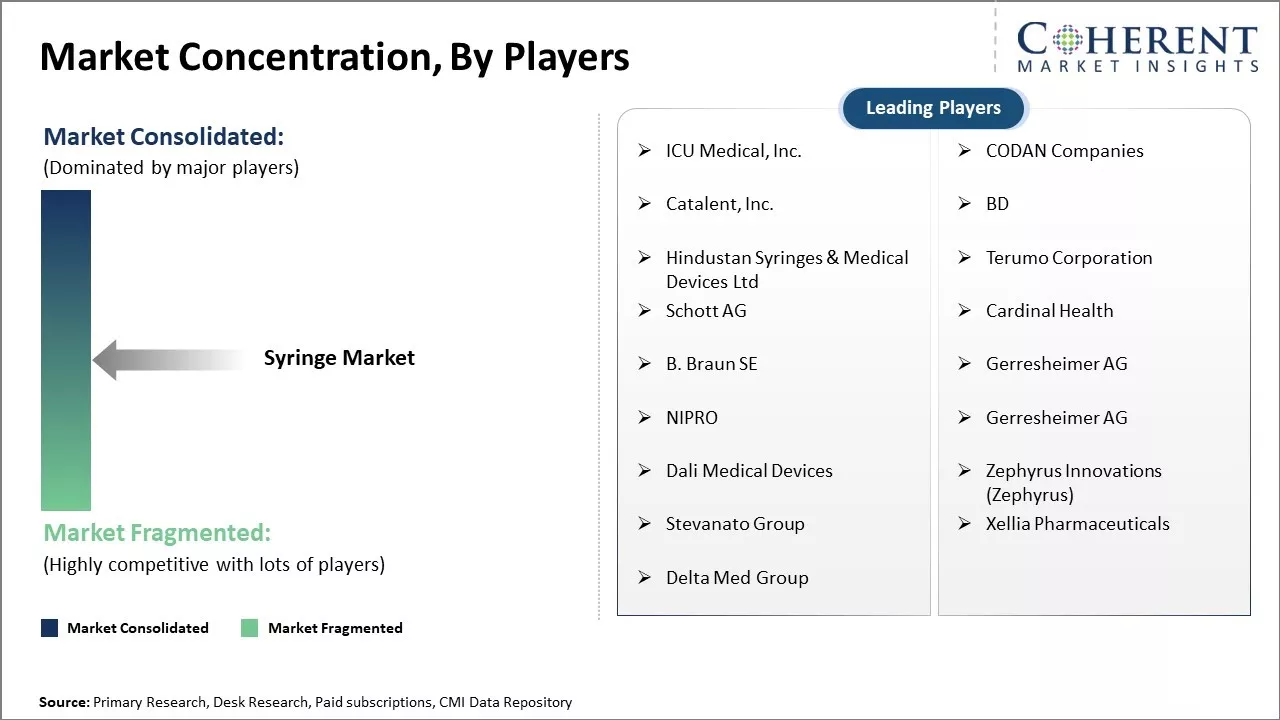
Market Concentration and Competitive Landscape
Recent Development
- In January 2025, Ravensburg-based Vetter introduced an enhanced version of its Vetter-OVS® (V-OVS) syringe closure system, marking a key innovation in prefilled syringe safety. It is designed to optimize drug product integrity and ease of use, the next-gen V-OVS features improved tamper evidence and container closure integrity (CCI), essential for sterile drug delivery.
- In January 2025, SCHOTT Pharma launched its next‑generation SCHOTT TOPPAC infuse polymer syringe system, combining a novel cap, advanced label, and carton packaging designed to enhance patient safety, reduce waste, and streamline hospital logistics. The new cap offers tamper‑evident first‑opening indication directly at the syringe level, while the functional label shields against oxygen and light and can host an embedded RFID chip for automated traceability and inventory control.
- In December 2024, Researchers at IIT Bombay unveiled a groundbreaking needle‑free “shock syringe” that delivers medication painlessly via high‑energy shockwaves, bypassing traditional needle penetration.
- In September 2024, Becton, Dickinson and Company (BD) unveiled the BD Neopak XtraFlow™ glass prefillable syringe, optimized for high-viscosity biologics with an 8 mm needle and thinner-wall cannula to enhance subcutaneous delivery.
Analyst Opinion (Expert Opinion)
- The global syringe market value is entering a decisive phase, where innovation—not volume—is emerging as the defining metric of competitiveness. Market growth now hinges on integration of safety features, precision dosing technologies, and adaptability to novel drug formulations, especially biologics.
- A striking example is the accelerating demand for prefilled syringes in biopharmaceutical applications. With biologics accounting for nearly 40% of the global pharmaceutical pipeline, the shift from vials to prefilled delivery systems is not merely logistical but strategic. Prefilled syringes reduce dosing errors, ensure drug stability, and enhance patient compliance—a critical factor in self-administered therapies. In fact, it is estimated that nearly 70% of all new injectable drugs are now launched in prefilled formats, particularly in therapeutic areas such as rheumatoid arthritis, multiple sclerosis, and oncology.
- Moreover, safety syringes are no longer niche products, but regulatory imperatives—especially in high-liability geographies like the U.S. and Europe. Needle-stick injury prevention is a non-negotiable compliance requirement, and devices with retractable or auto-disable features are becoming mandatory in healthcare institutions. Manufacturers like Becton Dickinson (BD) have moved early in this direction, leveraging proprietary safety-engineering to establish significant market share in institutional procurement contracts.
- With the rise of sensitive biologics, cyclic olefin polymers (COP) and cyclic olefin copolymers (COC) are increasingly replacing traditional glass due to their superior barrier properties and compatibility with reactive compounds. For instance, SCHOTT’s syriQ® BioPure and Gerresheimer’s Gx RTF® syringes exemplify the shift toward high-performance polymers, particularly in auto-injector-compatible designs.
- From a regional perspective, while Asia-Pacific continues to be a manufacturing base, it is increasingly becoming an innovation center, particularly in low-dead-space syringe design. These designs, promoted for cost-efficiency in national immunization programs and supported by WHO initiatives, underscore the growing role of public-private partnerships in shaping product preferences at scale.
Speak to the analyst
Want personalized insights?
Take the findings above to one of our principal consultants, or have the report rebuilt around the segments, geographies and competitors you actually track.
Market Report Scope
Syringe Market Report Coverage
| Report Coverage | Details | ||
|---|---|---|---|
| Base Year: | 2025 | Market Size in 2026: | USD 26.40 Bn |
| Historical Data for: | 2020 To 2024 | Forecast Period: | 2026 To 2033 |
| Forecast Period 2026 to 2033 CAGR: | 9.7% | 2033 Value Projection: | USD 50.48 Bn |
| Geographies covered: |
| ||
| Segments covered: |
| ||
| Companies covered: | ICU Medical, Inc., CODAN Companies, Catalent, Inc., BD, Hindustan Syringes & Medical Devices Ltd, Terumo Corporation, Schott AG, Cardinal Health, B. Braun SE, Gerresheimer AG, NIPRO, Gerresheimer AG, Dali Medical Devices, Zephyrus Innovations (Zephyrus), Stevanato Group, Xellia Pharmaceuticals, and Delta Med Group | ||
| Growth Drivers: |
| ||
| Restraints & Challenges: |
| ||
Syringe Market Driver
- Rise in Prevalence of Chronic Diseases
The prevalence of chronic diseases across the world has been on a steady rise over the past few decades. Chronic diseases, such as diabetes, cardiovascular diseases, cancer, etc., have assumed epidemic proportions globally. According to the World Health Organization, chronic non-communicable diseases account for over 70% of all deaths worldwide. The rising burden of chronic illnesses can be attributed to changing lifestyle habits such as a lack of physical activity, stress, unhealthy diets rich in fat, sugar, and processed foods.
Increasing prevalence of chronic diseases such as diabetes, cancer, cardiovascular diseases, and others increases the demand for syringes and needles for diagnosis and treatment of diseases, which is expected to drive the growth of the global syringe market over the forecast period. For instance, an article published by John Wiley & Sons, Inc., a U.S.-based multinational publishing company, on January 12, 2023, stated that 1,958,310 new cancer cases and 609,820 cancer deaths are projected to occur in the U.S. in 2023. With more people being diagnosed with chronic diseases each year, the volumes of syringe utilization are expected to scale up enormously, which will drive the global syringe market growth during the forecast period.
- Increasing Launches of Technologically-advanced Syringes by Market Players
Market players are focusing on launching technologically advanced syringes to offer customers an easy and safe administration of drugs, which is expected to fuel the global syringe market growth over the forecast period. For instance, in January 2023, Sharps Technology, Inc., an innovative medical device and drug delivery company, announced the advancement of the company's specialized prefillable syringe system product line, which will be manufactured in collaboration with Nephron Pharmaceuticals, which manufactures generic respiratory medication products, at the Inject EZ facility in West Columbia, South Carolina, U.S. Sharps' specialized product pipeline and market strategy will include a wide range of sizes, silicon-free systems that address contamination issues in the broader healthcare market, dual chamber systems that improve drug shelf life while reducing unnecessary packaging, and customized solutions for systems serving the growing autoinjector segment.
Syringe Market Opportunity
- Development of Prefilled Syringes for Self-administration
Increasing self-administration of medication is expected to offer lucrative growth opportunities for players in the global syringe market. Moreover, the advantage of self-administration is that it helps to prevent and treat symptoms and aliments without the need for a doctor. The patient experiences immediate relief. This relieves the strain on medical services in areas where they are scarce and insufficient. Key players in the market are focusing on the launch of novel self-administered prefilled syringes, which is expected to drive the market growth over the forecast period.
Market Segmentation
- Usage Insights (Revenue, USD Bn, 2026 - 2033)
- Sterilizable/Reusable Syringes
- Disposable Syringes
- Prefilled Syringes
- Application Insights (Revenue, USD Bn, 2026 - 2033)
- Insulin Syringes
- Botox
- Osteoarthritis
- Human Growth Hormone
- Others
- End User Insights (Revenue, USD Bn, 2026 - 2033)
- Hospitals
- Clinics
- Homecare Settings
- Others
- Regional Insights (Revenue, USD Bn, 2026 - 2033)
- North America
- U.S.
- Canada
- Latin America
- Brazil
- Argentina
- Mexico
- Rest of Latin America
- Europe
- Germany
- U.K.
- Spain
- France
- Italy
- Russia
- Rest of Europe
- Asia Pacific
- China
- India
- Japan
- Australia
- South Korea
- ASEAN
- Rest of Asia Pacific
- Middle East
- GCC Countries
- Israel
- Rest of Middle East
- Africa
- South Africa
- North Africa
- Central Africa
- North America
- Key Players Insights (Revenue, USD Bn, 2021 - 2033)
- ICU Medical, Inc.
- CODAN Companies
- Catalent, Inc.
- BD
- Hindustan Syringes & Medical Devices Ltd.
- Terumo Corporation
- Schott AG
- Cardinal Health
- B. Braun SE
- Gerresheimer AG
- NIPRO
- Dali Medical Devices
- Zephyrus Innovations (Zephyrus)
- Stevanato Group
- Xellia Pharmaceuticals
- Delta Med Group
Sources
Primary Research Interviews from the following stakeholders
Stakeholders
- Interviews with syringe manufacturers, hospital procurement heads, medical device distributors, pharmacists, clinical experts, and healthcare facility managers across leading global markets.
Specific stakeholders
- Product managers and R&D heads at leading syringe manufacturers
- Procurement officers at public and private hospitals
- Supply chain and logistics managers at medical device distributors
- Pharmacy and retail procurement heads
- Infection control officers and clinical supervisors in ICUs and outpatient departments
- Public health officials involved in immunization programs
- Biomedical engineers and device regulators at national health authorities
Databases
- World Health Organization (WHO) Global Health Observatory
- UN Comtrade Database – Medical Instruments Category
- World Bank Healthcare Expenditure Indicators
- National Health Service (NHS) Procurement Data
- U.S. FDA Medical Device Databases
- European Medicines Agency (EMA) Device Approval Registry
- Central Drugs Standard Control Organization (CDSCO), India
- China National Medical Products Administration (NMPA) Data
Magazines
- Medical Device Network
- PharmaTimes
- Healthcare Packaging
- MD+DI (Medical Device and Diagnostic Industry)
- Pharmaceutical Technology
- Clinical Services Journal
- Hospital Pharmacy Europe
- Infection Control Today
Journals
- Journal of Hospital Infection
- International Journal of Pharmaceutics
- Journal of Biomedical Materials Research
- Vaccine (Elsevier)
- American Journal of Infection Control
- Clinical Therapeutics
- Journal of Medical Devices
- Biomedical Engineering Online
Newspapers
- The Economic Times – Healthcare & Lifesciences
- Business Standard – Pharmaceuticals & MedTech
- The Hindu Business Line – Medical Devices
- The Wall Street Journal – Health
- Financial Times – Healthcare & Pharma Insights
- Nikkei Asia – Medical Devices Supply Chain
- South China Morning Post – Health & Science
Associations
- World Health Organization (WHO) – Essential Medicines and Health Products Division
- Association of Indian Medical Device Industry (AiMeD)
- European Association of Medical Device Manufacturers (EUROM VI)
- U.S. Pharmacopeial Convention (USP)
- Medical Device Innovation Consortium (MDIC)
- Asian Harmonization Working Party (AHWP)
- National Health Systems Resource Centre (NHSRC), India
- International Organization for Standardization (ISO) – Syringe and Needle Standards
Public Domain Sources
- Ministry of Health and Family Welfare (India) – Immunization & Procurement Reports
- National Health Accounts – India & OECD Health Statistics
- Indian Pharmacopoeia Commission
- U.S. Centers for Disease Control and Prevention (CDC) – Syringe and Injection Safety Programs
- European Centre for Disease Prevention and Control (ECDC)
- Reserve Bank of India (RBI) Reports on Health Infrastructure Investments
- National Medical Devices Policy (India)
- Department of Pharmaceuticals – India
- U.S. Department of Health and Human Services (HHS)
Proprietary Elements
- CMI Data Analytics Tool, and Proprietary CMI Existing Repository of information for last 8 years
*Definition: The syringe market includes the manufacturing and distribution of syringes used for the injection of medications into or extraction of fluids from the human body. Syringes are a necessary medical product used by healthcare professionals, patients and caregivers for administering injections, immunizations, blood sampling, and other medical procedures. Key players in this market produce a variety of syringe types in different sizes, materials and designs to meet the needs of different medical applications, from basic disposable syringes to more advanced pre-filled syringes.
Get access to 250+ pages report
Every segment, forecast, competitor profile and data table behind the analysis above — available for instant download.
- ESOMAR Member
- ISO 9001:2015 Certified
- D-U-N-S Registered
- GDPR & CCPA Compliant
Missing comfort of reading report in your local language? Find your preferred language:
Transform your Strategy with Exclusive Trending Reports
Frequently Asked Questions
The Syringe Market is estimated to be valued at USD 26.40 Bn in 2026, and is expected to reach USD 50.48 Bn by 2033.
The CAGR of the Syringe Market is projected to be 9.7% from 2026 to 2033.
Rise in prevalence of chronic diseases and increasing launches of technologically advanced syringes by market players are the major factors driving the growth of the syringe market.
Increasing product recalls and high fixed cost and low profit margins are the major factors hampering the growth of the syringe market.
In terms of usage, disposable syringes is estimated to dominate the market revenue share in 2026.
ICU Medical, Inc., CODAN Companies, Catalent, Inc., BD, Hindustan Syringes & Medical Devices Ltd, Terumo Corporation, Schott AG, Cardinal Health, B. Braun SE, Gerresheimer AG, NIPRO, Gerresheimer AG, Dali Medical Devices, Zephyrus Innovations (Zephyrus), Stevanato Group, Xellia Pharmaceuticals, and Delta Med Group are the major players.
North America is expected to lead the syringe market.