

Thrombocytopenia Treatment Market Size and Forecast – 2026 to 2033
The Thrombocytopenia Treatment Market is anticipated to grow at a CAGR of 4.8% with USD 6.9 Bn share in 2026 and is expected to reach USD 9.3 Bn in 2033. The rising prevalence of thrombocytopenia associated with cancer, autoimmune disorders, and chronic liver disease drives market growth. Chronic liver disease affects approximately 1.5 Bn people globally and causes around 2 million deaths annually.
Key Takeaways
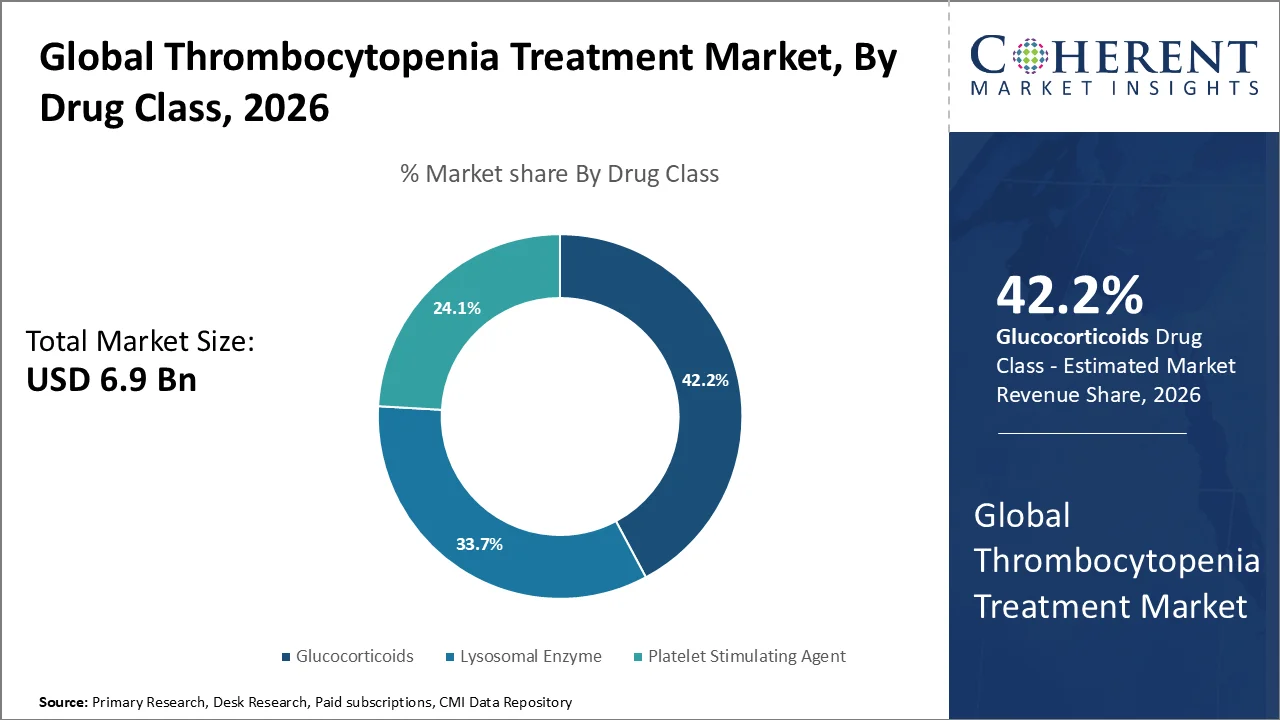
- Glucocorticoids hold the largest market share of 42.2% in 2026 owing to the rising prevalence of immune thrombocytopenia (ITP). The annual incidence of immune thrombocytopenia (ITP) is approximately 5 per 100,000 children and 2 per 100,000 adults.
- Hospitals Pharmacy expected to hold largest market share of 38.8% in 2026 owing to its increasing hospital admissions for severe thrombocytopenia. Hospitalizations increased from 11.8 million to 12.8 million between 2020–21 and 2024–25.
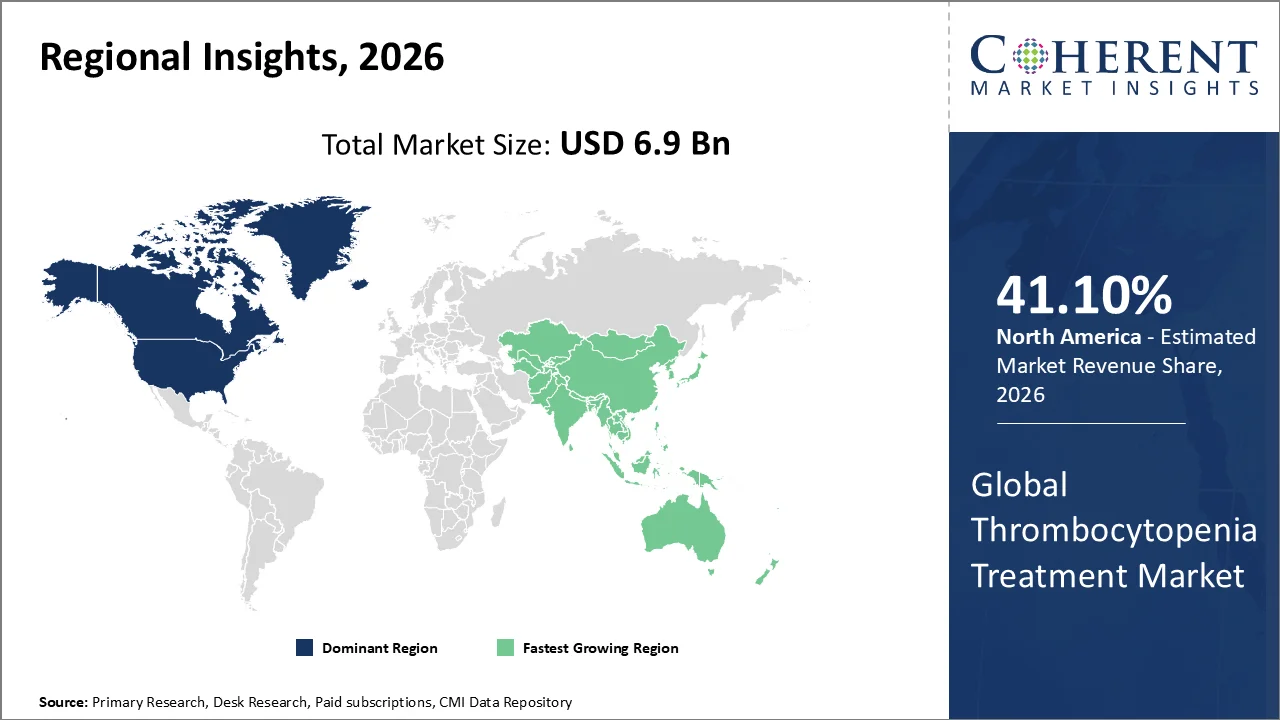
- North America is expected to acquire the dominant share of 41.1% in 2026 owing to the high prevalence of hematological and autoimmune disorders. Approximately 15 million people are estimated to have at least one of 105 autoimmune diseases.
Current Events and Their Impact on the Thrombocytopenia Treatment Market
Current Event | Description and its Impact |
FDA Approval of Rilzabrutinib (Wayrilz) for Chronic Immune Thrombocytopenia (2025) |
|
EMA Positive Opinion for Generic Eltrombopag (Viatris) (2024) |
|
Segmental Insights
- Current Industry Events of 2026
- Market Size Estimation
- Regional Breakdown
- Competitive Landscape
- Customer Intelligence
- Segmental Analysis
- Pricing Analysis
- Key Market Drivers, Challenges & Future Trends
- Customized Insights Section
Why is Drug Class Acquiring the Largest Market Share?
Glucocorticoids hold the largest market share of 42.2% in 2026. Healthcare providers continue to drive the thrombocytopenia treatment market by prescribing glucocorticoids as the preferred first-line therapy for immune thrombocytopenia and other autoimmune platelet disorders. These medications rapidly increase platelet counts, offer cost-effective treatment, and maintain broad clinical acceptance across healthcare settings. Manufacturers support market growth through the widespread availability of generic formulations, while clinicians routinely incorporate glucocorticoids into treatment protocols and combination regimens with immunoglobulins or targeted therapies. Rising diagnoses of autoimmune conditions and expanding access to healthcare further increase the adoption of glucocorticoid therapies. In March 2026, Corcept Therapeutics announced that the FDA approved Lifyorli (relacorilant) with nab-paclitaxel for adults with platinum-resistant epithelial ovarian, fallopian tube, or primary peritoneal cancer after one to three prior systemic treatments, including bevacizumab. The label includes warnings for neutropenia, severe infections, adrenal insufficiency, glucocorticoid-related risks, and embryo-fetal toxicity.
Hospitals Pharmacy expected to hold largest market share
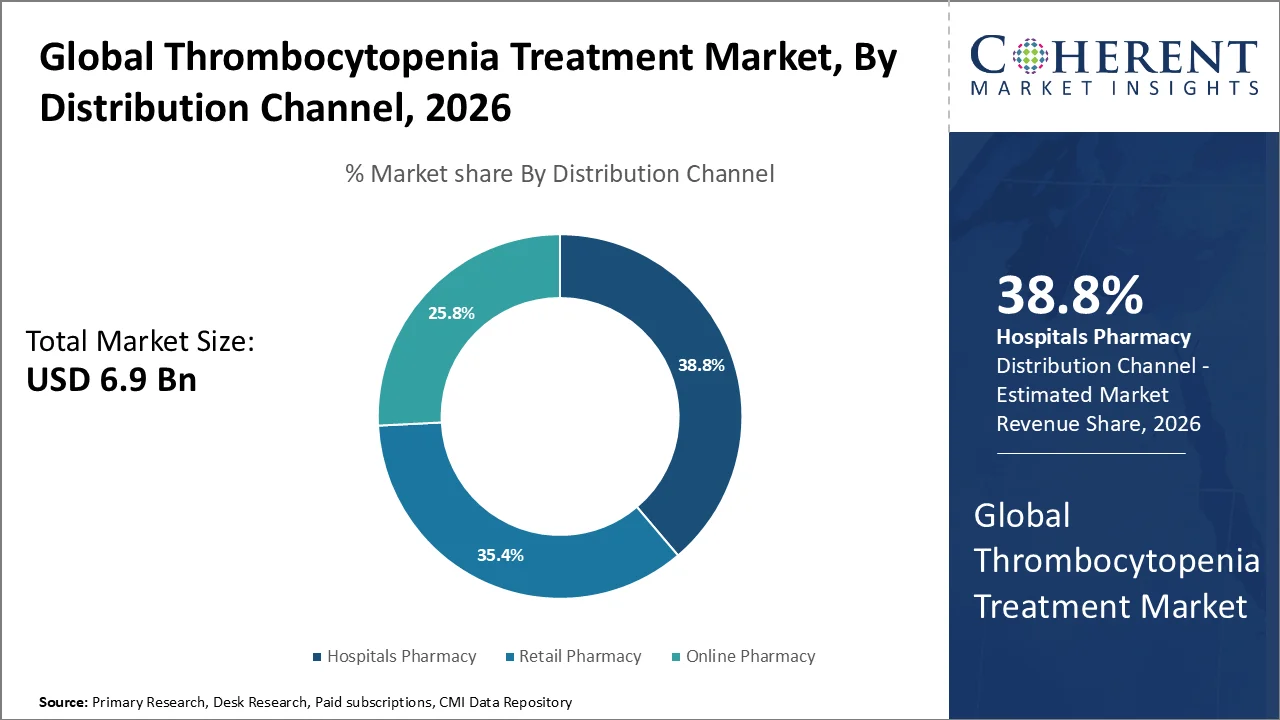
Hospitals Pharmacy expected to hold largest market share of 38.8% in 2026 owing to its adoption of advanced and high-cost therapies. Hospitals strengthen the thrombocytopenia treatment market by providing patients with timely access to essential medications for severe and complex platelet disorders. Hospital pharmacies actively dispense corticosteroids, intravenous immunoglobulins, thrombopoietin receptor agonists, biologics, and other supportive therapies required for inpatient treatment. Rising hospital admissions for immune thrombocytopenia, chemotherapy-induced thrombocytopenia, and related hematologic conditions continue to increase demand through this distribution channel. Healthcare providers also leverage advanced diagnostic capabilities, coordinated multidisciplinary care, and specialized treatment options to improve patient outcomes and support market growth.
Thrombocytopenia Treatment Market Trends
- Growing adoption of targeted therapies, including thrombopoietin receptor agonists (TPO-RAs) and monoclonal antibodies, is improving platelet response, reducing relapse rates, and expanding treatment options for patients with chronic immune thrombocytopenia (ITP). TPO-RAs such as eltrombopag, romiplostim, and avatrombopag achieve platelet response rates of 70–90% in adults with chronic ITP, significantly reducing bleeding episodes and the need for rescue therapy.
- The increasing prevalence of immune thrombocytopenia, hematologic malignancies, and chemotherapy-induced thrombocytopenia continues to drive treatment demand. Primary immune thrombocytopenia has an annual incidence of approximately 2–5 cases per 100,000 adults, while prevalence ranges from 9–12 cases per 100,000 population. In addition, the International Agency for Research on Cancer (IARC) estimated about 20 million new cancer cases worldwide in 2022, increasing the number of patients at risk of chemotherapy-induced thrombocytopenia.
- Expanding reimbursement support and healthcare access are improving the availability of thrombocytopenia therapies across developed and emerging markets. In the United States, Medicare and most commercial insurers reimburse approved ITP treatments—including romiplostim, eltrombopag, avatrombopag, fostamatinib, IVIG, and rituximab—based on FDA-approved indications and clinical guidelines. Similarly, European countries increasingly reimburse TPO-RAs through national health systems following health technology assessments, improving patient access to advanced therapies.
Regional Insights
North America dominates owing to increasing cancer incidence and chemotherapy utilization
North America is expected to acquire the dominant share of 41.10% in 2026. North America strengthens the thrombocytopenia treatment market by leveraging advanced healthcare infrastructure, increased disease awareness, and rapid adoption of innovative therapies. Healthcare providers across the region utilize well-developed hematology centers, advanced diagnostic technologies, and specialized treatment options to manage immune thrombocytopenia and other platelet disorders effectively. Growing cases of autoimmune diseases, cancer-associated thrombocytopenia, and age-related conditions continue to drive treatment demand. According to the National Institute of Allergy and Infectious Diseases (NIAID), approximately 8% of the U.S. population is affected by autoimmune diseases. Supportive reimbursement frameworks, extensive clinical research, and the presence of leading pharmaceutical companies further accelerate the development and accessibility of thrombocytopenia therapies. For instance, in June 2026, Organon announced that the FDA approved the supplemental Biologics License Application (sBLA) for TOFIDENCE (tocilizumab-bavi) injection, an intravenous biosimilar to ACTEMRA (tocilizumab).
Asia Pacific Thrombocytopenia Treatment Market Trends
The Asia Pacific thrombocytopenia treatment market grows as the increasing prevalence of blood disorders, rising awareness of advanced therapies, and improved healthcare infrastructure drive demand. Healthcare providers and researchers invest in medical advancements, expand diagnostic access, and adopt innovative treatment approaches to strengthen market development. The growing elderly population, higher occurrence of chronic diseases, and government efforts to improve healthcare services further encourage the adoption of effective thrombocytopenia management solutions across the region. India's population aged 60 years and above accounts for approximately 11–12% of the population (140–153 million people) and is projected to exceed 319–347 million by 2050, representing more than 20% of the population. In May 2026, Sanofi launched AccelRare in India, an AI-powered tool that helps healthcare professionals identify rare diseases faster and improve patient access to timely treatment.
United States Thrombocytopenia Treatment Market Trends
The United States thrombocytopenia treatment market is propelled by the growing burden of platelet disorders, increasing focus on early diagnosis, and rising demand for targeted treatment options. In 2024, patients with Bernard–Soulier syndrome in the United States showed an equal gender distribution, with females and males each accounting for approximately 50% of cases. Advancements in medical research, improved healthcare facilities, and the introduction of novel therapies are enhancing disease management. Greater clinical adoption of innovative solutions, expanding patient access to specialized care, and ongoing pharmaceutical developments are creating new opportunities for market growth while supporting improved outcomes for individuals affected by thrombocytopenia. For instance, Sandoz announced the US availability of TYRUKO (natalizumab-sztn), the first FDA-approved natalizumab biosimilar for treating relapsing forms of multiple sclerosis.
China Thrombocytopenia Treatment Market Trends
China’s thrombocytopenia treatment market continues to expand as healthcare providers address the growing incidence of blood-related disorders and improve patient awareness of available therapies. In China, more than 65,000 people are estimated to have hemophilia, with related blood-borne complications affecting approximately 5% of children and 22% of adults. Pharmaceutical companies and research institutions are advancing biotechnology initiatives to introduce innovative treatment options, including targeted medicines and platelet-enhancing therapies. Healthcare reforms and stronger diagnostic networks are helping more patients access specialized thrombocytopenia care. Additionally, the rising prevalence of chronic conditions and an aging population are increasing the need for reliable and effective treatment approaches.
Who are the Major Companies in Thrombocytopenia Treatment Industry
Some of the major key players in Thrombocytopenia Treatment are 3SBio Inc., Amarillo Biosciences, Inc., Amgen Inc., Baxalta Incorporated, Bayer AG, Boehringer Ingelheim GmbH, Bristol-Myers Squibb Company, Cellerant Therapeutics, Inc., Eisai Co., Ltd., Hansa Medical AB, Intas Pharmaceuticals Ltd., Merck & Co., Inc., Momenta Pharmaceuticals, Inc., Myelo Therapeutics GmbH, Neumedicines Inc., Novartis AG, Pfizer Inc., Prophylix Pharma AS, Rigel Pharmaceuticals, Inc., Shionogi & Co., Ltd., STATegics, Inc., and ViroMed Co., Ltd.
Key News
- In May 2026, Knight Therapeutics announced that its Brazilian affiliate, United Medical Ltda., received ANVISA approval for TAVALISSE (fostamatinib disodium hexahydrate) to treat adults with chronic immune thrombocytopenia (ITP) who had an inadequate response to prior treatments.
Market Report Scope
Thrombocytopenia Treatment Market Report Coverage
| Report Coverage | Details | ||
|---|---|---|---|
| Base Year: | 2025 | Market Size in 2026: | USD 6.9 Bn |
| Historical Data for: | 2020 To 2024 | Forecast Period: | 2026 To 2033 |
| Forecast Period 2026 to 2033 CAGR: | 4.8% | 2033 Value Projection: | USD 9.3 Bn |
| Geographies covered: |
| ||
| Segments covered: |
| ||
| Companies covered: | 3SBio Inc., Amarillo Biosciences, Inc., Amgen Inc., Baxalta Incorporated, Bayer AG, Boehringer Ingelheim GmbH, Bristol-Myers Squibb Company, Cellerant Therapeutics, Inc., Eisai Co., Ltd., Hansa Medical AB, Intas Pharmaceuticals Ltd., Merck & Co., Inc., Momenta Pharmaceuticals, Inc., Myelo Therapeutics GmbH, Neumedicines Inc., Novartis AG, Pfizer Inc., Prophylix Pharma AS, Rigel Pharmaceuticals, Inc., Shionogi & Co., Ltd., STATegics, Inc., and ViroMed Co., Ltd. | ||
Analyst Opinion
- Thrombocytopenia treatment demand is being shaped by the increasing clinical burden of platelet disorders rather than short-term market trends. Globally, immune thrombocytopenia (ITP) affects approximately 3–4 adults per 100,000 annually, with persistent and chronic cases creating a continued need for long-term disease management. The growing focus on early diagnosis and personalized treatment approaches is pushing healthcare providers to adopt more advanced platelet-restoring therapies, particularly for patients who do not respond adequately to conventional treatments.
- The treatment landscape is shifting from traditional approaches toward targeted therapies that improve patient outcomes and reduce dependency on repeated interventions. Thrombopoietin receptor agonists such as eltrombopag and romiplostim have demonstrated strong clinical value by stimulating platelet production and helping many chronic ITP patients maintain safer platelet levels. Their adoption highlights a broader industry movement toward biologic and mechanism-based therapies that address underlying disease pathways rather than only managing symptoms.
- Rising use of advanced treatments in oncology and hematology is expected to remain a major growth catalyst for the thrombocytopenia treatment market. Chemotherapy-induced thrombocytopenia affects a significant proportion of cancer patients, with studies reporting platelet reductions occurring in a considerable share of individuals receiving myelosuppressive chemotherapy. As cancer treatment volumes increase and clinicians prioritize maintaining treatment schedules, demand for platelet-supportive therapies, including agents such as thrombopoietin mimetics and supportive care solutions, is expected to strengthen.
- Future market momentum will depend on improving access to innovative therapies and expanding treatment options for difficult-to-manage cases. Recent regulatory approvals of newer agents, such as oral thrombopoietin receptor agonists, demonstrate the industry’s shift toward convenient and patient-friendly therapies. However, affordability, reimbursement limitations, and uneven access to specialized hematology care remain key factors influencing adoption, particularly across emerging healthcare markets.
Speak to the analyst
Want personalized insights?
Take the findings above to one of our principal consultants, or have the report rebuilt around the segments, geographies and competitors you actually track.
Market Segmentation
- By Drug Class (Revenue, USD Bn, 2021-2033)
- Glucocorticoids
- Lysosomal Enzyme
- Platelet Stimulating Agent
- By Distribution Channel (Revenue, USD Bn, 2021-2033)
- Hospitals Pharmacy
- Retail Pharmacy
- Online Pharmacy
- By Region (Revenue, USD Bn, 2021-2033)
- North America
- U.S.
- Canada
- Latin America
- Brazil
- Mexico
- Argentina
- Rest of Latin America
- Europe
- Germany
- U.K.
- France
- Italy
- Spain
- Russia
- Rest of Europe
- Asia Pacific
- China
- India
- Japan
- Australia
- South Korea
- ASEAN
- Rest of Asia Pacific
- Middle East
- GCC
- Israel
- Rest of Middle East
- Africa
- South Africa
- Central Africa
- North Africa
- North America
Sources
Primary Research interviews
- Healthcare professionals, hematologists, oncologists, and clinicians involved in thrombocytopenia diagnosis and treatment
- Hospital administrators and healthcare decision-makers
- Researchers and academicians specializing in hematology and platelet disorders
- Pharmaceutical industry experts involved in drug development, clinical trials, and commercialization
- Key opinion leaders (KOLs) in thrombocytopenia management
Databases
- U.S. Food and Drug Administration (FDA) databases
- European Medicines Agency (EMA) databases
- ClinicalTrials.gov
- World Health Organization (WHO) databases
- National Institutes of Health (NIH) databases
- PubMed and biomedical literature databases
- National health statistics databases
- Government healthcare expenditure and disease surveillance databases
Magazines
- Hematology and healthcare industry magazines
- Pharmaceutical and biotechnology industry publications
- Medical technology and healthcare innovation magazines
- Life sciences and clinical research publications
Journals
- Blood
- The Lancet Haematology
- Journal of Thrombosis and Haemostasis
- Haematologica
- American Journal of Hematology
- British Journal of Haematology
- Clinical Hematology International
- Peer-reviewed journals covering platelet disorders, immune thrombocytopenia (ITP), oncology, and hematology
Newspapers
- Healthcare and life sciences news publications
- Medical research news platforms
- Regulatory and policy news sources
- Biotechnology and pharmaceutical development news outlets
Associations
- American Society of Hematology
- European Hematology Association
- International Society on Thrombosis and Haemostasis
- National hematology and oncology associations
- Patient advocacy groups focused on platelet disorders and rare blood diseases
Public Domain sources
- Government healthcare reports and publications
- Regulatory approvals and drug safety communications
- Clinical trial registries and study results
- Epidemiological studies and disease burden reports
- Publicly available scientific publications
- Healthcare guidelines and treatment recommendations
- Institutional research reports and academic publications
Proprietary Elements:
- CMI Data Analytics Tool
- Proprietary CMI Existing Repository of information for last 10 years
Get access to 250+ pages report
Every segment, forecast, competitor profile and data table behind the analysis above — available for instant download.
- ESOMAR Member
- ISO 9001:2015 Certified
- D-U-N-S Registered
- GDPR & CCPA Compliant
Missing comfort of reading report in your local language? Find your preferred language:
Transform your Strategy with Exclusive Trending Reports
Frequently Asked Questions
The thrombocytopenia treatment market refers to the global market for therapies, drugs, and supportive care solutions used to manage low platelet count disorders and related conditions.
The market is growing due to the rising prevalence of thrombocytopenia, increasing cases of cancer and autoimmune diseases, advancements in treatment options, and growing healthcare investments.
Common treatments include platelet transfusions, thrombopoietin receptor agonists, corticosteroids, immunosuppressive therapies, and other targeted medications.
The demand for thrombocytopenia treatments is associated with conditions such as immune thrombocytopenic purpura (ITP), leukemia, chemotherapy-induced thrombocytopenia, liver disorders, and other blood-related diseases.
Thrombopoietin receptor agonists and other drug-based therapies represent significant segments due to their effectiveness in increasing platelet production and reducing bleeding risks.