

Tuberculosis Drugs Market Analysis & Forecast: (2026-2033)
Tuberculosis drugs market is estimated to be valued at USD 2.51 Bn in 2026 and is expected to reach USD 3.49 Bn in 2033, exhibiting a compound annual growth rate (CAGR) of 4.77% from 2026 to 2033.
Key Takeaways
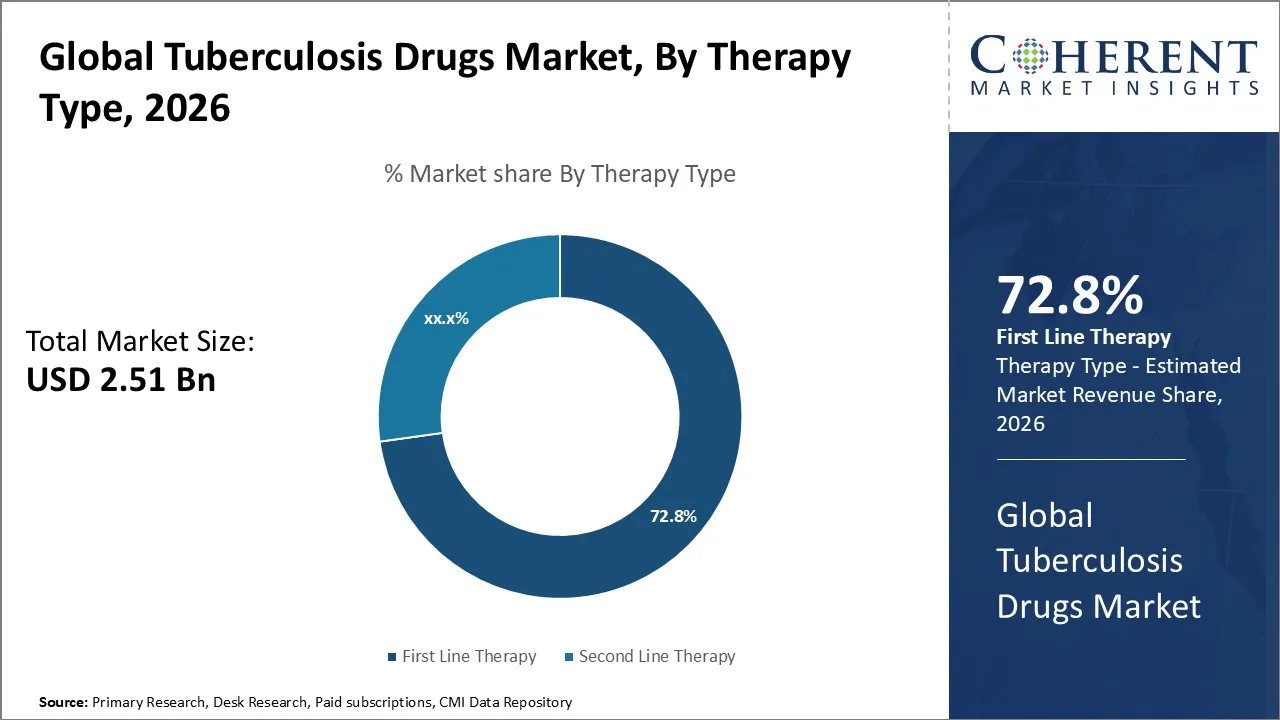
- Based on Therapy Type, the first-line therapy segment is projected to capture 72.8% share of the market in 2026.
- Based on Disease Type, the Active TB segment is estimated to acquire 87.4% share of the market in 2026,
- Based on Distribution Channel, the Hospital Pharmacies segment is expected to hold 58.2% share of the market in 2025.
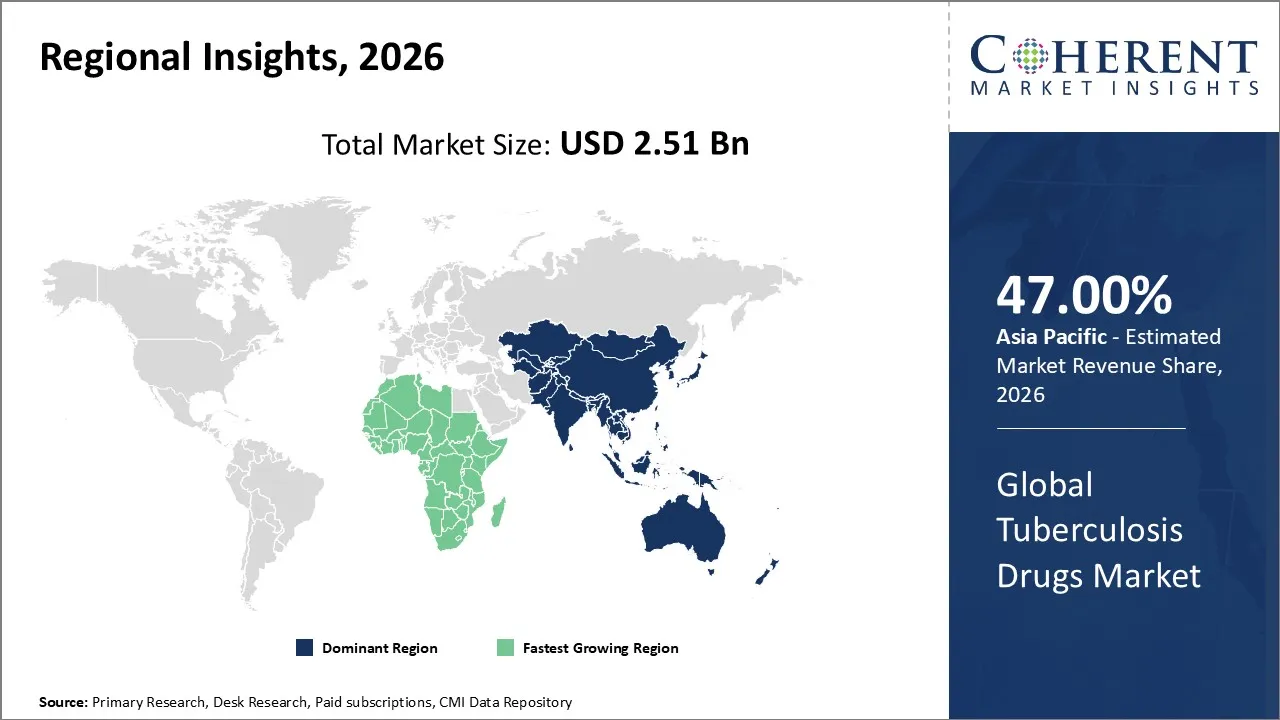
- Based on Region, Aisa Pacific is set to lead the tuberculosis drugs market with 47% share in 2026. While, Africa is projected to be the fastest growing region.
Market Overview
Tuberculosis (TB) is a chronic condition, and has become a global disease burden. Manufacturers of TB drugs are focused on developing drugs that can shorten the duration of treatment, and help to overcome challenges of drug-susceptible TB and drug-resistant TB. The treatment of TB is divided into two types, such as first line treatment, second line treatment, and drug-resistant treatment.
Advanced technologies and introduction of novel therapies are expected to improve the duration of treating TB, however, most TB cases with currently available medicines can require up to 6 months of treatment. However, despite of existing medicines and ongoing TB treatment drugs innovations, there is continuous need to improve patients’ access to appropriate TB medicines particularly in the areas of multidrug-resistant TB (MDR TB) and pediatric TB.
Current Event and its Impact Tuberculosis Drugs Market
Current Event | Description and its Impact |
WHO Global TB Strategy Implementation and Policy Changes |
|
Drug-Resistant TB Emergence in Key Regions |
|
How are digital adherence tools transforming tuberculosis care and reducing resistance?
- Sorfequiline
- A promising new drug candidate targeting resistant TB strains (MDR/XDR).
- Early trials show improved efficacy and fewer side effects compared to older second-line drugs.
- Could provide a new line of defense against resistance and reduce reliance on less effective therapies.
- Combination Therapies (BPaL & BPaL-M)
- BPaL regimen: bedaquiline, pretomanid, linezolid.
- BPaL-M adds moxifloxacin for broader coverage.
- Shortens treatment duration from 18–24 months to 6–9 months, improving adherence.
- Adoption is rising in high-burden regions, reshaping treatment protocols.
- Digital Adherence Tools
- Smart pill packaging tracks medication intake.
- AI monitoring systems analyze adherence patterns and send reminders.
- Reduces risk of incomplete therapy and drug resistance.
- Especially valuable in regions with high dropout rates, improving cure outcomes.
- Current Industry Events of 2026
- Market Size Estimation
- Regional Breakdown
- Competitive Landscape
- Customer Intelligence
- Segmental Analysis
- Pricing Analysis
- Key Market Drivers, Challenges & Future Trends
- Customized Insights Section
Segmental Insights
Why Is First-Line Therapy Projected to Dominate the Tuberculosis Drug Market?
In terms of therapy type, the first-line therapy segment is expected to hold 72.8% share of the market in 2026, due to its proven efficacy, affordability, and global adoption under WHO guidelines. Drugs like isoniazid, rifampicin, ethambutol, pyrazinamide, and streptomycin remain the cornerstone of treatment for drug-sensitive TB. Their widespread availability and standardized regimens ensure consistent patient outcomes, driving majority market share.
For instance, in March 2025, Rifampicin, a core first-line tuberculosis drug, is being commissioned in India to strengthen treatment and reduce reliance on imports. As part of WHO-recommended regimens, its consistent supply is vital for combating drug-sensitive TB. Government initiatives under the PLI scheme aim to boost domestic production, ensuring accessibility and supporting TB elimination.
Active TB segment Dominates the Tuberculosis Drugs Market
In terms of disease type, the active TB segment is expected to lead the market with 87.4% share in 2026, because it requires immediate, multi-drug intervention to prevent transmission and mortality. The global burden of active TB cases, particularly in Asia and Africa, sustains demand for comprehensive treatment regimens. Public health programs prioritize active TB management, reinforcing its dominance over latent TB therapies.
For instance, in July 2025, The Unite4TB flagship trial has completed its first wave of recruitment, testing 14 drug regimens for pulmonary tuberculosis, including drug-resistant forms. Focused on active TB, the study aims to deliver shorter, safer, and more effective treatments. This milestone strengthens global efforts to improve TB care and reduce transmission.
Hospital Pharmacies Are Projected to Dominate TB Drug Distribution
In terms of distribution channel, the hospital pharmacies segment is projected to account for 58.2% share of the market in 2026, as TB treatment is largely managed in institutional and public health settings. Government procurement and centralized supply chains ensure reliable access to essential drugs. Hospitals remain the primary point of care for diagnosis and treatment, making them the dominant channel in the TB drugs market.
For instance, in June 2025, Shri Mahant Indiresh Hospital introduced the BPaLM regimen under India’s National Tuberculosis Eradication Programme to treat multidrug-resistant TB. Over 1,000 patients benefit from this shorter, effective therapy delivered in hospital settings. The initiative highlights hospital pharmacies’ role in dispensing and managing TB drugs, strengthening institutional care and treatment outcomes.
Regional Insights
Asia Pacific Tuberculosis Drugs Market Analysis & Trends
Asia Pacific is expected to lead the tuberculosis drugs market with 47% share in 2026, due to its high disease burden, especially in India, China, and Indonesia. Dense populations, rising drug-resistant TB cases, and strong government programs like India’s NTEP sustain market growth. Public health prioritization and expanded domestic drug production reinforce Asia-Pacific’s dominance and rapid expansion.
For instance, in April 2025, The WHO launched the TB-Free Central Asia initiative in Astana, Kazakhstan, covering five countries: Kazakhstan, Kyrgyzstan, Tajikistan, Turkmenistan, and Uzbekistan. The program aims to accelerate TB elimination by 2030 through stronger health systems, improved diagnostics, shorter oral regimens, and regional cooperation, addressing drug-resistant TB and enhancing patient-centered care.
Africa Tuberculosis Drugs Market Analysis & Trends
Africa is expected to exhibit the fastest growth, due to its high TB burden, widespread multidrug-resistant cases, and limited healthcare infrastructure. Strong support from WHO, Global Fund, and donor programs ensures drug supply. Rising incidence, government prioritization, and international funding drive rapid growth, making Africa the second-largest market.
For instance, in October 2025, Stellenbosch University in South Africa launched a new Centre for Drug Discovery to address Africa’s healthcare needs. The centre focuses on developing treatments for diseases like tuberculosis, malaria, and HIV/AIDS. By advancing innovative research, it aims to strengthen drug development capacity and improve access to affordable medicines across the continent.
Tuberculosis Drugs Market Outlook Country-Wise
India Tuberculosis Drugs Market Trends
In 2026, India’s tuberculosis drugs market is highly demanding due to its large TB burden, rising multidrug-resistant cases, and government-led control programs. Expanded adoption of new regimens like BPaL, increased healthcare investment, and WHO-backed initiatives drive demand, making India a critical hub for TB treatment and drug accessibility.
For instance, in January 2026, The Brihanmumbai Municipal Corporation treated over 1,000 drug-resistant tuberculosis patients using the new BPaL-M regimen. Combining bedaquiline, pretomanid, linezolid, and optional moxifloxacin, this innovative therapy shortens treatment duration and improves outcomes. The rollout marks a significant step in India’s fight against TB, enhancing access to effective, patient-centered care.
UAE Tuberculosis Drugs Market Trends
In 2026, the UAE’s tuberculosis drugs market is demanding due to updated national TB control guidelines, rising focus on drug-resistant cases, and government investment in modern regimens. Strengthened healthcare infrastructure, international collaborations, and public health initiatives drive demand, ensuring improved access to effective TB treatments and supporting nationwide disease control.
For instance, in December 2025, The UAE Ministry of Health and Prevention launched updated scientific guidelines for the National Tuberculosis Control Program 2025. These guidelines strengthen TB prevention, diagnosis, and treatment, incorporating modern drug regimens and global best practices. The initiative aims to enhance patient care, reduce TB burden, and support public health goals nationwide.
Market Report Scope
Tuberculosis Drugs Market Report Coverage
| Report Coverage | Details | ||
|---|---|---|---|
| Base Year: | 2025 | Market Size in 2026: | USD 2.51 Bn |
| Historical Data for: | 2020 To 2024 | Forecast Period: | 2026 To 2033 |
| Forecast Period 2026 to 2033 CAGR: | 4.77% | 2033 Value Projection: | USD 3.49 Bn |
| Geographies covered: |
| ||
| Segments covered: |
| ||
| Companies covered: | Johnson & Johnson Services, LLC, Lupin Ltd, Novartis AG, Macleods Pharmaceuticals Ltd., Otsuka Pharmaceutical Co., Ltd, Pfizer Inc., and others. | ||
| Growth Drivers: |
| ||
| Restraints & Challenges: |
| ||
Tuberculosis Drugs Market Driver
Drug-resistant TB (MDR/XDR)
The increasing prevalence of multidrug-resistant (MDR) and extensively drug-resistant (XDR) tuberculosis is a major challenge worldwide. These strains require advanced therapies such as bedaquiline, pretomanid, and linezolid, which are now being adopted more widely. The surge in resistant cases significantly boosts tuberculosis drugs market demand, as countries must procure newer regimens to combat evolving strains. This trend drives innovation, accelerates drug approvals, and expands treatment options, making resistant TB a central driver of market growth.
Government & Policy Initiatives
National TB Control Programs in countries like India, South Africa, and the UAE are strengthening drug procurement and updating treatment guidelines. These initiatives ensure wider access to modern regimens, improve patient outcomes, and reduce disease burden. By prioritizing TB eradication, governments enhance healthcare infrastructure and stimulate pharmaceutical investment. Such policies not only expand treatment coverage but also stabilize the tuberculosis drugs market share, positioning TB drugs as essential assets in national health strategies.
Tuberculosis Drugs Market Opportunity
Digital Health Tools
Digital health innovations such as mobile apps, AI-driven monitoring, and e-prescriptions are transforming tuberculosis treatment. These tools improve patient adherence, track progress, and reduce risks of incomplete therapy that often lead to resistance. By integrating technology into care delivery, healthcare providers enhance efficiency and outcomes. Such advancements are expected to significantly influence the tuberculosis drugs market forecast, driving growth as digital solutions become essential in managing complex TB regimens across high-burden regions.
Analyst opinion (Expert Opinion)
- The tuberculosis drugs market is shaped by a persistent high burden of disease and evolving therapeutic needs. In recent years, global TB notifications reached historically elevated levels, with over 8 million new diagnoses reported, reflecting improved detection and ongoing transmission in many regions. First-line anti-TB drugs remain the cornerstone of treatment, with standard regimens such as isoniazid and rifampin used extensively for drug-susceptible cases. First-line therapies account for a significant majority of treatment volume worldwide, underscoring their role in public health programs.
- Concurrently, drug-resistant tuberculosis presents a major challenge, leading to increased demand for second-line and combination therapies. For instance, nearly 176 000 people commenced treatment for multidrug- or rifampicin-resistant TB, illustrating pressure on more complex drug protocols that require longer courses and a broader drug mix. Treatment outcome data show that while drug-susceptible TB regimens typically achieve high success rates, success for drug-resistant TB remains comparatively lower, reinforcing the need for improved therapeutic options.
- Overall, the tuberculosis drugs market continues to expand in response to disease prevalence patterns, diversification of treatment needs, and ongoing development of optimized therapeutic regimens.
Speak to the analyst
Want personalized insights?
Take the findings above to one of our principal consultants, or have the report rebuilt around the segments, geographies and competitors you actually track.
Recent Developments
- In January 2026, The FDA launched a new fast-track voucher program, granting priority to therapies for tuberculosis and sickle cell disease. This initiative accelerates drug development and regulatory review, addressing urgent health needs. By supporting innovative treatments, the program aims to improve patient outcomes and strengthen access to critical medicines in the United States.
- In April 2025, The TB Alliance announced a 25% price drop for a key drug-resistant tuberculosis medicine through its multi-manufacturer strategy. This global initiative expands access, reduces treatment costs, and strengthens affordability for patients. By lowering prices, the program enhances availability of life-saving TB drugs and supports worldwide efforts to combat drug-resistant TB.
Market Segmentation
- By Therapy Type,
- First Line Therapy
- Isoniazid (INH)
- rifampicin (RIF)
- Ethambutol (EMB)
- Pyrazinamide (PZA)
- Streptomycin (SM).
- Second Line Therapy
- Fluoroquinolones
- Injectable antituberculosis drugs
- First Line Therapy
- By Disease Type,
- Active TB
- Latent TB
- By Distribution Channel
- Hospital Pharmacy
- Retail Pharmacy
- Online Pharmacy
- By Region
- North America
- U.S.
- Canada
- Latin America
- Brazil
- Argentina
- Mexico
- Rest of Latin America
- Europe
- Germany
- U.K.
- Spain
- France
- Italy
- Russia
- Rest of Europe
- Asia Pacific
- China
- India
- Japan
- Australia
- South Korea
- ASEAN
- Rest of Asia Pacific
- Middle East & Africa
- GCC Countries
- Israel
- Rest of Middle East & Africa
- North America
- Tuberculosis Drugs Market - Competitive Landscape
- Johnson & Johnson Services, LLC
- Lupin Ltd
- Novartis AG
- Macleods Pharmaceuticals Ltd.
- Otsuka Pharmaceutical Co., Ltd
- Pfizer Inc.
Sources
Primary Research Interviews
- Pharmaceutical & Biopharmaceutical Manufacturers (Anti-TB Drugs)
- API Manufacturers & Contract Manufacturing Organizations (CMOs)
- Infectious Disease Specialists & Pulmonologists
- Hospital Pharmacists & TB Program Coordinators
- Public Health Officials & TB Control Program Managers
- Clinical Research Organizations (CROs)
- Others
Databases
- Bloomberg Terminal
- Thomson Reuters Eikon
- IHS Markit
- GlobalData Healthcare
- S&P Global Market Intelligence
- IQVIA
- Others
Magazines
- Pharmaceutical Executive
- Nature Reviews Drug Discovery
- Drug Development & Delivery
- Pharma Times
- BioSpectrum
- Others
Journals
- The Lancet Infectious Diseases
- Clinical Infectious Diseases
- Tuberculosis
- International Journal of Tuberculosis and Lung Disease
- Journal of Antimicrobial Chemotherapy
- Others
Newspapers
- Financial Times
- The Wall Street Journal
- The New York Times
- Reuters
- Bloomberg News
- Others
Associations
- World Health Organization (WHO) – Global TB Programme
- Stop TB Partnership
- International Union Against Tuberculosis and Lung Disease (The Union)
- Centers for Disease Control and Prevention (CDC) – TB Division
- European Respiratory Society (ERS)
- Others
Public Domain Sources
- World Health Organization (WHO)
- U.S. Centers for Disease Control and Prevention (CDC)
- National Institutes of Health (NIH)
- European Medicines Agency (EMA)
- U.S. Food and Drug Administration (FDA)
- World Bank Open Data
- Others
Proprietary Elements
- CMI Data Analytics Tool
- Proprietary CMI Existing Repository of Information for the Last 8 Years
Get access to 250+ pages report
Every segment, forecast, competitor profile and data table behind the analysis above — available for instant download.
- ESOMAR Member
- ISO 9001:2015 Certified
- D-U-N-S Registered
- GDPR & CCPA Compliant
Missing comfort of reading report in your local language? Find your preferred language:
Transform your Strategy with Exclusive Trending Reports
Frequently Asked Questions
The tuberculosis drugs market is estimated to be valued at USD 2.51 Bn in 2026, and is expected to reach USD 3.49 Bn by 2033.
Major players operating in the global tuberculosis drugs market include Johnson & Johnson Services, LLC, Lupin Ltd, Novartis AG, Macleods Pharmaceuticals Ltd., Otsuka Pharmaceutical Co., Ltd, Pfizer Inc., and others.
Affordability & access gaps are expected to hamper growth of the market over the forecast period.
Drug-resistant TB (MDR/XDR) and Government & Policy Initiatives are expected to propel growth of the market over the forecast period.
The global tuberculosis drugs market is estimated to exhibit a CAGR of 4.77% over the forecast period.
Among regions, Asia Pacific is expected to hold a dominant position in the global tuberculosis drugs market over the forecast period.