

Global Tuberculosis Therapeutics Market Size and Forecast – 2026 to 2033
The global tuberculosis therapeutics market is estimated to be valued at USD 2.27 Bn in 2026 and is expected to reach USD 3.82 Bn by 2033, exhibiting a compound annual growth rate (CAGR) of 7.7% from 2026 to 2033. This steady growth reflects increasing investments in healthcare infrastructure and rising prevalence of tuberculosis across developing regions, driving the demand for effective therapeutics.
Key Takeaways of the Global Tuberculosis Therapeutics Market
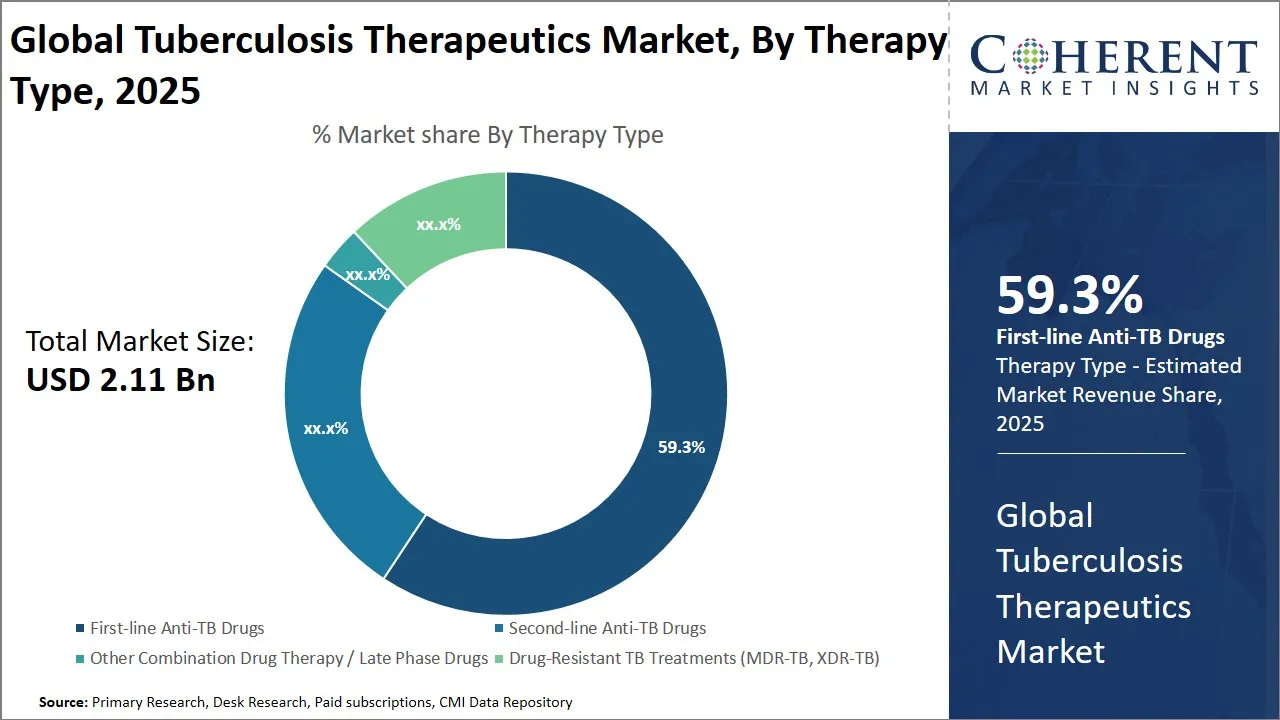
- By therapy type, the first-line Anti-TB drugs segment is expected to hold the largest share of the global tuberculosis therapeutics market, contributing 60.3% share in 2026.
- Within the disease type segment, the latent TB segment is expected to lead the market with a 35.2% share in 2026.
- Based on the route of administration, the oral segment is projected to dominate the market, accounting for 76.4% of the share in 2026.
- North America is expected to lead the market, holding an estimated share of 39.3% in 2026. Asia Pacific is anticipated to be the fastest-growing region, with an expected market share of 24.5% in 2026.
Market Overview
A market trends indicate a significant shift towards the development of novel drug formulations and shorter treatment regimens, enhancing patient compliance and treatment outcomes. Additionally, advances in biotechnology and government initiatives aimed at tuberculosis eradication are fueling innovation and expanding market opportunities. The increasing adoption of personalized medicine approaches and integration of diagnostics with therapeutics also contribute to the evolving landscape of the tuberculosis therapeutics market.
Currents Events and their Impact
Current Events | Description and its Impact |
WHO Updates on Drug-Resistant Tuberculosis Treatment Regimens |
|
Regional Policy Alignment in Asia Pacific |
|
Segmental Insights
- Current Industry Events of 2026
- Market Size Estimation
- Regional Breakdown
- Competitive Landscape
- Customer Intelligence
- Segmental Analysis
- Pricing Analysis
- Key Market Drivers, Challenges & Future Trends
- Customized Insights Section
Tuberculosis Therapeutics Market Insights, By Therapy Type - Dominance of First-line Anti-TB Drugs is Driven by Established Efficacy and Treatment Protocols
The first-line anti-TB segment is expected to hold a market share of 60.3% in 2026, driven by their foundational role in standard TB treatment regimens worldwide. These drugs, including Isoniazid, Rifampicin, Ethambutol, and Pyrazinamide, serve as the frontline defense against tuberculosis due to their proven efficacy, accessibility, and well-established safety profiles. Health authorities such as the World Health Organization and national health programs continue to endorse these first-line agents as the initial treatment pathway for newly diagnosed TB cases, which underpins sustained the demand across the global healthcare systems.
The broad adoption of first-line drugs is also influenced by their effectiveness in treating both drug-sensitive tuberculosis and latent infections, which forms a significant portion of the overall TB burden. Isoniazid and Rifampicin, in particular, have long-standing clinical validation and are pivotal in preventing disease progression and transmission. Coupled with relatively affordable pricing and inclusion in national TB control programs, these drugs ensure consistent utilization even in resource-limited settings, which constitute a substantial market segment.
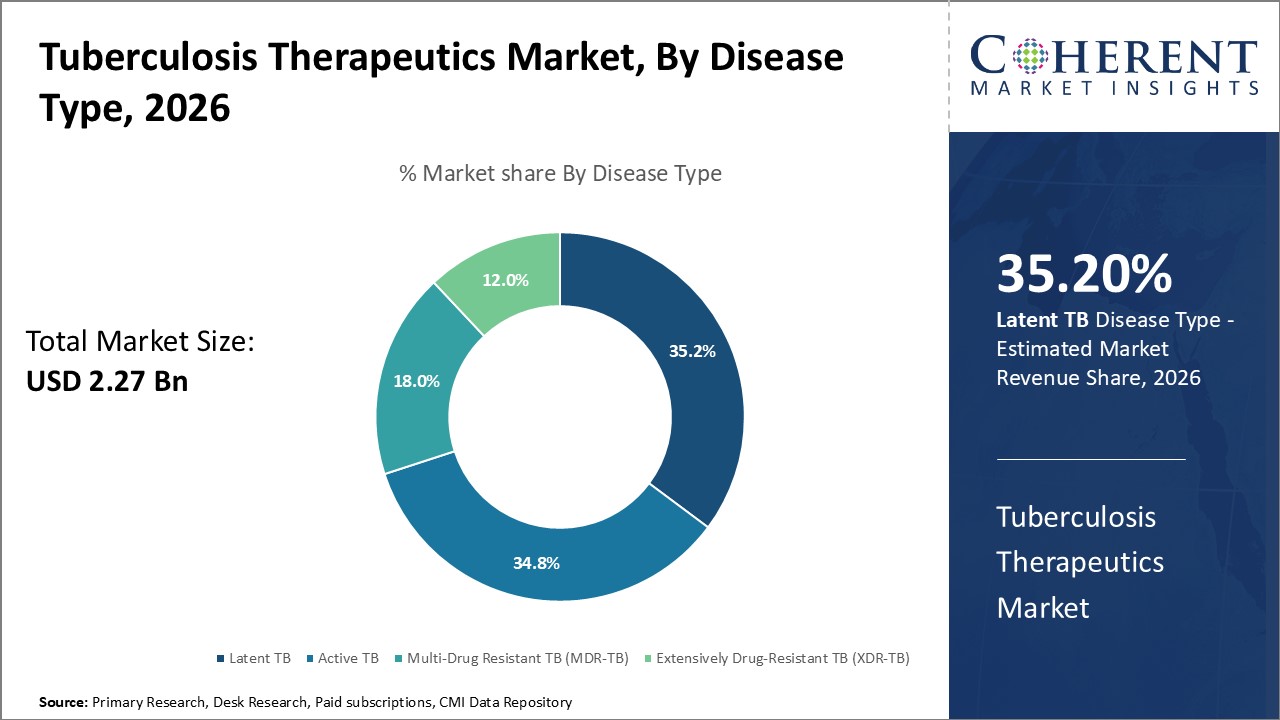
Tuberculosis Therapeutics Market Insights, By Disease Type - Latent TB Segment Expansion is fueled by Increased Screening and Preventive Treatment Initiatives
Within the disease type segment, latent TB is expected to lead the market with a 35.2% share in 2026, driven by the expanding focus on early detection and preventive treatment strategies aimed at halting the progression to active disease. Latent TB infection, characterized by a dormant state of Mycobacterium tuberculosis without clinical symptoms, holds a substantial reservoir that can reactivate under immunocompromised conditions or other risk factors.
This strategic focus has resulted in increased screening programs, especially among high-risk populations such as healthcare workers, people living with HIV, and individuals in close contact with active TB patients. Enhanced diagnostic capabilities, including Interferon-Gamma Release Assays (IGRAs) and improved tuberculin skin tests, facilitate the detection of latent TB cases that previously went unrecognized.
In April 2025, Centers for Disease Control and Prevention along with the National Tuberculosis Coalition of America, updated its guidance for treating latent tuberculosis infection, urging healthcare providers to prioritize short-course rifamycin-based regimens of three to four months. as they are safer and more effective than older 6–9-month isoniazid courses, which remain alternatives when drug interactions limit options.
Tuberculosis Therapeutics Market Insights, By Route of Administration - Oral Segment Dominates Due to Patient Compliance and Ease of Administration
The oral segment is expected to hold a market share of 76.4% in 2026, driven by advantages in patient adherence, convenience, and widespread feasibility in diverse healthcare settings. TB treatment regimens often require prolonged courses extending to six months or more, making ease of administration a critical factor for successful therapy completion. Oral formulations allow patients to self-administer medication outside hospital environments, boosting compliance compared to parenteral routes which necessitate clinical visits or healthcare professional oversight.
The preference for oral delivery also stems from its cost-effectiveness and operational simplicity. Oral medications reduce the need for sterile environments, injection equipment, and associated healthcare personnel time, making them especially suitable for resource-constrained regions where TB burden is typically high. This lowers barriers to access, enabling broader dissemination of therapeutics and alignment with national TB control programs focusing on community-based care.
Regional Insights
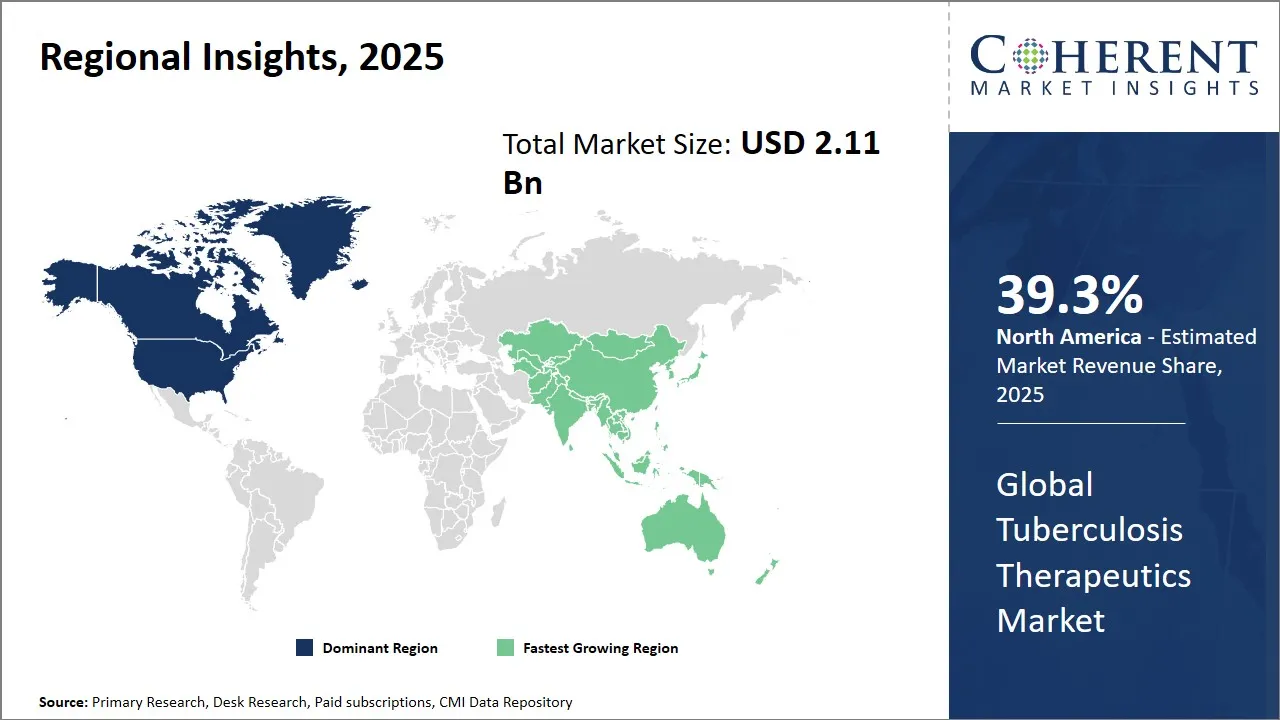
North America Tuberculosis Therapeutics Market Analysis and Trends
North America is expected to dominate the market with a share of 39.3% in 2026, driven by a well-established healthcare infrastructure, substantial government funding, and robust R&D ecosystems. The presence of leading pharmaceutical companies such as Johnson & Johnson, GSK, and Pfizer has ensured the development and commercialization of advanced tuberculosis therapeutics.
Government initiatives, including the U.S. CDC’s comprehensive tuberculosis control programs and favorable regulatory frameworks by the FDA, facilitate quick approval processes and encourage innovation in drug development. Furthermore, the integration of advanced diagnostic tools and treatment adherence technologies supports improved patient outcomes, reinforcing North America’s market leadership.
Asia Pacific Tuberculosis Therapeutics Market Analysis and Trends
The Asia Pacific region exhibits the fastest growth with an estimated share of 24.5% in 2026, due to the high burden of tuberculosis cases in this region combined with rising healthcare investments and expanding pharmaceutical manufacturing capabilities. Countries such as India and China are intensifying efforts to combat tuberculosis through government-backed programs by organizations like India’s Revised National Tuberculosis Control Program (RNTCP) and China’s CDC. These programs prioritize accessibility and affordability of therapeutics, leading to increase the demand for novel and generic TB drugs. Additionally, rapid urbanization, growing awareness about TB, and expanding healthcare infrastructure contribute to this accelerating market.
In September 2024, the Union Ministry of Health & Family Welfare, India’s apex public health authority, approved the introduction of the BPaLM regimen a shorter, more effective treatment for multi-drug-resistant tuberculosis (MDR-TB) under the National TB Elimination Programme. The four-drug combination of Bedaquiline, Pretomanid, Linezolid, and Moxifloxacin has been proven to cure drug-resistant TB in just six months, compared to the older 20-month treatment with severe side effects.
Global Tuberculosis Therapeutics Market Outlook for Key Countries
U.S. Tuberculosis Therapeutics Market Analysis and Trends
The U.S. tuberculosis therapeutics market is characterized by advanced research activities and strong pharmaceutical presence. Major players like Johnson & Johnson and Pfizer lead the development of innovative TB therapeutics focusing on drug-resistant strains. Extensive government funding through agencies such as the National Institutes of Health (NIH) and robust public health infrastructure support clinical trials and awareness campaigns. Moreover, rising investments in personalized medicine and advanced diagnostics contribute to enhancing treatment effectiveness and patient compliance.
In November 2023, the Centers for Disease Control and Prevention (CDC), the U.S. national public health agency, through its Tuberculosis Trials Consortium (TBTC), has launched a new international clinical trial called CRUSH-TB (Combination Regimens for Shortening Tuberculosis Treatment). The study aims to test new drug combinations that could cut TB treatment time while improving tolerability and reducing side effects.
India Tuberculosis Therapeutics Market Analysis and Trends
India remains a critical market due to one of the highest tuberculosis burdens worldwide. The government’s intensified commitment through the National Tuberculosis Elimination Program reflects in extensive screening, treatment initiatives, and access to affordable drugs. Local pharmaceutical giants such as Lupin and Cipla are pivotal in producing generic TB medications, ensuring cost-effective treatment availability. Additionally, India’s expanding healthcare infrastructure especially in rural areas and flourishing clinical research sector are accelerating the adoption of new therapeutics. Collaborations between global pharma companies and local manufacturers also facilitate technology transfer and improve drug supply chains.
In March 2026, the Odisha state government, under India’s National TB Elimination Programme, has launched BPaLM, a 26-week treatment regimen for multi-drug resistant tuberculosis (MDR-TB) patients. The rollout began at MKCG Medical College and Hospital (Berhampur), SCB Medical College and Hospital (Cuttack), and PRM Medical College and Hospital (Baripada).
China Tuberculosis Therapeutics Market Analysis and Trends
China continues to lead efforts in expanding access to tuberculosis therapeutics through government-funded programs and healthcare reforms aimed at universal tuberculosis care. Companies like Huadong Medicine and Shanghai Pharmaceuticals are instrumental in producing and distributing TB drugs, including second-line treatments for multi-drug-resistant tuberculosis. The country’s commitment to innovation is evident in increasing investments in biotechnology and clinical research. Strategic collaborations with international partners enhance China’s capacity to adopt advanced treatment protocols, while regulatory reforms improve market entry and commercialization of novel therapeutics.
In December 2024, the Chinese Journal of Antituberculosis a leading national publication and the Chinese Antituberculosis Association a key body guiding TB research and care launched the “Expert Consensus on the Use of Contezolid in the Treatment of Tuberculosis” on the CNKI platform. This landmark guidance highlights Contezolid a new-generation oxazolidinone antibiotic as an important option in combination therapy for drug-resistant TB, especially for patients unable to tolerate linezolid due to side effects.
South Africa Tuberculosis Therapeutics Market Analysis and Trends
South Africa faces a significant tuberculosis challenge exacerbated by high HIV prevalence, demanding specialized therapeutic solutions. The government’s National Department of Health collaborates with global organizations including the WHO and the Global Fund to enhance treatment accessibility and develop effective TB regimens. Major players like Aspen Pharmacare localize TB drug production and distribution, improving affordability and availability. South Africa’s strong emphasis on combating drug-resistant TB through research, clinical trials, and community health initiatives supports a dynamic market. Import-export facilitation and regional trade agreements add to the inflow of advanced therapeutics from global pharmaceutical firms.
In September 2023, South Africa’s Competition Commission, the country’s antitrust body, investigated Johnson & Johnson, a U.S.-based pharmaceutical company, for charging high prices for its tuberculosis drug bedaquiline and extending its patent to 2027 to stop cheaper generics. The case, announced with support from the Health Justice Initiative a legal advocacy group and Médecins Sans Frontières an international medical humanitarian organization, raises concerns of profiteering in a country where TB is the top killer.
End User Feedback and Unmet Needs the Tuberculosis Therapeutics Market
- Across the global tuberculosis therapeutics landscape, feedback from end-users such as healthcare providers, public health agencies, and community health organizations consistently reflects both satisfaction with recent innovations and persistent challenges in day-to-day application. On the positive side, clinicians in government-run treatment centers have highlighted the advantages of shorter, all-oral regimens that improve patient adherence and reduce the burden of prolonged hospital stays. For example, programs piloting bedaquiline-based second-line therapies have reported higher patient compliance rates, with physicians noting that the reduced injection dependency not only eases logistical complexity but also enhances patient morale—an important factor in sustaining long-term treatment completion. This type of user experience illustrates how treatment simplification directly translates into better clinical outcomes and reduced pressure on already stretched public health systems.
- At the same time, recurring concerns center around affordability and equitable access. Local health authorities in lower-income regions frequently cite high drug costs and limited availability of newer regimens as barriers to scaling treatment programs. A common frustration reported by procurement officers is the gap between regulatory approvals and actual availability in public distribution channels, which delays access to life-saving therapies. Unmet needs therefore extend beyond scientific innovation to include cost-effective manufacturing, broader distribution, and support mechanisms that help local systems integrate new therapies into national TB programs. Addressing these challenges could not only expand market reach but also position developers as long-term partners in strengthening public health infrastructure. For manufacturers and policymakers, bridging these gaps presents opportunities to reinforce trust, secure higher adoption rates, and inspire innovation in patient-centric delivery models that align medical progress with on-the-ground realities.
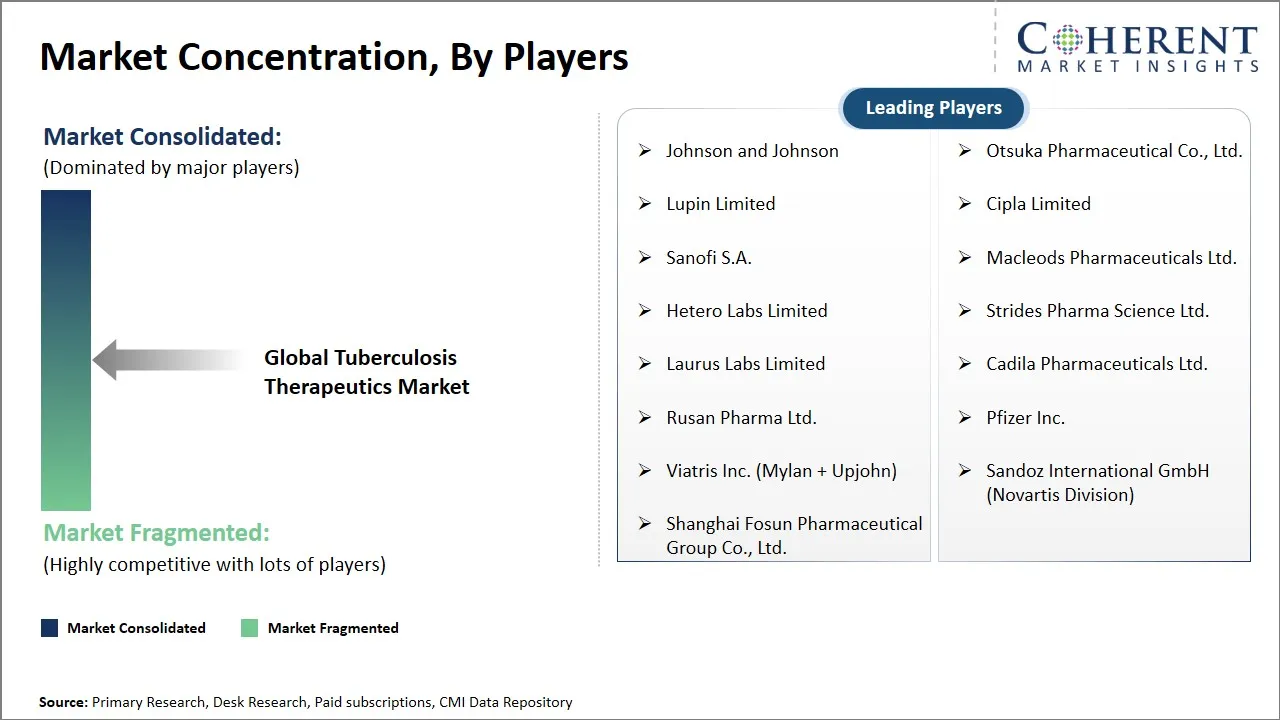
Market Players, Key Developments, and Competitive Intelligence
Key Developments
- In June 2025, Lupin Limited, a leading Indian pharmaceutical company known for its strong presence in generics and specialty drugs, has received clearance from the Central Drugs Standard Control Organization (CDSCO) expert panel to launch its Isoniazid Dispersible Tablets for tuberculosis treatment. The approval marks another step in Lupin’s efforts to expand access to affordable TB therapies in India.
- In February 2025, Union Health Minister J. P. Nadda, who heads India’s Ministry of Health and Family Welfare, announced in the Lok Sabha that 159 thousand new tuberculosis (TB) patients have been identified since the launch of the government’s 100-day TB Mukt Bharat Abhiyan on December 7, 2024. The campaign, rolled out across 347 priority districts, has so far conducted 494 thousand Ni-kshay Shivirs and screened 56.3 million vulnerable people.
- In November 2023, Macleods Pharmaceuticals, a leading Indian drugmaker, launched pretomanid, becoming the second global supplier and the first since WHO’s updated drug-resistant TB guidelines. Macleods will supply pretomanid to 135 low- and middle-income countries through the Global Drug Facility, supporting wider rollout of the six-month BPaL regimen that shortens and simplifies treatment for drug-resistant TB.
- In November 2022, GSK plc, a global biopharmaceutical company, announced positive Phase IIa results for its first-in-class TB candidate GSK3036656, showed early bactericidal activity with a low, once-daily oral dose over 14 days in patients with drug-susceptible pulmonary TB. The treatment was well tolerated with no serious side effects, highlighting its potential as part of simpler future TB regimens.
Top Strategies Followed by the Global Tuberculosis Therapeutics Market Players
- Established players dominate the market through significant investments in research and development (R&D), aimed at innovating high-performance TB therapeutics that meet the evolving needs of healthcare providers and patients. These companies focus extensively on developing novel drug formulations and advanced delivery mechanisms to improve treatment efficacy and patient compliance. Additionally, they form strategic partnerships and alliances with major industry stakeholders, including pharmaceutical giants and Original Equipment Manufacturers (OEMs), to leverage shared expertise and resources.
- In August 2022, the PAN-TB collaboration, including Johnson & Johnson (healthcare giant), Otsuka (delamanid developer), Evotec (drug discovery firm), GSK (global pharma), and the Gates MRI (non-profit research body), signed a joint deal to move two TB drug regimens into phase 2 trials, aiming to cut treatment to three months for both drug-susceptible and resistant TB, a major step against a disease causing 1.5 million deaths each year.
- Mid-level players in the tuberculosis therapeutics market adopt a somewhat different approach, focusing predominantly on cost-effective solutions that strike a balance between quality and affordability. These companies aim to cater to price-sensitive consumer segments, including public health programs and non-governmental organizations operating in low- and middle-income countries. By offering affordable yet reliable TB treatment options, mid-level firms contribute to broader accessibility and treatment coverage.
- In April 2025, TB Alliance, a nonprofit focused on developing affordable TB medicines, announced, that the price of pretomanid, a key drug in the BPaL/M regimens for drug-resistant TB, has dropped 25% to USD 169 per treatment course less than USD 1 per day after bringing on a third licensed manufacturer through the Global Drug Facility.
- Small-scale players, meanwhile, carve out their niche by focusing on specialized and innovative TB therapeutic products that address unique patient needs or emerging treatment gaps. These firms typically emphasize differentiation through innovation, such as developing targeted drug delivery systems or leveraging cutting-edge biotechnologies to improve drug efficacy and reduce side effects.
- In February 2024, a new study by Weill Cornell Medicine a leading U.S. medical research institution and GHESKIO a renowned Haiti-based global health center shows that patients with drug-resistant tuberculosis respond as quickly to bedaquiline from Johnson & Johnson a global healthcare company as drug-sensitive patients do to first-line therapies.
Market Report Scope
Tuberculosis Therapeutics Market Report Coverage
| Report Coverage | Details | ||
|---|---|---|---|
| Base Year: | 2025 | Market Size in 2026: | USD 2.27 Bn |
| Historical Data for: | 2020 To 2024 | Forecast Period: | 2026 To 2033 |
| Forecast Period 2026 to 2033 CAGR: | 7.7% | 2033 Value Projection: | USD 3.82 Bn |
| Geographies covered: |
| ||
| Segments covered: | By Therapy Type: First-line Anti-TB Drugs (Isoniazid, Rifampicin, Others (Ethambutol, Pyrazinamide, etc.)), Second-line Anti-TB Drugs (Bedaquiline, Moxifloxacin, Others (Pretomanid, etc.)), Other Combination Drug Therapy/Late Phase Drugs, and Drug-Resistant TB Treatments (MDR-TB, XDR-TB) By Disease Type: Latent TB, Active TB, Multi-Drug Resistant TB (MDR-TB), and Extensively Drug-Resistant TB (XDR-TB) By Route of Administration: Oral and Parenteral (Injectables) By Dosage Form: Tablets, Capsules, and Others (Injections) By Age Group: Adult, Pediatric, and Geriatric By Distribution Channel: Hospital Pharmacies, Retail Pharmacies, and Online Pharmacies By End User: Hospitals, Specialty clinics, Ambulatory Surgical Centers, Academic and Research Institutes, Homecare Settings, and Other Healthcare Facilities | ||
| Companies covered: | Johnson and Johnson, Otsuka Pharmaceutical Co., Ltd., Lupin Limited, Cipla Limited, Sanofi S.A., Macleods Pharmaceuticals Ltd., Hetero Labs Limited, Strides Pharma Science Ltd., Laurus Labs Limited, Cadila Pharmaceuticals Ltd., Rusan Pharma Ltd., Pfizer Inc., Viatris Inc. (Mylan + Upjohn), Sandoz International GmbH (Novartis Division), and Shanghai Fosun Pharmaceutical Group Co., Ltd. | ||
| Growth Drivers: |
| ||
| Restraints & Challenges: |
| ||
Tuberculosis Therapeutics Market Dynamics
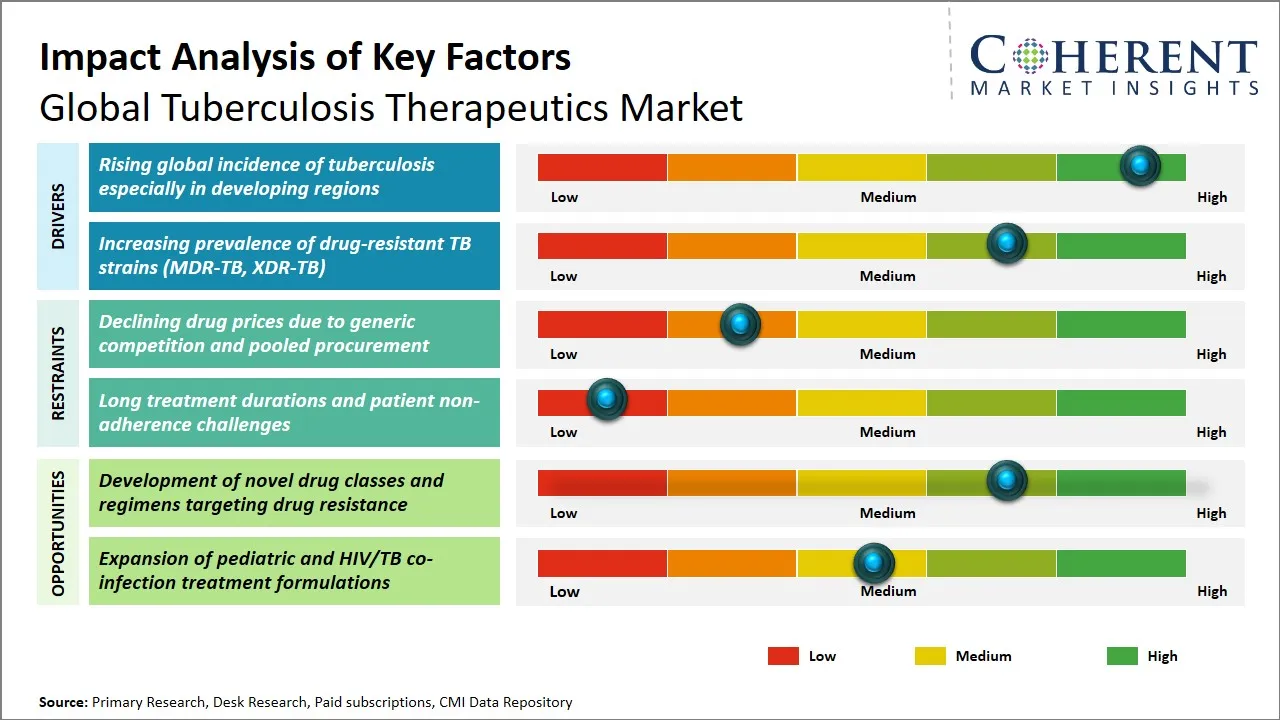
Tuberculosis Therapeutics Market Driver - Rising Global Incidence of Tuberculosis Especially in Developing Regions
The increasing prevalence of tuberculosis (TB) in developing regions significantly fuels the demand within the global tuberculosis therapeutics market. Factors such as overcrowded living conditions, limited access to quality healthcare, and a high burden of HIV co-infection contribute to the heightened transmission and inadequate management of TB in these areas. Additionally, challenges like drug-resistant TB strains and poor treatment adherence further complicate disease control efforts, necessitating the development and deployment of more effective therapeutic options. The socio-economic conditions prevalent in low- and middle-income countries often hinder timely diagnosis and completion of treatment regimens, thereby perpetuating the cycle of infection. As a result, healthcare systems in these regions are under increased pressure to adopt advanced therapeutics and implement robust patient management strategies, driving innovation and the demand in the market.
In October 2024, the World Health Organization (WHO) reported a sharp rise in global tuberculosis (TB) cases, with 8.2 million people newly diagnosed in 2023 – the highest figure since monitoring began in 1995. TB has once again become the world’s leading infectious disease killer, surpassing COVID-19, despite deaths falling slightly to 1.25 million. The WHO Global Tuberculosis Report 2024 shows India, Indonesia, China, the Philippines, and Pakistan together accounted for over half of the global burden, highlighting persistent funding gaps and the urgent need for stronger global action to expand diagnosis, treatment, and prevention.
Tuberculosis Therapeutics Market Opportunity - Development of Novel Drug Classes and Regimens Targeting Drug Resistance
The global tuberculosis therapeutics market presents a significant opportunity through the development of novel drug classes and treatment regimens specifically designed to combat drug-resistant strains of Mycobacterium tuberculosis. With the increasing prevalence of Multidrug-Resistant (MDR) and Extensively Drug-Resistant (XDR) TB cases worldwide, conventional treatment protocols are becoming less effective, thereby intensifying the demand for innovative therapeutics. Pharmaceutical companies and research institutions are investing in the discovery and development of new molecular entities that possess unique mechanisms of action, aiming to overcome resistance barriers that render existing drugs ineffective. These novel drug classes not only promise higher efficacy against resistant TB strains but also have the potential to reduce treatment durations and side effects, thus improving patient adherence and outcomes.
On October 3, 2024, researchers from the University of British Columbia, the Shanghai Institute of Materia Medica, and McGill University developed BPD-9, a redesigned natural compound that fights drug-resistant tuberculosis more effectively and safely. This marks an important step in the development of new drug classes and regimens aimed at overcoming TB drug resistance.
Analyst Opinion (Expert Opinion)
- The global tuberculosis therapeutics market is being shaped by a mix of innovation, regulatory support, and persistent public health challenges. On one side, the growing adoption of shorter, more effective regimens such as bedaquiline and pretomanid-based therapies, alongside investments in diagnostics and drug development, is fueling market expansion. Governments and agencies including the WHO and Stop TB Partnership continue to push for broader access and affordability, creating an environment where new entrants and generic suppliers can scale up. However, challenges like drug resistance, high treatment costs, and limited healthcare infrastructure in low- and middle-income countries remain pressing hurdles. At the same time, emerging opportunities lie in digital health integration, stronger international collaborations, and the development of all-oral regimens that can reduce treatment duration and improve patient adherence.
- Conferences such as the Union World Conference on Lung Health and the Stop TB Partnership Forums over the past two to three years have been central platforms for showcasing new therapies, reviewing global policy roadmaps, and aligning public–private partnerships. These gatherings have helped fast-track initiatives like India’s National Strategic Plan for TB Elimination and Macleods’ launch of pretomanid under TB Alliance licensing, both of which mark critical steps toward greater accessibility. Similarly, collaborative programs like the BPaL/M regimen pilot projects and expanded GDF (Global Drug Facility) supply channels are reshaping treatment delivery worldwide. Together, these initiatives highlight how science, policy, and collaboration are converging to not only address the immediate challenges of TB control but also build a more resilient foundation for the future of tuberculosis therapeutics.
Speak to the analyst
Want personalized insights?
Take the findings above to one of our principal consultants, or have the report rebuilt around the segments, geographies and competitors you actually track.
Market Segmentation
- Therapy Type Insights (Revenue, USD Bn, 2020 - 2032)
- First-line Anti-TB Drugs
- Isoniazid
- Rifampicin
- Others (Ethambutol, Pyrazinamide, etc.)
- Second-line Anti-TB Drugs
- Bedaquiline
- Moxifloxacin
- Others (Pretomanid, etc.)
- Other Combination Drug Therapy/Late Phase Drugs
- Drug-Resistant TB Treatments (MDR-TB, XDR-TB)
- First-line Anti-TB Drugs
- Disease Type Insights (Revenue, USD Bn, 2020 - 2032)
- Latent TB
- Active TB
- Multi-Drug-Resistant TB (MDR-TB)
- Extensively Drug-Resistant TB (XDR-TB)
- Route of Administration Insights (Revenue, USD Bn, 2020 - 2032)
- Oral
- Parenteral (Injectables)
- Dosage Form Insights (Revenue, USD Bn, 2020 - 2032)
- Tablets
- Capsules
- Others (Injections)
- Age Group Insights (Revenue, USD Bn, 2020 - 2032)
- Adult
- Pediatric
- Geriatric
- Distribution Channel Insights (Revenue, USD Bn, 2020 - 2032)
- Hospital Pharmacies
- Retail Pharmacies
- Online Pharmacies
- End User Insights (Revenue, USD Bn, 2020 - 2032)
- Hospitals
- Specialty clinics
- Ambulatory Surgical Centers
- Academic and Research Institutes
- Homecare Settings
- Other Healthcare Facilities
- Regional Insights (Revenue, USD Bn, 2020 - 2032)
- North America
- U.S.
- Canada
- Latin America
- Brazil
- Argentina
- Mexico
- Rest of Latin America
- Europe
- Germany
- U.K.
- Spain
- France
- Italy
- Russia
- Rest of Europe
- Asia Pacific
- China
- India
- Japan
- Australia
- South Korea
- ASEAN
- Rest of Asia Pacific
- Middle East
- GCC Countries
- Israel
- Rest of Middle East
- Africa
- South Africa
- North Africa
- Central Africa
- North America
- Key Players Insights
- Johnson and Johnson
- Otsuka Pharmaceutical Co., Ltd.
- Lupin Limited
- Cipla Limited
- Sanofi S.A.
- Macleods Pharmaceuticals Ltd.
- Hetero Labs Limited
- Strides Pharma Science Ltd.
- Laurus Labs Limited
- Cadila Pharmaceuticals Ltd.
- Rusan Pharma Ltd.
- Pfizer Inc.
- Viatris Inc. (Mylan + Upjohn)
- Sandoz International GmbH (Novartis Division)
- Shanghai Fosun Pharmaceutical Group Co., Ltd.
Sources
Primary Research Interviews
Industry Stakeholders
- Pharmaceutical R&D Directors
- Procurement Managers – Public Health Programs
- Clinical Trial Investigators
- Drug Manufacturing Quality Heads
- Distribution Channel Partners
- Hospital Pharmacists
End Users
- Pulmonologists
- Infectious Disease Specialists
- Community Health Workers
- TB Program Coordinators
- Patient Advocacy Group Leaders
- Nurses in TB Treatment Centers
Government and International Databases
- World Health Organization (WHO) Global TB Database
- Centers for Disease Control and Prevention (CDC)
- National Institutes of Health (NIH) – TB Research
- Indian Council of Medical Research (ICMR)
- European Centre for Disease Prevention and Control (ECDC)
- United Nations (UN) Data Portal
Trade Publications
- Pharma Manufacturing
- BioPharm International
- The Pharma Letter
- FiercePharma (non-commercial editorial content)
- Pharmaceutical Technology
- Scrip News
Academic Journals
- The Lancet Infectious Diseases
- New England Journal of Medicine (NEJM)
- International Journal of Tuberculosis and Lung Disease
- Clinical Infectious Diseases
- Journal of Antimicrobial Chemotherapy
- Nature Reviews Drug Discovery
Reputable Newspapers
- The New York Times – Health Section
- The Guardian – Global Health
- The Washington Post – Science & Health
- BBC News – Health
- Financial Times – Healthcare & Pharmaceuticals
- Reuters Health
Industry Associations
- Stop TB Partnership
- International Union Against Tuberculosis and Lung Disease (The Union)
- Infectious Diseases Society of America (IDSA)
- European Respiratory Society (ERS)
- Global Alliance for TB Drug Development (TB Alliance)
- International Society for Infectious Diseases (ISID)
Public Domain Resources
- U.S. National Library of Medicine
- World Bank Health Data
- OECD Health Statistics
- Global Health Observatory (GHO) – WHO
- National Health Service (NHS) – UK
Proprietary Elements
- CMI Data Analytics Tool: Proprietary analytics tool to analyze real-time market trends, consumer behavior, and technology adoption in market
- Proprietary CMI Existing Repository of Information for Last 8 Years
Get access to 250+ pages report
Every segment, forecast, competitor profile and data table behind the analysis above — available for instant download.
- ESOMAR Member
- ISO 9001:2015 Certified
- D-U-N-S Registered
- GDPR & CCPA Compliant
Missing comfort of reading report in your local language? Find your preferred language:
Transform your Strategy with Exclusive Trending Reports
Frequently Asked Questions
The global tuberculosis therapeutics market is estimated to be valued at USD 2.27 Bn in 2026 and is expected to reach USD 3.82 Bn by 2033.
The CAGR of the global tuberculosis therapeutics market is projected to be 7.7% from 2026 to 2033.
Rising global incidence of tuberculosis especially in developing regions and Increasing prevalence of drug-resistant TB strains (MDR-TB, XDR-TB) are the major factor driving the growth of the global tuberculosis therapeutics market.
Declining drug prices due to generic competition and pooled procurement and Long treatment durations and patient non-adherence challenges are the major factor hampering the growth of the global tuberculosis therapeutics market.
In terms of therapy type, first-line Anti-TB drugs are estimated to dominate the market revenue share in 2026.
Johnson and Johnson, Otsuka Pharmaceutical Co., Ltd., Lupin Limited, Cipla Limited, Sanofi S.A., Macleods Pharmaceuticals Ltd., Hetero Labs Limited, Strides Pharma Science Ltd., Laurus Labs Limited, Cadila Pharmaceuticals Ltd., Rusan Pharma Ltd., Pfizer Inc., Viatris Inc. (Mylan + Upjohn), Sandoz International GmbH (Novartis Division), and Shanghai Fosun Pharmaceutical Group Co., Ltd. are the major players.
North America is expected to lead the global tuberculosis therapeutics market in 2026.