

Vegan Cosmetics Market Analysis & Forecast: 2026-2033
The Vegan Cosmetics Market size is estimated to be valued at USD 76.16 Bn in 2026 and is expected to reach USD 118.35 Bn by 2033, growing at a compound annual growth rate (CAGR) of 6.5% from 2026 to 2033.
Key Takeaways
- By Product Type, Skin Products Segment are likely to capture the vegan cosmetics market outlook with a value of 39.8% by 2026 as a result of consumer attention towards maintaining healthy skin and natural caring methods.
- By Gender, Female segment is expected to gain the highest market capture share at 43.8% in 2026 owing to increased focus on beauty and wellness as inner beauty amongst women is rising.
- By Price Point, Economic vegan cosmetics are likely to capture 39.3% of the market share by 2026 due to increased market sensitivity for low-priced and cruelty-free products.
- By Region, North America region is likely to dominate in the global vegan cosmetics market with 39.3% of the share by 2026 due to strong awareness among consumers, well-developed retail and distribution systems, and the availability of eco-friendly cosmetics drives their spending on organic alternatives.
Market Overview
The Vegan Cosmetics Market growth is expected to witness a positive trend over the forecast period. The growth in demand for cruelty-free products is expected to drive the market growth. Further, increasing awareness about the benefits of vegan cosmetic products is also expected to support the market growth. Consumers are seeking products that are vegan certified and not tested on animals. Moreover, social media influencers promoting vegan lifestyles are positively influencing the purchase behavior of consumers towards vegan cosmetic products. The advent of natural and organic skincare products brands catering to vegan consumers worldwide will continue boosting the vegan cosmetics market during the projection years.
Current Events and Its Impact on the Vegan Cosmetics Market
Event | Description and Impact |
Regulatory Shifts in Major Markets |
|
Geopolitical Trade Dynamics |
|
Technological Innovations |
|
Technological Advancements in the Vegan Cosmetics Market
The growth in demand for ethical, sustainable and high-performance beauty products has inspired innovative change in the vegan cosmetics market.
- Plant-Based Biotechnologies
Companies are working to create plant-based imitations of collagen, keratin and hyaluronic acid. Lab-grown vegan alternatives made out of plants are more ethical and equally effective.
- Formulation with Green Chemistry
To lessen their negative environmental impact, manufacturers are adhering to green chemistry principles. This includes the use of proprietary and renewable materials, cutting perilous substances, and enhancing energy efficiency during production.
- Personalization with AI Technologies
To boost efficacy and customer satisfaction, artificial intelligence alongside machine learning is carving out tailored vegan solutions for each client’s unique skin type, needs and preferences.
- Digital Advances and E-Commerce
With the help of digital tools and influencer marketing, there has been a rapid increase in online user and consumer engagement. E-commerce has now become the primary marketplace for a broad range of products, offering ease and enhanced access.
- Various Innovative Product Formats
New formats such as solid shampoos and concentrated serums as waterless products, and biosourced glitter from plant cellulose have emerged. These new formats help to reduce water and plastic consumption.
The growth of the market is catalyzed by these innovations while shaping consumer expectations as it targets product sustainability, personalization, and efficiency.
- Current Industry Events of 2026
- Market Size Estimation
- Regional Breakdown
- Competitive Landscape
- Customer Intelligence
- Segmental Analysis
- Pricing Analysis
- Key Market Drivers, Challenges & Future Trends
- Customized Insights Section
Consumer Feedback and Unmet Demand in the Vegan Cosmetics Market
- The demand for cruelty-free and sustainable beauty products that resonate with the ethical values of Millennials and Gen Z is on the rise. Many of them avidly look for vegan cosmetics as well as PETA-certified or Vegan Society-approved products, free of any animal-sourced ingredients.
- There is a growing preference for eco-conscious aesthetic and transparency in the supply chain. Brands like Lush and Axiology have established a loyal customer base because of their business model that prioritizes sustainability and ethical practices.
- Despite the expanding market, gaps still exist. The lack of brick-and-mortar retail shops in the suburbs poses a significant challenge, as it drives consumers online to shops with less competitive pricing and slower shipping times.
- Moreover, skepticism regarding the performance of vegan cosmetics compared to their non-vegan counterparts is prevalent. Even though perceptions are changing, this still deters a portion of potential buyers.
- Focusing on price sensitivity, while some consumers are willing to pay a premium, others seek cheap alternatives. Brands like e.l.f. Cosmetics are spearheading the movement by selling quality vegan options at lower prices, increasing the perceived value.
- In general, the consumer outlook across the board emphasizes effectiveness, affordability, and ethical transparency, areas where brands still have room to grow in order to meet market demand fully.
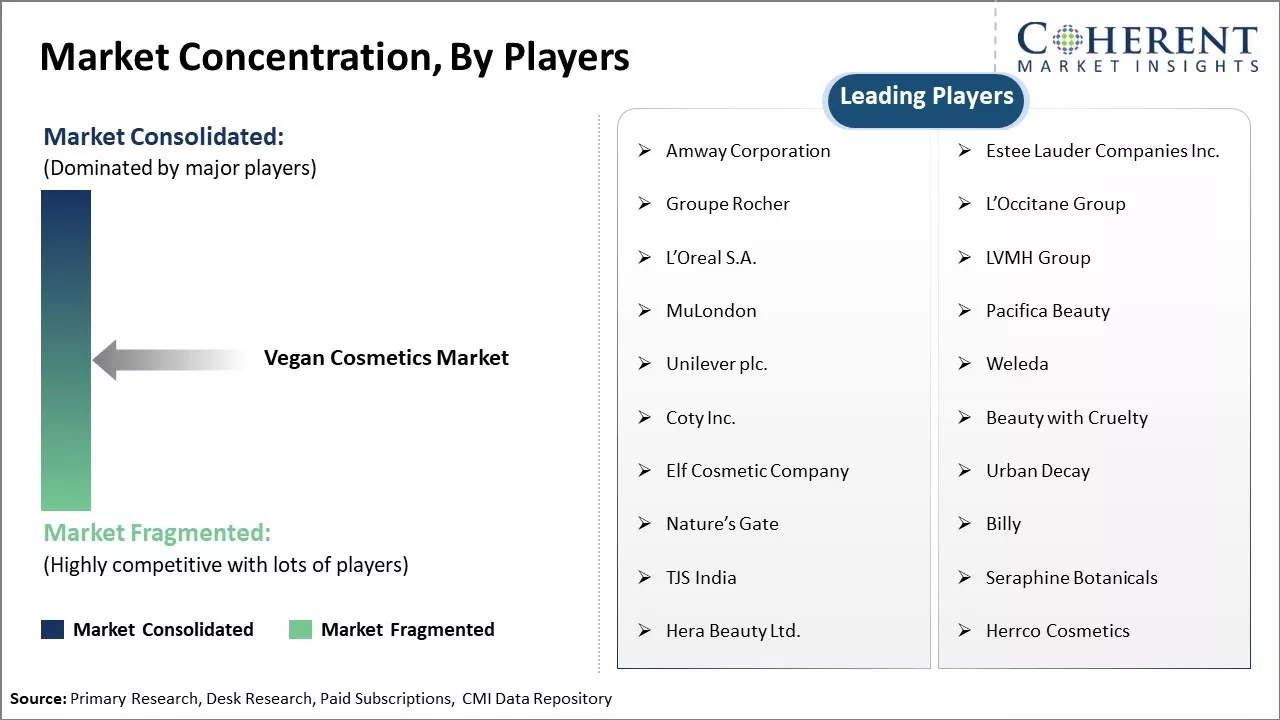
Market Concentration and Competitive Landscape
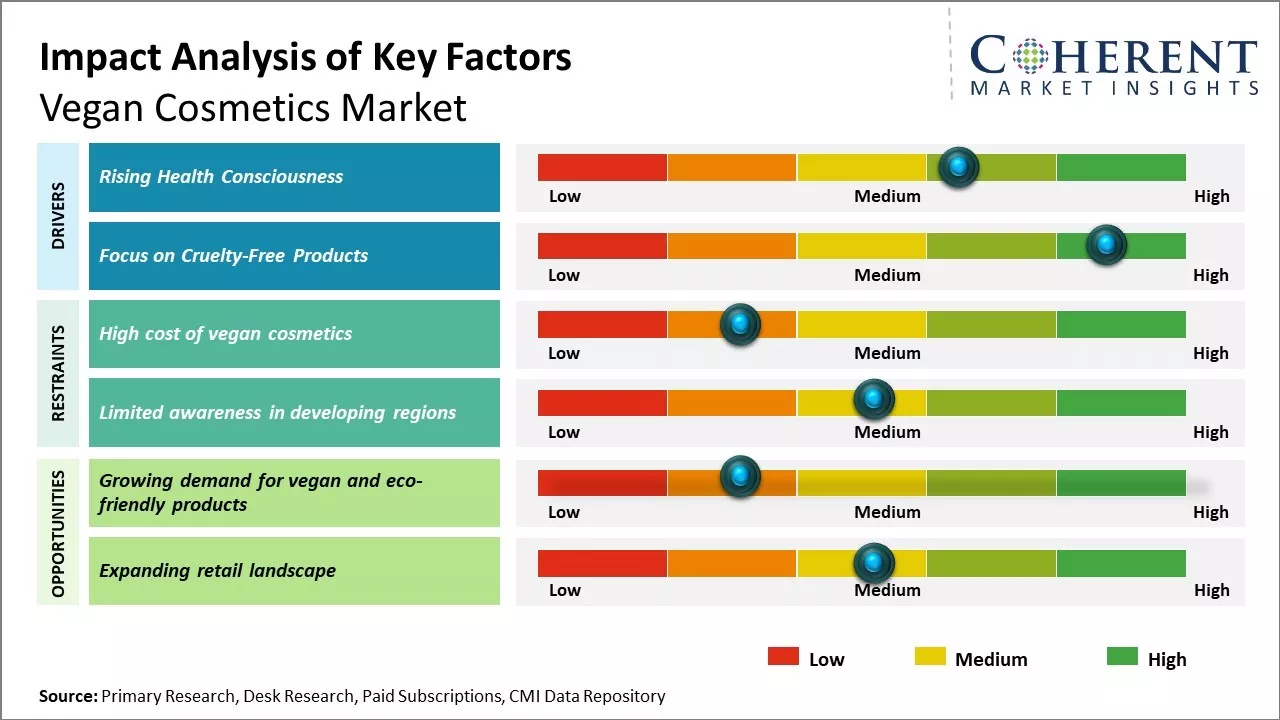
Rising Health Consciousness
The modern consumer is becoming increasingly conscious about the ingredients used in the personal care products they use. With numerous reports highlighting the presence of toxic and harmful chemicals in conventional cosmetic products, people are actively seeking out natural and organic alternatives. Vegan cosmetics perfectly fit this demand side behavior as they are formulated without any animal-derived ingredients or by-products and are also free from chemicals like parabens, phthalates, and mineral oils.
The vegan lifestyle in mainstream now and more individuals want their personal care and makeup items to align with their ethical beliefs of avoiding harm to animals. They wish to make compassionate choices and feel good about what they apply on their skin on a daily basis. By opting for vegan cosmetics, people believe they are not only taking care of their own well-being but also doing their bit to create a more sustainable world.
Focus on Cruelty-free Products
Another major driver is the rising opposition to any form of animal testing in the cosmetic industry. Images and videos of animals being harmed and abused for cosmetic testing have created considerable discontent among the public. Many see such practices as unnecessary, unethical, and an indication of lack of innovation. They feel anguished by how multinational corporations are using living creatures to test odd ingredients just for profit making.
Brands promoting vegan and cruelty-free credentials attract these socially conscious customers who want to make purchases from companies that demonstrate empathy. Several countries have already passed legislation to ban cosmetic testing on animals. Many popular brands proactively took a no-animal-testing stance even before it was mandated.
Cruelty-free certification granted by third-party auditors like PETA and Leaping Bunny acts as proof for consumers that particular vegan brands are truly walking their talk. This builds trust and allows such brands to tap into customers seeking conscientious options.
Opportunities: Growing demand for vegan and eco-friendly products
The growing demand for sustainable and cruelty-free products has opened up a huge opportunity for vegan cosmetics companies. Consumers, especially millennials and generation Z, are increasingly concerned about the environmental and ethical impact of the products they use. They want brands that are sustainable, vegan and do not involve animal testing.
Vegan cosmetic firms that recognize emerging consumer priorities and offer sustainable alternatives with natural, cruelty-free ingredients will see huge tailwinds. They can attract a growing tribe of ethical buyers who are willing to pay more for products aligning with their values. The vegan cosmetics category remains highly fragmented with plenty of opportunities for new entrants as well as expansion for existing small brands.
Innovation will be key to meet the rising demand. Some international firms have already started offering vegan-dedicated makeup and skin care ranges. As more consumers worldwide embrace sustainable lifestyles, vegan cosmetics industry looks set for exponential growth in the coming years.
Segmental Insights
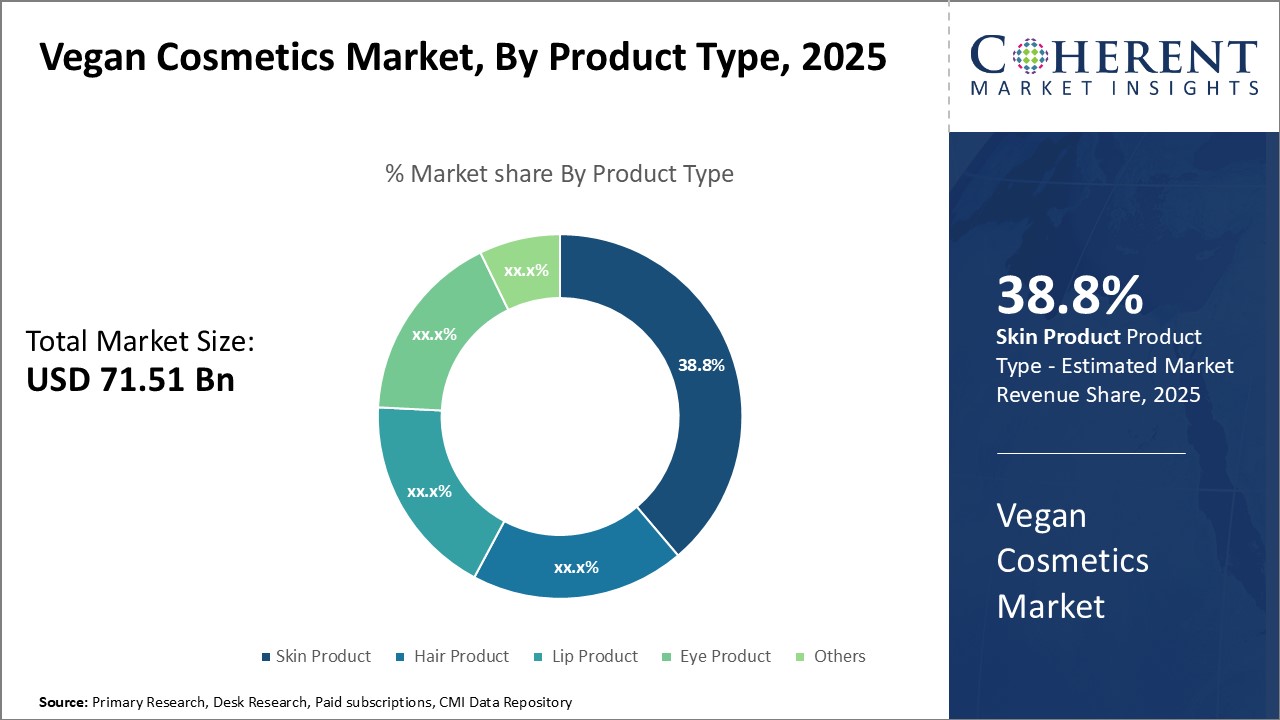
Vegan Cosmetics Market Insights, by Product Type
In terms of product type, skin product is expected to contribute 39.8% Vegan cosmetics market share in 2026, owing to increasing consumer awareness about the importance of skin health. A growing number of people are conscious about the ingredients used in personal care products and their effects on the skin. Vegan skin products are gaining popularity as they are chemical-free and contain natural nutrients that hydrate and nourish the skin without any side effects.
The rise in pollution levels has made most consumers vulnerable to premature skin aging, acne, and other skin issues. As a result, they prefer vegan skin care lines containing antioxidant-rich plant-based ingredients like aloe vera, argan oil, jojoba oil, etc. that heal and protect skin from damage. Additionally, the expanding beauty and cosmetics industry promotes the advantages of organic skin products through social media and influencer marketing, driving more consumers toward natural vegan alternatives.
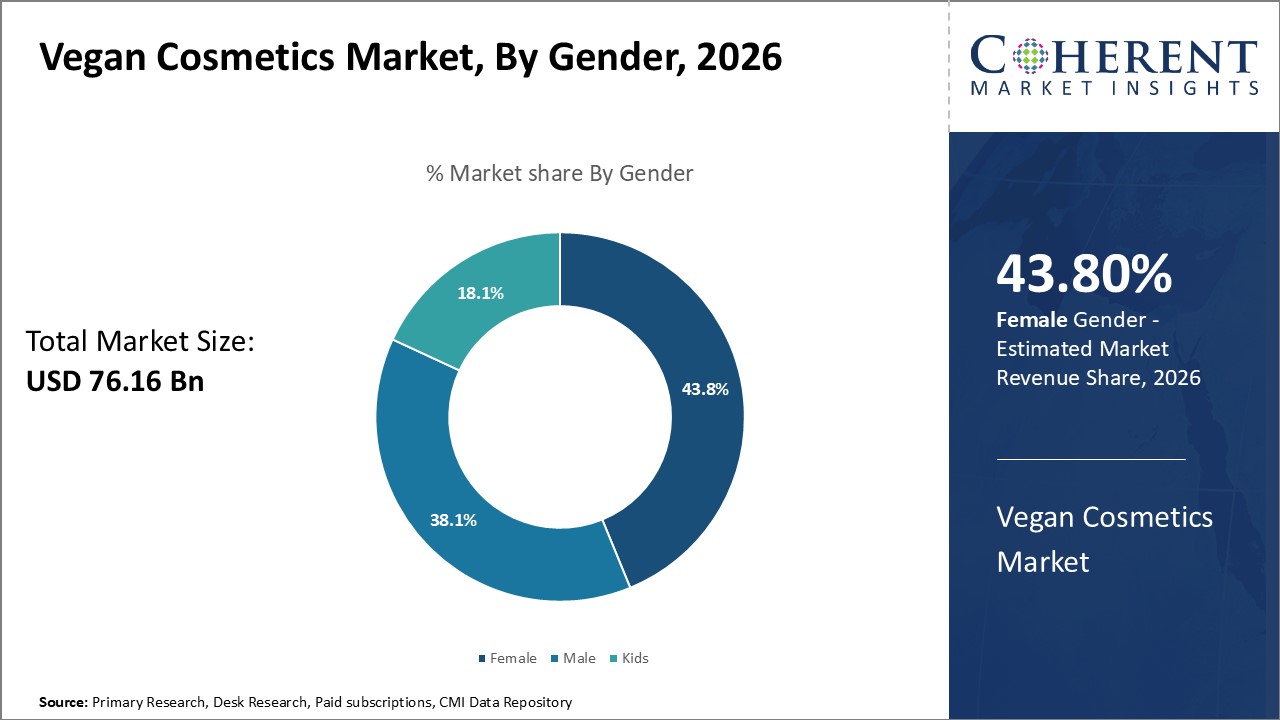
Vegan Cosmetics Market Insights, by Gender
In terms of gender, female is expected to contribute 43.8% share of the Vegan Cosmetics Market demand in 2026. Women are increasingly conscious about how personal care products impact their health and wellbeing. The societal focus on inner beauty and wellness has made this segment more inclined towards vegan makeup and cosmetic brands with natural formulations.
Female customers give priority to cruelty-free products that nourish their skin without harsh chemicals. Vegan color cosmetics catering to women promise a combination of effective pigmentation along with nutrients. Their marketing highlights empowerment through natural products. Female bloggers and celebrities endorsing vegan lifestyles have created positive sentiments toward ethical brands as well, fueling the segment's growth.
Vegan Cosmetics Market Insights, by Price Point
In terms of price point, economic is expected to contribute the 39.3% share of the market in 2026. With rising living costs and economic uncertainties, most consumers watch their spending closely and prefer affordable options.
Vegan cosmetic brands offering pocket-friendly yet high-performance options are thus gaining widespread acceptance. They market themselves as delivering salon-quality results without the lavish price tags through innovative formulations and streamlined production processes. Such models make organic personal care accessible to mainstream buyers on a budget.
Further, discount retailers proliferating online and in high streets make economic vegan items easily available. Consumers find the affordability and accessibility of lower-priced vegan variants more attractive than premium brands alone, boosting this segment sizeably.
Regional Insights
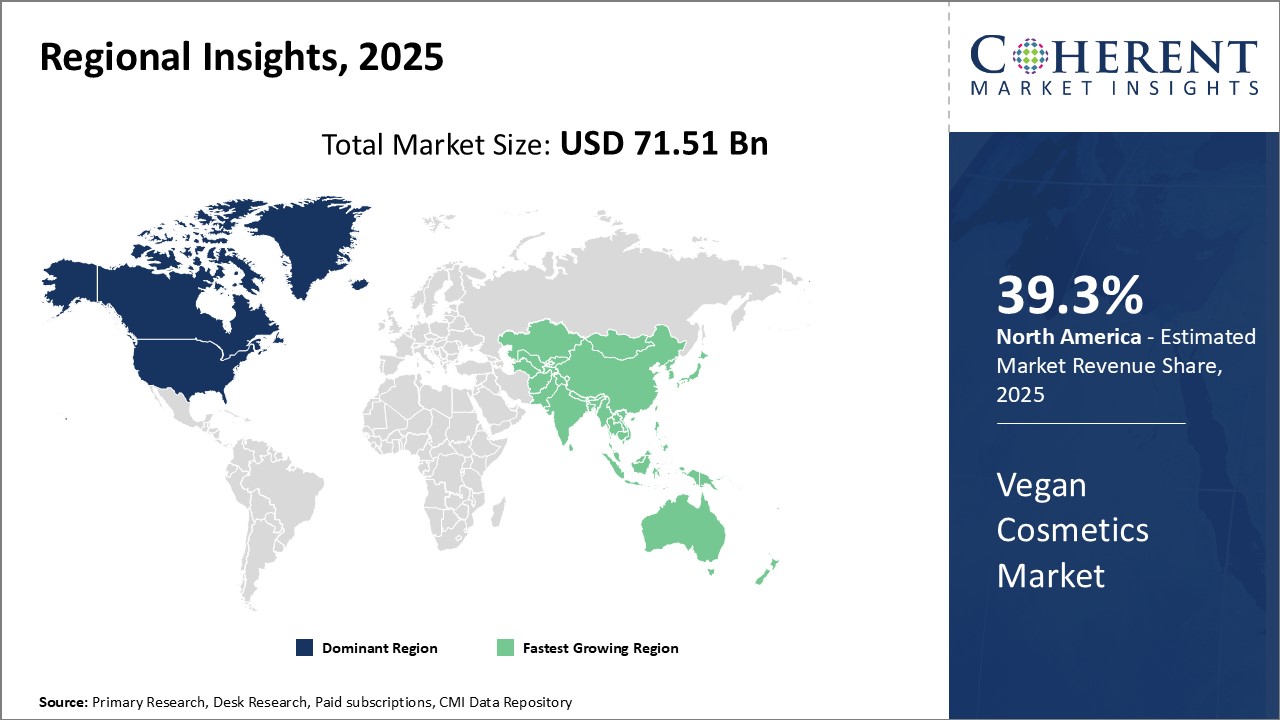
North America Vegan Cosmetics Market Analysis and Trends
North America is projected to retain its dominant position in the global vegan cosmetics market value, accounting for a significant 39.3% share in 2026. This leadership is driven by increasing ethical consumerism and heightened awareness around clean label and natural beauty products in key markets such as the U.S. and Canada. Established vegan beauty brands have secured strong market footholds, supported by widespread consumer education on the benefits of plant-based formulations.
The region benefits from the presence of major cosmetic corporations that are expanding their vegan product portfolios to meet growing consumer demand. Additionally, a vibrant ecosystem of innovative startups is contributing to the proliferation of natural and cruelty-free alternatives, focusing on replacing animal-derived ingredients with sustainable options. Consumers in North America demonstrate a readiness to pay premium prices for ethical products, which bolsters the commercial appeal of vegan brands.
Advanced distribution networks spanning both brick-and-mortar retail and e-commerce channels ensure widespread availability and accessibility of vegan cosmetics, further accelerating market penetration.
Asia Pacific Vegan Cosmetics Market Analysis and Trends
Asia Pacific is emerging as the fastest-growing regional market in the global vegan cosmetics market trend, propelled by rising health consciousness and cultural factors in countries like India. The region’s growth is underpinned by consumers adhering to religious and ethical practices such as Jainism and certain Hindu traditions, which avoid animal-derived substances in personal care products. Domestic cosmetic companies are capitalizing on this trend by launching dedicated vegan sub-brands tailored to local preferences.
The expanding middle class, accompanied by increasing disposable incomes, is creating robust demand for premium natural beauty products. Influenced by global wellness trends and a younger generation’s preference for chemical-free cosmetics, Asia Pacific is witnessing a significant shift toward vegan formulations. This evolving consumer landscape, combined with a strategic focus on exports by regional manufacturers, presents substantial growth opportunities for vegan cosmetics producers across the region.
Dominating Countries in the Vegan Cosmetics Market
United States Vegan Cosmetics Market Analysis and Trends
The U.S. remains the largest contributor to North America’s vegan cosmetics market, supported by a highly conscious consumer base and a well-established network of vegan brands and retailers. The country’s progressive stance on sustainability and animal welfare, along with increasing demand for transparency and ingredient safety, is driving innovations in plant-based formulations. Investments in research and product development continue to elevate the competitive positioning of U.S. vegan cosmetic companies, ensuring sustained market leadership.
India Vegan Cosmetics Market Analysis and Trends
India is positioning itself as a key growth hub for vegan cosmetics within the Asia Pacific region. Accelerated by a growing middle class and rising awareness of ethical beauty practices, Indian consumers are increasingly embracing vegan and cruelty-free products. The nation’s diverse religious and cultural background further supports demand for animal-free cosmetics. Local companies are actively responding with innovative product launches, while government initiatives and global wellness influences are fostering greater acceptance and adoption of vegan beauty products nationwide.
Market Report Scope
Vegan Cosmetics Market Report Coverage
| Report Coverage | Details | ||
|---|---|---|---|
| Base Year: | 2025 | Market Size in 2026: | USD 76.16 Bn |
| Historical Data for: | 2020 To 2024 | Forecast Period: | 2026 To 2033 |
| Forecast Period 2026 to 2033 CAGR: | 6.5% | 2033 Value Projection: | USD 118.35 Bn |
| Geographies covered: |
| ||
| Segments covered: |
| ||
| Companies covered: | Amway Corporation, Estee Lauder Companies Inc., Groupe Rocher, L’Occitane Group, L’Oreal S.A., LVMH Group, MuLondon, Pacifica Beauty, Unilever plc., Weleda, Coty Inc., Beauty with Cruelty, Elf Cosmetic Company, Urban Decay, Nature’s Gate, Billy , TJS India, Seraphine Botanicals, Hera Beauty Ltd., and Herrco Cosmetics | ||
| Growth Drivers: |
| ||
| Restraints & Challenges: |
| ||
Analyst Viewpoint on the Vegan Cosmetics Market
- The vegan cosmetics market is a rapidly evolving sector fueled by growing consumer demand for ethical, cruelty-free, and sustainable beauty products. Key drivers include increasing awareness of animal welfare, environmental concerns, and a shift toward clean, plant-based ingredients that offer effective alternatives to traditional cosmetic components.
- However, the market faces challenges such as the higher cost and limited availability of some vegan ingredients, as well as lingering consumer doubts about product efficacy compared to conventional cosmetics. Regulatory standards and certification processes also add complexity for manufacturers.
- Despite these hurdles, significant growth opportunities exist, especially as innovation in biotechnology enables the creation of high-performance, sustainable ingredients. The rising popularity of personalized vegan formulations and eco-friendly packaging further enhances market appeal.
- Geographically, the Asia-Pacific region is poised for rapid expansion due to rising consumer awareness and increasing disposable incomes, particularly in markets like China and India. Meanwhile, North America and Europe remain key markets driven by strong consumer advocacy and established vegan brands.
- Overall, brands that invest in research, transparency, and affordability while aligning with evolving consumer values will be best positioned to capture growth in this dynamic market.
Speak to the analyst
Want personalized insights?
Take the findings above to one of our principal consultants, or have the report rebuilt around the segments, geographies and competitors you actually track.
Vegan Cosmetics Market: Key Developments
- In April 2025, Lush Cosmetics launched a new line of AI-personalized vegan skincare products, utilizing machine learning algorithms to tailor formulations based on individual skin profiles. This innovation is expected to boost consumer satisfaction and market share in personalized beauty.
- In March 2025, Natura &Co announced a strategic partnership with biotech startup BiomeLabs to develop sustainable, lab-grown vegan ingredients that reduce environmental impact while maintaining product efficacy. This collaboration strengthens the company’s commitment to eco-friendly innovation.
- In February 2025, The Body Shop expanded its vegan cosmetics range by introducing cruelty-free, biodegradable packaging made from ocean plastic waste. This move aims to enhance brand loyalty among environmentally conscious consumers and reduce plastic pollution.
- In December 2024, Sephora integrated AR-powered virtual try-on technology specifically for its vegan makeup collection, enabling customers to experience products digitally before purchase. The enhancement seeks to improve online shopping experiences and increase conversion rates.
Market Segmentation
- Product Type Insights (Revenue, USD Bn, 2021 - 2033)
- Skin Product
- Hair Product
- Lip Product
- Eye Product
- Others
- Gender Insights (Revenue, USD Bn, 2021 - 2033)
- Kids
- Male
- Female
- Price Point Insights (Revenue, USD Bn, 2021 - 2033)
- Premium
- Economic
- Distribution Channel Insights (Revenue, USD Bn, 2021 - 2033)
- Online
- Offline
- Supermarket
- Hypermarket
- Specialty Stores
- Others
- Regional Insights (Revenue, USD Bn, 2021 - 2033)
- North America
- U.S.
- Canada
- Latin America
- Brazil
- Argentina
- Mexico
- Rest of Latin America
- Europe
- Germany
- U.K.
- Spain
- France
- Italy
- Russia
- Rest of Europe
- Asia Pacific
- China
- India
- Japan
- Australia
- South Korea
- ASEAN
- Rest of Asia Pacific
- Middle East & Africa
- GCC Countries
- Israel
- Rest of Middle East & Africa
- Key Players Insights
- Amway Corporation
- Estee Lauder Companies Inc.
- Groupe Rocher
- L’Occitane Group
- L’Oreal S.A.
- LVMH Group
- MuLondon
- Pacifica Beauty
- Unilever plc.
- Weleda
- Coty Inc.
- Beauty with Cruelty
- Elf Cosmetic Company
- Urban Decay
- Nature’s Gate
- Billy
- TJS India
- Seraphine Botanicals
- Hera Beauty Ltd.
- Herrco Cosmetics
Sources
Primary Research Interviews
- Product Development Managers at e.l.f. Cosmetics
- Sustainability Officers at L'Oréal's Vegan Divisions
- Retail Buyers from Sephora's Clean Beauty Section
- Others
Databases
- USDA Plant-Based Ingredient Database
- Others
Magazines
- Beauty Independent
- Global Cosmetics News
- Vegan Beauty Review
- Sustainable Cosmetics Summit Publications
- Others
Journals
- Journal of Cosmetic Science
- International Journal of Sustainable Beauty
- Environmental Science & Technology
- Others
Newspapers
- The New York Times
- The Guardian
- Cosmetics Business
- WWD (Women’s Wear Daily)
- Others
Associations
- PETA's Beauty Without Bunnies Program
- Leaping Bunny International Certification Body
- The Vegan Society
- Sustainable Beauty Coalition
- Others
Public Domain Sources
- FDA Cosmetics Regulation Documents
- EU CosIng Database (Cosmetic Ingredients)
- NGO Reports from Cruelty Free International
- CBI Ministry of Foreign Affairs Market Analyses
- Others
Proprietary Elements
- CMI Data Analytics Tool
- Proprietary CMI Existing Repository of Information for Last 8 Years
Get access to 250+ pages report
Every segment, forecast, competitor profile and data table behind the analysis above — available for instant download.
- ESOMAR Member
- ISO 9001:2015 Certified
- D-U-N-S Registered
- GDPR & CCPA Compliant
Missing comfort of reading report in your local language? Find your preferred language:
Transform your Strategy with Exclusive Trending Reports
Frequently Asked Questions
The Vegan Cosmetics Market size is estimated to be valued at USD 76.16 Bn in 2026, and is expected to reach USD 118.35 Bn by 2033.
The CAGR of the global Market is projected to be 6.5% from 2026 to 2033.
Rising health consciousness and focus on cruelty-free products are the major factors driving the growth of the vegan cosmetics market.
High cost of vegan cosmetics and limited awareness in developing regions are the major factors hampering the growth of the vegan cosmetics market.
In terms of product type, skin product is estimated to dominate the market revenue share in 2026.
Amway Corporation, Estee Lauder Companies Inc., Groupe Rocher, L’Occitane Group, L’Oreal S.A., LVMH Group, MuLondon, Pacifica Beauty, Unilever plc., Weleda, Coty Inc., Beauty with Cruelty, Elf Cosmetic Company, Urban Decay, Nature’s Gate, Billy, TJS India, Seraphine Botanicals, Hera Beauty Ltd., and Herrco Cosmetics are the major players.
North America is expected to lead the global market.