

Virology Testing Market Size and Forecast – 2026 to 2033
The Virology Testing Market is anticipated to grow at a CAGR of 5.6% with USD 8.9 Bn share in 2026 and is expected to reach USD 14.6 Bn in 2033. Rising viral infections, increasing demand for rapid and accurate diagnostics, and expanding disease surveillance programs drive the Virology Testing Market. The distribution of respiratory viruses was assessed in two age groups: pediatric patients (0–18 years) and adults (>18 years), reflecting differences in the clinical and epidemiological characteristics of viral infections across age groups.
Key Takeaways
- Molecular Diagnostics Method hold the largest market share of 38.9% in 2026 owing to the rising prevalence of viral infections. Real-time PCR (qPCR) is a widely used molecular diagnostic method for detecting viral infections.
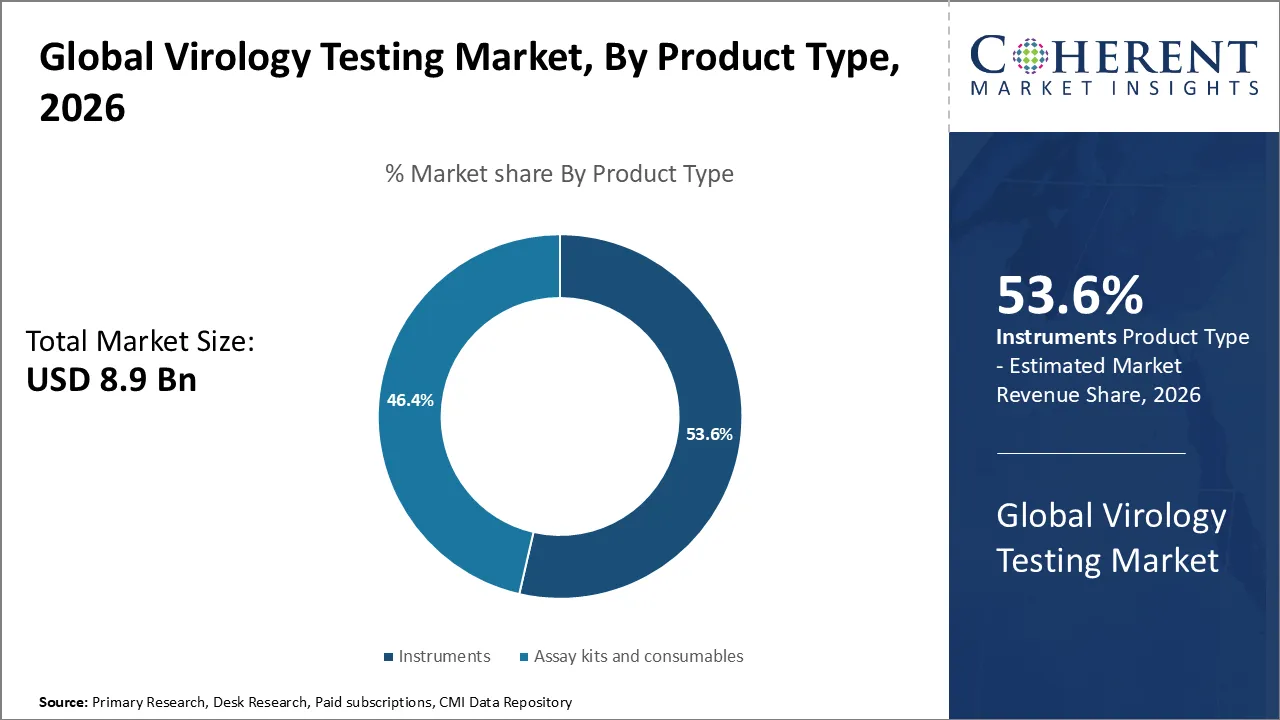
- Instruments expected to hold largest market share of 53.6% in 2026 owing to its rising adoption of molecular testing.
- Hospitals acquired the largest market share of 42.6% in 2026 owing to the increasing hospital admissions for infectious diseases. In the United States, infectious and parasitic diseases accounted for 4.7 million emergency department visits and 790,000 hospital admissions as the principal discharge diagnosis.
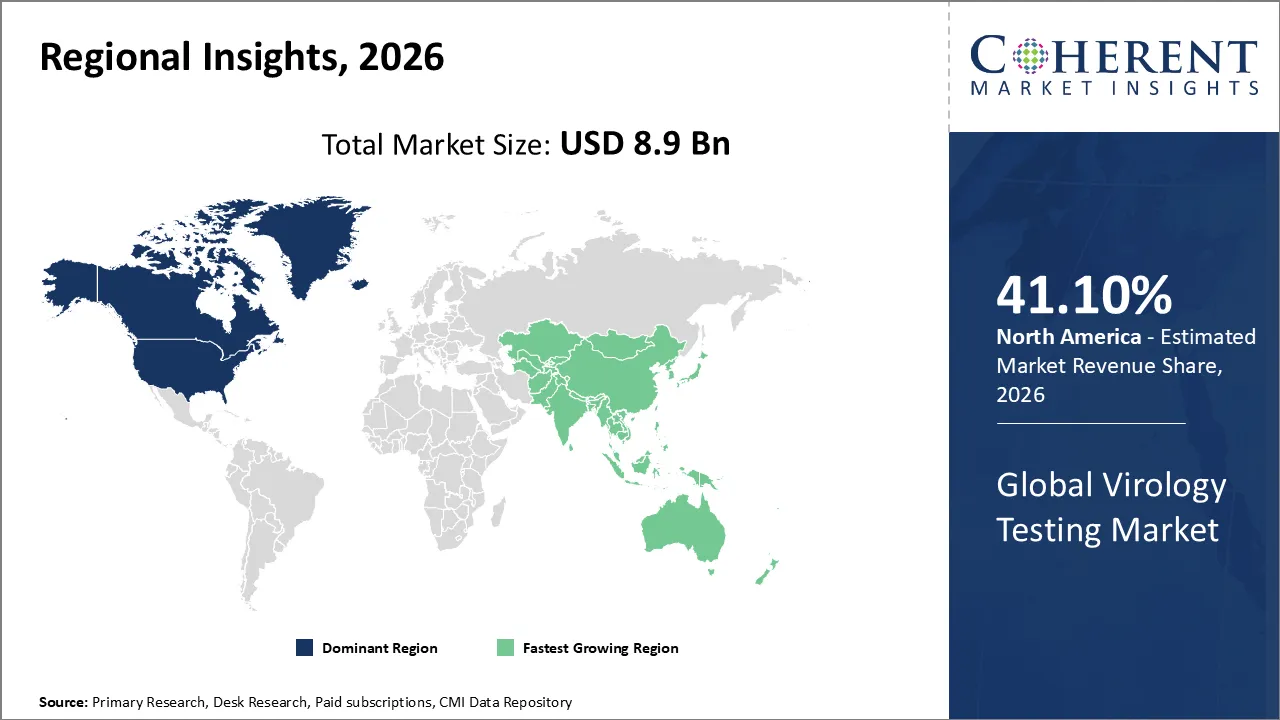
- North America is expected to acquire the dominant share of 41.1% in 2026 owing to its high healthcare expenditure. U.S. healthcare spending increased by 7.2% in 2024, reaching USD 5.3 trillion, or USD 15,474 per capita.
Current Events and Their Impact on the Virology Testing Market
Current Event | Description and its Impact |
FDA Phaseout of General Enforcement Discretion for Laboratory-Developed Tests (LDTs) |
|
Expansion of FDA-Authorized Multiplex Respiratory Virus Tests |
|
Segmental Insights
- Current Industry Events of 2026
- Market Size Estimation
- Regional Breakdown
- Competitive Landscape
- Customer Intelligence
- Segmental Analysis
- Pricing Analysis
- Key Market Drivers, Challenges & Future Trends
- Customized Insights Section
Instruments Expected to Hold Largest Market Share
Instruments expected to hold largest market share of 53.6% in 2026 owing to its emergence of new viral pathogens and variants. Rising viral infections increase demand for advanced virology testing instruments. Healthcare laboratories invest in automated PCR systems, analyzers, sample preparation platforms, and high-throughput instruments to accelerate testing and improve diagnostic accuracy. Technological innovation, greater laboratory automation, and demand for rapid results encourage further adoption. Increasing testing volumes and the need for outbreak preparedness also drive investments in modern equipment. According to the WHO, 56,556 samples were tested for SARS-CoV-2 across 78 countries during 31 August–6 September 2026.
Why is Molecular Diagnostics Method Acquiring the Largest Market Share?
Molecular Diagnostics Method hold the largest market share of 38.9% in 2026. The rising prevalence of viral infections drives demand for molecular diagnostics, as healthcare providers seek rapid, accurate, and early disease detection. Laboratories increasingly adopt PCR, real-time PCR, multiplex testing, and other nucleic-acid technologies because these methods deliver high sensitivity and specificity. Technological advancements, automation, point-of-care testing, outbreak preparedness, and viral surveillance further strengthen adoption. Healthcare organizations also use molecular diagnostics to support timely diagnosis, viral-load monitoring, and efficient laboratory workflows, thereby expanding their role in virology testing. In August 2026, Cancer Cell Diagnostics launched its CellSight DNA test, which analyzes intact circulating tumor cells to detect cancer, unlike conventional liquid biopsies that examine fragmented cell-free tumor DNA.
Which End User segment dominates the market?
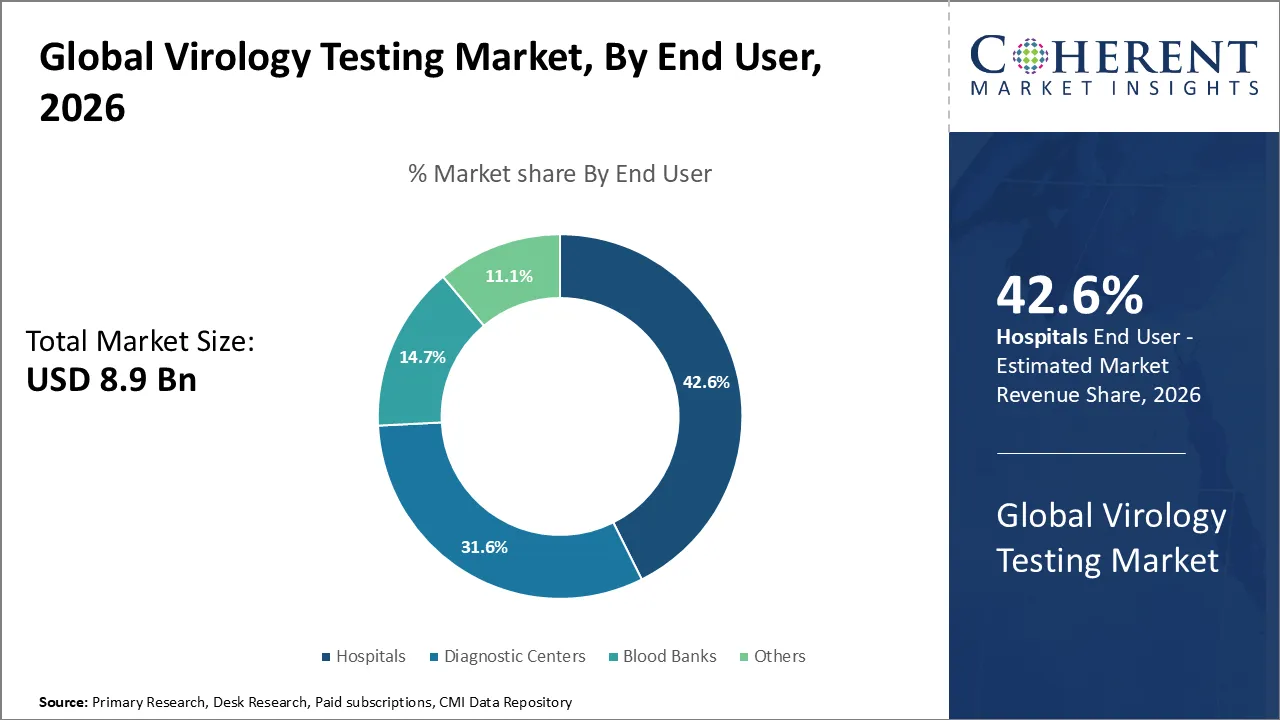
Hospitals acquired the largest market share of 42.6% in 2026. Hospitals increasingly strengthen virology testing capacity as clinicians require dependable results to manage infectious diseases and protect patients. The expansion of emergency, critical-care, and specialized treatment services increases the need for rapid viral screening and monitoring. Hospitals also integrate automated and decentralized testing technologies to streamline laboratory operations and support clinical decision-making. Investments in diagnostic infrastructure, infection-prevention programs, and outbreak readiness further stimulate demand, while the shift toward hospital-based testing reduces reliance on external diagnostic facilities.
Virology Testing Market Trends
- Multiplex molecular testing is gaining traction as laboratories increasingly adopt panels capable of simultaneously detecting multiple respiratory viruses, improving diagnostic efficiency and supporting faster clinical decision-making. WHO’s integrated surveillance framework now combines influenza, SARS-CoV-2, and RSV, reflecting the increasing importance of multi-pathogen detection in respiratory-virus surveillance. WHO also reported that, in week 36 of 2026 (ending September 6), influenza positivity was approximately 10% globally, while SARS-CoV-2 and RSV activity remained low.
- Point-of-care and decentralized virology testing is expanding, particularly for diseases requiring rapid diagnosis and linkage to treatment. WHO’s 2026 hepatitis B and C guidance specifically promotes rapid and point-of-care testing, molecular testing, dried-blood-spot testing, and reflex testing, while also supporting decentralized service delivery. The guidance reflects an increasing emphasis on bringing viral diagnostics closer to patients and integrating testing with primary care.
- Viral-load testing and molecular monitoring remain important in HIV and viral hepatitis management. WHO recommends routine HIV viral-load testing at 6 and 12 months after ART initiation and annually thereafter. In 2024, 73% of people living with HIV globally had suppressed viral loads, including 74% of adults and 47% of children, demonstrating the continued importance of viral-load monitoring within HIV treatment programs.
Regional Insights
North America dominates owing to increasing demand for rapid and point-of-care testing
North America is expected to acquire the dominant share of 41.10% in 2026. North America’s advanced healthcare systems and strong laboratory networks drive the adoption of virology testing. Healthcare providers and public-health agencies expand testing to monitor respiratory and emerging viral infections. Laboratories increasingly implement molecular diagnostics, genomic sequencing, point-of-care platforms, and automated technologies to improve testing efficiency and speed. Growing investments in infectious-disease preparedness strengthen demand for reliable diagnostic solutions. Established diagnostic infrastructure, technological innovation, and expanding surveillance programs further support the region’s virology testing market. The University of South Florida has launched the USF Health Institute for Translational Virology, led by Dr. Robert C. Gallo, to advance research on HIV, virus-related cancers, mosquito-borne diseases, and pandemic threats.
Asia Pacific Virology Testing Market Trends
The Asia Pacific virology testing market is expanding as viral infections such as hepatitis, dengue, and influenza become more prevalent. Healthcare providers are strengthening infrastructure and expanding diagnostic access, particularly across developing economies. Governments are also promoting screening initiatives and investing in laboratory networks, which increases testing demand. At the same time, diagnostic companies are advancing PCR, molecular diagnostic, and point-of-care technologies to deliver faster and more accurate results, improving testing accessibility across densely populated countries. The Institute of Advanced Virology (IAV) in Thiruvananthapuram has launched an advanced mobile testing unit to support rapid response during epidemic outbreaks.
United States Virology Testing Market Trends
The United States virology testing market continues to grow as viral infections such as influenza, RSV, COVID-19, HIV, and hepatitis create strong demand for rapid and accurate diagnosis. According to preliminary CDC estimates for the 2025–2026 influenza season, influenza caused at least 32 million illnesses, 390,000 hospitalizations, and 24,000 deaths in the United States, including 192 deaths among children. Healthcare providers increasingly adopt molecular technologies, including PCR, next-generation sequencing, and multiplex assays, to enhance detection speed and accuracy. Point-of-care and at-home testing options are expanding diagnostic access. Furthermore, technological advancements, regulatory approvals, public-health surveillance programs, and investments in laboratory infrastructure continue to strengthen market development. Stanford Medicine’s Clinical Virology Laboratory launched an mpox diagnostic test to accelerate accurate detection and support public-health efforts to control the virus’s spread.
Japan Virology Testing Market Trends
Japan’s aging population drives demand for virology testing as older adults face greater susceptibility to viral infections. Japan’s well-developed healthcare infrastructure, extensive hospital and laboratory networks, and government initiatives for infectious-disease surveillance further strengthen the market. In July 2026, Professor Yasutoshi Kido of Osaka Metropolitan University, in collaboration with DNAFORM and the Democratic Republic of the Congo’s National Institute for Biomedical Research (INRB), received funding from the Global Health Innovative Technology (GHIT) Fund to develop a portable rapid diagnostic system for Bundibugyo virus disease (BDBV), a form of Ebola virus disease. Such initiatives are accelerating the market growth.
Who are the Major Companies in Virology Testing Industry
Some of the major key players in Virology Testing are F. Hoffmann-La Roche AG, Bio-Rad Laboratories Inc., Hologic Inc., Abbot Healthcare, Fujirebio Diagnostics Inc., Cepheid, bioMerieux SA, Siemens AG Grifols, Eiken Chemical Co Ltd., Sequenom, and Diamedix Inc.
Key News
- In June 2026, Agilus Diagnostics launched the automated Idylla molecular diagnostics system at its Goregaon laboratory, enabling cancer mutation detection within 2.5–3 hours.
Market Report Scope
Virology Testing Market Report Coverage
Report Coverage | Details | ||
Base Year: | 2025 | Market Size in 2026: | USD 8.9 Bn |
Historical Data for: | 2020 to 2024 | Forecast Period: | 2026 to 2033 |
Forecast Period 2026 to 2033 CAGR: | 5.6% | 2033 Value Projection: | USD 14.6 Bn |
Geographies covered: |
| ||
Segments covered: |
| ||
Companies covered: | F. Hoffmann-La Roche AG., Bio-Rad Laboratories Inc. , Hologic Inc., Abbot Healthcare, Fujirebio Diagnostics Inc., Cepheid, bioMerieux SA, Siemens AG Grifols, Eiken Chemical Co Ltd., Sequenom, and Diamedix Inc. | ||
Analyst Opinion
- Virology testing is increasingly becoming a surveillance necessity rather than a discretionary diagnostic service. WHO reported that, in 2023, more than 1.4 million new HIV infections occurred globally, while viral hepatitis caused approximately 1.3 million deaths annually, underscoring the continuing clinical burden of viral disease. In my view, this persistent disease burden will keep molecular and serological testing embedded in routine clinical decision-making, particularly where early identification directly affects treatment selection and infection control.
- Respiratory viruses remain one of the strongest practical arguments for expanding testing capacity. WHO estimates that seasonal influenza causes around 3–5 million cases of severe illness and 290,000–650,000 respiratory deaths each year worldwide. The COVID-19 experience further demonstrated the value of rapid diagnostic infrastructure: during 2021 alone, laboratories worldwide processed billions of SARS-CoV-2 tests. This has permanently raised expectations for rapid, scalable viral diagnostics and strengthened demand for multiplex and point-of-care platforms.
- Multiplex molecular testing is, in my assessment, one of the most consequential technological shifts in virology diagnostics. A single respiratory panel can simultaneously identify multiple pathogens, including influenza A/B, respiratory syncytial virus, and SARS-CoV-2, reducing the need for sequential testing. This matters clinically because symptoms frequently overlap. For example, CDC surveillance recorded more than 30,000 RSV hospitalizations among adults aged 65 and older in the United States during the 2023–24 season. The ability to distinguish pathogens quickly should continue pushing laboratories toward automated, syndromic testing workflows rather than isolated single-pathogen assays.
- Japan illustrates why virology testing demand is increasingly tied to an aging patient population and sophisticated diagnostics infrastructure. Japan has one of the world’s oldest populations, with people aged 65 and above accounting for roughly 29% of the population. This demographic structure strengthens the clinical value of rapid viral identification because older patients face substantially higher risks from respiratory infections and complications. Japan’s established laboratory network and adoption of automated molecular platforms therefore create a particularly strong environment for advanced virology testing technologies.
Speak to the analyst
Want personalized insights?
Take the findings above to one of our principal consultants, or have the report rebuilt around the segments, geographies and competitors you actually track.
Market Segmentation
- By Diagnostic Technique (Revenue, USD Bn, 2021-2033)
- Molecular Diagnostics Method
- PCR based methods
- NGS based methods
- Immunoassay based Method
- Mass Spectroscopy based Method
- Others
- Molecular Diagnostics Method
- By Product Type (Revenue, USD Bn, 2021-2033)
- Instruments
- Assay kits and consumables
- By End User (Revenue, USD Bn, 2021-2033)
- Hospitals
- Diagnostic Centers
- Blood Banks
- Others
- By Region (Revenue, USD Bn, 2021-2033)
- North America
- U.S.
- Canada
- Latin America
- Brazil
- Mexico
- Argentina
- Rest of Latin America
- Europe
- Germany
- U.K.
- France
- Italy
- Spain
- Russia
- Rest of Europe
- Asia Pacific
- China
- India
- Japan
- Australia
- South Korea
- ASEAN
- Rest of Asia Pacific
- Middle East
- GCC
- Israel
- Rest of Middle East
- Africa
- South Africa
- Central Africa
- North Africa
- North America
Sources
Primary Research interviews
- Clinical microbiologists and virologists
- Infectious-disease specialists
- Laboratory directors and pathologists
- Molecular diagnostics specialists
- Hospital laboratory managers
- Diagnostic testing procurement managers
- Public-health laboratory officials
- Regulatory and quality-assurance professionals
- Diagnostic equipment manufacturers and assay developers
- Distributors and laboratory testing service providers
Databases
- World Health Organization (WHO) Global Health Observatory
- WHO Global Health Estimates
- WHO In Vitro Diagnostics Database
- WHO Prequalified In Vitro Diagnostics Database
- U.S. Centers for Disease Control and Prevention (CDC) Surveillance Databases
- CDC Infectious Diseases Laboratories Test Directory
- U.S. Food and Drug Administration (FDA) In Vitro Diagnostic Database
- FDA Nucleic Acid-Based Tests Database
- National Center for Biotechnology Information (NCBI)
- PubMed
- National Institutes of Health (NIH) databases
- World Bank Health Data
- OECD Health Statistics
- European Centre for Disease Prevention and Control (ECDC) Surveillance Atlas
Magazines
- Nature
- Scientific American
- The Scientist
- Lab Manager
- Clinical Lab Products
- Medical Device Network
- Diagnostics World
Journals
- Journal of Virology
- Journal of Clinical Virology
- Journal of Medical Virology
- Virology
- Journal of Virological Methods
- Clinical Microbiology Reviews
- Clinical Infectious Diseases
- Emerging Infectious Diseases
- The Lancet Infectious Diseases
- Nature Microbiology
- Nature Medicine
- PLOS Pathogens
- Virus Research
Newspapers
- The New York Times
- The Washington Post
- The Guardian
- Reuters
- The Associated Press
- Financial Times
- The Japan Times
- Nikkei Asia
- The Hindu
- The Times of India
Associations
- American Society for Microbiology (ASM)
- Infectious Diseases Society of America (IDSA)
- American Association for Clinical Chemistry (AACC)
- Association for Molecular Pathology (AMP)
- Clinical & Laboratory Standards Institute (CLSI)
- European Society of Clinical Microbiology and Infectious Diseases (ESCMID)
- International Society for Infectious Diseases (ISID)
- International Federation of Clinical Chemistry and Laboratory Medicine (IFCC)
- World Association of Societies of Pathology and Laboratory Medicine (WASPaLM)
- International Federation of Biomedical Laboratory Science (IFBLS)
Public Domain sources
- World Health Organization (WHO) reports, guidelines, surveillance data, and diagnostic resources
- U.S. Centers for Disease Control and Prevention (CDC) reports and surveillance data
- U.S. Food and Drug Administration (FDA) regulatory databases and approvals
- National Institutes of Health (NIH) publications and datasets
- National Center for Biotechnology Information (NCBI) and PubMed
- European Centre for Disease Prevention and Control (ECDC) surveillance reports
- U.S. National Library of Medicine (NLM)
- World Bank health indicators
- OECD health statistics
- Government health ministry publications and national surveillance reports
- National public-health laboratory reports
- WHO Essential In Vitro Diagnostics resources
Proprietary Elements
- CMI Data Analytics Tool
- Proprietary CMI Existing Repository of information for last 10 years
Get access to 250+ pages report
Every segment, forecast, competitor profile and data table behind the analysis above — available for instant download.
- ESOMAR Member
- ISO 9001:2015 Certified
- D-U-N-S Registered
- GDPR & CCPA Compliant
Missing comfort of reading report in your local language? Find your preferred language:
Transform your Strategy with Exclusive Trending Reports
Frequently Asked Questions
The Virology Testing Market is projected to expand from USD 8.9 Bn in 2026 to USD 14.6 Bn by 2033, supported by increasing viral infections, and stronger infectious-disease surveillance programs.
Molecular diagnostics holds the leading position, accounting for 38.9% of the market in 2026.
Molecular diagnostics enables healthcare providers to detect viral genetic material rapidly and accurately.
Instruments are expected to account for the largest share at 53.6% in 2026.
Hospitals account for 42.6% of the market in 2026 because they manage substantial volumes of infectious-disease cases and require rapid diagnostic results for emergency, and specialized treatment.