

Waterborne Coatings Market Size and Forecast — 2026 - 2033
The Global Waterborne Coatings Market size is estimated to be valued at USD 20.50 billion in 2026 and is expected to reach USD 38.20 billion by 2033, exhibiting a compound annual growth rate (CAGR) of 9.3% from 2026 to 2033.
Overview
Waterborne coatings are surface finishes in which water is used as the primary solvent or carrier instead of organic solvents. They are widely used in industries such as construction, automotive, packaging, and furniture for protection and decoration of surfaces. These coatings form a continuous film after application as water evaporates, leaving behind resins, pigments, and additives. Compared to solvent-based coatings, waterborne coatings emit significantly lower levels of volatile organic compounds (VOCs), making them more environmentally friendly and safer for human health. They offer good adhesion, durability, corrosion resistance, and ease of application, while supporting stricter environmental regulations and sustainability goals.
Key Takeaways
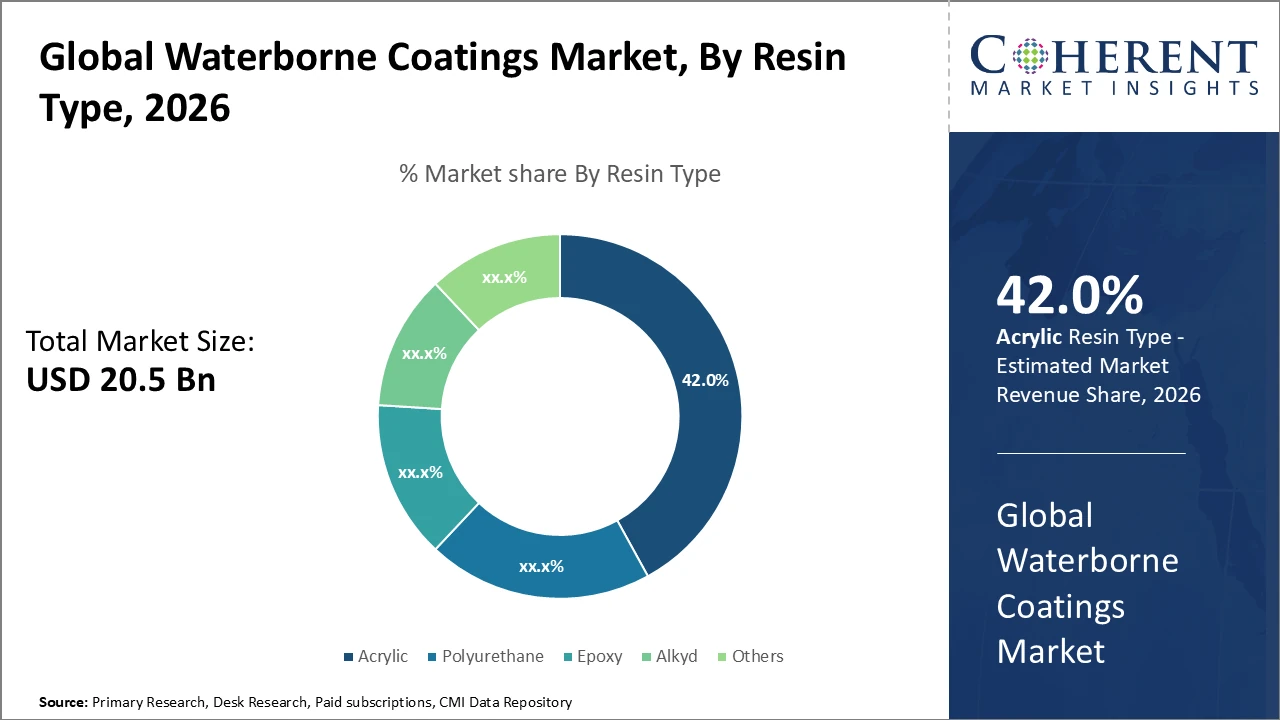
The acrylic resin segment leads the waterborne coatings market with a 42% share, driven by superior weather resistance suitable for automotive and architectural applications.
Polyurethane coatings are the fastest-growing segment, supported by innovations enhancing chemical resistance for industrial uses.
The automotive end-user segment is expected to sustain strong growth due to regulatory mandates and technology solutions tailored to electric vehicles.
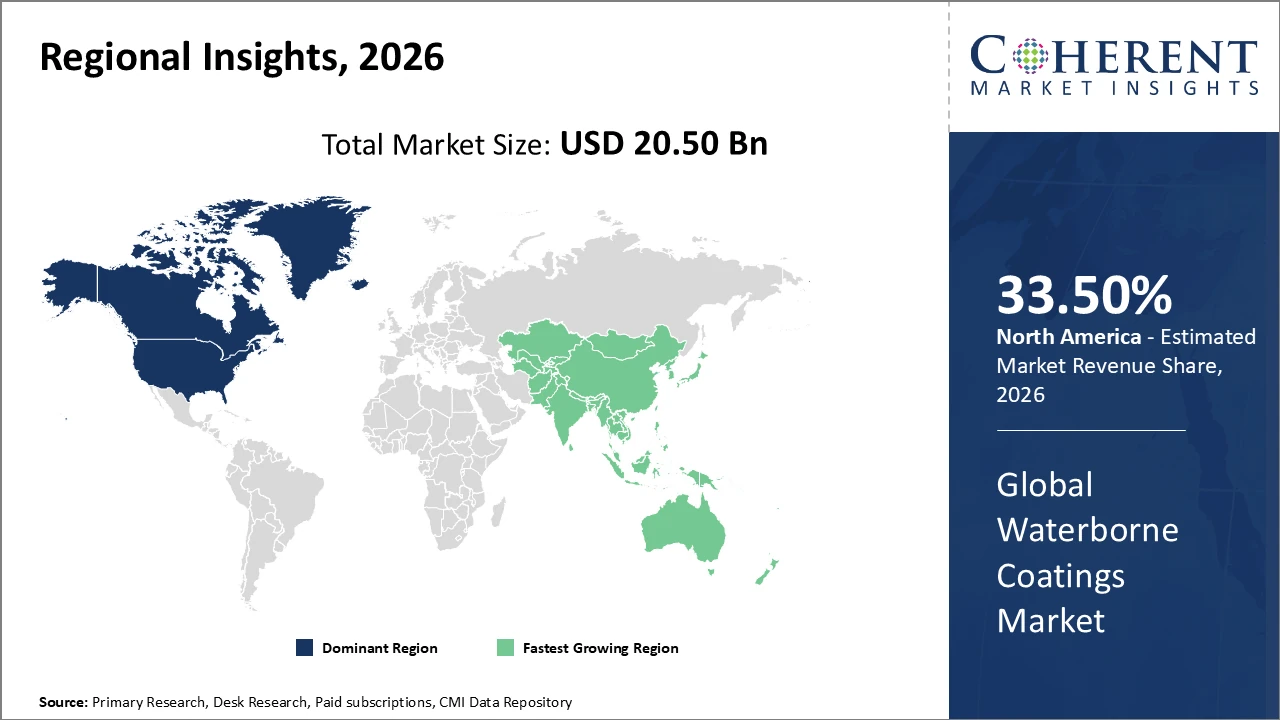
Asia Pacific dominates the market, capturing over 38% of global share, driven by rapid industrialization, expanding automotive hubs, and proactive environmental policies.
North America is a key region for adopting technological innovations in waterborne coatings.
Europe maintains strong growth supported by export-driven demand.
The Middle East & Africa is gradually gaining traction with infrastructural investments and rising awareness of sustainable coatings, showing promising CAGR figures.
Waterborne Coatings Market Segmentation Analysis
Waterborne Coatings Market Insights, By Resin Type
Acrylic resins dominate the waterborne coatings market, holding around 42% share due to their versatility, weather resistance, and cost-effectiveness, making them ideal for automotive and architectural applications requiring durability and color retention. The fastest-growing subsegment is polyurethane, driven by superior chemical and abrasion resistance, particularly in industrial environments, supported by innovations in waterborne formulations that maintain environmental compliance. Epoxy resins offer strong adhesion and chemical resistance for marine and industrial uses but face limitations due to curing challenges. Alkyd resins are gradually transitioning from solvent-based systems, while specialty resins cater to emerging sectors such as aerospace with tailored polymer blends.
Waterborne Coatings Market Insights, By Technology
Air Dry technology currently dominates waterborne coatings usage, capturing a significant volume share due to its ease of application and suitability for architectural and automotive sectors with moderate curing requirements. The fastest-growing technology is Bake coatings, driven by industrial manufacturing trends emphasizing rapid curing, higher throughput, and enhanced hardness and chemical resistance, particularly in automotive OEM plants, while maintaining low VOC emissions. UV Curing is gaining traction for its ultra-fast curing and minimal energy consumption, appealing to niche applications like electronics and decorative arts. Emerging technologies include hybrid curing and advanced powder formulations incorporating waterborne components for specialized uses.
Waterborne Coatings Market Insights, By End-User
The automotive segment dominates the waterborne coatings market, driven by stringent environmental regulations and rising global electric vehicle production, with waterborne coatings providing VOC compliance and reliable performance. Electric vehicle output in China and the U.S. increased over 40% in 2025, reinforcing growth in this sector. The fastest-growing segment is Architectural, supported by urban construction and renovation projects, with low-toxicity, versatile waterborne coatings preferred. Industrial coatings are expanding due to innovations enhancing chemical and abrasion resistance. Aerospace coatings require lightweight, high-performance solutions, sustaining niche growth, while marine coatings focus on anti-corrosion properties but face challenges integrating waterborne systems without compromising durability.
Waterborne Coatings Market Trends
The transition to low-VOC and zero-VOC waterborne coatings is a key industry trend.
In 2026, over 60% of new product launches worldwide focused on bio-based resins, highlighting advances in sustainable chemistry.
Technological innovations in nanoparticle additives are enhancing durability without compromising environmental standards, particularly in industrial applications requiring abrasion resistance.
Growing consumer awareness of environmentally responsible products is driving demand for waterborne coatings in decorative applications.
Urban residential projects saw a 17% increase in market revenue for waterborne coatings globally in 2025, reflecting this demand shift.
Waterborne Coatings Market Insights, By Geography
North America Waterborne Coatings Market Analysis and Trends
North America exhibits the fastest growth in the waterborne coatings market, with a CAGR exceeding 10%, driven primarily by the automotive and aerospace sectors adopting waterborne solutions to achieve sustainability targets. Federal regulations on VOC emissions are accelerating the transition from solvent-based to eco-friendly coatings. Increased research and development investments by leading companies such as PPG Industries and Sherwin-Williams are fostering innovation in high-performance, low-VOC waterborne formulations. The combination of regulatory support, growing industrial adoption, and technological advancements is strengthening North America’s position as a key market, encouraging both established players and new entrants to expand their presence in the region.
Asia Pacific Waterborne Coatings Market Analysis and Trends
Asia Pacific dominates the waterborne coatings market, driven by rapid industrialization and stringent environmental regulations in countries such as China, India, and South Korea. The region accounts for over 38% of global market share, with major automotive manufacturing hubs and large-scale construction projects fueling demand for eco-friendly coatings. Leading companies, including Asian Paints and Nippon Paint, contribute to market growth by investing in product innovation, sustainable formulations, and capacity expansions. Government policies promoting low-VOC solutions further encourage adoption. Overall, the combination of industrial growth, regulatory support, and active market players strengthens Asia Pacific’s leadership and long-term growth potential in the waterborne coatings industry.
Waterborne Coatings Market Outlook for Key Countries
USA Waterborne Coatings Market Analysis and Trends
The U.S. waterborne coatings market remains a key hub, driven by substantial investments in green infrastructure and the growing electric vehicle industry. Federal regulations targeting a 25% reduction in VOC emissions by 2027 have accelerated the adoption of eco-friendly waterborne coatings, prompting major players to expand production capacities. In 2025, the architectural coatings segment alone recorded a 19% revenue increase, supported by strong demand from both new construction and refurbishment projects. Combined with technological innovations and sustainability initiatives by companies, these factors reinforce the U.S. market’s role as a critical growth driver in the global waterborne coatings industry.
Germany Waterborne Coatings Market Analysis and Trends
Germany’s waterborne coatings market is driven by strong industrial infrastructure, environmental regulations, and a focus on sustainability. The country has seen widespread adoption of low-VOC and bio-based coatings across automotive, construction, and industrial sectors. Leading companies such as BASF and Beckers actively invest in research and development to improve coating performance, durability, and environmental compliance. Technological innovations, including advanced nanoparticle additives and hybrid curing methods, are enhancing product efficiency. Growing consumer demand for eco-friendly architectural coatings further supports market expansion. Overall, Germany’s market trends reflect a combination of regulatory compliance, industrial modernization, and increasing adoption of sustainable, high-performance waterborne coatings.
Analyst Opinion
Demand-Side Indicators: Rapid growth in the automotive sector, particularly electric vehicles, drives waterborne coatings market revenue. In 2024, China’s EV production surged over 45%, increasing demand for durable, low-VOC coatings, contributing about 30% of total market share.
Supply-Side Indicators: Innovations in waterborne resin chemistry and expanded production capacity reduced costs by nearly 15% in 2025 compared to 2023, allowing manufacturers to broaden market reach and supporting a 12% year-over-year revenue increase.
Import-Export Dynamics: U.S. imports of eco-friendly raw materials, such as soy-based resins, rose 18% in early 2026 due to production mandates, while European exports of finished coatings, led by Germany, increased approximately 22% to Asia Pacific.
Use Cases Across Industries: Waterborne coatings’ application in architectural and aerospace sectors is growing. In 2025, the architectural segment accounted for 40% of market revenue, with urban infrastructure projects in India, spending USD 350 billion, driving demand for low-toxicity coatings.
- Current Industry Events of 2026
- Market Size Estimation
- Regional Breakdown
- Competitive Landscape
- Customer Intelligence
- Segmental Analysis
- Pricing Analysis
- Key Market Drivers, Challenges & Future Trends
- Customized Insights Section
Market Scope
| Report Coverage | Details | ||
|---|---|---|---|
| Base Year: | 2025 | Market Size in 2026: | USD 20.50 billion |
| Historical Data for: | 2020 To 2024 | Forecast Period: | 2026 To 2033 |
| Forecast Period 2026 to 2033 CAGR: | 9.3% | 2033 Value Projection: | USD 38.20 billion |
| Geographies covered: |
| ||
| Segments covered: |
| ||
| Companies covered: | Akzo Nobel, PPG Industries, BASF SE, Jotun Group, Kansai Paint, Asian Paints Ltd., Allnex, RPM International, Dow Chemical Company, Hempel A/S | ||
| Growth Drivers: |
| ||
Waterborne Coatings Market Growth Factors
Increasing regulatory pressure to reduce volatile organic compounds (VOCs) has accelerated the adoption of waterborne coatings, with governments implementing stricter air quality standards between 2024 and 2026. The automotive sector is shifting toward eco-friendly coatings to lower carbon footprints, driving a 25% revenue increase in the U.S. automotive coatings segment in 2025. Urban infrastructure investments in Asia Pacific, particularly in India and China, have boosted demand for architectural coatings, increasing their market share. Technological innovations, such as UV curing introduced in 2025, have enhanced drying times and durability, encouraging broader adoption of waterborne coatings in industrial applications.
Waterborne Coatings Market Development
In February 2025, AkzoNobel scientists developed a waterborne wood coating containing 20% bio-based material, increasing the use of renewable raw resources while maintaining high performance.
Key Players
Leading Companies of the Market
Akzo Nobel
PPG Industries
BASF SE
Jotun Group
Kansai Paint
RPM International
Asian Paints Ltd.
Allnex
Dow Chemical Company
Hempel A/S
Notable competitive strategies in the waterborne coatings market include AkzoNobel’s aggressive R&D investments, which led to the launch of zero-VOC waterborne coatings in 2025, expanding their industrial segment revenue by 18%. Similarly, PPG Industries pursued strategic acquisitions targeting specialty waterborne products, resulting in a 14% increase in their global market share in 2026. These approaches highlight how leading companies leverage innovation, sustainability, and portfolio expansion to strengthen market positioning, drive revenue growth, and respond to evolving regulatory and consumer demands in the rapidly developing waterborne coatings industry.
Waterborne Coatings Market Future Outlook
The global waterborne coatings market is poised for strong growth driven by increasing environmental regulations, rising demand for low-VOC and zero-VOC solutions, and the shift toward sustainable manufacturing practices. Automotive, architectural, and industrial sectors are expected to remain key revenue contributors, with electric vehicle production and urban infrastructure development fueling adoption. Technological innovations, including UV curing, nanoparticle additives, and bio-based resins, will enhance performance, durability, and environmental compliance. Asia Pacific is likely to maintain a dominant market share, while North America and Europe focus on advanced formulations and regulatory adherence, collectively shaping a future of sustainable and high-performance waterborne coatings.
Waterborne Coatings Market Historical Analysis
The waterborne coatings market has experienced steady growth over the past decade, driven by increasing environmental awareness and stricter regulations on volatile organic compounds (VOCs). Early adoption was led by architectural and industrial applications, with acrylic and epoxy resins dominating product segments. The automotive sector gradually embraced waterborne coatings to comply with low-VOC mandates, particularly in North America, Europe, and Asia Pacific. Technological advancements, including UV curing, nanoparticle additives, and bio-based resins, improved performance and durability, expanding usage across multiple industries. Historical trends also reflect rising consumer demand for sustainable solutions, setting the stage for ongoing innovation and global market expansion.
Sources
Primary Research Interviews:
Chemical engineers and R&D specialists
Production and plant managers in coatings facilities
Supply chain and procurement managers
Industry consultants and market analysts
Databases:
International Energy Agency (IEA) Statistics
Organization of the Petroleum Exporting Countries (OPEC) Data
United Nations Comtrade Database
World Bank Energy and Industry Data
Magazines:
Chemical Week
ICIS Chemical Business
Hydrocarbon Processing
Chemical & Engineering News
Coatings World
Journals:
Journal of Coatings Technology and Research
Progress in Organic Coatings
Surface & Coatings Technology
Paint & Coatings Industry Journal
Polymer Engineering and Science
Newspapers:
Financial Times (Energy & Chemicals)
The Wall Street Journal (Markets & Industry)
The Economic Times (Industry & Manufacturing)
Reuters (Commodities & Chemicals)
Bloomberg (Energy & Coatings)
Associations:
American Coatings Association (ACA)
European Coatings Association (CEPE)
World Coatings Council
Society of Chemical Industry (SCI)
International Paint & Coatings Federation
Get access to 250+ pages report
Every segment, forecast, competitor profile and data table behind the analysis above — available for instant download.
- ESOMAR Member
- ISO 9001:2015 Certified
- D-U-N-S Registered
- GDPR & CCPA Compliant
Missing comfort of reading report in your local language? Find your preferred language:
Transform your Strategy with Exclusive Trending Reports
Frequently Asked Questions
Leading market players include AkzoNobel, PPG Industries, BASF SE, Allnex, and Asian Paints Ltd, commanding a substantial portion of market share through product innovation and strategic acquisitions.
The market size is projected to reach USD 38.2 billion by 2033 from USD 20.5 billion in 2026, reflecting a CAGR of 9.3% during the forecast period.
The automotive sector, particularly electric vehicle manufacturing, offers the largest growth opportunity due to demand for eco-friendly, durable coatings that comply with stringent environmental regulations.
Market trends are expected to shift toward bio-based and zero-VOC coatings, driven by advancements in resin technologies, expanded applications in architectural and industrial sectors, and regulatory support promoting global adoption.
The competitive landscape is shaped by innovation-driven product development and global supply chain adaptations. Key challenges include raw material cost volatility and balancing high performance with environmental compliance.
Companies focus on mergers and acquisitions, strategic R&D investments in sustainable technologies, and expansion into emerging regional markets to capitalize on growth and evolving demand patterns.