Allergy Diagnostic And Treatment Market Analysis & Forecast: 2026-2033

Allergy Diagnostic And Treatment Market Size and Forecast – 2026 – 2033
The Global Allergy Diagnostic And Treatment Market size is estimated to be valued at USD 8.56 billion in 2026 and is expected to reach USD 14.23 billion by 2033, exhibiting a compound annual growth rate (CAGR) of 7.1% from 2026 to 2033.
Global Allergy Diagnostic And Treatment Market Overview
Products in the allergy diagnostic and treatment market include diagnostic kits, testing devices, and therapeutic solutions used to identify and manage allergic conditions. Diagnostic products encompass skin prick tests, blood-based IgE assays, and allergen panels. Treatment products include antihistamines, corticosteroids, immunotherapy formulations, and emergency epinephrine devices. These products help detect allergen sensitivity, control symptoms, and prevent severe allergic reactions. Accuracy, safety, and patient compliance are critical product features.
Key Takeaways
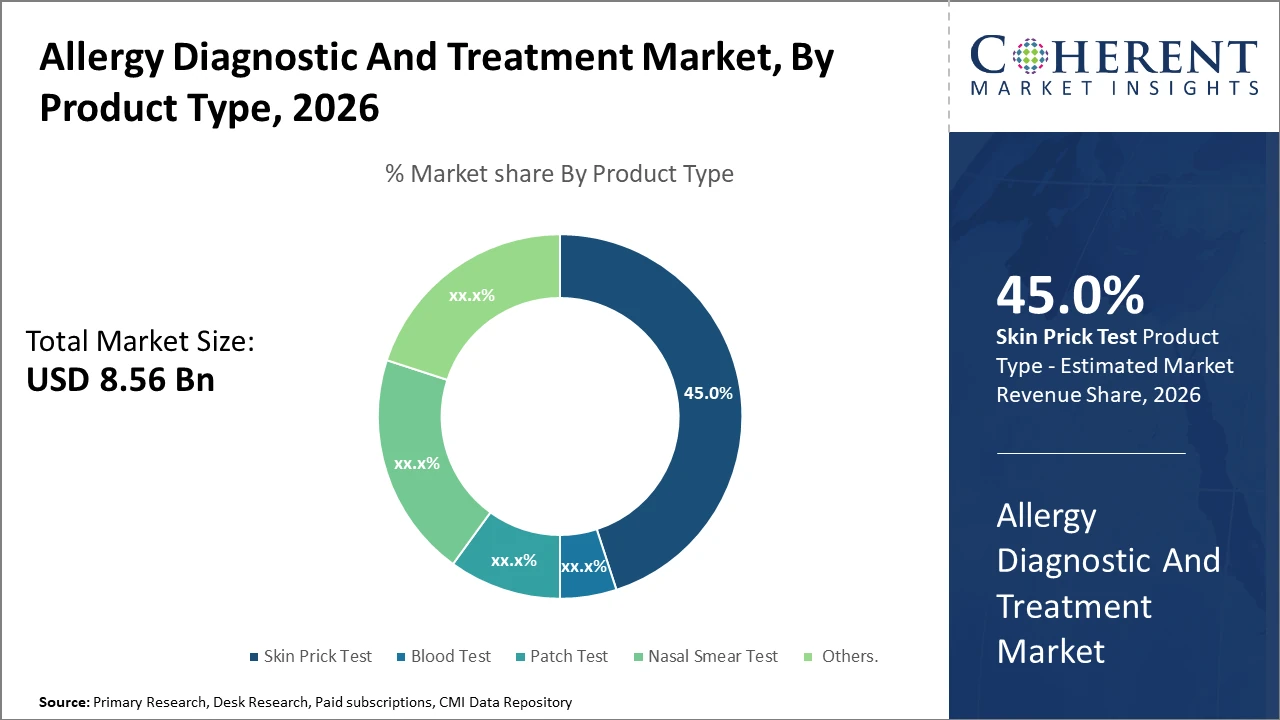
Skin Prick Test holds dominance in the product type subsegment with 45% market share, reaffirming its status as the frontline diagnostic modality due to affordability and accessibility.
Diagnostic laboratories dominate end-use segment with a 52% industry share, reflecting increasing outsourcing of diagnostic services and laboratory modernization initiatives.
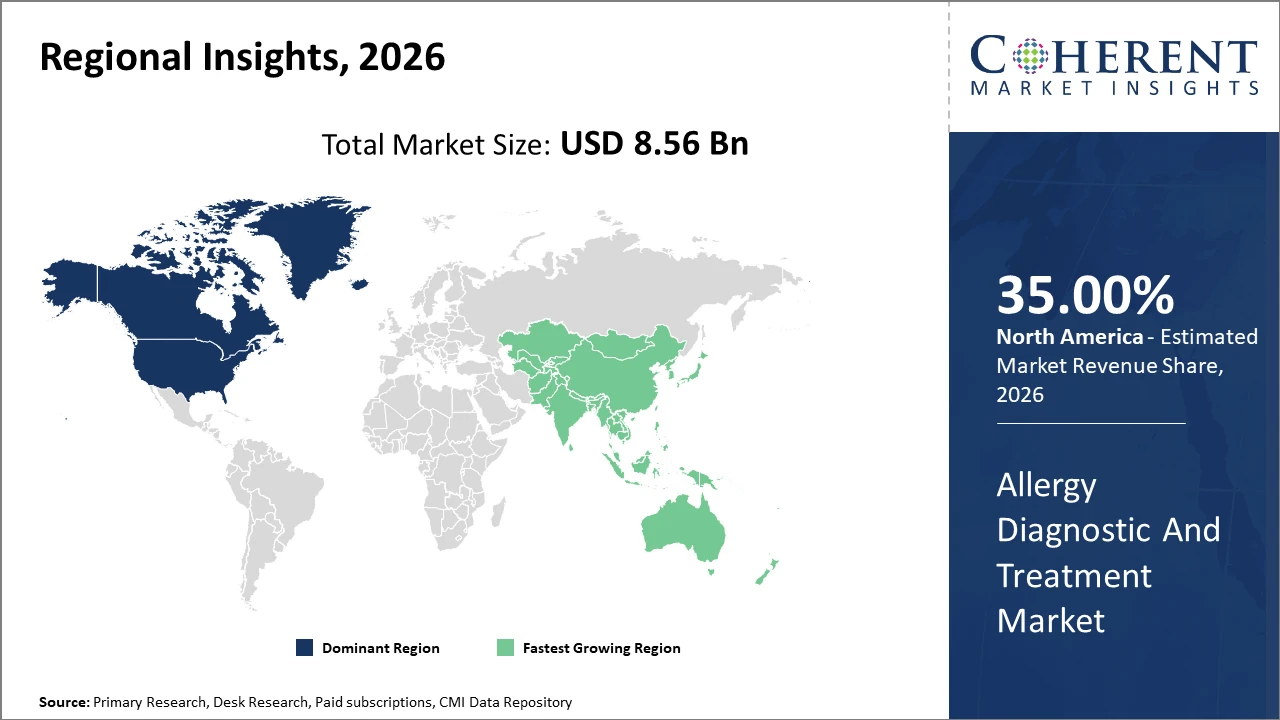
North America commands the largest market share by 35% attributed to robust healthcare infrastructure and high adoption of advanced allergy diagnostic technologies.
Asia Pacific is the fastest-growing region driven by expanding healthcare access, government initiatives, and growing incidence of allergies amid rising urbanization.
Allergy Diagnostic And Treatment Market Segmentation Analysis
To learn more about this report, Request Free Sample
Allergy Diagnostic And Treatment Market Insights, By Product Type
Skin Prick Test dominates the market share with 45%. The Skin Prick Test remains the frontline diagnostic tool due to its cost-effectiveness, rapid results, and widespread clinical acceptance. It is extensively utilized in hospitals and diagnostic laboratories globally, particularly in North America and Europe. The fastest-growing subsegment is Blood Test, which is gaining traction owing to enhanced accuracy and the advent of molecular assay formats enabling precise allergen component detection. Patch Tests serve as a specialty diagnostic primarily for contact allergens, while Nasal Smear Tests focus on respiratory allergy assessment.
Allergy Diagnostic And Treatment Market Insights, By Treatment Type
Immunotherapy represents the dominating therapeutic approach for disease modification, favored for its potential to induce long-term tolerance and reduce symptom severity, and commands a substantial industry share. The fastest growing segment here is Biologics, propelled by recent approvals of monoclonal antibodies targeting severe allergic disorders such as asthma and atopic dermatitis. These biologics are reshaping treatment paradigms, with increased adoption across North America and Europe.
Allergy Diagnostic And Treatment Market Insights, By End-Use Industry
Diagnostic Laboratories dominate the market share at approximately 52%. Diagnostic laboratories are central to allergy testing innovation and service delivery, benefiting from technological upgrades and outsourcing trends by hospitals and clinics. They provide comprehensive allergy profiles with specialized molecular diagnostics. The fastest growing subsegment is Clinics, driven by increased allergy awareness and accessibility, especially in semi-urban and rural regions, supported by telehealth initiatives. Hospitals continue to hold a significant market share due to their integrated care model. Research Institutes largely contribute to innovation and clinical trial,s but have a limited revenue share compared to commercial end users.
Allergy Diagnostic And Treatment Market Trends
The Allergy Diagnostic and Treatment market trend is moving decisively toward personalized diagnostics and therapeutics.
Molecular diagnostics have seen a dramatic shift, with a 35% revenue contribution in 2024, underscoring the demand for precision in allergy identification.
Innovations in biologics have captured growing market revenue streams, especially after breakthroughs such as targeted monoclonal antibody therapies approved in recent years.
Telehealth integration for allergy management also represents a transformative trend, facilitating wider patient reach.
Allergy Diagnostic And Treatment Market Insights, By Geography
To learn more about this report, Request Free Sample
North America Allergy Diagnostic And Treatment Market Analysis and Trends
In North America, the dominance in the market is underscored by advanced healthcare infrastructure, early adoption of cutting-edge diagnostics, and robust funding for allergy research. The U.S. alone contributes major share, supported by significant investment in R&D by companies like Thermo Fisher Scientific and Abbott Laboratories. Government initiatives promoting early screening programs have expanded diagnostic test volumes by 15% in the last two years.
Asia Pacific Allergy Diagnostic And Treatment Market Analysis and Trends
Meanwhile, the Asia Pacific exhibits the fastest growth with a CAGR exceeding 9% due to increasing government healthcare spending, rising allergy prevalence linked to rapid urbanization, and expanding private healthcare sectors. Countries such as China and India are witnessing rapid increases in allergy diagnostic labs and clinics. Local players and multinational firms are collaborating to broaden market reach and tailor solutions specific to regional allergy profiles.
Allergy Diagnostic And Treatment Market Outlook for Key Countries
USA Allergy Diagnostic And Treatment Market Analysis and Trends
The USA market is at the forefront of adopting innovative allergy diagnostics and treatments, accounting for the largest share of global market revenue. The 2024 roll-out of advanced molecular allergy testing platforms contributed to over $1.2 billion in market revenue, reflecting heightened precision and patient-specific management. Leading companies continually invest in R&D hubs in the USA, reinforcing its position as a technology incubator. Increasing awareness campaigns and favorable reimbursement policies have expedited market penetration in both urban and suburban areas, driving sustained business growth.
China Allergy Diagnostic And Treatment Market Analysis and Trends
China’s market is evolving rapidly, bolstered by the government's healthcare reforms and growth in private healthcare delivery. The rising allergy prevalence, estimated at over 15% in urban centers, has driven demand for modern diagnostics, particularly skin prick and blood tests. Recent collaborations between domestic firms and multinational companies have accelerated distribution of biologics across major cities, with market revenue growth surpassing 10% year-on-year. Increased insurance coverage and health awareness programs are amplifying market scope and business growth substantially.
Analyst Opinion
Supply-side dynamics reveal a notable increase in production capacity of diagnostic kits, with leading manufacturers expanding their manufacturing units in Asia Pacific by over 18% in 2024 to meet heightened demand. This surge has led to a 12% reduction in unit costs, enhancing affordability and accessibility for end-users globally.
Demand-side indicators highlight a rising adoption of molecular-based allergy tests, which accounted for approximately 35% of total allergy diagnostic market revenue in 2024, a substantial increase from 22% in 2022. This shift correlates with improved diagnostic accuracy and personalized treatment planning.
Market insights demonstrate that pediatric and adult allergy therapeutics recorded a combined market share of nearly 60% in 2024, with immunotherapy treatments representing about 40% within therapeutics. The growing prevalence of asthma and allergic rhinitis among children and adults is driving intensified research and development in this segment.
Import statistics from 2024 indicate a 15% rise in advanced allergy diagnostic devices into North America, primarily fueled by government initiatives promoting early allergy detection. These imports have contributed to a compounded growth in diagnostic testing volumes, underpinning the overall market expansion.
Market Scope
| Report Coverage | Details | ||
|---|---|---|---|
| Base Year: | 2025 | Market Size in 2026: | USD 8.56 billion |
| Historical Data for: | 2020 To 2024 | Forecast Period: | 2026 To 2033 |
| Forecast Period 2026 to 2033 CAGR: | 7.1% | 2033 Value Projection: | USD 14.23 billion |
| Geographies covered: |
|
||
| Segments covered: |
|
||
| Companies covered: | Hologic, Inc., Alere Inc. (now Abbott), Mylan N.V., Stallergenes Greer, HAL Allergy Group, Circassia Pharmaceuticals Plc, Aimmune Therapeutics, Meda Pharmaceuticals, Astellas Pharma Inc., Meda AB. | ||
| Growth Drivers: |
|
||
Uncover macros and micros vetted on 75+ parameters: Get instant access to report
Allergy Diagnostic And Treatment Market Growth Factors
Growing allergic disease incidence worldwide remains a primary driver, with WHO reporting an increased allergy prevalence by nearly 25% in urban populations in recent years. Technological advancements in diagnostic methodologies such as molecular allergology are improving diagnostic sensitivity and specificity, stimulating demand for advanced allergy diagnostic solutions. Increasing government initiatives and healthcare expenditure in developing regions are expanding the market scope, contributing substantially to business growth. Moreover, rising penetration of biologic therapies for severe allergic conditions is catalyzing robust market growth, with these therapies witnessing a 30% revenue spike in 2024 alone.
Allergy Diagnostic And Treatment Market Development
In 2022, STAT Medical introduced at-home finger-prick testing kits for food and respiratory allergies, designed to simplify sample collection while enabling reliable allergy screening outside traditional clinical settings. These user-friendly kits expanded access to allergy diagnostics by supporting convenient, home-based testing without the need for venous blood draws.
In 2025, Beckman Coulter launched a next-generation Basophil Activation Test (BAT) for research applications, advancing allergy and immunology studies through improved sensitivity and cellular analysis. The new BAT platform supports deeper insights into allergic response mechanisms, aiding researchers in the development and evaluation of targeted therapies.
Key Players
Leading Companies of the Market
Hologic, Inc.
Alere Inc. (now Abbott)
Mylan N.V.
Stallergenes Greer
HAL Allergy Group
Circassia Pharmaceuticals Plc
Aimmune Therapeutics
Meda Pharmaceuticals
Astellas Pharma Inc.
Meda AB
Leading players are implementing diversified growth strategies including acquisitions to expand their product portfolio and market presence; for instance, a major healthcare company’s 2024 acquisition of a biotech firm specializing in molecular allergy diagnostics expanded its footprint in personalized testing. Additionally, partnerships focusing on the development of biologics for allergy therapeutics have resulted in a pipeline enhancement and increased licensing revenues by 20% year-over-year.
Allergy Diagnostic And Treatment Market Future Outlook
The future of the allergy diagnostic and treatment market will focus on precision medicine and personalized therapies. Advances in molecular diagnostics will enable more accurate allergen identification. Biologic therapies targeting immune pathways will improve treatment outcomes. Increasing awareness and early diagnosis will expand patient populations. Growth in home-based testing and digital health platforms will enhance accessibility and long-term disease management.
Allergy Diagnostic And Treatment Market Historical Analysis
The allergy diagnostic and treatment market evolved alongside growing recognition of allergic diseases worldwide. Early diagnostic methods were limited to basic skin tests and symptom observation. Advances in immunology led to the development of specific IgE testing and standardized allergen extracts. Pharmaceutical innovations introduced antihistamines, corticosteroids, and immunotherapies. The rising prevalence of allergies and improved diagnostic accuracy drove market expansion. Healthcare systems are increasingly integrating allergy management into routine care.
Sources
Primary Research Interviews:
Allergists
Immunologists
Clinical Researchers
Hospital Pharmacists
Diagnostic Lab Managers
Databases:
WHO Allergy Data
PubMed
IQVIA
Magazines:
Allergy Today
Pharmaceutical Technology
Medical Device Network
Drug Discovery Today
BioSpectrum
Journals:
Journal of Allergy and Clinical Immunology
Clinical & Experimental Allergy,
Allergy Journal
Annals of Allergy
Immunology Journal
Newspapers:
Reuters Health
New York Times (Health)
Guardian (Health)
Financial Express (Pharma),
The Hindu (Health)
Associations:
American Academy of Allergy Asthma & Immunology
World Allergy Organization
European Academy of Allergy and Clinical Immunology
Indian Academy of Allergy
British Society for Allergy
Share
Share
Vipul Patil is a dynamic management consultant with 6 years of dedicated experience in the pharmaceutical industry. Known for his analytical acumen and strategic insight, Vipul has successfully partnered with pharmaceutical companies to enhance operational efficiency, cross broader expansion, and navigate the complexities of distribution in markets with high revenue potential.

Credibility and Certifications

860519526


9001:2015

27001:2022


Need a Custom Report?
We can customize every report - free of charge - including purchasing stand-alone sections or country-level reports
Customize NowJoining thousands of companies around the world committed to making the Excellent Business Solutions.
View All Our Clients