Bio-based Construction Polymers Market Analysis & Forecast: 2026-2033

Bio-based Construction Polymers Market Size and Forecast – 2026 – 2033
The Global Bio-based Construction Polymers Market size is estimated to be valued at USD 4.64 billion in 2026 and is expected to reach USD 8.5 billion by 2033, exhibiting a compound annual growth rate (CAGR) of 10.4% from 2026 to 2033.
Global Bio-based Construction Polymers Market Overview
Bio-based construction polymers are sustainable polymers derived from renewable sources such as starch, cellulose, polylactic acid (PLA), bio-polyethylene, and other plant-based feedstocks. They are used in insulation materials, flooring, sealants, adhesives, coatings, and structural components. These polymers offer reduced carbon footprint, improved recyclability, and favorable mechanical properties while maintaining durability and resistance comparable to traditional petrochemical polymers. Their application supports green building certifications and energy-efficient construction. With technological advancements, bio-based polymers now provide enhanced heat resistance, toughness, and compatibility with modern architectural and engineering materials.
Key Takeaways
The insulation materials segment holds the largest market share within applications, accounting for 40% of market revenue, driven by growing demand for energy-efficient buildings in North America.
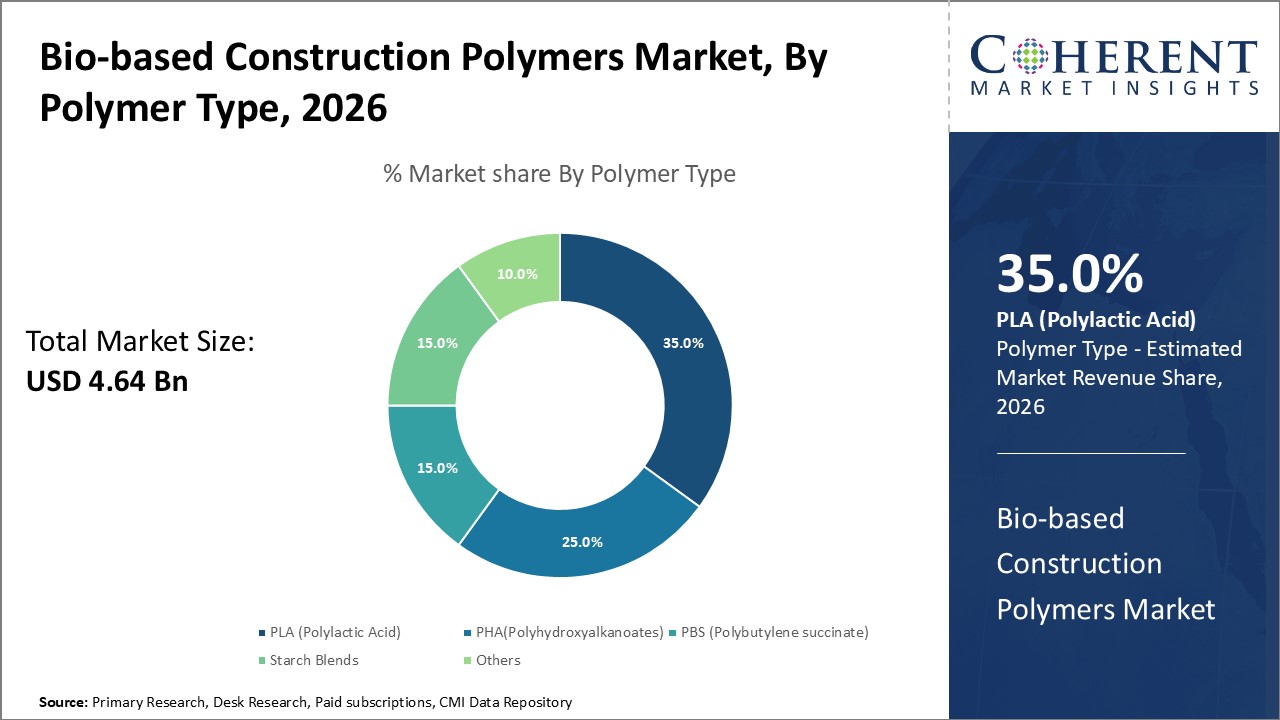
The PLA polymer type dominates with a 35% share due to its biodegradability and cost-effectiveness in mass production.
The residential end-use industry commands 45% of the total industry share, underscoring the rising adoption of bio-based polymers in green housing projects in Asia Pacific.
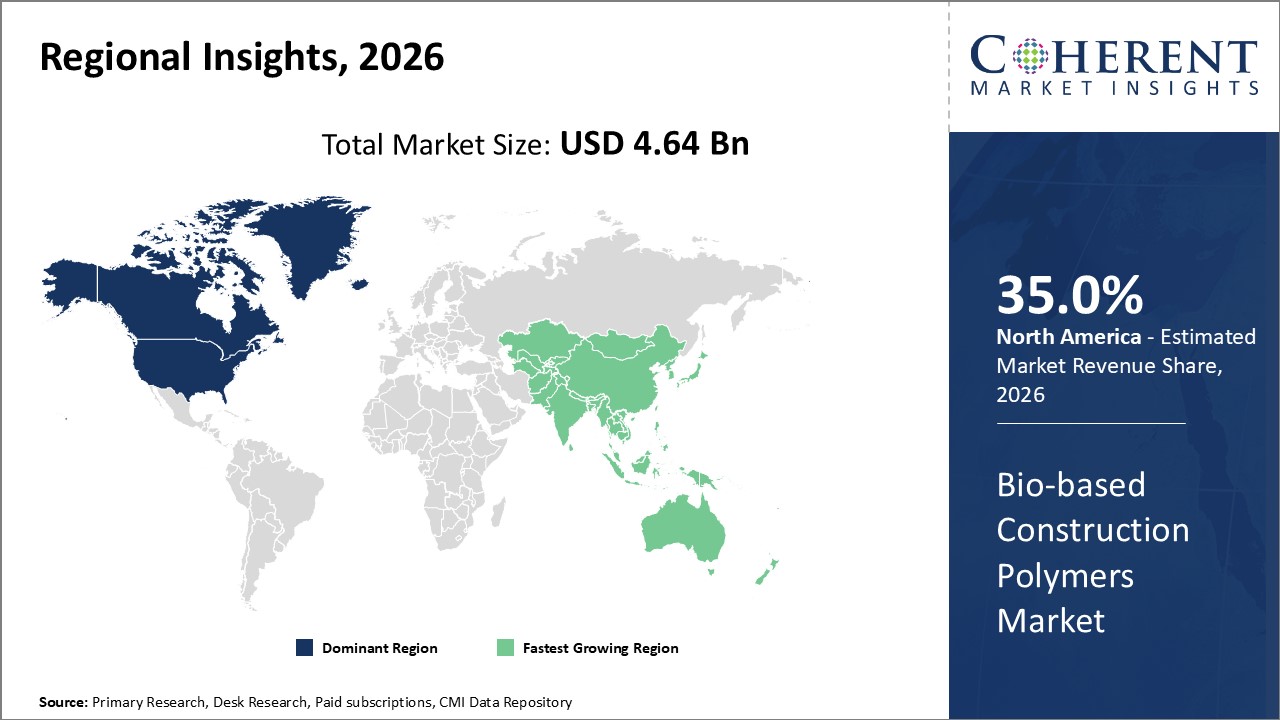
Regionally, North America retains dominance in market revenue, attributed to stringent regulations and high green building adoption rates.
Meanwhile, Asia Pacific is the fastest-growing region, with a CAGR exceeding 12%, propelled by rapid urbanization and supportive government policies fostering renewable material usage.
Europe also presents strong growth potential through innovation in biopolymer blends and smart construction technologies.
Bio-based Construction Polymers Market Segmentation Analysis
To learn more about this report, Request Free Sample
Bio-based Construction Polymers Market Insights, By Polymer Type
PLA dominates the market share with 34%. PLA's dominance stems from its favorable biodegradability, cost-efficient synthesis, and versatility in construction applications, making it the polymer of choice for insulation and flexible coating materials. The rapid scalability of PLA manufacturing capacity has underpinned consistent supply to meet bolstered demand in North American and European markets.
Bio-based Construction Polymers Market Insights, By Application
Insulation Materials dominate the market share at 40%. The demand for bio-based insulation is fueled by rising energy efficiency regulations globally and the superior thermal performance offered by bio-polymers, coupled with sustainability credentials. Enhanced demand for eco-friendly homes in developed economies continues to support this segment’s leading position. Structural Components represent the fastest-growing application segment. Bio-based polymer composites are increasingly replacing conventional materials in load-bearing systems due to their improved compressive strength and resistance to corrosion, leading to a 22% growth in recent years, particularly in Europe and the Asia Pacific.
Bio-based Construction Polymers Market Insights, By End-Use Industry
Residential applications dominate with a 45% market share, as the demand for sustainable living spaces and eco-certified housing projects compels builders to adopt bio-based polymers widely. Government incentives for green housing in North America and the Asia Pacific have further propelled this trend, creating a strong business growth environment. The Commercial segment is the fastest growing, driven by increasing construction of eco-conscious office spaces and retail complexes integrating bio-based polymer innovations for energy-efficient envelopes and interiors. Infrastructure & Public Works have a strong presence facilitated by public sector emphasis on sustainability, although growth is relatively slower compared to other segments due to longer adoption cycles. The Industrial segment caters mainly to specialized polymer applications in factories and warehouses.
Bio-based Construction Polymers Market Trends
The bio-based construction polymers market has recently witnessed rapid technological advancements, facilitating superior polymer blends that enhance durability and environmental compliance.
One notable trend is the integration of natural fibers with bio-polymers, offering improved insulation properties and reinforcing structural components, widely adopted in European high-performance buildings during 2023-2025.
Another significant development is the emphasis on smart polymer manufacturing that allows precision tailoring of materials to meet varying climatic and structural demands, as seen in the innovative solutions deployed in Japan’s residential sector.
Bio-based Construction Polymers Market Insights, By Geography
To learn more about this report, Request Free Sample
North America Bio-based Construction Polymers Market Analysis and Trends
In North America, the dominance in the Bio-based Construction Polymers market is attributed to stringent government policy frameworks promoting sustainable construction practices and substantial investments in green infrastructure. The U.S. market alone accounted for over 35% of total regional revenue in 2025, fueled by increasing LEED-certified projects and federal incentives encouraging bio-based material adoption. Companies such as BASF and NatureWorks have also established significant manufacturing and R&D hubs, reinforcing the region’s leadership.
Asia Pacific Bio-based Construction Polymers Market Analysis and Trends
Meanwhile, the Asia Pacific exhibits the fastest growth with a CAGR exceeding 12%, supported by rapid urbanization and government initiatives in China, India, and Southeast Asia promoting renewable and sustainable building materials. The region's expanding construction sectors, coupled with a growing middle-class focus on eco-friendly housing, have driven substantial market expansion. Investments by leading market players to localize production in countries like China and India have optimized supply chains and accelerated market penetration.
Bio-based Construction Polymers Market Outlook for Key Countries
USA Bio-based Construction Polymers Market Analysis and Trends
The USA's bio-based construction polymers market has made remarkable strides due to aggressive government incentives encouraging green construction. The Inflation Reduction Act of 2022, for example, allocates billions toward energy-efficient building materials, directly influencing bio-based polymer adoption. Leading market players have increased production capacity by over 15% between 2023-2025 to meet rising demand. The country also benefits from a mature ecosystem of sustainable construction professionals and early adoption of stringent environmental regulations, resulting in bio-based construction polymers capturing a significant share of new residential and commercial developments.
China Bio-based Construction Polymers Market Analysis and Trends
China's market is rapidly expanding, underpinned by the government's 14th Five-Year Plan emphasizing sustainability and carbon neutrality by 2060. The construction boom, coupled with substantial policy support for renewable materials, has elevated demand for bio-based polymers. Domestic manufacturers have increased production output by nearly 20% in the past year, with firms strategically investing in innovation for enhanced fire resistance and mechanical strength. Notable players like Braskem and Mitsubishi Chemical Holdings have entered strategic partnerships with local stakeholders to accelerate regional penetration, underscoring China's emerging leadership in the Asia Pacific market.
Analyst Opinion
The surge in demand for green building certifications such as LEED and BREEAM has significantly boosted the adoption of bio-based construction polymers. For instance, over 71% of new commercial buildings in 2025 in the U.S. integrated sustainable polymer solutions, driving a 16% increase in sector-specific polymer consumption compared to 2023.
Production capacity expansion in Asia Pacific, notably China and India, has played a pivotal role, with manufacturing capacities growing by 18% in 2025 alone. This has enabled local supply chains to better address domestic construction booms, lowering import dependencies and enhancing availability in the region.
Pricing dynamics have remained competitive despite raw material cost fluctuations, as manufacturers leveraged advances in bio-polymer synthesis to reduce production costs by approximately 13% since 2023. This has made bio-based polymers economically viable compared to conventional alternatives, increasing market penetration in cost-sensitive construction projects.
Diverse end-use applications ranging from insulation solutions to structural components across residential, commercial, and infrastructure sectors have expanded the market scope. For example, the usage of bio-based polymer composites in high-rise buildings in Europe has grown by 22% in recent years due to enhanced durability and fire resistance.
Market Scope
| Report Coverage | Details | ||
|---|---|---|---|
| Base Year: | 2025 | Market Size in 2026: |
USD 4.64 billion |
| Historical Data for: | 2020 To 2024 | Forecast Period: | 2026 To 2033 |
| Forecast Period 2026 to 2033 CAGR: | 10.4% | 2033 Value Projection: |
USD 8.5 billion |
| Geographies covered: |
|
||
| Segments covered: |
|
||
| Companies covered: | FKuR Kunststoff GmbH, Synvina BV, Kaneka Corporation, TotalEnergies Corbion PLA, Evonik Industries, Zelan LLC, Green Dot Bioplastics, Biome Bioplastics, RWDC Industries, Plantic Technologies | ||
| Growth Drivers: |
|
||
Uncover macros and micros vetted on 75+ parameters: Get instant access to report
Bio-based Construction Polymers Market Growth Factors
The regulatory landscape favoring low-emission construction materials is the foremost growth driver; notably, the EU’s 2025 Green Deal revision mandates at least 50% use of sustainable polymers in new public infrastructure projects. Growing environmental consciousness among consumers and construction companies is accelerating demand for bio-based polymers as they offer benefits such as biodegradability and reduced VOC emissions. Advances in biopolymer synthesis technology have significantly improved the mechanical properties and weather resistance of bio-based construction polymers, increasing their applicability in harsh climates. Lastly, cost parity achieved between bio-based and conventional polymers through economies of scale and feedstock optimization is making these materials more accessible globally.
Bio-based Construction Polymers Market Development
In 2025, Michelmersh, one of the UK’s leading brick manufacturers, entered into a strategic partnership with Braskem to integrate bio-based materials into its brick production processes. The collaboration aims to substantially lower embodied carbon across the brick value chain by replacing traditional petrochemical inputs with Braskem’s renewable, sugarcane-derived materials. This initiative supports the UK’s push for low-carbon construction solutions and positions Michelmersh as an early adopter of circular, bio-based building technologies.
In 2026, the Green Chemistry Centre of Excellence (GCCE) and Synthomer launched a dedicated research initiative to develop low-carbon bio-monomers tailored for sustainable construction polymers. The program focuses on next-generation monomer chemistries derived from renewable feedstocks, targeting applications in adhesives, sealants, coatings, and high-performance composites. By enabling drop-in replacements for conventional fossil-based monomers, the collaboration aims to accelerate the construction sector’s transition toward lower-emission, circular polymer systems.
Key Players
Leading Companies of the Market
FKuR Kunststoff GmbH
Synvina BV
Kaneka Corporation
TotalEnergies Corbion PLA
Evonik Industries
Zelan LLC
Green Dot Bioplastics
Biome Bioplastics
RWDC Industries
Plantic Technologies
Competitive strategies in this market focus heavily on innovation in polymer formulation and sustainability certifications. For example, NatureWorks LLC’s partnership with major construction firms has accelerated adoption by demonstrating lifecycle carbon reduction exceeding 30%. Similarly, BASF SE has invested in expanding its R&D facilities for next-gen bio-based adhesives, leading to a 25% improvement in bonding efficacy on traditional substrates.
Bio-based Construction Polymers Market Future Outlook
Future growth will be driven by large-scale adoption of sustainable construction practices, government incentives for green materials, and technological breakthroughs enabling high-performance bio-polymers. Builders are likely to increasingly favor renewable materials for insulation, flooring, coatings, and structural composites. Advances in bio-based epoxy resins, biodegradable protective films, and low-carbon concrete additives will broaden application potential. As climate targets tighten globally, the need for low-carbon alternatives in construction will position bio-based polymers as essential materials in future building ecosystems.
Bio-based Construction Polymers Market Historical Analysis
The Bio-based Construction Polymers market has grown from niche usage to broader acceptance as sustainability became central to construction strategies. Initially dominated by bio-polyurethane and bio-based polyethylene, the market expanded with improved material strength, temperature resistance, and compatibility with modern building systems. Over the past decade, global green building certifications, stricter carbon reduction mandates, and rising demand for recyclable materials have significantly enhanced adoption. Rapid urban development in Asia and increasing retrofitting in Europe further stimulated demand for environmentally conscious construction materials.
Sources
Primary Research Interviews:
Green Building Experts
Polymer Scientists
Construction Material Manufacturers
Sustainability Officers
Civil Engineers
Databases:
GlobalData Construction
Statista Bio-based Materials
IEA Bioenergy
UN Environment Data
OECD Bio-materials Database
Magazines:
Green Building Magazine
Sustainable Construction Review
Construction Dive
Chemical & Engineering News
Eco-Build Journal
Journals:
Journal of Cleaner Production
Construction & Building Materials
Sustainable Materials & Technologies
Polymer Science Journal
Green Chemistry
Newspapers:
The Guardian (Environment)
The Washington Post (Sustainability)
The Economic Times (Construction)
Financial Express (Industry)
The Times (Environment)
Associations:
USGBC
World Green Building Council
ASTM International
American Chemical Society (ACS)
European Bioplastics Association
Share
Share
Pankaj Poddar is a seasoned market research consultant with over 12 years of extensive experience in the fast-moving consumer goods (FMCG) and plastics material industries. He holds a Master’s degree in Business Administration with specialization in Marketing from Nirma University, one of India’s reputed institutions, which has equipped him with a solid foundation in strategic marketing and consumer behavior.
As a Senior Consultant at CMI for the past three years, he has been instrumental in harnessing his comprehensive understanding of market dynamics to provide our clients with actionable insights and strategic guidance. Throughout his career, He has developed a robust expertise in several key areas, including market estimation, competitive analysis, and the identification of emerging industry trends. His approach is grounded in a commitment to understanding client needs thoroughly and fostering collaborative relationships. His dedication to excellence and innovation solidifies his role as a trusted advisor in the ever-evolving landscape of not only FMCG but also chemicals and materials markets.

Credibility and Certifications

860519526


9001:2015

27001:2022


Need a Custom Report?
We can customize every report - free of charge - including purchasing stand-alone sections or country-level reports
Customize NowJoining thousands of companies around the world committed to making the Excellent Business Solutions.
View All Our Clients