

Chromatography Resins Market Size and Forecast – 2026 to 2033
The chromatography resins market is estimated to be valued at USD 3.00 Bn in 2026 and is expected to reach USD 4.88 Bn by 2033, exhibiting a compound annual growth rate (CAGR) of 7.1% from 2026 to 2033.
Key Takeaways
- Based on Type, the Natural segment leads the market holding an estimated share of 52.8 % share in 2026, due to their wide use in protein purification, enzyme isolation, and monoclonal antibody production.
- Based on Technique, the Ion Exchange segment leads the market holding an estimated share of 33.7 % in 2026, supported by its efficiency in separating proteins, nucleic acids, and other charged biomolecules.
- Based on End-Use, the Pharmaceutical & Biotechnique segment is expected to contribute the largest share of 34.9 % in 2026, driven by rising biologics and biosimilars production, expanding vaccine development, and increasing demand for advanced drug purification methods.
- Based on Region, North America is estimated to lead the market with a share of 30.8 % in 2026. While, Asia Pacific is projected to be the fastest growing region.
Market Overview
Rising demand from the pharmaceutical industry is expected to be a key driver. Pharmaceutical companies are increasingly relying on chromatographic techniques for the large-scale purification of drugs during manufacturing. This is increasing the demand for high-performance chromatography resins that can efficiently separate and purify complex biomolecules. Furthermore, growing investments by resin manufacturers to develop advanced biocompatible resins for use in protein chromatography applications will further support the market growth over the coming years. Wide applications of chromatography across various industries, such as food and beverage testing, environmental testing, and biotechnology, are also boosting the chromatography resins market growth.
Current Events and Its Impact
Current Event | Description and Its Impact |
Pharmaceutical Patent Cliff Crisis |
|
Green Chemistry and Environmental Regulatory Pressure |
|
End-user feedback and unmet needs in the Chromatography Resins Market
End-User Feedback
- Pharmaceutical & Biotech Firms: Appreciate high binding capacity and reproducibility but expect lower costs for large-scale biologics purification.
- Food & Beverage Companies: Value resins for contaminant removal but demand simpler, faster workflows for routine testing.
- Academic & Research Institutes: Highlight flexibility and broad application range but face challenges with high pricing.
- Environmental Labs: Emphasize reliability in water and pollutant analysis but require resins with better durability for repeated use.
Unmet Needs
- Cost Efficiency – Current chromatography resins are expensive, limiting accessibility for small and mid-sized labs.
- Reusability – Demand for resins with longer lifecycle and consistent performance across multiple runs.
- Scalability – Need for smooth transition from lab-scale to industrial-scale purification without loss of efficiency.
- Customization – Lack of specialized resins tailored for niche biologics, vaccines, and gene therapy products.
- Sustainability – Growing call for greener, biodegradable resins to align with regulatory and environmental standards.
- Current Industry Events of 2026
- Market Size Estimation
- Regional Breakdown
- Competitive Landscape
- Customer Intelligence
- Segmental Analysis
- Pricing Analysis
- Key Market Drivers, Challenges & Future Trends
- Customized Insights Section
Segmental Insights
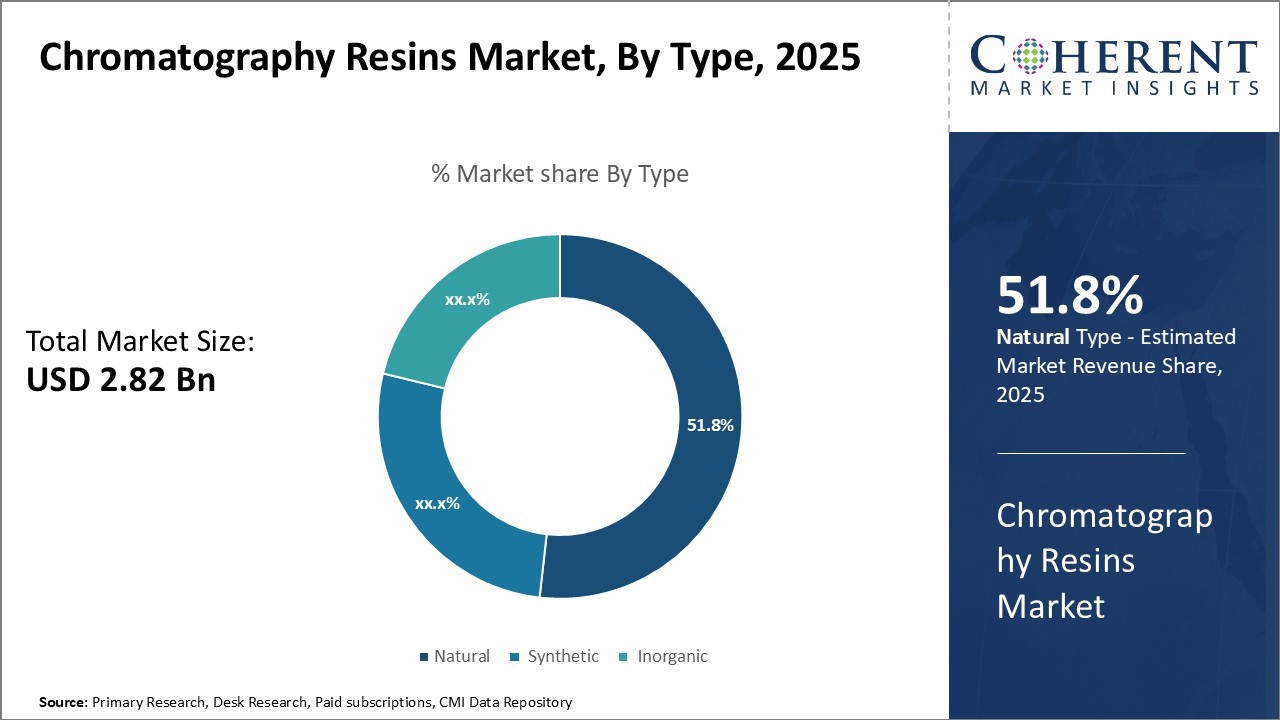
Chromatography Resins Market Insights, By Type - Natural is Dominating Due To Their Biocompatibility and Cost-Effectiveness
In terms of type, the natural segment is expected to contribute 52.8% share of the market in 2026, due to their wide use in protein purification, enzyme isolation, and monoclonal antibody production. Their biocompatibility, ease of availability, and cost-effectiveness make them highly preferred across pharmaceutical and biotech applications. Moreover, their long-standing use in chromatography processes reinforces demand despite synthetic alternatives.
For instance, in May 2025, DuPont launched AmberChrom TQ1, a new agarose-based chromatography resin designed for purifying oligonucleotides and peptides in biopharma manufacturing. It offers high loading capacity, high throughput, and lower pressure requirements versus competitors, enabling high purity separations even in large-scale operations.
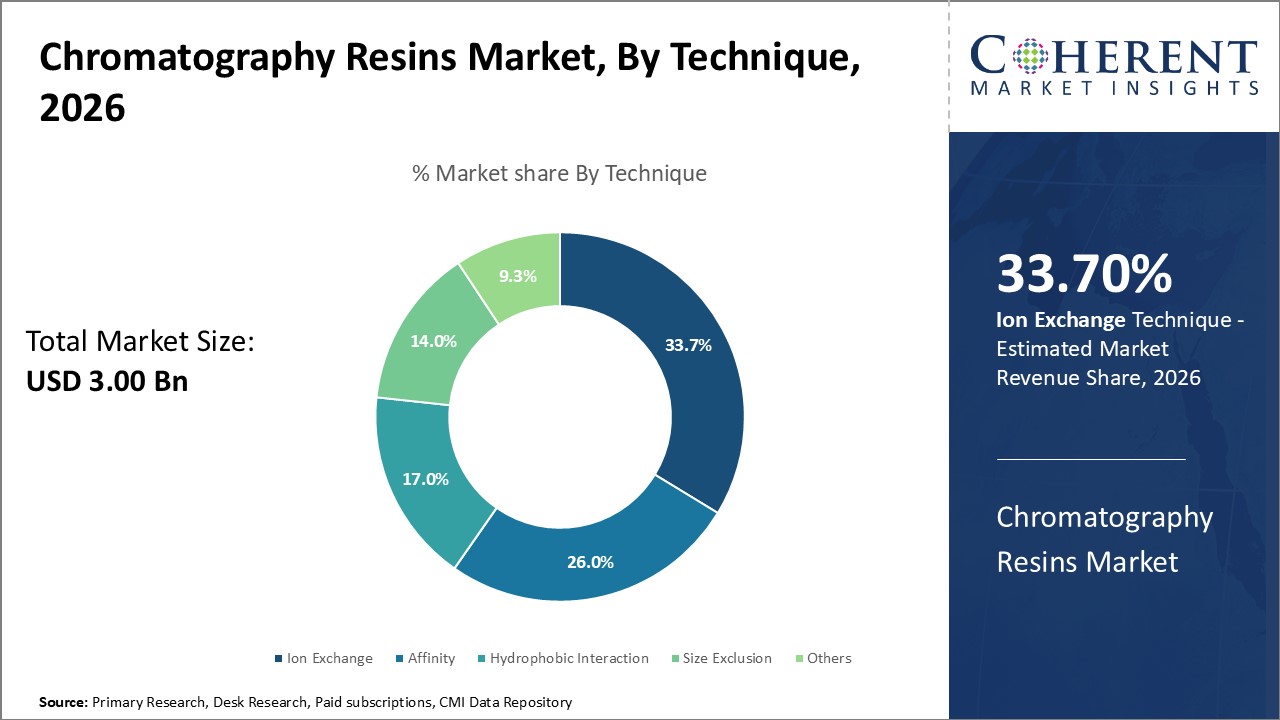
Chromatography Resins Market Insights, By Technique - Ion Exchange is Favored for Its Versatility in Purifying Proteins, Nucleic Acids, And Monoclonal Antibodies
In terms of technique, the ion exchange segment is expected to contribute 33.7% share of the market in 2026, supported by its efficiency in separating proteins, nucleic acids, and other charged biomolecules. It is a key technique in biopharmaceutical manufacturing, especially for purifying monoclonal antibodies and vaccines. Its flexibility, high resolution, and ability to handle large-scale purification processes ensure its dominance over other chromatography techniques.
For instance, in September 2024, Sunresin unveiled a novel line of medicinal powder resins engineered to enhance drug formulations by offering superior ion‐exchange functionality. The water-insoluble resins, strong cation and weak anion exchangers, boost drug efficacy through controlled release, bitterness masking, improved stability, and minimized side effects.
Chromatography Resins Market Insights, By End-Use - Role in Pharma & Biotech fueled by rising biologics production, vaccine development, and demand for advanced drug purification
In terms of end-use, pharmaceutical & biotechnique segment is expected to contribute 34.9% share of the market in 2026, driven by rising biologics and biosimilars production, expanding vaccine development, and increasing demand for advanced drug purification methods. Continuous investments in R&D, regulatory requirements for high-quality purification, and the growing prevalence of chronic diseases further strengthen the segment’s leading position.
For instance, in July 2025, Ecolab Life Sciences launched Purolite AP+50, a next-generation affinity chromatography resin aimed at enhancing biopharmaceutical purification. The resin features 50-micron beads, offering the highest dynamic binding capacity in the AP range, durability for monoclonal antibody capture, and improved lot-to-lot consistency via Ecolab’s “Jetted resin bead” technology.
Regional Insights
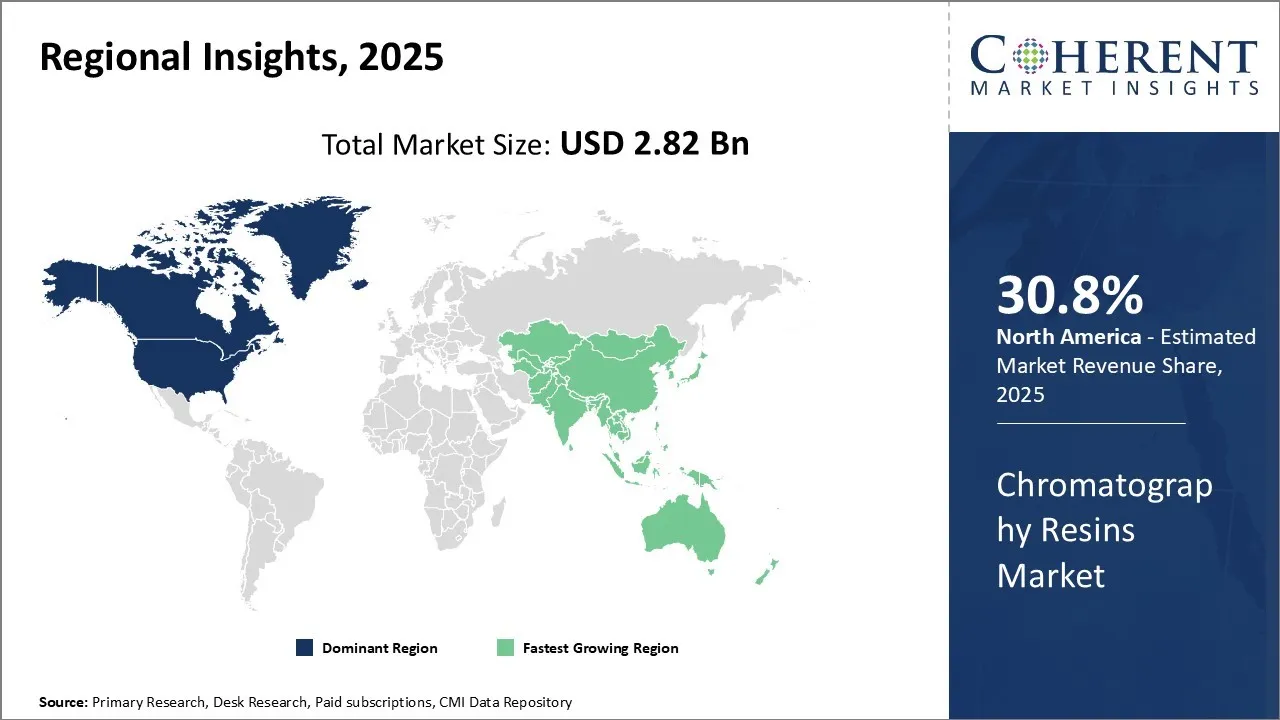
North America Chromatography Resins Market Analysis & Trends
North America has historically dominated the global chromatography resins market. The region is expected to account for 30.8% of the market share in 2026, owing to the strong presence of pharmaceutical and biotechnology companies in the region. The U.S. is home to many leading pharmaceutical firms which are engaged in development and production of biotherapeutics and large molecule drugs. This has propelled the demand for various chromatography techniques and resins for purification and separation applications over the years. Additionally, heavy investments in R&D by these companies have created a robust landscape for chromatography resin suppliers to cater to their complex purification requirements. Some of the top pharmaceutical companies in the region are known to directly source resins from manufacturers based on their proprietary needs, adding to the market share. However, pricing pressures due to patent cliffs have pushed these companies to focus on cost efficiency without compromising on quality. This has benefitted chromatography resin producers who offer customized solutions and services.
For instance, in June 2026, Cytiva, part of Danaher, has completed USD 1.6 billion worth of investment since 2019 in expansion projects across the US, Europe and Asia to boost manufacturing capacity. The moves include new chromatography and filtration facilities in Michigan and Sweden, increased production in places like Florida and UK, and expanded single-use consumables and media-manufacturing operations through 2026.
Asia Pacific Chromatography Resins Market Analysis & Trends
The Asia Pacific region is poised to grow at an unprecedented rate in the coming years on account of emerging economies like China and India increasingly adopting modern bioprocessing technologies. Surging investments in healthcare infrastructure coupled with growing biosimilars market in these countries has boosted their biopharmaceutical manufacturing capabilities. Domestic firms are actively partnering with multinational drug makers to gain knowledge and set up large scale production facilities. This is translating into higher sales of various bioprocess consumables including chromatography resins. Additionally, price competitiveness of Asia Pacific's resin manufacturers along with their ability to meet proprietary requirements is helping them attain a sizable share of exports to other developing markets. The availability of technologically skilled workforce provides impetus to local players to compete with global leaders in the development of specialty resins.
For instance, in October 2024, Shimadzu Corporation invested in Sepragen Corporation, a leader in bioprocess chromatography systems for biopharmaceutical production. Effective November 2024, Shimadzu will exclusively market and service Sepragen’s products in Japan, South Korea, and Southeast Asia. This strategic move expands Shimadzu’s presence in the growing biopharmaceutical sector, focusing on vaccine and gene therapy drug purification.
Chromatography Resins Market Outlook Country-Wise
The U.S. Chromatography Resins Market Trends
The United States leads the Chromatography Resins Market due to its well-established biopharmaceutical sector, extensive R&D investments, and large-scale production of biologics and biosimilars. High adoption of advanced purification techniques, stringent regulatory standards, and continuous innovation in drug development further drive the demand for chromatography resins across pharmaceutical and biotechnology applications, ensuring consistent market growth.
For instance, in December 2024, Repligen Corporation launched AVIPure® dsRNA Clear OPUS® columns, a novel affinity chromatography solution designed to enhance mRNA therapeutic and vaccine production. This technology offers a 2-3 log reduction of double-stranded RNA impurities in just one minute, without the need for heat or solvents. The product combines Repligen’s affinity ligands with Tantti Laboratory’s DuloCore® bead technology, following Repligen’s acquisition of Tantti in July 2024.
India Chromatography Resins Market Trends
In India, the Chromatography Resins Market is witnessing strong demand due to the country’s rapidly expanding pharmaceutical exports and booming clinical research sector. Indian manufacturers are increasingly focusing on biologics and biosimilars production, where cost-effective purification methods are critical. Additionally, government initiatives supporting biotech innovation and growing investments in R&D further strengthen the adoption of chromatography resins across the industry.
For instance, in April 2026, Cytiva introduced two new protein A chromatography resins — MabSelect SuRe 70 and MabSelect PrismA X — crafted from renewable agarose to support scalable and cost-efficient monoclonal antibody (mAb) purification. The launches target both early-stage clinical and commercial production, offering high binding capacity and durability. Cytiva also emphasizes its commitment to sustainability and global supply security .
Market Report Scope
Chromatography Resins Market Report Coverage
| Report Coverage | Details | ||
|---|---|---|---|
| Base Year: | 2025 | Market Size in 2026: | USD 3.00 Bn |
| Historical Data for: | 2020 To 2024 | Forecast Period: | 2026 To 2033 |
| Forecast Period 2026 to 2033 CAGR: | 7.1% | 2033 Value Projection: | USD 4.88 Bn |
| Geographies covered: |
| ||
| Segments covered: |
| ||
| Companies covered: | W.R. Grace and Company, Osaka Soda Co. Limited, Alfa Aesar, Merck KGaA, AGC Group, SiliCycle Inc., Sorbead India, Sepax Technologies Inc., Bio - Rad Laboratories, Inc., Wipro GE Healthcare Pvt Ltd, Purolite, GRACE, Mitsubishi Chemical Holdings Corporation., and Danaher | ||
| Growth Drivers: |
| ||
| Restraints & Challenges: |
| ||
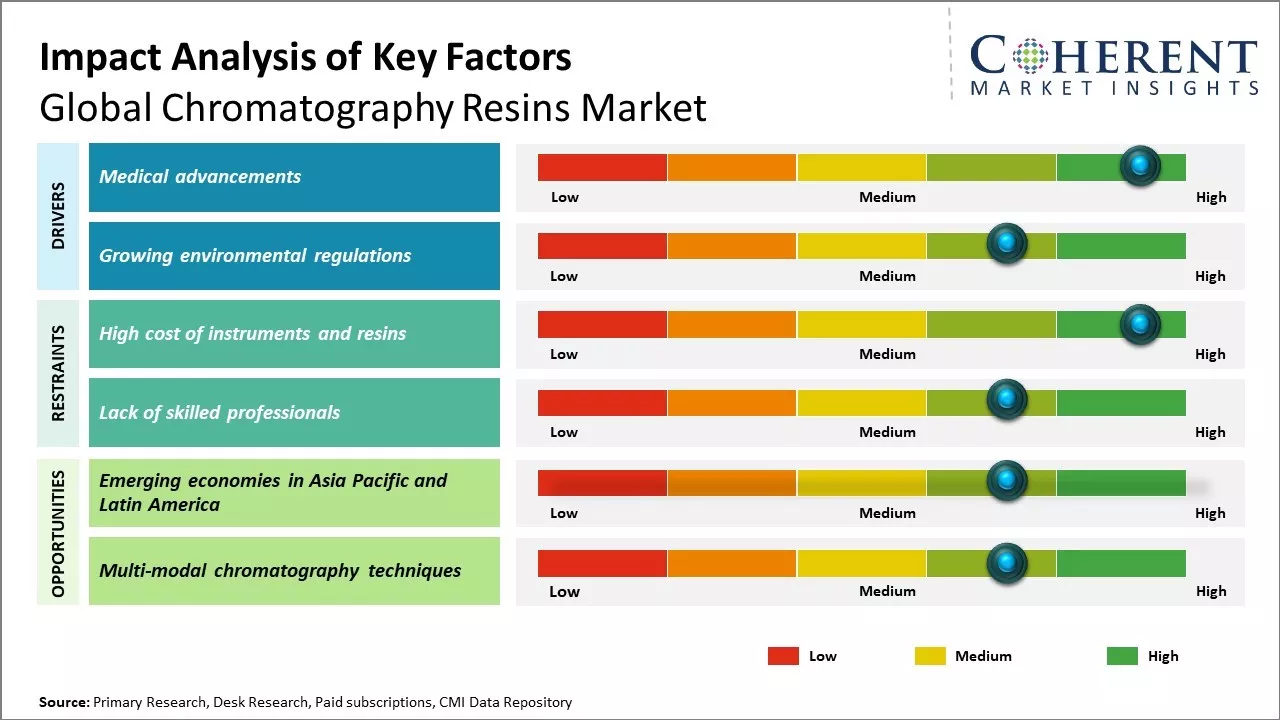
Chromatography Resins Market Driver
Medical advancements
The chromatography resins market has seen considerable growth due to increased investments in the research and development of biotherapeutics like monoclonal antibodies. Chromatography finds widespread application in the purification and isolation of biologics during drug manufacturing and production. Rise in non-communicable diseases like cancer has fueled the demand for biologic drugs. More effective targeted therapies are being designed that counter specific pathologies. Their development relies on the ability to analyze intricate protein structures and interactions at the molecular level. Chromatography resins provide a reliable means to isolate biologic compounds from complex production samples. They assist in characterizing molecular properties and ensuring purity standards are met before drugs can enter clinical testing and commercial production. Ensuring drug safety and efficacy is a top priority for regulatory bodies as well as pharmaceutical manufacturers. This has encouraged innovations in chromatography resin design that offer improved selectivity, capacity, and resolution for complex separation tasks. The development of next-generation biologics will continue propelling investments in R&D and analytical capabilities, driving the need for advanced chromatography resins.
Market Concentration and Competitive Landscape
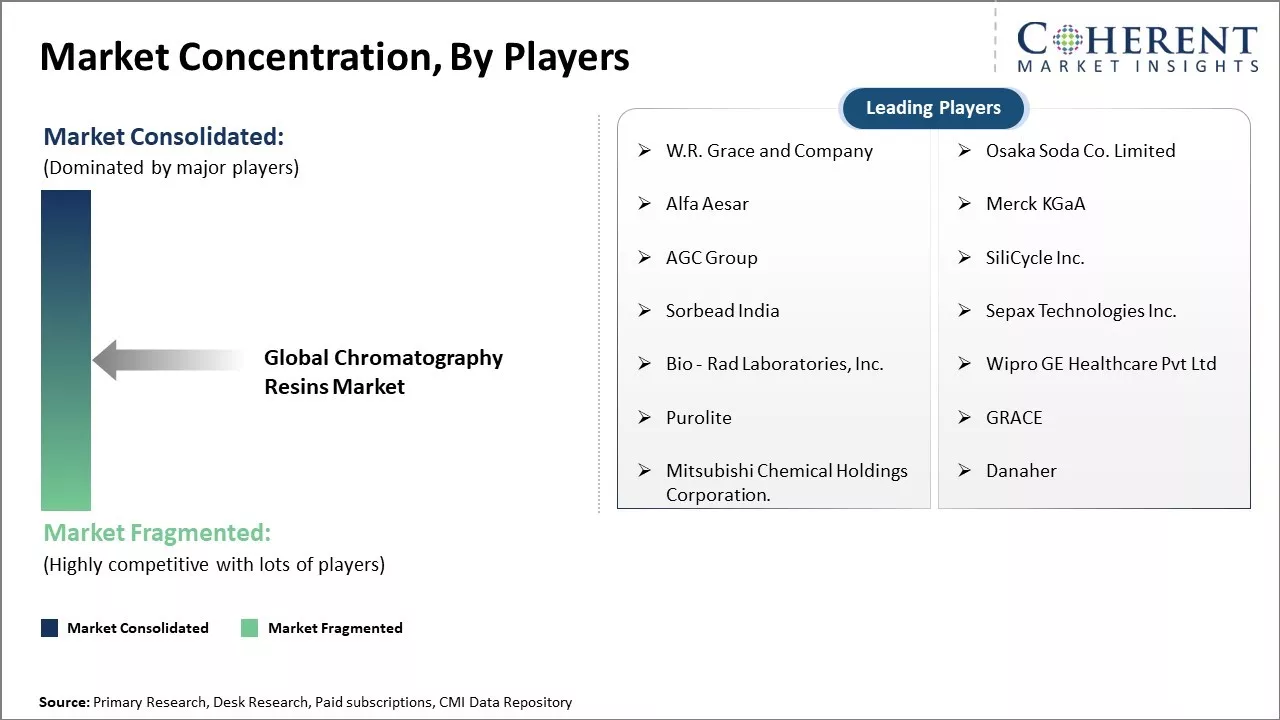
Analyst Opinion (Expert Opinion)
The Chromatography Resins market value is undergoing a technically driven maturation phase in which product differentiation, raw-material sourcing and downstream process integration will determine winners and losers. Recent supplier activity and regional industrial patterns indicate the market is no longer simple consumables play; it has become a strategic enabler for biologics scale-up, biosimilar cost economics and regional biomanufacturing independence.
Technology and product innovation are now the principal commercial battlegrounds. Upgrades in Protein A chemistries and high-capacity base matrices are being introduced explicitly to reduce cost-per-gram of monoclonal antibody (mAb) capture and to enable faster cycle times. A salient example is the 2025 roll-out of new MabSelect resins (MabSelect SuRe 70 and MabSelect PrismA X) that emphasize both higher productivity and use of renewable agarose feedstock, a clear signal that suppliers are investing in both performance and sustainability claims rather than competing only on price.
Market structure is bifurcating: (a) premium, performance-led resins for mAb and complex biologics purification (high value per batch, strong technical service attachment), and (b) commoditized resins for baseline analytical and small-molecule separations. Margin pressures will be acute in the latter segment; commercial success in the former will rely on demonstrable process intensification gains (e.g., higher dynamic binding capacity, reuse cycles, or compatibility with continuous capture). Suppliers that can quantify real downstream operating expense reductions will preserve pricing power. Evidence of this strategic shift is visible in product messaging that emphasizes throughput and lifecycle cost versus simple binding capacity claims.
Sustainability and raw material sourcing are rising as procurement criteria. The publicization of resins made from renewable agarose underlines a broader buyer preference: procurement teams and manufacturing quality groups will favor materials that reduce upstream environmental risk and long-term supplier dependency. This preference will translate into tenders that weight sustainability and supply-chain transparency alongside technical performance.
Speak to the analyst
Want personalized insights?
Take the findings above to one of our principal consultants, or have the report rebuilt around the segments, geographies and competitors you actually track.
Chromatography Resins Industry News
- In January 2025, Bio-Rad Laboratories launched Nuvia wPrime 2A Media, a new mixed-mode chromatography resin combining weak anion exchange and hydrophobic interaction modalities for biomolecule purification. It’s suited for lab-, pilot-, and manufacturing-scale workflows and is effective at removing host cell proteins, DNA, aggregates and other impurities from antibodies and adeno-associated viruses.
- In February 2024, Purolite and Repligen, jointly launched Praesto 70 CH1, a 70 μm agarose-based affinity resin for purifying specialized monoclonal antibodies, including bispecifics and antibody fragments. The resin, developed under their strategic partnership, combines Purolite’s bead manufacturing with Repligen’s ligand tech.
- In 2023, Mitsubishi Chemical initiated the implementation of a commercial polycarbonate (PC) resin recycling program. By the year 2030, the company aims to establish an annual processing capacity of 10,000 tons of recycled PC resin material, thereby commercializing the chemical recycling of PC resin.
Market Segmentation
- Type Insights (Revenue, USD Bn, 2026 - 2033)
- Natural
- Synthetic
- Inorganic
- Technique Insights (Revenue, USD Bn, 2026 - 2033)
- Ion Exchange
- Affinity
- Hydrophobic Interaction
- Size Exclusion
- Others
- End-use Insights (Revenue, USD Bn, 2026 - 2033)
- Pharmaceutical & Biotechnique
- Food & Beverage
- Water & Environmental Analysis
- Other End-Uses
- Regional Insights (Revenue, USD Bn, 2026 - 2033)
- North America
- U.S.
- Canada
- Latin America
- Brazil
- Argentina
- Mexico
- Rest of Latin America
- Europe
- Germany
- U.K.
- Spain
- France
- Italy
- Russia
- Rest of Europe
- Asia Pacific
- China
- India
- Japan
- Australia
- South Korea
- ASEAN
- Rest of Asia Pacific
- Middle East & Africa
- GCC Countries
- Israel
- Rest of Middle East & Africa
- Key Players Insights (Revenue, USD Bn, 2021 - 2033)
- W.R. Grace and Company
- Osaka Soda Co. Limited
- Alfa Aesar
- Merck KGaA
- AGC Group
- SiliCycle Inc.
- Sorbead India
- Sepax Technologies Inc.
- Bio - Rad Laboratories, Inc.
- Wipro GE Healthcare Pvt Ltd
- Purolite
- GRACE
- Mitsubishi Chemical Holdings Corporation.
- Danaher
Sources
Primary Research Interviews from the following stakeholders
Stakeholders
- Interviews with biopharmaceutical manufacturers, contract development & manufacturing organizations (CDMOs), academic research institutes, CROs, regulatory professionals, and procurement managers across leading global markets.
Specific stakeholders
- Bioprocess development leads at global pharma companies (e.g., Pfizer, Novartis, Amgen)
- Heads of purification and downstream processing at CDMOs (e.g., Lonza, WuXi Biologics, Samsung Biologics)
- Principal investigators at university biotech labs (e.g., MIT, University of Cambridge, National University of Singapore)
- Quality assurance and regulatory affairs managers at biologics facilities
- Procurement and sourcing managers at biopharma and vaccine manufacturers
- R&D directors at chromatography resin suppliers (e.g., protein A, ion exchange, affinity)
- Process engineers and scale-up managers at biosimilar and monoclonal antibody production facilities
Databases
- World Trade Organization (WTO) Trade Statistics
- UN Comtrade Database
- U.S. Food & Drug Administration (FDA) – Biologics and Drug Approvals Data
- European Medicines Agency (EMA) – Biopharmaceutical Approvals & Guidelines
- Eurostat – Chemicals and Life Sciences Trade Data
- Japan External Trade Organization (JETRO) – Biotechnology & Life Sciences Data
- Directorate General of Commercial Intelligence and Statistics (DGCIS), India – Pharma & Biotech Trade
- Korea Customs Service Data Portal – Biotech-related Trade Statistics
- China Customs Statistics – Biopharma Imports/Exports
Magazines
- Genetic Engineering & Biotechnology News (GEN)
- Biopharm International
- Pharmaceutical Technology
- Bioprocess International
- The Scientist – Biotechnology Section
- European Pharmaceutical Review
- Pharma’s Almanac
- Drug Development & Delivery
Journals
- Journal of Chromatography A (Elsevier)
- Journal of Separation Science (Wiley)
- Analytical Chemistry (ACS Publications)
- Biotechnology and Bioengineering (Wiley)
- Nature Biotechnology
- Journal of Pharmaceutical Sciences (Elsevier)
- mAbs Journal (Taylor & Francis)
- Biochemical Engineering Journal
Newspapers
- The Wall Street Journal – Pharma & Biotechnology
- The Economic Times – Pharma & Life Sciences
- The Hindu Business Line – Healthcare & Biotech
- Financial Times – Pharmaceuticals and Bioprocessing Coverage
- Nikkei Asia – Biopharma and Life Sciences Supply Chain
- South China Morning Post – Healthcare and Biotech Sector
Associations
- American Chemical Society (ACS) – Analytical Chemistry Division
- International Society for Pharmaceutical Engineering (ISPE)
- Bio-Process Systems Alliance (BPSA)
- European Federation of Pharmaceutical Industries and Associations (EFPIA)
- Parenteral Drug Association (PDA)
- Indian Pharmaceutical Association (IPA)
- Biotechnology Innovation Organization (BIO)
- International Union of Pure and Applied Chemistry (IUPAC) – Separation Science Division
Public Domain Sources
- U.S. National Institutes of Health (NIH) – Biotech Research Grants & Databases
- U.S. Pharmacopeia (USP) – Chromatography Standards
- National Institute of Standards and Technology (NIST), U.S.
- Ministry of Health, Labour and Welfare (MHLW), Japan – Biopharma Guidelines
- Central Drugs Standard Control Organization (CDSCO), India – Biotech Regulations
- European Commission – Life Sciences & Biotechnology Reports
- Reserve Bank of India (RBI) – Healthcare Sector Reports
- India Investment Grid – Biotechnology & Pharma Sector
Proprietary Elements
- CMI Data Analytics Tool, and Proprietary CMI Existing Repository of information for last 8 years
*Definition: The chromatography resins market consists of various separation media materials that are used in chromatography techniques for analytical and process purposes. The resins help isolate and purify biomolecules and other chemical compounds. They play a key role in processes like protein purification, water treatment, drug discovery, and purification of antibodies. Common resin types available in this market include silica gel, polystyrene divinylbenzene, and agarose, among others. They are designed to effectively and efficiently separate target molecules from a complex mixture.
Get access to 250+ pages report
Every segment, forecast, competitor profile and data table behind the analysis above — available for instant download.
- ESOMAR Member
- ISO 9001:2015 Certified
- D-U-N-S Registered
- GDPR & CCPA Compliant
Missing comfort of reading report in your local language? Find your preferred language:
Transform your Strategy with Exclusive Trending Reports
Frequently Asked Questions
The Chromatography Resins Market is estimated to be valued at USD 3.00 Bn in 2026, and is expected to reach USD 4.88 Bn by 2033.
The CAGR of the Chromatography Resins Market is projected to be 7.1% from 2026 to 2033.
Medical advancements and growing environmental regulations are the major factors driving the growth of the global chromatography resins market.
Medical advancements and growing environmental regulations are the major factors driving the growth of the global chromatography resins market.
In terms of type, natural is estimated to dominate the market revenue share in 2026.
W.R. Grace and Company, Osaka Soda Co. Limited, Alfa Aesar, Merck KGaA, AGC Group, SiliCycle Inc., Sorbead India, Sepax Technologies Inc., Bio - Rad Laboratories, Inc., Wipro GE Healthcare Pvt Ltd, Purolite, GRACE, Mitsubishi Chemical Holdings Corporation., and Danaher are the major players.
North America is expected to lead the global chromatography resins market.