Disposable Infusion Extension Lines Market Analysis & Forecast: 2026-2033

Disposable Infusion Extension Lines Market Size and Forecast – 2026 – 2033
The Global Disposable Infusion Extension Lines Market size is estimated to be valued at USD 1.2 billion in 2026 and is expected to reach USD 2.1 billion by 2033, exhibiting a compound annual growth rate (CAGR) of 8.5% from 2026 to 2033.
Global Disposable Infusion Extension Lines Market Overview
The Disposable Infusion Extension Lines market is driven by the rising number of hospitalizations and intravenous (IV) therapies, particularly in critical care, oncology, and emergency medicine. Increasing prevalence of chronic diseases such as cancer, diabetes, and cardiovascular disorders has significantly boosted long-term infusion requirements. Growing emphasis on infection control and prevention of catheter-related bloodstream infections is accelerating the shift toward single-use disposable extension lines. Expanding surgical procedures, rising ICU admissions, and advancements in IV drug delivery systems further support market growth. Additionally, stringent healthcare safety regulations and increasing adoption of home healthcare and ambulatory care services are strengthening demand globally.
Key Takeaways
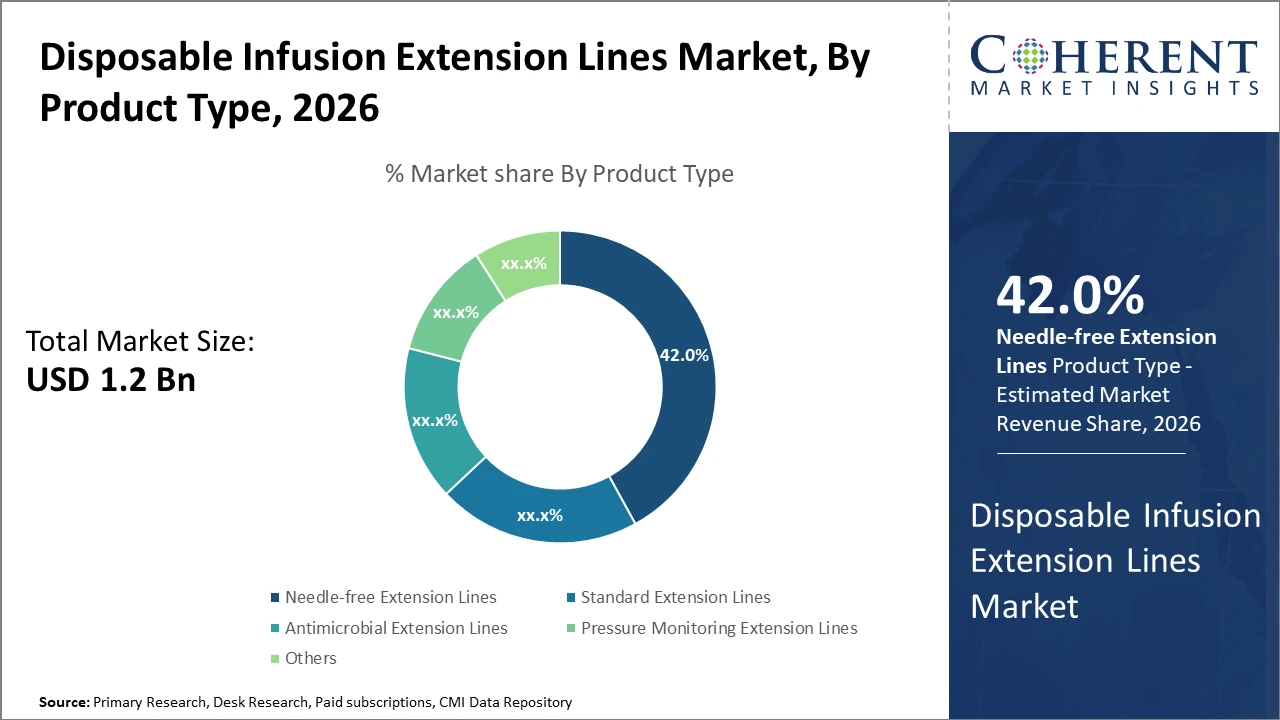
Needle-free extension lines dominate the Disposable Infusion Extension Lines Market with approximately 42% market share, driven by advancements in contamination prevention, enhanced patient safety, and growing adoption of needleless access technologies.
Hospitals account for around 58% of the market share, making them the largest end-user segment due to increasing infusion therapy procedures, high patient volumes, and stringent infection control requirements.
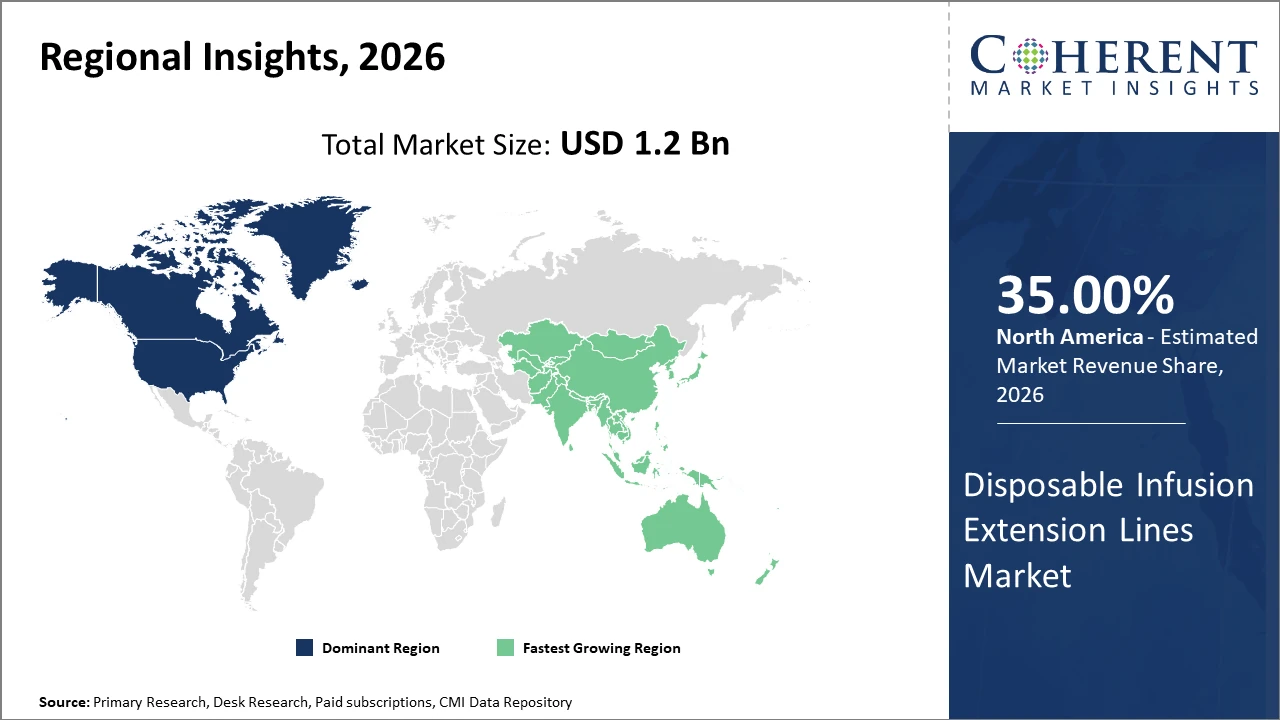
North America leads the global market with more than 35% of industry revenue, supported by advanced healthcare infrastructure, strong regulatory standards, and widespread use of disposable infusion devices.
Asia Pacific is the fastest-growing regional market, registering a CAGR above 10%, fueled by expanding healthcare access, increasing chronic disease burden, and growing adoption of home-based infusion therapies in countries such as China and India.
Disposable Infusion Extension Lines Market Segmentation Analysis
To learn more about this report, Request Free Sample
Disposable Infusion Extension Lines Market Insights, By Product Type
Needle-free extension lines dominate the Disposable Infusion Extension Lines Market with a 42% share, driven by stringent hospital safety protocols and regulatory recommendations aimed at reducing needlestick injuries and minimizing the risk of healthcare-associated infections. Their ease of use and enhanced safety profile have made them a preferred choice across healthcare facilities. Antimicrobial extension lines represent the fastest-growing segment, fueled by increasing concerns over catheter-associated bloodstream infections, particularly in intensive care and high-risk patient settings. Standard extension lines continue to maintain widespread adoption due to their affordability and compatibility with various infusion systems. Pressure monitoring extension lines are gaining traction in critical care applications, while other specialized extension lines serve niche clinical requirements.
Disposable Infusion Extension Lines Market Insights, By Material Type
Polyurethane is the leading material segment in the Disposable Infusion Extension Lines Market due to its superior flexibility, excellent chemical resistance, and compatibility with a wide range of medications and infusion solutions. Its lower phthalate content and favorable safety profile have further strengthened its adoption in advanced clinical settings. Silicone-based extension lines represent the fastest-growing segment, driven by their exceptional biocompatibility, durability, and suitability for prolonged infusion therapies involving sensitive or specialty drug formulations. PVC continues to hold a substantial market share because of its cost-effectiveness and widespread availability across healthcare facilities.
Disposable Infusion Extension Lines Market Insights, By End User
Hospitals dominate the Disposable Infusion Extension Lines Market with a 58% share, primarily due to the high volume of intravenous therapies, surgical procedures, and critical care treatments performed in these settings. Strict infection prevention protocols and the widespread use of disposable medical devices further support their leading position. Home healthcare is the fastest-growing end-user segment, driven by increasing demand for outpatient infusion therapies, chronic disease management, and a growing preference for treatment in home settings. Ambulatory care centers continue to experience steady growth by offering convenient and cost-effective infusion services.
Disposable Infusion Extension Lines Market Trends
IoT-enabled infusion extension lines are gaining traction, enabling real-time monitoring of infusion parameters, improving patient safety, and reducing medication administration errors in healthcare facilities.
Smart infusion systems have seen increasing adoption, with hospitals in Germany among the early adopters, integrating connected infusion technologies to enhance clinical workflow efficiency and treatment accuracy.
Sustainability is becoming a key market trend, driving the development of recyclable and biodegradable infusion extension lines. Eco-friendly product launches have contributed to increased adoption, particularly in European healthcare markets.
Manufacturing is becoming more geographically diversified, with Southeast Asia emerging as an important production hub due to favorable government policies, lower manufacturing costs, and efforts to strengthen supply chain resilience.
Disposable Infusion Extension Lines Market Insights, By Geography
To learn more about this report, Request Free Sample
Asia Pacific Disposable Infusion Extension Lines Market Analysis and Trends
The Asia Pacific region is the fastest-growing market for disposable infusion extension lines, registering a CAGR exceeding 10%. Growth is driven by expanding healthcare access, increasing healthcare expenditures, and ongoing improvements in medical infrastructure across emerging economies such as China and India. Government initiatives aimed at strengthening healthcare systems and expanding access to quality medical care are further supporting market expansion. The rising preference for home-based infusion therapies and outpatient care is also accelerating demand. Additionally, regional manufacturers, supported by collaborations with global medical device companies, are expanding production capacity and introducing cost-effective products tailored to local healthcare needs, fostering broader adoption across hospitals, clinics, and home healthcare settings.
North America Disposable Infusion Extension Lines Market Analysis and Trends
North America leads the Disposable Infusion Extension Lines Market with more than 35% of global revenue, largely driven by the United States. The region benefits from advanced healthcare infrastructure, high healthcare spending, and stringent regulatory requirements that encourage the adoption of safe and innovative infusion products. Major medical device companies such as Medtronic and Becton Dickinson contribute to a strong market ecosystem through continuous product development and distribution networks. Government initiatives promoting infusion safety and infection prevention further support market growth. Additionally, the increasing popularity of outpatient treatment programs and home infusion therapies has significantly expanded demand for disposable extension lines across healthcare settings.
Disposable Infusion Extension Lines Market Outlook for Key Countries
USA Disposable Infusion Extension Lines Market Analysis and Trends
The United States represents the largest market for disposable infusion extension lines, driven by widespread adoption of advanced infusion technologies and stringent patient safety standards. In 2025, U.S. hospitals accounted for nearly 40% of total market revenue, reflecting the extensive use of infusion therapies in acute and chronic care settings. Leading companies such as Smiths Medical and B. Braun collaborate closely with healthcare providers to implement smart infusion solutions that improve treatment accuracy and reduce infection risks. Regulatory emphasis on needle-free systems and infection prevention continues to support market growth, while the expanding home healthcare sector further increases demand for disposable infusion extension lines used in outpatient therapies.
Germany Disposable Infusion Extension Lines Market Analysis and Trends
Germany represents one of Europe’s most advanced markets for disposable infusion extension lines, supported by a strong healthcare infrastructure, high standards of patient safety, and widespread adoption of modern infusion technologies. Hospitals and outpatient care centers are increasingly utilizing needle-free and antimicrobial extension lines to reduce healthcare-associated infections and improve clinical efficiency. Market trends include the growing integration of smart infusion systems and IoT-enabled monitoring solutions that enhance medication accuracy and patient outcomes. Sustainability is also gaining importance, prompting demand for environmentally friendly medical consumables. Strong regulatory oversight, favorable reimbursement policies, and rising home healthcare services continue to drive steady market growth across Germany.
Analyst Opinion
Demand for safety-engineered and needle-free infusion extension lines increased significantly, with U.S. hospitals reporting a 25% rise in adoption in 2025, prompting manufacturers to expand production capacity by 18%.
Value-based procurement and bundled purchasing contracts are reshaping pricing strategies, contributing to a 12% increase in product volumes across emerging markets such as India and Brazil in 2026.
Expanding use in pediatric, oncology, and critical care applications is driving market demand, with European oncology clinics reporting a 30% increase in demand for chemotherapy-compatible extension lines in 2024.
Export volumes from East Asian manufacturing hubs rose by 20% during the first half of 2026, highlighting strong demand from North America and Europe and the growing importance of global supply chains.
Market Scope
| Report Coverage | Details | ||
|---|---|---|---|
| Base Year: | 2025 | Market Size in 2026: | USD 1.2 billion |
| Historical Data for: | 2020 To 2024 | Forecast Period: | 2026 To 2033 |
| Forecast Period 2026 to 2033 CAGR: | 8.5% | 2033 Value Projection: | USD 2.1 billion |
| Geographies covered: |
|
||
| Segments covered: |
|
||
| Companies covered: | Smiths Medical, Terumo Corporation, Medtronic PLC, Nipro Corporation, Hospira Inc., CareFusion Corporation, MCQ Infusions, ICU Medical Inc., Baxter International Inc., Halyard Health Inc. | ||
| Growth Drivers: |
|
||
Uncover macros and micros vetted on 75+ parameters: Get instant access to report
Disposable Infusion Extension Lines Market Growth Factors
The Disposable Infusion Extension Lines Market is experiencing strong growth due to the rising prevalence of chronic diseases that require frequent intravenous therapies. According to CDC data, U.S. hospital admissions involving infusion-based treatments increased by approximately 15% between 2024 and 2026, supporting higher demand for infusion accessories. The growing preference for home-based healthcare has further accelerated market expansion, with home infusion therapy adoption in Asia Pacific rising by nearly 20% in 2025. Additionally, stricter infection prevention regulations in North America and Europe have increased the use of safety-enhanced extension lines, with compliance rates exceeding 30% growth in 2026. Advancements in biocompatible materials, including innovative polyurethane-based products, continue to improve clinical performance and adoption rates.
Disposable Infusion Extension Lines Market Development
In 2025, Terumo Corporation introduced a new generation of polyurethane-based disposable infusion extension lines designed to improve flexibility, biocompatibility, and resistance to kinking during prolonged infusion procedures. The product gained rapid acceptance in hospitals and infusion centers due to its enhanced patient safety profile and compatibility with a wide range of infusion therapies.
Key Players
Leading Companies of the Market
Smiths Medical
Terumo Corporation
Medtronic PLC
Nipro Corporation
Baxter International Inc.
MCQ Infusions
Hospira Inc.
CareFusion Corporation
ICU Medical Inc.
Halyard Health Inc.
Leading companies in the Disposable Infusion Extension Lines Market are increasingly focusing on research and development, strategic collaborations, and product innovation to strengthen their competitive positions. For example, in 2025, Smiths Medical introduced a proprietary polymer-based needle-free extension line designed to enhance patient safety and reduce contamination risks. The product reportedly achieved a 22% reduction in contamination rates, contributing to increased adoption and market share growth across North America. Similarly, B. Braun partnered with healthcare institutions to evaluate and implement environmentally friendly disposable materials in infusion products. This initiative strengthened the company’s sustainability profile, supported regulatory compliance efforts, and helped expand its presence in environmentally conscious healthcare markets across Europe.
Disposable Infusion Extension Lines Market Future Outlook
The Disposable Infusion Extension Lines Market is expected to witness steady growth through 2033, driven by increasing demand for intravenous therapies, expanding home healthcare services, and rising awareness of infection prevention. Technological advancements such as needle-free connectors, antimicrobial coatings, smart infusion monitoring capabilities, and enhanced biocompatible materials will continue to improve product performance and patient safety. Growing adoption of outpatient and home-based infusion treatments will create new opportunities, particularly in emerging markets. Sustainability initiatives are also expected to influence product development, encouraging the use of environmentally friendly materials. Additionally, supportive healthcare regulations and increasing healthcare investments worldwide will further strengthen market expansion.
Disposable Infusion Extension Lines Market Historical Analysis
The Disposable Infusion Extension Lines Market has experienced consistent growth over the past decade, driven by rising hospitalization rates, increasing use of intravenous therapies, and growing emphasis on infection prevention. Initially, market expansion was supported by the widespread adoption of single-use medical devices aimed at reducing cross-contamination and improving patient safety. As healthcare systems strengthened infection-control protocols, demand for needle-free and antimicrobial extension lines increased significantly. The growth of oncology treatments, critical care services, and home infusion therapies further accelerated market adoption. In recent years, advancements in biocompatible materials, smart infusion technologies, and safety-engineered designs have enhanced product functionality, establishing disposable infusion extension lines as essential components of modern infusion therapy.
Sources
Primary Research Interviews:
Medical device manufacturers, infusion therapy equipment suppliers, hospital procurement managers, healthcare distributors, home healthcare providers, infusion pump manufacturers, and supply chain professionals involved in the production and distribution of disposable infusion extension lines.
Critical care specialists, anesthesiologists, infusion nurses, infection control experts, biomedical engineers, regulatory consultants, clinical researchers, and R&D directors specializing in intravenous therapy systems, needle-free connectors, antimicrobial technologies, and patient safety solutions.
Magazines:
Medical Device and Diagnostic Industry (MD+DI) – Coverage of medical device innovation, regulatory developments, and healthcare technology trends.
Healthcare Purchasing News – Insights into hospital procurement, infection prevention products, and healthcare supply chain developments.
Medical Product Outsourcing – Updates on medical device manufacturing, materials innovation, and outsourcing strategies.
Journals:
Journal of Infusion Nursing – Research on infusion therapy practices, vascular access devices, and patient safety.
American Journal of Infection Control – Studies on infection prevention, healthcare-associated infections, and medical device safety.
Journal of Vascular Access – Research covering vascular access technologies, infusion systems, and clinical outcomes.
Newspapers:
Financial Times – Coverage of healthcare investments, medical technology companies, and healthcare infrastructure developments.
Reuters – Reporting on medical device approvals, healthcare regulations, and industry partnerships.
Bloomberg – Insights into healthcare markets, medical device manufacturers, and corporate growth strategies.
Associations:
Infusion Nurses Society (INS) – Standards, best practices, and educational resources related to infusion therapy and vascular access.
Association for Vascular Access (AVA) – Clinical guidance, research, and training focused on vascular access technologies and patient care.
Association for Professionals in Infection Control and Epidemiology (APIC) – Resources, standards, and research related to infection prevention and healthcare safety practices.
Share
Share
Manisha Vibhute is a consultant with over 5 years of experience in market research and consulting. With a strong understanding of market dynamics, Manisha assists clients in developing effective market access strategies. She helps medical device companies navigate pricing, reimbursement, and regulatory pathways to ensure successful product launches.

Credibility and Certifications

860519526


9001:2015
27001:2022


Need a Custom Report?
We can customize every report - free of charge - including purchasing stand-alone sections or country-level reports
Customize NowJoining thousands of companies around the world committed to making the Excellent Business Solutions.
View All Our Clients