Glycerin Market Analysis & Forecast: 2026-2033

Glycerin Market Size and Forecast – 2026 – 2033
The Global Glycerin Market size is estimated to be valued at USD 4.51 billion in 2026 and is expected to reach USD 6.8 billion by 2033, exhibiting a compound annual growth rate (CAGR) of 7.4% from 2026 to 2033.
Global Glycerin Market Overview
Glycerin is a versatile, water-soluble polyol compound derived from vegetable oils, animal fats, or synthetic processes. It acts as a humectant, solvent, sweetener, and emollient in various applications such as pharmaceuticals, personal care, food and beverages, and chemical manufacturing. Known for its moisture retention properties and compatibility with many substances, glycerin is essential in creams, soaps, cough syrups, food preservatives, and industrial formulations like antifreeze and resins.
Key Takeaways
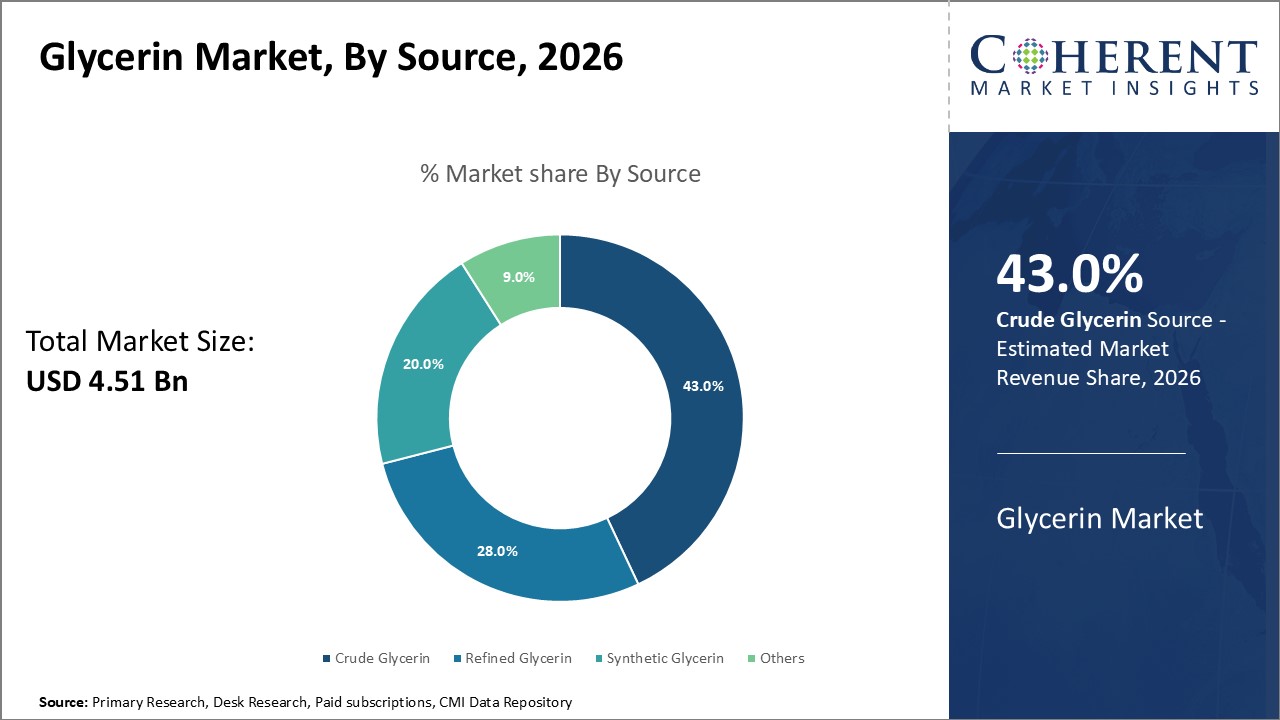
In the Crude Glycerin segment, dominating with 43% of market share, biodiesel byproduct supply and cost-effectiveness primarily drive market dynamics.
Refined glycerin subsegments are the fastest growing, propelled by pharmaceutical and personal care industry demand for high-purity products.
Other subsegments, including synthetic glycerin, maintain a steady presence in specialty applications.
Pharmaceutical application dominates the market revenue, driven by demand in topical and oral formulations, whereas personal care is emerging rapidly due to organic and certified glycerin preferences.
The food & beverages subsegment continues steady growth, focused on humectant and sweetener functions.
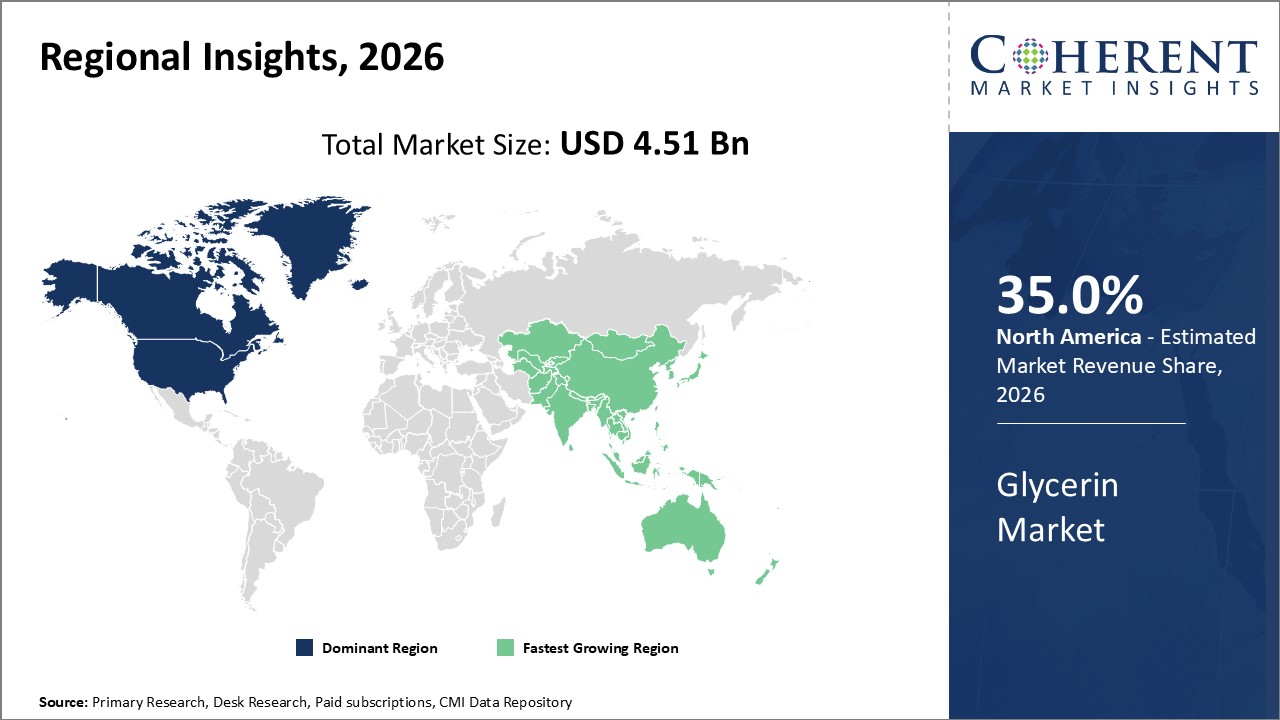
Regionally, North America commands a significant industry share due to established pharmaceutical and personal care sectors and stringent quality standards, fostering refined glycerin demand.
Asia Pacific exhibits the fastest growth rate owing to rapid biodiesel industry expansion, growing food processing units, and increasing industrial adoption, especially in India and China.
Meanwhile, Europe’s regulatory push towards bio-based chemicals sustains market dynamics in refined glycerin consumption.
Glycerin Market Segmentation Analysis
To learn more about this report, Request Free Sample
Glycerin Market Insights, By Source
Crude Glycerin dominates the market share with 43%, primarily fueled by abundant byproduct generation from biodiesel production across the Asia Pacific and Latin America. Its cost competitiveness and volume availability make it a preferred source in industrial applications. Refined Glycerin is recognized as the fastest-growing subsegment due to rising demand for pharmaceutical and personal care products that emphasize purity and regulatory compliance. Synthetic Glycerin serves niche markets where high consistency and specific chemical properties are required.
Glycerin Market Insights, By Application
Pharmaceuticals hold the largest market share, supported by glycerin’s wide usage in formulations ranging from cough syrups to topical treatments. The Personal Care & Cosmetics segment demonstrates rapid growth propelled by organic and bio-based product trends and expanding skin care product portfolios. Food & Beverages utilize glycerin as a humectant, sweetener, and solvent, maintaining stable growth under evolving health-conscious consumption patterns. Industrial applications, such as antifreeze, plastics, and explosives, contribute to a significant revenue stream, with emerging uses in bio-polymers creating new growth avenues.
Glycerin Market Insights, By Grade
Refined Grade glycerin commands the largest market share due to its broad applicability in pharmaceuticals and food industries requiring detoxified, high-purity glycerin. USP Grade, a subsegment focused on pharmaceutical and cosmetic grades meeting stringent quality specifications, is the fastest growing, benefiting from stricter regulations and increasing demand for premium-quality products globally. Technical Grade glycerin caters mainly to industrial uses such as antifreeze and soap manufacturing, with less purity requirement, but maintains a stable demand.
Glycerin Market Trends
The market exhibits significant trends, such as the rise of bio-based glycerin driven by regulatory encouragement and consumer preference for environmentally friendly products.
For example, European markets in 2025 reported a 30% increase in certified organic glycerin consumption.
Smart manufacturing technologies, including AI-based process monitoring and automation, have reduced production costs and enhanced product consistency, as demonstrated by refiners in Germany and the U.S.
Additionally, expanding glycerin applications in vaping and biodegradable plastics are shifting traditional market dynamics, opening new revenue streams.
Glycerin Market Insights, By Geography
To learn more about this report, Request Free Sample
North America Glycerin Market Analysis and Trends
In North America, the dominance in the glycerin market holds steady with over 35% market share. This is supported by well-established pharmaceutical and personal care industries, strict regulatory frameworks that favor USP grade glycerin, and steady biodiesel production. The region boasts pioneering companies such as Dow Inc. and Archer Daniels Midland Company that drive innovation and maintain supply chain robustness. The U.S. government’s renewable fuel standards continue to incentivize biodiesel output, thus influencing crude glycerin availability for downstream refining.
Asia Pacific Glycerin Market Analysis and Trends
Meanwhile, the Asia Pacific exhibits the fastest growth, with a CAGR projected well above 8%. This growth is primarily fueled by expanding biodiesel industries in Indonesia, Malaysia, and India, alongside increasing utilization in the region’s booming cosmetics and food & beverages sectors. Government initiatives to promote biofuels further catalyze glycerin supply. Companies such as Wilmar International and Musim Mas actively enhance production capacity, contributing to robust market dynamics and increasing industrial glycerin demand.
Glycerin Market Outlook for Key Countries
USA Glycerin Market Analysis and Trends
The United States market is driven by an integrated ecosystem of biodiesel production and pharmaceutical-grade glycerin refinement. In 2025, the U.S. accounted for more than 50% of North American refined glycerin consumption, backed by leading companies like Archer Daniels Midland and Dow Inc., which have invested heavily in R&D and capacity improvements. Government policies promoting renewable fuels under the Renewable Fuel Standard (RFS) program have maintained a steady supply of crude glycerin, supporting market revenue growth and expansion into newer applications such as biotech formulations.
Brazil Glycerin Market Analysis and Trends
Brazil’s glycerin market benefits from its status as a major biodiesel producer, contributing significantly to crude glycerin volumes. The country saw a biodiesel production increase of 18% in 2025, directly influencing glycerin byproduct availability. Local companies are particularly focused on expanding glycerin refining technologies to meet rising pharmaceutical and cosmetic industry demand. Government incentives and biofuel blending mandates are sustaining market growth, positioning Brazil as a pivotal player in the Latin American glycerin landscape.
Analyst Opinion
Supply-side dynamics are central to glycerin’s market size growth. Increased production capacities in Southeast Asia and Latin America, particularly due to the expansion of biodiesel plants, have resulted in an uptick in crude glycerin availability. In 2025, increased glycerin by-product generation from biodiesel production in Indonesia surged by over 15%, contributing to global supply expansion. Pricing stability linked to feedstock costs, notably palm oil and soybean oil, had a significant market influence, as biodiesel feedstock prices in 2026 remained within a 5% variance range, containing glycerin price volatility.
Demand-side indicators show diversified and rising applications. Pharmaceutical and cosmetic industries accounted for over 36% of worldwide glycerin consumption in 2025, driven by glycerin's moisturizing properties and low toxicity profile. For example, the increasing use of glycerin in topical drug formulations grew approximately 13% year-over-year, signalling robust demand from the health and personal care sectors.
Microeconomic factors indicate evolving preferences for bio-based and pharmaceutical-grade glycerin. The percentage of refined glycerin sales climbed to nearly 40% of total glycerin revenue in 2026, highlighting increasing demand for purity and sustainability. Additionally, import statistics reveal that Europe saw a 20% growth in glycerin imports in 2025, mainly due to limited domestic production capacity and stringent quality requirements.
Nano-indicators relate to niche industrial applications such as glycerin in antifreeze and tobacco industry segments, which showed expansion rates exceeding 10% in 2025. Emerging consumer trends in vaping products boosted glycerin usage as a primary humectant, especially in North American markets. This niche usage directly contributed to incremental market revenue in recent years.
Market Scope
| Report Coverage | Details | ||
|---|---|---|---|
| Base Year: | 2025 | Market Size in 2026: |
USD 4.51 billion |
| Historical Data for: | 2020 To 2024 | Forecast Period: | 2026 To 2033 |
| Forecast Period 2026 to 2033 CAGR: | 7.4% | 2033 Value Projection: |
USD 6.8 billion |
| Geographies covered: |
|
||
| Segments covered: |
|
||
| Companies covered: | Solvay SA, LyondellBasell Industries, Oleofats GmbH, Kao Corporation, Wilmar International Limited, Daicel Corporation, Nippon Oil Corporation, Gujarat State Fertilizers & Chemicals Ltd., KLK Oleo, Musim Mas Holdings Pte Ltd. | ||
| Growth Drivers: |
|
||
Uncover macros and micros vetted on 75+ parameters: Get instant access to report
Glycerin Market Growth Factors
The glycerin market growth is fuelled primarily by increased biodiesel production, which generates crude glycerin as a byproduct, abundantly available in emerging markets such as Indonesia and Brazil. In 2025, Brazil’s biodiesel output surged by 18%, resulting in a corresponding boost in glycerin byproduct volumes. Another driver is the expanding pharmaceutical and personal care industry, with glycerin’s application in moisturizers, cough syrups, and elixirs witnessing an annual growth rate of approximately 11% globally. Additionally, growing food and beverage sector usage, mainly as a humectant and sweetener, is driving demand. Regulatory initiatives promoting bio-based and non-toxic ingredients in European and North American markets further underscore the growth trajectory. Finally, development in glycerin derivatives used in industrial processes such as antifreeze and plasticizers adds to market growth by introducing alternative revenue streams.
Glycerin Market Development
In October 2025, Argent Energy commissioned Europe’s largest facility for technical-grade, bio-based glycerin, producing 99.7% purity glycerin derived from waste biodiesel. The launch marked a major step toward petrochemical replacement, enabling manufacturers in chemicals, pharmaceuticals, and personal care to adopt more sustainable, circular raw materials.
In May 2026, Louis Dreyfus Company (LDC) inaugurated a large-scale glycerin refining plant in Indonesia, dedicated to producing high-purity, USP-grade glycerin for global markets. The facility significantly strengthened worldwide supply availability and supported fast-growing demand from food, cosmetics, pharmaceuticals, and industrial applications.
In November 2022, BASF introduced a new line of vegetable-derived glycerin sourced entirely from renewable feedstocks, designed for use in eco-friendly formulations across personal care, home care, and industrial products. The launch reinforced BASF’s commitment to sustainable raw materials while offering customers improved formulation flexibility and reduced environmental impact.
Key Players
Leading Companies of the Market
Solvay SA
LyondellBasell Industries
Oleofats GmbH
Kao Corporation
Wilmar International Limited
Daicel Corporation
Nippon Oil Corporation
Gujarat State Fertilizers & Chemicals Ltd.
KLK Oleo
Musim Mas Holdings Pte Ltd.
Several leading companies have adopted capacity expansion and strategic collaborations to strengthen market share. For instance, Archer Daniels Midland Company expanded its glycerin refining capacity by 21% in 2025, enhancing product purity and meeting USP grade requirements. Similarly, BASF SE entered a strategic alliance with regional biodiesel producers in Southeast Asia to secure a steady crude glycerin feedstock supply, significantly stabilizing their production costs and increasing output efficiency. Such market growth strategies play a pivotal role in competitive positioning within the market ecosystem.
Glycerin Market Future Outlook
The future of the market will benefit from rising demand in personal care, food processing, and pharmaceutical formulations. Growth in vegan and natural beauty products will further accelerate glycerin usage as a safe and mild humectant. The expansion of biobased chemicals and green solvents will open new opportunities in industrial applications. Manufacturers will continue optimizing purification processes to meet high-purity requirements for medical and electronic uses. Asia-Pacific will lead consumption due to a booming cosmetics sector and large biodiesel production capacity.
Glycerin Market Historical Analysis
Historically, the glycerin market was shaped by its use in soap manufacturing, pharmaceuticals, and personal care products. The biodiesel boom in the mid-2000s dramatically transformed supply availability, as glycerin emerged as a major byproduct of biodiesel production. Increased supply led to lower prices and expanded applications, including food & beverages, tobacco humectants, resins, and industrial formulations. Over time, demand stabilized with the growth of cosmetics, OTC medicines, and chemical intermediates. Technical-grade and refined glycerin gained widespread use due to improved purification technologies.
Sources
Primary Research Interviews:
Glycerin Producers
Refiners
Cosmetic Formulators
Pharmaceutical Excipients Buyers
Biodiesel Plant Managers
Databases:
ICIS Chemicals
UN Comtrade Glycerin Trade
Magazines:
Chemical Week
CosmeticsDesign
Biodiesel Magazine
Chemical Engineering
Specialty Chemicals Review
Journals:
Journal of Cleaner Production
Industrial & Engineering Chemistry Research
Green Chemistry
Journal of Surfactants and Detergents
Food Chemistry
Newspapers:
Financial Times (Chemicals)
Reuters (Commodities)
The Economic Times (Industry)
The Wall Street Journal (Markets)
The Guardian (Sustainability)
Associations:
American Oil Chemists’ Society (AOCS)
European Fat Processors and Renderers Association
International Biodiesel Association
Chemical Industries Association
IFRA (for cosmetic standards)
Share
Share
Pankaj Poddar is a seasoned market research consultant with over 12 years of extensive experience in the fast-moving consumer goods (FMCG) and plastics material industries. He holds a Master’s degree in Business Administration with specialization in Marketing from Nirma University, one of India’s reputed institutions, which has equipped him with a solid foundation in strategic marketing and consumer behavior.
As a Senior Consultant at CMI for the past three years, he has been instrumental in harnessing his comprehensive understanding of market dynamics to provide our clients with actionable insights and strategic guidance. Throughout his career, He has developed a robust expertise in several key areas, including market estimation, competitive analysis, and the identification of emerging industry trends. His approach is grounded in a commitment to understanding client needs thoroughly and fostering collaborative relationships. His dedication to excellence and innovation solidifies his role as a trusted advisor in the ever-evolving landscape of not only FMCG but also chemicals and materials markets.

Credibility and Certifications

860519526


9001:2015

27001:2022


Need a Custom Report?
We can customize every report - free of charge - including purchasing stand-alone sections or country-level reports
Customize NowJoining thousands of companies around the world committed to making the Excellent Business Solutions.
View All Our Clients